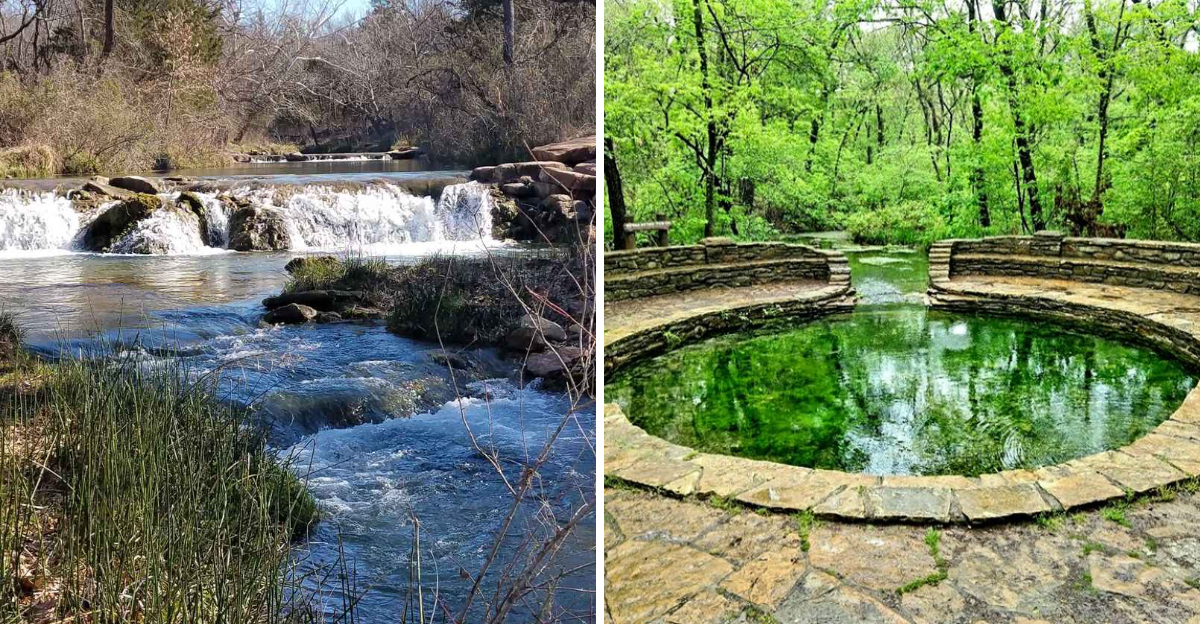
Remember when you could find parking at Chickasaw National Recreation Area without circling for twenty minutes? Locals sure do.
This southern Oklahoma sanctuary has transformed from a peaceful weekend retreat into a social media hotspot overrun with crowds that locals predicted would arrive the moment the first viral post dropped.
What was once a quiet place to cool off in crystal-clear springs has become a battleground for parking spots and picnic tables, especially during summer weekends when out-of-state plates outnumber Oklahoma tags three to one.
The transformation happened fast, and those who grew up swimming in these waters watched helplessly as their secret spot became everybody’s bucket list destination. Is this progress or destruction?
That depends on whether you’re discovering Chickasaw for the first time or mourning the loss of what it used to be.
Little Niagara Falls Became an Instagram Zoo
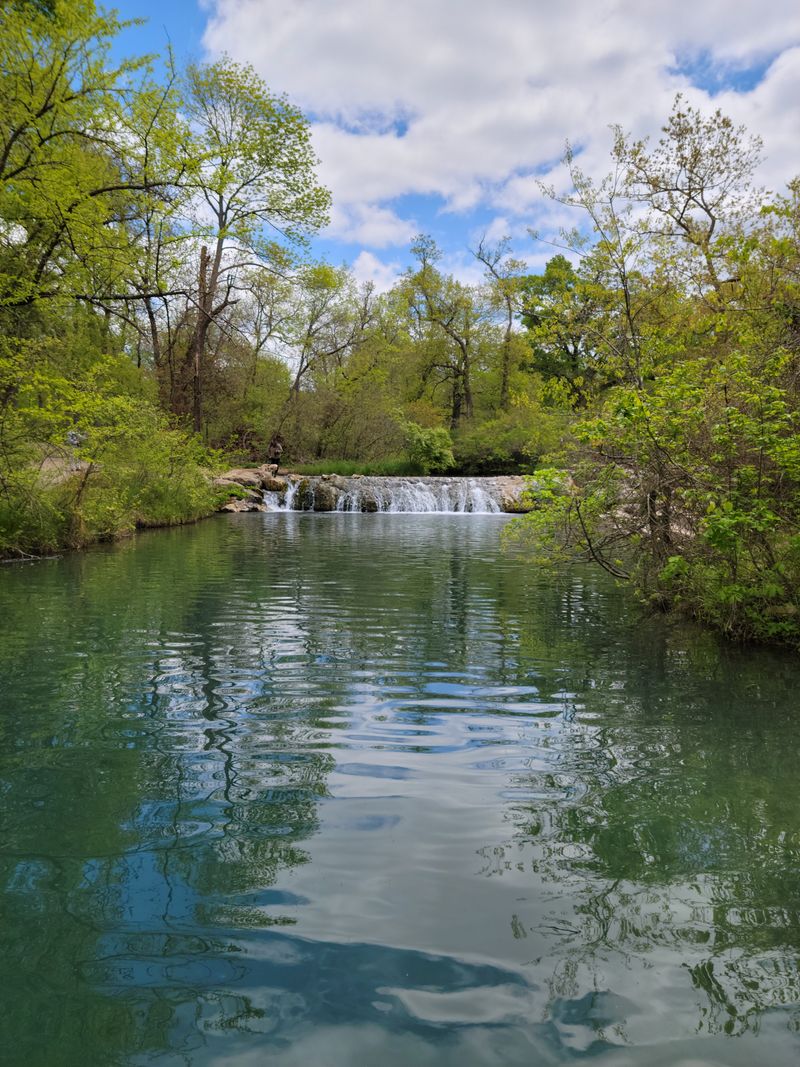
Walk up to Little Niagara Falls on any Saturday between May and September, and you’ll find yourself in a scene that resembles a music festival more than a nature preserve.
Families sprawl across every available rock surface, coolers stacked like Tetris pieces, while teenagers pose for endless photo shoots on the cascading water.
The waterfall itself remains stunning with its turquoise pools and smooth travertine ledges. Cold spring water tumbles over limestone formations that took thousands of years to create, providing natural water slides that kids adore.
But the magic gets diluted when you’re sharing six square feet of rock with strangers who treat the area like their personal backyard barbecue spot.
Rangers now direct traffic during peak hours because visitors park wherever they please, blocking roads and creating safety hazards. The trails leading to the falls show significant erosion from foot traffic that exceeds what the landscape can handle.
Trash bins overflow by noon, and despite regular cleanups, plastic bottles and food wrappers end up wedged between rocks.
Early mornings offer your best chance at experiencing what locals remember. Arrive before 8 AM on weekdays, and you might catch that peaceful moment when mist rises off the water and birdsong drowns out human chatter.
Otherwise, brace yourself for the chaos that comes with popularity.
Address: 901 W 1st St, Sulphur, OK 73086
Parking Turned Into a Contact Sport
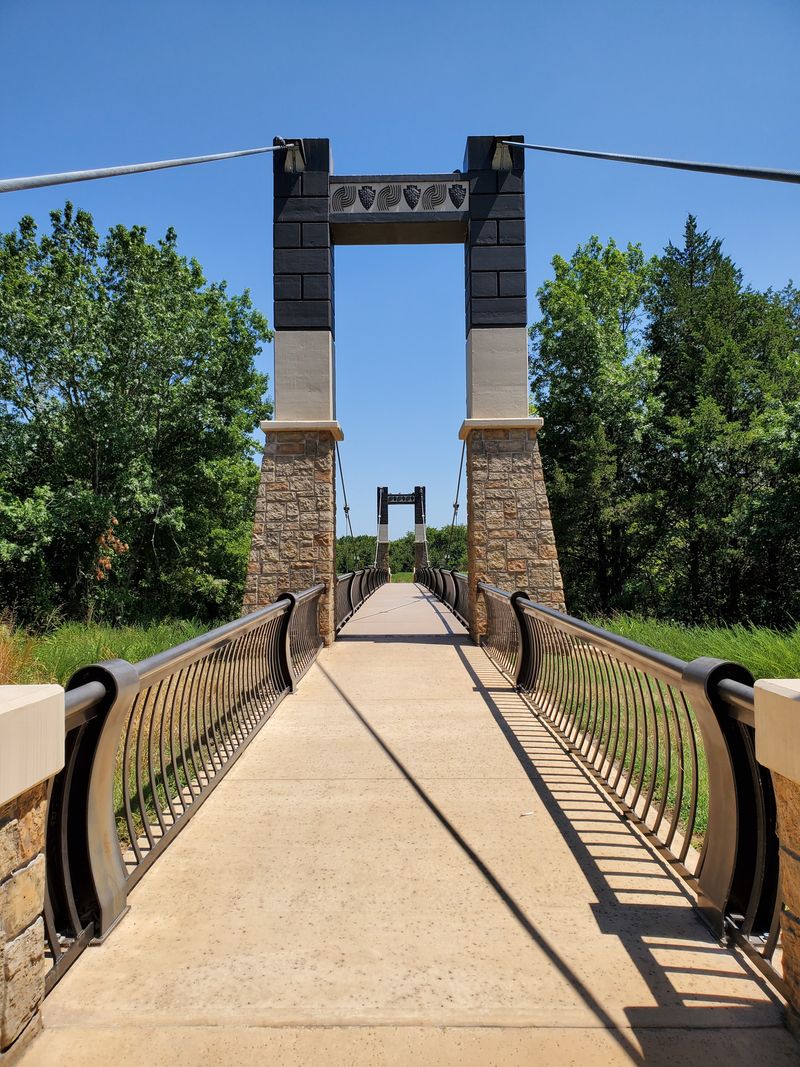
Finding parking at Chickasaw used to mean pulling into an empty lot and choosing your favorite shaded spot. Now it requires strategic planning, patience, and occasionally some aggressive driving skills that would make city commuters proud.
The park’s infrastructure was designed for a different era when visitor numbers measured in hundreds rather than thousands per day. Current parking facilities can’t accommodate summer weekend crowds that arrive in waves starting around 10 AM.
Cars circle endlessly, drivers eyeing anyone walking toward their vehicle like vultures spotting prey.
Rangers have become traffic directors out of necessity, standing in parking lots during peak hours to prevent gridlock and arguments. They’ve witnessed near-fights over spaces, watched people park illegally along roadsides, and dealt with visitors who simply abandon their vehicles wherever convenient.
The situation has become so problematic that the park service now posts parking availability updates on social media.
Locals learned to avoid weekends entirely or arrive at dawn before the tourist invasion begins. Some have started using the park only during off-season months when cold weather keeps crowds manageable.
The overflow parking areas that were supposed to solve the problem fill up almost as quickly as the main lots.
Weekday visits offer dramatically better experiences, but even those have become busier as word spreads about beating the weekend rush.
The Campgrounds Lost Their Peaceful Character
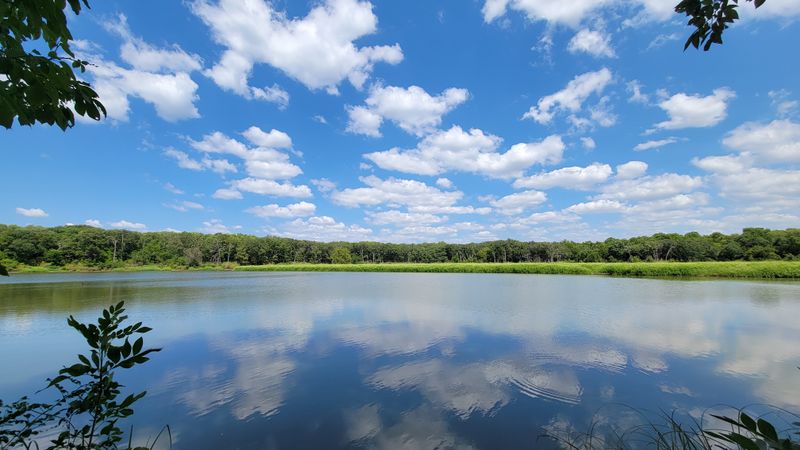
Camping at Chickasaw once meant falling asleep to cricket songs and waking to bird calls. Now you’re more likely to hear generators humming, kids shouting across campsites, and music playing from competing speakers until quiet hours finally arrive.
The campground loops fill up months in advance during summer, with reservation slots disappearing within hours of becoming available. Sites sit so close together that privacy becomes a distant memory.
You’ll know what your neighbors are cooking for dinner and probably catch snippets of their family drama whether you want to or not.
Central Campground and Buckhorn Campground both suffer from overcrowding that the original designers never anticipated. The facilities remain clean and well-maintained, but no amount of maintenance can create space where none exists.
Campers pack in like sardines, RVs parked inches from tent sites, creating an atmosphere more reminiscent of a parking lot than wilderness.
Long-time camping enthusiasts remember when you could snag a last-minute site on a random weekend. Those days vanished along with the solitude that made camping here special.
Restrooms and shower facilities experience heavy use, leading to longer wait times and supplies running out faster than staff can restock them.
Fall and spring camping seasons offer better experiences with fewer crowds and more comfortable temperatures. Winter camping remains gloriously empty for those brave enough to handle Oklahoma’s unpredictable cold snaps.
Trail Erosion Shows the Physical Toll
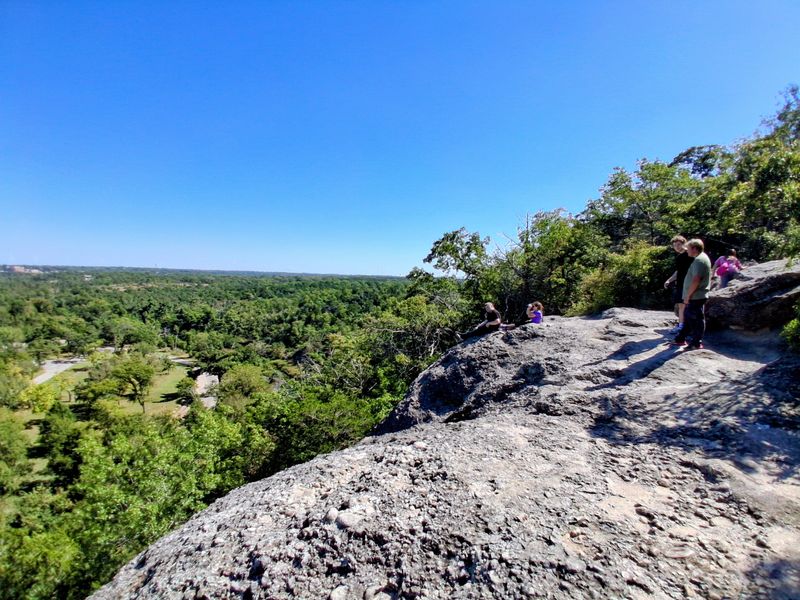
Footsteps tell stories, and the trails at Chickasaw tell tales of overwhelming popularity that the landscape struggles to absorb. Paths that once featured soft dirt and scattered leaves now show exposed roots, widened tracks, and erosion patterns that grow worse each season.
The Antelope and Buffalo Springs Trail sees particularly heavy use, with hikers creating unauthorized shortcuts that kill vegetation and accelerate soil loss. What starts as a few people cutting corners becomes a secondary trail that scars the landscape.
Park staff works constantly to restore damaged areas, but restoration can’t keep pace with ongoing impact.
Travertine Nature Center trails experience similar problems despite being relatively short and easy. The concentration of foot traffic in small areas creates compaction that prevents plant regrowth and channels water in destructive ways during rainstorms.
Boardwalks and bridges show wear from thousands of hands gripping railings and feet pounding across wooden planks.
Rangers have closed certain trail sections temporarily for rehabilitation, frustrating visitors who don’t understand why restrictions exist. Signs explaining trail etiquette get ignored by people who either don’t read them or don’t care about the consequences of their actions.
The educational efforts continue, but changing behavior requires more than posted information.
Experienced hikers notice the degradation immediately and mourn the loss of trail quality that once rivaled anywhere in Oklahoma. The natural beauty persists, but the scars from overuse become harder to ignore with each passing year.
Swimming Areas Became Overcrowded Pools
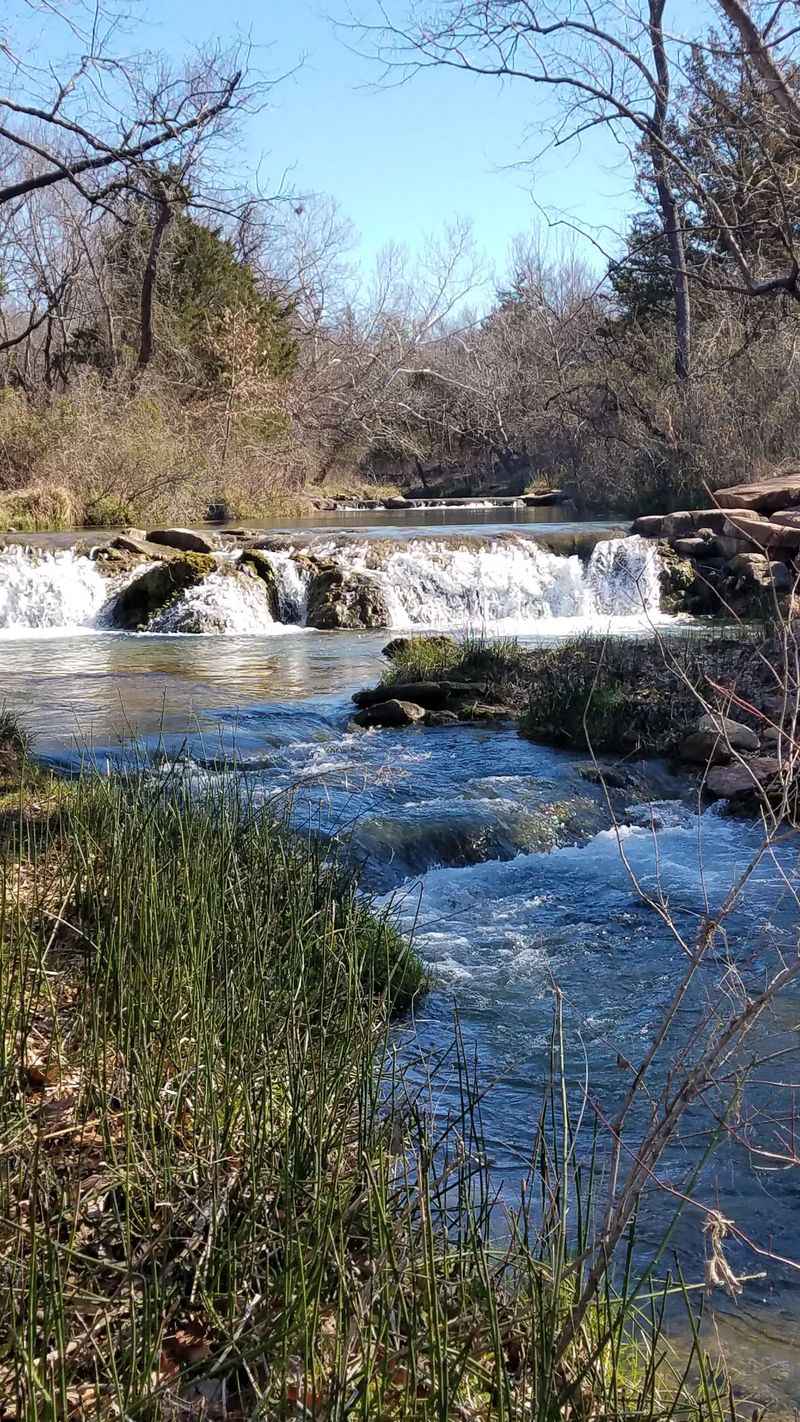
Crystal-clear spring water still flows through Chickasaw’s swimming areas, but good luck finding enough space to actually swim. Peak summer days transform these natural pools into something resembling public swimming pools at maximum capacity, minus the lifeguards and chlorine.
Travertine Creek and the various swimming holes along its length attract hundreds of people on hot weekends. Bodies pack so densely in popular spots that actually swimming becomes impossible.
Instead, people stand waist-deep in cold water, jockeying for position while children splash and play around them. The experience feels less like communing with nature and more like waiting in line at an amusement park.
Water quality remains excellent despite heavy use, thanks to the constant flow from underground springs. However, sunscreen and body oils create visible slicks on the surface during busy periods.
Algae growth has increased in areas where slower-moving water receives excessive nutrients from human activity.
Locals remember when you could float peacefully downstream without bumping into other swimmers every few feet. They recall diving into deep pools without worrying about landing on someone.
Those experiences have become casualties of viral fame and easy interstate access from Dallas and Oklahoma City.
Early morning swimming offers the best compromise, with water temperatures coldest but crowds thinnest. By 11 AM, the invasion begins, and tranquility disappears until sunset drives most visitors back to their cars and campsites.
The Mineral Springs Lost Their Sacred Quiet
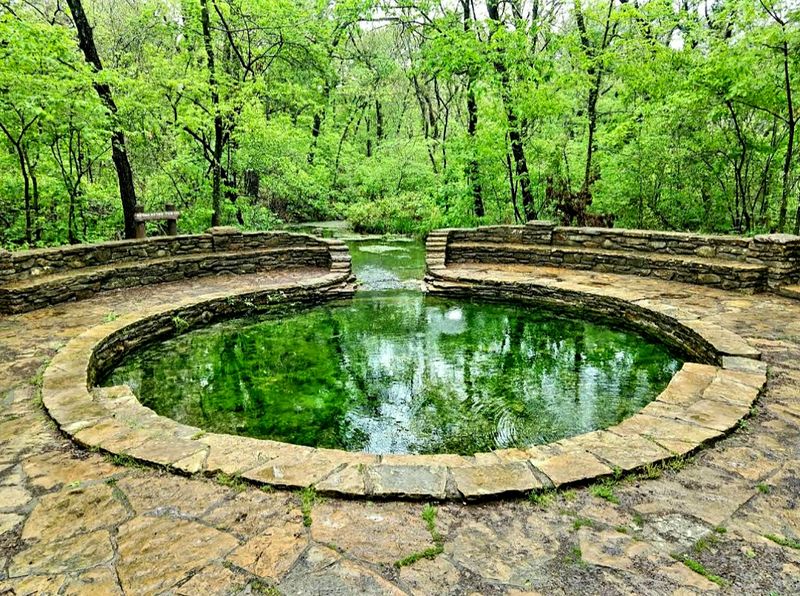
Sulphur’s mineral springs once served as sacred healing waters for the Chickasaw Nation and later became a destination for those seeking therapeutic benefits from the mineral-rich water. The springs still bubble up from underground, but the reverent atmosphere has evaporated along with the solitude.
Pavilions protecting various springs now see constant traffic as visitors fill water bottles, pose for photos, and rush through without appreciating the historical and cultural significance.
The distinctive sulfur smell that gives the town its name provokes complaints from tourists who expected something more Instagram-friendly.
They wrinkle their noses and make jokes, unaware that people once traveled hundreds of miles specifically for these waters.
Bromide Spring, Hillside Spring, and the other named sources each have unique mineral compositions and interesting backstories that most visitors never learn. The information plaques get glanced at briefly if read at all.
People want the photo opportunity, not the history lesson, reducing these culturally significant sites to mere checkboxes on a travel itinerary.
The Chickasaw Nation’s connection to these lands runs deep, predating the national recreation area by centuries. Modern crowds rarely pause to consider that heritage or show proper respect for what these springs represent.
The park service tries to educate visitors, but competing with smartphone distractions proves challenging.
Off-season visits allow for quieter reflection and actual appreciation of these natural wonders. The springs flow year-round, and winter visits offer chances to experience them without fighting through crowds or listening to ignorant comments.
Wildlife Watching Became a Circus Performance
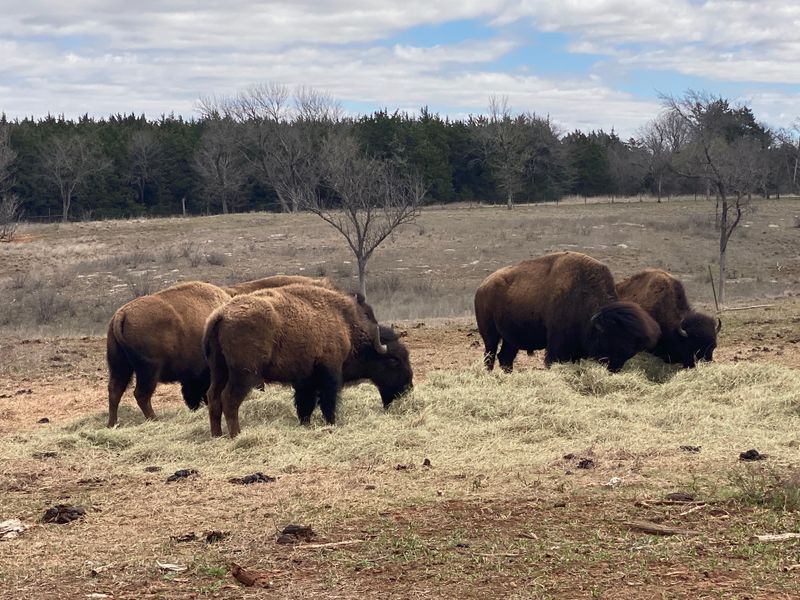
The bison paddock at Chickasaw was meant to provide a glimpse into Oklahoma’s prairie past and honor the Chickasaw Nation’s connection to these magnificent animals. Instead, it has become a stage where tourists treat wild animals like zoo exhibits, complete with inappropriate behavior and dangerous assumptions.
Visitors crowd the viewing areas when bison are visible, shouting and waving to get the animals’ attention for better photos.
Some people ignore warning signs and approach fences too closely, apparently unaware that bison can move with surprising speed and aggression when threatened or annoyed.
Rangers spend considerable time educating visitors about proper wildlife viewing etiquette and safety protocols.
The bison themselves seem increasingly habituated to human presence, which concerns wildlife managers who prefer these animals maintain healthy wariness.
Excessive noise and commotion stress the herd, particularly during calving season when mothers naturally become more protective and aggressive.
Deer throughout the park face similar problems as visitors attempt to feed them despite clear regulations against it. Human food harms deer health and creates dangerous dependencies that alter natural behaviors.
The animals lose their fear of people, leading to aggressive begging and increased vehicle collisions as deer approach cars expecting handouts.
Proper wildlife watching requires patience, respect, and distance. Early morning and late evening offer the best opportunities to observe animals behaving naturally without crowds of people disrupting the experience.
Binoculars help maintain appropriate distance while still enjoying detailed views of these magnificent creatures.
Trash and Litter Became Constant Problems
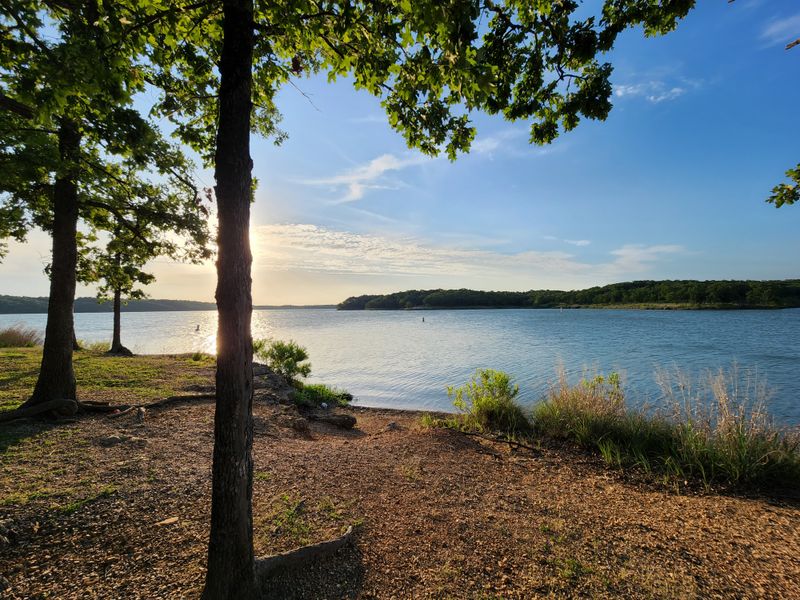
Chickasaw National Recreation Area employs dedicated staff who work tirelessly to keep the park clean, but they’re fighting a losing battle against the sheer volume of trash generated by thousands of daily visitors.
Garbage bins overflow by midday on busy weekends, and litter finds its way into streams, trails, and campsites despite abundant disposal facilities.
Picnic areas suffer particularly badly, with visitors leaving behind food waste, disposable plates, and packaging despite trash receptacles sitting mere feet away. The “pack it in, pack it out” philosophy seems foreign to many who treat the park like their personal servants will clean up after them.
Cigarette butts dot the landscape, plastic bottles wedge between rocks in swimming areas, and food wrappers blow across prairies.
The environmental impact extends beyond aesthetics. Wildlife ingests plastic, sharp objects injure bare feet in swimming areas, and decomposing food attracts problematic species like raccoons and feral hogs.
Water quality suffers when trash enters streams, and the visual pollution diminishes the natural beauty that attracts visitors in the first place.
Volunteers organize regular cleanup events, removing hundreds of pounds of trash that careless visitors left behind. These efforts help but don’t address the root problem of people who simply don’t respect public lands.
Educational campaigns continue, though changing ingrained behaviors proves frustratingly slow.
Visitors who pack out their own trash and pick up litter they encounter make meaningful differences. The park’s beauty depends on everyone taking responsibility, not just relying on overworked maintenance crews.
Locals Abandoned Their Favorite Retreat
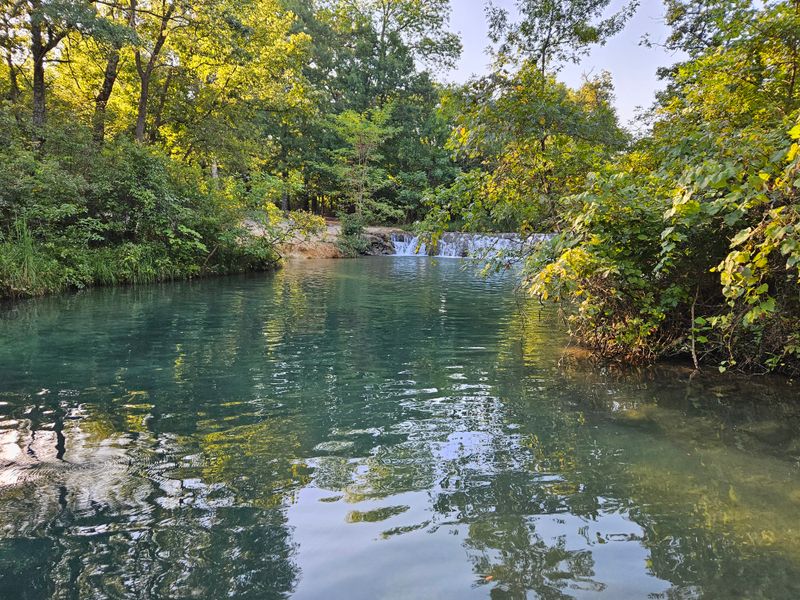
Talk to longtime Sulphur residents, and they’ll tell you about the Chickasaw they remember before it became an overcrowded destination. They grew up swimming in travertine pools with only neighbors for company, camping without reservations, and hiking trails where you might not see another person all day.
That version of Chickasaw exists only in memories now.
Many locals stopped visiting their own backyard treasure because dealing with crowds became more frustrating than the experience was worth.
They surrendered their favorite swimming holes to tourists, ceded their preferred campsites to reservation systems, and found alternative recreation areas farther from home.
The loss feels personal, like watching your childhood home get demolished for a strip mall.
Some adapted by shifting their visits to weekdays, early mornings, or off-season months when Oklahoma weather keeps fair-weather visitors away.
Others discovered lesser-known areas within the park that tourists haven’t found yet, though they’re reluctant to share those secrets for fear of losing those spots too.
The economic benefits to Sulphur can’t be denied, with restaurants, hotels, and shops thriving from tourist dollars. But economic growth came at a cost that residents didn’t necessarily agree to pay.
Their quality of life decreased as their town became a destination rather than a community.
The irony isn’t lost on anyone. The very qualities that made Chickasaw special attracted attention that destroyed those qualities.
Locals saw it coming and tried to warn people, but popularity has its own momentum that no amount of local wisdom can stop.
Dear Reader: This page may contain affiliate links which may earn a commission if you click through and make a purchase. Our independent journalism is not influenced by any advertiser or commercial initiative unless it is clearly marked as sponsored content. As travel products change, please be sure to reconfirm all details and stay up to date with current events to ensure a safe and successful trip.
