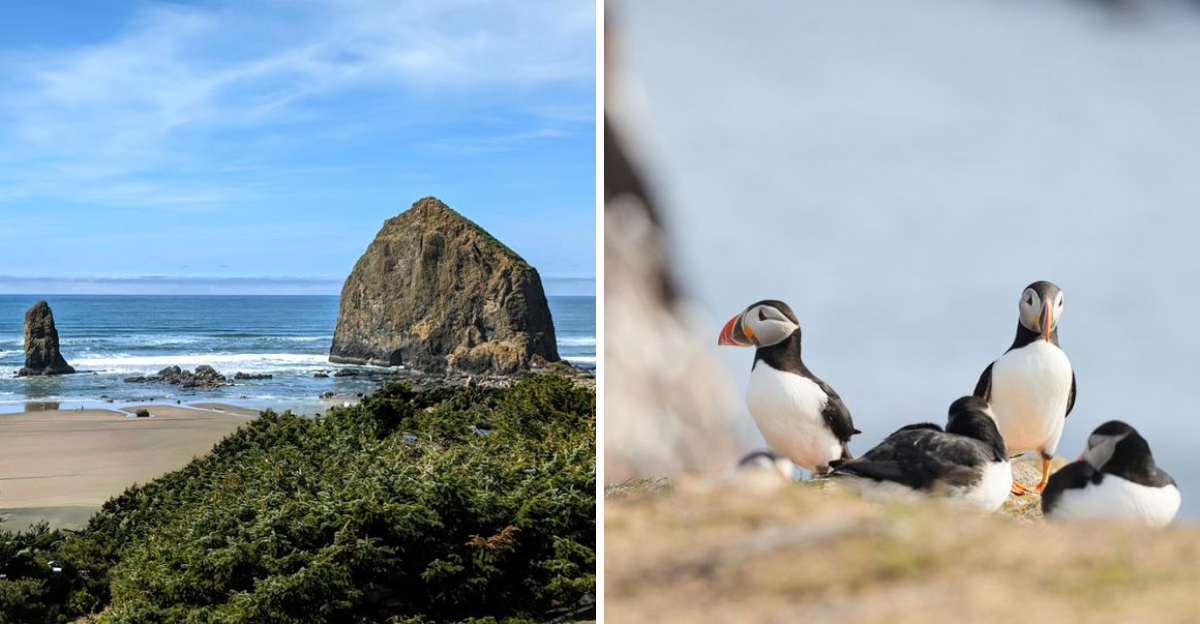
They look like clowns of the sea with those bright orange beaks and funny waddles. Oregon’s coastline gets a little more magical every spring when these birds return.
Tufted puffins are not easy to find in most of the country, but here they show up like clockwork. They nest in rocky crevices, popping in and out with fish hanging from their beaks.
You will hear them before you see them, a strange grumbling sound that does not match their goofy appearance. Binoculars help, but even with naked eyes you can spot their black bodies and white faces against the gray rock.
Kids love watching them because they move like little cartoon characters. Adults love them because puffins are proof that nature has a sense of humor.
Bring a jacket and some patience because these birds operate on their own schedule. When you finally see one, you will understand the hype.
What Makes Haystack Rock So Iconic
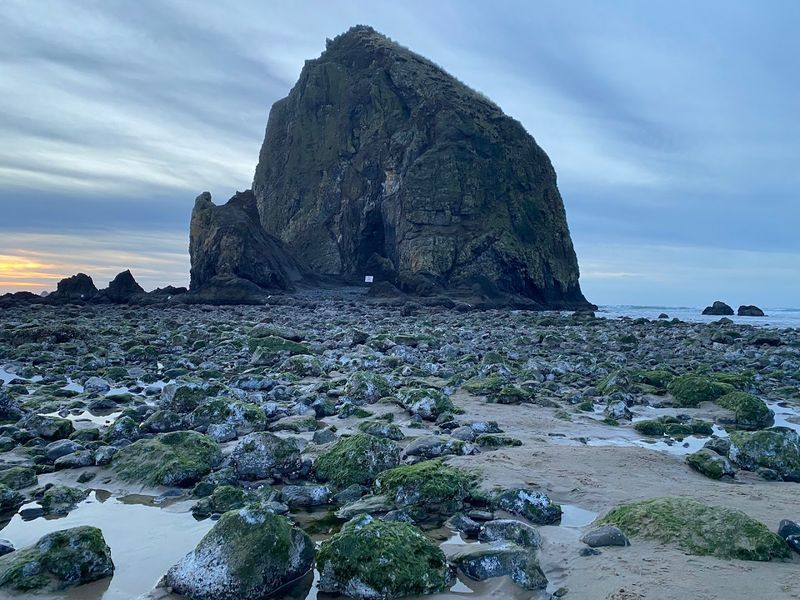
Nothing quite prepares you for the first moment you see Haystack Rock up close. Photos help, but they shrink it.
Standing at its base, you realize this basalt monolith has been here for millions of years, shaped entirely by volcanic activity and the relentless Pacific Ocean.
It is the third-largest coastal monolith in the United States. That fact alone stopped me in my tracks.
The rock is not just big. It is commanding in a way that makes the rest of the beach feel quieter around it.
Cannon Beach itself wraps gently around this landmark. The sand is wide and firm, easy to walk on even with kids or a dog.
Locals treat the rock with real respect, and that energy is contagious.
Visiting at different times of day reveals completely different moods. Morning light turns the rock golden.
Evening fog wraps it in mystery. Rain makes it look ancient and fierce.
Every single visit feels like a new experience at this one unforgettable place.
When Tufted Puffins Arrive and Why It Matters

Every spring, tufted puffins return to Haystack Rock to nest, and the whole energy of the beach shifts. They typically arrive in April and stay through late July.
Watching them land clumsily on the rocky slopes after soaring over the ocean is oddly charming.
Tufted puffins are seabirds with striking looks. Their black bodies, white faces, and bright orange beaks are hard to miss.
During nesting season, they grow long golden tufts behind their eyes, which makes them look almost theatrical.
Haystack Rock is one of the few reliable spots in the Pacific Northwest where you can actually see them nesting. That matters a lot for bird lovers and casual visitors alike.
You do not need any special gear or expertise to enjoy the show.
Bring binoculars if you have them. The puffins nest high on the rock’s grassy upper ledges, so a closer look makes the experience much richer.
Mornings tend to offer the most active sightings before beach crowds build up.
The Best Time of Year to Visit for Wildlife
Timing your visit makes a real difference at Haystack Rock. April through July is the sweet spot if puffins are your goal.
The rock is alive with nesting seabirds during these months, and the energy is completely different from a winter walk on the beach.
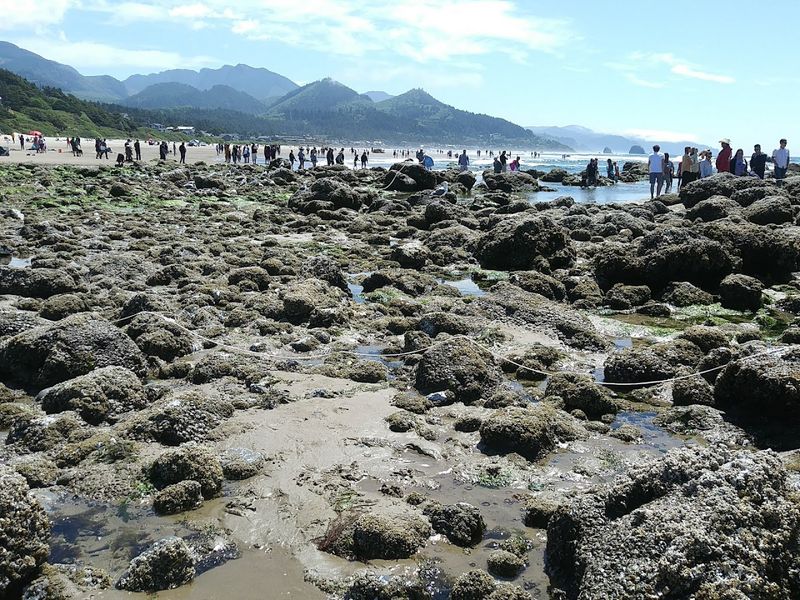
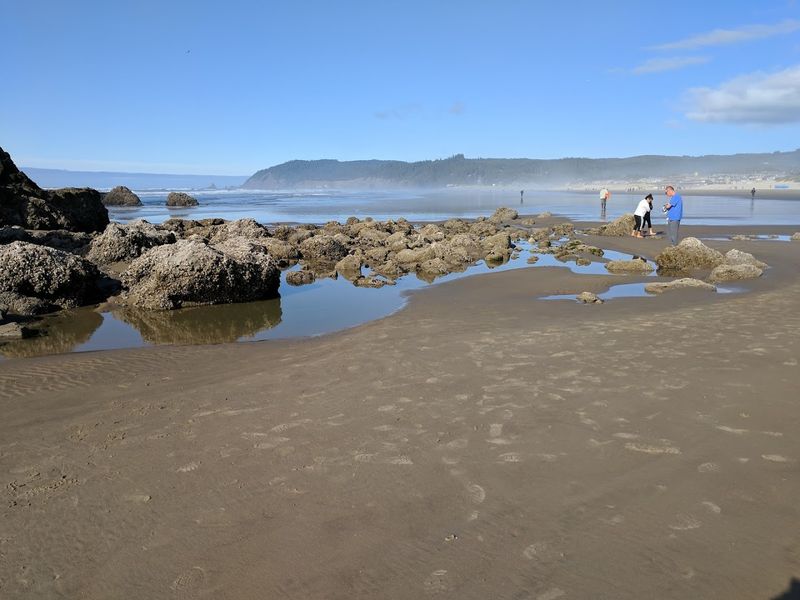
Low tide is another factor worth planning around. When the tide pulls back, the Marine Garden at the base of the rock becomes accessible.
That stretch of exposed reef is teeming with sea stars, neon-green anemones, tiny crabs, and small fish tucked into every crevice.
Checking a tide chart before heading out is genuinely useful. Apps and local visitor centers can point you to the right times.
Getting there within an hour of low tide gives you the most access and the best wildlife viewing.
Sunrise visits are underrated here. The morning light is soft and warm, crowds are thin, and the birds are most active.
I watched a cormorant dry its wings on the rocks at 7am once, completely alone on the beach. Pure magic.
Exploring the Tide Pools Up Close
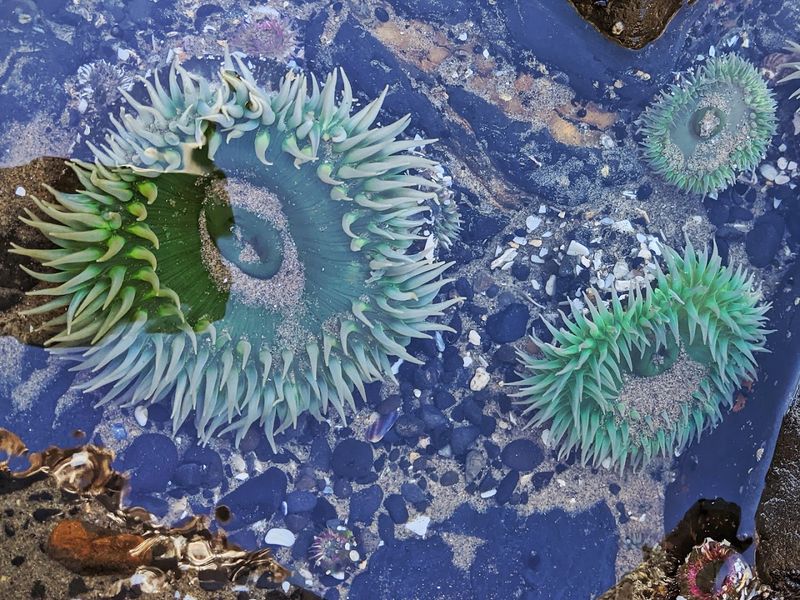
Getting close to the tide pools at Haystack Rock feels like peering into another world. Bright purple sea stars cling to wet rocks.
Green anemones wave their tentacles slowly in shallow pools. Tiny hermit crabs drag their borrowed shells across the sand.
The Marine Garden zone at the base of the rock is protected. Visitors are asked not to touch or remove anything, and that rule genuinely helps keep the ecosystem healthy.
Volunteers from the Haystack Rock Awareness Program are often on-site to answer questions and guide curious visitors.
Kids absolutely love this part of the visit. Watching their faces when they spot a sea star for the first time is priceless.
Adults get just as absorbed, crouching over pools and pointing things out to each other like excited kids themselves.
Wear shoes with good grip. The rocks near the water get slippery fast.
Sandals work fine on the dry sand, but once you step toward the tide pools, you want something with traction. A little preparation goes a long way here.
The Haystack Rock Awareness Program
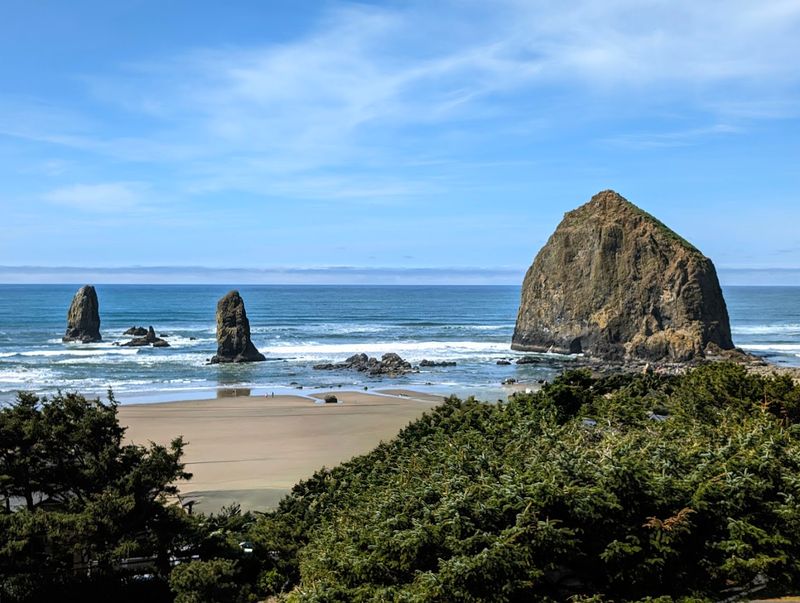
One of the most underrated parts of visiting Haystack Rock is the Haystack Rock Awareness Program, often called HRAP. Volunteers set up near the tide pools during low tide and nesting season to educate visitors about the wildlife and ecosystem.
They bring spotting scopes so you can actually see the puffins clearly on the upper rock. That alone is worth stopping for.
The volunteers are genuinely enthusiastic and happy to chat, whether you have deep questions or just want a quick look through the lens.
HRAP has been running for decades and plays a real role in protecting the rock’s wildlife. Their presence encourages respectful behavior from visitors, which keeps the ecosystem intact for future generations.
It is conservation made friendly and approachable.
No tickets, no sign-up, no cost. You just walk up and join the group.
I spent nearly an hour talking with a volunteer about puffin nesting habits once, and it completely changed how I saw the rock. Programs like this are rare and genuinely special.
Watching Sunsets Behind the Rock
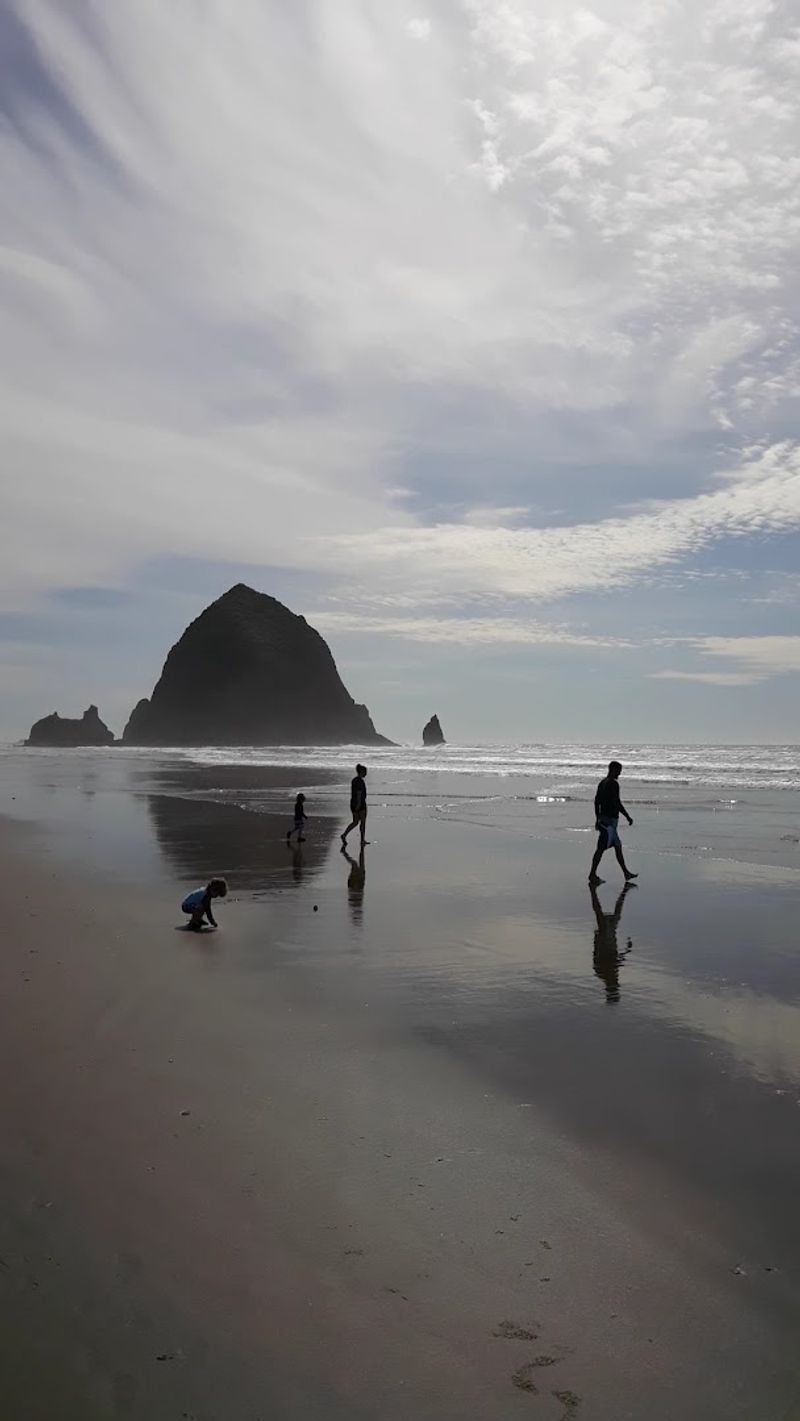
Sunsets at Haystack Rock have a reputation, and they fully earn it. The rock sits just far enough offshore that the sun drops behind it during certain times of year, creating a silhouette that looks almost cinematic.
The sky turns shades of orange, pink, and deep purple.
The wet sand reflects all of it. Walking along the shoreline during golden hour feels surreal, like the beach is holding a mirror up to the sky.
I have taken hundreds of photos here and never once felt like I captured it perfectly.
Crowds do gather for sunset, especially in summer. Arriving thirty minutes early gives you space to settle in and find your spot.
Bring a light jacket. The wind picks up as the sun goes down, and the temperature drops faster than you expect near the water.
Even cloudy evenings produce beautiful light here. Thick coastal clouds catch the color and spread it across the whole sky.
Wildlife Beyond the Puffins
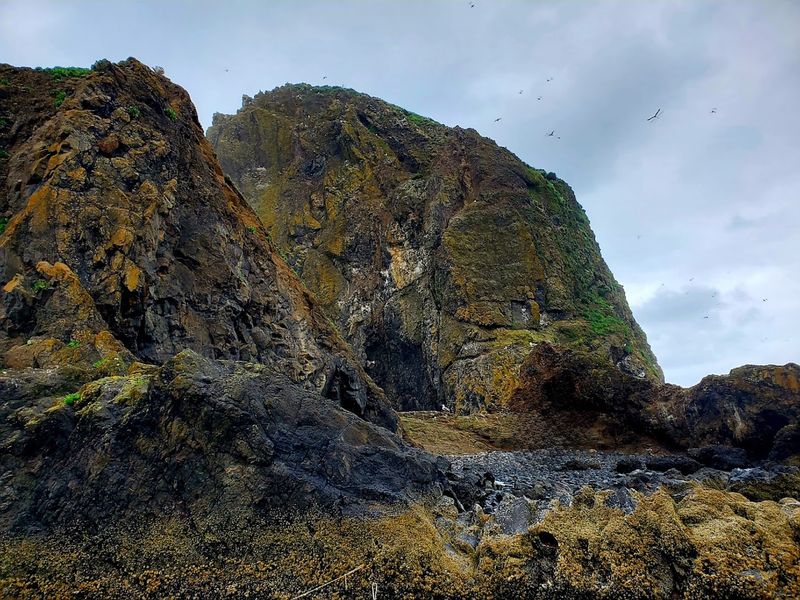
Tufted puffins get most of the attention, but Haystack Rock is home to a surprising variety of wildlife year-round. Brandt’s cormorants nest here in large numbers.
Pelagic cormorants, pigeon guillemots, and western gulls all use the rock as a seasonal home.
Brown pelicans sometimes glide past in formation just above the wave line. Harbor seals occasionally haul out on the surrounding rocks during low tide.
Spotting one curled up on a ledge, completely unbothered by the world, is one of those quiet moments that sticks with you.
Elk have also been spotted near the parking areas around Cannon Beach. Seeing a herd of Roosevelt elk just hanging out near the road is not something you forget quickly.
It adds a whole other layer to what already feels like a wildlife-rich destination.
The variety here is genuinely impressive for a single beach visit.
Parking, Access, and Getting There
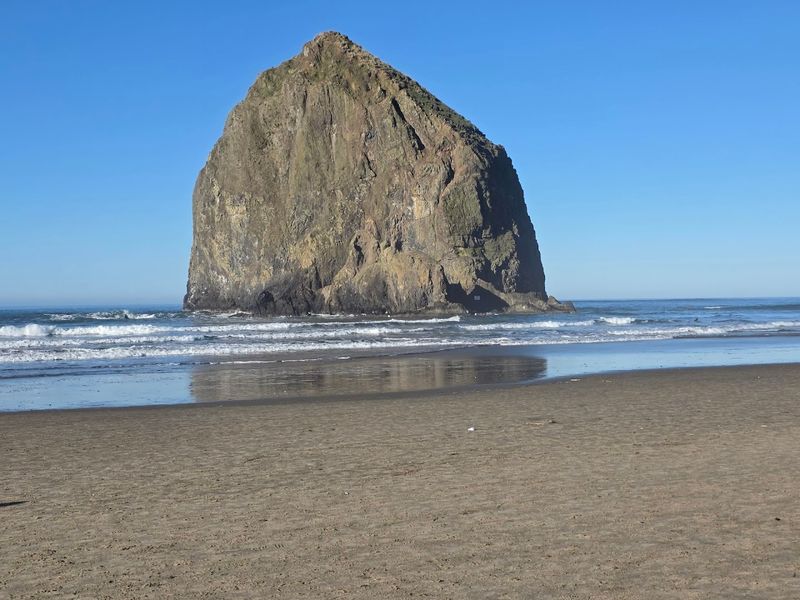
Getting to Haystack Rock is straightforward once you know the lay of the land. Cannon Beach sits right off US-101, and the rock is visible from the road as you approach.
Parking can be competitive in summer, especially on weekends and sunny days.
Street parking lines the roads near the beach access points. Free parking is also available near Cannon Beach City Hall.
Arriving early in the morning or later in the afternoon helps you avoid the worst of the competition for spots.
The beach itself is accessed via short staircases from the road. The walk down is quick and easy for most visitors.
A few of the paths require navigating a small hill, but nothing demanding. The beach is wide and flat once you reach the sand.
Haystack Rock is open 24 hours a day, every day of the year. That means early risers and late-night stargazers are equally welcome.
What to Bring for the Best Experience
A little preparation goes a long way at Haystack Rock. The Oregon coast is famously unpredictable.
Sunny skies can shift to heavy mist within an hour. Layers are not optional here.
A windproof jacket is probably the single most useful thing to pack.
Binoculars are worth bringing if you want to see the puffins clearly. The birds nest high on the rock’s upper slopes, and the naked eye misses a lot of detail from the beach.
Even a basic pair makes a big difference for bird watching.
Waterproof or rubber-soled shoes are smart for tide pool exploration. The rocks get slippery fast, and a fall on wet basalt is no fun.
Good footwear lets you explore freely without constant worry about your footing.
Sunscreen matters even on overcast days. The UV reflection off wet sand and ocean water is stronger than it looks.
Making the Most of Your Full Day at Cannon Beach

Haystack Rock is the anchor of any Cannon Beach visit, but the town itself adds a lot to the day. Hemlock Street runs through the heart of downtown and is lined with art galleries, coffee shops, and local restaurants.
It is easy to walk and worth exploring at a relaxed pace.
Grabbing coffee before heading to the beach sets the morning up well. The town has a genuine small-town feel that does not feel forced or overly touristy.
Locals are friendly and the pace is easy.
After a morning at the tide pools and a stretch watching the puffins, the afternoon opens up nicely. A long walk north or south along the beach gives you different angles of the rock and quieter stretches of shoreline.
The sand is firm and easy to walk on for a good distance.
Ending the day with sunset on the beach and a meal in town makes for a complete and satisfying experience.
