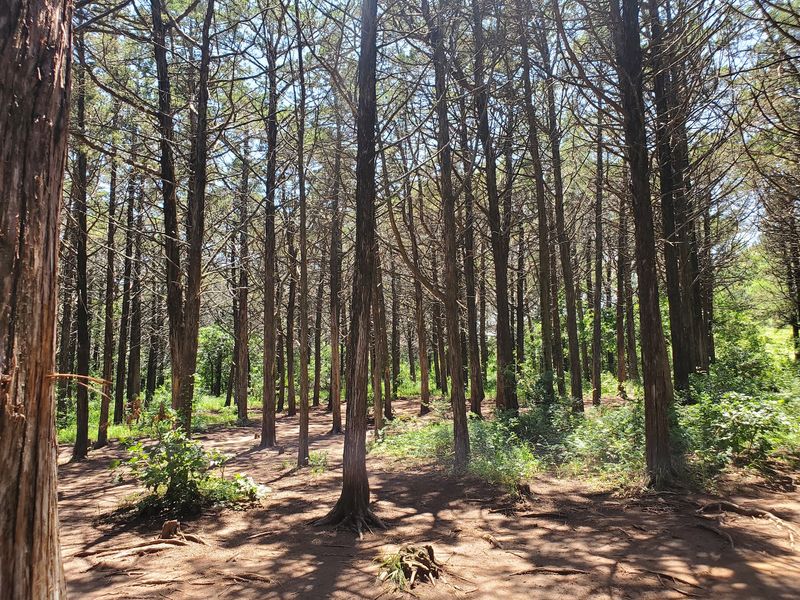
Some Oklahoma places give up their secrets from the parking lot, and then there are the ones that make you walk a hundred yards before your brain catches up. I pulled off a two-lane road expecting a plain stand of cedars and instead found trees lined up like soldiers, row after row, in every direction I turned.
The air went cool, the highway noise vanished, and I stood there grinning like someone who had just been let in on a very old joke. Sixteen acres of planted geometry, free to walk, and most folks driving past have no idea it exists.
A Sixteen-Acre Grid Tucked Inside the Wichita Mountains
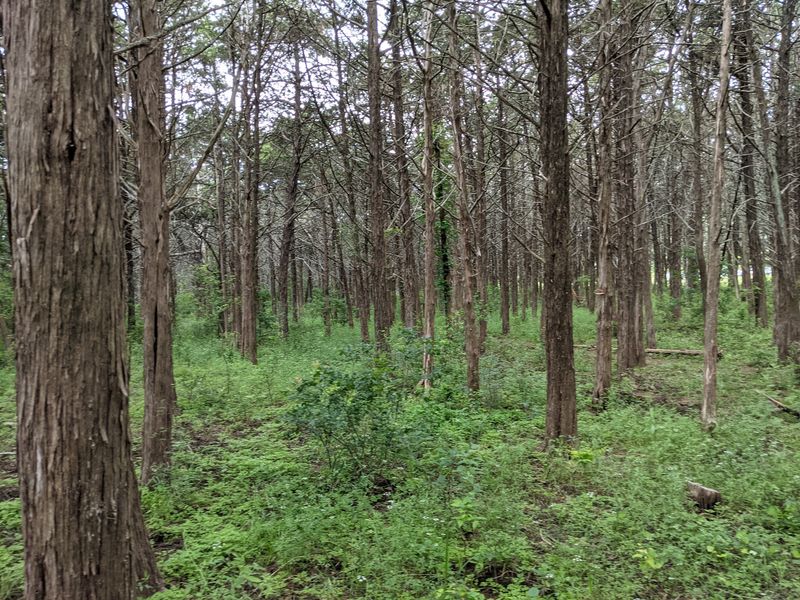
Roughly 20,000 eastern red cedars, each planted about six feet from its neighbors in every direction, cover a 16-acre patch inside the Wichita Mountains Wildlife Refuge north of Lawton. The result is a forest that reads like graph paper.
Look left, look right, look diagonally, and the trunks line up into corridors that seem to run forever.
Mail sent this way carries a Lawton, OK 73507 address, though the spot sits well outside town among granite outcrops and open prairie. Access comes off Oklahoma State Route 115, where a small gravel lot marks the edge of the planting.
What surprises most first-timers is the temperature drop. Under that packed canopy, the air runs noticeably cooler than the sunbaked grassland just outside, which regulars point out as a genuine mercy during an Oklahoma August.
The refuge itself is managed by the U.S. Fish and Wildlife Service, so the forest shares its neighborhood with bison, longhorn, and deer that wander the range freely.
Cattle guards at the entrances keep the big animals inside refuge boundaries, and signs at the lot spell out the rules plainly.
Dust Bowl Desperation Planted in Straight Lines
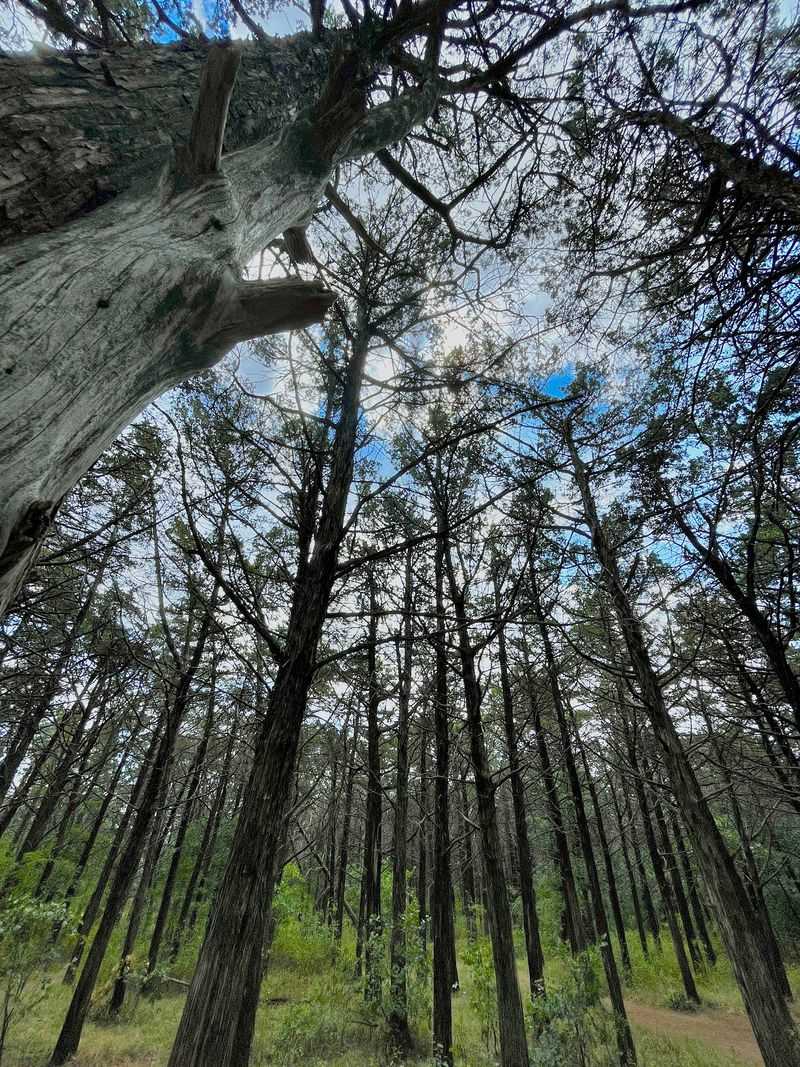
Back in the 1930s, the southern Plains were losing topsoil by the ton, and the federal response included planting trees by the millions. The Parallel Forest belongs to that chapter.
Cedars were set close together on purpose so they would race each other upward rather than spreading out, producing tall, straight trunks and a solid wall against the wind.
Some accounts push the original planting back as far as 1912, and a few visitors have heard it described as a science experiment from the 1960s. The dates vary depending on who is telling it, but the erosion-fighting purpose behind the tight grid is the thread that runs through every version.
Eastern red cedar made sense for the job. It tolerates drought, heat, cold, and poor soil, and its fibrous roots grip dirt that wind wants to carry off toward Kansas.
Federal crews eventually moved on and the experiment was left to its own devices. Decades later, the trees are still standing in formation, which may be the most Oklahoma outcome possible: a government project abandoned, then quietly adopted by hikers and photographers who love it exactly as it is.
The Tree That Did the Job and Then Some
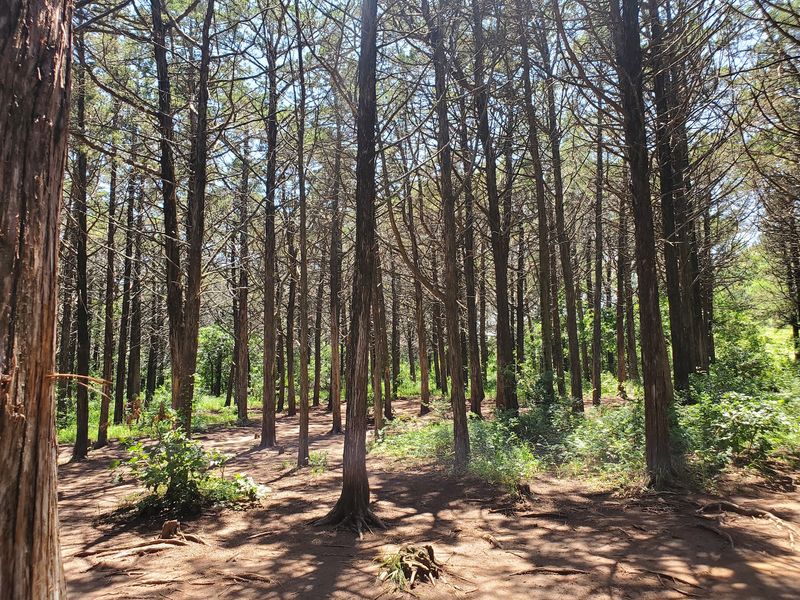
Juniperus virginiana, better known as eastern red cedar, is native to Oklahoma and stubborn in the best possible way. It grows in rocky ground, sandy ground, and the sticky red clay that swallows shovels.
That toughness is exactly why planners chose it when they needed a living fence against blowing soil.
Planted at six-foot spacing, the trees competed for light and shot skyward. Lower branches died back from shade, leaving bare trunks and a high green ceiling.
Walking among them feels less like a woods and more like a hall of columns.
Here is the twist worth knowing. The same traits that made red cedar a hero in the 1930s now make it a headache across Oklahoma grasslands, where changed fire patterns have let it spread into prairie it once stayed out of.
Land managers spend real effort pushing it back.
Standing inside the grid, that tension is easy to feel. A tree once drafted to save the land is now often fought on the same land, and this little rectangle of forest holds both stories at once without apologizing for either.
Endless Corridors and the Trick They Play on Your Eyes
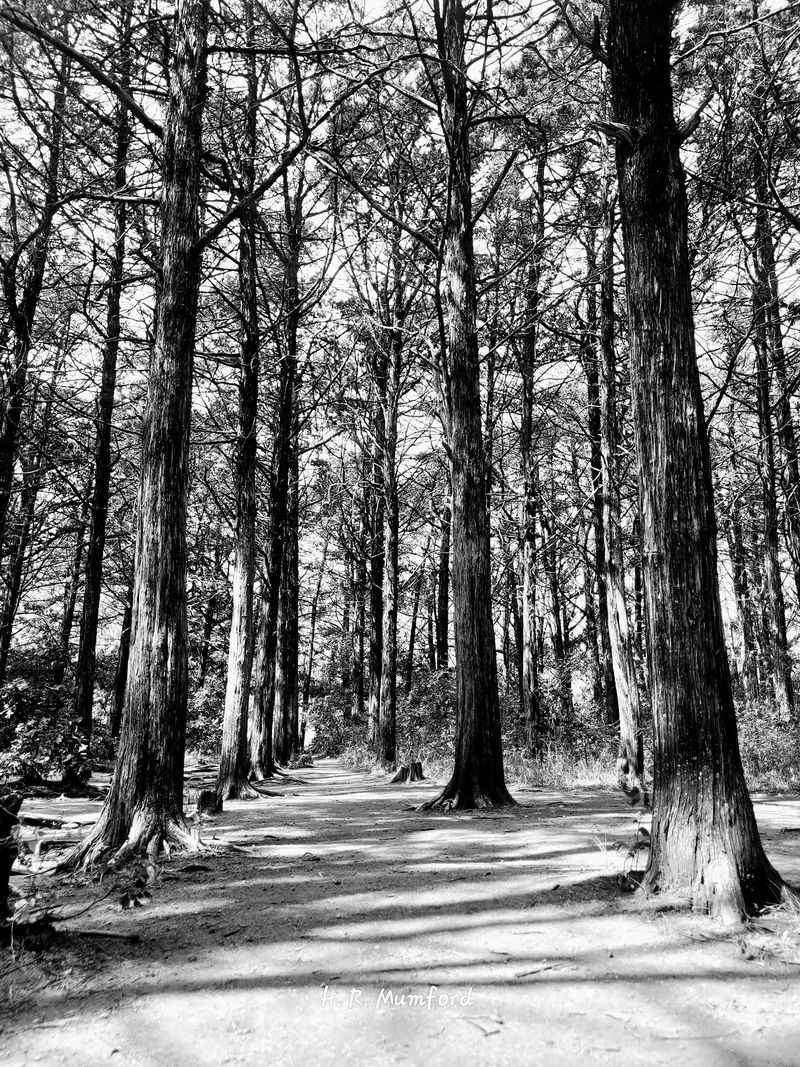
Optical strangeness is the main event here. Turn your body a few degrees and the trunks snap into a fresh set of parallel lines, then snap again, then again.
Some visitors describe the entrance as almost surreal, and that word fits better than any I could come up with while standing there.
Photographers figured this out long ago. Weekend evenings near the entrance can get busy with portrait sessions, senior pictures, and family shoots taking advantage of those vanishing-point rows.
If you would rather have the place to yourself, morning is the smarter call.
Not everyone is bowled over, and that is fair. A few folks shrug and say it is simply tall trees on a grid with plenty of sun still coming through, which is an honest description of the facts.
My take is that the appeal depends on how you approach it. Rush through and it is a stand of cedars.
Slow down, pick a row, and follow it with your eyes until the trunks blur together, and the whole hillside starts to feel like a puzzle someone built on purpose.
Short Trails, Exposed Roots, and a Creek Worth Finding
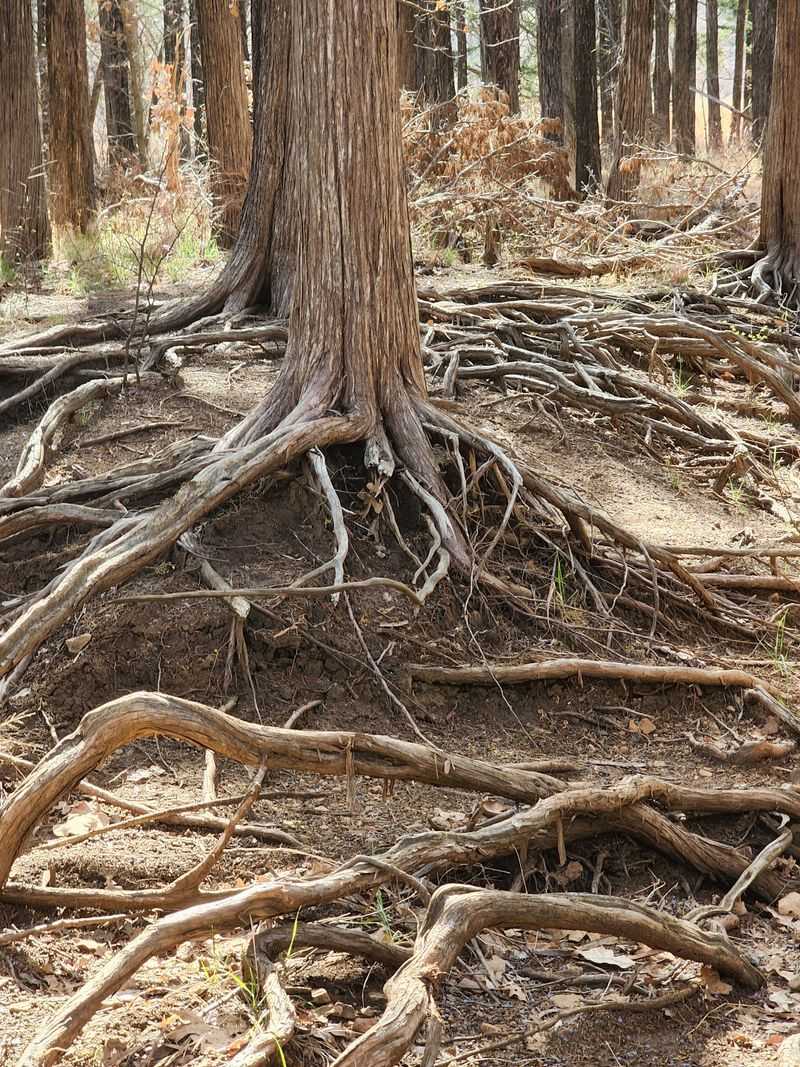
Most people walk an easy out-and-back of roughly seven-tenths of a mile, which is nothing for a casual afternoon. The catch is that the grid makes every direction look identical, and side paths branch off constantly.
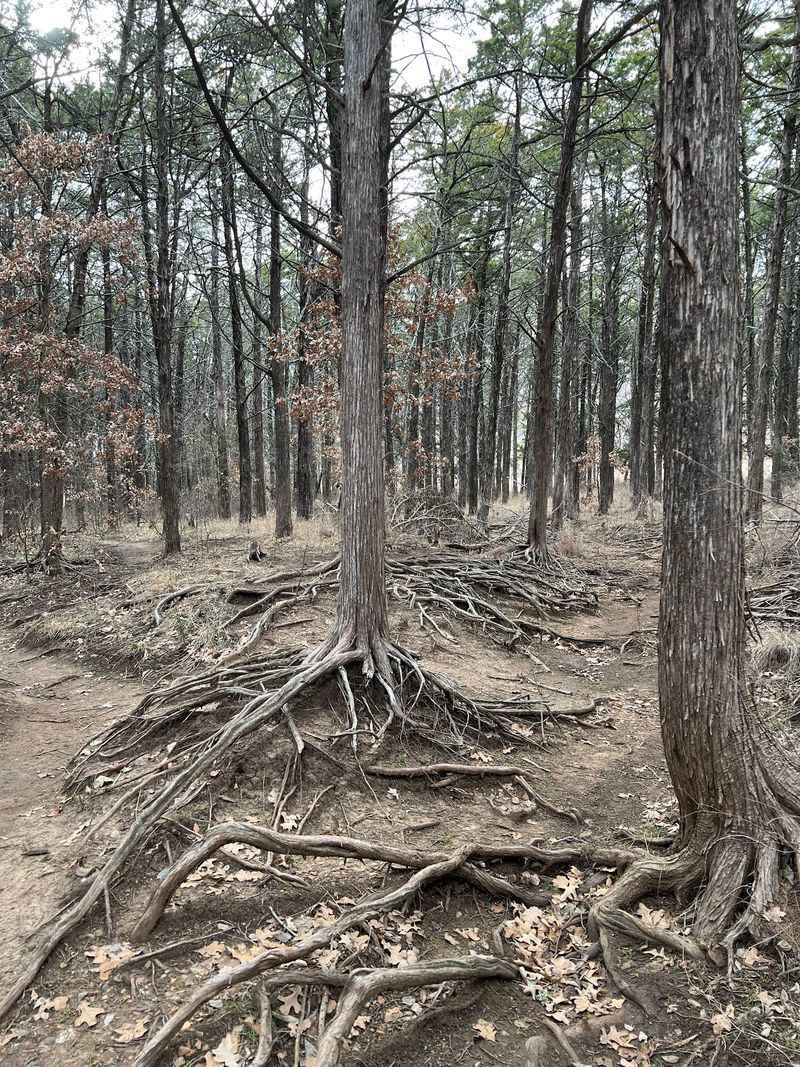
Underfoot, exposed roots crisscross the dirt, so decent shoes beat sandals. Sections of trail run narrow and get overgrown in the warmer months, though hikers generally describe the going as manageable rather than rough.
Push northeast from the main entrance and the terrain opens up. A small creek runs through, separating the cedar block from a rocky landscape with a bit of elevation and a wider view of the surrounding refuge.
Several visitors call that stream the highlight of the whole outing.
Navigation deserves a word of caution. Trees are marked, and following those markers keeps you oriented, but people do get turned around because every corridor resembles the last one.
Downloading a trail app before you lose signal is a cheap insurance policy.
Picnic areas nearby give families a place to spread out after the walk, which makes a short visit stretch comfortably into a couple of hours.
Stone Circles, Grinding Stones, and Stories Told After Sundown
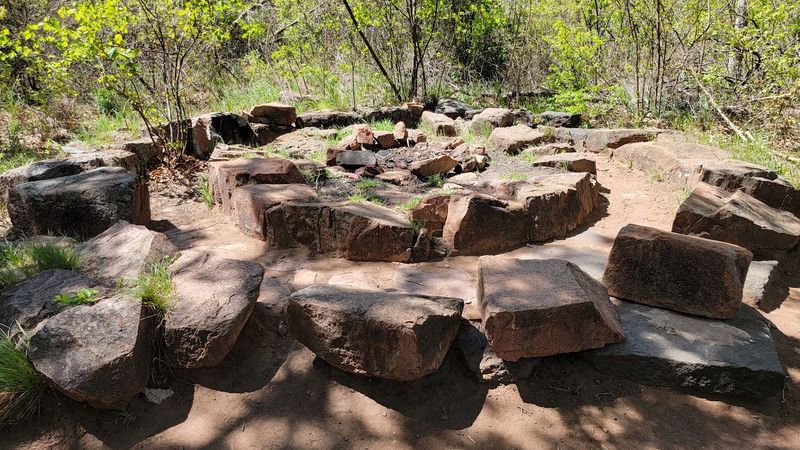
Wander far enough east and slightly north of the main entrance and you may come across a ring of stones arranged on the ground, often described as looking like an old campfire circle. Nobody hiking past seems entirely sure who built it or why, and that mystery has done wonders for the forest’s reputation.
There is also talk of a grinding stone somewhere in the trees. Plenty of visitors go looking and come back empty-handed, then promise themselves another trip to try again, which is honestly a fine excuse to return.
Ghost stories circulate too. The forest gets eerily quiet in spots, the identical rows mess with your sense of direction, and the combination has fed local legends for years.
One hiker joked about not spotting a single ghost, while another noticed dust orbs showing up in photos.
Believe what you like. The atmosphere does the heavy lifting on its own, and you do not need a single spooky tale to feel that odd hush settle in about two hundred steps past the tree line.
Bison, Deer, and a Refuge That Belongs to the Animals
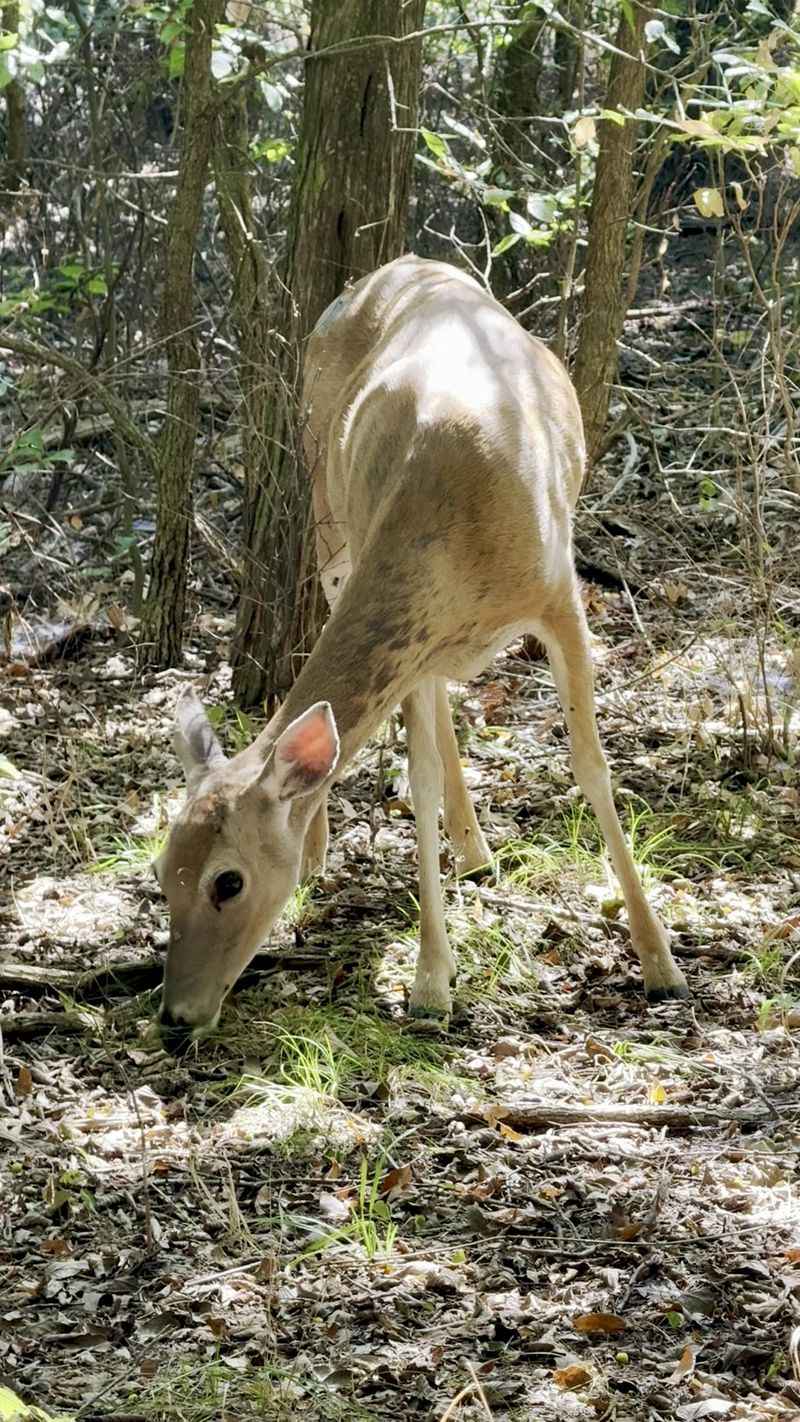
Wildlife is not a bonus here, it is the whole point of the surrounding refuge. Bison roam freely through the area, and cattle guards at the entrances keep them within refuge boundaries rather than out on the highway.
Inside the cedars, deer show up often enough that encounters feel almost expected. One group described watching a deer forage quietly among the trunks, and that kind of moment lands differently when the forest around you is already so still.
Common sense applies. Bison are large, fast, and unbothered by your schedule, so give them enormous room and never position yourself between animals.
Watch from your vehicle when they are near the road.
Cyclists ride the refuge roads nearby and rate the scenery highly, with granite hills, open range, and mixed grass prairie rolling past. The Parallel Forest works well as one stop on a longer loop through the area rather than a standalone destination.
Bring binoculars if you have them. Between the wandering herds and whatever is moving through the cedars, there is usually something worth stopping the car for.
Free Parking, Fall Timing, and How to Actually Get There
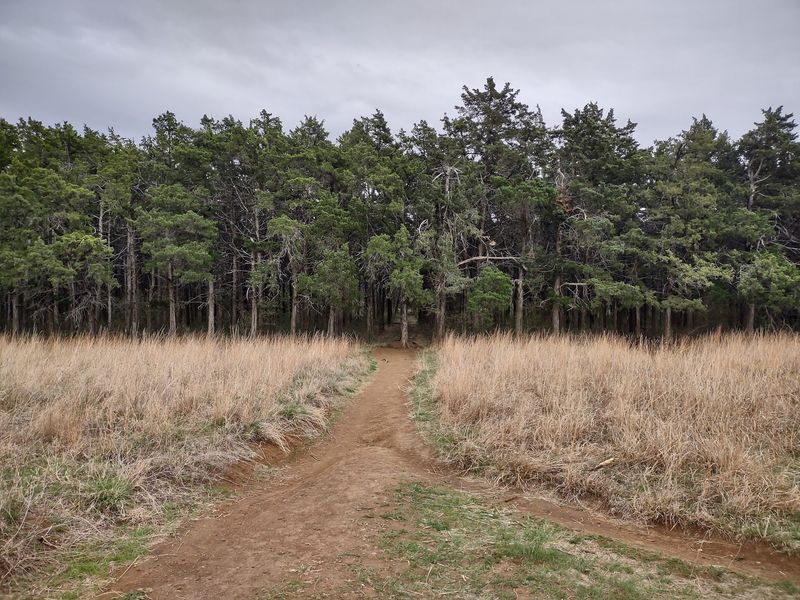
Cost is the easiest part of the trip. Parking is free, entry to the Wichita Mountains Wildlife Refuge is free, and the only money you will spend is on gas and whatever you pack in the cooler.
The lot off State Route 115 is small and easy to miss until you spot that unmistakable wall of evenly spaced cedars. From Lawton it is a short drive north, putting the forest within comfortable reach of an Oklahoma City day trip and an easy add-on for Tulsa folks already headed southwest.
Timing matters more than you might expect. Frequent visitors recommend fall, when the heat backs off and the walking is far more pleasant.
Summer is doable thanks to the shade, but Oklahoma heat is Oklahoma heat.
Weekend evenings near the entrance fill with photo sessions, so mornings are quieter if solitude is the goal. Refuge areas generally close around sunset, so plan to be out before dark.
Pack water, wear closed shoes for the roots, and check refuge alerts before you go since portions can close for management activity.
Worth the Drive, Strange in the Best Way
Sixteen acres will not fill a whole day, and it does not need to. What this place offers is a short, cheap, genuinely odd walk that sticks in your memory longer than plenty of pricier attractions.
Families do well here. The main path is easy, the distance is kid-sized, and nearby picnic spots handle the sandwich portion of the afternoon.
Grandparents who remember Dust Bowl stories from their own parents tend to find the history especially meaningful.
Photographers, hikers, and anyone with a soft spot for the unusual will get the most out of it. If you need gift shops and guided tours, this is not that kind of stop, and the people who love it best appreciate exactly that.
What stays with me is the quiet. Twenty thousand trees planted by hand nearly a century ago to hold Oklahoma soil in place, still standing in their rows long after the crews packed up and left.
Pair it with a loop through the refuge and a meal back in Lawton, and you have a solid day built around one of the strangest patches of ground in the state.
