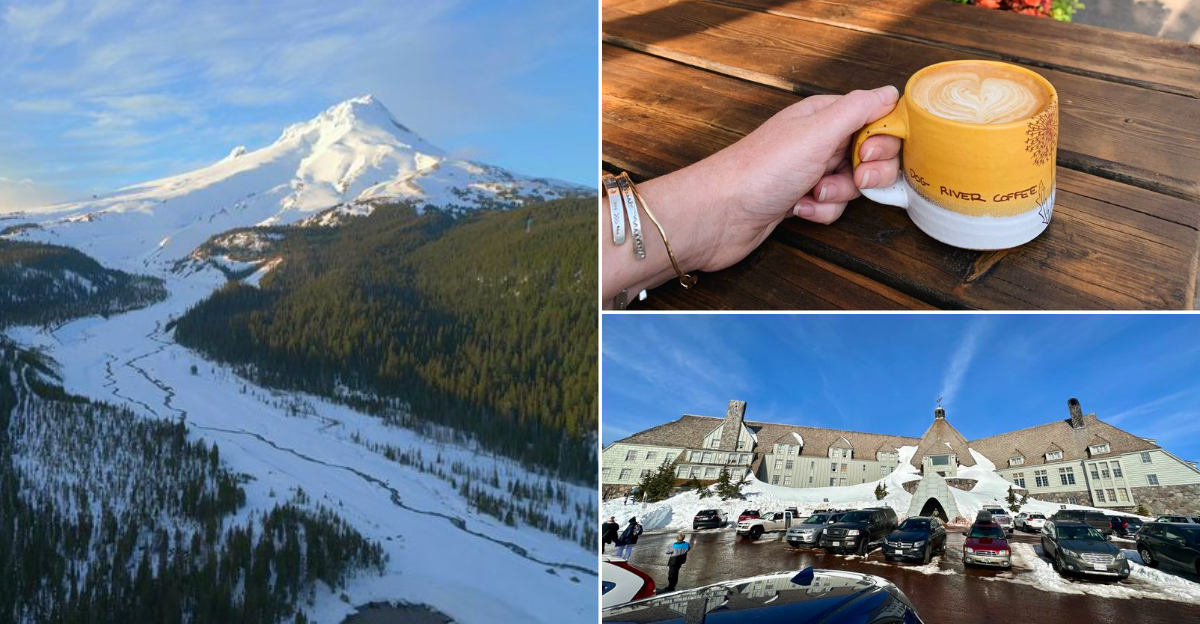
Imagine waking up to a forest that feels completely untouched, where every snowflake on the pine branches seems placed just for you.
This two-day Oregon snow loop delivers that kind of magic, weaving together cozy cabins, rivers glittering under ice, and winding roads that invite slow exploration.
Cabins sit tucked into quiet groves, smoke curling from chimneys, while the crisp air carries the scent of pine and winter itself.
Frozen rivers glint in the soft daylight, bridges are framed with ice-crusted branches, and trails crunch satisfyingly underfoot as you wander through untouched snow. Evenings are for fireplaces and quiet reflection, the kind of calm only the forest can offer.
This route is about slowing down, noticing the small details, and letting Oregon’s winter landscapes fill your senses.
Every mile delivers both adventure and restorative quiet, making it a perfect seasonal escape.
Leaving Portland As The Forest Starts To Close In
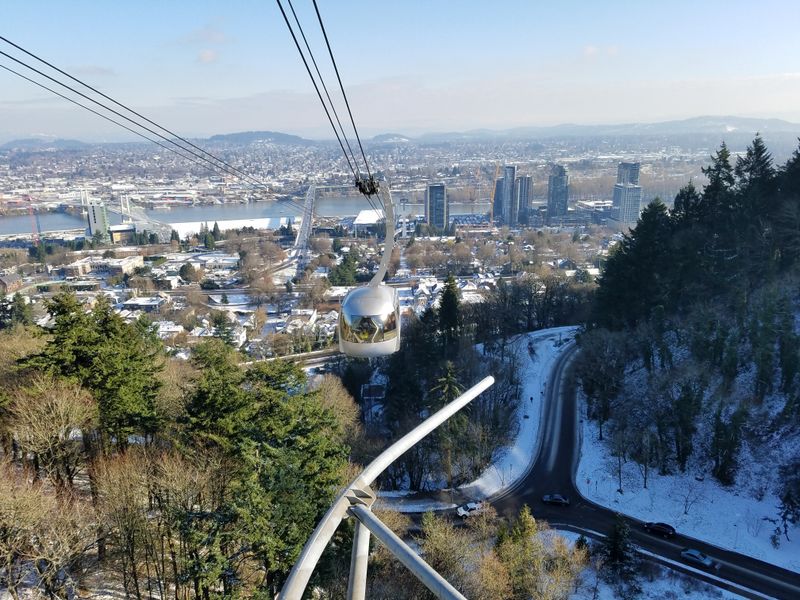
The jump-off feels easy as you leave Portland and slide onto Highway 26 with the west hills lifting like a slow curtain.
Forest Park sits behind you while the Coast Range quiet fades, and the lanes tilt toward Mount Hood with traffic thinning just enough to breathe.
Want a simple landmark to anchor your start? Roll past the Sylvan interchange and watch the signage flip toward Sandy while the air grows sharper.
Once you cross into the outer suburbs, the storefronts loosen, and Douglas-fir stands start hemming the highway with darker greens. You can almost smell sap even with the vents set low, and the road shoulder picks up a dusting when the temperatures slide.
If you need a spot pin, think of the Gateway to Mt. Hood sign outside Sandy around 38925 Proctor Boulevard, Sandy, Oregon.
It is a mental marker more than a stop, just a little nudge that the city is truly behind you.
The climb is gentle, steady, and a little hypnotic. Keep your pace relaxed, because the curves will slowly stack up as elevation rises.
By the time the trees close in near Rhododendron, sound gets softer and headlights feel warmer. That is your cue to settle into winter rhythm, not chase it.
Coffee And Pine Air In Government Camp
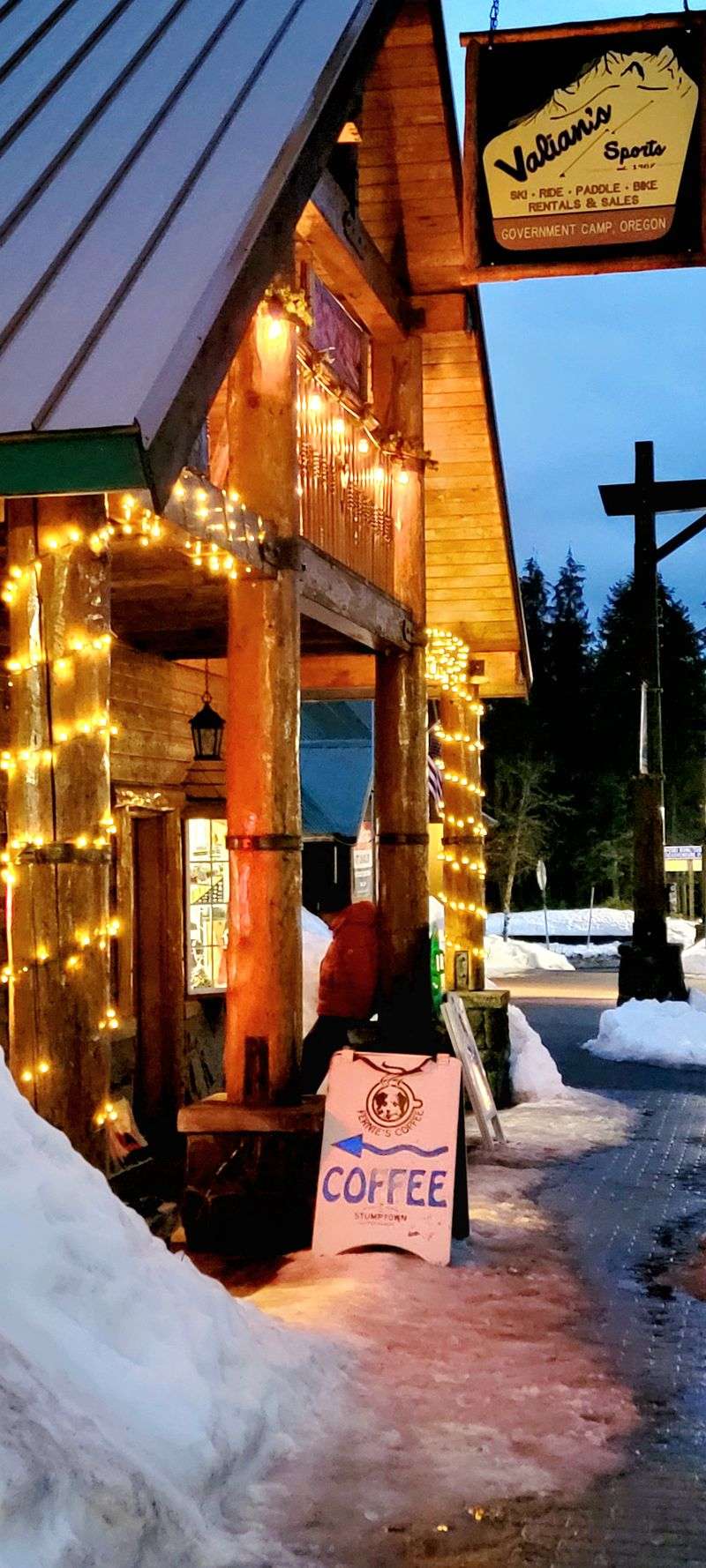
Government Camp is where the loop actually starts to feel like a loop, with snowbanks edging the boardwalks and plowed berms shaping the lanes.
The timber buildings lean into the weather like they were built by people who know winter personally.
Park near the main drag at 88335 Government Camp Loop. Then wander the short stretch on foot so you can take in rooflines wearing white and the easy pace of this little mountain village.
Grab a seat near a window and let your hands warm while the view is just busy enough to watch. Snow flurries come and go, and you can time your next move by how the branches sway.
If you want a quick reference spot, the Mount Hood Cultural Center and Museum sits at 88900 Government Camp Loop. It is a friendly anchor for finding your bearings and reading the sky.
Take a minute to check road conditions before rolling again.
The highway ahead curls into taller drifts and slower turn-ins.
When you step back outside, breathe deep because the air smells like clean wood and cold iron. That mix tells you the mountain is close and the day is still wide open.
Snowy Curves And Quiet Pullouts Inside Mount Hood National Forest
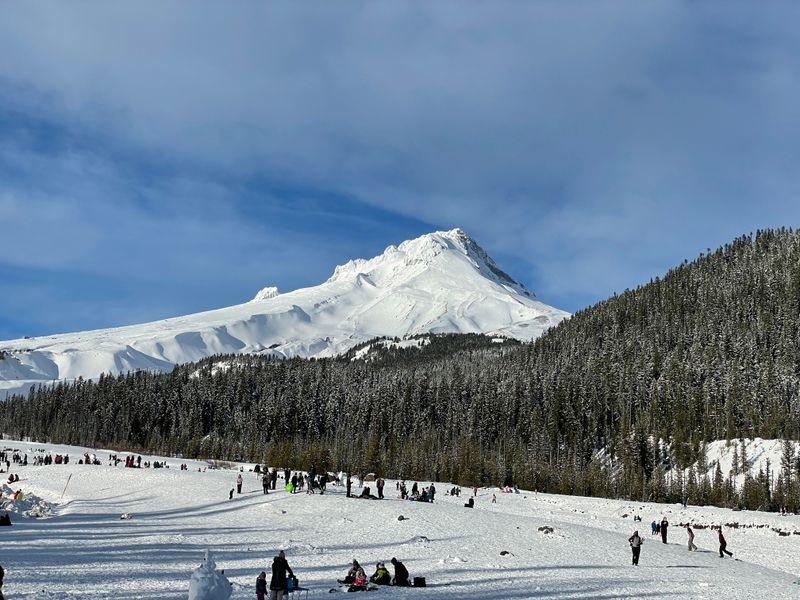
Past town, Highway 26 and nearby spurs thread through Mount Hood National Forest like careful handwriting in white. Snow walls rise and fall, and every curve asks for patience in exchange for silence.
There are pullouts that work for short pauses, especially near the Zigzag Ranger District sign around 70220 East Highway 26, Rhododendron.
Use those to step out, listen to the hush, and check the way the clouds frame the mountain.
Do not rush the straights because the road shade changes quickly and keeps surprises. Let other drivers pass if they want the hurry, and you keep the steady tempo that winter prefers.
Trailheads sleep under blankets this time of year, but the entry boards still show their names like quiet invitations. You can read them without committing to anything except a breath and a look around.
If you need a slightly deeper wander, scout a plowed turnout near Still Creek.
It is usually calm, and the trees gather the softest kind of light.
When the sky brightens, the forest snaps with tiny reflections along every crusted edge. That is a good sign to continue east and follow that clean glow.
Cabin Check-In As Evening Settles Near The Mountain
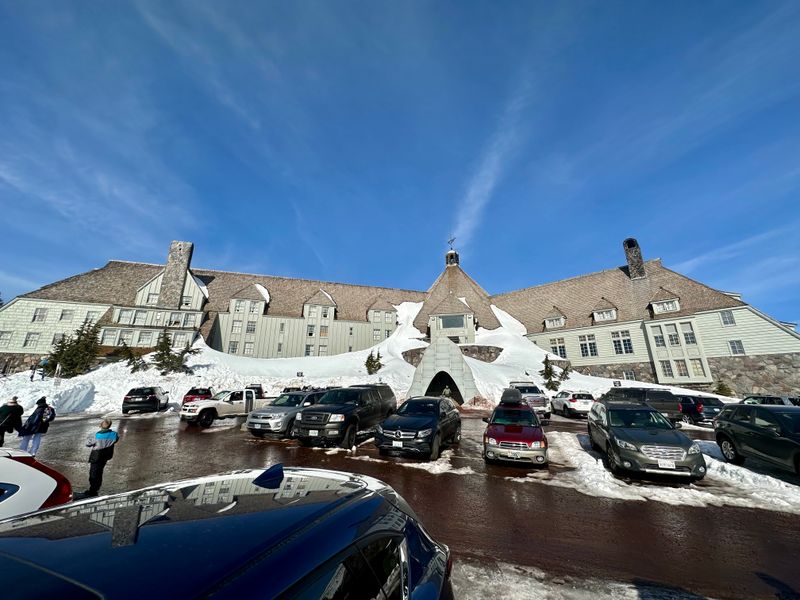
As the light slides down, a cabin near the south or east side of Mount Hood makes the whole trip feel grounded. The snow dampens sound, and that first key turn is its own little ceremony.
Pick a base near Government Camp, Trillium Lake Road, or over toward Highway 35 where the trees thin a bit.
A practical locator is around 27500 East Timberline Road, Government Camp, which helps you orient to this side of the mountain.
Set bags down, kick off snow from boots, and let the quiet sink in. Lights glow warmer against the snow, and the evening becomes simple on its own.
If you like a tiny stroll, follow the cleared path to take in rooflines and chimney plumes. You will hear nothing but wind brushing needles and the distant rush of tires on packed snow.
Check the forecast on a porch step while you look up through branches.
Stars sometimes cut through the cloud cover in quick windows that feel like luck.
Sleep comes faster at elevation with that deep, cold stillness. Keep a layer handy so the morning start is easy and unhurried.
Morning Light And Frozen Shorelines At Trillium Lake
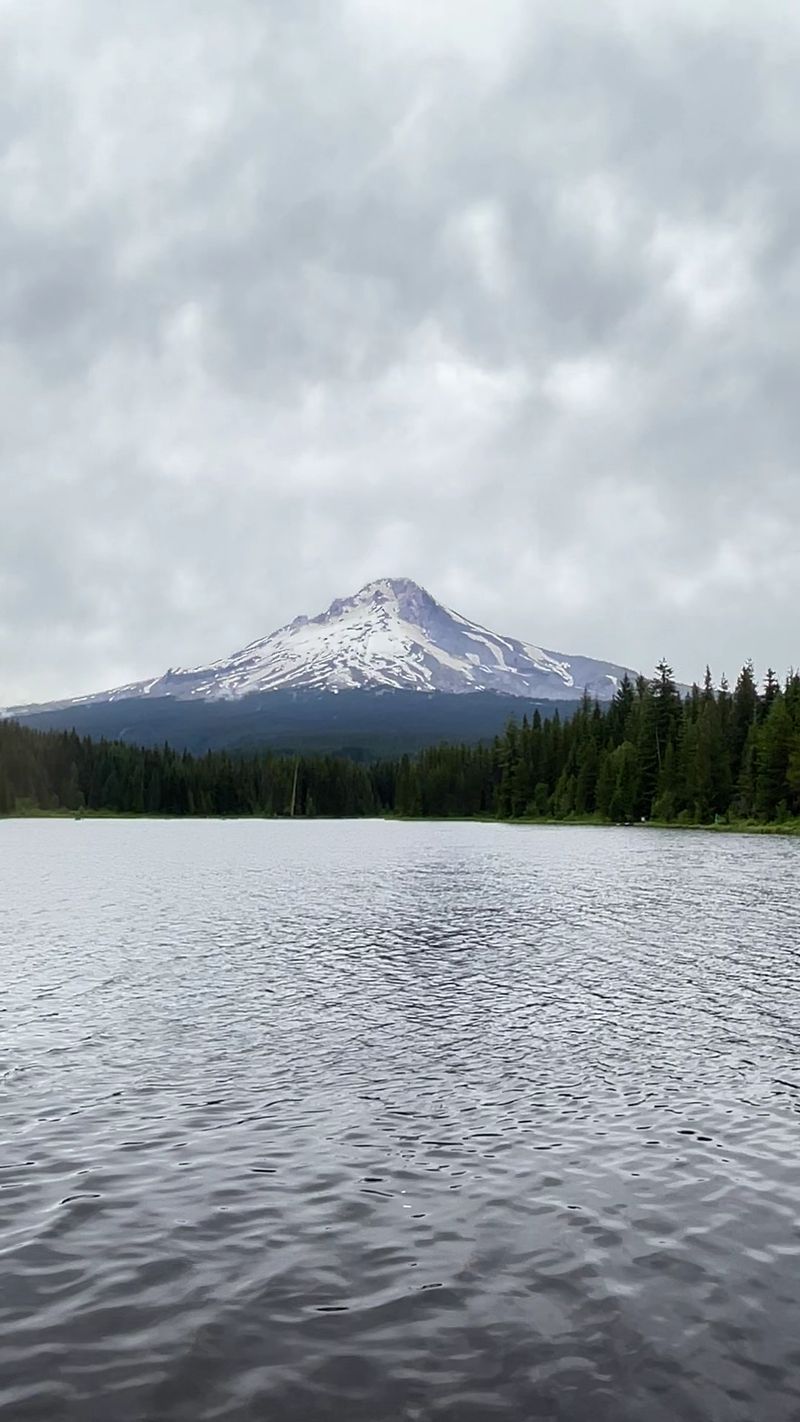
Morning around Trillium Lake feels like stepping into a held breath, especially if you arrive early. The shoreline freezes in clean lines, and the mountain floats on thin reflections where the surface cracks.
Head for the Trillium Lake area via Trillium Lake Road, Government Camp.
Park only where plowing allows and walk the last stretch so your boots can crunch you awake.
The dock sits under a soft mound, but you will still spot the rectangular edges under powder. It frames Mount Hood in a way that makes you fall quiet without trying.
If you are aligning maps, the campground reference is 90900 East Root Road, Government Camp. Use it as a mental pin while you drift along the lake edge and listen for wingbeats over the basin.
When the sun clears the trees, the snow turns almost blue before brightening.
That color shift is your sign to pack up and point the hood toward the river valleys.
Leave space for a last glance because the mountain often shows a new angle as you drive. That quick surprise is part of why this whole Oregon loop feels so generous in winter.
Icy River Views Along The White River Corridor
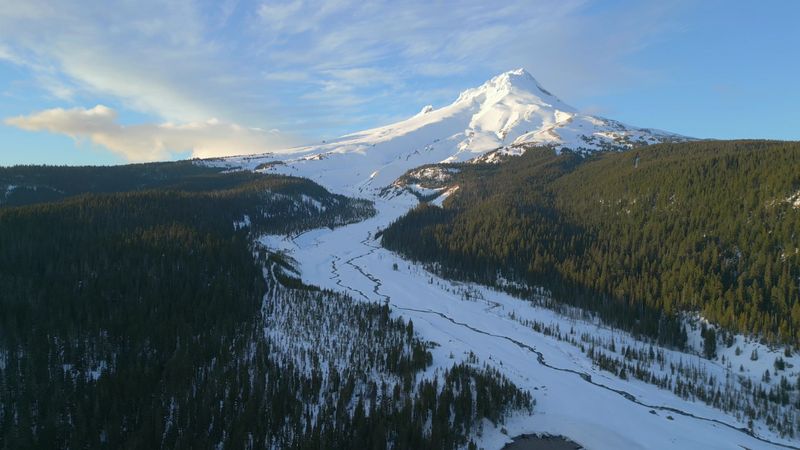
Dropping toward White River changes the soundtrack from soft wind to steady water. The flow keeps moving even when the banks freeze into delicate shelves.
Follow Highway 35 and look for access near White River West Sno-Park at 90230 Highway 35, Mount Hood.
From there, short paths lead to safe vantage points where you can watch the current riffle through ice collars.
The river surface braids around black rock and carries thin mist that smells almost metallic. It is not loud, just consistent, like it is keeping time for the day.
Stay mindful of edges because snow can hide drop-offs beside the channel. Step back when footing feels uncertain and keep the visit simple rather than long.
When the light slides between clouds, the water flashes silver and looks colder than it is.
That quick flicker photographs well if you like clean, minimal scenes.
Before leaving, stand still and focus on one bend of current until the motion slows in your head. Then you will feel ready to keep drifting east along Oregon’s winter ribbon.
A Slower Afternoon Roll Toward Hood River
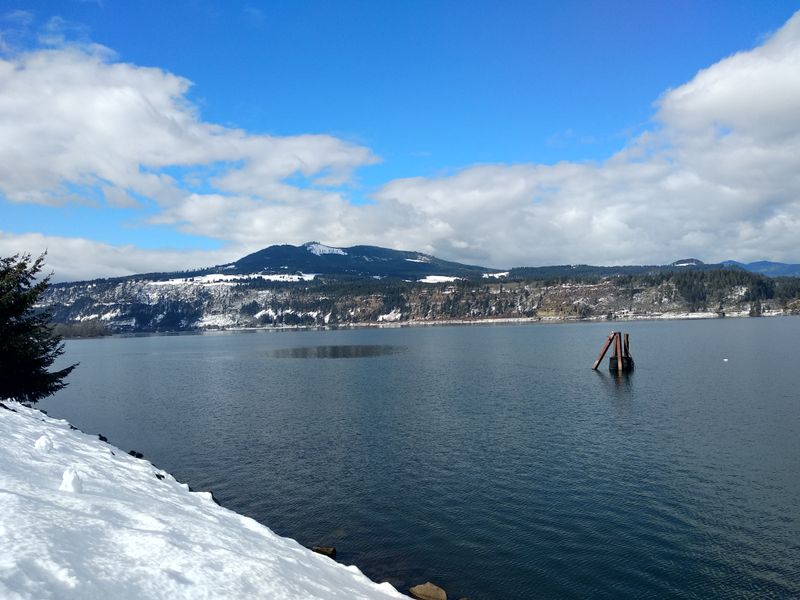
The grade eases and the valley opens, and suddenly you can see farther than you have all day. Orchards sit quiet under pale blankets with rows drawing lines toward the Gorge.
Keep to Highway 35 and let the long curves do their thing as you drop toward Hood River. A good navigation bead is the Mount Hood Visitor Center at 65000 Highway 26, Welches, though by now you are flowing north and light is softening.
Do you feel how the air loosens as elevation slips away? Windows can crack a little without the chill biting as hard.
The route asks for patience more than attention here, which is a relief.
You can hold conversation and still track the next bend without stress.
As you near town, barns flash by with wide doors and quiet yards. Those flat fields make the sky feel larger and the day feel longer than the clock shows.
By the time signs start mentioning Hood River, you are already in evening mode. Let the speed fade and drift into town like you have been here before.
Warm Drinks And River Fog In Town Before Heading Back

Hood River winds down easy in winter, with the Columbia throwing a thin fog across the edge of town. Streetlights glow against old brick and the river sits right there, moving without showing off.
Park near 201 Cascade Avenue, Hood River, and take a short walk along Oak and State.
The storefronts feel steady, and the windows catch that soft river light in a way that slows your steps.
Find a chair, warm your hands, and look out toward the silvery stripe beyond the tracks. Conversations around you tend to float, which is perfect because your brain is still humming from the drive.
If you want a quick view with less wind, head near the waterfront park at 650 Portway Avenue, Hood River. It gives you water, trees, and a clean line of sight to the pale horizon.
Let the minutes stretch because there is no big finish to chase.
The whole loop works better when the end sneaks up gently.
When you finally step back to the car, the cabin feels warmer than it should. That is your sign you are ready to fold the route back west.
Why This Snow Loop Feels Better Without A Tight Schedule
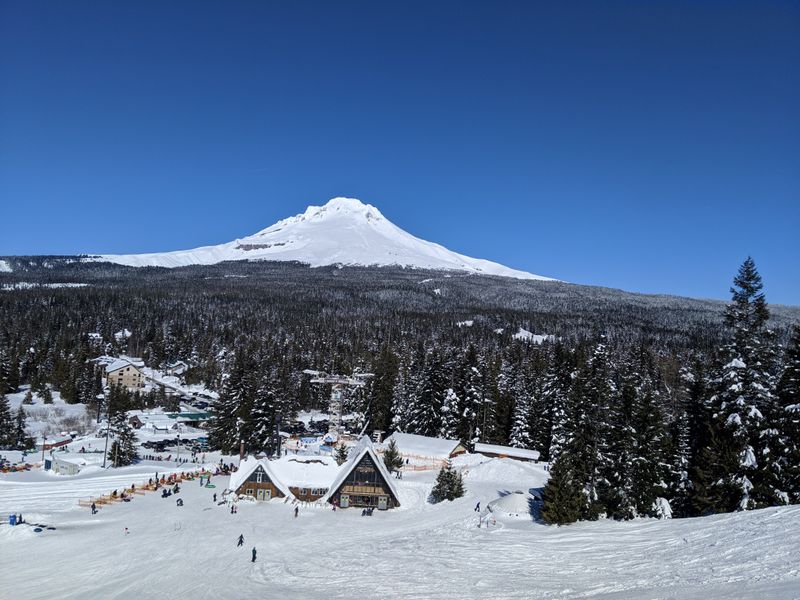
The reason this loop lands so well is that nothing demands you right on time. Winter rewards unhurried choices, and this route hands you those choices one after another.
Loose timing lets you linger at Trillium Lake if the sky starts doing something gentle. Or move on fast when clouds flatten and the river is calling.
Driving slow in Oregon snow is not just about safety, it changes what you notice.
You start hearing the tiny squeak of boots and the way pines hold wind like instruments.
Without a tight plan, you are free to trade one stop for another the second it feels right. That flexibility turns small moments into the main story without trying.
When daylight shifts, you can pivot toward Hood River or tuck back near Government Camp.
Nothing is lost because the loop keeps giving you new angles.
By the time you roll home, the miles feel lighter than they look on a map. That is the quiet gift of this Oregon snow loop, and it sticks with you.
Dear Reader: This page may contain affiliate links which may earn a commission if you click through and make a purchase. Our independent journalism is not influenced by any advertiser or commercial initiative unless it is clearly marked as sponsored content. As travel products change, please be sure to reconfirm all details and stay up to date with current events to ensure a safe and successful trip.
