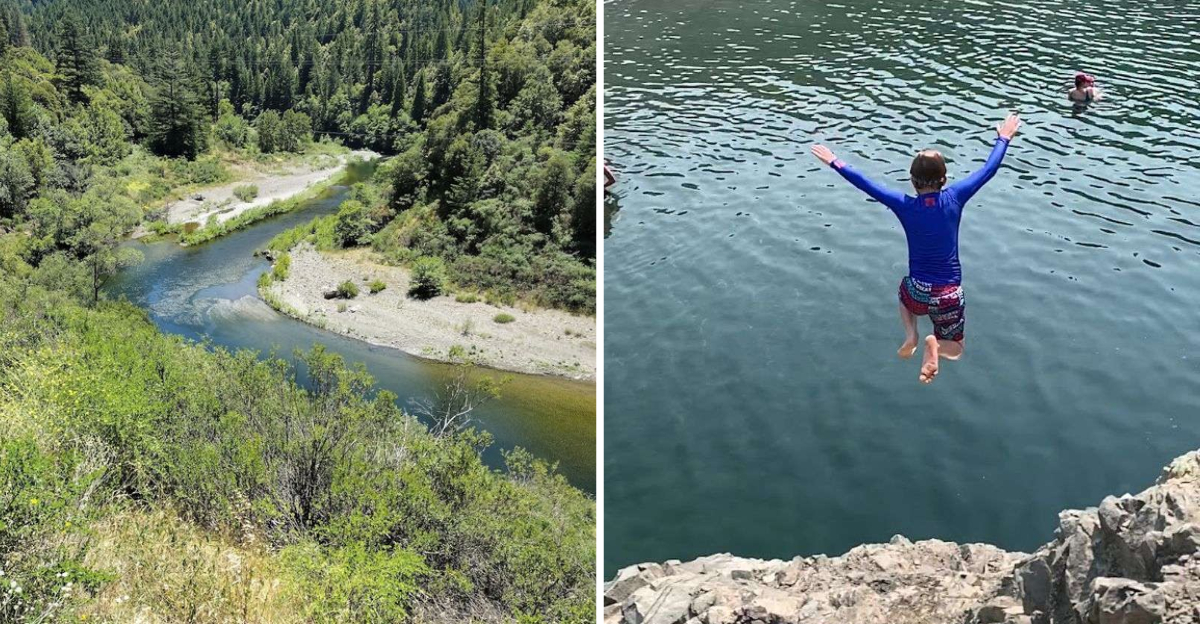
There is a stretch of Northern California where the trees grow so tall they block out whole sections of sky, and the river below them runs a color that does not look entirely real. This recreation area sits along Highway 101, nestled in a canyon where the river carves its way through more than 1,000 acres of redwood forest.
The first time you catch a glimpse of those emerald swimming holes through the trees, the kind that are nearly 20 feet deep with sandy bottoms, it genuinely stops you mid-step. I pulled over on a whim and spent the next few hours forgetting I had anywhere else to be.
Old-growth redwoods, a wild and scenic river designation, and trails that wind through canyon bluffs all combine into something that feels almost too good to be real.
This place has a way of making the outside world feel very far away, very fast. Come for a few hours or stay for a week; it rewards every kind of visitor who shows up curious and ready to explore.
The South Fork of the Eel River and Its Legendary Emerald Pools
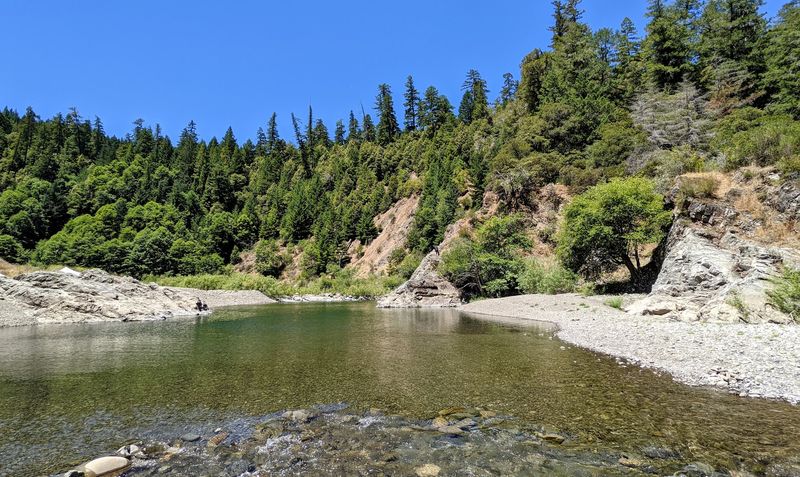
The color hits you before anything else does. It is this deep, translucent green that seems almost impossible for a river in California, like someone swapped the water out for sea glass.
The South Fork of the Eel River holds two main swimming holes within the park that have earned a reputation as some of the best in the entire state.
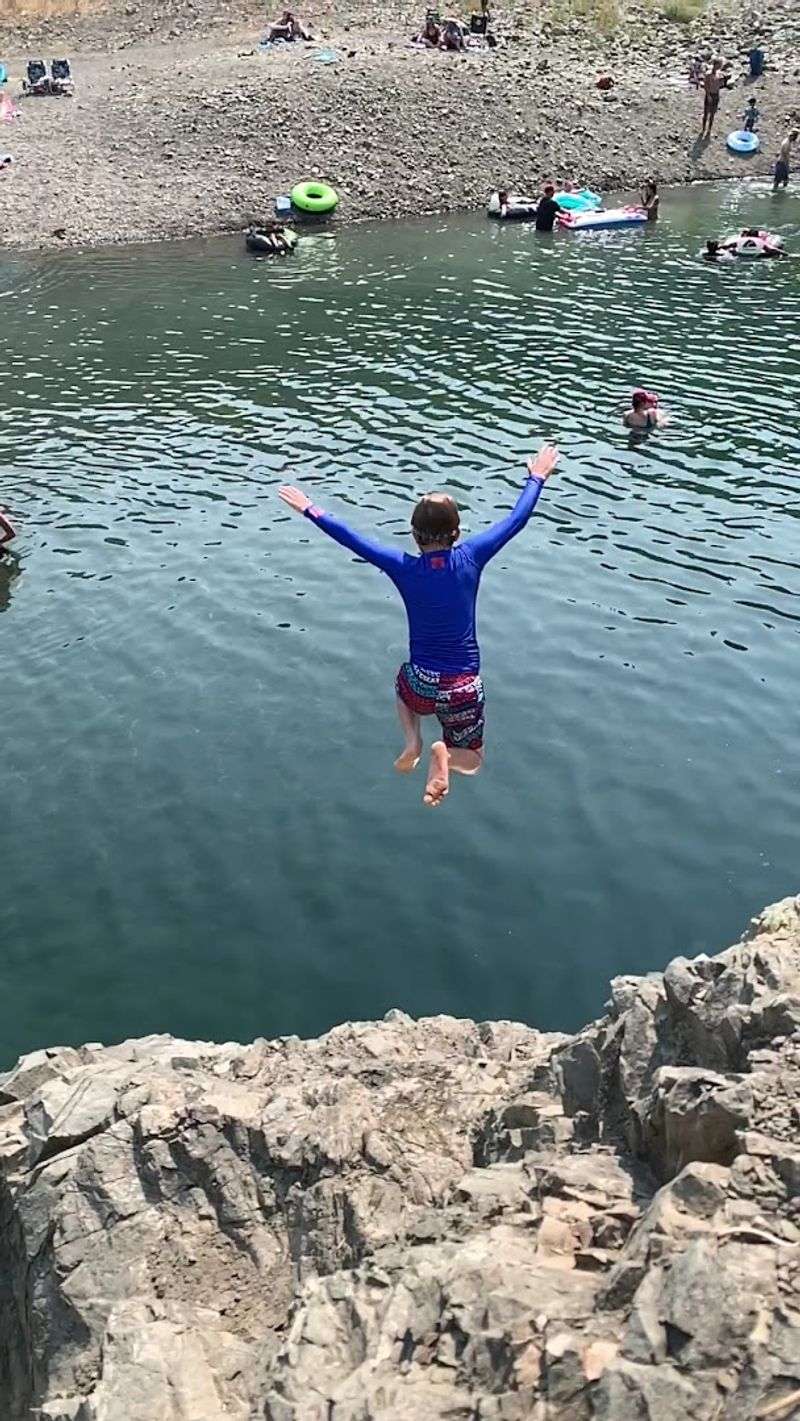
Both pools reach depths of nearly 20 feet, with sandy bottoms that catch the light on clear summer days. The main pool is deep enough for diving and floating, while the shallower edges give younger visitors a safe place to wade and splash around without worry.
The river carries a wild and scenic designation from both state and federal governments, which means it has been protected from development for a long time. That protection shows.
The water stays crisp and refreshing even during peak summer heat, fed by snowmelt and shaded by forest on both sides. Seasonal bridges are installed each summer to help visitors cross safely, but high winter water levels can make the area inaccessible.
Plan your visit between late spring and early fall for the best experience at the water.
Redwood Giants and the Old-Growth Forest Experience
Redwood forests have a particular kind of quiet that you do not find anywhere else. The canopy closes overhead, the light turns soft and green, and the scale of everything around you shifts in a way that takes a moment to process.
Standish-Hickey protects both second-growth forest and genuine pockets of old-growth redwoods, and the difference between the two is immediately obvious once you step into one of those ancient groves.
The trees here are not just tall. They are old in a way that feels almost geological.
Douglas fir, laurel, big-leaf maple, and alder fill out the understory alongside the redwoods, creating a layered forest that supports an enormous range of wildlife and plant life.
Wildflowers like redwood sorrel, Indian warrior, and milkmaid bloom along the trail edges depending on the season. Huckleberry and manzanita grow in the gaps where light reaches the forest floor.
Black-tailed deer move quietly through the trees, and if you stay still long enough, you might spot a gray fox picking its way along the ridge. The forest feels genuinely alive here, not just scenic, and that distinction makes every walk through it feel worthwhile.
The Captain Miles Standish Tree: A 1,200-Year-Old Giant
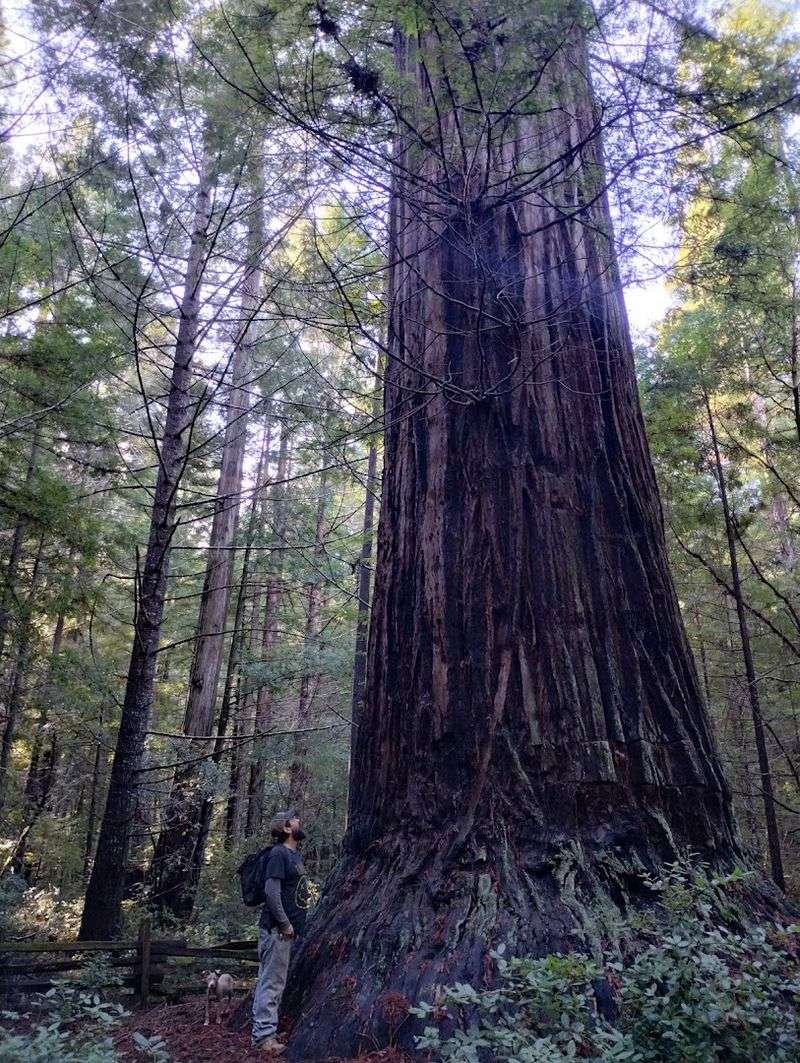
Some trees make you feel like you have arrived somewhere important. The Captain Miles Standish Tree is one of those.
Rising 225 feet into the Northern California sky and estimated to be over 1,200 years old, this redwood was already a mature giant when most of Europe was still in the early Middle Ages.
The Big Tree Trail is a two-mile loop that leads directly to this remarkable specimen. It is not a difficult hike, but the payoff at the end is the kind that makes you stand quietly for a while, just taking it in.
The sheer diameter of the trunk, the deeply furrowed bark, the way the upper branches disappear into the canopy above, all of it adds up to something genuinely humbling.
Getting there requires crossing the river via the seasonal bridge, so timing your visit to summer or early fall is important. The trail itself winds through mixed forest, offering plenty of interesting scenery along the way, not just at the destination.
Rangers at the park are knowledgeable about the tree’s history and the surrounding ecosystem, and catching one during a guided talk, as some visitors have been lucky enough to do, adds a whole extra layer to the experience.
Hiking the Taber Nature Trail Through the Grove
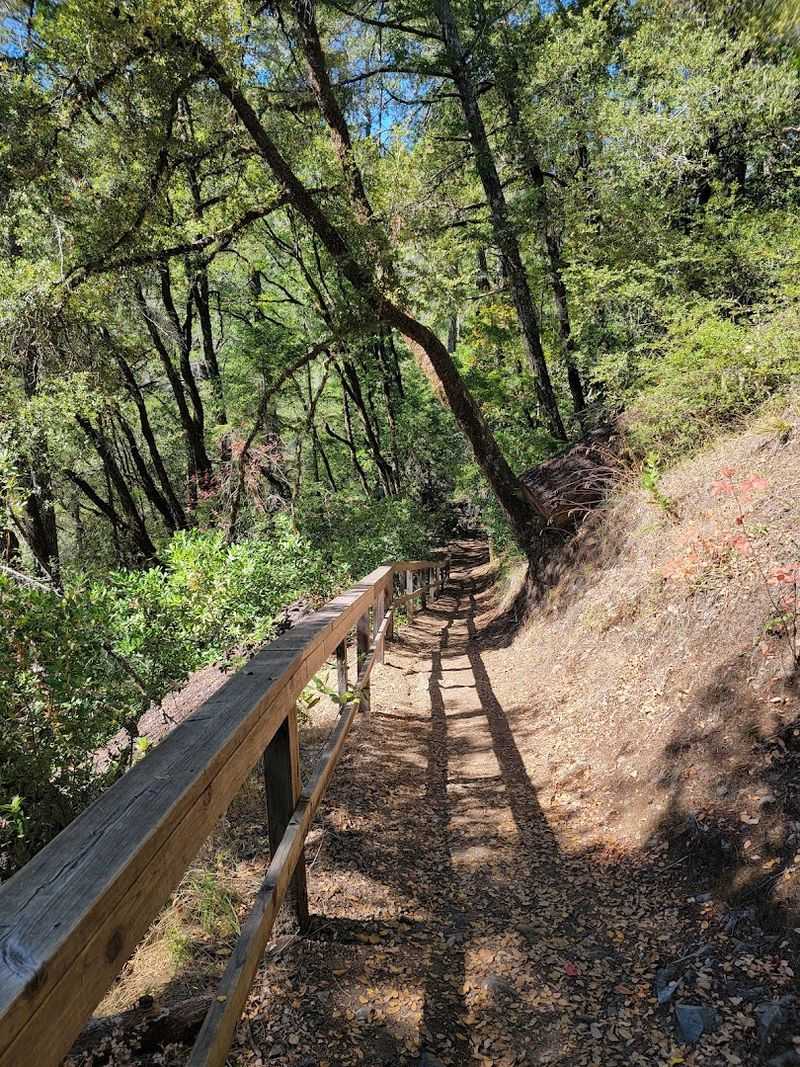
The Taber Nature Trail, also called the Grove Trail, covers 1.7 miles and is probably the most accessible hike in the park for visitors who want a meaningful forest experience without committing to a full-day adventure. It moves through a grove of old-growth redwoods that feel genuinely remote, even though the trailhead is not far from the campgrounds.
The trail earns its other name honestly. This is a grove walk in the truest sense, the kind where you are surrounded on all sides by trees that have been growing since before your great-great-grandparents were born.
The forest floor stays cool and shaded even on warm days, carpeted with ferns, sorrel, and fallen needles that muffle your footsteps.
Wildlife sightings along this route are common. Eagles, owls, and hawks patrol the upper canopy, while acorn woodpeckers and Steller’s jays make themselves known with sound long before you spot them.
Blue herons sometimes appear near the river crossings, moving with that slow, deliberate patience they are known for. The trail is well worth repeating at different times of day, since the light and the sounds change significantly between morning and late afternoon.
The Mill Creek Loop Trail and Canyon Views
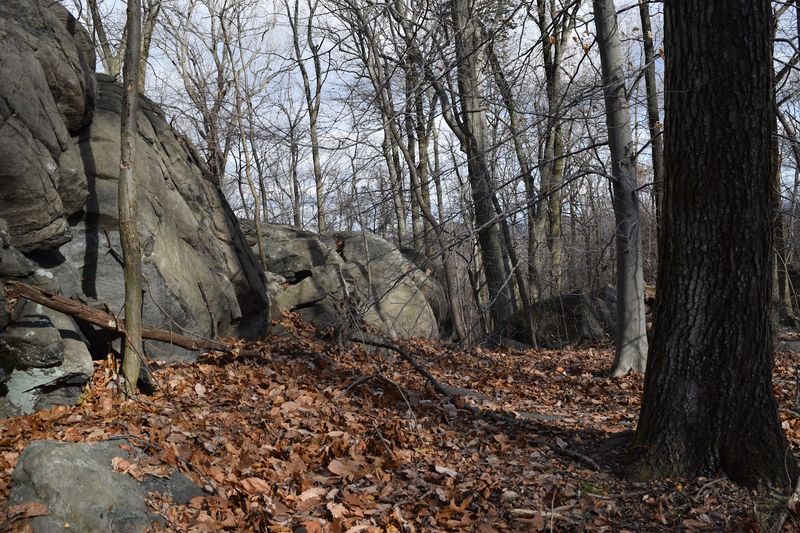
For visitors who want something more demanding, the Mill Creek Loop Trail delivers six miles of terrain that earns its reputation as the park’s most strenuous option. The route climbs through steep canyon bluffs and opens up to scenic views of Big Tree Meadow, a reward that feels genuinely satisfying after the uphill sections.
This trail is a different kind of experience from the grove walks. Where the Taber Nature Trail is about immersion and quiet, the Mill Creek Loop is about movement and perspective.
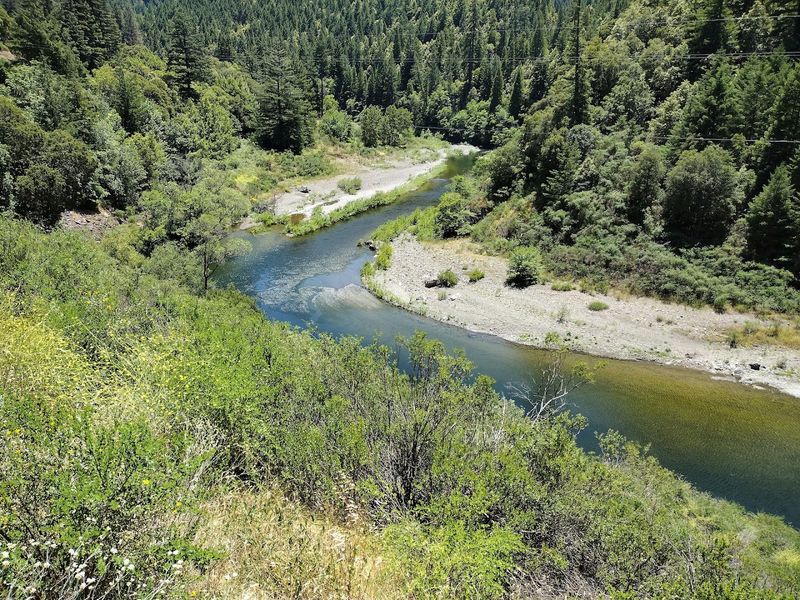
You get a sense of the park’s full geography from the higher vantage points, the river below winding through the canyon, the forest stretching in every direction.
Trail conditions can vary significantly by season, and some sections require river crossings that depend on the seasonal bridges being in place. Checking with park staff before setting out is genuinely useful, not just a formality.
The park rangers are consistently described by visitors as knowledgeable and approachable, and they can give you accurate, current information about which sections are passable. Wear sturdy footwear, bring enough water for the full six miles, and give yourself a full morning to complete the loop without feeling rushed.
Camping Under the Redwoods at Hickey and Rock Creek Campgrounds
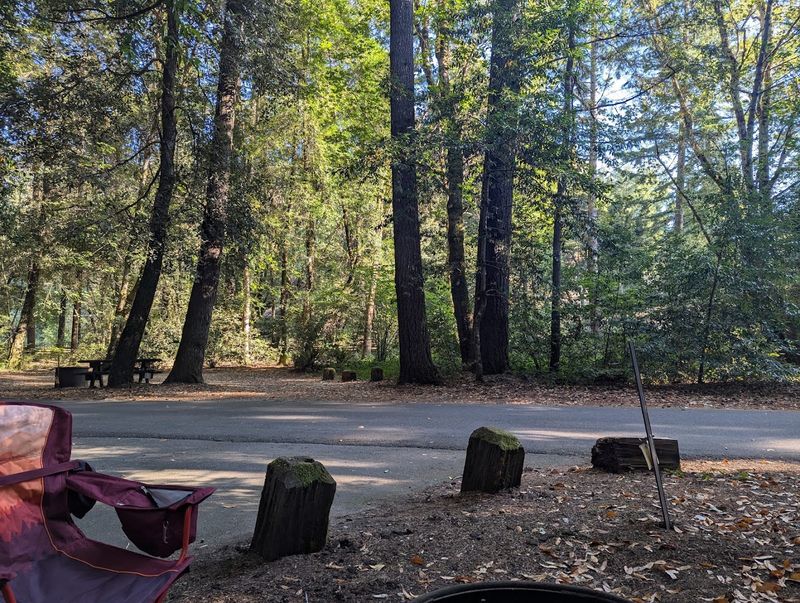
Spending a night at Standish-Hickey changes your relationship with the place in a way a day visit simply cannot. The Hickey and Rock Creek campgrounds are both open seasonally, offering around 60 sites perched on a cliff above the Eel River, each with a fire ring, bear box, and picnic table as standard.
Facilities are more complete than you might expect from a state recreation area of this size. Restrooms, showers, water spigots, and waste disposal are all available on site.
RVs are welcome with a length limit of 27 feet, and trailers can be accommodated up to 24 feet.
One honest note worth passing along: the campgrounds sit close to Highway 101, and traffic noise is audible, especially at night. Bringing earplugs is a genuinely practical suggestion, not an exaggeration.
Choosing a site positioned away from the road makes a noticeable difference. Dogs are welcome in the campgrounds on a leash but are not permitted on the hiking trails, with the exception of service animals.
At least one campground loop typically stays open year-round, making Standish-Hickey a viable destination even outside the peak summer season for those who do not mind cooler temperatures.
Wildlife, Wildflowers, and the Living Ecosystem of the Park
Standish-Hickey is not just a park you look at. It is one you listen to, smell, and notice in layers the longer you spend time there.
The wildlife here is remarkably diverse for a park of its size, and sightings happen with enough regularity that keeping your eyes open is always worth it.
Black bears, mountain lions, river otters, black-tailed deer, and gray foxes all call this canyon home. The river itself draws ospreys and belted kingfishers to the water’s edge, and during fall and winter, salmon and steelhead swim upstream through the South Fork to spawn, turning the river into something genuinely dramatic.
The plant life is just as varied. Madrones, buckeye, yew, coyote brush, and oaks fill the spaces between the conifers, and seasonal wildflowers push up through the leaf litter in spring.
Redwood sorrel creates a low green carpet under the biggest trees. One ranger-led talk on forest fungi, mentioned by a visitor who stumbled into one, apparently turned into an unexpectedly entertaining afternoon.
That kind of spontaneous, educational moment is exactly the sort of thing this park tends to offer when you show up without a rigid plan. Address: 69350 US Hwy 101, Leggett, CA 95585.
