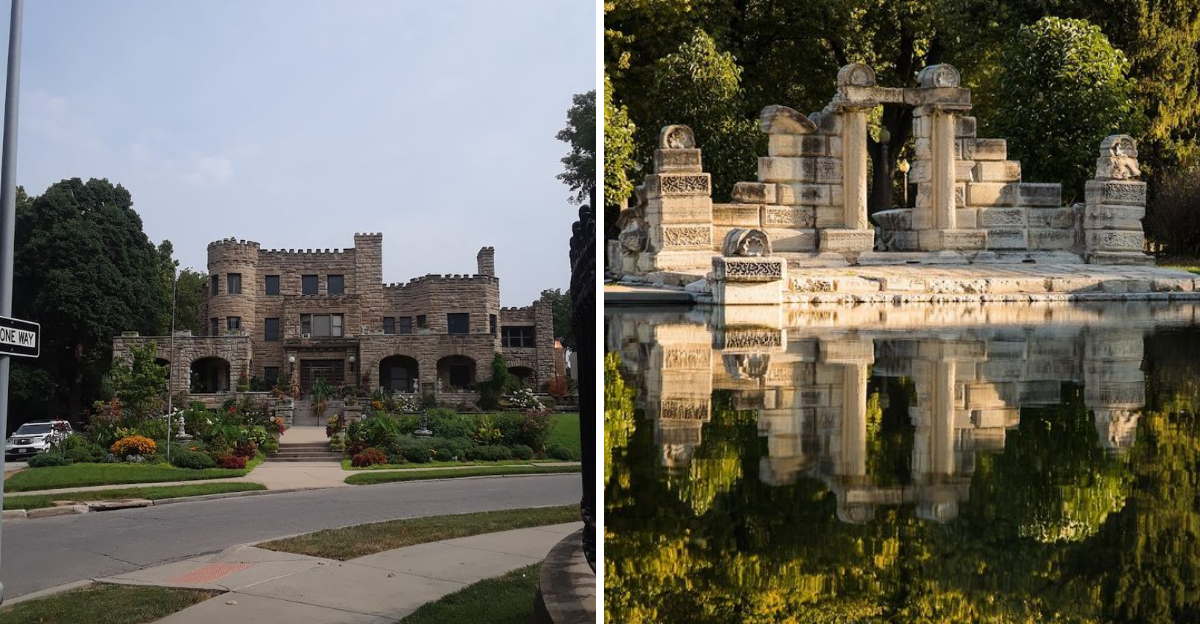
Missouri has a secret that most travelers completely miss. Hidden in the woods of ten under the radar state parks are crumbling stone ruins that look like they belong in the Scottish Highlands rather than the Show Me State.
These European style castle remnants feel like a bygone fairytale kingdom, the kind of place where you half expect to see a knight in armor or a dragon napping in the shadows.
The ruins were built decades ago by dreamers who wanted to bring a little Old World magic to the Ozarks. Stone walls rise from the forest floor, covered in moss and ivy, with archways that frame the trees beyond.
Some structures still have staircases leading nowhere and fireplaces that have not seen a flame in years. The whole scene feels mysterious and slightly haunting, the perfect backdrop for a day of exploring.
Hikers stumble upon these ruins after winding through wooded trails, and the discovery never gets old. Families take photos of kids pretending to be royalty, and photographers chase the golden light that filters through the trees onto the ancient stones.
1. Ha Ha Tonka State Park, Camdenton
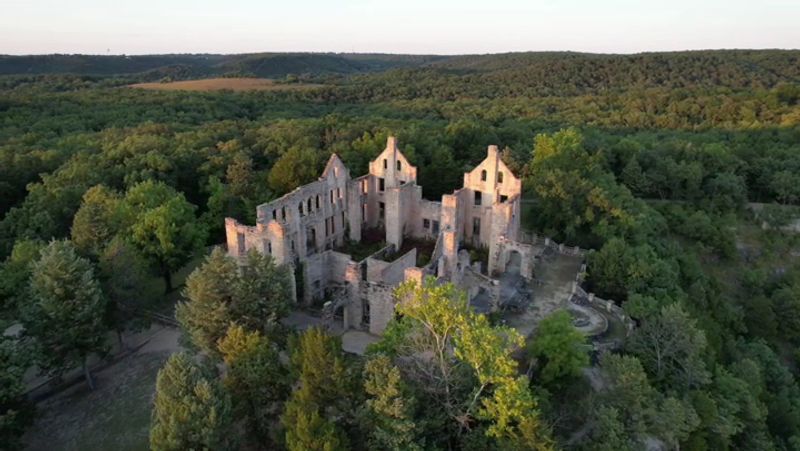
Standing on a 250-foot bluff above the Lake of the Ozarks, the castle ruins at Ha Ha Tonka State Park are the kind of sight that stops you mid-step on the trail.
A wealthy Kansas City businessman began constructing this grand stone estate in 1905, bringing in European stonemasons to craft a structure inspired by 16th-century castle architecture.
The project took years to complete, and the finished building was nothing short of spectacular.
Then, in 1942, a fire swept through the structure and left behind only the stone shell you see today.
Roofless towers, arched doorways, and hollow window frames now frame perfect views of the Ozark sky, giving the whole place an almost theatrical quality.
The park sits at 1491 Missouri D, Camdenton, MO 65020, and it is one of Missouri’s most visited state parks for good reason.
Trails wind through natural bridges, sinkholes, and a spring that feeds directly into the lake below, so the castle is just one piece of a much larger natural puzzle.
I recommend arriving early in the morning when the mist still hangs over the lake and the stone walls glow faintly gold in the early light.
The ruins are fully accessible via a short, well-marked trail from the main parking area, and the views from the castle tower are genuinely worth every step.
Pack a picnic, bring a camera with a wide-angle lens, and give yourself at least two hours to properly explore both the ruins and the surrounding natural landscape.
2. Fort Belle Fontaine County Park, St. Louis
Most St. Louis locals have never heard of Fort Belle Fontaine County Park, and that is honestly part of its charm.
Tucked along the Missouri River bluffs at 13002 Bellefontaine Rd, St. Louis, MO 63138, this park holds one of the most atmospheric WPA-era stonework complexes in the entire region.
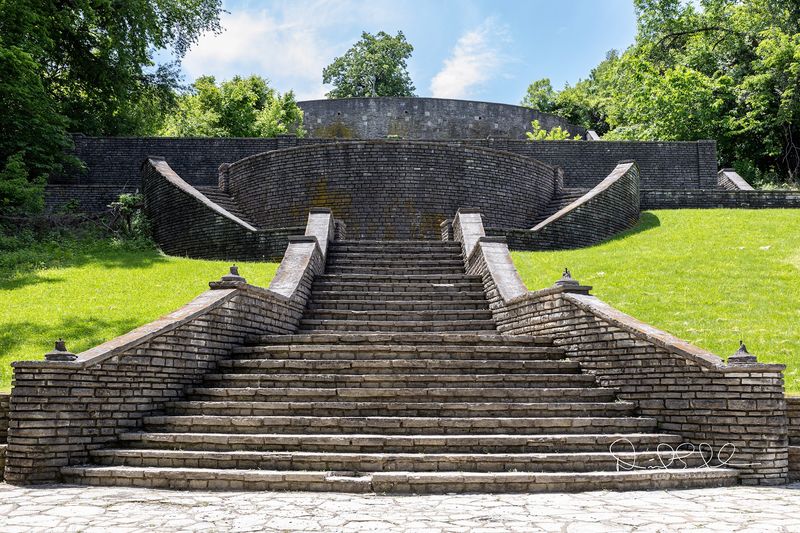
Built during the 1930s by the Works Progress Administration, the so-called Grand Staircase is a sweeping collection of limestone terraces, outdoor fireplaces, and arched stone structures that tumble down toward the river.
The construction style draws heavily from European medieval garden design, with thick stone walls and gothic-shaped archways that feel far older than they actually are.
Nature has been slowly reclaiming parts of the complex for decades, and the result is a beautifully overgrown landscape that feels genuinely ancient.
Moss creeps across the stonework, tree roots push between the pavers, and the whole place carries a hushed, almost reverent atmosphere.
I spent a full afternoon here once just photographing the different archways from every possible angle, and I still felt like I had not seen everything.
The park also sits near the site of a historic military fort established in 1805, adding another layer of historical depth to an already fascinating location.
Bring sturdy shoes because some of the stone surfaces are uneven and slippery after rain.
Visit in autumn when the surrounding hardwood trees turn brilliant shades of orange and red, framing the pale limestone in a way that looks almost too beautiful to be real.
3. Castlewood State Park, Ballwin
Few Missouri parks wear their mystery as openly as Castlewood State Park, located at 1401 Kiefer Creek Rd, Ballwin, MO 63021, just outside St. Louis.
The name alone hints at something magical, but the real story unfolds once you step off the main trail and start poking around in the woods.
During the 1920s, this area along Caulks Creek was a booming resort destination, packed with private clubs, dance halls, and grand social venues built from concrete and local stone.
When the resort era ended and the floods came, most of those structures were abandoned and left to the forest.
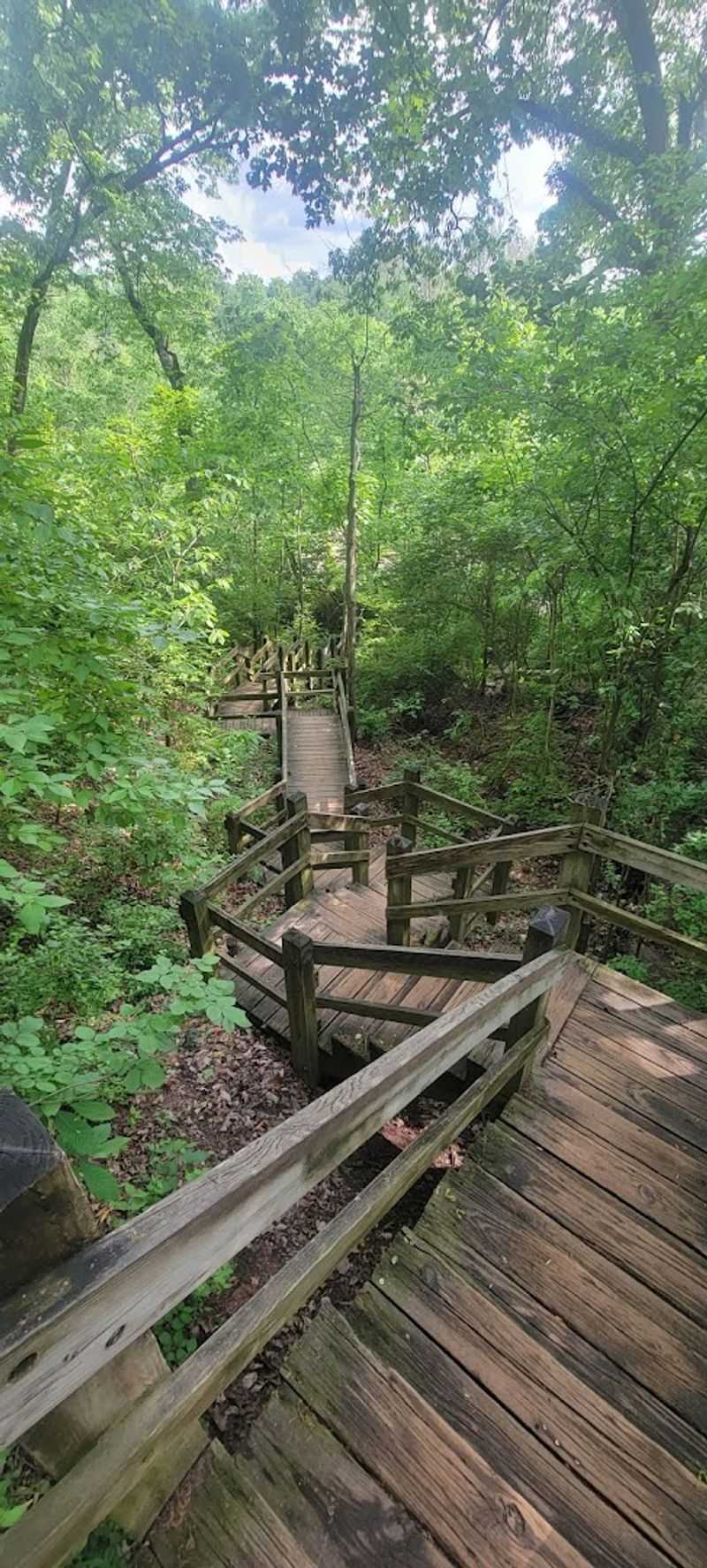
Today, hikers who venture off the beaten path discover crumbling grand staircases that lead nowhere, stone foundations half-buried in leaf litter, and hidden spring houses draped in ferns and ivy.
Every ruin tells a fragment of a story about a time when this wooded valley was the place to be on a summer weekend.
The trails here are well maintained but not overly crowded, which means you can have an entire stone staircase to yourself on a quiet weekday morning.
I found one particularly dramatic set of steps that descended from a flat clearing straight into a creek bed, and I genuinely had no idea what grand building once stood at the top.
That sense of mystery is exactly what makes Castlewood so addictive for history lovers and casual hikers alike.
Go in spring when the wildflowers bloom around the old foundations, turning the ruins into something that looks lifted straight from a fantasy illustration.
4. Elephant Rocks State Park, Belleview
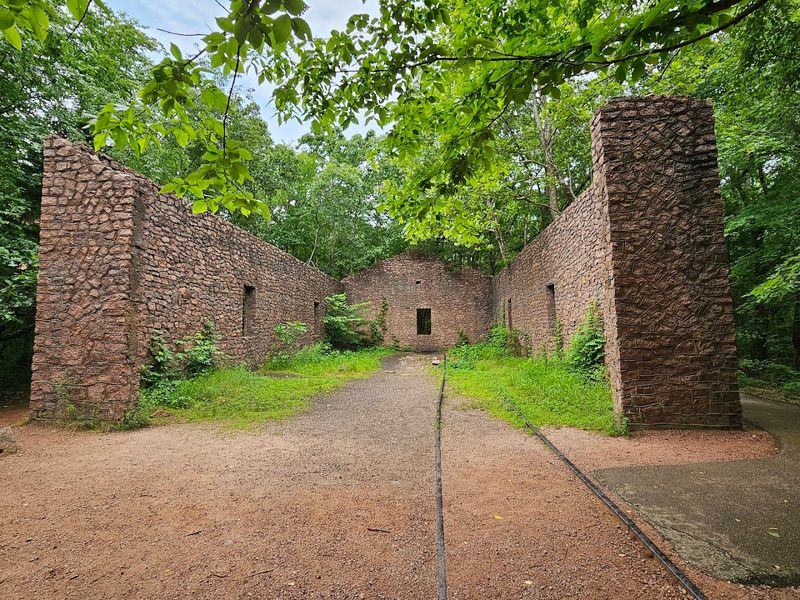
Everyone who visits Elephant Rocks State Park near Belleview, MO 63623 comes for the massive pink granite boulders, and those boulders absolutely deserve the hype.
But tucked just off the main trail, there is a completely different kind of spectacle waiting for those curious enough to look for it.
A short detour from the main loop leads to the stark, imposing ruins of a 19th-century engine house built by quarry workers who harvested the park’s famous granite for use in bridges, buildings, and cobblestone streets across Missouri.
The structure is roofless and windowless now, with tall granite walls that rise up from the forest floor like the remnants of a miniature fortress.
The stone is the same warm pink-gray granite as the famous boulders nearby, which gives the ruins a sense of organic belonging within the landscape.
Standing inside the empty walls, you can almost hear the clanking machinery and shouted commands of the workers who once filled this space with industrial noise and purpose.
The park is located at 7406 MO-21, Belleview, MO 63623, and the Braille Trail that winds through the main boulder field is one of the most accessible nature trails in the state.
I suggest doing the boulder trail first and saving the engine house ruins for the end of your visit, when the crowds thin out and the late afternoon light hits the stone at a warm, dramatic angle.
The combination of natural geological wonder and human historic ruin makes this park one of Missouri’s most layered and rewarding destinations.
5. Tower Grove Park, St. Louis

Tower Grove Park in St. Louis is a Victorian masterpiece that most people walk through without realizing it contains a deliberately constructed ruin straight out of a 19th-century European romantic garden tradition.
Located at 4257 Northeast Dr, St. Louis, MO 63110, the park was designed by Henry Shaw, the same visionary behind the Missouri Botanical Garden, and his eye for dramatic landscape design is everywhere you look.
The Stone Ruins near the central pond are the park’s most theatrical feature, built intentionally to look ancient and crumbling from the very first day they were assembled.
Shaw used stones salvaged from the old St. Louis Thomas Jefferson Hotel to construct this picturesque folly, creating a structure that mimics a European castle gateway with arched openings and weathered facades.
The effect is completely convincing, especially in the early morning when mist rises off the pond and the stone takes on a gray, timeworn quality.
This concept of building fake ruins to evoke a sense of romantic history was wildly popular in Victorian England, and Shaw brought that sensibility to the American Midwest with impressive results.
The park also features ornate pavilions, ancient-looking stone fountains, and tree-lined promenades that reinforce the sense of stepping into a different era entirely.
I always visit in late October when the maple trees surrounding the ruins turn deep amber and red, creating a backdrop that feels almost theatrical in its beauty.
Tower Grove is free to enter, open daily, and genuinely one of the most underappreciated historic parks in the entire country.
6. Wallace State Park, Cameron
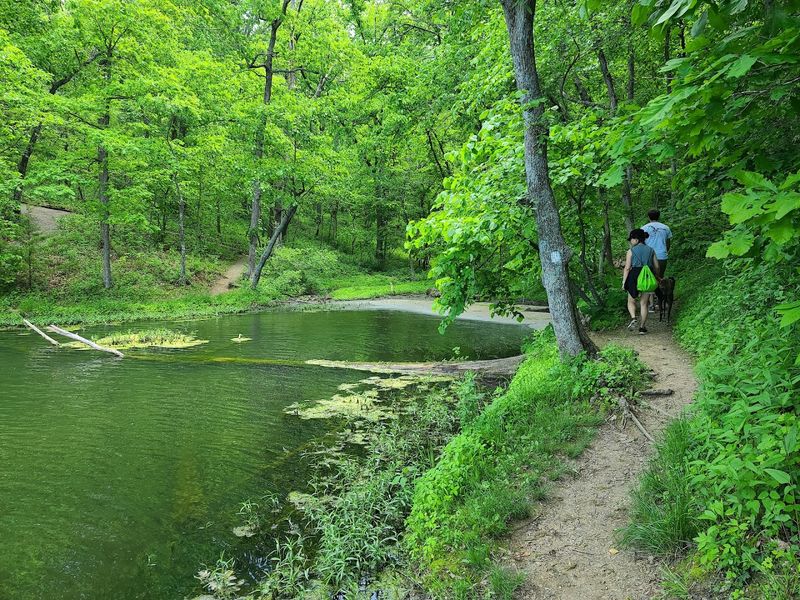
Northwest Missouri does not get nearly enough credit as a destination, and Wallace State Park near Cameron is one of the main reasons that oversight is so frustrating to me personally.
Situated at 10621 MO-121, Cameron, MO 64429, this quiet park was largely shaped by the Civilian Conservation Corps during the 1930s, and the craftsmanship those workers left behind is extraordinary.
Hiking the heavily wooded trails here means crossing moss-covered stone bridges, passing ornate stone water fountains, and discovering the foundations of old CCC-built structures that blend so seamlessly into the landscape that they look like they have been there for centuries.
The stonework has a rough, handcrafted quality that modern construction simply cannot replicate, with each stone chosen and placed by hand in a way that gives every structure its own personality.
The forest canopy at Wallace is dense and lush, which means the trails stay cool and shaded even on warm summer days, and the light that filters through the leaves creates a dappled, almost dreamlike quality over the old stone structures.
I particularly love the stone bridge near the lake, where the curved arch reflects perfectly in the still water on calm mornings, creating a scene that feels more like a painting than a park.
Wildlife is abundant here, with white-tailed deer frequently crossing the trails in the early morning and evening hours.
The park also offers camping, fishing, and a swimming beach, making it an ideal spot for a full weekend rather than just a day trip.
Come in spring for wildflowers framing the stonework in brilliant color.
7. Missouri Mines State Historic Site, Park Hills

Not every fairytale kingdom is built from delicate towers and flower-filled courtyards, and Missouri Mines State Historic Site in Park Hills makes a compelling argument for the industrial-gothic variety.
Found at 4000 State Hwy 32, Park Hills, MO 63601, this site preserves the sprawling remains of one of the most productive lead-milling complexes in American history.
The St. Joe Lead Company operated here for decades, and at its peak, the facility processed an almost incomprehensible volume of ore pulled from deep beneath the Missouri earth.
What remains today is a cathedral of industrial architecture, with towering brick and concrete structures standing empty against the sky like the ruins of some forgotten civilization.
The scale of the complex is genuinely staggering when you see it in person, with building after building stretching across the grounds in various states of weathered decay.
The on-site museum inside the powerhouse building is one of the best mining history museums in the Midwest, packed with original equipment, photographs, and detailed exhibits about the human stories behind the industrial machinery.
I spent more time in that museum than I expected, completely absorbed by the photographs of workers and the enormous scale of the equipment they operated.
The exterior ruins are viewable from designated areas, and the contrast between the massive industrial structures and the quiet surrounding countryside creates a genuinely striking visual experience.
Visit on a gray, overcast day if you can manage it, because the moody sky transforms the brick ruins into something that looks like a scene from a post-industrial gothic novel.
8. Lafayette Park, St. Louis
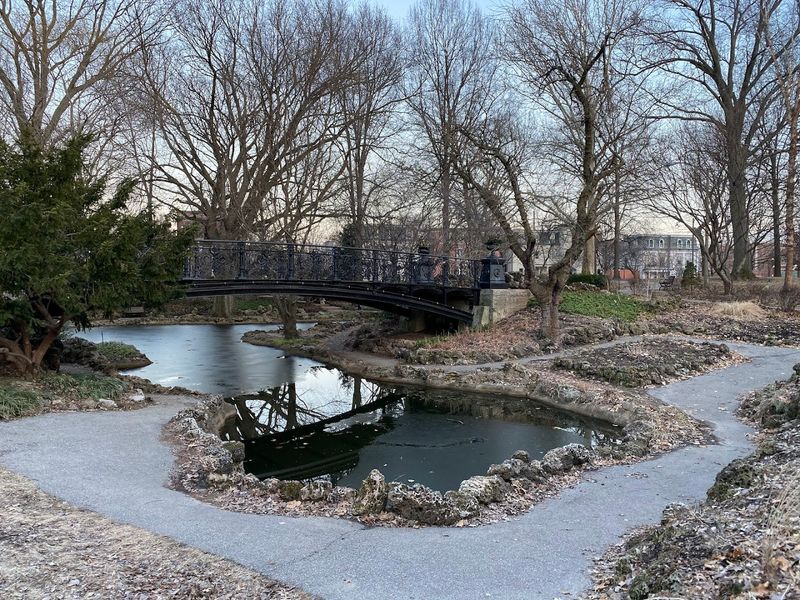
Lafayette Park carries the distinction of being the oldest public park west of the Mississippi River, and that kind of history leaves marks you can still touch with your own hands today.
Located at 2023 Lafayette Ave, St. Louis, MO 63104, the park sits in one of St. Louis’s most beautifully preserved historic neighborhoods, surrounded by 19th-century townhouses and tree-lined streets.
Inside the park, the ornamental stone grotto is a quietly spectacular structure that most visitors walk past without fully appreciating its age or craftsmanship.
Built in the 1800s, the grotto features rough-cut stonework, arched openings, and a mossy, time-worn texture that gives it the appearance of something transplanted directly from a European garden estate.
Nearby, the ruins of a historic lakeside music pavilion add another layer of atmospheric charm, with weathered stone arches and decorative ironwork standing beside the small lake at the park’s heart.
The ironwork in particular has a delicate, lacy quality that contrasts beautifully with the rough stone, creating a visual combination that feels genuinely Victorian in its romantic sensibility.
I visited on a Sunday morning when the park was nearly empty, and the stillness around the old pavilion ruins made the whole experience feel surprisingly intimate and reflective.
The surrounding neighborhood is worth exploring after your park visit, with beautiful examples of Italianate and Second Empire architecture lining the streets just outside the park gates.
Lafayette Park is free, open year-round, and at its absolute best in late spring when the old magnolia trees are in full, fragrant bloom.
9. Johnson’s Shut-Ins State Park, Middle Brook
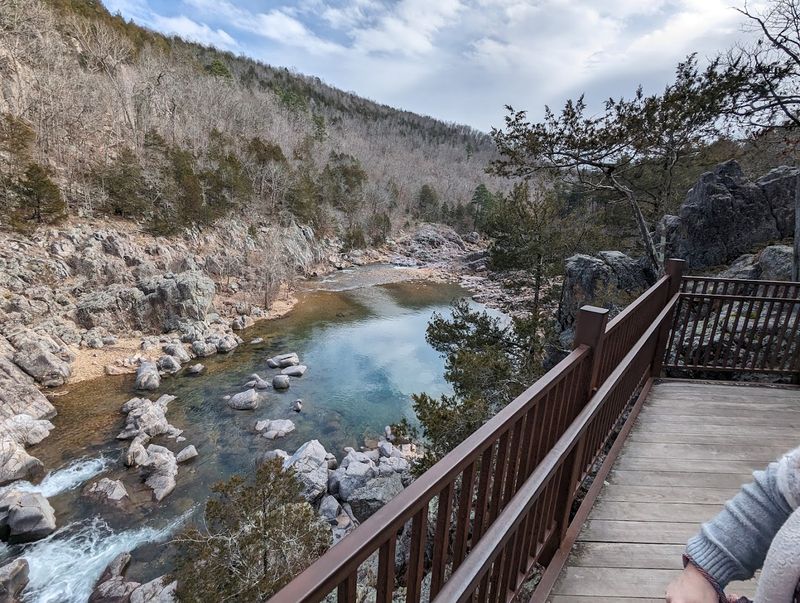
Johnson’s Shut-Ins State Park near Middle Brook, MO 63656 is famous across Missouri for its natural swimming holes carved into ancient volcanic rock, and those rock formations absolutely live up to every bit of the reputation.
The park’s address is 148 Taum Sauk Trail, Middle Brook, MO 63656, and the main swimming area draws crowds on hot summer weekends for good reason.
But the park holds a quieter, more contemplative kind of wonder for those willing to hike deeper into the Ozark wilderness along the Scour Trail.
This longer trail winds through terrain dramatically reshaped by the 2005 breach of the Taum Sauk Reservoir, which sent a massive wall of water through the valley and scoured the landscape down to bare rock in places.
Hidden among the regrowth along this trail are the hand-stacked stone remnants of early pioneer homesteads and old farm boundaries, built entirely from locally gathered Ozark stone by settlers who worked this land long before the park existed.
The walls are low and irregular, some barely knee-high, but their presence in the middle of deep forest creates a powerful sense of connection to the people who once cleared these same trees and turned this same soil.
The stones themselves are a beautiful dark gray, covered in lichen and moss, and they blend into the forest floor in a way that makes them easy to miss if you are not paying attention.
Slow down on the Scour Trail and let your eyes adjust to the landscape, because the rewards for careful observation are genuinely remarkable here.
10. Kessler Park and Cliff Drive, Kansas City
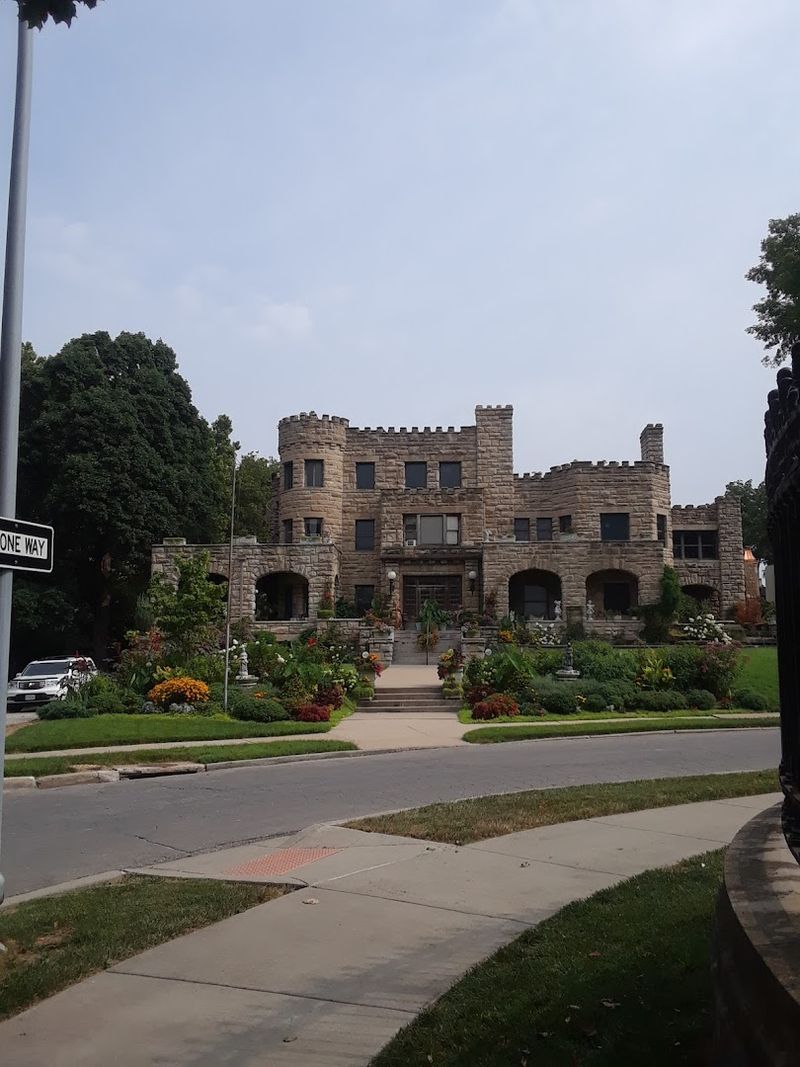
Kansas City’s northeast side keeps one of the city’s most dramatic historic secrets tucked along a winding scenic road that most residents have never fully explored.
Cliff Drive, addressed at Cliff Dr, Kansas City, MO 64123, runs through Kessler Park along the bluffs above the Missouri River, and the stonework infrastructure built here in the early 20th century is nothing short of monumental.
The Overlook and Reservoir Ruins are the crown of the whole experience, featuring massive stone retaining walls that cascade down the hillside in broad, sweeping terraces.
Historic stone staircases connect the different levels, and old open-air reservoir structures sit at the top of the bluff like the battlements of a fortress surveying the river valley below.
The scale of the stonework is genuinely surprising, especially given how little attention this area receives compared to more famous Kansas City landmarks.
George Kessler, the landscape architect behind the park, designed the drive and its surrounding stonework as a grand civic statement, blending natural topography with formal stone construction in a way that was deeply influenced by European landscape design traditions.
I drove Cliff Drive for the first time on a foggy October morning, and the combination of low clouds, river views, and ancient-looking stone walls along the road made the whole experience feel like driving through a forgotten kingdom.
Stop at the overlook pull-offs to fully appreciate the scale of the retaining walls, and bring a wide-angle camera lens to capture how the stonework interacts with the dramatic bluff topography.
Early morning visits reward you with golden light and almost guaranteed solitude on the trail.
