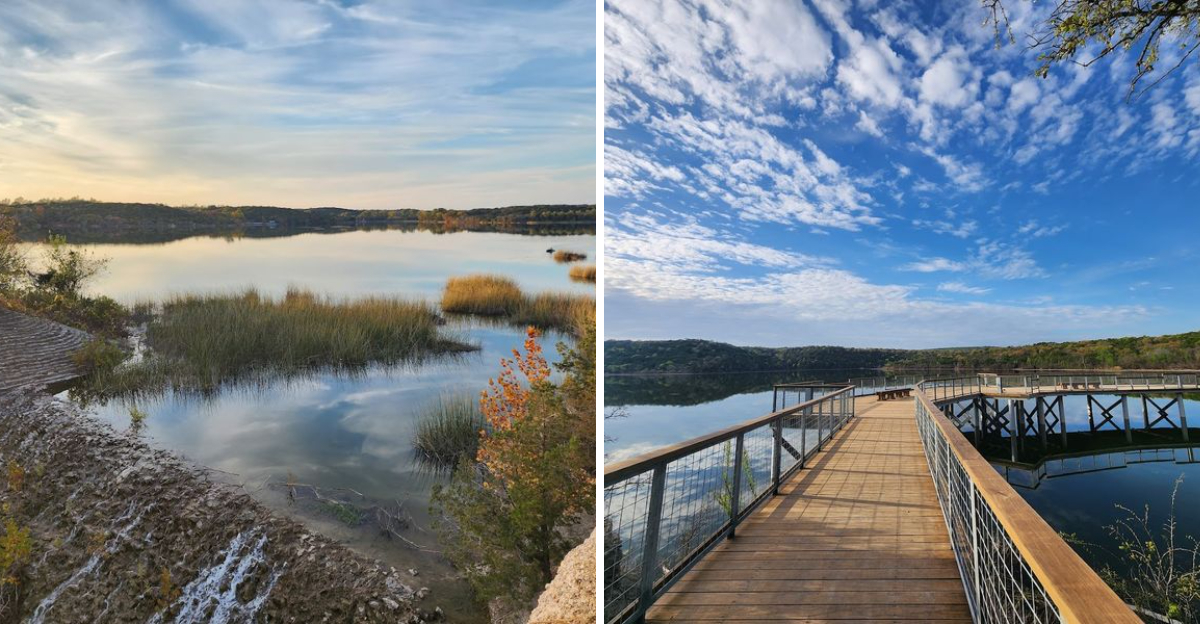
Let us be honest. The famous state parks are packed.
Parking lots full by 9 AM, trails that feel like a conga line, and the only wildlife a person sees is a stressed out parent yelling at their kids. Time to ditch the crowds.
These 13 Texas parks are the quiet cousins of the famous ones, just as stunning, way less hassle. Desert canyons that catch fire at sunset.
Pine forests that smell like a Christmas tree farm. Coastal marshes where the only noise is the wind and a distant heron.
No entrance lines, no trail traffic, and plenty of space to actually breathe. Some of these spots require a bit of extra driving, but that is part of the deal.
The further off the highway, the better the payoff. Texas is enormous, and most of it is still untouched.
1. Caprock Canyons State Park and Trailway, Quitaque
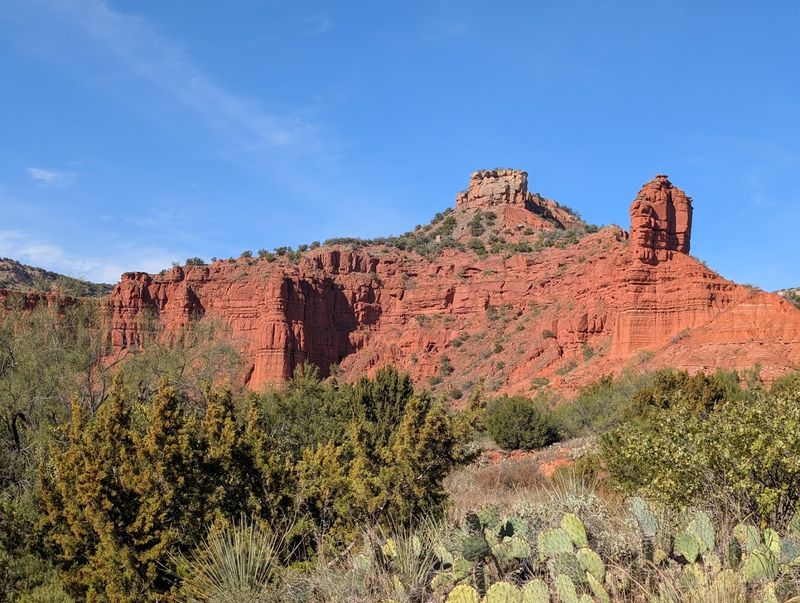
Red canyon walls rising over three hundred feet out of the flat Texas Panhandle is not something you forget easily. Caprock Canyons is often called the Original Texas Canyon, and once you see those rust-colored cliffs glowing in the late afternoon light, that nickname makes perfect sense.
The colors shift from deep red to burnt orange to soft purple depending on the hour, and the whole landscape feels almost too cinematic to be real.
The park stretches across a surprisingly rugged chunk of the Panhandle, offering over twenty-eight miles of trails for hikers, mountain bikers, and horseback riders.
The Upper Canyon Trail is a highlight, dropping down into a narrow slot canyon where the striped rock walls close in around you and the silence gets thick.
It is the kind of trail that slows your pace without you even realizing it.
One of the most unexpected features here is the official Texas State Bison Herd, which roams freely through the park. Spotting a bison on a dusty canyon trail is a genuinely humbling experience.
Beyond the trails, the park connects to a sixty-four-mile trailway built along a former railroad route, making it a dream for long-distance cyclists. Camping under the open Panhandle sky, far from city lights, adds another layer to the whole visit.
This is a park that rewards patience and curiosity in equal measure.
Address: 850 Caprock Canyon Park Rd, Quitaque, TX
2. Palmetto State Park, Gonzales
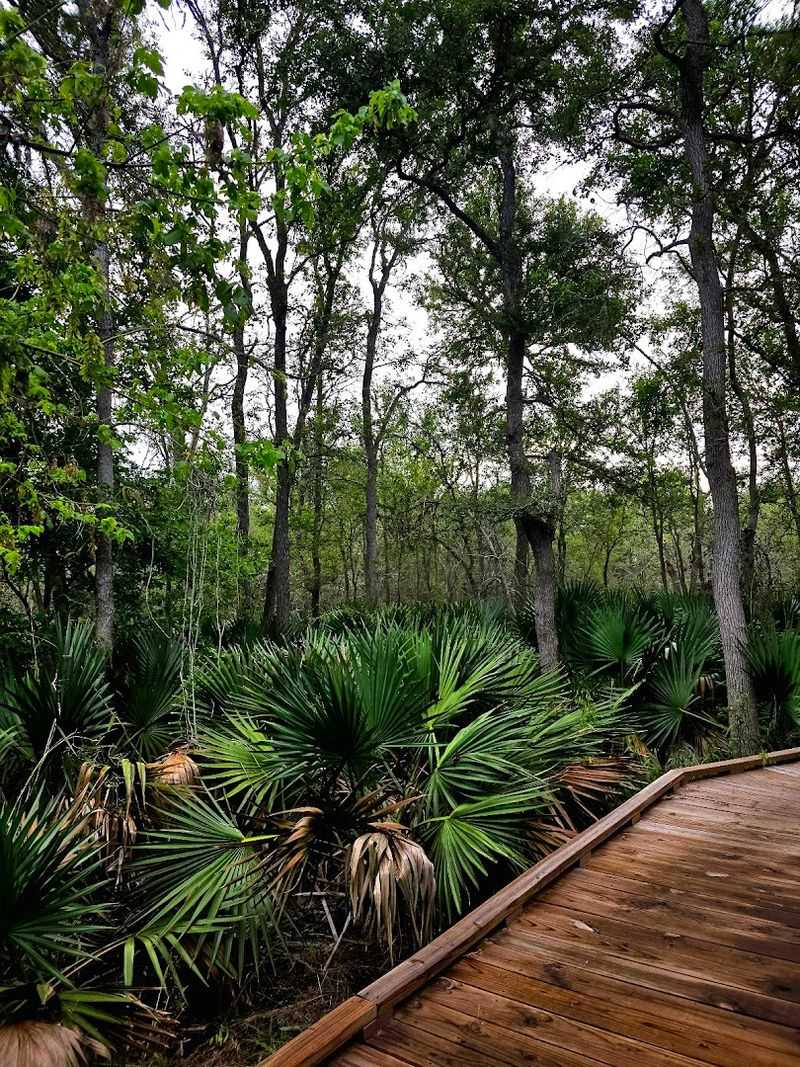
Nowhere else in Central Texas do you feel quite like you have accidentally crossed into Louisiana bayou country. Palmetto State Park sits along the San Marcos River and is blanketed in dwarf palmetto plants that give the whole place a lush, almost tropical atmosphere.
It is a genuine oddity in a region better known for cedar and limestone, and that contrast is a big part of its charm.
The palmettos grow thick along the riverbanks, their fan-shaped fronds catching the light in a way that makes everything feel a little dreamy. Birdwatchers have a field day here because the dense vegetation attracts an impressive variety of species, including painted buntings during migration season.
The air feels heavier and greener than you expect from a Central Texas park.
Hiking trails wind through the bottomland forest and past artesian springs that bubble up from the ground year-round. The San Marcos River is calm and inviting, perfect for a lazy float on a warm afternoon.
Fishing along the banks is a popular way to spend a slow morning, and the shaded picnic areas make it easy to linger. Families tend to love this park because there is enough variety to keep everyone occupied without needing to hike serious mileage.
The campground is hidden into the trees and feels genuinely secluded even when the park is busy. Palmetto is the kind of place that earns a return visit almost immediately after you leave.
Address: 78 Park Rd 11 S, Gonzales, TX
3. Big Bend Ranch State Park, Terlingua
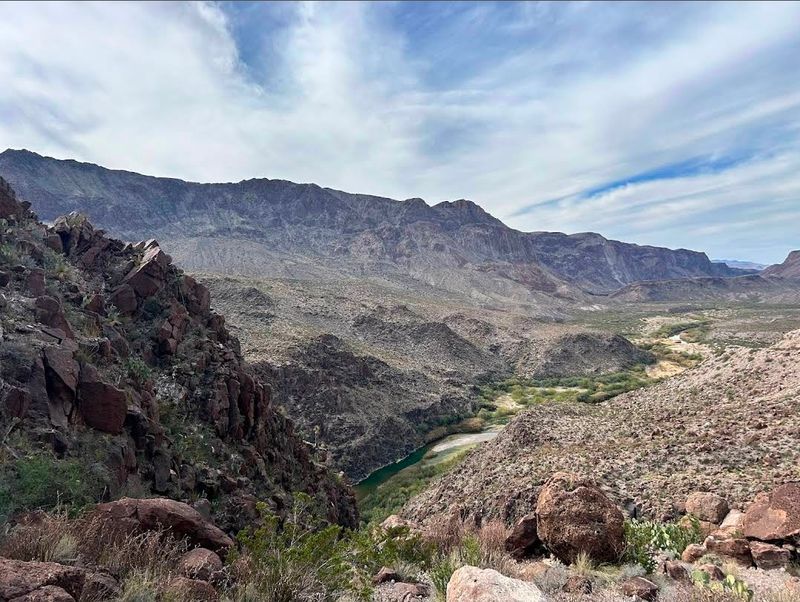
People call it the Other Side of Nowhere, and after spending even half a day out here, that description feels like an understatement. Big Bend Ranch State Park covers over three hundred thousand acres of raw Chihuahuan Desert, making it the largest state park in Texas by a significant margin.
The landscape is volcanic, ancient, and almost aggressively beautiful in its harshness.
Rugged canyons slice through the desert floor, and the silence out here is a physical thing. There are no crowds, no convenience stores nearby, and no cell signal for most of the park.
What you do get is an overwhelming sense of scale and a kind of quiet that is genuinely hard to find anywhere else in the continental United States.
Mountain bikers come for the legendary Fresno-Sauceda Loop, a sixty-mile route that tests endurance and rewards riders with views that feel impossibly vast. Hikers can explore river canyons and volcanic formations that tell a geological story spanning millions of years.
The park also offers guided float trips along the Rio Grande, where canyon walls rise dramatically on both sides of the water. Stargazing here is extraordinary because light pollution is essentially nonexistent.
Camping overnight transforms the experience entirely, as the desert cools quickly after dark and the sky fills with more stars than most people see in a lifetime. This is a park that demands respect and delivers something unforgettable in return.
Address: 21800 FM170, Terlingua, TX
4. Resaca de la Palma State Park, Brownsville
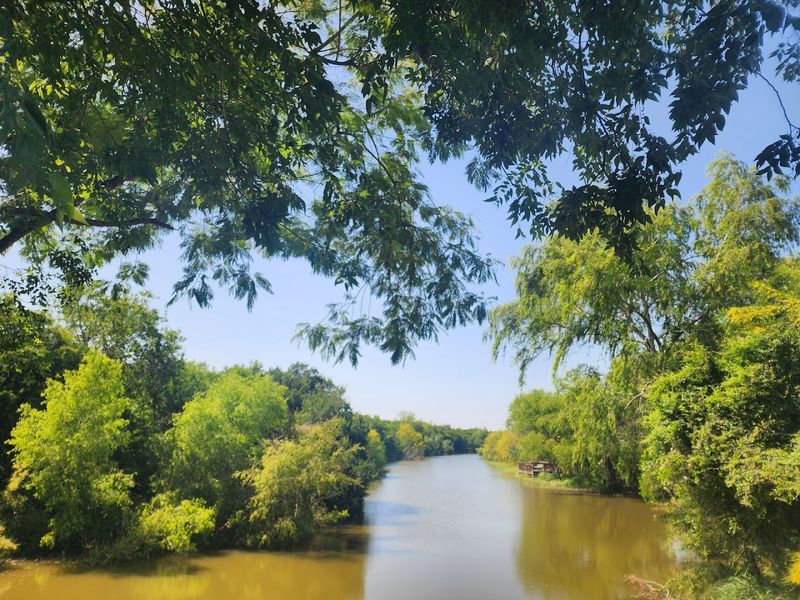
Right at the southern tip of Texas, where the Rio Grande Valley meets the Gulf Coast plain, Resaca de la Palma feels more like a nature documentary set than a state park you can drive to.
The park protects a rare stretch of native South Texas thornscrub, a habitat type that has nearly vanished from the region due to development.
What remains here is genuinely precious and surprisingly wild-feeling.
The resacas are old river channels that have been cut off from the main Rio Grande over time, forming slow, oxbow-style waterways that wind through the park. These quiet channels reflect the sky and the overhanging trees in a way that makes the whole place feel hushed and a little otherworldly.
Wildlife density here is remarkable, with over three hundred bird species recorded in and around the park.
Ocelots, one of the rarest wild cats in North America, have been documented within the park boundaries, which gives every trail walk a certain electric quality. Tram tours are available for visitors who want a guided introduction to the habitat without covering miles on foot.
The native plant life is dense and diverse, including thorny shrubs, towering sabal palms, and flowering plants that attract butterflies in spectacular numbers. The park connects to a broader wildlife corridor that stretches toward the coast, making it a critical link in the regional ecosystem.
Visiting here feels less like recreation and more like witnessing something that urgently needs protecting.
Address: 1000 New Carmen Ave, Brownsville, TX
5. Kickapoo Cavern State Park, Brackettville
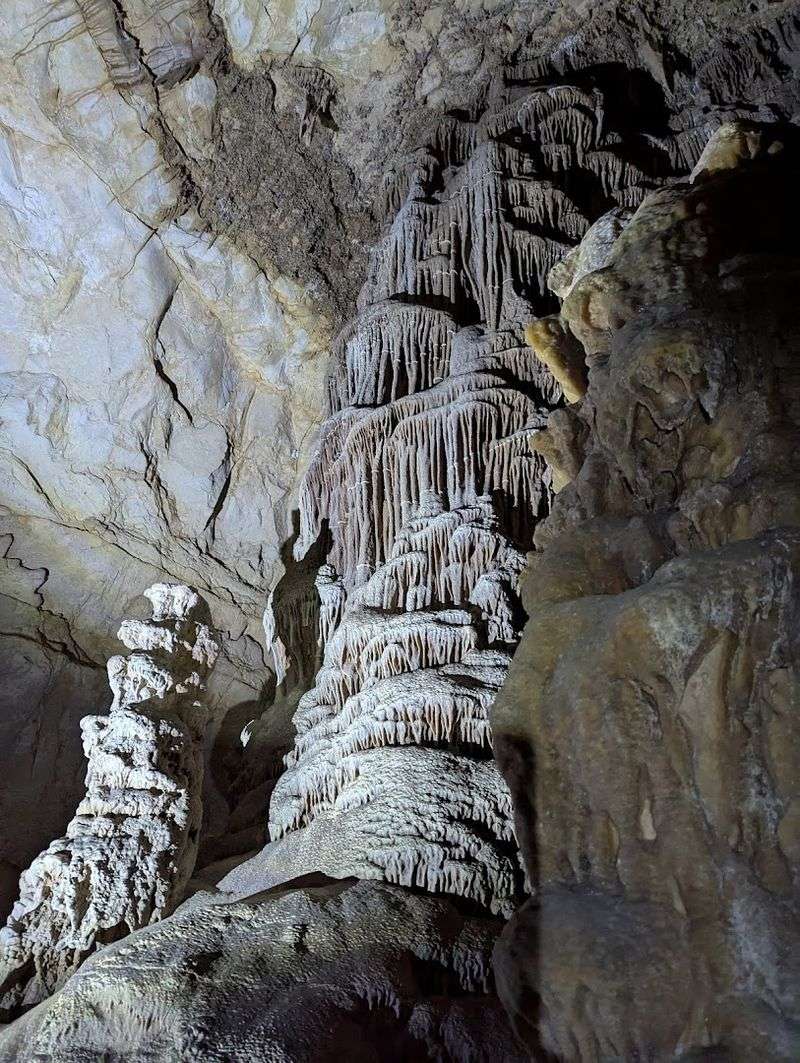
Most of this park’s magic is hidden underground, and that is exactly what makes it so unusual. Kickapoo Cavern State Park sits in the rugged limestone country of southwest Texas and harbors twenty known caves beneath its surface.
The namesake Kickapoo Cavern is the largest, and it is the only one open to the public, accessible only through guided flashlight tours that give the whole experience a wonderfully old-fashioned adventurous feel.
Inside the cavern, the geological formations are genuinely dramatic. Stalactites hang from the ceiling like stone chandeliers, and the cave floor is dotted with stalagmites that have been growing for thousands of years.
The scale of some of the chambers is disorienting in the best way possible, especially when you realize how much of this landscape exists invisibly beneath your feet.
Above ground, the park offers hiking trails through classic Edwards Plateau scenery, where cedar and oak shade the rocky terrain. The area is known for excellent birding, particularly for species that favor the brushy limestone habitat of the region.
One of the park’s most spectacular natural events happens at dusk near the cave entrance, when thousands of Mexican free-tailed bats emerge in a swirling, living cloud. It is one of those moments that makes you reach for your camera and then immediately put it down because no photo could do it justice.
Reservations are required for cave tours, so planning ahead is genuinely important for this one.
Address: 20939 Ranch to Market Road 674 North, Brackettville, TX
6. Fort Boggy State Park, Centerville
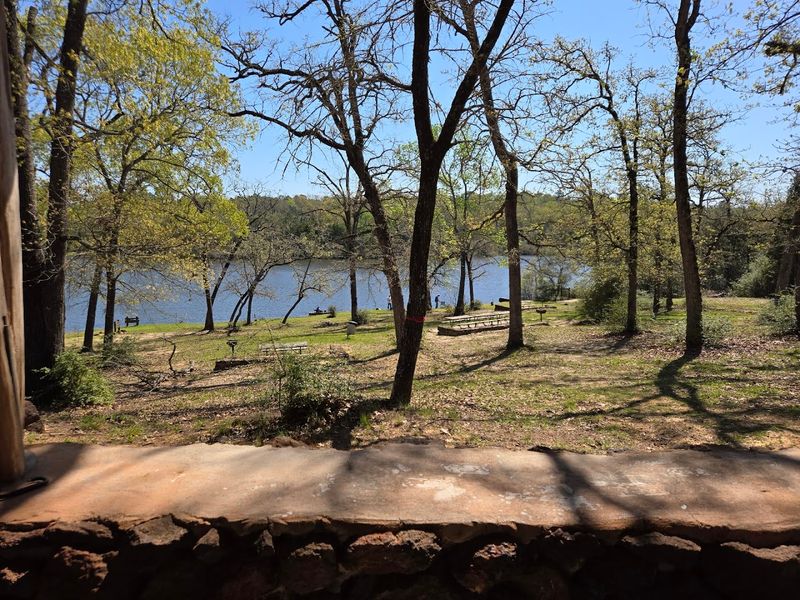
Hidden between the piney woods of East Texas and the rolling prairies of Central Texas, Fort Boggy occupies a quiet middle ground that most travelers blow right past on their way somewhere else. That is their loss.
The park surrounds a clear, spring-fed lake that reflects the surrounding forest so perfectly it almost looks like a painting rather than a real place.
The name comes from Boggy Creek, which feeds the lake and winds through the property with an unhurried ease that sets the whole tone for a visit here. Fishing is excellent, with the lake stocked regularly and the banks offering plenty of shaded spots to set up for a few hours.
Swimming is allowed in designated areas, and the water is refreshingly cool even in the heat of a Texas summer.
Hiking trails loop through a mix of pine and hardwood forest, passing through habitat that supports white-tailed deer, wild turkey, and a solid variety of songbirds.
The trails are not technically demanding, which makes them accessible for families with younger kids who want to explore without tackling serious elevation.
Camping here has a relaxed, unhurried feel that is genuinely restorative. The park rarely gets crowded, which means you can often have a stretch of lakeside trail entirely to yourself.
Fort Boggy is the kind of place that does not announce itself loudly but leaves a lasting impression once you have spent a quiet afternoon watching the light shift across the water.
Address: 4994 TX-75 South, Centerville, TX
7. Devil’s Sinkhole State Natural Area, Rocksprings
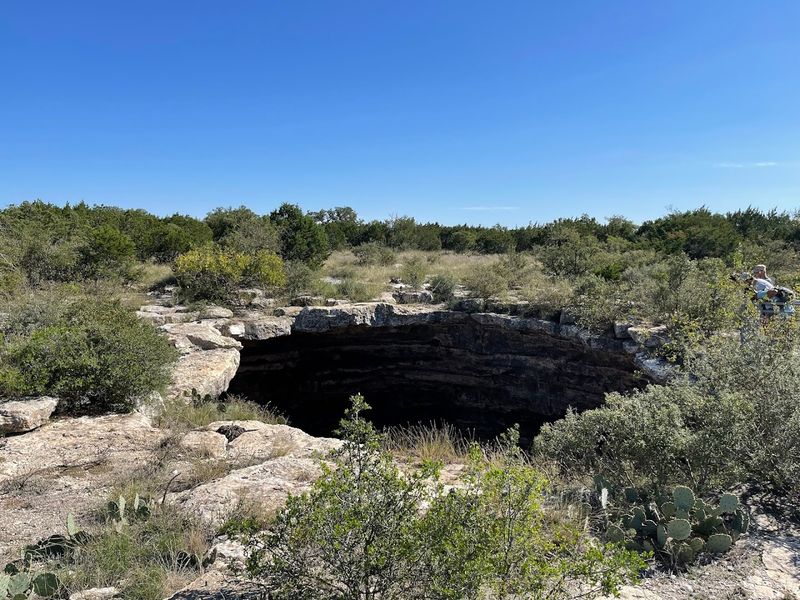
There is a moment at dusk near the edge of a giant limestone pit in the Texas Hill Country when the air starts to hum. Then the hum becomes a roar, and suddenly millions of Mexican free-tailed bats pour out of the earth in a column that spirals upward and spreads across the sky like smoke from a distant fire.
Devil’s Sinkhole is one of the most dramatic natural spectacles in the entire state, and it is one that most Texans have never heard of.
The sinkhole itself is a vertical shaft that drops about one hundred forty feet straight down into the earth, opening into a cavern below. It was formed over millions of years by water dissolving the limestone bedrock of the Edwards Plateau.
The sheer scale of the opening is striking even in daylight, before the bats even enter the picture.
Access to the sinkhole is managed through the Devil’s Sinkhole Society, which operates guided tours from the nearby town of Rocksprings. Evening bat flight tours are the main draw, but daytime geology tours are also available for those who want to understand what they are looking at beneath their feet.
The surrounding landscape is classic Hill Country, with cedar, oak, and rocky outcroppings stretching in every direction.
Bringing a blanket and settling in to watch the bat emergence against a fading sunset sky is one of those genuinely free, genuinely unforgettable Texas experiences that money really cannot improve on.
8. Hueco Tanks State Park and Historic Site, El Paso
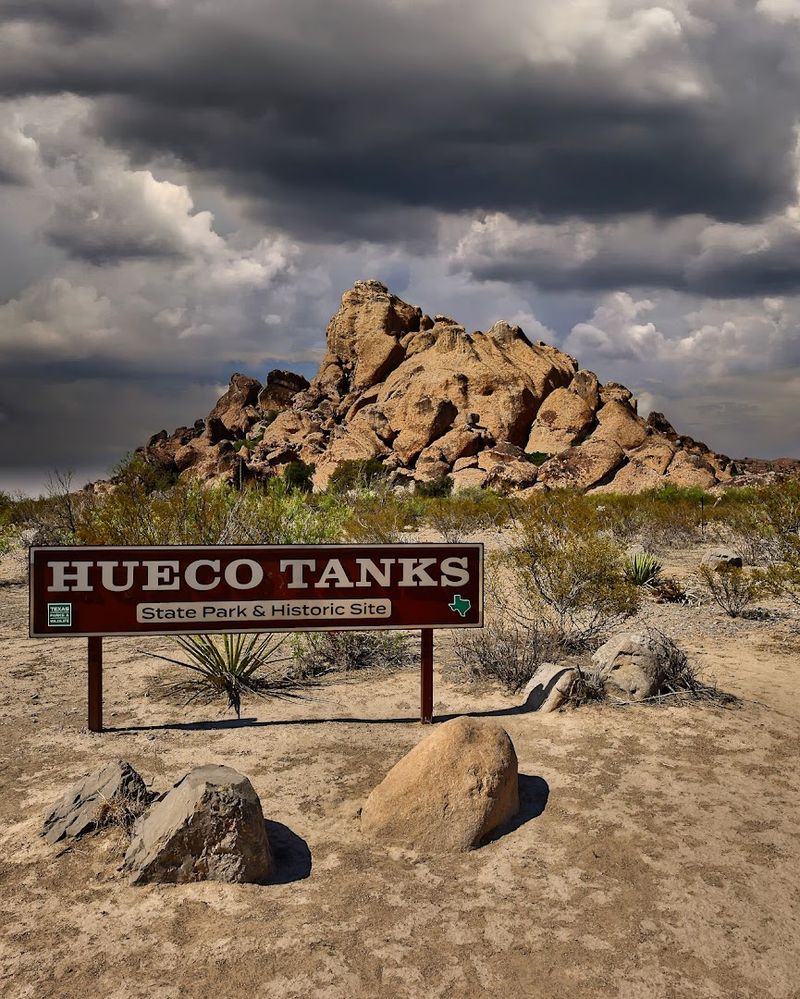
Massive rounded boulders rise from the Chihuahuan Desert floor west of El Paso like something dropped there by a careless giant. Hueco Tanks takes its name from the natural rock basins, called huecos, that collect rainwater and have sustained life in this otherwise dry landscape for thousands of years.
That water is the reason people have been coming here for millennia, and the evidence of their presence is still visible on the rock faces in vivid color.
The pictographs at Hueco Tanks are extraordinary. Over three thousand individual images have been documented here, painted by different cultures across a span of thousands of years.
The Jornada Mogollon people left some of the most striking works, including large, expressive mask figures that stare back at you from the rock with an unsettling intensity.
The park is also considered sacred ground by the Tigua Indians, whose connection to this landscape stretches back generations. That cultural weight is palpable when you are standing in the shadow of the rocks, and it changes how you move through the space.
Rock climbing is a major draw as well, with the bouldering here considered world-class by serious climbers who travel from across the country to test themselves on the formations. Daily visitor numbers are strictly limited to protect the site, so reservations are essential.
Guided tours are the only way to access the most historically significant areas, and those tours tend to fill up quickly during cooler months.
Address: 6900 Hueco Tanks Rd #1, El Paso, TX
9. Seminole Canyon State Park and Historic Site, Comstock
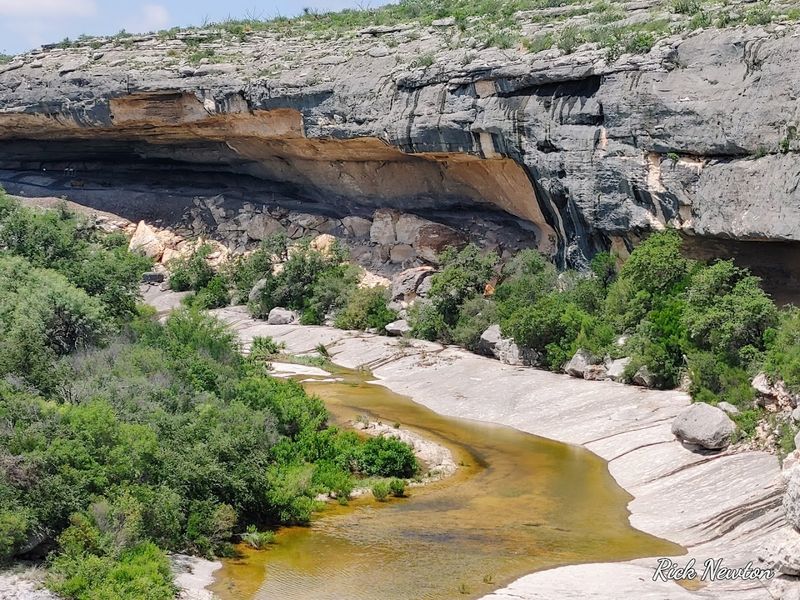
The Lower Pecos Canyonlands hold some of the oldest and most haunting artwork in North America, and Seminole Canyon is where you go to see it up close. The park sits at the confluence of the Pecos and Rio Grande rivers, in a landscape so stark and elemental it feels like the beginning of the world.
The canyons here are deep, dry, and full of a kind of ancient quiet that gets under your skin.
The main attraction is Fate Bell Shelter, a large rock overhang where pictographs painted four thousand years ago still cling to the limestone walls. The images include shamans with elaborate headdresses, animals, and abstract figures rendered in deep red and black pigments.
Looking at them is a genuinely moving experience, partly because of their age and partly because of how much life and intention they still seem to carry.
Guided tours are the only way to access the shelter, and the rangers who lead them are exceptionally knowledgeable about the cultures that created the art. The hike down into the canyon is moderate and the views along the way are worth the effort on their own.
A second shelter, Panther Cave, is accessible by boat from the nearby Amistad National Recreation Area and contains some of the most dramatic individual images in the entire region.
Camping at the park puts you under some of the darkest skies in Texas, and the silence after dark is the kind that makes you aware of your own heartbeat.
Address: US-90, Comstock, TX
10. Monahans Sandhills State Park, Monahans
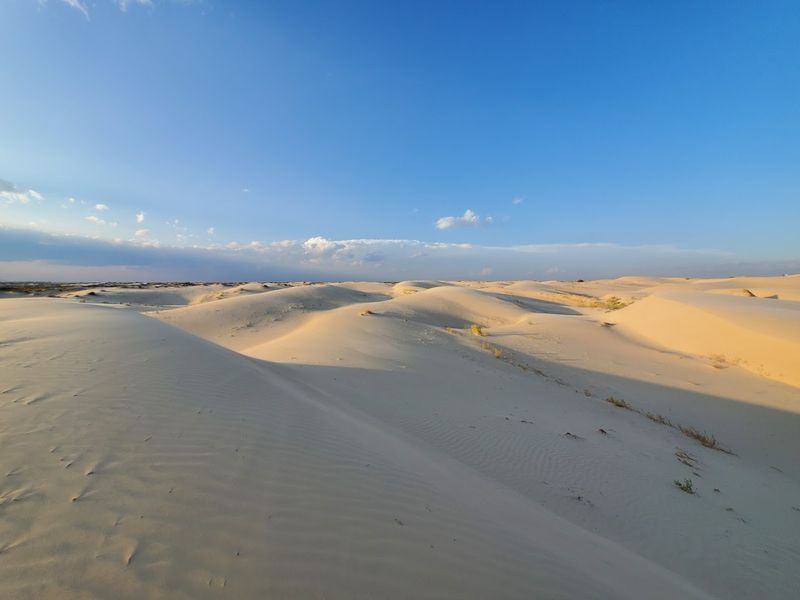
Sand dunes in West Texas are not something most people expect to find, and that surprise is a big part of what makes Monahans Sandhills so enjoyable. The park protects a section of a massive dunefield that extends across the Texas-New Mexico border, with individual dunes reaching up to seventy feet high.
The landscape is clean, spare, and almost lunar in the way it strips everything down to its simplest elements.
The sand is fine and pale, and it shifts constantly under the wind, erasing footprints and reshaping the dunes overnight. Walking up to the crest of a tall dune and looking out over the rolling expanse gives you a sense of being genuinely far from the ordinary world.
The silence is broken only by wind and the occasional burst of laughter from kids sledding down the slopes on rented sand discs.
Sand sledding is one of the park’s most popular activities, and it is exactly as fun as it sounds. The park rents equipment, and the dunes provide a surprisingly effective natural slope for a fast, sandy ride.
Beneath the dunes, a hidden oak forest of Harvard shin oaks survives with root systems that tap into an underground water source, making them one of the most unusual plant communities in the state.
Sunrise and sunset at Monahans are spectacular, with the low light turning the sand from white to gold to deep amber.
It is one of those places that photographs beautifully but feels even better in person.
Address: Park Rd #41, Monahans, TX
11. Inks Lake State Park, Burnet
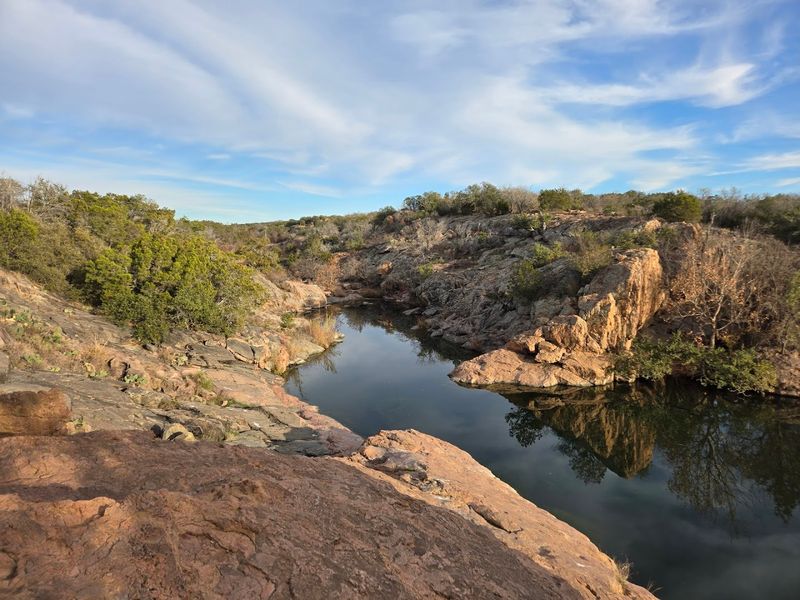
Inks Lake sits in the heart of the Highland Lakes chain in the Texas Hill Country, and it has a quality that its more famous neighbors somehow lack: consistency. Unlike other Highland Lakes, Inks Lake maintains a relatively stable water level year-round because it is fed by a constant-flow dam upstream.
That stability makes it one of the most reliably beautiful lakes in the region, with clear water lapping against pink granite outcroppings regardless of the season.
The park surrounding the lake is compact but wonderfully varied. Hiking trails wind through cedar and live oak, crossing rocky terrain that reveals the ancient granite beneath the Hill Country’s limestone veneer.
The Devil’s Waterhole, a popular swimming spot where a small creek tumbles into the lake over smooth rock shelves, is the kind of place you find yourself returning to every hour or so throughout the day.
Kayaking and canoeing on Inks Lake are particularly rewarding because the lake is small enough to feel personal but large enough to spend hours exploring. Fishing is consistent, and the granite shoreline provides plenty of quiet spots to drop a line and watch the water.
The campground is one of the most scenic in the Texas state park system, with sites perched close to the water and shaded by old cedar trees. Families return to Inks Lake year after year with a loyalty that speaks volumes about what the place delivers.
There is a comfortable, familiar rhythm to a few days here that is hard to replicate anywhere else.
Address: 3480 Park Rd 4 W, Burnet, TX
12. Palo Pinto Mountains State Park, Strawn
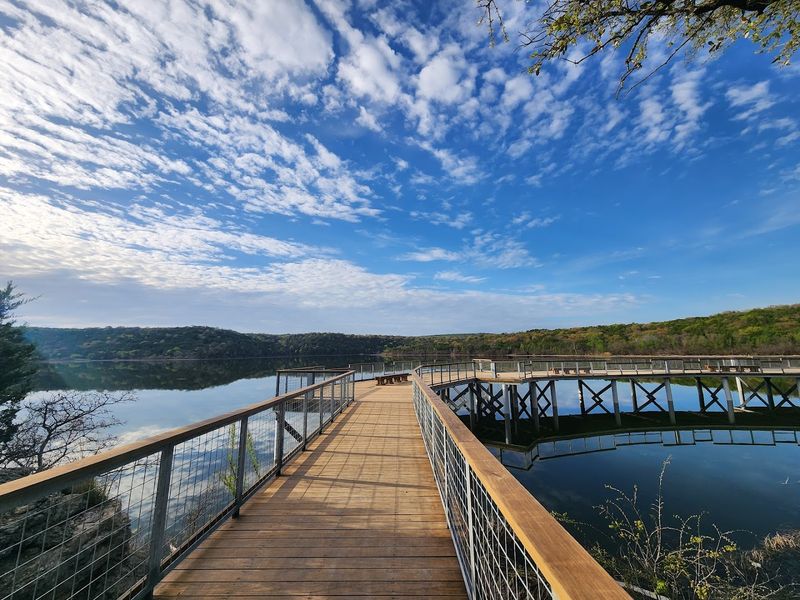
Texas’s newest state park opened to the public in 2024, and the excitement surrounding it is entirely justified.
Palo Pinto Mountains State Park fills a long-standing gap in the state park system by protecting a significant stretch of the Palo Pinto Mountains, a rugged and overlooked range in North Central Texas that most people in the state have never visited.
The landscape here is genuinely surprising, with rocky ridgelines, cedar-covered slopes, and sweeping views that feel more like West Texas than anything you might expect this close to the Dallas-Fort Worth metroplex.
The park was decades in the making, the result of sustained advocacy from conservation groups and outdoor enthusiasts who recognized the ecological and recreational value of the land.
That sense of hard-won preservation gives the place a particular energy, like something that was nearly lost and is now being carefully tended.
Hiking trails traverse the rocky terrain and climb to viewpoints where the surrounding countryside stretches out in every direction. The elevation changes are meaningful enough to give your legs a real workout, which sets this park apart from the flatter landscapes that dominate much of North Texas.
A reservoir within the park provides opportunities for fishing and non-motorized boating, adding a water element to a landscape that is primarily defined by its hills and rock.
Because the park is so new, visitor infrastructure is still developing, which means early visitors get to experience it in a relatively raw and unpolished state.
That is not a drawback, it is an invitation.
Address: 100 Park Road #77, Strawn, TX
13. Cleburne State Park, Cleburne
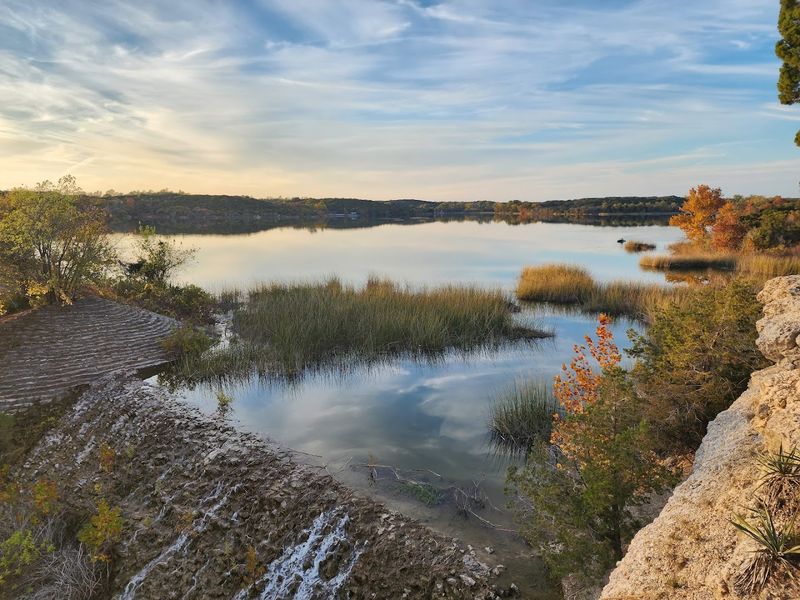
About an hour south of Fort Worth, Cleburne State Park has been quietly delivering excellent weekend escapes since the 1930s, when the Civilian Conservation Corps built its roads, shelters, and dam by hand.
The craftsmanship of that era is still visible throughout the park, in the stone pavilions and the careful way the landscape was shaped to complement rather than overpower the natural terrain.
There is a warmth to older parks like this that newer facilities often struggle to match.
Cedar Lake sits at the center of the park, fed by a small spring-fed creek and ringed by limestone hills covered in juniper and live oak. The water is calm and clear enough for swimming, fishing, and paddling, and the lake’s modest size makes it feel intimate rather than overwhelming.
Renting a paddle boat and drifting across the lake on a cool morning is a genuinely pleasant way to do nothing in particular.
Hiking trails loop through the surrounding hills, passing through habitat that supports white-tailed deer, wild turkey, and a variety of songbirds that make the cedar breaks their home. The trails gain enough elevation to offer views across the rolling terrain, which turns a lovely shade of gold in the fall.
Camping at Cleburne is comfortable and well-organized, with sites ranging from primitive spots near the water to full hookup options for those who prefer more amenities.
The park’s proximity to the Dallas-Fort Worth area makes it a popular weekend destination, but it rarely feels overwhelmed, especially on weekday visits.
Address: 5800 Park Rd 21, Cleburne, TX
