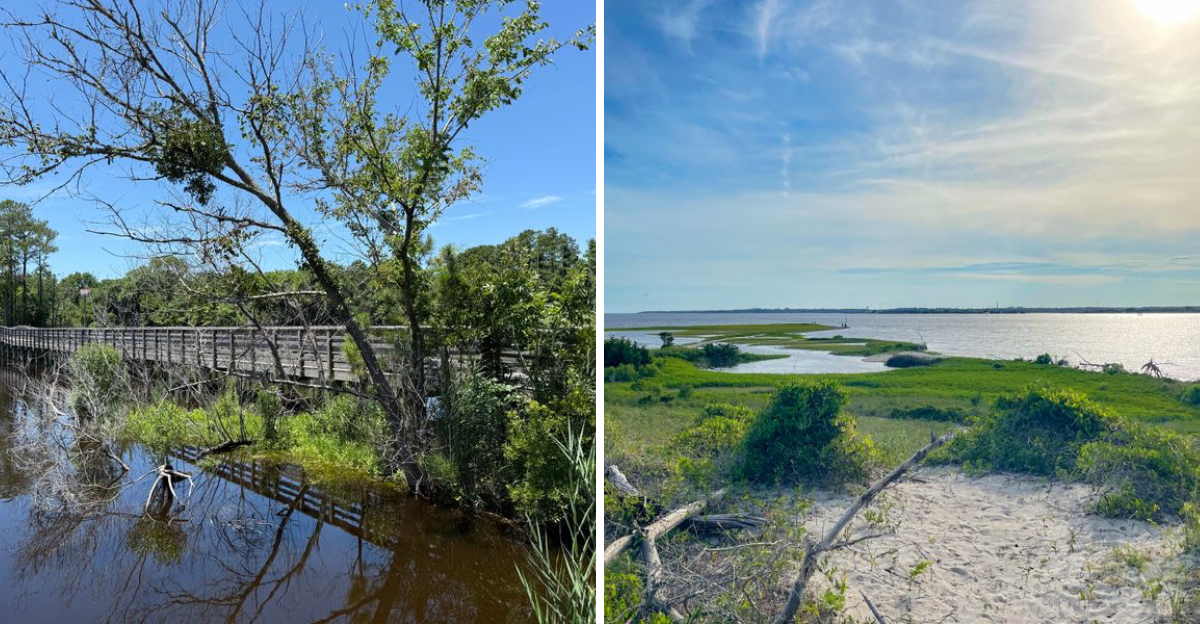
Winter along the North Carolina coast trades crowds for quiet paths, glassy water, and skies that feel larger than summer ever allows.
You get room to breathe, to hear the wings of a heron, and to notice small shells tucked into cool sand.
Locals love these shoulder season strolls because they reveal textures and tones that heat and haze often hide.
Step into these peaceful routes, and you will see why the off season holds the coast at its most honest.
1. Fort Fisher Basin Trail, Kure Beach
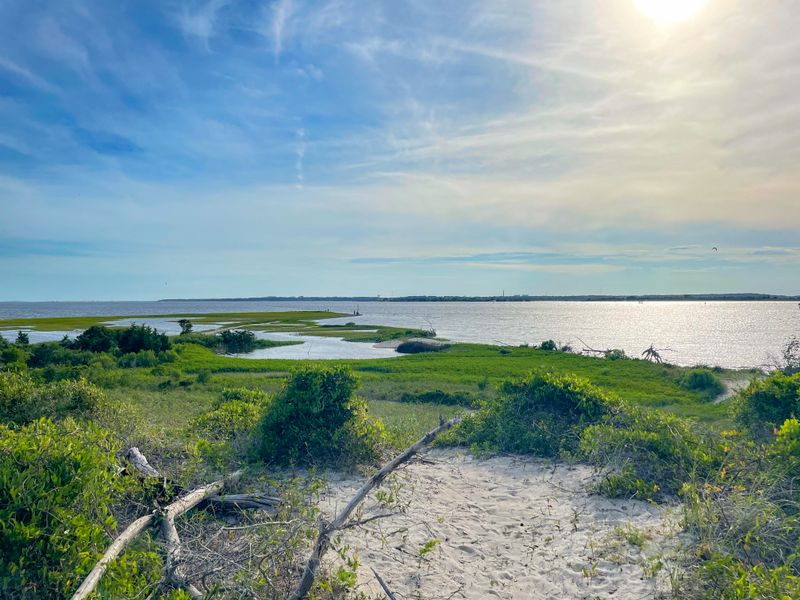
Start the Fort Fisher Basin Trail beneath wind shaped live oaks that frame a sandy path toward the Cape Fear River, and the hush of winter settles in quickly.
You will find the entrance near 1000 Loggerhead Road, Kure Beach, North Carolina, where the maritime forest buffers the sound of waves and guides you toward open water.
Cool air carries the scent of salt and pine, and the softer light outlines trunks, roots, and saw palmetto in crisp detail.
The trail curves past low dunes and pockets of yaupon, then opens to wide views of the river where tidal flats draw pale ribbons across the basin.
In winter, the quieter shoreline lets fiddler crab burrows and subtle channels stand out, and herons often stalk the edges with unhurried steps.
Look north to the silhouettes of utility structures and south to the broad sweep of the spit, and the horizon feels unusually spacious.
Keep an eye on tides because puddled flats can expand quickly, though the route remains gentle and accessible underfoot.
On calmer days, the river surface turns mirror like, and the reflected sky doubles the sense of openness.
When wind picks up, the reeds sing in thin, steady notes, and small whitecaps sketch diagonal lines across the channel.
Benches appear near the river edge, offering a good pause point to watch shorebirds shuttle along the seam of sand and water.
Photographers appreciate the clean foregrounds, especially when the clouds stack in layered bands over the Cape Fear.
Before you leave, linger where forest meets flats, because this boundary is where North Carolina shows its winter soul most clearly.
2. Hammocks Beach State Park Ferry Landing Walk, Swansboro
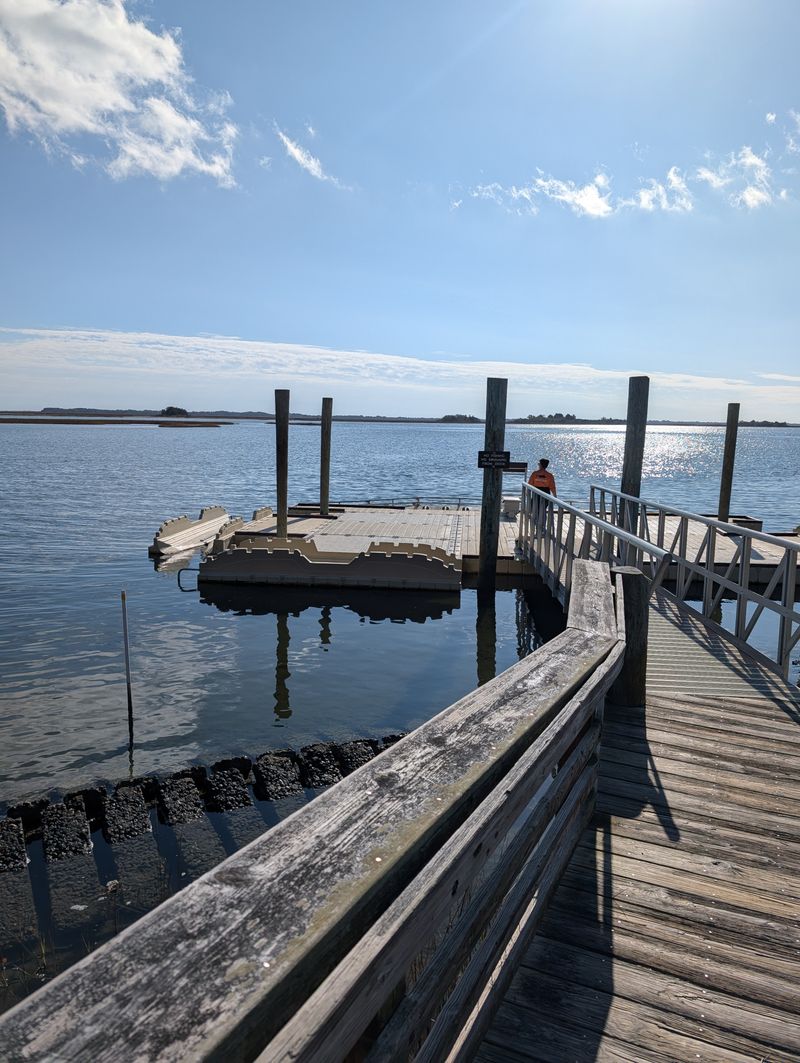
The mainland side of Hammocks Beach State Park turns peaceful in the cold months, and the boardwalk by 1572 Hammocks Beach Road, Swansboro, North Carolina, becomes a front row seat to calm tides.
With the ferry on pause, you can follow wooden walkways that skim the marsh, where creeks curl like glass and spartina holds the color of dune straw.
Birdlife settles into a slower rhythm, and you may spot egrets motionless in the shallows as if pinned to the water by the light.
Take time to pause at the overlooks, because each one frames a different pattern of channels and oyster mounds.
The sandy paths beyond the planks feel springy and quiet, and your footsteps blend into the soft hiss of winter wind.
Low sun slips across the marsh and gives the creeks a pewter sheen that looks almost metallic from certain angles.
When tides shift, the smell of brine sharpens, and ripples tick along the pilings in gentle taps.
You can trace long lines toward Bear Island without rushing, guided by the simple geometry of railing shadows on the boards.
Look back toward the visitor area to see how the marsh opens like a fan, each spoke a narrow creek leading to wider water.
This is a forgiving walk with level surfaces and many places to stop, which suits short winter days.
Bring layers, because breezes slant across open water and can feel cooler than the forecast suggests.
As dusk nears, the park feels like a quiet amphitheater, and the marsh holds the last light the way North Carolina holds its coastal calm.
3. Springer’s Point Nature Preserve Loop, Ocracoke
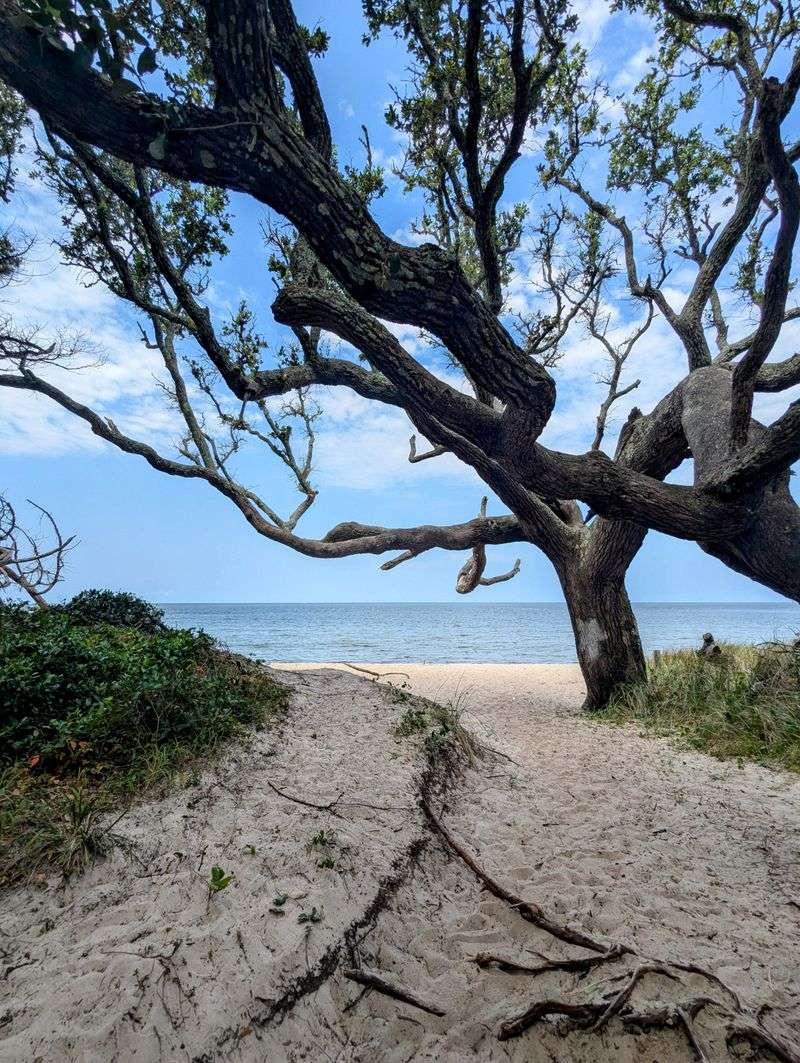
On Ocracoke, the loop at Springer’s Point begins near the end of Lighthouse Road, Ocracoke, North Carolina, where a sandy lane enters a tunnel of live oaks.
The preserve hushes the village behind you, and the canopy creates a sheltered corridor that feels restful even in a stiff breeze.
Underfoot, the sand is firm, stitched with roots and leaf litter that crunches in light steps.
Sun slips between limbs and moss, and the winter angle casts braided shadows that move with every gust.
Follow the markers toward the sound, and the forest gives way to a narrow beach that faces Pamlico’s broad, silver plate.
When the air is cold and dry, the far shoreline comes into crisp relief, and boats sit quietly on their moorings.
The preserve carries a sense of history, and the stillness lets that story surface without signage or fanfare.
Gulls patrol the edge where foam meets sand, then rest on the darker patches where the tide left shell hash.
You can loop back through the oaks along a different strand of trail to vary the light and texture.
Each bend offers a fresh angle on limbs that twist like braided cables across the path.
Keep to posted routes to protect dunes and understory, which are slow to recover in cooler months.
By the time you return to the trailhead, the island feels quieter, and North Carolina’s winter shows itself in soft, thoughtful tones.
4. Kitty Hawk Woods Maritime Forest Overlook, Kitty Hawk
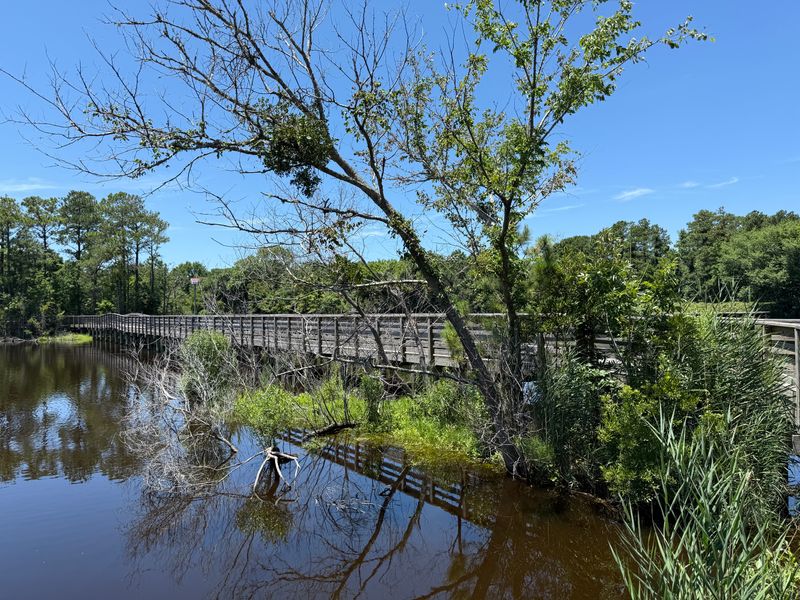
Kitty Hawk Woods spreads behind neighborhoods like a secret, and the overlook near 823 Kitty Hawk Road, Kitty Hawk, North Carolina, brings the forest into focus.
Pines and hardwoods hold the wind at bay, so the only sound is water nudging the banks of still ponds.
In winter, needles gleam a deeper green, and the air smells clean and slightly resinous.
Sun threads through the canopy at low angles, and reflections on the water turn into slow moving mosaics.
Trails roll over sandy ridges, then dip into wetlands where cypress knees stud the margins like chess pieces.
Herons prefer the quiet corners, and their wingbeats feel louder than they look when the forest is this calm.
The overlook platform gives a wide view across reeds, and the horizon feels tucked in despite the expanse.
You can trace deer tracks where damp sand keeps perfect prints, then watch them vanish at the edge of a pond.
Walkers find the footing gentle, though roots appear often enough to keep attention grounded.
As clouds move, the light switches from silver to gold, and shadows change shape without warning.
Signs mark turns clearly, which helps in a forest that repeats colors and textures.
Leaving the overlook, the Outer Banks feels new, and North Carolina reveals a quieter layer under its well known beaches.
5. Coquina Beach Access Paths, South of Nags Head
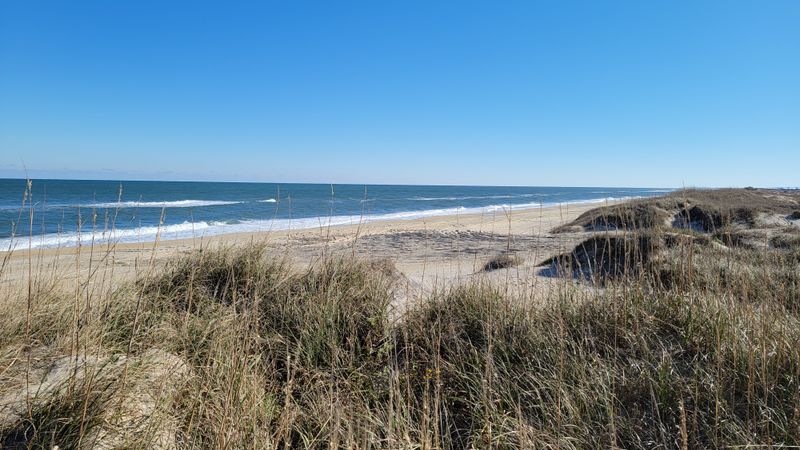
Coquina Beach sits just south of Nags Head along Cape Hatteras National Seashore, with access near Lighthouse Road, Nags Head, North Carolina, and the openness hits you the moment the dunes part.
The paths over the berms lead to a sweeping canvas of sand that feels almost endless in winter clarity.
Wind scribbles tight patterns on the surface, and footprints fade quickly into new textures.
The beach runs level and wide, so your stride finds a steady rhythm against the hum of the surf.
Dune grasses bend but rarely break, and their shadows stripe the sand in clean lines.
Gulls and sanderlings stitch the swash zone with quick work, then lift as one when waves push higher.
Look for shell fragments that glow against the pale ground, especially along small wrack lines after a stronger tide.
The air carries a cold brightness that turns the water a deeper blue, and the horizon sits sharp and unwavering.
You can walk for a long time without seeing many people, which adds to the meditative feel of this stretch.
Occasional beach access posts give reference points without breaking the view.
When clouds stack, the scene takes on a moody calm that photographers appreciate for even light.
It is a simple walk, and in that simplicity, North Carolina’s coast offers pure space to think.
6. Fort Macon Jetty Walk, Atlantic Beach
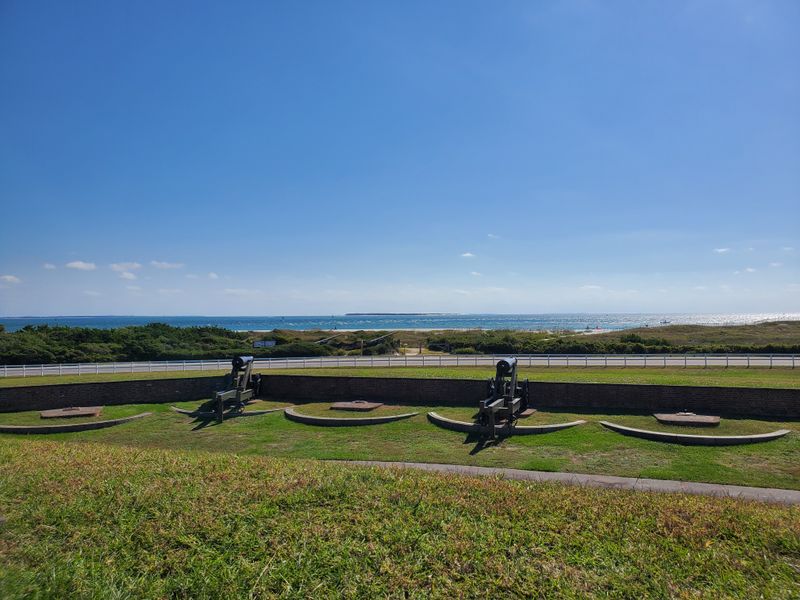
At Fort Macon State Park, the jetty walk begins near 2303 East Fort Macon Road, Atlantic Beach, North Carolina, and follows the granite blocks toward Beaufort Inlet.
Cold season air clears the view so you can pick out Shackleford Banks and the cut of the channel with ease.
The sound of waves on stone becomes a steady metronome that sets a calm walking pace.
Sand here is firm, and the approach to the jetty passes dunes that hold a mix of sea oats and low shrubs.
Pelicans fly low in single file, using the wind that spills over the surf to glide without effort.
When the tide rises, spray flickers along the rocks, and the air takes on a faint mineral smell.
Turn back occasionally to admire the long arc of beach that frames the park’s historic earthworks at a distance.
Winter color is subtle, with grays and greens that feel timeless against the clear water.
The jetty itself offers texture underfoot, so good footwear helps even though the route stays straightforward.
There are quiet corners tucked in the lee of the rocks where you can pause and watch the inlet traffic slide by.
As light softens, the blocks turn dark and glossy, and the reflections stretch like brushstrokes along the wet faces.
This walk delivers focus and space, and it highlights a side of North Carolina that is steady and unhurried.
7. Masonboro Island Reserve Shoreline Walk, Wilmington
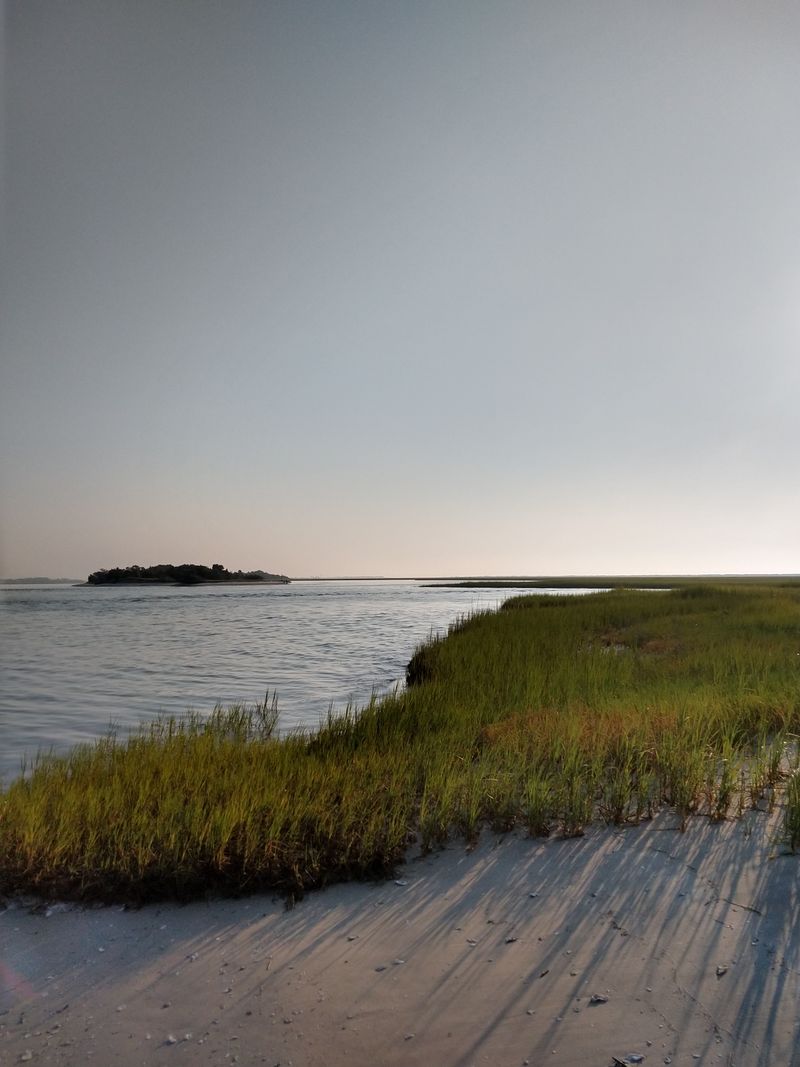
Begin near 3800 Oleander Drive, Wilmington, North Carolina, where the marsh edges approach the Intracoastal Waterway and the view stretches toward the protected expanse of the Masonboro Island Reserve.
Pines frame the approach, and winter air sharpens every scent of brine and resin.
Boardwalk segments lift you over slick mud and tidal seams, then transition to sandy patches that move softly underfoot.
Open reeds reveal narrow creeks that catch the light in shifting mirrors, and gusts turn each reflection into a slow ripple.
Egrets, kingfishers, and wintering shorebirds hunt in the calmer channels, their quick movements adding bright interruptions to the stillness.
Noise from the city fades quickly, replaced by water brushing roots, a low and steady sound that shapes the rhythm of the walk.
Benches sit where the marsh widens, angled toward broad water and distant tree lines.
Look for glossy pluff mud along the banks after higher tides slide out, leaving smooth, dark traces.
The route stays gentle and grounded, ideal for a slow winter pass that lets the landscape settle into view.
Late in the day, the sound becomes a metallic sheet of pale blues and silvers, doubling every twig and reed in quiet reflection.
Leaving the shoreline, the city feels farther away than it is, and the reserve’s winter calm stays with you.
8. Sunset Beach Waterfront Park Path, Sunset Beach
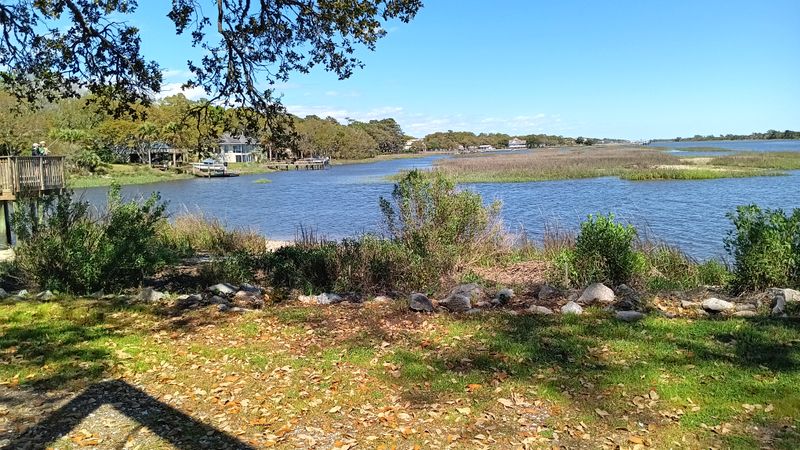
Behind Town Park at 206 Sunset Boulevard North, Sunset Beach, North Carolina, a shoreline path threads along the Intracoastal Waterway with an easy pace.
The route is short, yet each turn finds a new window over marsh channels and slow water.
In winter, skies often soften into pastels that stretch from the bridge to the horizon like brushed chalk.
Benches along the route face west, which makes this a favorite for late afternoon walkers who want quiet color without effort.
Watch how the tide tucks into marsh pockets and leaves glossy pools that mirror the sky.
Egrets work the edges, and their careful steps leave small rings that widen and fade.
The boardwalk segments feel solid and smooth, and sandy connectors keep the rhythm casual.
Look back toward the village to see rooftops line up like low dunes, neat and understated.
When the sun nears the water, the reflections turn to long bands that hover just above the surface.
The park’s plantings stay green enough to frame the scene without stealing attention from the marsh.
It is a simple walk that rewards patience, especially when the last light settles into muted pinks and grays.
Leaving the path, you carry a quiet glow, the kind North Carolina seems to save for winter evenings by the water.
Dear Reader: This page may contain affiliate links which may earn a commission if you click through and make a purchase. Our independent journalism is not influenced by any advertiser or commercial initiative unless it is clearly marked as sponsored content. As travel products change, please be sure to reconfirm all details and stay up to date with current events to ensure a safe and successful trip.
