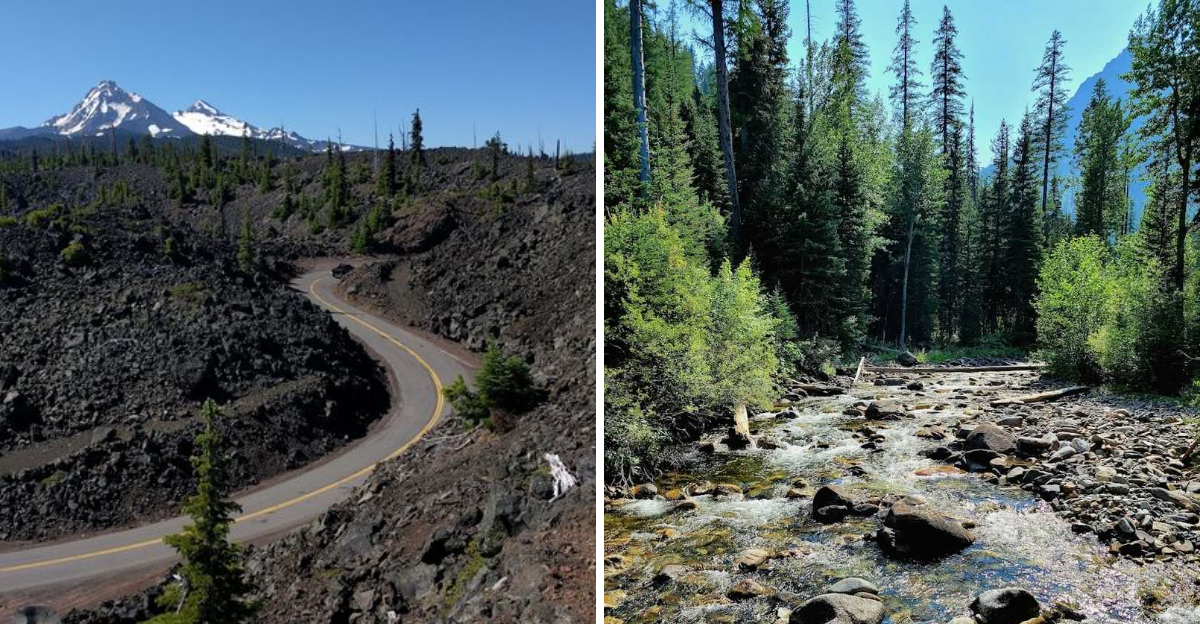
Think you’ve seen all of Oregon? Think again.
These 9 underrated road trips are full of hidden gems, quirky stops, and scenery that makes your playlist feel like a soundtrack to adventure. I hit winding backroads, sleepy towns, and secret viewpoints that locals treat like their best-kept secrets.
Every mile brought surprises – wildflowers, waterfalls, and that perfect little café you’d never find on a map. Even the shortest detours turned into mini adventures worth bragging about.
Locals clearly know these routes, but stumbling upon them yourself feels like discovering treasure. By the end of the trips, I was full of awe, snacks, and the kind of stories that make you start planning your next road trip immediately.
1. McKenzie Pass-Santiam Pass Scenic Byway, Cascade Mountains, Oregon
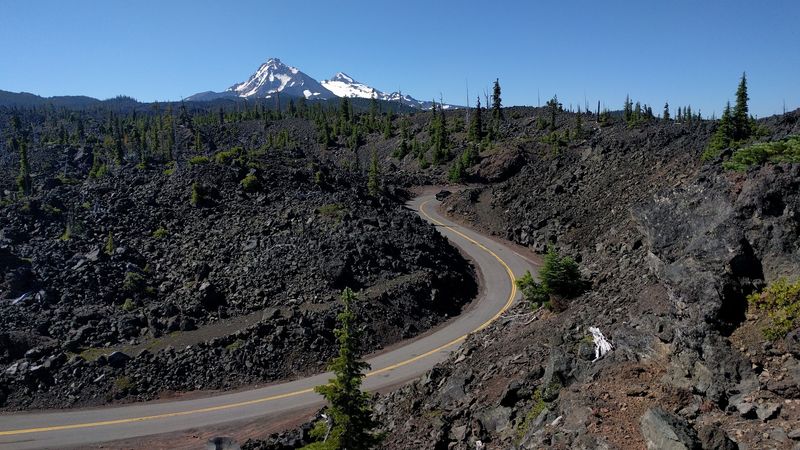
Ancient lava fields and alpine meadows share the same 82-mile loop, and the contrast is genuinely jaw-dropping.
The McKenzie Pass-Santiam Pass Scenic Byway cuts through the Cascade Mountains in central Oregon. It is one of those drives where you keep pulling over because every viewpoint looks better than the last.
The Dee Wright Observatory sits right on the lava flow. It was built entirely from volcanic rock in the 1930s, and the views from its windows frame several Cascade peaks at once.
Proxy Falls and Sahalie Falls are two of the most photogenic stops along the route. Proxy Falls drops in two separate streams through a moss-covered forest, and Sahalie thunders with serious spring energy.
One thing to plan around is the road closure. McKenzie Pass typically opens in late June or July, so late spring travelers should use the Santiam side of the loop.
Always check Oregon Department of Transportation updates before heading out.
This byway rewards slow driving. Give yourself a full day, bring layers, and do not skip the short hike to the lava field viewpoint near the observatory.
The silence out there is the kind that actually clears your head.
2. Outback Scenic Byway, La Pine to New Pine Creek, Oregon
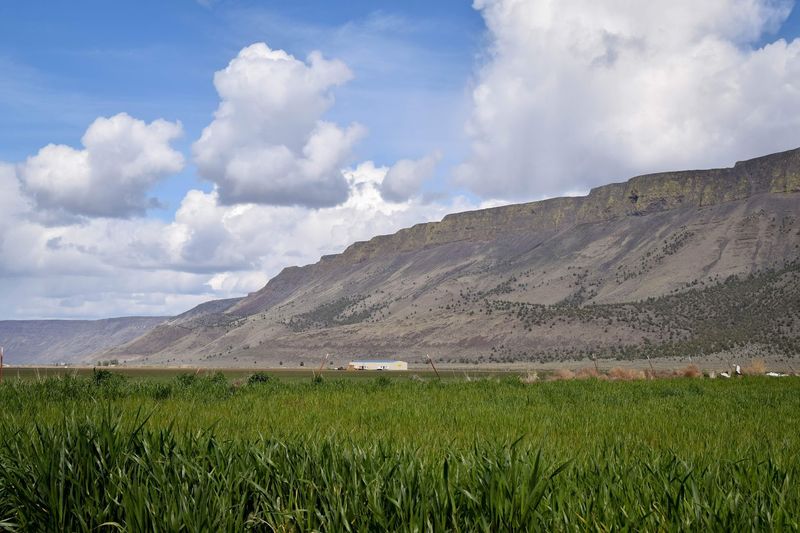
Most people do not picture Oregon when they think of a desert road trip. The Outback Scenic Byway is here to change that completely.
Stretching 170 miles from La Pine to New Pine Creek in south-central Oregon, this byway rolls through wide-open high desert country. There are no traffic jams, no tourist crowds, and almost no cell service, which honestly feels like a gift.
Fort Rock State Park is one of the first major stops worth slowing down for. This volcanic butte rises dramatically from the flat desert floor, and it has a fascinating history tied to some of the oldest human artifacts found in Oregon.
Hole-in-the-Ground is exactly what it sounds like. It is a massive volcanic crater about a mile wide, and you can walk the rim for sweeping views of the surrounding landscape.
Summer Lake Hot Springs is a natural thermal pool that makes a perfect rest stop mid-route. Late spring is the sweet spot for visiting, when daytime temps are comfortable and the desert blooms with color.
Pack enough water and fuel before you start. Services are sparse along this stretch, and that is part of the charm.
This byway is best enjoyed by people who actually want to feel far from everything.
3. Spring Basin Wilderness, Near Fossil, Oregon
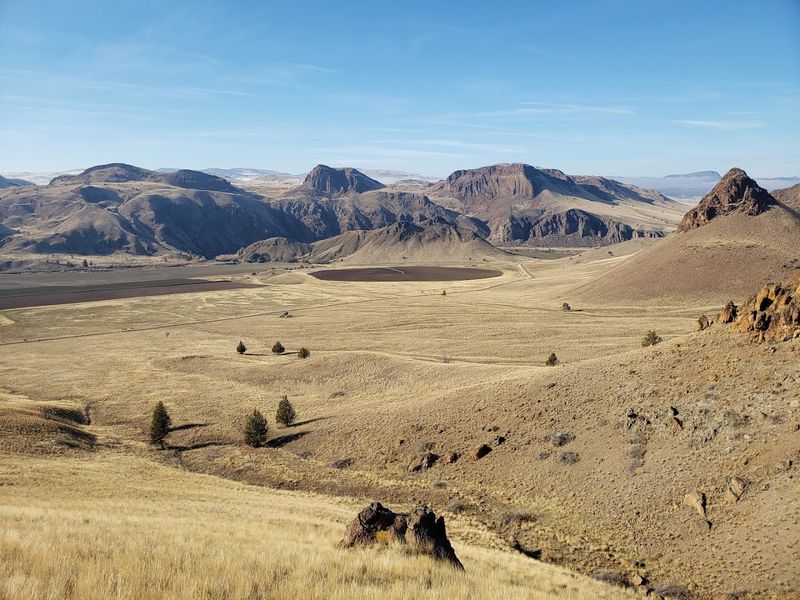
There is something quietly thrilling about driving toward a place most Oregonians have never heard of. Spring Basin Wilderness near Fossil, Oregon, earns that feeling every single time.
This 6,382-acre wilderness area sits in the John Day River region of north-central Oregon. The landscape is all jagged cliffs, winding canyons, and exposed geologic layers that tell millions of years of story.
Spring is genuinely the best time to visit. The canyon floors green up fast after winter, and wildflowers push through the rocky soil in patches of yellow, purple, and white.
It feels almost surreal against the dramatic stone backdrops.
The area is remote and trails are not heavily marked, so bring a good map and solid hiking footwear. This is not a place for flip-flops or short attention spans.
But if you are comfortable with solitude and a little navigation, the rewards are significant.
Wildlife sightings are common here. Mule deer, golden eagles, and chukar partridge are regular residents.
Birdwatchers will want to bring binoculars.
The nearby town of Fossil is worth a stop too. It has a small but genuinely fascinating fossil bed where visitors can dig for plant fossils right on the high school grounds.
That alone makes the detour worthwhile.
4. Elowah Falls Trail, Columbia River Gorge, Oregon
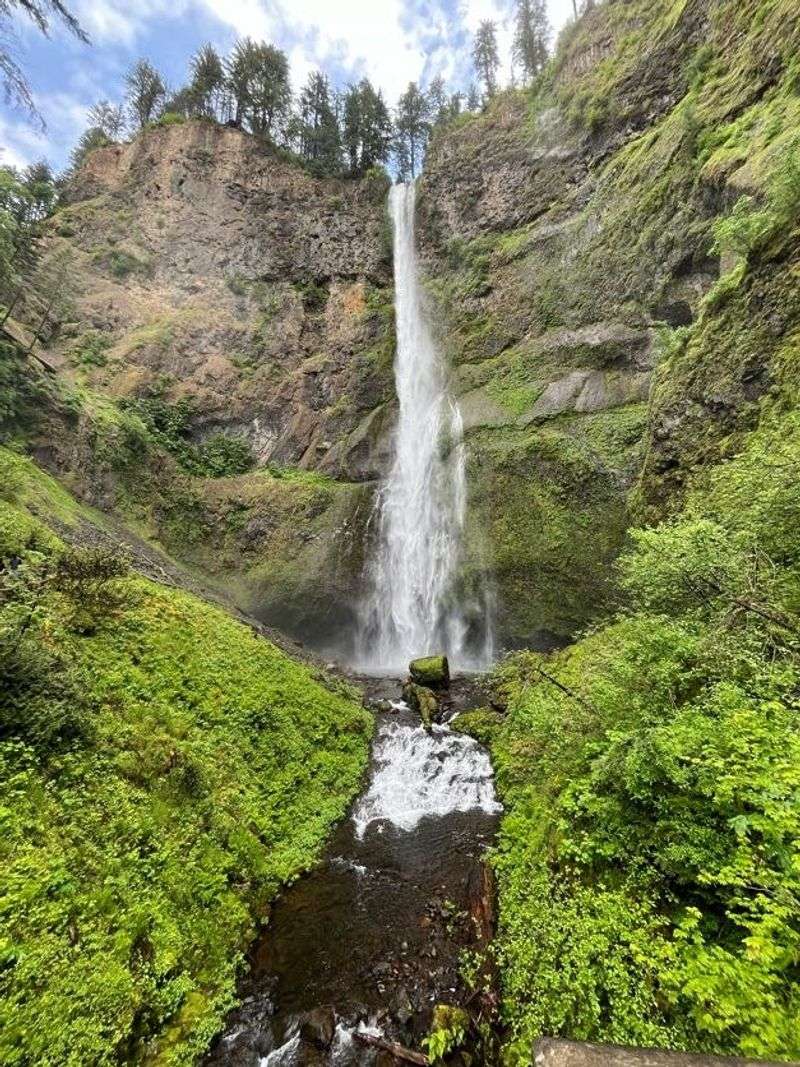
Standing at the base of Elowah Falls in spring feels like watching nature show off on purpose.
Located in the Columbia River Gorge east of Portland, Oregon, this 213-foot waterfall is one of the most undervisited in the entire gorge. Most hikers flock to Multnomah Falls just down the road, which means Elowah gets to stay blissfully quiet.
The trailhead sits along the Historic Columbia River Highway. The hike to the falls is about 3.2 miles round trip with modest elevation gain, making it manageable for most fitness levels.
Expect muddy trail sections in early spring, so waterproof boots are a smart call.
The falls drop into a wide amphitheater of basalt rock, and the spray can reach you from a surprising distance. In peak spring flow, the roar of the water is genuinely impressive.
An upper trail branch leads to a smaller waterfall called McCord Creek Falls and offers a bird’s-eye view of Elowah from above. Taking both trails adds about a mile but is completely worth the extra steps.
Spring wildflowers line the path in early April and May. Trilliums, ferns, and shooting stars appear along the creek corridor.
The whole trail has a lush, almost otherworldly quality that photographs beautifully in soft morning light.
5. Painted Hills Unit, John Day Fossil Beds, Oregon
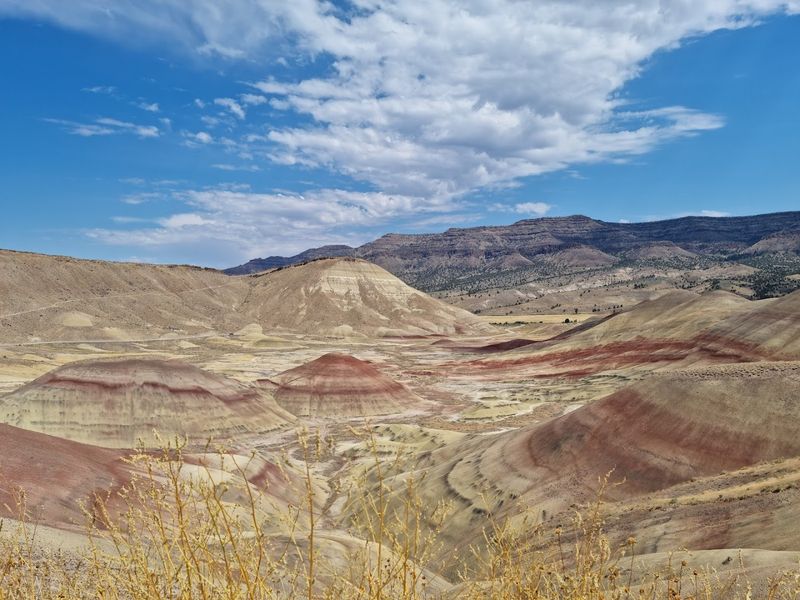
Red, gold, black, and tan rolling hills that look almost too vivid to be real, that is the Painted Hills in a single image.
Part of John Day Fossil Beds National Monument in central Oregon, the Painted Hills Unit sits about 9 miles northwest of Mitchell. The drive out there cuts through wide open ranching country before suddenly revealing one of the most colorful landscapes in the entire western United States.
The colors come from ancient volcanic ash and clay minerals that respond to moisture. After spring rain, the reds and golds intensify dramatically.
Late April and early May offer some of the most vivid color displays of the year.
Several short trails loop through the area. The Painted Hills Overlook Trail is only 0.5 miles and gives a panoramic view of the main ridge.
The Carroll Rim Trail is longer and more rewarding, climbing to a high point with views stretching for miles.
Wildflowers bloom around the base of the hills in spring, adding yellow and purple accents to the already bold color palette. Early morning light makes the hills glow in a way that afternoon sun simply cannot match.
Stay on designated trails here. The clay soil is fragile, and footprints can damage the formations permanently.
This is a place that deserves respect and a slow pace.
6. Steens Mountain Backcountry Byway, Harney County, Oregon
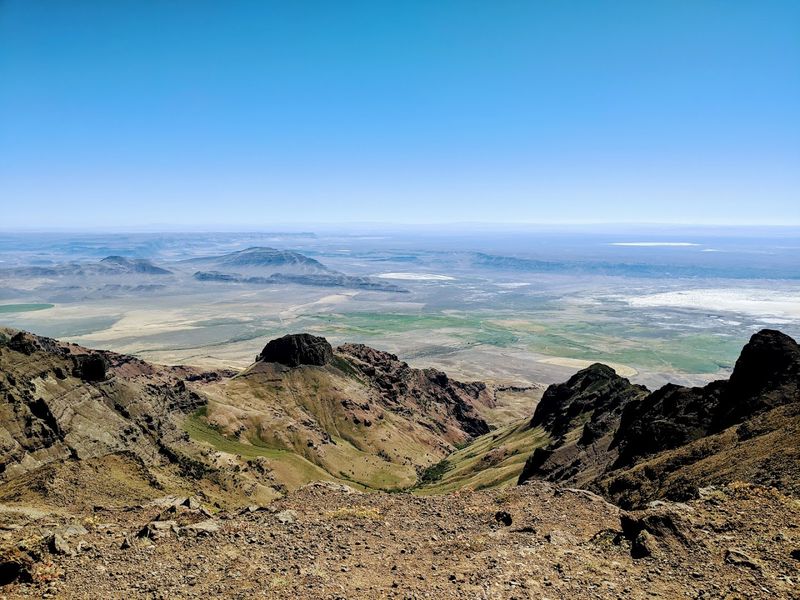
Steens Mountain does not ease you in gently. It drops nearly 5,000 feet on its eastern side in just a few miles, creating one of the most dramatic fault-block escarpments in North America.
Located in Harney County in southeastern Oregon, the Steens Mountain Backcountry Byway is a 66-mile loop that climbs to nearly 9,700 feet at its highest point. The drive passes through aspen groves, glacially carved gorges, and open alpine terrain before delivering jaw-dropping views of the Alvord Desert below.
Late spring access depends heavily on snowmelt. The upper portions of the loop typically open in June, but lower sections can be explored earlier.
Always check with the Bureau of Land Management office in Hines before heading out.
The Kiger Gorge and Little Blitzen Gorge viewpoints are among the most dramatic stops on the route. These U-shaped valleys were carved by glaciers thousands of years ago and look completely unlike anything else in Oregon.
Wild horses roam the Steens area, and spring is a great time to spot them with young foals. Pronghorn antelope and bighorn sheep are also regularly seen along the lower stretches of the byway.
Cell service is essentially nonexistent out here. Download offline maps, tell someone your plans, and enjoy being genuinely off the grid for a few hours.
7. Rogue-Umpqua Scenic Byway, Southern Oregon
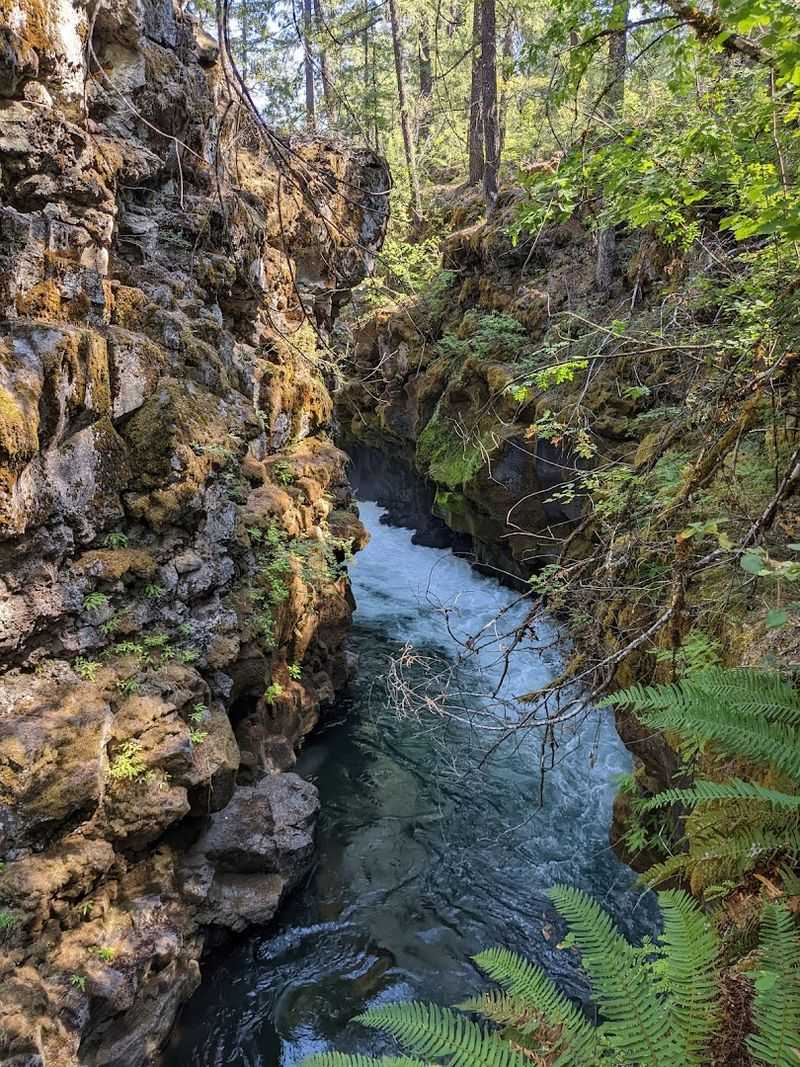
Some roads follow rivers, and some roads are defined by them. The Rogue-Umpqua Scenic Byway belongs firmly in the second category.
This 172-mile route in southern Oregon connects Roseburg to Crater Lake National Park, tracing the North Umpqua and Rogue rivers through canyon forests and volcanic terrain. It passes through the communities of Glide, Toketee Falls, and Union Creek along the way.
Toketee Falls is one of the most photographed stops on the byway. The falls drop 120 feet through a perfectly formed basalt canyon, and the short half-mile hike to the viewpoint is well worth the effort.
Spring snowmelt pushes the flow to its most powerful and photogenic state.
Watson Falls, just a short detour off the main route, is another highlight. At 272 feet, it is one of the tallest waterfalls in Oregon and sees far fewer visitors than it deserves.
The byway also passes through the Umpqua National Forest, where old-growth Douglas fir trees create a cathedral-like canopy over the road. Driving through it in spring, with new green growth everywhere, has a deeply calming effect.
Plan for a full day on this route. There are enough pull-offs, short hikes, and scenic overlooks to easily fill eight hours without rushing.
This is a drive that rewards patience.
8. Wallowa Lake Loop, Wallowa County, Oregon
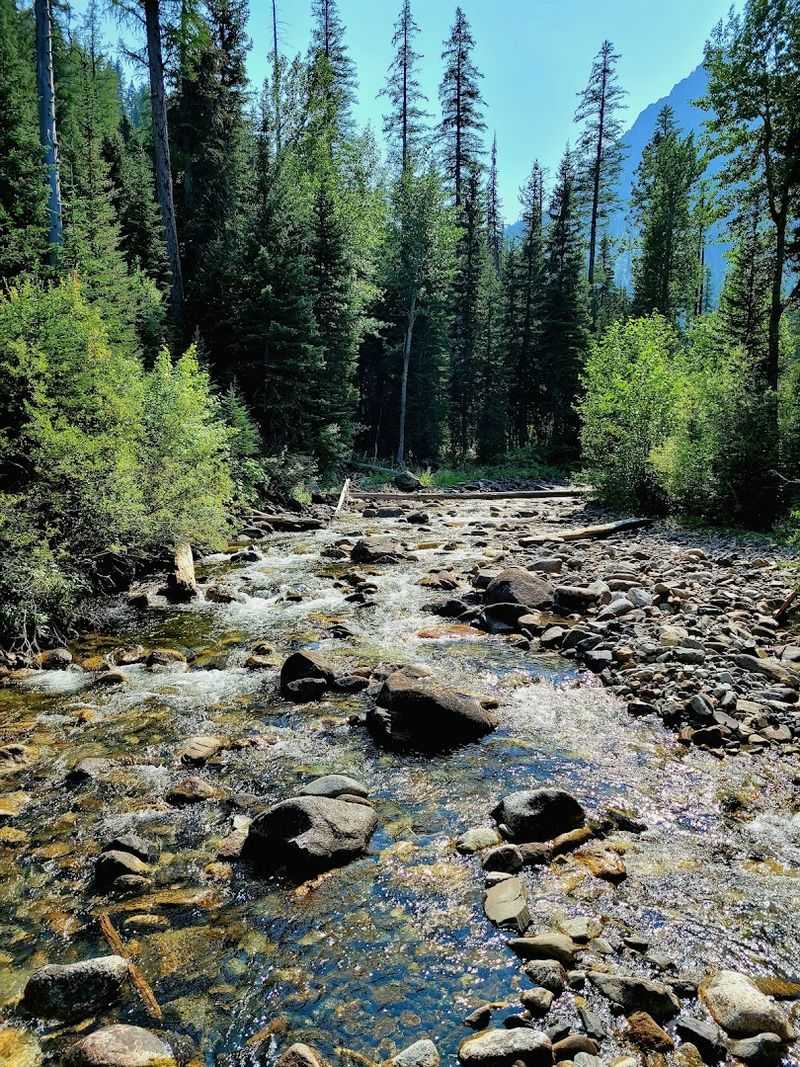
People call the Wallowas the Switzerland of Oregon, and once you see them in spring, that nickname starts to make perfect sense.
The Wallowa Lake Loop in northeastern Oregon is a short but spectacular drive that circles one of the most beautiful glacial lakes in the Pacific Northwest. The lake sits at the base of the Wallowa Mountains, with peaks rising sharply above 9,000 feet on three sides.
The town of Joseph, Oregon, is the perfect base for this trip. It is a small arts community with excellent bronze foundries, galleries, and a laid-back energy that suits a slow spring getaway perfectly.
Several good restaurants and local shops line the main street.
Wallowa Lake State Park sits at the southern end of the lake and offers camping, hiking trails, and access to the Wallowa Lake Tramway. The tram climbs to 8,150 feet and delivers views that stretch into Idaho and Washington on clear days.
Spring wildflowers appear along the lake shoreline in May, and the snowmelt feeds the streams that pour down from the mountains with impressive force. Wildlife is active this time of year, including deer, osprey, and the occasional black bear spotted at a safe distance.
The drive itself is only about 6 miles around the lake, but the scenery makes it feel much bigger than that.
9. Cape Blanco to Port Orford Coastal Drive, Southern Oregon Coast
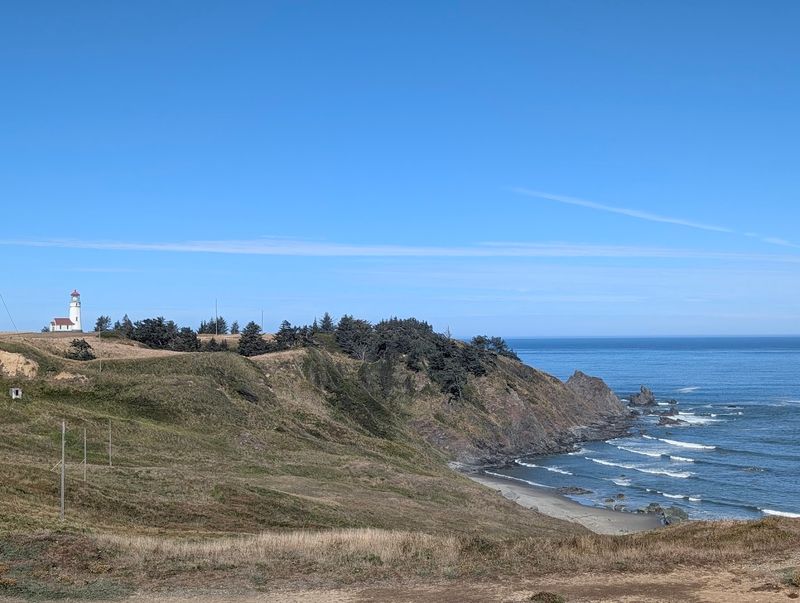
Oregon’s southern coast plays by its own rules, and the stretch between Cape Blanco and Port Orford is one of the most overlooked drives in the entire state.
Cape Blanco sits on the westernmost point of Oregon and is home to the Cape Blanco Lighthouse, built in 1870. It is the oldest operating lighthouse in Oregon and one of the most dramatically positioned, perched on a headland above wild Pacific surf.
The drive south to Port Orford covers only about 9 miles, but the scenery shifts constantly. Rugged sea stacks, grassy bluffs, and crashing waves line the route.
Port Orford itself is a small fishing town with a working boat dock unlike any other on the coast, boats are hoisted in and out of the water by crane because there is no protected harbor.
Spring is ideal for whale watching along this stretch. Gray whales migrate north from March through May, and the bluffs near Cape Blanco offer excellent vantage points for spotting spouts offshore.
Humbug Mountain State Park sits just south of Port Orford and offers a forested hike to a 1,756-foot summit with panoramic ocean views. The trail is lush with spring growth and takes about two hours round trip.
This corner of Oregon feels genuinely undiscovered, and that feeling is exactly what makes it special.
Dear Reader: This page may contain affiliate links which may earn a commission if you click through and make a purchase. Our independent journalism is not influenced by any advertiser or commercial initiative unless it is clearly marked as sponsored content. As travel products change, please be sure to reconfirm all details and stay up to date with current events to ensure a safe and successful trip.
