Indiana might seem like a state you just pass through on your way to somewhere else, but the Hoosier State hides some truly bizarre and fascinating stops along its roads.
From a ball covered in thousands of paint layers to a grave sitting smack in the middle of a road, these quirky attractions turn boring drives into unforgettable adventures.
Each roadside oddity tells a story that captures the imagination and makes you pull over for a closer look.
Whether you’re a curious traveler or a local looking for something different, these seven unexpected stops will transform your Indiana road trip into a collection of tales you’ll share for years to come.
World’s Largest Ball of Paint
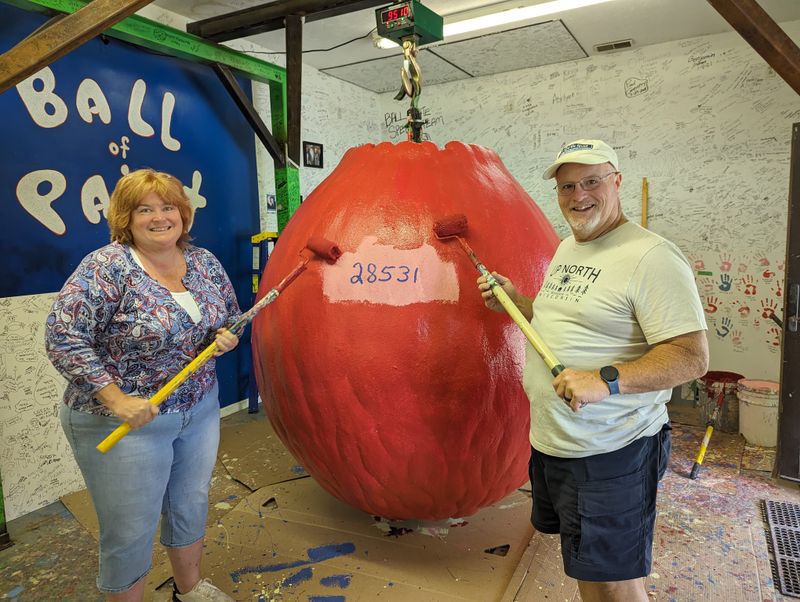
Tucked away in a small town near Alexandria, a seemingly ordinary shed holds an extraordinary record-breaking treasure that keeps growing with every visitor who stops by.
Mike Carmichael started this colorful project back in 1977 with a simple baseball, and over four decades later, it has ballooned into a massive sphere weighing thousands of pounds.
The ball now holds the Guinness World Record and features more than 26,000 layers of paint contributed by visitors from around the globe.
What makes this attraction so special is the interactive experience it offers to everyone who visits.
Guests don’t just observe this rainbow-colored marvel from behind a velvet rope—they actually get to add their own layer of paint to the ball.
Mike welcomes visitors by appointment and provides brushes, paint, and the chance to become part of this ongoing art project.
Each new coat adds to the ball’s history, and your contribution becomes permanently sealed beneath the layers that follow.
The experience feels personal and genuine, unlike many commercialized roadside attractions that charge hefty admission fees.
Mike’s enthusiasm for his creation is contagious, and he loves sharing stories about memorable visitors and unusual paint colors that have been added over the years.
The shed itself is filled with paint cans, brushes, and documentation of the ball’s incredible journey from baseball to behemoth.
Located at 10696 N 200 W, Alexandria, IN 46001, this quirky stop requires a bit of planning since visits are by appointment only.
It’s worth the effort to coordinate your visit and witness this testament to dedication, creativity, and the joy of building something unusual over time.
This isn’t just a roadside attraction; it’s a living, growing piece of folk art that invites you to leave your mark on Indiana history.
The Grave in the Middle of the Road
Imagine driving down a peaceful county road and suddenly having to steer around a fenced cemetery plot sitting right in the middle of the pavement.
This bizarre sight near Franklin, Indiana, exists because of a stubborn family dispute that dates back more than a century.
When the county wanted to build a road through the property in the early 1900s, the landowner refused to allow the grave of Nancy Kerlin Barnett to be moved, creating a permanent obstacle that remains to this day.
The small iron fence surrounds a single grave that forces traffic to split and flow around it on both sides.
Local legend has it that Nancy’s husband or descendants made a vow that her resting place would never be disturbed, and they held firm against all attempts to relocate the burial site.
The county eventually gave up and simply paved around the grave, creating one of the most unusual traffic patterns you’ll ever encounter.
Drivers approaching the site might do a double-take as they realize they’re navigating around someone’s final resting place.
The grave has become a peculiar landmark that represents the power of individual determination against bureaucratic plans.
It serves as a reminder that sometimes the most interesting stories come from ordinary people who refused to compromise on matters of principle.
Photographers and curious travelers frequently stop to capture images of this oddity, though visitors should be respectful given that it remains an actual grave.
You can find this unusual roadside memorial at 6844 E 400th S, Franklin, IN 46131, where County Road 400 South makes its distinctive split.
The grave stands as a testament to family loyalty and the unexpected ways history shapes the landscape we navigate today.
It’s a quick stop that sparks conversations about property rights, family devotion, and the quirky compromises that dot Indiana’s rural roads.
Martini-Drinking Pink Elephant
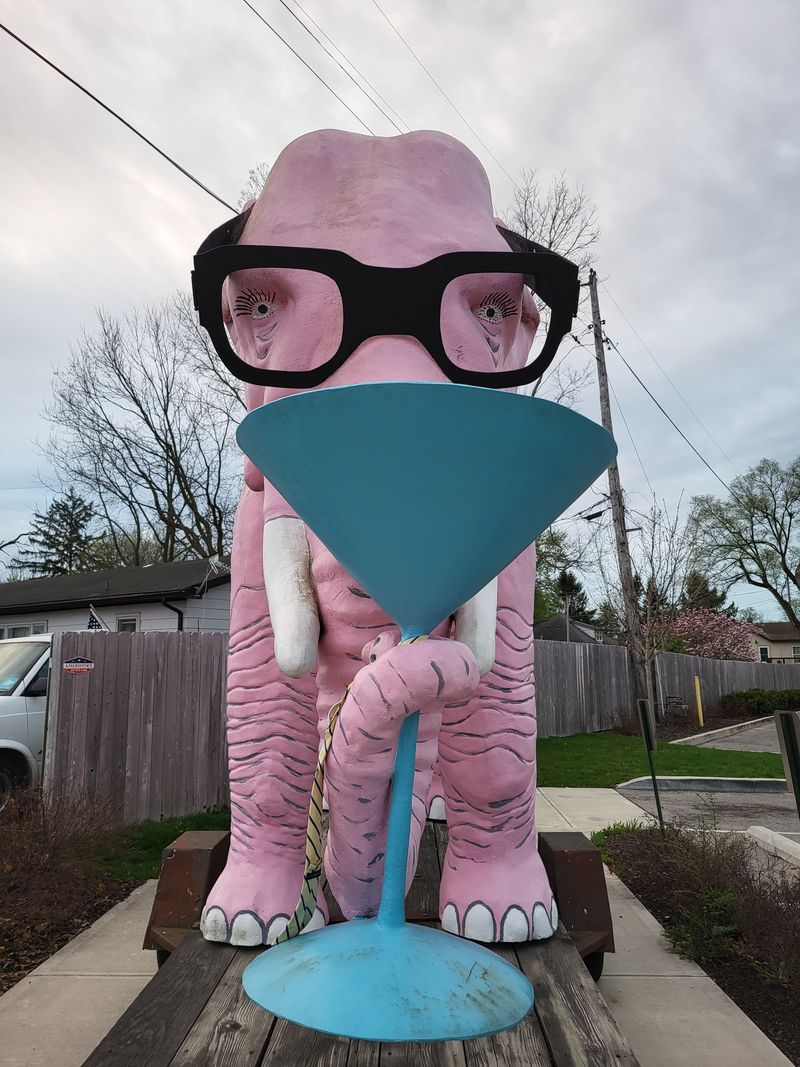
Standing proudly outside a beverage store in Fortville, a larger-than-life pink elephant wearing spectacles and holding a cocktail glass greets passersby with whimsical charm.
This cheerful mascot has become an iconic photo opportunity and a beloved local landmark that perfectly captures the playful spirit of small-town Indiana.
The elephant’s vibrant color and amusing pose make it impossible to drive past without at least slowing down for a second look.
The statue serves as the mascot for a local liquor store, playing on the old expression “seeing pink elephants” that refers to hallucinations associated with excessive drinking.
Rather than being a cautionary tale, this friendly pachyderm embraces the humor with its sophisticated glasses and martini glass, creating an image that’s more fun than preachy.
Families, friends, and solo travelers alike stop to pose with the elephant, creating silly photos that capture the lighthearted nature of Indiana’s roadside attractions.
The elephant has appeared in countless social media posts and has become a must-see landmark for anyone exploring the towns northeast of Indianapolis.
What makes this stop particularly enjoyable is how it represents the personality of small-town America where business owners aren’t afraid to have fun with their marketing.
The elephant isn’t part of a corporate chain or carefully focus-grouped branding strategy; it’s simply a local business having fun and creating something memorable for the community.
Children love the bright colors and silly concept, while adults appreciate the tongue-in-cheek humor.
Located at 308 W Broadway St, Fortville, IN 46040, this cheerful elephant is easy to spot from the road and welcomes visitors any time.
It’s a perfect example of how the most memorable road trip stops often aren’t official tourist attractions but rather unexpected bits of character that make a place unique and worth remembering.
The Tree on the Courthouse Roof
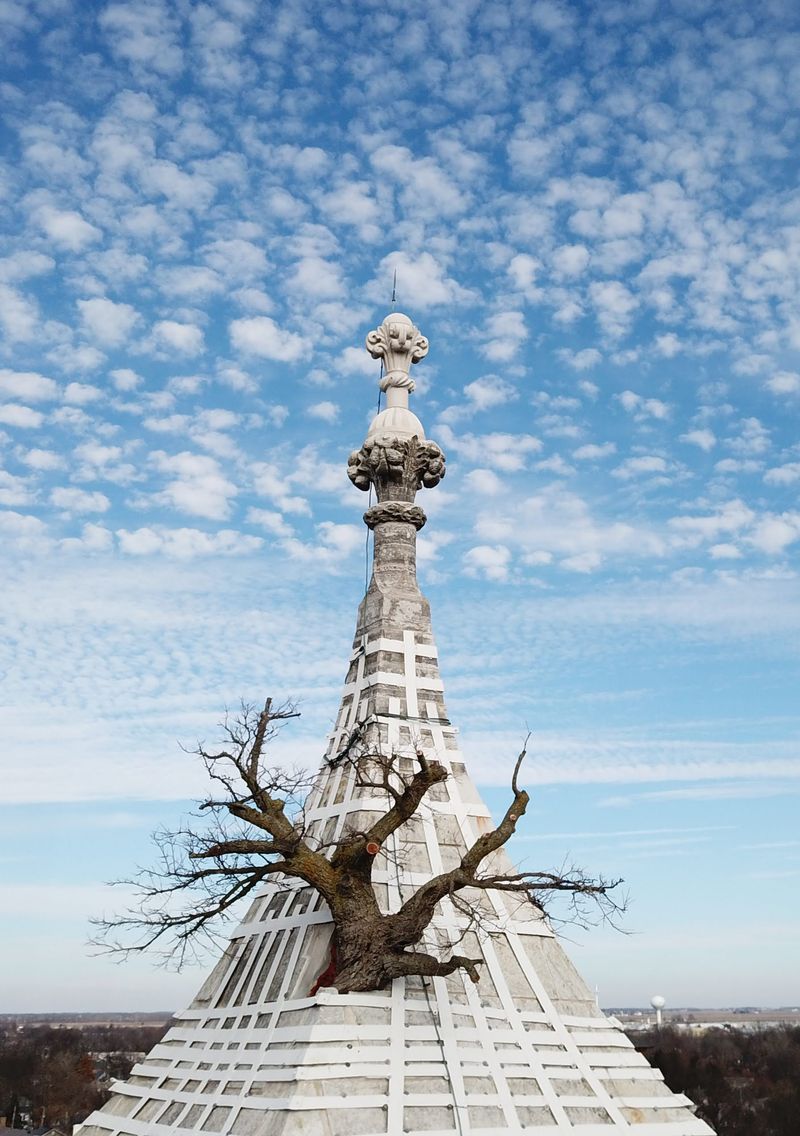
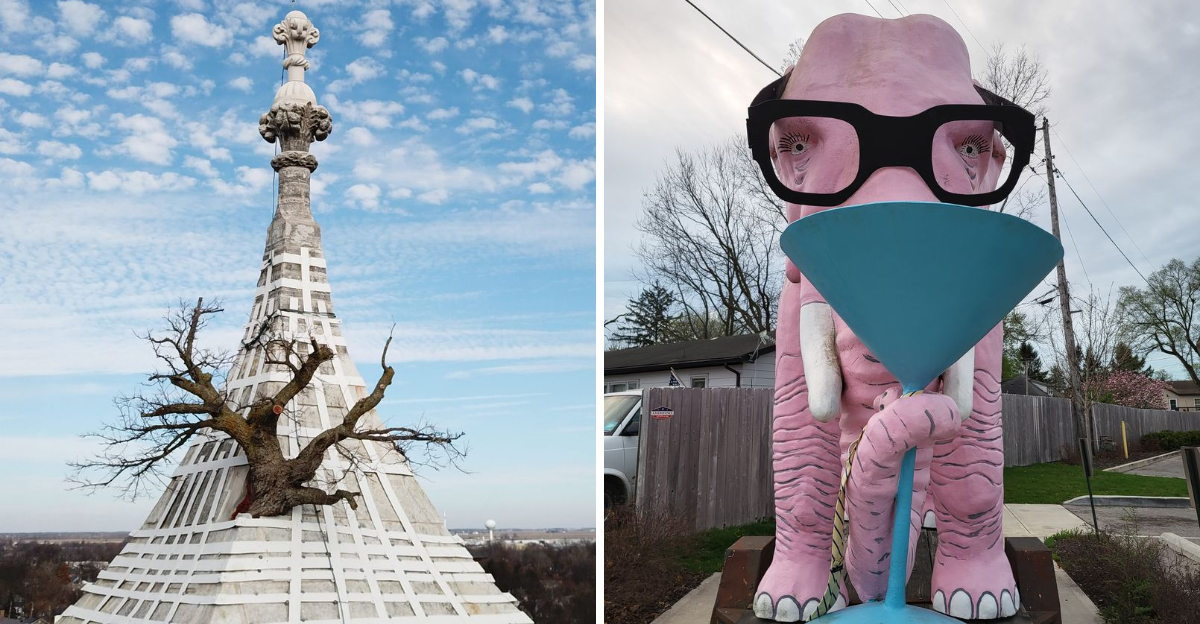
Greensburg, Indiana, has earned the nickname “Tree City” not because of its parks or forests, but because of a biological mystery that has puzzled visitors for more than a century.
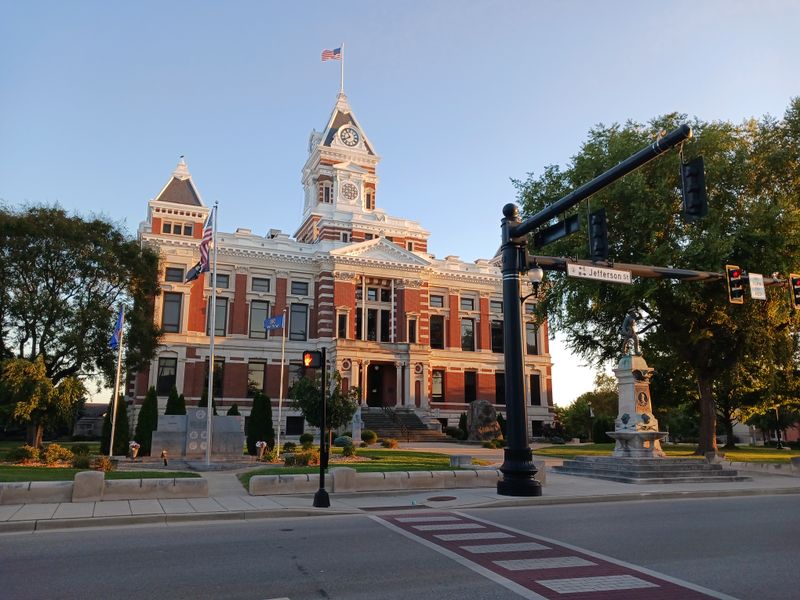
A large tree grows from the top of the Decatur County Courthouse tower, defying logic and expectations about where trees should put down roots.
This isn’t a decorative planter or intentional landscaping; it’s a genuine tree that somehow found enough soil and moisture in the courthouse tower to establish itself and thrive.
The tree has become such an integral part of Greensburg’s identity that the town has embraced it as a symbol and incorporated it into local branding.
Scientists and horticulturists have studied the phenomenon, trying to understand how a tree can survive in such an unlikely location without regular watering or deep soil.
The current tree is actually one in a succession of trees that have grown in the same spot, as previous trees have died and been replaced by seedlings that take root in the accumulated organic matter.
The courthouse tower apparently provides just enough protection from harsh weather and just enough moisture accumulation to sustain tree growth.
Visitors can view the tree from the courthouse square, where it’s visible from multiple angles as it extends from the tower’s top.
The sight is so unusual that many first-time visitors assume it’s artificial or part of an art installation, only to learn that it’s completely natural.
Local shops sell souvenirs featuring the tree, and the community takes pride in this quirky claim to fame.
The courthouse is located at 150 Courthouse Sq, Greensburg, IN 47240, in the heart of downtown where the tree has become an unexpected source of community pride.
This living landmark proves that sometimes nature finds a way in the most unlikely places, creating stories that endure for generations.
Old Ben and the Sycamore Stump
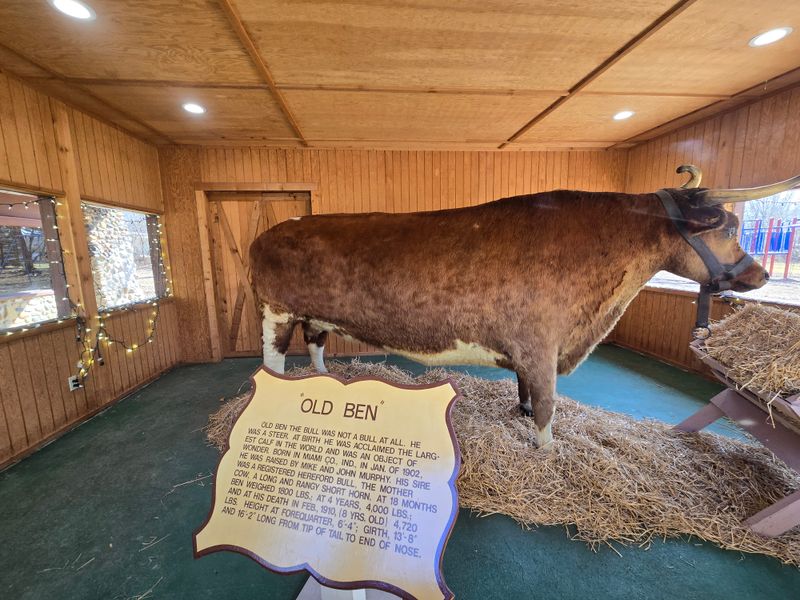
Highland Park in Kokomo houses one of the strangest museum displays you’ll find in any public park—the taxidermied remains of Old Ben, once the world’s largest steer.
This massive bovine weighed nearly 5,000 pounds and stood over six feet tall at the shoulder during his lifetime in the late 1800s and early 1900s.
Old Ben toured with circuses and exhibitions across the country, amazing audiences with his incredible size and surprisingly gentle temperament despite his imposing appearance.
After Old Ben’s death in 1910, his owners decided to preserve him through taxidermy so future generations could witness his remarkable proportions.
The mounted steer now stands in a glass enclosure where visitors can walk around and truly appreciate just how enormous this animal was compared to modern cattle.
Standing next to Old Ben gives you a visceral understanding of his size that photographs simply can’t capture; his legs are as thick as tree trunks and his massive head seems impossibly large.
Sharing space with Old Ben is an equally impressive natural wonder: a massive section of an ancient sycamore tree stump that measures over 57 feet in circumference.
This tree was already hundreds of years old when it was cut down, and the preserved stump shows the incredible girth that American sycamores can achieve.
Together, these two exhibits celebrate natural extremes, one animal and one plant that both reached extraordinary sizes.
The combination makes for a unique museum experience that you won’t find replicated anywhere else in the country.
Both exhibits are located in Highland Park in Kokomo, IN 46901, where they’re freely accessible to the public during park hours.
The park setting makes this an easy stop for families, and children are particularly fascinated by Old Ben’s enormous size.
This quirky pairing of agricultural history and natural history creates a memorable stop that showcases Indiana’s appreciation for the remarkable and unusual.
Flick Statue: A Christmas Story
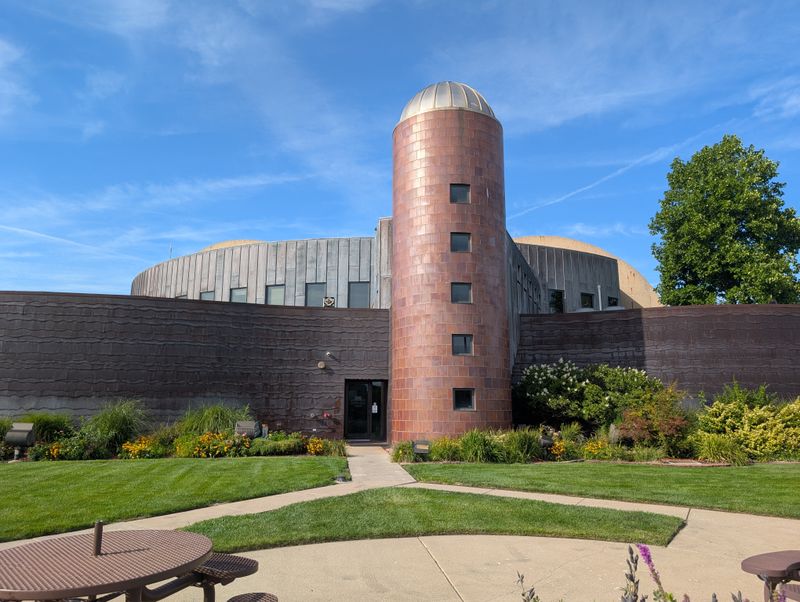
Movie fans and Christmas enthusiasts make pilgrimages to the Indiana Welcome Center in Hammond to see a bronze statue commemorating one of cinema’s most iconic moments.
The statue depicts young Flick with his tongue frozen to a flagpole, recreating the infamous “triple-dog-dare” scene from the beloved 1983 film A Christmas Story.
This permanent installation, created by the Fine Art Studio of Rotblatt Amrany, celebrates Indiana’s connection to the holiday classic and provides a year-round photo opportunity that brings the humor to life.
The statue captures the panic and helplessness on Flick’s face as he realizes the terrible mistake he’s made by accepting Schwartz’s dare on that cold December morning.
Every detail has been carefully crafted, from the textures of Flick’s 1940s winter coat to the expression of dawning horror as his tongue sticks fast to the metal.
Visitors love posing next to the statue, often pretending to be stuck themselves, appreciating the artistry that went into capturing this timeless piece of Hoosier-related pop culture history.
The welcome center location serves as a gateway for travelers entering or leaving Indiana, introducing them to the state’s pride in author Jean Shepherd, who grew up in Hammond.
A Christmas Story has become a holiday tradition for millions, with the annual exhibit “A Christmas Story” Comes Home drawing huge crowds to the center every November and December.
The film’s humor resonates because it captures the authentic, messy reality of childhood, and scenes like the flagpole incident remain universal symbols of youthful peer pressure and dares.
The statue honors that shared experience while celebrating a film that has become a permanent pillar of the American holiday season and Indiana’s cultural identity.
Located at 7770 Corinne Dr, Hammond, IN 46323, the statue stands right outside the main entrance to greet guests at the Indiana Welcome Center near the Illinois border.
It is a lighthearted tribute that showcases the region’s unique heritage and provides a fun, unexpected greeting for travelers exploring the many treasures of the Hoosier State.
Jug Rock
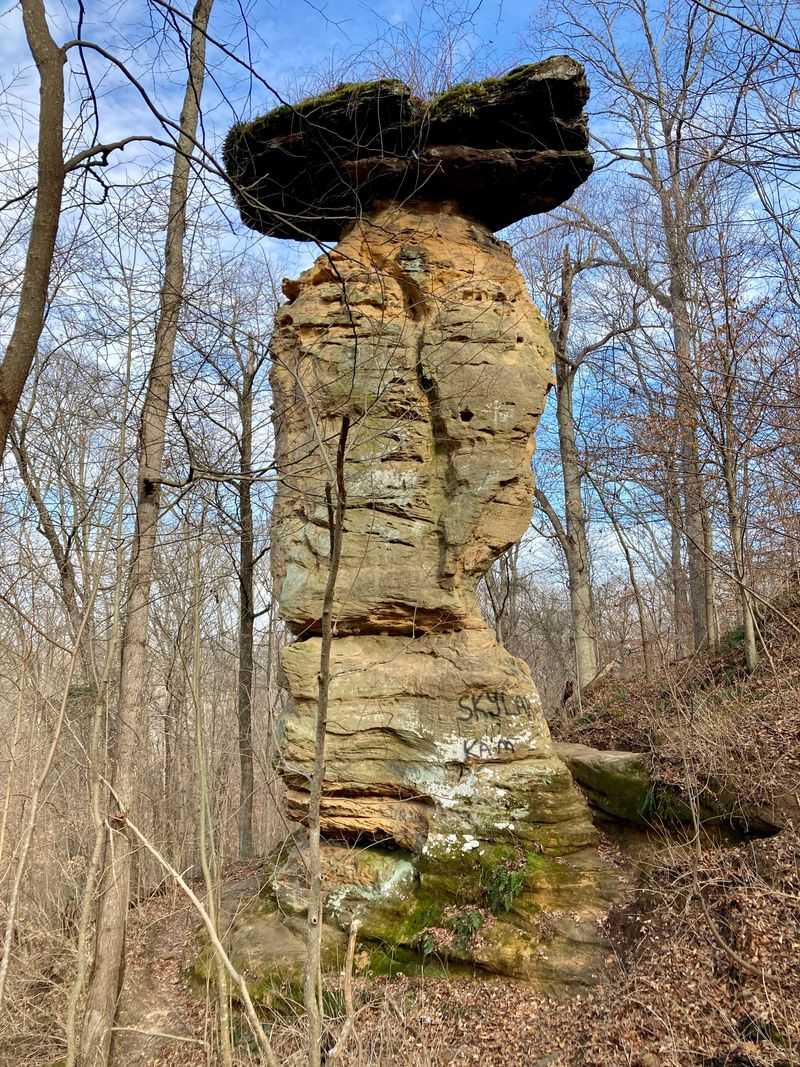
Rising from the Indiana landscape near Shoals, Jug Rock stands as a geological wonder that has captivated visitors for generations with its improbable shape and impressive size.
This natural sandstone formation is the largest free-standing table rock east of the Mississippi River, measuring approximately 60 feet tall with a distinctive mushroom or jug-like profile.
Erosion over millions of years carved away the softer rock layers beneath the harder capstone, creating a narrow stem that seems impossibly delicate for the massive rock it supports.
The formation’s survival is remarkable considering how vulnerable it appears to collapse or weathering.
Geologists study Jug Rock to understand erosion patterns and the different hardness levels of sedimentary rock layers in southern Indiana.
The harder sandstone cap has protected the softer rock directly beneath it while wind, water, and weather eroded the surrounding material, leaving the distinctive pedestal shape that gives the rock its name.
Native Americans knew about this formation long before European settlers arrived, and local legends have grown around this natural landmark over the centuries.
Visitors can view Jug Rock from a designated observation area that provides excellent photo opportunities and interpretive signs explaining the formation’s geology.
The surrounding area offers a peaceful natural setting where you can appreciate this geological oddity while enjoying the southern Indiana landscape.
Unlike many roadside attractions, Jug Rock requires no admission fee and offers a genuine natural wonder rather than a manufactured tourist trap.
The formation is located off Albright Ln in Shoals, IN 47581, where a short walk from the parking area leads to viewing platforms.
Jug Rock represents the kind of patient, powerful natural forces that shape landscapes over incomprehensible timescales, creating something beautiful and improbable that turns a simple drive through southern Indiana into an encounter with geological history.
Dear Reader: This page may contain affiliate links which may earn a commission if you click through and make a purchase. Our independent journalism is not influenced by any advertiser or commercial initiative unless it is clearly marked as sponsored content. As travel products change, please be sure to reconfirm all details and stay up to date with current events to ensure a safe and successful trip.
