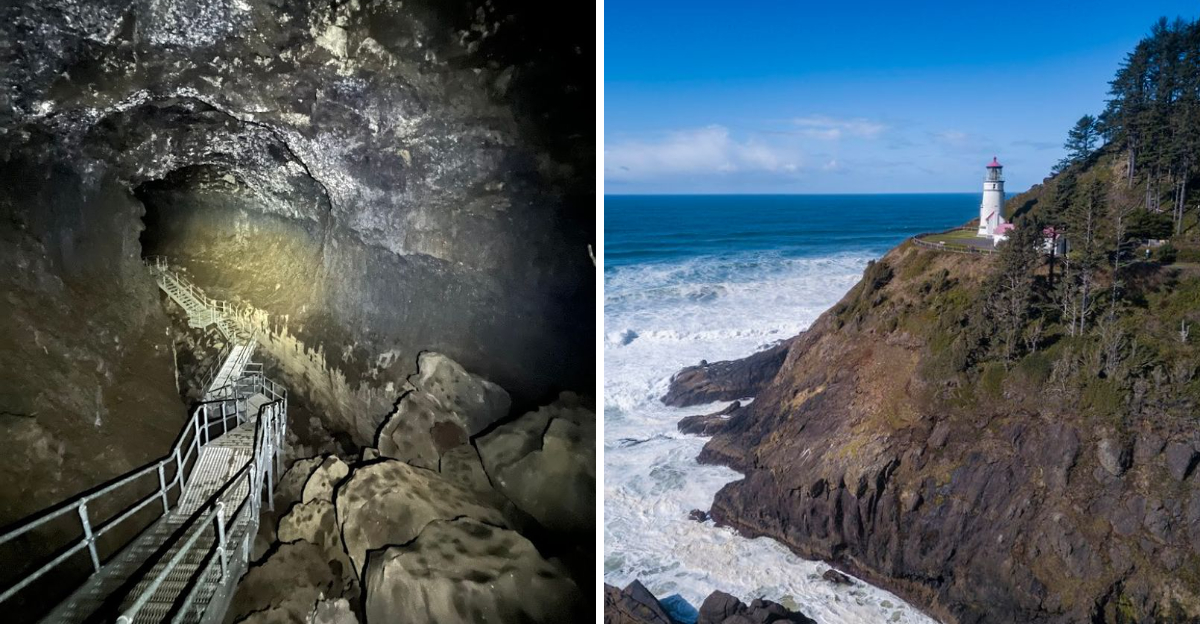
Oregon is full of places that make you do a double-take and whisper, “Wait… this is real?”. I spent days chasing down 10 spots that look straight out of a dream – strange, stunning, and completely unexpected.
From glowing waters to gravity-defying landscapes, each location made me question my own eyes. Locals move through some of these gems like it’s just another Tuesday, while I bounced from one jaw-dropping scene to the next.
Every stop had its own quirky twist, from hidden art installations to natural wonders that feel almost magical. Even short visits turn into full-on adventures you’ll remember forever.
By the end, I was convinced that Oregon might secretly be the most delightfully unbelievable state in the country.
1. Thor’s Well, Yachats, Oregon Coast
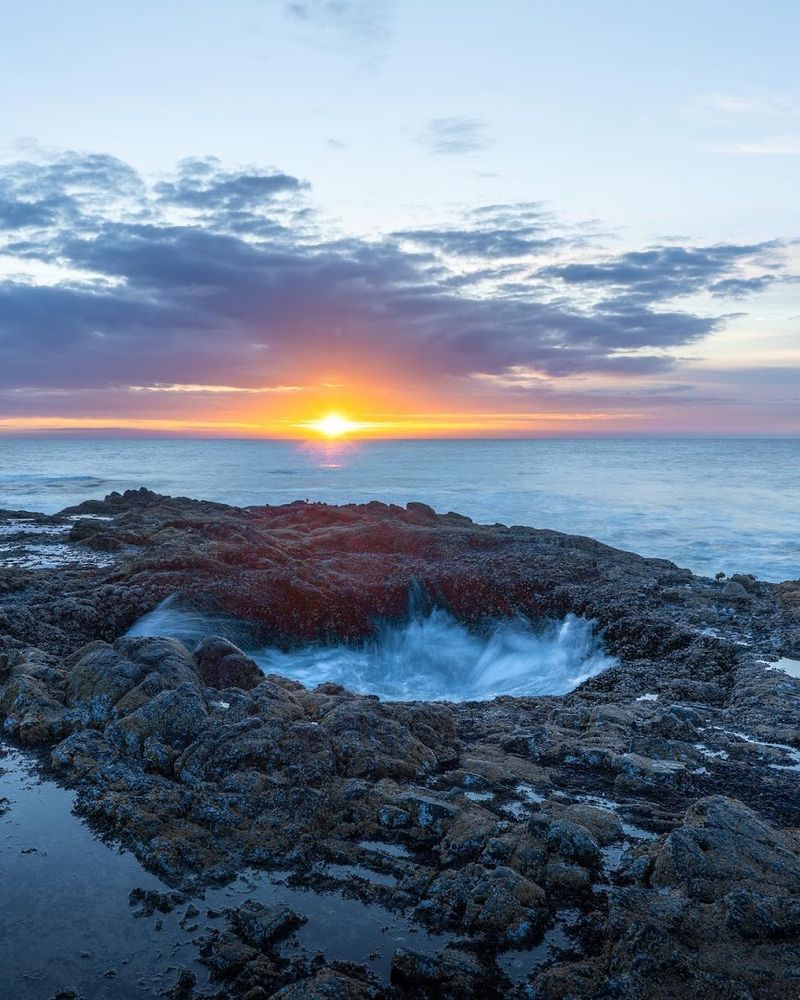
A giant hole in the ocean rocks that appears to swallow the sea whole is not something you expect to find on a casual coastal walk.
Thor’s Well sits near Yachats along the central Oregon coast, carved into the basalt shoreline at Cape Perpetua.
It formed when the roof of a sea cave collapsed, leaving a roughly 20-foot deep opening in the rock.
When waves roll in, water surges up through the hole and spills dramatically over the rim. During high tide and stormy weather, the effect is absolutely jaw-dropping.
The best time to visit is about an hour before high tide. Arriving then gives you the full show without getting dangerously close to the surging water.
Wear shoes with good grip and stay behind the safety barriers. The rocks here are slippery and the waves are unpredictable.
Photographers love this spot at sunset, when the golden light catches the mist and spray beautifully. Getting the perfect shot requires patience, but the results are stunning.
Thor’s Well is part of the Cape Perpetua Scenic Area, so there is plenty more to explore nearby. The Spouting Horn and Cook’s Chasm are just a short walk away along the same trail.
2. Painted Hills, John Day Fossil Beds, Eastern Oregon
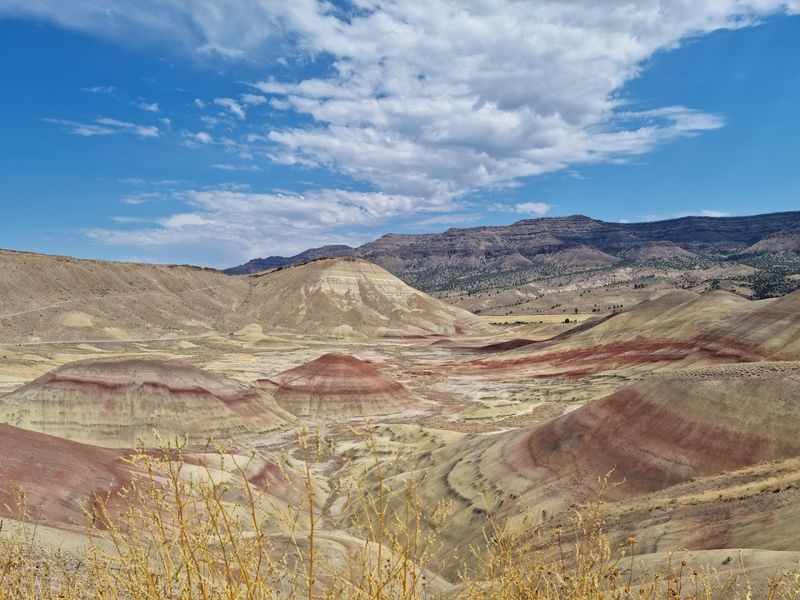
Some landscapes look like a painter went wild with a giant canvas, and the Painted Hills in Eastern Oregon are exactly that kind of place.
Located within the John Day Fossil Beds National Monument near the town of Mitchell, these hills are one of the most visually striking spots in the entire Pacific Northwest.
The colors you see, including deep red, burnt orange, gold, and black, come from layers of volcanic ash and minerals deposited over 33 million years.
As sunlight shifts throughout the day, the colors seem to change with it. Early morning and late afternoon are the best times to visit for the richest, most vivid hues.
Short, well-marked trails wind around and through the hills. The Painted Hills Overlook Trail offers a wide panoramic view, while the Leaf Hill Trail puts you right in the middle of the color bands.
No climbing on the hills is allowed. The surface layer is fragile and can be damaged by foot traffic, so staying on the trails protects the site for future visitors.
Mitchell is the nearest town and has basic amenities including a small market and lodging options. Camping is also available nearby at the Painted Hills Unit campground.
3. Crater Lake, Crater Lake National Park, Southern Oregon
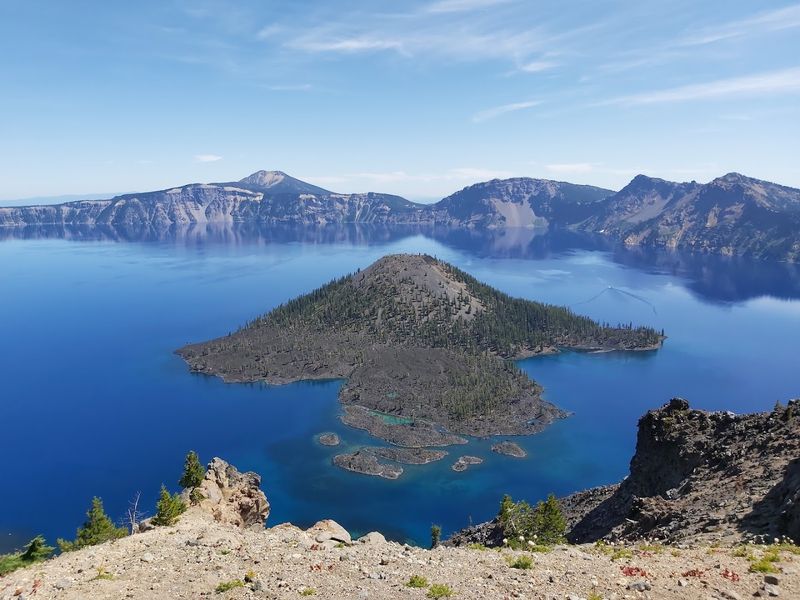
No photograph fully prepares you for the color of Crater Lake. That shade of blue is so deep and pure it looks almost unreal the first time you see it.
Crater Lake sits in the caldera of Mount Mazama, a volcano that erupted and collapsed roughly 7,700 years ago. It is located in Crater Lake National Park in southern Oregon.
At 1,943 feet deep, it holds the title of the deepest lake in the United States. The water is incredibly clear, with visibility reaching up to 100 feet below the surface.
Because no rivers flow in or out, the lake is fed entirely by rain and snowmelt. That isolation is what keeps the water so remarkably pure and blue.
The 33-mile Rim Drive circles the entire lake and offers dozens of viewpoints. Each stop reveals a slightly different perspective of the caldera and the iconic Wizard Island rising from the center.
Boat tours run in summer and take visitors to Wizard Island, where you can hike to the top of the volcanic cone. Spots fill up fast, so booking in advance is strongly recommended.
Winter brings massive snowfall to the rim, sometimes exceeding 40 feet annually. The park stays open year-round, and snowshoeing along the rim in winter is a surreal, peaceful experience.
4. Alvord Desert, Harney County, Southeastern Oregon
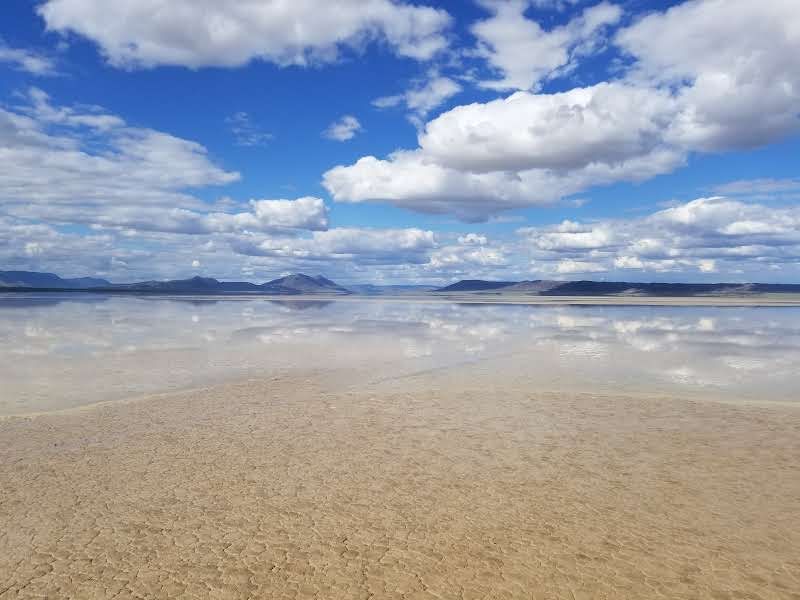
Picture a perfectly flat, blindingly white expanse of cracked earth stretching for miles in every direction, with a massive mountain wall rising straight out of the ground behind it.
That is the Alvord Desert, a remote dry lakebed playa in Harney County, southeastern Oregon. It sits in the rain shadow of Steens Mountain, one of the largest fault-block mountains in North America.
The playa covers roughly 100 square miles and sits at about 4,000 feet in elevation. During dry months, the surface becomes incredibly hard and smooth.
Speed enthusiasts have actually set land-speed records on this flat surface. The conditions here rival those of famous playas like Bonneville Salt Flats in Utah.
Getting here requires driving on unpaved roads, and a high-clearance vehicle is strongly recommended. The nearest town with services is Fields, a tiny community with a small store and a diner famous for its milkshakes.
Hot springs are located just east of the playa at Alvord Hot Springs, where you can soak in geothermal water while looking out over the desert. It is one of the most remote and relaxing spots in the state.
Stargazing here is extraordinary. With virtually no light pollution for miles around, the night sky fills with stars from horizon to horizon.
5. Tamolitch Blue Pool, McKenzie River Trail, Central Oregon
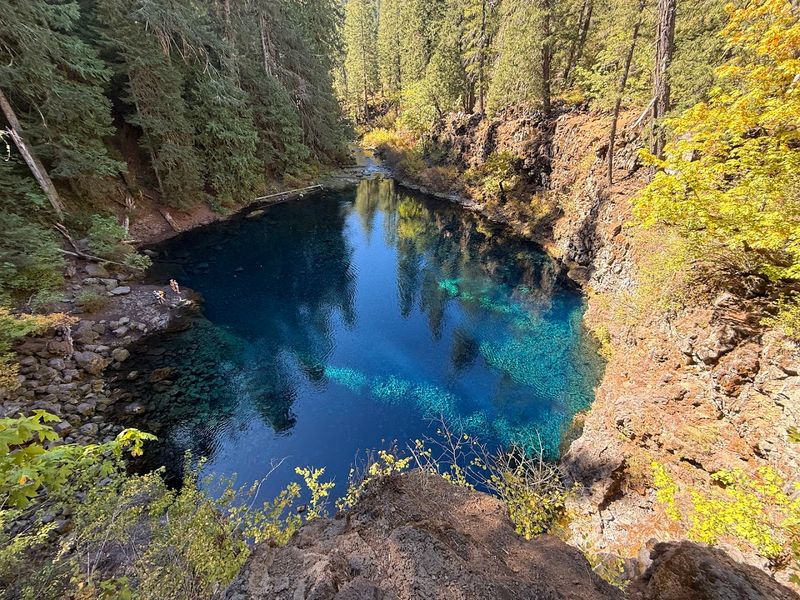
Imagine hiking through dense forest and suddenly arriving at a pool of water so intensely blue it looks like someone poured paint into it.
Tamolitch Blue Pool is found along the McKenzie River Trail in the Willamette National Forest in central Oregon, about 15 miles east of the town of Blue River.
The pool gets its remarkable color from the McKenzie River, which flows underground through ancient lava tubes and resurfaces here in a dramatic underground spring.
The surrounding rock is dark volcanic basalt, which makes the vivid sapphire water stand out even more sharply. The contrast between the black rock and blue water is genuinely breathtaking.
The round-trip hike to reach the pool is about four miles along a well-maintained trail. The terrain is relatively flat and suitable for most fitness levels, making it a popular day hike.
Water temperature stays extremely cold year-round, usually around 34 to 38 degrees Fahrenheit. Swimming is allowed, but be aware that the cold water can cause shock very quickly.
The pool is most visually stunning in late spring and early summer when water flow is at its highest. During late summer, the upper section of the river sometimes runs dry, but the pool itself remains filled.
Arrive early on weekends to beat the crowds.
6. Opal Creek Wilderness, Santiam Canyon, Northwestern Oregon
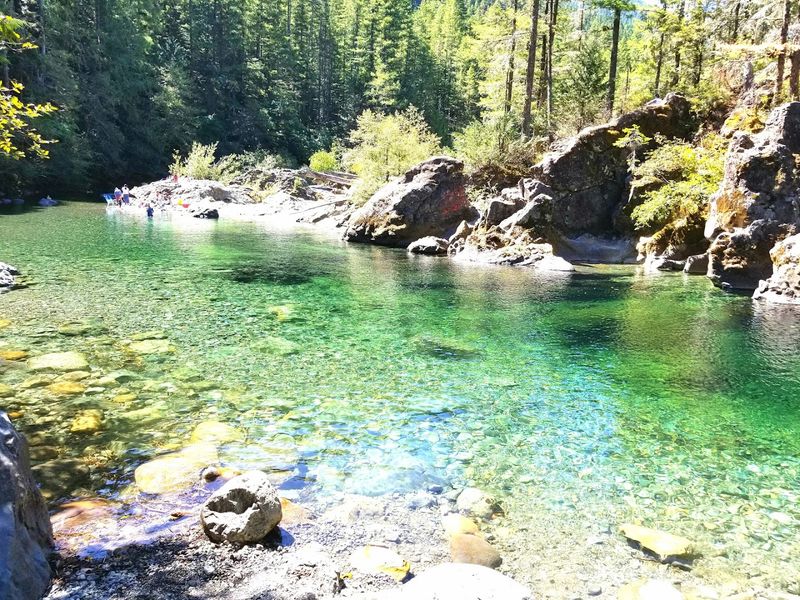
There is a place in Oregon where the water runs the color of a gemstone and the trees have been standing for over a thousand years.
Opal Creek Wilderness is located in the Santiam Canyon area of the Willamette National Forest in northwestern Oregon, roughly 25 miles east of the town of Stayton.
The creek gets its name from the opalescent green and blue tones of its water, which flows through one of the largest remaining old-growth forests in the Pacific Northwest.
Some of the Douglas fir and western red cedar trees here are more than 1,000 years old. Walking among them is a humbling experience that is hard to put into words.
The main trail into Opal Creek begins at the Jawbone Flats trailhead. A gravel road leads to the parking area, and from there a 5.5-mile round-trip trail follows the creek through the ancient forest.
Jawbone Flats is a historic mining settlement along the trail that has been preserved and is now used as an educational outdoor school. Stopping there gives great context to the area’s history.
Swimming holes along the creek are popular in summer, and the water is refreshingly cold and clean. Several natural pools invite you to stop and cool off on warm days.
7. Proxy Falls, Three Sisters Wilderness, Central Oregon
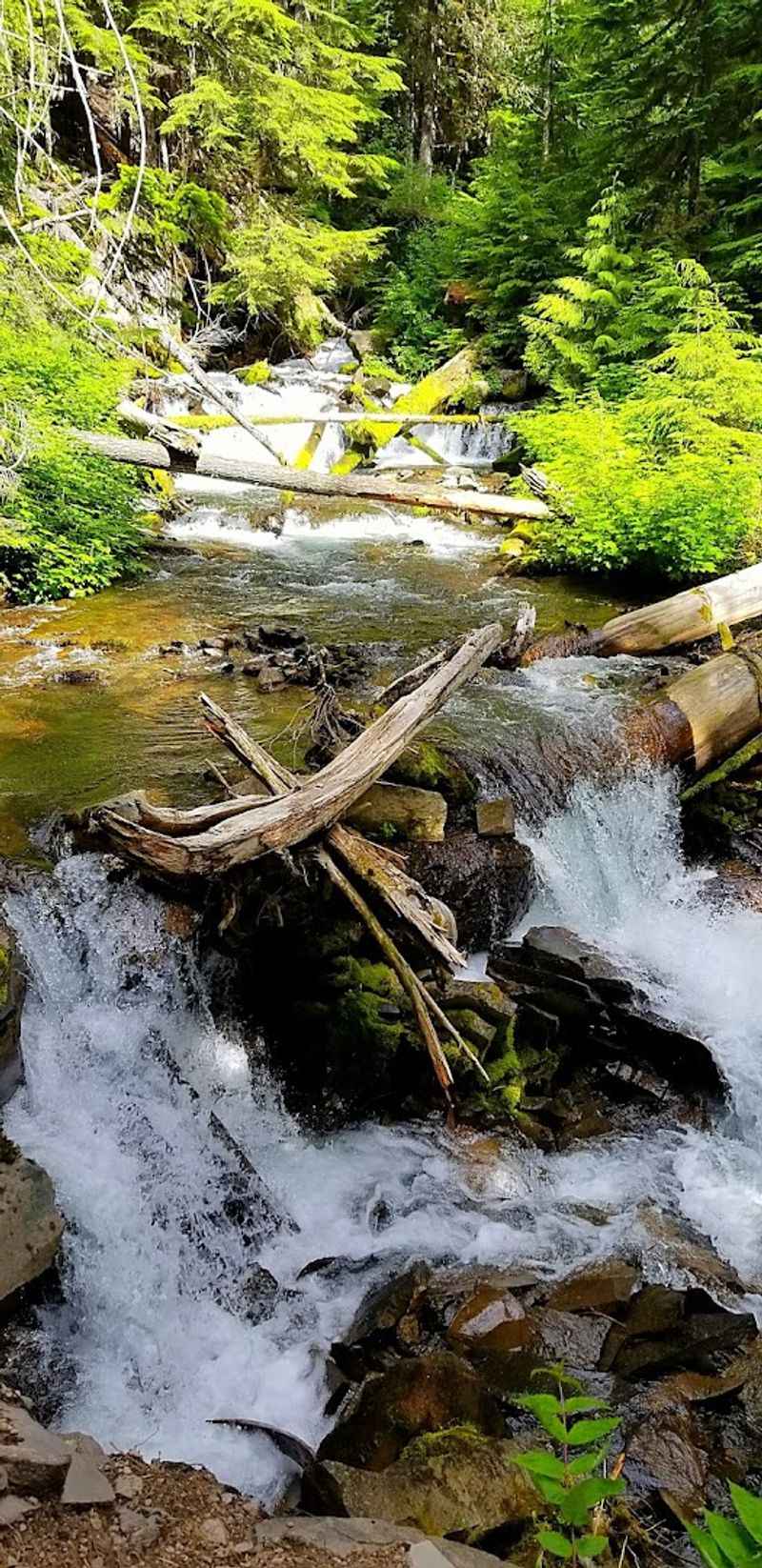
Some waterfalls are loud and obvious. Proxy Falls is the kind of place that reveals itself quietly, then completely takes your breath away.
Proxy Falls is located in the Three Sisters Wilderness area of the Willamette National Forest in central Oregon, near the town of McKenzie Bridge.
The falls actually split into two separate cascades, Upper Proxy Falls and Lower Proxy Falls, each with its own distinct character. Both are accessible via a short and scenic loop trail of about 1.5 miles.
Lower Proxy Falls drops about 200 feet over a curved basalt wall draped in thick green moss. The water fans out as it falls, creating a wide curtain effect that is truly magical.
Upper Proxy Falls is taller, dropping around 226 feet in a more vertical and narrow stream. Both falls reward visitors who take the time to explore the full loop.
The water from Proxy Falls actually disappears into the porous lava rock at the base and never forms a downstream creek. That geological quirk makes it one of the more unusual waterfalls in the entire state.
Late spring is the best time to visit when snowmelt pushes the water flow to its peak. The surrounding forest is brilliantly green at that time of year.
8. Heceta Head Lighthouse, Florence, Oregon Coast
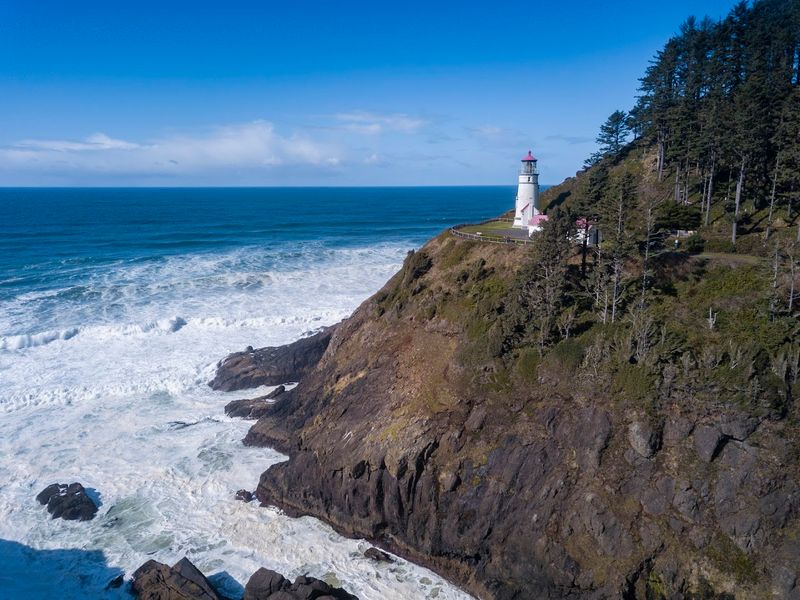
Perched on a rugged cliff above the Pacific, Heceta Head Lighthouse is the kind of place that makes you feel like you have stepped into a painting.
Located about 13 miles north of Florence on the central Oregon coast, this lighthouse has been guiding ships since 1894. It is one of the most photographed lighthouses in the entire United States.
The light itself is still active and visible up to 21 miles offshore on a clear night. The Fresnel lens inside is a beautifully preserved piece of maritime history.
The keeper’s house next to the lighthouse has been converted into a bed and breakfast called the Heceta Head Lighthouse Bed and Breakfast. Staying overnight there is a genuinely unforgettable experience.
A short but steep trail leads from the parking area up to the lighthouse. The views from the headland look straight out over the ocean and down the rocky coastline in both directions.
Sea lions, harbor seals, and migrating gray whales are commonly spotted from this overlook. Bring binoculars if you have them.
Below the headland, Sea Lion Caves is a nearby attraction where you can see wild Steller sea lions in a massive natural sea cave. It is well worth combining both stops into a single coastal day trip.
9. Bend Lava Tubes, Newberry National Volcanic Monument, Central Oregon
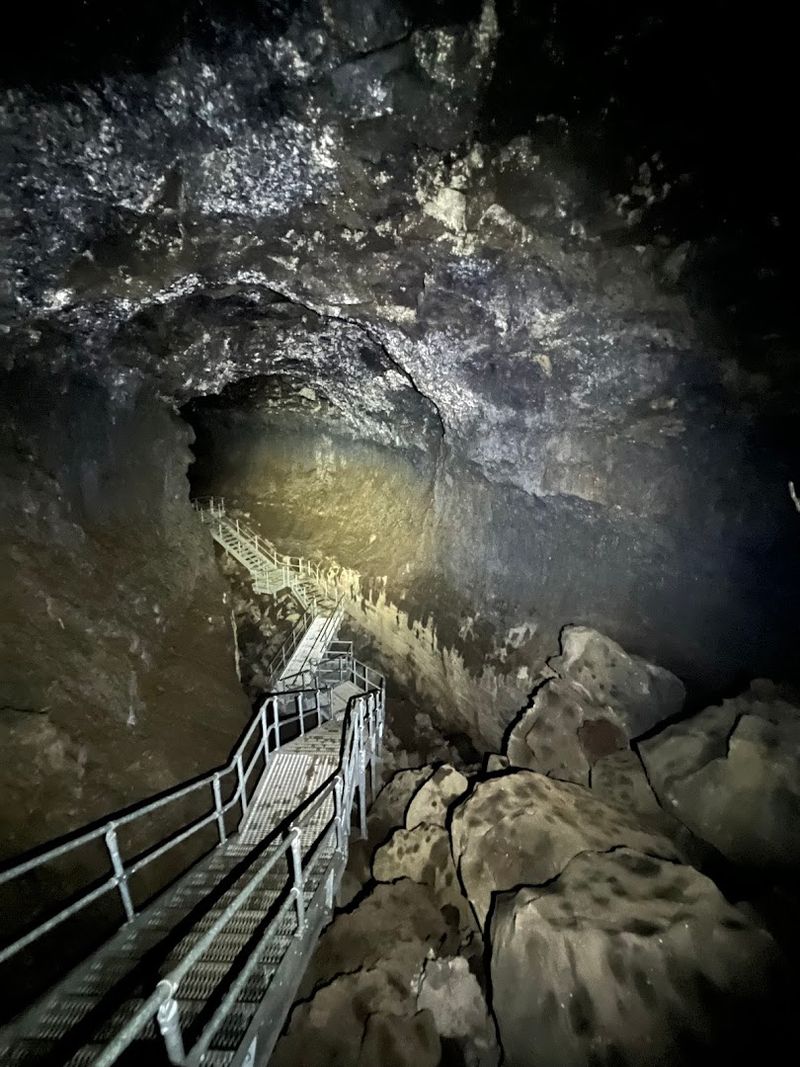
Walking underground through a tunnel carved by flowing lava millions of years ago is not an everyday experience, but near Bend, Oregon, it is entirely possible.
The Bend Lava Tubes are located within the Newberry National Volcanic Monument in central Oregon, managed by the Deschutes National Forest just south of the city of Bend.
The most popular of these tubes is the Lava River Cave, a single lava tube stretching over a mile in length. It is the longest uncollapsed lava tube in Oregon.
Inside, temperatures hover around 42 degrees Fahrenheit year-round, so bringing a warm jacket is essential even in the middle of summer. The cold can catch visitors off guard quickly.
Lanterns are available to rent at the entrance, which is helpful since the cave is completely dark beyond the entrance zone. Wearing sturdy closed-toe shoes is also strongly recommended.
Boyd Cave and Skeleton Cave are two other nearby lava tubes that are less visited and offer a more adventurous caving experience. These require more navigation and a reliable flashlight.
The Newberry Caldera at the top of the monument is another remarkable feature, containing two lakes, a massive obsidian flow, and panoramic views of the surrounding high desert.
10. Cape Kiwanda, Pacific City, Oregon Coast
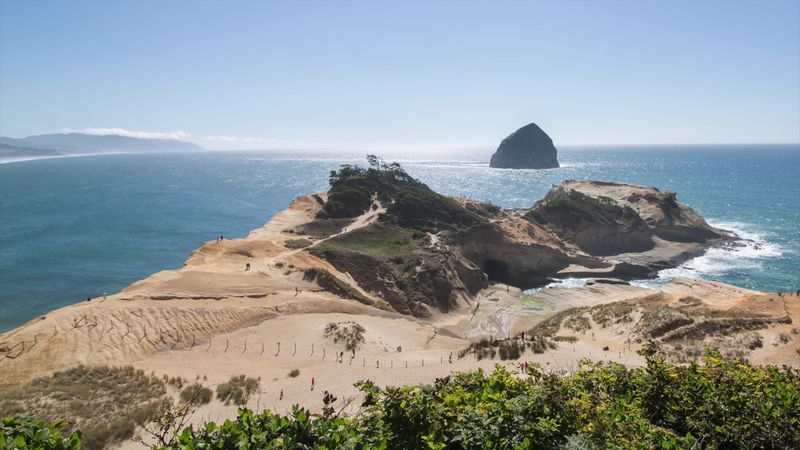
Not many places on the Oregon coast let you scramble up a giant golden sandstone cliff and look straight down at the crashing Pacific below.
Cape Kiwanda is located just north of Pacific City on the northern Oregon coast, about two hours west of Portland. It is one of the most accessible and dramatic natural headlands in the state.
The cape is made of soft Paleocene sandstone that has been sculpted by wind and waves into sweeping curves and dramatic overhangs. The warm golden color of the rock stands out beautifully against the blue ocean.
Climbing the large sand dune on the south side of the headland is a popular activity and offers wide panoramic views of the coastline. The hike up is short but steep, and the sandy descent is genuinely fun.
Pacific City sits just below the cape and is home to a fleet of flat-bottomed dory boats that launch directly from the beach into the surf. Watching them head out through the waves is an impressive sight.
The beach at the base of the cape is wide and sandy, great for walking, kite flying, and tidepooling at low tide. Haystack Rock, a distinctive offshore sea stack, adds another striking visual element to the view.
Sunset here is spectacular, with the golden sandstone cliffs catching the last light of the day in vivid orange and amber tones.
Dear Reader: This page may contain affiliate links which may earn a commission if you click through and make a purchase. Our independent journalism is not influenced by any advertiser or commercial initiative unless it is clearly marked as sponsored content. As travel products change, please be sure to reconfirm all details and stay up to date with current events to ensure a safe and successful trip.
