
Florida attracts millions of visitors every year with its sunny beaches, theme parks, and vibrant culture, but many tourists remain unaware of the state’s quirky legal landscape and persistent myths.
From protected chickens roaming freely in Key West to strict recording consent laws that could land you in serious trouble, the Sunshine State has its share of unusual rules that catch newcomers off guard.
Understanding these laws and separating fact from fiction can save you from unexpected fines, legal complications, or embarrassing misunderstandings during your visit.
Whether you’re planning a beach vacation, exploring wildlife habitats, or simply enjoying Florida’s unique character, knowing what’s real and what’s myth will help you navigate the state with confidence.
This guide explores seven surprising Florida laws and common misconceptions that visitors frequently overlook, offering practical insights to ensure your trip remains memorable for all the right reasons.
Armed with this knowledge, you’ll be better prepared to enjoy everything Florida offers while staying on the right side of the law and avoiding common tourist traps.
Let’s explore these fascinating legal quirks and myths that make Florida one of America’s most interesting states to visit.
Animal Cruelty Public Database – Dexter’s Law

Starting January 1, 2026, Florida became one of the first states to maintain a public, searchable database of individuals convicted of aggravated animal cruelty.
Named after a dog named Dexter who suffered horrific abuse, this law represents a significant step forward in protecting animals and informing communities about potential threats.
The Florida Department of Law Enforcement now manages this registry, making it accessible to anyone who wants to check whether a potential pet sitter, veterinary employee, or neighbor has a history of animal abuse.
Beyond the database itself, Dexter’s Law also increased sentencing penalties for those convicted of aggravated animal cruelty, recognizing the serious nature of these crimes.
Studies have shown that individuals who harm animals often pose risks to humans as well, making this registry a valuable public safety tool.
Visitors renting vacation homes or using pet care services in Florida can now verify the backgrounds of people who might interact with their beloved pets.
The law applies specifically to aggravated cases, which involve intentional torture, torment, or killing of animals, rather than minor neglect violations.
If you’re traveling to Florida with pets or considering adopting an animal during an extended stay, this database provides peace of mind and transparency.
Many animal welfare advocates hope other states will follow Florida’s example in creating similar registries.
Checking the database before hiring pet services demonstrates responsible pet ownership and helps support the law’s protective intent.
Florida’s commitment to animal welfare through Dexter’s Law shows how legal innovations can address community safety concerns while honoring the memory of abuse victims.
Protected Free-Roaming Chickens in Key West

Key West’s famous feral chickens have become unofficial mascots of the island, strutting confidently through streets, parks, and even outdoor restaurants without fear.
These colorful birds, often called “Gypsy Chickens,” are protected by local ordinance that makes it illegal to harm, kill, or capture them.
Their presence dates back centuries, with some historians suggesting they descended from chickens brought by Cuban immigrants or escaped from cockfighting operations.
Today, they’re as much a part of Key West’s character as Hemingway’s six-toed cats.
However, a 2021 update to the ordinance added an important twist that confuses many visitors.
While the chickens themselves remain protected, feeding them on public property is now illegal and can result in fines up to five hundred dollars.
This change came after residents complained about aggressive chicken behavior and unsanitary conditions caused by well-meaning tourists tossing food scraps.
The chickens have adapted remarkably well to urban life, foraging naturally and thriving without human intervention.
Visitors often find the chickens charming photo subjects, especially the roosters with their vibrant plumage and bold personalities.
Their crowing at dawn has become a signature sound of Key West mornings, though some hotel guests find it less enchanting than others.
Local authorities occasionally relocate particularly problematic birds to farms or sanctuaries when complaints mount.
The chicken protection law reflects Key West’s quirky commitment to preserving local character and wildlife, even when that wildlife wakes you at five in the morning.
Respecting these feathered residents by observing without feeding ensures they remain a beloved part of the island’s unique ecosystem.
Two-Party Consent for Recording Conversations

Florida stands as one of roughly a dozen states requiring all-party consent before recording any private conversation, whether in person or over the phone.
Under Florida Statute 934.03, secretly recording someone’s private oral or electronic communication without their knowledge constitutes a third-degree felony, carrying potential penalties of up to five years in prison.
This law catches many visitors off guard, especially those from one-party consent states where recording your own conversations is perfectly legal.
The key distinction involves whether participants have a reasonable expectation of privacy during the conversation.
Recording conversations in public spaces where no privacy expectation exists generally falls outside this statute’s scope.
However, recording a private discussion in a hotel room, rental car, or quiet restaurant booth without everyone’s permission violates the law.
Business travelers who routinely record meetings or phone calls for note-taking purposes must adapt their practices when operating in Florida.
Even recording a confrontation with a difficult landlord, mechanic, or service provider requires notification and consent from all parties involved.
The law applies equally to audio and video recordings that capture conversations, though video-only recordings without audio receive different treatment.
Many people mistakenly believe that announcing “this call is being recorded” at the beginning satisfies the requirement, but continued participation doesn’t always constitute legal consent.
Violators can face both criminal prosecution and civil lawsuits from recorded parties seeking damages.
Journalists, investigators, and everyday citizens must understand these restrictions before hitting the record button in Florida.
The statute’s strict penalties reflect the state’s strong stance on privacy rights and protection against unauthorized surveillance, making it essential knowledge for anyone conducting business or resolving disputes in the Sunshine State.
Complete Ban on Balloon Releases

As of July 1, 2024, Florida completely eliminated the previous exception that allowed releasing up to nine helium-filled balloons, now prohibiting the intentional release of even a single balloon.
This strengthened environmental protection law addresses the serious threat that released balloons pose to marine life, wildlife, and ecosystems throughout the state.
Balloons that float away eventually deflate and fall into oceans, rivers, lakes, or natural areas where animals mistake them for food.
Sea turtles, dolphins, manatees, and birds frequently ingest balloon fragments, leading to intestinal blockages, starvation, and death.
The updated statute treats balloon releases as littering infractions, with most violations carrying a one hundred fifty dollar fine.
Larger intentional releases, such as those at events or celebrations, can result in higher penalties and potential legal action.
Many event planners and celebration venues had to quickly adapt their practices, finding alternatives like biodegradable confetti, bubbles, or planted memorial trees.
The law applies to all balloon types, including those marketed as “biodegradable,” which still take years to decompose and cause harm during that period.
Visitors planning weddings, memorials, or celebrations in Florida must now choose environmentally friendly alternatives to traditional balloon releases.
Some communities offer balloon recycling programs and encourage proper disposal after parties.
The prohibition reflects Florida’s growing commitment to protecting its valuable coastal and marine ecosystems from preventable pollution.
Wildlife rehabilitation centers across the state have documented countless cases of animals harmed by balloon debris, making this law a necessary conservation measure.
Understanding and respecting this ban helps preserve Florida’s natural beauty and protects the diverse species that make the state such a remarkable ecological treasure for future generations to enjoy.
Prohibited Wildlife Harassment
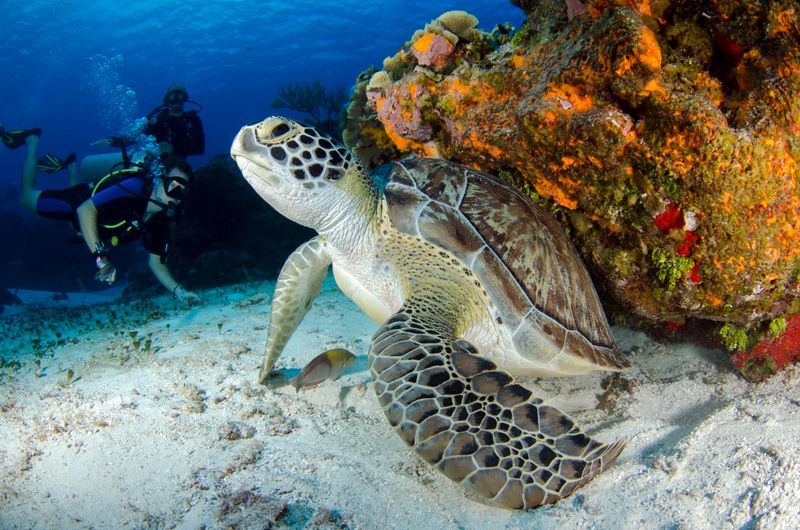
Florida’s waters host some of North America’s most iconic and protected marine species, including manatees, sea turtles, and dolphins, all shielded by strict harassment laws.
Both state and federal statutes make it illegal to touch, feed, pursue, or otherwise disturb these animals, with violations carrying substantial fines and potential criminal charges.
The Marine Mammal Protection Act and Endangered Species Act provide federal-level protection, while Florida adds its own enforcement mechanisms.
Manatees, those gentle aquatic giants often called “sea cows,” face particular vulnerability during winter months when they congregate in warm springs and power plant discharge areas.
Many well-intentioned tourists don’t realize that even passive interference, like blocking a manatee’s path or surrounding it with kayaks for photos, constitutes illegal harassment.
Federal authorities can impose civil penalties up to fifty thousand dollars per violation, and criminal violations may result in a year in prison.
Similar protections extend to sea turtles, whose nesting beaches attract crowds of observers each summer.
Touching nesting turtles, disturbing their nests, or using flashlights that disorient hatchlings all violate protective laws.
Dolphin encounters present another common violation area, as tour operators and individual boaters sometimes approach too closely or attempt to swim with wild pods.
Responsible wildlife viewing maintains proper distances, avoids feeding or touching, and minimizes disturbance to natural behaviors.
Florida Fish and Wildlife Conservation Commission officers actively patrol popular viewing areas and investigate reported violations.
Legitimate wildlife tour operators follow strict guidelines and educate participants about legal viewing practices.
Understanding these protections helps preserve Florida’s remarkable biodiversity while allowing visitors to appreciate these magnificent creatures safely and legally.
Respecting wildlife boundaries ensures these species survive and thrive for future generations to admire from appropriate distances.
Outward-Opening Doors in Public Venues

Florida Building Code mandates that exit doors in public entertainment venues, theaters, nightclubs, and similar establishments must swing outward rather than inward.
This seemingly minor requirement carries profound importance rooted in tragic fire safety history, particularly the 1942 Cocoanut Grove nightclub fire in Boston that killed nearly five hundred people.
When panicked crowds rushed toward exits, inward-opening doors became impossible to open against the crush of bodies.
Modern building codes nationwide adopted outward-swinging exit doors to prevent similar tragedies, and Florida maintains strict enforcement of these standards.
The requirement applies specifically to doors serving as emergency exits from spaces where crowds gather, ensuring rapid evacuation during fires, active shooter situations, or other emergencies.
Visitors rarely notice this design feature, but it represents critical life-safety engineering that could mean the difference between escape and disaster.
Building inspectors verify compliance during construction and renovation projects, and violations can result in occupancy permit denial or revocation.
The regulation extends beyond just the swing direction, also addressing door width, panic hardware requirements, and clear exit path maintenance.
Establishments that block exit doors with furniture, decorations, or equipment face serious penalties and liability concerns.
Fire marshals conduct regular inspections to ensure ongoing compliance, especially in high-capacity venues like concert halls and sports arenas.
Understanding this requirement helps explain why some doors seem awkwardly positioned or why certain establishments configure their entrances in specific ways.
The law reflects Florida’s commitment to public safety and lessons learned from preventable tragedies.
Next time you exit a Florida theater or nightclub, take a moment to appreciate how that outward-swinging door represents decades of safety evolution and could potentially save your life in an emergency situation.
Local Alcohol Bans on Public Beaches

Contrary to popular belief, drinking alcohol on Florida beaches is not universally legal, with many coastal communities maintaining strict prohibitions against alcoholic beverages on public sands.
Counties including Pinellas, Sarasota, Volusia, and portions of Miami-Dade enforce local ordinances banning alcohol consumption on their public beaches, with violations resulting in fines or citations.
This surprises many visitors who assume Florida’s relaxed reputation extends to beach drinking everywhere.
The restrictions typically apply only to public beach areas, while private beaches at resorts or gated communities may allow alcohol under different rules.
Some jurisdictions permit alcohol only during specific times or in designated areas, creating a patchwork of regulations that confuses even Florida residents.
Clearwater Beach, for example, prohibits alcohol on the sand but allows it at beachfront restaurants and bars.
Panama City Beach famously banned alcohol during March to curb spring break excesses after years of problematic behavior.
Enforcement varies by location, with some areas conducting regular patrols while others respond primarily to complaints.
Visitors should research specific beach regulations before packing coolers with beer or wine, as penalties can include fines starting around one hundred dollars.
Glass containers face even stricter prohibitions due to safety concerns, with many beaches banning them entirely regardless of contents.
Some communities allow alcohol-free beer or wine, though officers may inspect containers to verify compliance.
The regulations aim to reduce public intoxication, littering, underage drinking, and disorderly conduct that can plague popular beach destinations.
Responsible visitors respect local rules and enjoy Florida’s beautiful coastlines without alcohol when visiting restricted beaches.
Checking county or city websites before your beach day ensures you understand specific regulations and avoid unpleasant surprises from law enforcement officers patrolling the shoreline.
Dear Reader: This page may contain affiliate links which may earn a commission if you click through and make a purchase. Our independent journalism is not influenced by any advertiser or commercial initiative unless it is clearly marked as sponsored content. As travel products change, please be sure to reconfirm all details and stay up to date with current events to ensure a safe and successful trip.
