
New Mexico has earned a reputation for quirky statutes that sound too strange to be true.
Many residents and visitors assume these oddball regulations are nothing more than internet folklore, passed around for laughs.
Yet a surprising number of these laws actually exist in the state constitution or criminal code, complete with penalties and enforcement mechanisms.
From restrictions on anthem use to bans on horse tripping, these rules reflect historical concerns, cultural values, and legislative attempts to address unusual problems.
Understanding which laws are real and which are myths helps separate fact from fiction in the Land of Enchantment.
This guide examines verified statutes that often get dismissed as urban legends, explaining their origins, current status, and the real-world situations they address.
Prepare to discover that truth can indeed be stranger than fiction when it comes to New Mexico’s legal landscape.
1. The Idiot Voting Ban

Constitutional language can reveal a lot about the values and vocabulary of an era, and New Mexico’s voting qualifications were no exception.
For decades, Article VII, Section 1 of the state constitution explicitly barred “idiots” and “insane persons” from casting ballots.
While the intent was to establish competency standards for voters, the terminology reflected outdated medical and social attitudes that modern readers find shocking.
This provision remained on the books well into the twenty-first century, long after most other states had updated their language.
Critics argued that the wording was not only offensive but also vague, leaving room for discriminatory interpretation.
Advocacy groups pushed for reform, emphasizing that mental health diagnoses should not automatically strip citizens of their fundamental rights.
In 2016, New Mexico voters approved a constitutional amendment to replace the archaic phrasing with “persons who are mentally incapacitated” as determined by a court of law.
The new language aligns with contemporary legal standards and respects the dignity of individuals with disabilities.
It also ensures that any voting restriction must be based on a judicial finding rather than sweeping labels.
Many people still assume this old rule is an internet hoax, especially when they encounter it on “weird laws” lists.
Yet the original text was entirely real, and the amendment process was a significant step toward inclusive democracy.
Understanding this history highlights how legal reform can modernize statutes while preserving the intent to maintain electoral integrity.
New Mexico’s experience serves as a reminder that even foundational documents require periodic updates to reflect evolving social norms and human rights principles.
2. Misusing the National Anthem

Most Americans know that “The Star-Spangled Banner” holds special status as the national anthem, but fewer realize that New Mexico law imposes specific restrictions on how it can be performed or used.
Under NMSA 1978, Section 30-21-4, playing the anthem in an “improper” manner, such as incorporating it into a medley or using it for commercial advertising, constitutes a petty misdemeanor.
The same protections extend to “O, Fair New Mexico,” the state’s official song.
This statute dates back to an era when lawmakers sought to preserve the dignity of patriotic symbols against perceived commercial exploitation.
Businesses could not use anthem snippets in radio jingles, and musicians were discouraged from blending the tune into mashups or parody performances.
While enforcement has been rare in recent decades, the law remains on the books and technically enforceable.
Critics point out that such restrictions raise First Amendment questions, as artistic expression and commercial speech enjoy constitutional protections.
Yet supporters argue that certain symbols deserve special reverence, and that a modest penalty for misuse is a reasonable compromise.
The debate mirrors broader conversations about flag desecration laws and the balance between free expression and respect for national icons.
When people encounter this statute online, they often dismiss it as a fabricated “fun fact” designed to generate clicks.
In reality, New Mexico’s anthem protection law is entirely genuine, reflecting a legislative choice to codify cultural values.
Whether you agree with the policy or not, its existence underscores how states can regulate symbolic speech within constitutional limits.
For performers and advertisers in New Mexico, understanding this rule is essential to avoid an unexpected legal citation for an otherwise innocent creative decision.
3. Hunting by Spotlight

Nighttime hunting practices have long been a concern for wildlife managers, and New Mexico addresses the issue with a specific prohibition on spotlighting.
NMSA 1978, Section 17-2-31 makes it illegal for anyone other than landowners or authorized officers to shine a spotlight or artificial light into fields or forests where big game or livestock may be present while in possession of a firearm.
The law aims to prevent poaching and ensure fair chase principles.
Spotlighting gives hunters an unfair advantage by temporarily blinding or freezing animals in the beam, making them easy targets.
This practice not only threatens wildlife populations but also endangers livestock and can lead to accidental shootings.
By restricting the use of artificial light, legislators sought to level the playing field and promote ethical hunting standards.
Landowners receive an exemption because they may need to protect their property from predators or manage nuisance animals at night.
Law enforcement officers also have authority to use lights during investigations or wildlife management operations.
For everyone else, violating the spotlighting ban can result in fines, loss of hunting privileges, and even criminal charges depending on the circumstances.
Urban legends sometimes conflate this law with broader myths about nighttime activities in New Mexico, but the statute is straightforward and well-documented.
Game wardens actively enforce the rule, especially during hunting seasons when poaching incidents tend to spike.
Hunters visiting New Mexico should familiarize themselves with this regulation to avoid serious legal trouble.
The spotlighting ban reflects a commitment to conservation and ethical outdoor recreation, values that remain central to the state’s natural resource management philosophy.
4. Tripping a Horse for Sport
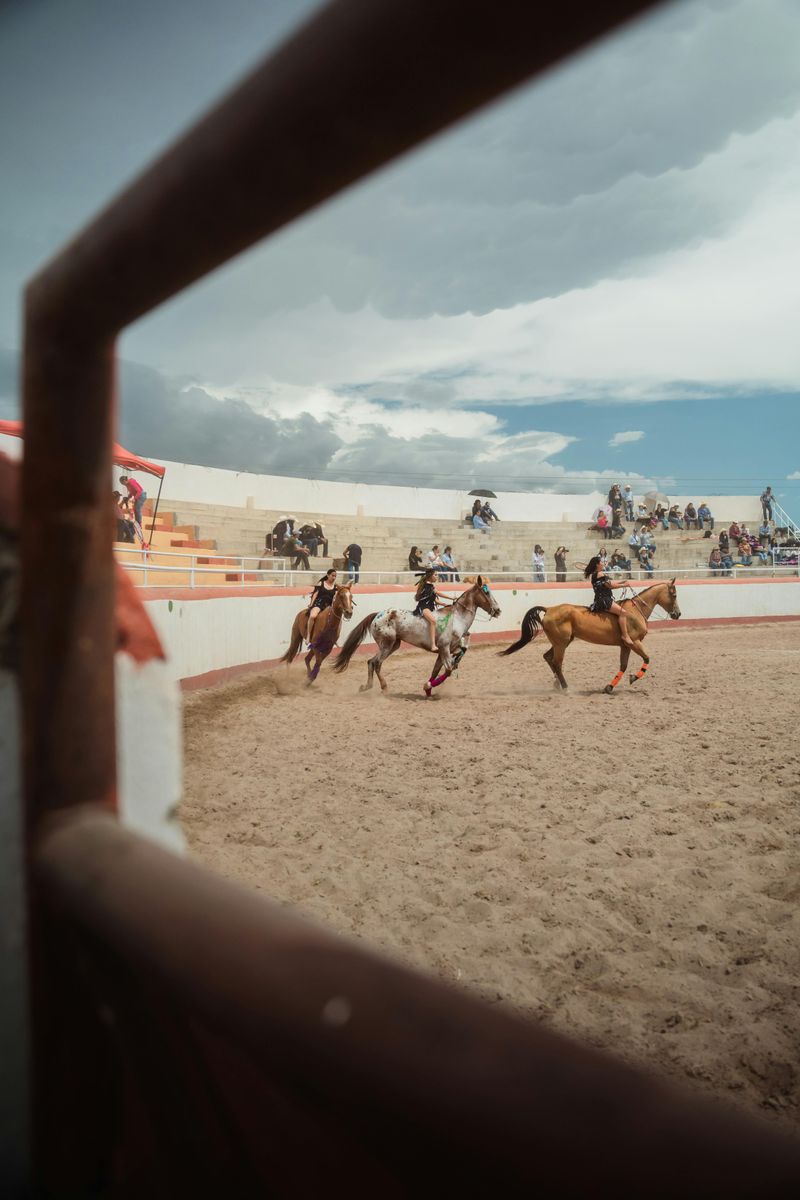
Rodeo culture runs deep in New Mexico, but not all traditional events have survived modern animal welfare scrutiny.
NMSA 1978, Section 30-18-11 specifically targets “horse tripping,” a practice in which competitors intentionally trip or lasso the legs of a running horse to bring it to the ground.
What some viewed as a test of skill, others condemned as cruelty, leading to legislative action.
The statute makes it a misdemeanor to intentionally trip an equine for sport or entertainment.
If the act results in injury or death to the animal, the charge escalates to a fourth-degree felony, carrying potential prison time and significant fines.
This law reflects growing public concern about animal suffering and the ethical boundaries of competitive events.
Supporters of the ban argue that horse tripping poses unnecessary risks to animals that can suffer broken bones, torn ligaments, and severe trauma.
Opponents, often from traditional ranching communities, contend that the practice is part of their cultural heritage and that skilled participants can minimize harm.
Despite these objections, New Mexico joined several other states in outlawing the activity.
Many people assume this law is a myth because horse tripping seems too bizarre to be a real issue.
Yet documented cases and advocacy campaigns confirm that the practice occurred at certain rodeos and prompted genuine legislative debate.
Today, rodeo organizers in New Mexico must ensure their events comply with the ban or face legal consequences.
The law illustrates how cultural traditions can evolve in response to changing ethical standards and scientific understanding of animal welfare, balancing respect for heritage with compassion for living creatures.
5. Extended Domain Firearm Law

Castle doctrine principles have taken a unique form in New Mexico through the concept of “extended domain.”
State law treats a private vehicle, whether a car, truck, motorcycle, or even a bicycle, as an extension of the home for purposes of firearm possession.
This means individuals can carry a loaded firearm openly or concealed within their vehicle without obtaining a concealed carry permit, a provision that surprises many visitors and residents alike.
The extended domain rule reflects New Mexico’s strong tradition of self-defense rights and recognition that people often spend significant time in their vehicles.
Lawmakers reasoned that the same protections afforded to homeowners should apply when citizens are traveling, especially in rural areas where law enforcement response times can be lengthy.
The policy also acknowledges the practical reality that vehicles serve as mobile extensions of personal space.
However, this freedom comes with important limitations.
The firearm must remain within the vehicle; stepping outside with a concealed weapon without a permit can result in criminal charges.
Additionally, federal restrictions still apply on properties like schools, courthouses, and federal buildings.
Gun owners must also comply with laws in other states when traveling, as extended domain is not universally recognized.
Skeptics often question whether this law is genuine, assuming it must be an exaggeration or internet rumor.
In fact, New Mexico courts have upheld the extended domain principle in multiple cases, and law enforcement agencies provide guidance on its application.
For gun owners, understanding this statute is crucial to exercising rights responsibly while avoiding inadvertent violations.
The extended domain law demonstrates how states can craft firearms policies that balance constitutional rights with public safety concerns in ways that reflect local values and geographic realities.
6. Indecent Waitering

Restaurant regulations typically focus on food safety and sanitation, but New Mexico law includes an unusual provision addressing server attire.
NMSA 1978, Section 30-9-15 establishes the offense of “indecent waitering,” making it a petty misdemeanor for food or beverage servers in licensed establishments to appear in a state of nudity or to expose intimate parts to customers.
The statute targets specific types of adult-oriented dining or bar concepts.
This law emerged during debates about adult entertainment venues and the boundaries between hospitality businesses and establishments primarily focused on sexual expression.
Legislators sought to create a clear legal distinction, ensuring that restaurants and bars holding liquor licenses could not operate as de facto strip clubs under the guise of food service.
The rule aims to maintain community standards while respecting the licensing framework for different business types.
Enforcement has been sporadic, with most cases arising from complaints about specific establishments that pushed the boundaries of acceptable server attire.
Prosecutors must prove that the exposure was intentional and that it occurred in a licensed food or beverage setting.
Penalties typically involve fines rather than jail time, though repeated violations can jeopardize an establishment’s liquor license.
The term “indecent waitering” sounds so peculiar that many assume it must be a joke or fabricated statute.
Yet the law is real and remains in the criminal code, reflecting legislative efforts to regulate the intersection of hospitality and adult entertainment.
Business owners in New Mexico need to be aware of this rule when designing uniforms or theme concepts for their establishments.
The statute illustrates how lawmakers sometimes craft very specific regulations to address niche problems, resulting in laws that sound stranger than fiction but serve practical regulatory purposes.
7. Dueling Prohibitions

While dueling may seem like a relic of the nineteenth century, New Mexico law explicitly addresses the practice in its criminal code.
NMSA 1978, Section 30-20-11 makes it a fourth-degree felony to challenge someone to a duel with a deadly weapon or to accept such a challenge, regardless of whether the duel actually takes place.
The statute covers both the issuance and acceptance of challenges, ensuring that all parties face potential prosecution.
This prohibition reflects historical concerns about honor culture and vigilante justice that once led to deadly confrontations.
In territorial days, dueling was a genuine social problem, with disputes over reputation or perceived insults escalating into lethal encounters.
By criminalizing not just the act but also the preliminary steps, lawmakers sought to discourage the entire dueling ritual before violence could occur.
Modern applications of the law are rare, but the statute remains relevant in cases involving prearranged fights or mutual combat agreements.
When two parties agree in advance to settle a dispute through violence, prosecutors can charge them under the dueling statute rather than relying solely on assault laws.
This approach acknowledges the premeditated nature of the confrontation and the danger it poses to public safety.
Many people laugh off dueling laws as outdated curiosities that surely must be myths or legal fossils.
Yet New Mexico’s prohibition is very much in force, and prosecutors have invoked it in contemporary cases involving planned fights.
The law serves as a reminder that some historical concerns remain relevant even as society evolves.
For anyone tempted to settle a dispute through violence, understanding that even issuing a challenge can result in felony charges might provide a strong deterrent, preserving both legal standing and personal safety.
Dear Reader: This page may contain affiliate links which may earn a commission if you click through and make a purchase. Our independent journalism is not influenced by any advertiser or commercial initiative unless it is clearly marked as sponsored content. As travel products change, please be sure to reconfirm all details and stay up to date with current events to ensure a safe and successful trip.
