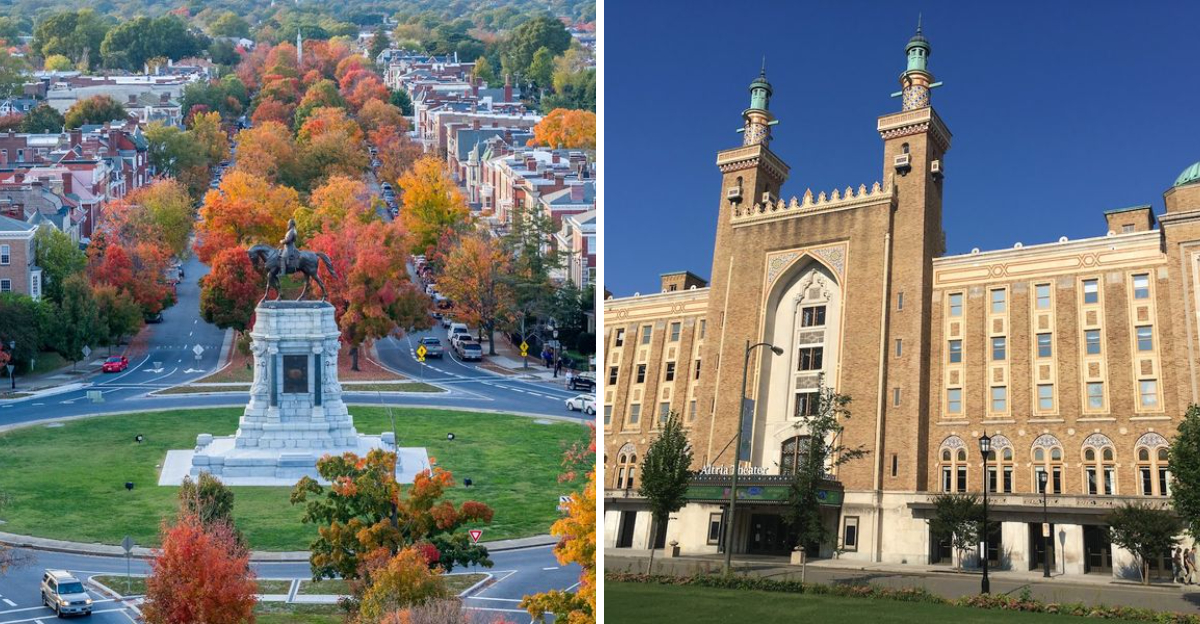
Victorian architecture is easy to admire but hard to find in large, uninterrupted stretches. Most cities have a few blocks, a handful of houses, a glimpse of what used to be.
But this Virginia neighborhood is different. The Fan District in Richmond is the most vibrant Victorian-era residential neighborhood in the country, block after block of brick and stone, porches and gables, tree-lined streets that seem designed for slow walks and deep conversations.
I spent an afternoon wandering, camera in hand, stopping every few minutes to stare at another perfect facade. The houses are well-preserved, the gardens are lush, and the whole area hums with life.
Virginia has plenty of historic districts. This one is something else entirely.
The Fan Shape That Started It All
Picture a neighborhood literally designed like a hand-held fan, streets fanning outward in graceful arcs from Monroe Park all the way to Arthur Ashe Boulevard. That is exactly how the Fan District earned its name, and the layout is as clever today as it was when city planners first sketched it out.
Walking these radiating streets feels almost theatrical. Every block opens up at a slightly different angle, giving the neighborhood a rhythm that grid-based cities completely lack.
You get a new perspective around every corner, which makes exploring on foot genuinely exciting.
Virginia has no shortage of historic places, but few neighborhoods have a physical shape this distinctive. The fan layout also means there are no true dead ends, just continuous, flowing paths that connect cafes, boutiques, and front porches in one long, satisfying loop.
Locals use the street pattern to navigate almost instinctively, and once you spend a morning here, you start to feel it too. The design is not just pretty from above; it shapes the entire social energy of the place, creating pockets of activity at every intersection.
Victorian Architecture That Makes Your Camera Work Overtime
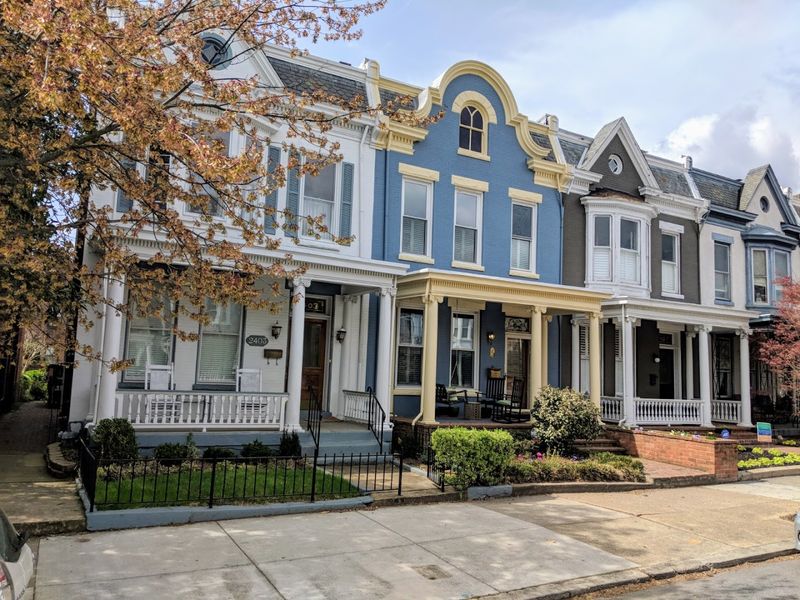
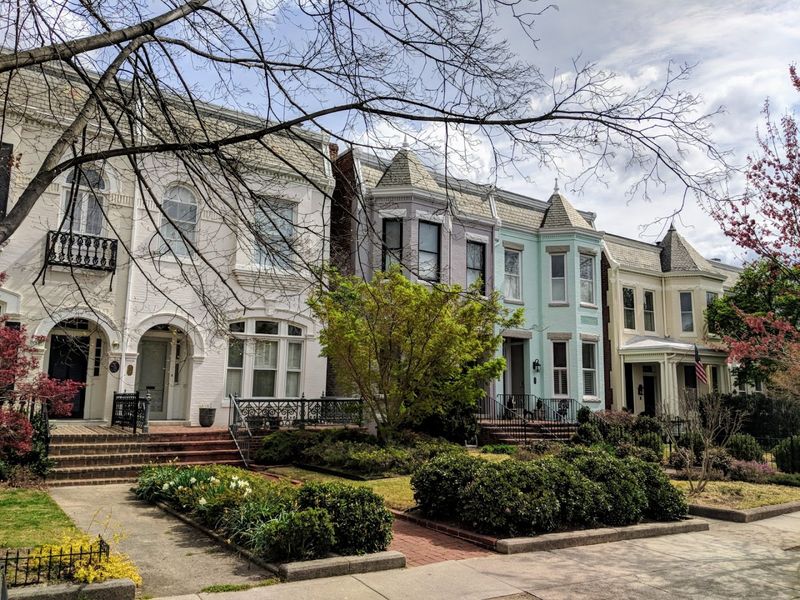
No filter needed here. The Fan District holds one of the most intact collections of Victorian-era architecture anywhere in the United States, and standing in front of these row houses feels like someone pressed pause on the late 1800s.
Queen Anne turrets, Second Empire mansard roofs, Italianate cornices, and Tudor Revival details all share the same block without competing. The variety is staggering, yet somehow everything feels cohesive.
Decorative ironwork lines the front steps, stained glass panels glow amber and cobalt in the afternoon sun, and carved wooden brackets crown nearly every doorway.
Most of the primary development happened between the late 1880s and around 1920, driven largely by the arrival of electric streetcar lines that made the area accessible to Richmond professionals. The result is a neighborhood frozen in its architectural prime.
Virginia Commonwealth University students sketch these facades for architecture classes, and honestly, the buildings deserve that level of attention. Every detail was intentional, from the patterned brickwork to the ornamental finials perched on rooflines.
Bring a wide-angle lens, comfortable shoes, and a lot of free time, because this block-by-block gallery is absolutely worth savoring slowly.
Monroe Park and the Neighborhood’s Beating Heart
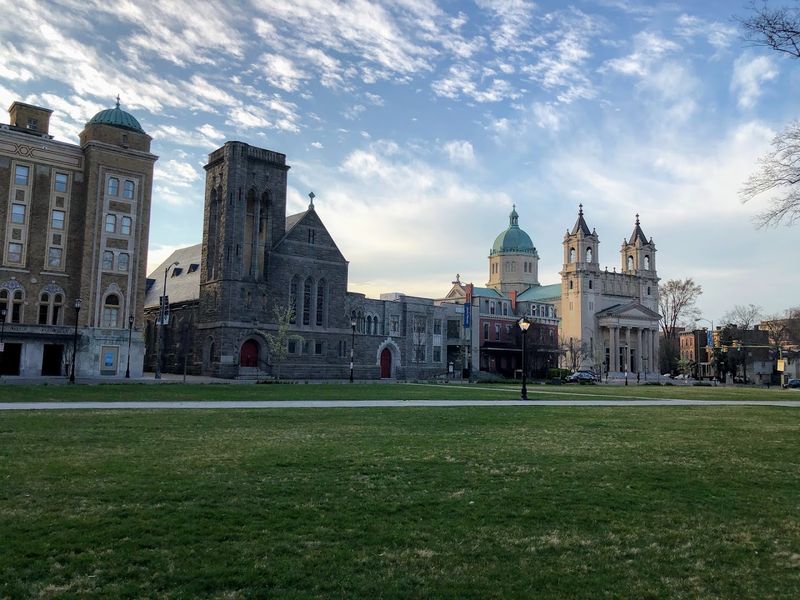
Monroe Park sits at the eastern anchor of the Fan District like a welcoming front porch for the entire neighborhood. Mature trees shade wide pathways, and on any given afternoon the park buzzes with students, dog walkers, and people who simply want to sit somewhere beautiful.
The park has served as a community gathering point for well over a century, and that tradition is very much alive. Weekend events pop up regularly, from outdoor performances to informal markets that spill across the grass.
The proximity to Virginia Commonwealth University means the energy here skews young and creative, which gives Monroe Park a distinctly lively personality compared to quieter city green spaces.
What makes this spot particularly special is the way it frames the neighborhood. Standing at the park’s edge and looking westward, the fan-shaped streets of the Fan District stretch out ahead of you like an invitation.
The Victorian rooflines form a skyline that is genuinely unique to Richmond. Virginia does not have another urban park with quite this combination of history, architecture, and daily community life packed into one compact, accessible space.
It is the perfect starting point before you wander deeper into the neighborhood.
Monument Avenue and Its Grand, Complicated Story
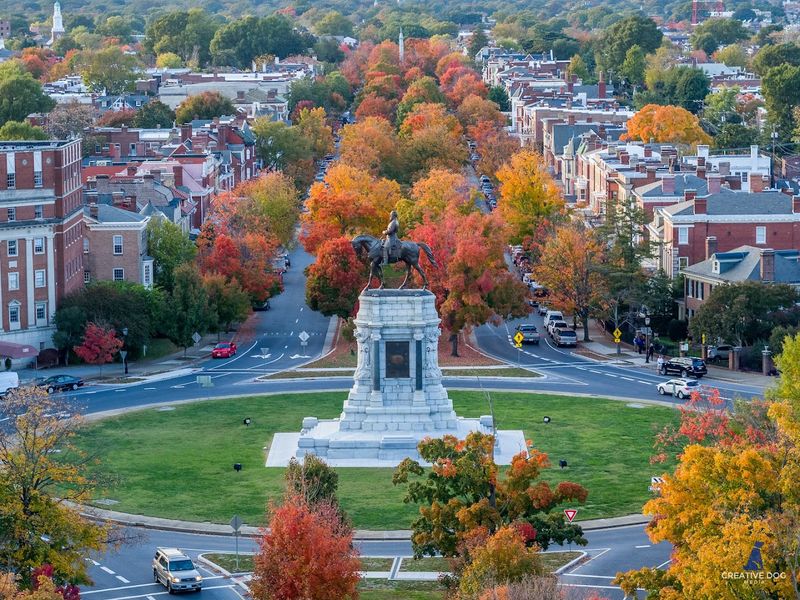
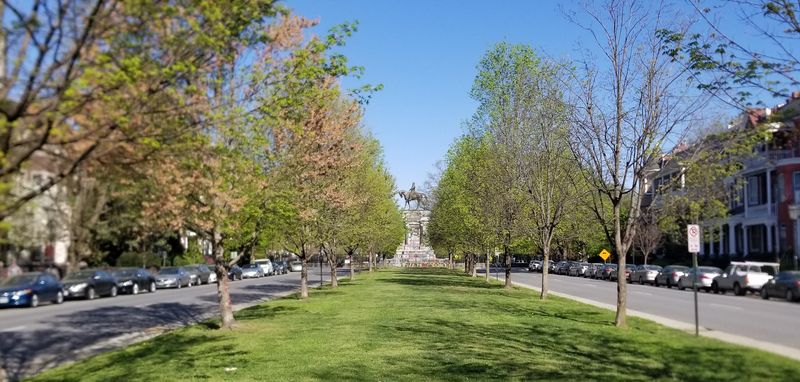
Monument Avenue is one of those streets that stops you cold the moment you turn onto it. The boulevard is absurdly wide, lined with enormous elm trees, and flanked by some of the grandest residential architecture in the entire South.
It is a street that was clearly built to impress, and it still does.
Running through the heart of the Fan District, Monument Avenue is listed on both the Virginia Landmarks Register and the National Register of Historic Places. The homes here lean toward Beaux-Arts grandeur and Colonial Revival elegance, a step up in scale from the row houses on neighboring streets.
Many have been meticulously restored, their original details preserved with obvious care and considerable investment.
The avenue has also been a site of public conversation and change in recent years, reflecting Virginia’s ongoing reckoning with its history. That complexity actually makes the street more interesting, not less.
A boulevard this beautiful carries weight, and walking it with that awareness adds a layer of meaning to every step. Locals will tell you that Monument Avenue rewards slow, thoughtful exploration far more than a quick drive-through.
Lace up your walking shoes and give this street the full attention it demands.
The Branch Museum of Architecture and Design
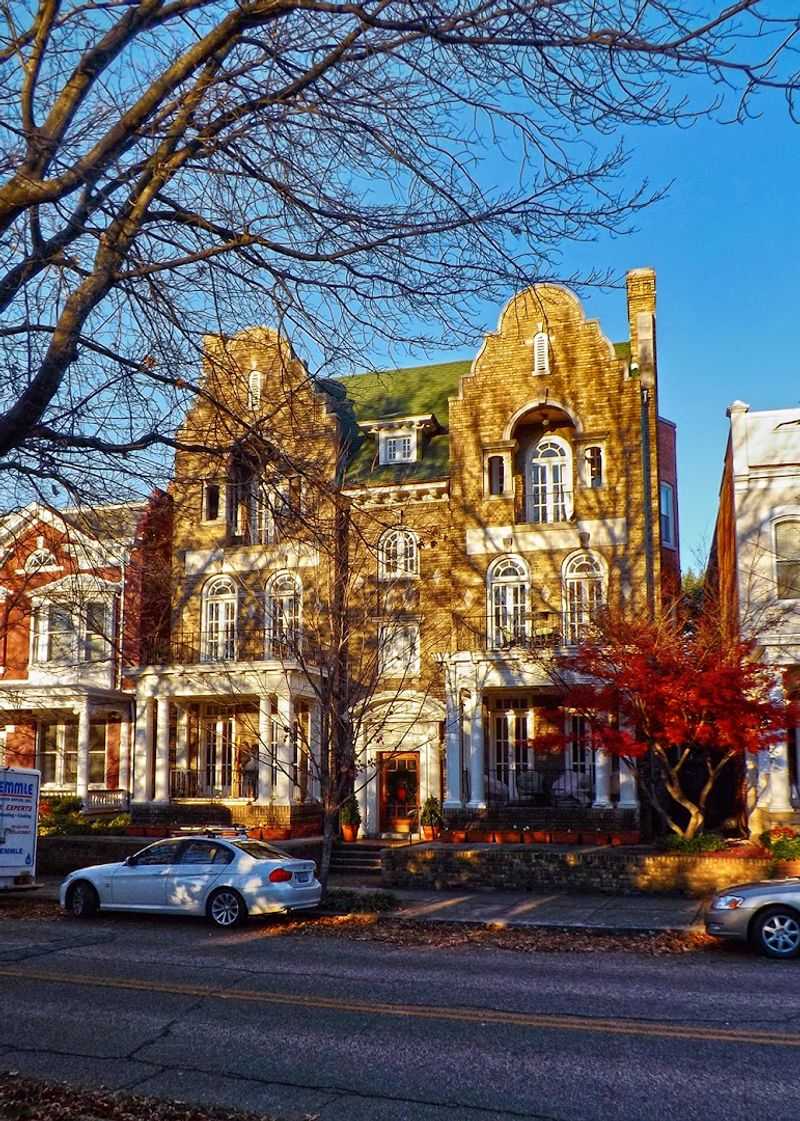
Tucked along Monument Avenue, the Branch Museum of Architecture and Design occupies one of the most spectacular Tudor Revival mansions in the Fan District. The building itself is the exhibit before you even step through the front door, with its half-timbered facade and commanding presence on the boulevard.
Inside, the museum celebrates architecture, design, and the built environment through rotating exhibitions and public programs. It is the kind of place where you can spend a genuinely absorbing hour learning about how cities are shaped, how buildings communicate ideas, and why preservation matters as much as new construction.
The connection to the surrounding neighborhood is intentional and powerful.
Tours of the mansion reveal interiors that are as impressive as the exterior, with original woodwork, grand staircases, and period details that give real context to the architectural history of the Fan District. For anyone even mildly interested in design, this museum punches well above its weight.
It is also refreshingly accessible, welcoming curious visitors without requiring any architectural background. The Branch Museum stands as proof that Virginia takes its built heritage seriously, and that the Fan District is not just a pretty backdrop but a living, curated expression of American design history.
Rowhouse Culture and the Art of the Front Porch
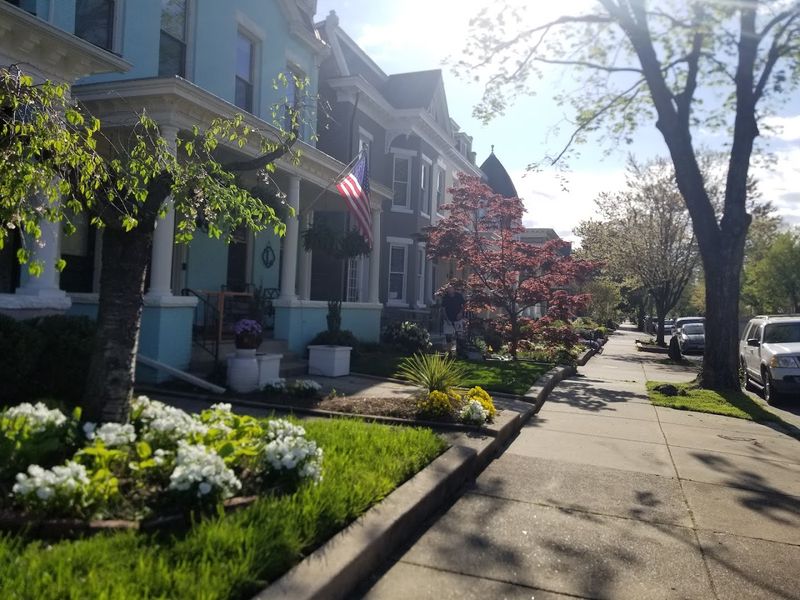
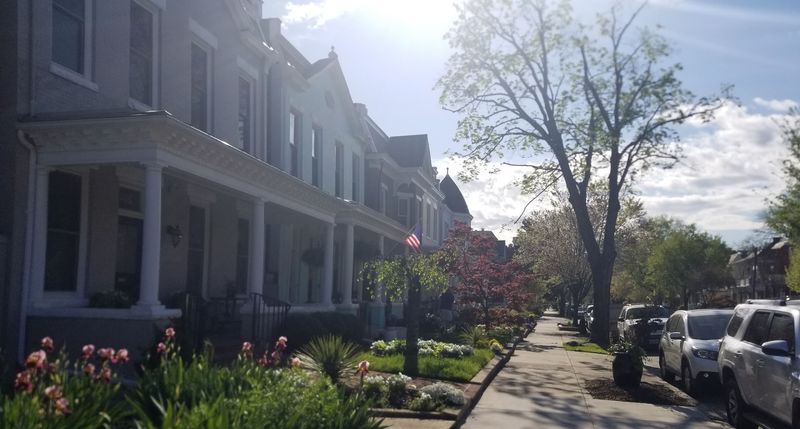
There is a social philosophy baked right into the architecture of the Fan District, and it lives on the front porch. Nearly every rowhouse on every block has one, and the tradition of actually using them is alive and well.
Neighbors call out to each other across the sidewalk, dogs get greeted by name, and strangers get a nod that feels genuinely warm.
The rowhouse format creates a kind of built-in community density that newer suburban neighborhoods simply cannot replicate. Houses share walls, front stoops practically touch the sidewalk, and the street itself becomes an extension of domestic life.
Kids ride bikes past ornate ironwork gates while residents read on steps that their great-grandparents probably used too.
What surprises most first-time visitors is how lived-in everything feels. This is not a museum neighborhood where pristine facades conceal empty interiors.
The Fan District is densely, enthusiastically inhabited by families, VCU students, artists, and longtime Richmond residents who have chosen this particular corner of Virginia deliberately. The mix of generations and backgrounds gives the rowhouse streets a texture and authenticity that is increasingly rare in American urban life.
Spend an evening here and you will understand immediately why people never want to leave.
Carytown, the Neighborhood’s Irresistible Shopping Strip
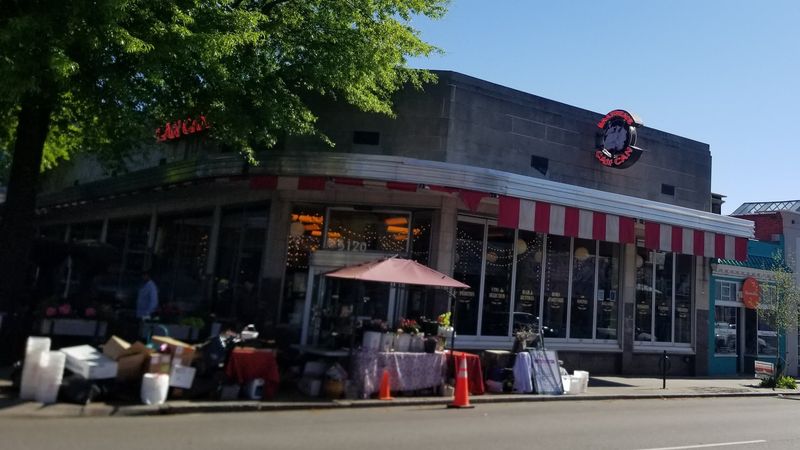
Just south of the Fan District’s residential streets, Carytown stretches out as one of Richmond’s most beloved commercial corridors, and it earns every bit of that reputation. Independent boutiques, vintage shops, bookstores, and specialty retailers line the street in a colorful, chaotic parade that rewards slow browsing.
Carytown has a personality all its own. The storefronts are quirky and individual, nothing feels chain-store generic, and the sidewalks stay busy from late morning well into the evening.
Street art appears unexpectedly on side walls, planters overflow with seasonal flowers, and the general vibe is one of relaxed, creative commerce.
For anyone staying in or near the Fan District, Carytown is the natural extension of a neighborhood walk. The transition from residential Victorian streets to this buzzing retail strip happens gradually and pleasantly, with no jarring shift in character.
Virginia has plenty of shopping destinations, but Carytown has a specific blend of local pride and eccentric charm that feels unique to Richmond. Local shop owners often know their regular customers by name, and even as a newcomer you get the sense of wandering through a community rather than a commercial zone.
Plan to spend more time here than you think you will.
Altria Theater and the Neighborhood’s Cultural Pulse
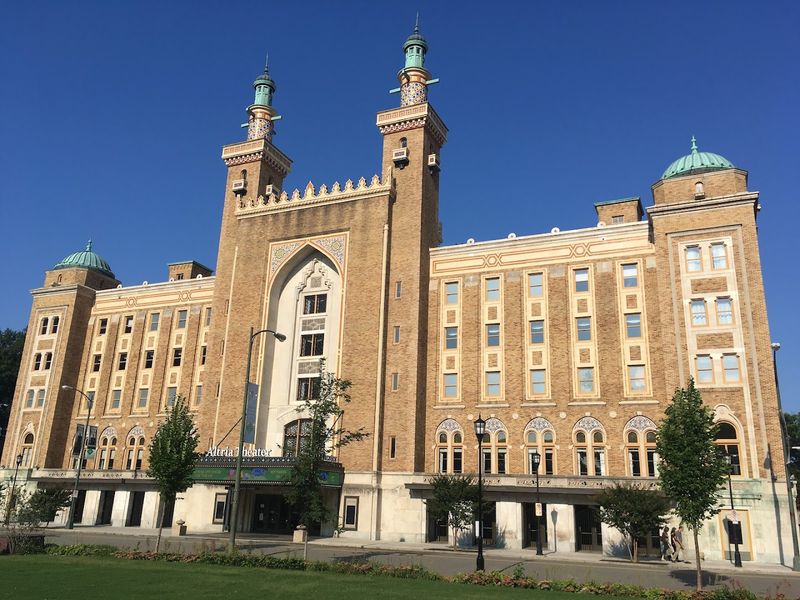
The Altria Theater anchors the cultural life of the Fan District with a presence that is hard to miss and impossible to ignore. The building itself is a landmark, its grand facade a fitting match for the Victorian and Edwardian architecture that surrounds it on all sides.
Inside, the theater hosts a genuinely diverse program, from touring Broadway productions and symphony performances to comedy shows and special events. The scale of the space is impressive without feeling cold, and the acoustics reward live performance in a way that modern venues sometimes fail to achieve.
Attending a show here is not just entertainment; it is an architectural experience in its own right.
The theater’s presence gives the Fan District something that many historic residential neighborhoods lack: a genuine reason to be here after dark. Pre-show crowds spill out onto the surrounding streets, nearby spots fill up with theatergoers, and the whole neighborhood takes on a festive energy that feels organic rather than manufactured.
Virginia has a rich performing arts tradition, and the Altria Theater is one of its finest expressions. Checking the schedule before your visit is highly recommended, because catching a live performance in this space makes the entire trip to Richmond feel complete.
Virginia Commonwealth University and the Neighborhood’s Creative Energy
Virginia Commonwealth University does not just border the Fan District; it breathes creative life into it. VCU’s presence means the neighborhood has a constant influx of artists, designers, musicians, and thinkers who bring their energy directly into the streets, cafes, and studios of the surrounding blocks.
The university’s arts programs are nationally recognized, and that reputation shapes the neighborhood’s aesthetic in tangible ways. Murals appear on buildings that might otherwise be blank.
Pop-up galleries occupy storefronts between longer-term tenants. Student-run shops and creative businesses take root in the rowhouse ground floors, adding layers of personality to streets that are already architecturally rich.
The mix of established residents and student newcomers creates a social dynamic that keeps the Fan District from ever feeling stagnant or overly precious. Long-term locals and first-year students share the same sidewalks, the same parks, and the same neighborhood pride.
That cross-generational energy is part of what makes Virginia’s most celebrated Victorian neighborhood feel genuinely alive rather than preserved in amber. The university is not a disruption to the neighborhood’s character; it is one of the main reasons that character remains so vivid and forward-looking decade after decade.
Plan Your Visit to the Fan District, Richmond
Getting to the Fan District is straightforward from anywhere in Richmond. The neighborhood sits centrally within the city, making it easy to combine with other Virginia destinations like the Virginia Museum of Fine Arts, which sits right on its edge, or the broader Richmond riverfront just a short drive away.
The Fan District is best explored on foot, and the fan-shaped street grid makes it surprisingly easy to navigate without getting genuinely lost. Start at Monroe Park, head west along any of the radiating streets, and let the architecture guide you.
Mornings are peaceful and perfect for photography. Afternoons bring more street life, open boutique doors, and the general buzz of a neighborhood fully awake.
The address that anchors the area is Richmond, VA, with the neighborhood running roughly between Monroe Park and Arthur Ashe Boulevard. Parking exists on most residential streets, but arriving by bike or on foot from nearby areas is genuinely the better option.
Virginia is full of beautiful places, and the Fan District deserves its reputation as one of the most extraordinary. Pack light, charge your camera, and clear your afternoon schedule because once you arrive, leaving early will feel like a small personal failure.
