You do not need a passport to feel like you have stepped into a fairy tale. Virginia has castles, real ones, tucked into the landscape and hidden in plain sight.
Some are historic, built centuries ago by wealthy families who wanted to show off. Others are newer, designed to look like something from the Scottish Highlands or the French countryside.
I have visited all ten on this list, and each one made me forget I was still in Virginia. The stone walls, the turrets, the grand halls and winding staircases.
You can tour some of them, and a few even offer overnight stays. Pack a camera and your imagination.
Virginia is full of surprises, and these castles are some of the most magical.
1. Swannanoa Palace, Afton
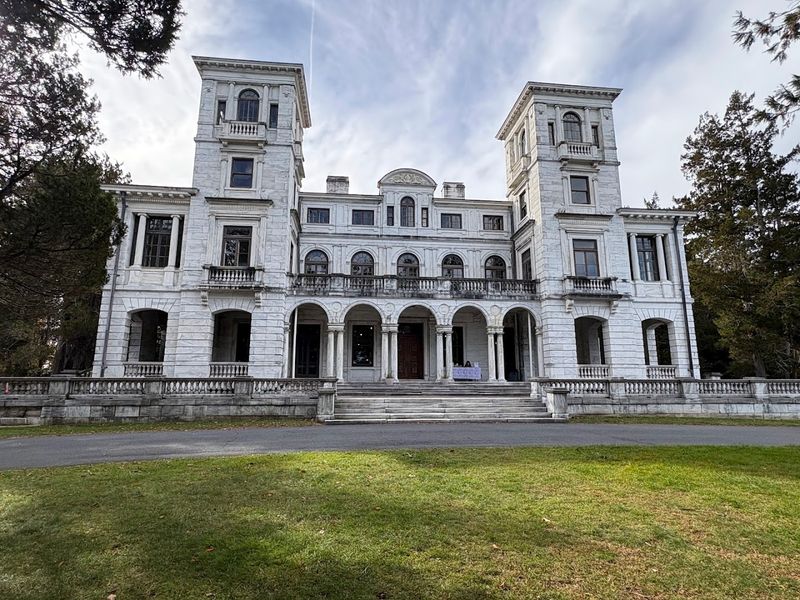
Sitting on top of Afton Mountain like a crown jewel nobody told you about, Swannanoa Palace is one of the most breathtaking architectural surprises in Virginia. Built in 1912 for millionaire James H.
Dooley, this Italian Renaissance Revival villa was modeled after the Villa de Medici in Rome, and yes, it looks exactly as dramatic as that sounds.
Gleaming Georgian marble covers the exterior, while hand-cut Italian marble lines the interiors. Two soaring towers flank the entrance, and balustraded terraces spill out toward sweeping views of the Shenandoah Valley below.
On a clear morning, standing on those terraces feels genuinely cinematic.
The crown jewel inside is the largest private Tiffany stained-glass window ever installed in an American home. Sunlight pours through it in a kaleidoscope of color that stops you mid-step every single time.
The grand staircase curling beneath it is pure old-world drama.
Seasonal ticketed events and estate openings are organized through Skyline Swannanoa, so checking their schedule before visiting is a smart move. Access to the mountaintop setting alone is worth the trip, but touring the interior rooms makes the experience genuinely unforgettable.
The terraced gardens, though no longer in their original manicured state, still carry a romantic, slightly wild elegance. Overgrown or not, the whole property radiates a mysterious grandeur that no perfectly trimmed hedge could manufacture.
Swannanoa is located at the top of Afton Mountain, along Afton Mountain Road, Afton, Virginia.
2. Agecroft Hall, Richmond
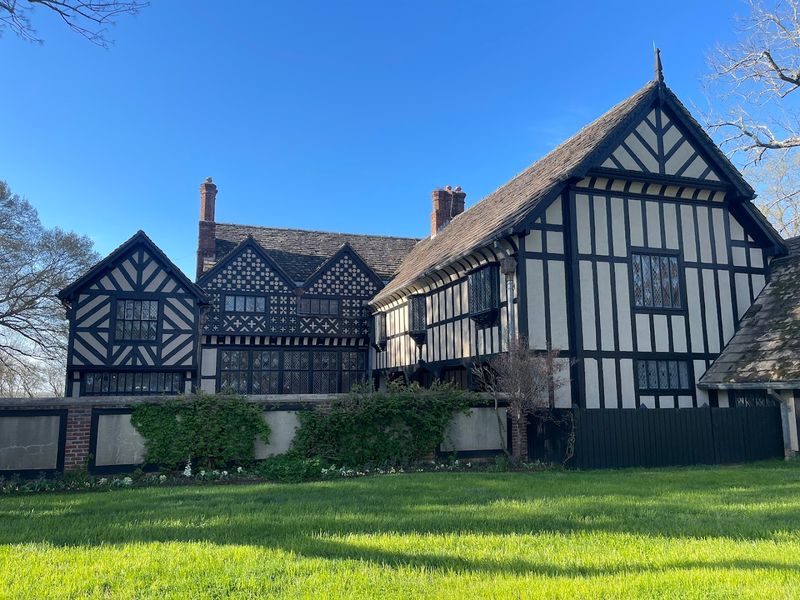
Agecroft Hall pulls off one of the most audacious architectural stunts in American history. It was originally constructed in Lancashire, England during the 15th century.
This authentic Tudor manor was dismantled timber by timber, stone by stone, packed into crates, shipped across the Atlantic, and reassembled on the banks of the James River in Richmond during the 1920s.
Walking through the front gate feels like stepping through a time portal. The half-timbered facade, leaded glass windows, and low-ceilinged rooms are all genuinely old, shaped and fitted by craftsmen who lived centuries before any of us were born.
That tactile connection to the past is something no replica can replicate.
The gardens surrounding the hall were inspired by Hampton Court Palace, featuring formal English plantings, knot gardens, and carefully clipped hedgerows that look spectacular in every season.
Spring brings a riot of color, but the moody grey-sky days of autumn suit the manor’s Tudor personality best.
Guided tours run regularly and cover the manor’s remarkable transatlantic journey as much as the architectural details themselves. Both stories are equally fascinating.
The costumed interpretation of 16th-century life adds a theatrical layer that families especially love.
Agecroft Hall sits in Richmond’s Windsor Farms neighborhood at 4305 Sulgrave Road, Richmond, Virginia. Parking is straightforward, and the grounds are compact enough to explore thoroughly in a single afternoon without ever feeling rushed.
This is genuinely one of the Old Dominion’s most underappreciated treasures.
3. Virginia House, Richmond
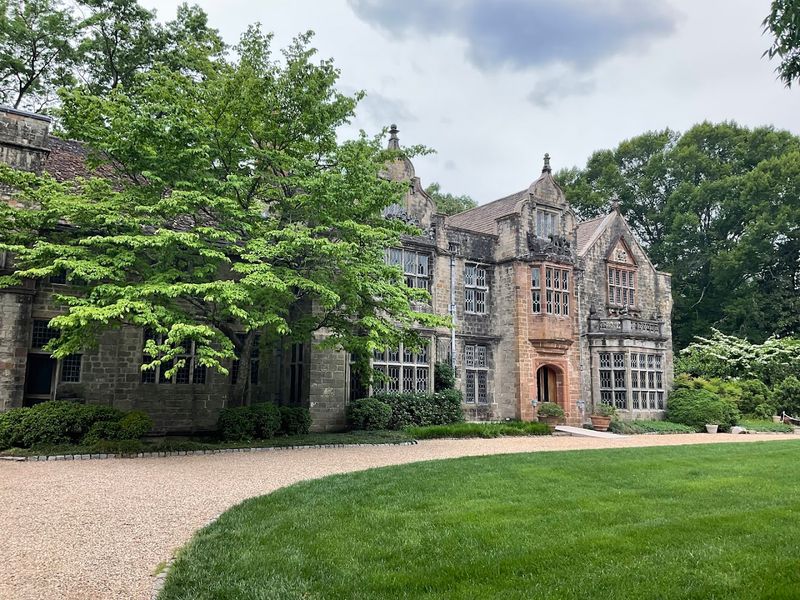
Just a short stroll down the road from Agecroft Hall, Virginia House is another architectural marvel that makes Richmond feel surprisingly, gloriously European.
Ambassador Alexander Weddell and his wife purchased a crumbling 12th-century English priory. They had it dismantled stone by stone, and shipped the entire structure across the ocean to rebuild it in Richmond’s Windsor Farms neighborhood during the 1920s.
The result is a manor that carries genuine medieval bones. Rugged stone walls, arched windows, and an irregular roofline give the building a dramatic, almost fortress-like silhouette that photographs beautifully from every angle.
Standing in front of it, it is genuinely hard to believe you are in Virginia and not somewhere deep in the English countryside.
Nearly eight acres of formal gardens surround the property, designed by legendary landscape architect Charles Gillette. His work here is considered some of his finest, blending structured English garden traditions with the natural topography of the James River landscape.
The gardens alone justify a dedicated visit.
The interior features stone floors, exposed timber beams, and rooms filled with European antiques that the Weddells collected during their diplomatic travels. Every corner of this house tells a story about a world that no longer exists in quite the same way.
Virginia House is located at 4301 Sulgrave Road, Richmond, Virginia, right next door to Agecroft Hall. Visiting both estates in a single day is an absolute no-brainer and one of the most satisfying half-days you can spend in the state.
4. Maymont Mansion, Richmond
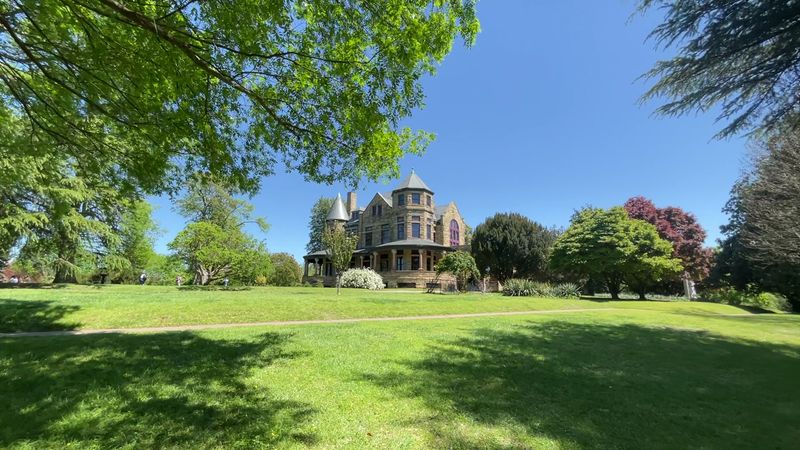
Maymont is the kind of place that makes you forget you are standing in the middle of a major American city. Sprawling across a hundred acres along the James River in Richmond, this Victorian estate centers on a Gilded Age mansion.
It is dripping with the kind of architectural excess that only the late 1800s could produce with a completely straight face.
The mansion itself is a masterpiece of ornate stonework, turrets, and decorative ironwork that feels more Loire Valley than mid-Atlantic Virginia.
Interior rooms are preserved in extraordinary detail, showcasing the lifestyle of Major James Dooley and his wife Sallie, who built the estate as their personal paradise.
Every room is a study in maximalist Victorian taste.
The real European magic, though, happens outside. Maymont’s Italian garden is a formal terraced masterpiece, complete with classical fountains, geometric plantings, and stone balustrades that look like they belong in Florence.
The Japanese garden adds an additional layer of artistry, making the grounds feel genuinely world-class.
One of the most remarkable things about Maymont is that the grounds are free to explore. Walking through the gardens on a warm afternoon, with the James River glittering below and the mansion rising behind you, costs absolutely nothing.
Mansion tours are ticketed and well worth booking in advance.
Maymont is located at 1700 Hampton Street, Richmond, Virginia. It is one of the most beloved public spaces in the state, and for very good reason.
Go early, stay late, and bring comfortable shoes.
5. Dover Hall, Manakin-Sabot
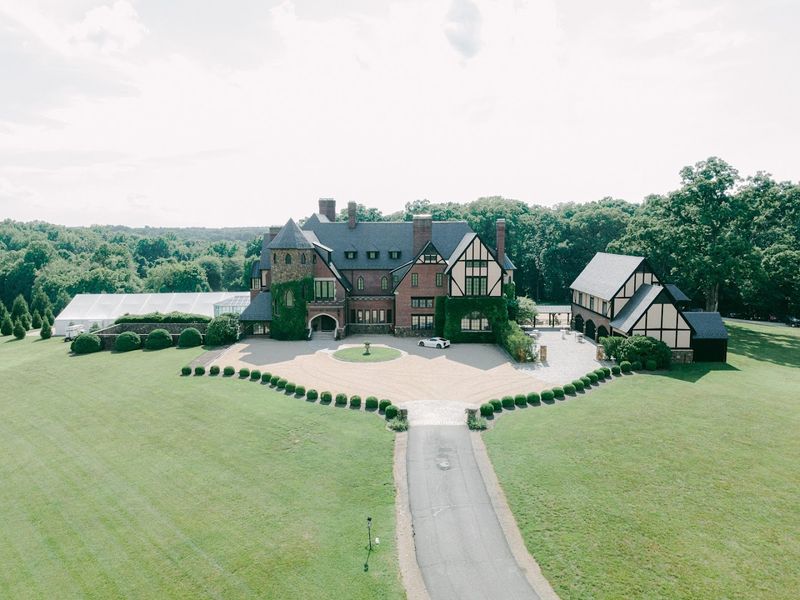
Tudor architecture has never looked quite so unapologetically extra as it does at Dover Hall. It was built in 2000 and it is spanning an almost absurd 38,000 square feet on 55 acres of rolling Virginia countryside.
This English Tudor-style manor in Manakin-Sabot operates primarily as a luxury event and wedding venue, but its architectural drama is worth knowing about even if you never attend a single event there.
Gothic arches frame every doorway. Massive hand-carved fireplaces anchor rooms with ceilings so high you half expect a chandelier to come crashing down in a period drama.
Chandeliers, artwork, and furnishings were sourced from estates across Europe during construction, giving the interior a genuine sense of accumulated old-world character rather than staged decoration.
The ballroom is genuinely spectacular, with proportions that make even the most jaded architectural observer stop and look upward.
Libraries, a pub, and a wine cellar round out a collection of rooms that feel like they were designed to host generations of aristocratic gatherings rather than a single Saturday evening.
Outside, the 55-acre estate is framed by horse farms and gentle hills that complete the English countryside illusion perfectly. On a misty morning, driving up the approach to Dover Hall, it is almost impossible not to feel like you have been transported somewhere far beyond Virginia’s borders.
Dover Hall is located at 1 Dover Hall Drive, Manakin-Sabot, Virginia. Tours and event bookings can be arranged through the estate directly.
The exterior alone is worth a slow drive past on a scenic afternoon.
6. Bacon’s Castle, Surry
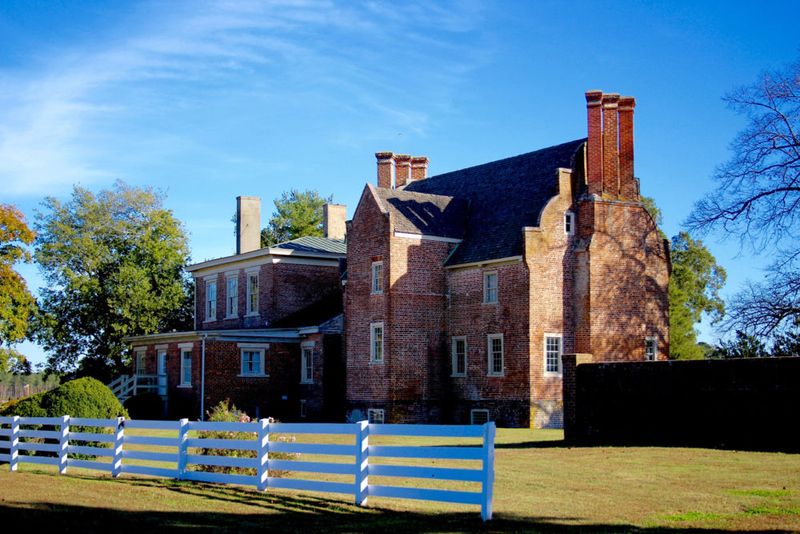
Bacon’s Castle does not just feel like Europe. It actually carries a piece of it in every single brick.
Built in 1665 for Arthur Allen, this is the oldest brick dwelling in North America and one of the rarest surviving examples of High Jacobean architecture anywhere on the planet, including in Britain itself, where the style largely disappeared centuries ago.
The building’s distinctive features read like a glossary of 17th-century English architectural ambition. Curvilinear Flemish gables sweep upward at each end of the roofline.
Triple-stacked diamond chimneys rise against the sky with a confidence that feels almost theatrical. The overall silhouette is unlike anything else you will encounter in American architecture.
During Bacon’s Rebellion in 1676, Nathaniel Bacon’s forces occupied the property, which is how the building earned its dramatic, slightly misleading name. Nobody actually built a castle here.
They just took over one that already looked like a fortress and the name stuck with admirable stubbornness.
A reconstructed 17th-century English formal garden surrounds the property, planted with period-appropriate herbs and flowers that add a living layer of historical texture. Guided interior tours are available, and a self-guided exterior cell phone tour lets you explore the grounds at your own pace.
Bacon’s Castle is managed by Preservation Virginia and is located at 465 Bacon’s Castle Trail, Surry, Virginia. Checking open hours and tour availability through Preservation Virginia before visiting is strongly recommended.
This is one of those rare sites that genuinely exceeds its own reputation.
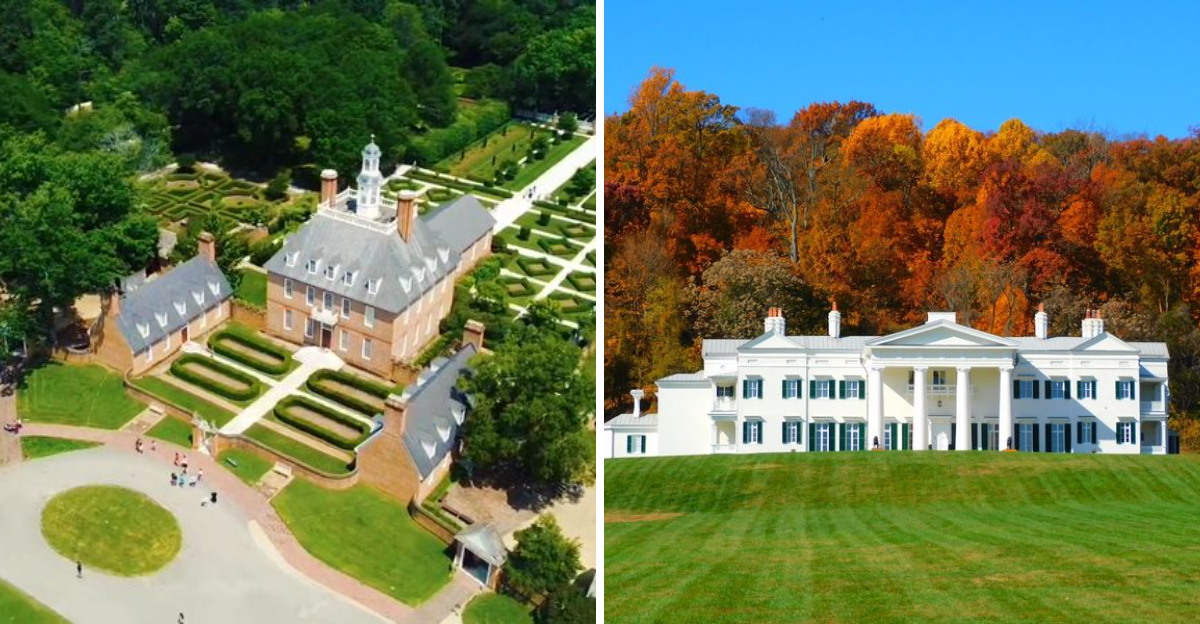
7. The Governor’s Palace, Colonial Williamsburg
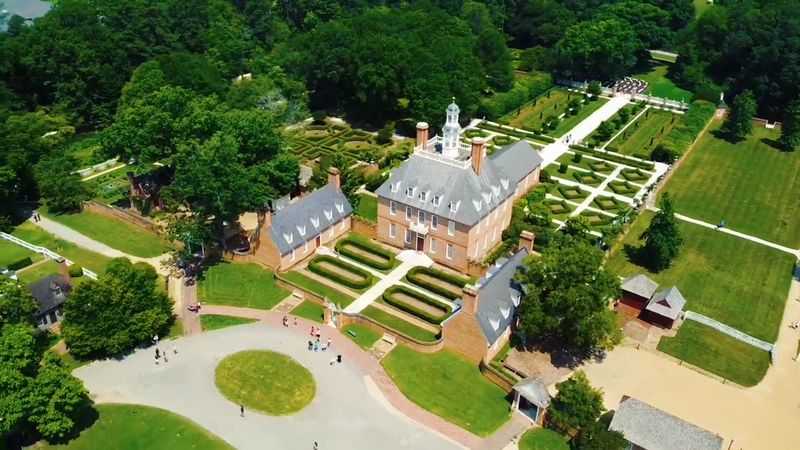
Royal authority has a very specific look, and the Governor’s Palace in Colonial Williamsburg has been perfecting it since the early 18th century.
Built as the official residence of Virginia’s royal governors during the colonial era, this palace was designed with all the symmetry, grandeur, and deliberate intimidation of a traditional European seat of power.
The formal facade is pure Georgian elegance, balanced to the point of mathematical perfection, flanked by dependencies and outbuildings that frame the main structure with quiet authority.
Stepping through the iron gates and up the approach feels genuinely ceremonial, which was absolutely the point for anyone arriving here during colonial times.
Behind the palace, the gardens are a revelation. Formal topiary mazes, geometric parterres, and clipped hedgerows stretch across the grounds in a style directly inspired by European royal gardens.
Walking through them, especially in the softer light of late afternoon, produces that specific sense of calm that only beautifully maintained formal gardens can deliver.
Colonial Williamsburg brings the entire palace to life with costumed interpreters, period furnishings, and historical programming that makes the experience feel immersive rather than merely educational.
Every room tells a story about power, wealth, and the complex relationship between the Virginia Colony and the British Crown.
The Governor’s Palace is located within the Colonial Williamsburg Historic Area at 1000 Colonial Williamsburg Way, Williamsburg, Virginia. Admission is managed through Colonial Williamsburg’s ticketing system.
Booking in advance, especially during peak seasons, makes the visit considerably smoother.
8. Morven Park, Leesburg
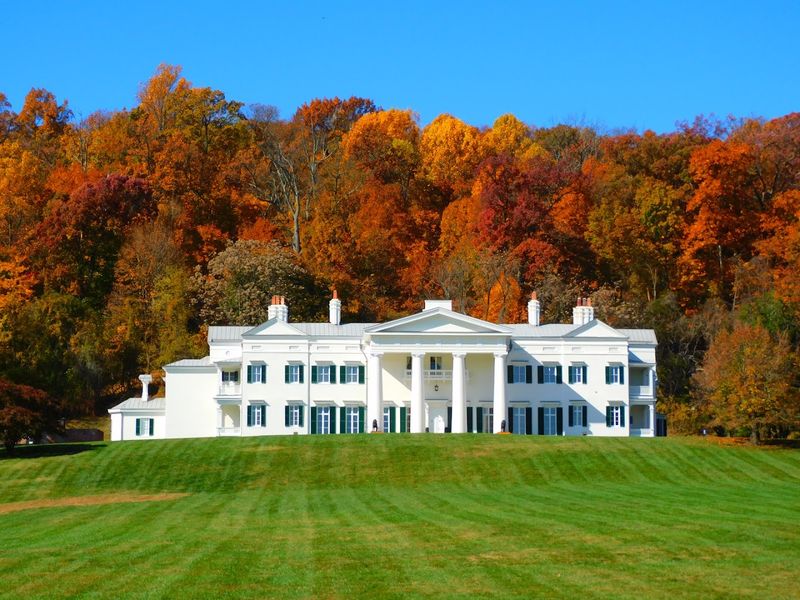
Morven Park carries itself with the kind of quiet, unhurried confidence that only genuinely old estates manage to project. Spread across a sweeping property in Leesburg, this magnificent mansion looks like it was plucked from the rolling farmland of rural England and set down gently among the horse country of Northern Virginia, which suits it perfectly.
The architecture is stately without being cold. Columns rise across the facade with elegant restraint, and the stonework carries the warm, weathered quality of a building that has been lived in and loved across many generations.
Formal boxwood gardens laid out in classic English style frame the mansion on multiple sides, adding a structured beauty that changes subtly with every season.
Equestrian heritage runs deep at Morven Park. The estate’s world-class carriage museum houses one of the largest collections of horse-drawn vehicles in the United States, which adds a distinctly European aristocratic dimension to what is already a remarkably cultured property.
The historic outbuildings scattered across the grounds deepen the old-world atmosphere considerably.
Walking the estate’s grounds at a leisurely pace reveals layers of history at every turn. The walled garden is particularly lovely, offering a secluded, almost secret quality that makes it a favorite spot for anyone who appreciates garden architecture done with real care and craft.
Morven Park is located at 17263 Southern Planter Lane, Leesburg, Virginia. The estate hosts seasonal events, tours, and equestrian competitions throughout the year.
Checking their calendar before visiting helps ensure you catch the property at its most animated and alive.
9. Oatlands Historic House and Gardens, Leesburg
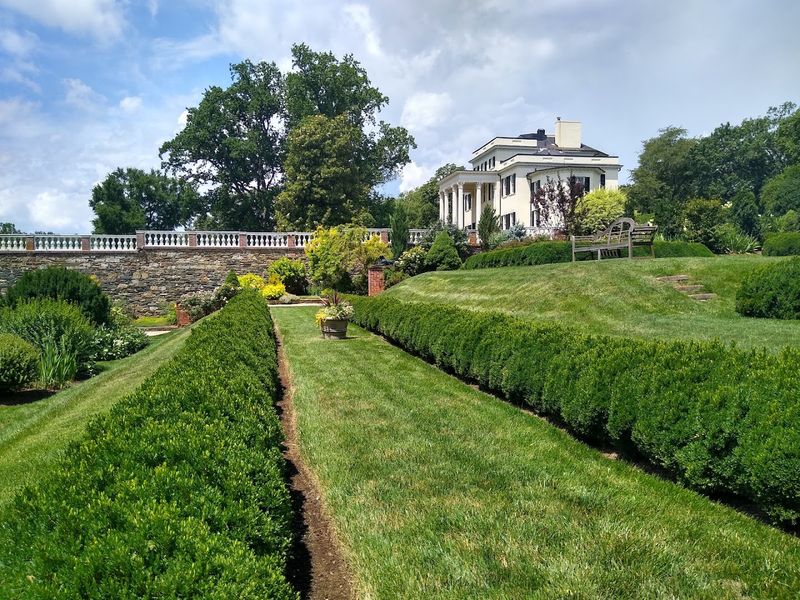
Greek Revival architecture has a particular magic. All those columns, all that classical symmetry, all that deliberate reference to the ancient world creates an atmosphere that feels simultaneously monumental and serene.
Oatlands Historic House in Leesburg captures that magic beautifully, sitting on 360 acres of National Trust for Historic Preservation land like a classical European country house that simply chose Virginia as its home.
The brick facade is elegant and commanding, with columns rising across the entrance portico in the manner of a grand Athenian civic building transplanted into the American countryside. The proportions are exactly right, neither too imposing nor too modest, striking that classical balance that European architects spent centuries trying to perfect.
The gardens at Oatlands are genuinely extraordinary. Formal terraced plantings descend from the house in a style that echoes the great garden traditions of France and Italy.
Boxwood parterres, stone walls, and carefully framed views across the surrounding landscape create a garden experience that feels curated over centuries rather than installed over a summer.
The estate hosts a robust calendar of seasonal events, from garden tours to historical programming, that make repeated visits worthwhile across different times of year. Spring, when the gardens are in full bloom, is particularly spectacular, but autumn’s warm color palette suits the classical architecture beautifully.
Oatlands is located at 20850 Oatlands Plantation Lane, Leesburg, Virginia. The National Trust for Historic Preservation manages the site, and their website carries current visiting information.
This is one of Northern Virginia’s most rewarding historical destinations, full stop.
10. Windsor Castle Park Manor House, Smithfield
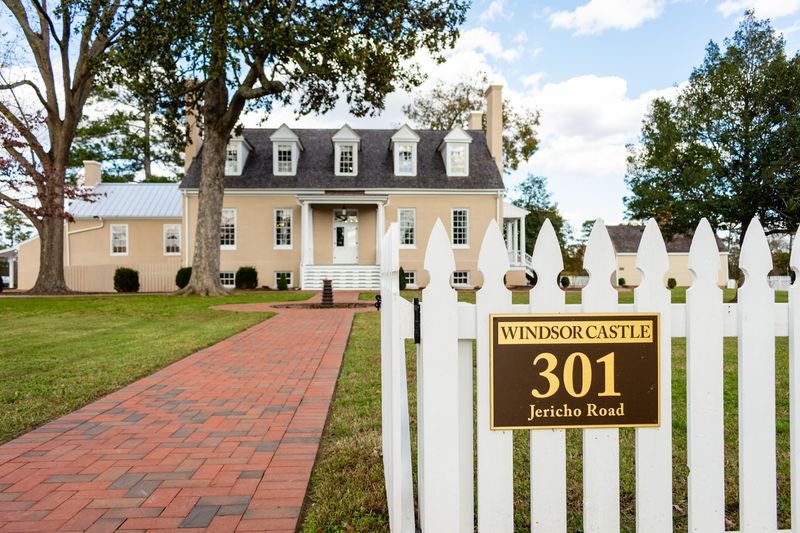
The name alone earns Windsor Castle Park a permanent spot on this list. Smithfield, Virginia is not a place most people associate with royal architectural ambition.
However, the manor house sitting at the heart of Windsor Castle Park has been quietly channeling English heritage since the 1720s, when the Smith family first laid its brick foundations.
Built in the early 18th century, the manor carries the solid, no-nonsense character of early colonial brick construction. It has the proportions and detailing that reflect the English architectural traditions its builders brought with them across the Atlantic.
It is not the flashiest building on this list, but its historical depth and quiet authority give it a presence that more elaborate structures sometimes lack.
The surrounding parkland amplifies the estate’s old-world atmosphere considerably. Mature trees, open meadows, and the gentle topography of Isle of Wight County create a landscape setting that feels more English country park than American municipal green space.
Walking the grounds on a cool morning, with mist sitting low over the fields, produces a genuinely atmospheric experience.
The park itself is open to the public and offers trails, picnic areas, and access to the waterfront that make it an ideal destination for a relaxed half-day outing.
The manor house anchors the entire property with historical gravitas, reminding every visitor that this landscape has been shaped by human hands for a very long time.
Windsor Castle Park is located at 301 Jericho Road, Smithfield, Virginia. Admission to the park is free, making this one of the most accessible European-flavored experiences in the entire state.
Pack a picnic, wear your walking shoes, and take your time.
