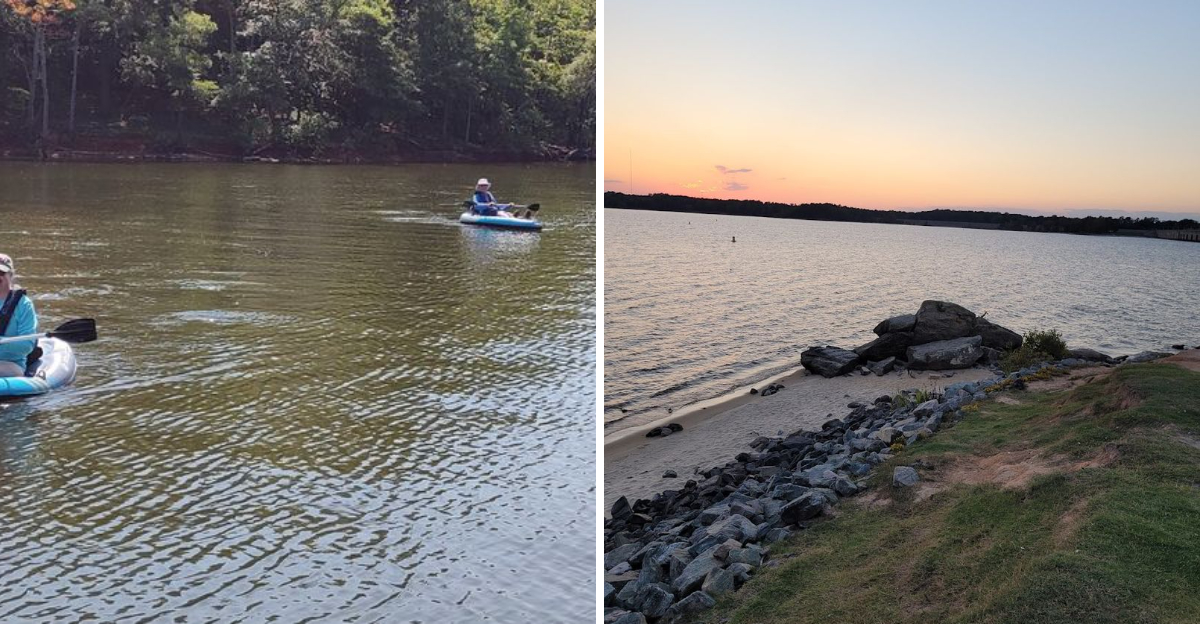
It’s easy to miss, but overlooking this place means skipping one of the East Coast’s most impressive lakes. Along the Virginia border lies a vast reservoir with nearly 800 miles of forest-lined shoreline, scattered with quiet coves that rarely feel crowded.
I came across it by chance, and it completely changed what I expect from a lake getaway. The water is strikingly clear, bald eagles circle overhead, and stretches of sandy beach often feel almost empty.
It’s the kind of setting that makes crowded, overpriced destinations seem far less appealing once you’ve seen what this place offers.
The Sheer Scale of This Lake Will Blow Your Mind
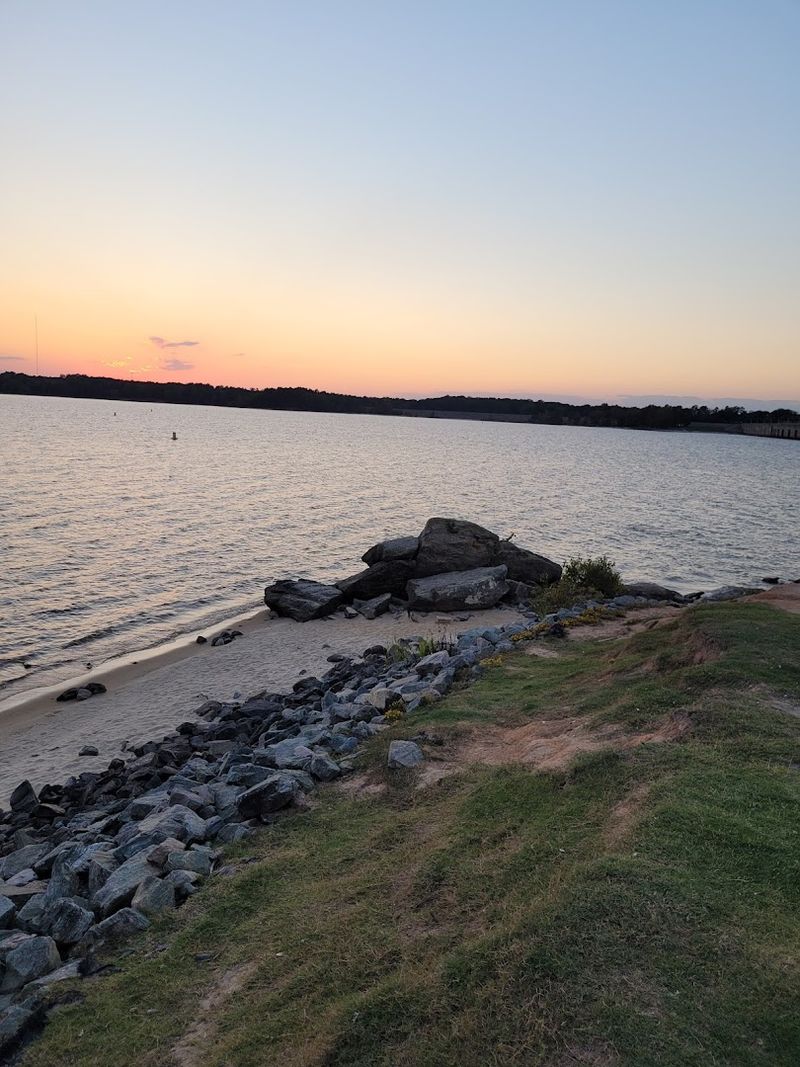
Nothing quite prepares you for the first time you lay eyes on Kerr Lake. Standing at one of the many overlooks, I kept turning my head left and right, trying to find the edge of the water, and there simply was none.
The reservoir sprawls across an enormous footprint, covering roughly 50,000 acres of glittering surface water.
John H. Kerr Dam and Reservoir holds the title of Virginia’s largest lake, and that distinction is well earned.
The shoreline winds through approximately 800 miles of forested coves, rocky points, and sandy inlets. For scale, that is more shoreline than the entire Chesapeake Bay coastline in Virginia.
The lake extends far up both the Roanoke and Dan Rivers, giving it a distinctive, sprawling shape that feels almost endless to explore by boat. Every cove you duck into reveals something new, a quiet beach, a family of herons, or a perfect swimming hole tucked behind a tree line.
Virginia rarely gets credit for landscapes this dramatic, and that is honestly part of its charm.
World-Class Fishing That Keeps Anglers Coming Back
Ask any serious angler in Virginia about Kerr Lake and watch their eyes light up immediately. The reservoir has earned a fierce reputation for producing trophy-sized largemouth bass, striped bass, crappie, catfish, and bluegill.
Stripers in particular grow impressively large here, and catching one near the dam face is practically a rite of passage for regulars.
The lake’s structure plays a huge role in its fishing quality. Submerged creek channels, flooded timber, and rocky underwater ledges create ideal habitat for bass to ambush prey.
Crappie stack up around the coves in spring, and catfish cruise the deeper channels at night. There is genuinely something biting year-round.
John H. Kerr Dam and Reservoir also benefits from consistent water quality and well-managed fish populations, which keeps the sport fishing healthy season after season.
Local boat rental outfits in nearby Clarksville can set you up with everything you need for a full day on the water. Pack your patience, bring good sunscreen, and expect to be pleasantly surprised by what you pull up.
Camping So Good You Will Extend Your Stay
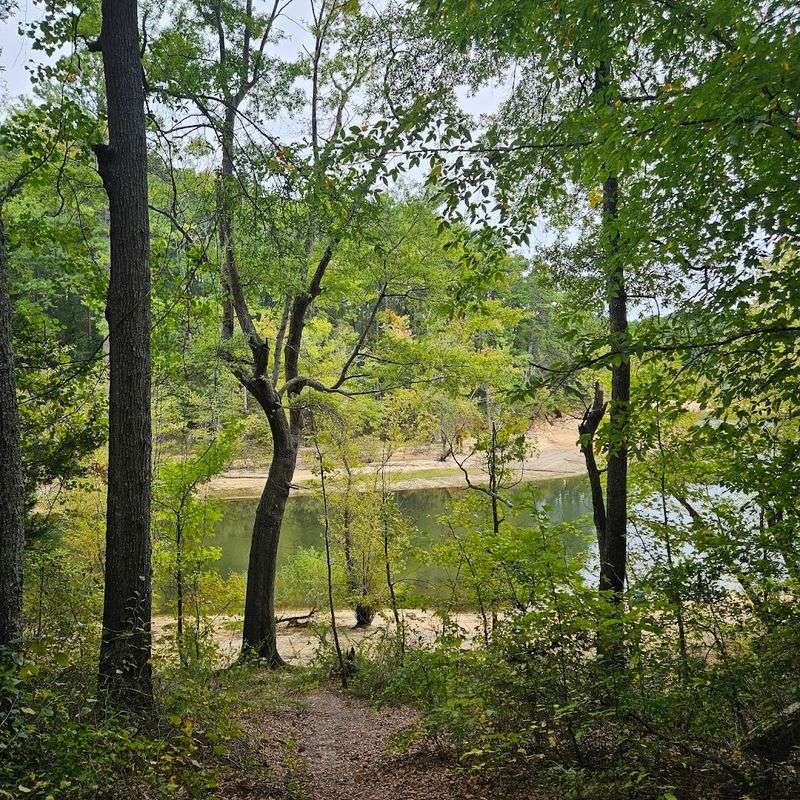
Camping at Kerr Lake is the kind of experience that turns skeptics into lifelong outdoor enthusiasts. The reservoir area offers multiple campgrounds managed by the U.S.
Army Corps of Engineers, along with Virginia and North Carolina state park facilities. North Bend Campground and Occoneechee State Park are two favorites that keep people returning year after year.
Sites range from basic tent pads tucked into the woods to pull-through spots that accommodate larger rigs. Amenities are genuinely solid, including bathhouses, boat ramps, playgrounds, and picnic areas.
The campgrounds sit close enough to the water that you can hear it at night, which is the best kind of lullaby.
John H. Kerr Dam and Reservoir manages to strike a rare balance between accessibility and seclusion.
You are never far from a convenience, yet the dense forest canopy around most sites makes you feel completely removed from the modern world. Spending eleven nights here is not unusual for regulars, and once you settle into the rhythm of morning paddles and evening campfires, it becomes very easy to understand why Virginia keeps this place so quietly to itself.
Swimming Beaches That Rival Anything on the Coast
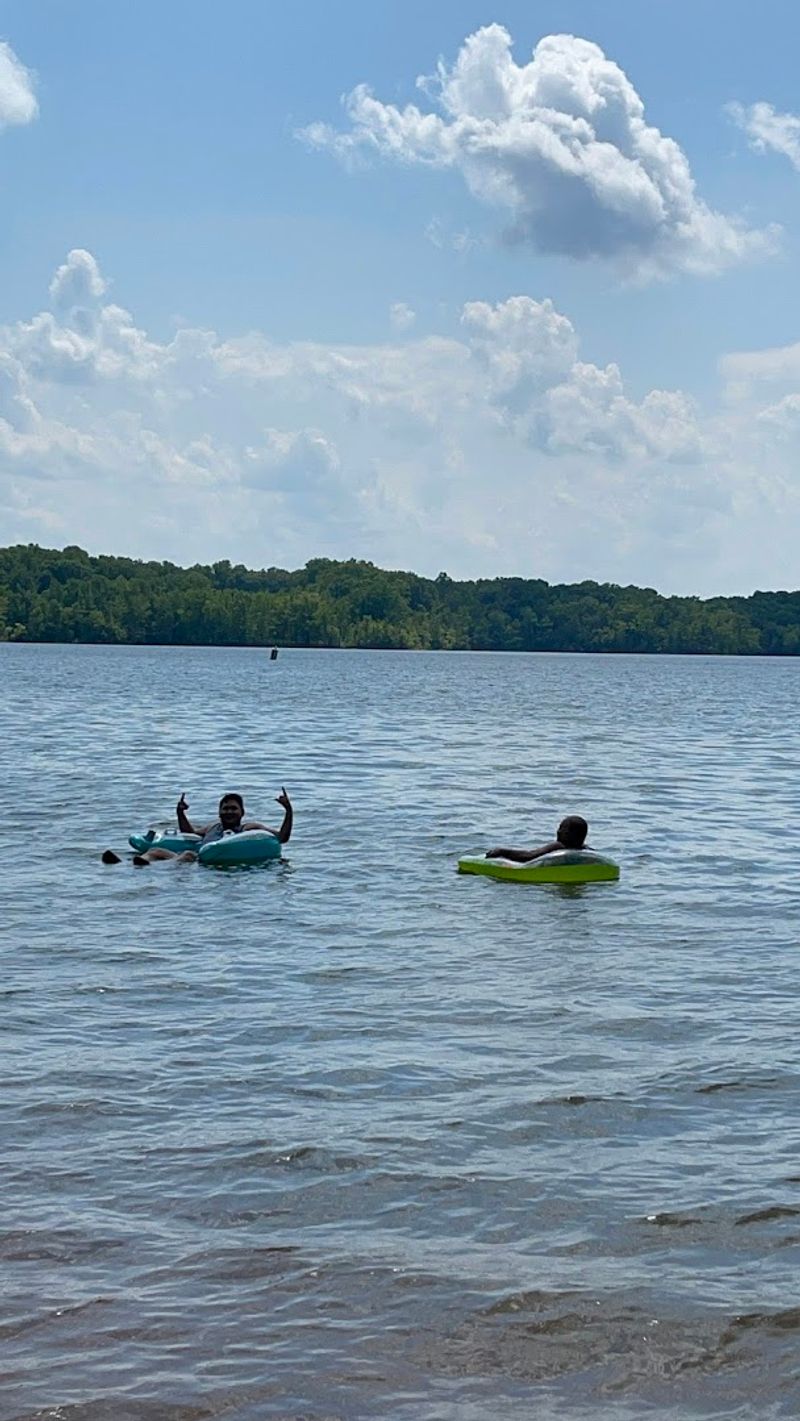
Forget fighting for a square foot of sand at an overcrowded ocean beach. The swimming areas at Kerr Lake offer clean, clear water and enough space to actually breathe.
The accessible beach near the dam area is a popular summer spot, and the water clarity here genuinely surprises people who expect murky lake water.
Multiple swim beaches are scattered across the reservoir’s recreation sites, so you can almost always find one with elbow room. The sandy shores slope gently into the water, making them comfortable for all ages.
Families set up chairs, kids splash in the shallows, and the whole scene feels refreshingly laid-back.
Virginia summers get hot and humid, and dunking yourself in Kerr Lake’s cool water is one of the most satisfying ways to handle the heat. The beach areas maintained by the Corps of Engineers are consistently clean and well-kept, with bathroom facilities nearby.
Lifeguards are not always present, so swimming with awareness is important. Bring a paddleboard, toss on a life jacket, and spend a lazy afternoon floating in water that looks almost too blue to be real this far inland.
Bald Eagles and Wildlife Watching Beyond Expectations
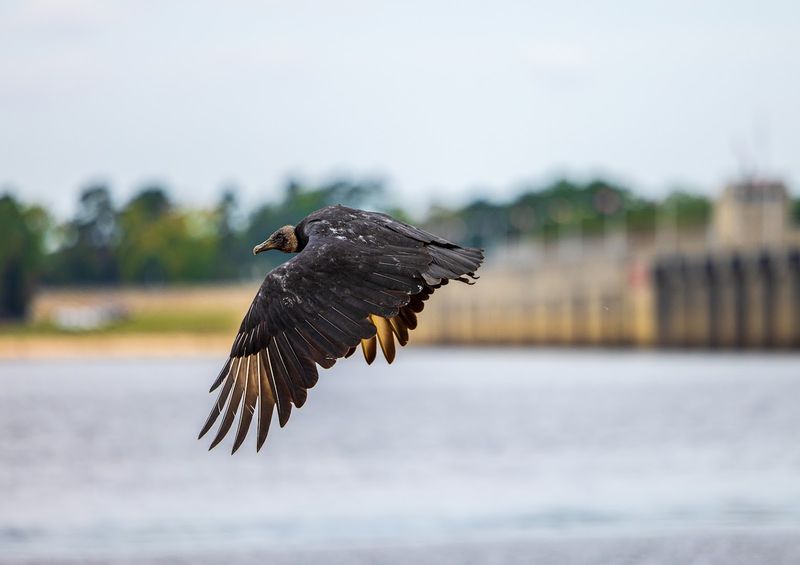
Tailrace Park, located just downstream from the dam structure itself, is one of Virginia’s most underappreciated birdwatching destinations. During the winter months, bald eagles congregate here in impressive numbers, drawn by the fish-rich tailwater below the dam.
Standing at the park with binoculars, you can watch these magnificent birds circle, dive, and perch along the tree line.
Great blue herons are a constant presence throughout the warmer months, stalking the shallows with their characteristic slow-motion patience. Osprey, kingfishers, wood ducks, and a rotating cast of migratory waterfowl make the lake’s edges endlessly entertaining for anyone with even a passing interest in birds.
Beyond birds, the wildlife management areas surrounding John H. Kerr Dam and Reservoir total more than 10,000 acres, supporting deer, foxes, river otters, and wild turkey.
Early morning is the magic hour, when mist still hangs over the coves and animals move freely along the shoreline. Bringing a decent pair of binoculars and a camera with a zoom lens is highly recommended.
Virginia does not advertise this wildlife spectacle loudly enough, and that is probably why it stays so remarkably good.
Boating Freedom Across Miles of Open Water
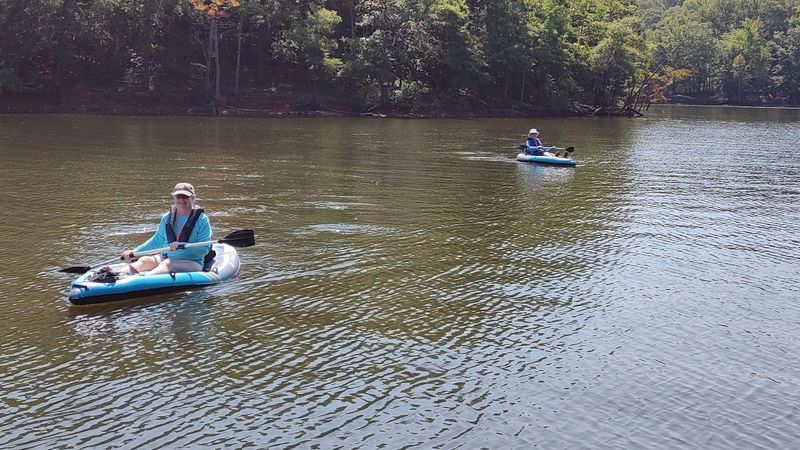
Open water and no traffic jams. That pretty much sums up boating on Kerr Lake.
The reservoir’s massive surface area means powerboats, pontoons, kayaks, and canoes all coexist comfortably without anyone feeling crowded out. On a weekday morning, you can cruise for miles without seeing another vessel.
Boat ramps are plentiful and well-maintained throughout the recreation areas, making launch and retrieval straightforward even for first-timers. Rental options are available in Clarksville, the nearest town, so you do not necessarily need to own a boat to enjoy a full day on the water.
Pontoon boats are particularly popular for family outings, offering a stable, shaded platform for fishing, swimming, and general lake wandering.
Kayakers and canoeists have an especially fine time exploring the quieter coves and inlets where motorboats cannot easily follow. Paddling into a still, wooded cove at John H.
Kerr Dam and Reservoir feels almost meditative, the kind of experience that resets your nervous system completely. Virginia’s interior lake country does not get nearly enough credit for producing moments like these, and Kerr Lake delivers them consistently throughout the warmer seasons.
Hiking Trails That Reward Every Step
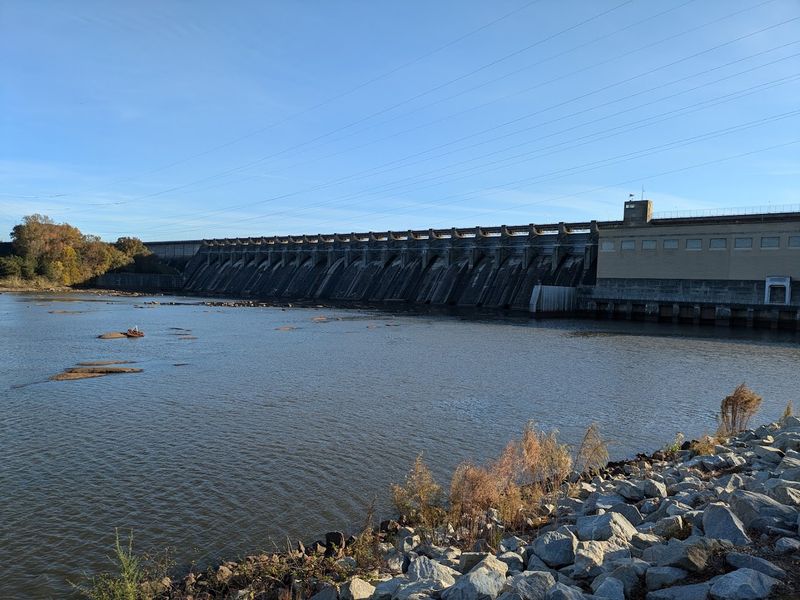
Liberty Hill Trail on the east side of the dam is a solid starting point for anyone wanting to stretch their legs and earn a view. The trail winds through mature hardwood forest before opening up to perspectives of the dam structure and the tailwater below.
It is not a brutal climb, but the payoff at the overlook points is genuinely satisfying.
Beyond Liberty Hill, the recreation areas surrounding Kerr Lake offer a variety of walking and biking paths suited to different fitness levels. Some trails hug the shoreline closely, giving you constant water views.
Others cut deeper into the forest, where the canopy closes overhead and the sounds of the lake fade to a distant murmur.
John H. Kerr Dam and Reservoir sits within a landscape that rewards slow exploration on foot.
The combination of forest, water, and open meadow edges creates a rich habitat that changes noticeably with every season. Fall foliage transforms the shoreline into something almost impossibly colorful.
Spring brings wildflowers along the trail edges. Virginia’s outdoor culture often fixates on the mountains or the coast, but Kerr Lake’s trail network deserves a spot on every hiker’s radar.
The Dam Itself Is a Jaw-Dropping Engineering Marvel
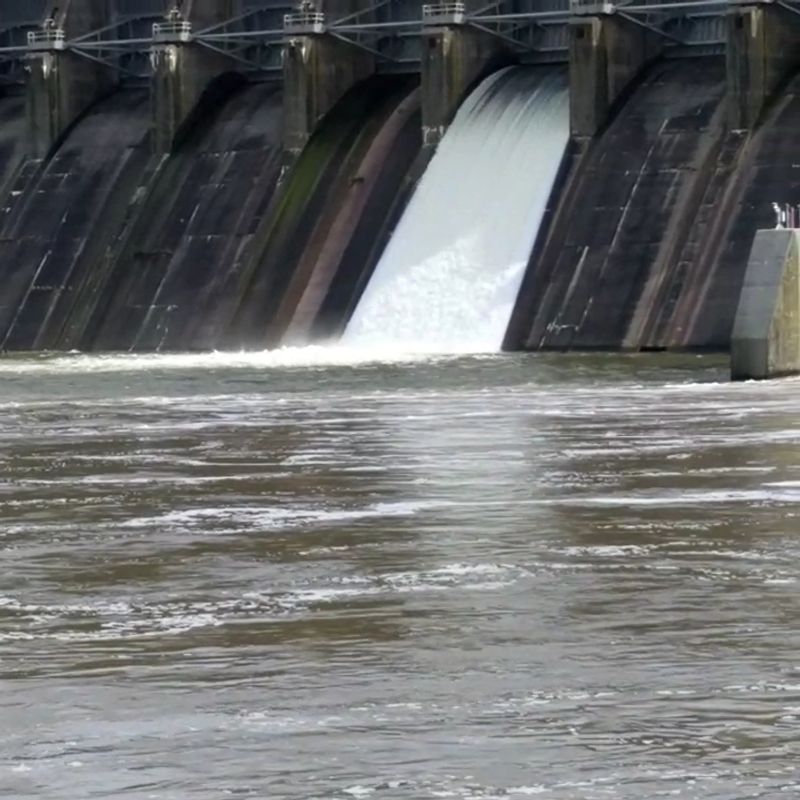
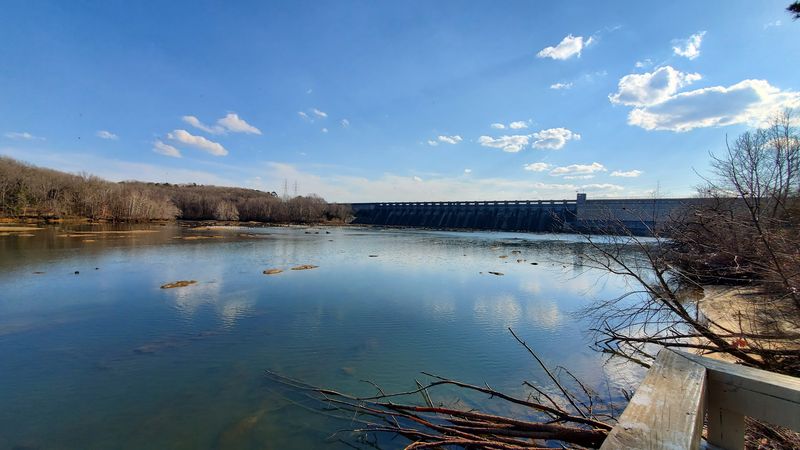
Most people come to Kerr Lake for the recreation, but the dam itself is worth a dedicated visit. The structure is enormous, and seeing it up close for the first time produces a genuine sense of awe.
Multiple vantage points on both sides of the dam give you different perspectives on the scale of this engineering achievement.
Built by the U.S. Army Corps of Engineers and completed in the early 1950s, the dam serves a trio of purposes: flood control, hydroelectric power generation, and recreation management.
The visitor center near the dam is free to enter and packed with interesting historical context about the construction process and the communities that were displaced when the valley was flooded.
Watching water release through the spillway when the dam is generating power is a surprisingly thrilling spectacle. The tailrace below churns white and fast, and the fishing directly against the dam face during generation periods is legendary among serious anglers.
John H. Kerr Dam and Reservoir offers a rare chance to appreciate both natural beauty and human ingenuity in the same glance.
Virginia does not have many landmarks quite like this one.
Picnicking and Day Use Areas Built for Pure Relaxation
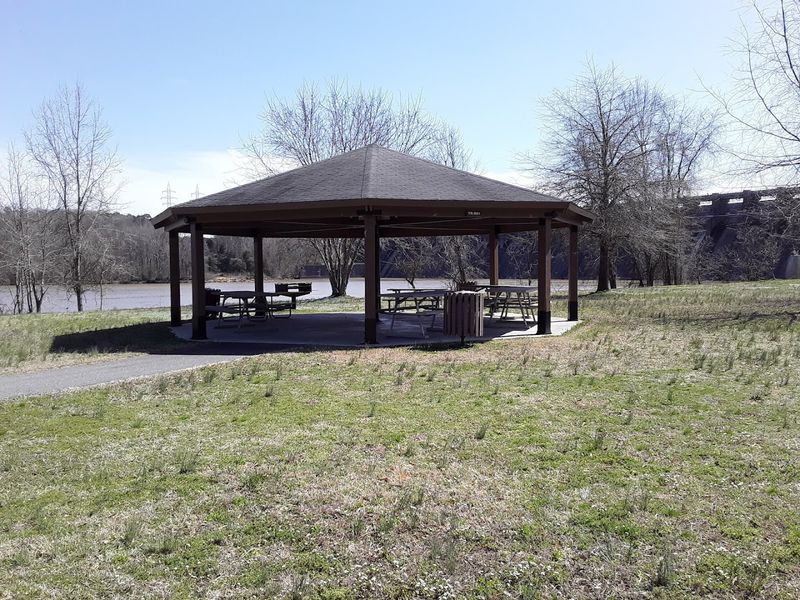
Not every great lake day requires a boat or a fishing rod. Sometimes the perfect afternoon is a shaded picnic table, a cooler full of good food, and an unobstructed view of glittering water.
Kerr Lake delivers that experience across multiple well-maintained day-use areas scattered throughout the recreation sites.
Picnic shelters are available at several locations, some reservable in advance for groups, others available on a first-come basis. Grills are positioned throughout the areas, making cookouts easy and practical.
The grounds are consistently clean, which speaks to the care the managing agencies put into maintaining this resource.
On the river side below the dam, Tailrace Park provides picnic shelters alongside one of the most scenic stretches of water in the entire area. Families set up for the whole day, kids explore the rocky shoreline, and the ambient sound of moving water makes everything feel calmer.
John H. Kerr Dam and Reservoir proves that you do not need elaborate amenities to have an exceptional outdoor day.
Virginia’s quiet corner along the North Carolina border is simply doing outdoor recreation right, without the fuss or the fanfare.
Plan Your Visit: Getting There and What to Know
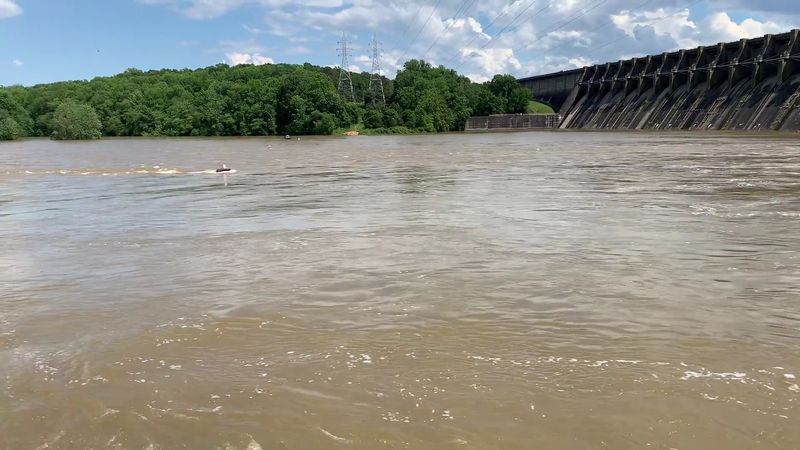
Kerr Lake sits in Mecklenburg County, Virginia, near the town of Boydton, which makes it a reasonable drive from both the Raleigh-Durham area in North Carolina and the Richmond metro area in Virginia. The roads leading in are scenic and unhurried, which immediately sets the tone for what awaits.
The Visitor Assistance Center at 1930 Mays Chapel Road, Boydton, VA 23917 is the best first stop for maps, recreation permits, and local advice. The staff there are genuinely helpful and know the lake intimately.
The center operates on weekday hours, so planning a mid-week arrival is ideal for getting oriented before the weekend rush.
Clarksville, the nearest town of any size, has grocery stores, fuel, and boat rentals to cover your practical needs. Cell service can be spotty in some recreation areas, so downloading offline maps before arrival is a smart move.
John H. Kerr Dam and Reservoir is open year-round, with peak season running through the warm months.
Spring and fall offer arguably the best conditions: mild temperatures, active wildlife, and noticeably fewer people competing for the good campsites. Virginia saved its best secret for last, and this is absolutely it.
