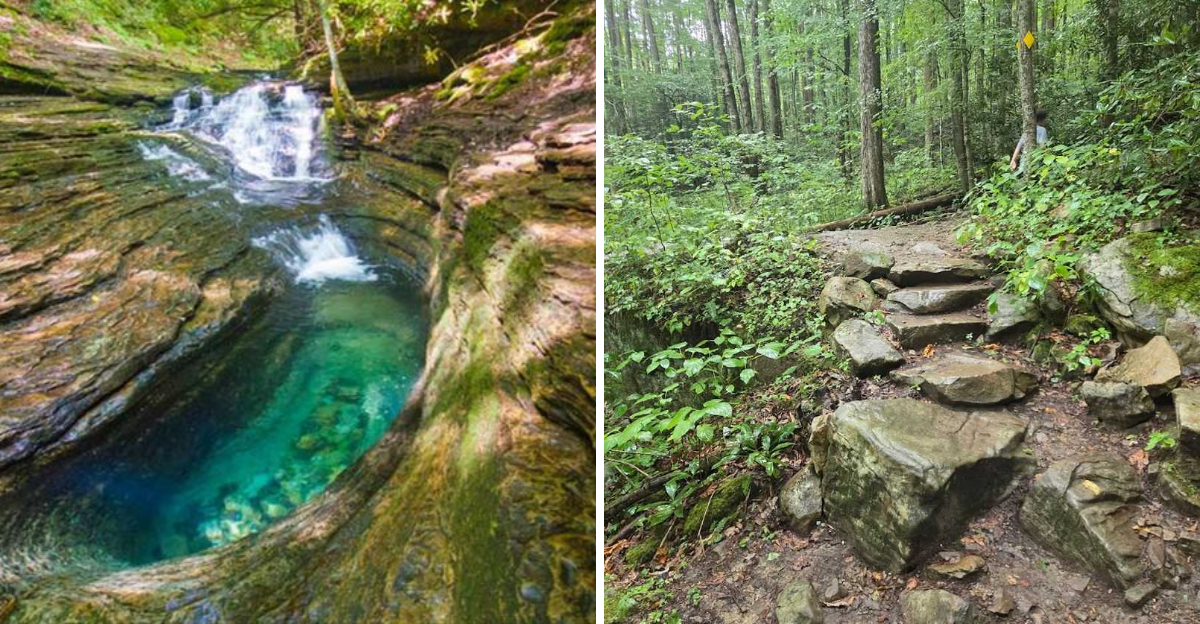
Deep in the mountains of southwest Virginia, within Jefferson National Forest, a hidden pool of blue-green water glows against ancient rock. The color looks unreal at first glance, but it is entirely natural, shaped by minerals, light, and the slow work of time.
What was once a local secret now draws a steady stream of hikers, all chasing that striking view at the end of the trail. The setting feels both wild and unexpectedly serene, like a place designed for quiet escape.
Whether it remains underrated or edges toward overexposed depends on who you ask, but the moment you see it in person, the appeal is easy to understand.
The Magic of the Aquamarine Water
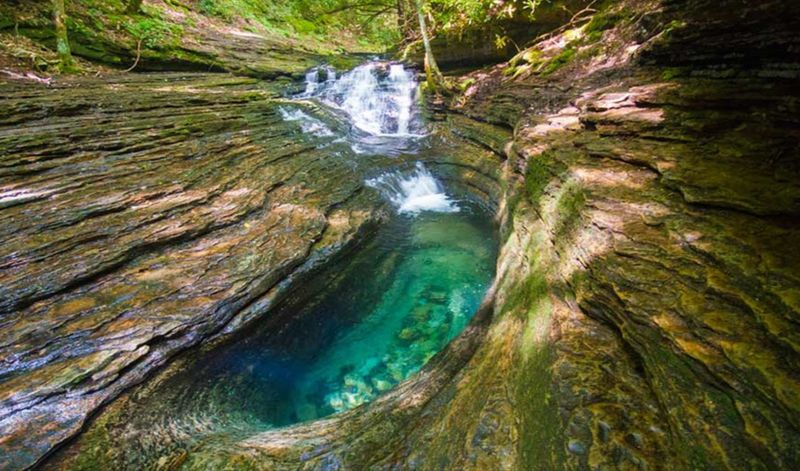
Nothing quite prepares you for the moment you round the last bend on the trail and catch your first glimpse of that electric blue-green pool shimmering between ancient boulders. The color looks almost tropical, the kind you’d expect in the Caribbean, not tucked inside a Virginia mountain forest.
The secret behind those stunning hues lies in the water’s mineral composition and the way light bounces off the pale sandstone and quartzite rock walls surrounding the pool. Cold, clear mountain water pours over a natural rock ledge and collects in a smooth basin worn down over thousands of years.
The water temperature stays bracingly cold even during the hottest summer months, typically hovering in the low sixties. Jumping in feels like a full-body wake-up call, equal parts shocking and exhilarating.
The pool itself is relatively compact at the top, but a larger, equally gorgeous swimming hole sits just below it. Both spots are completely natural, untouched, and free of any commercial development.
Standing there in the middle of the Virginia wilderness, staring into water that looks like liquid gemstone, is a moment that sticks with you long after the hike is done.
What the Trail Actually Looks Like
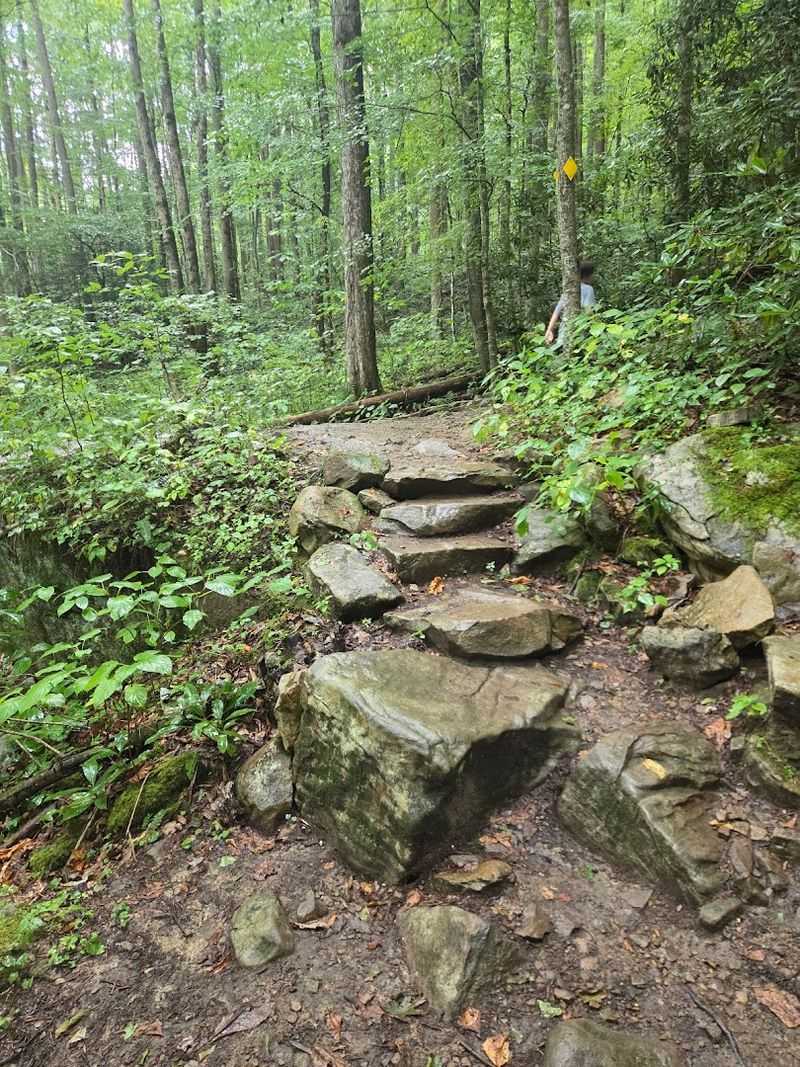
Forget paved paths and manicured walkways. The trail leading to Devil’s Bathtub is a proper mountain adventure that demands your full attention from the first step to the last.
Rocky terrain, exposed roots, uneven footing, and a steady uphill push make this one of those hikes that earns its reward.
Following Devil’s Fork Creek the entire way, the trail keeps the sound of rushing water as your constant soundtrack. Smaller pools and little cascades appear along the route, offering teaser glimpses of what’s waiting ahead.
The forest itself is lush and dense, with towering trees creating a canopy that keeps things mercifully shady on hot summer days.
The out-and-back route covers roughly four miles total, with the return trip feeling noticeably quicker thanks to the downhill momentum. Elevation gain is real but manageable for anyone with a decent fitness base.
Younger children may find certain rocky sections tricky, so a sturdy pair of hands nearby goes a long way. The trail runs through the heart of Virginia’s Jefferson National Forest, and every twist and turn reveals something worth pausing to appreciate.
Bring trekking poles if you have them.
The Creek Crossings That Make It an Adventure
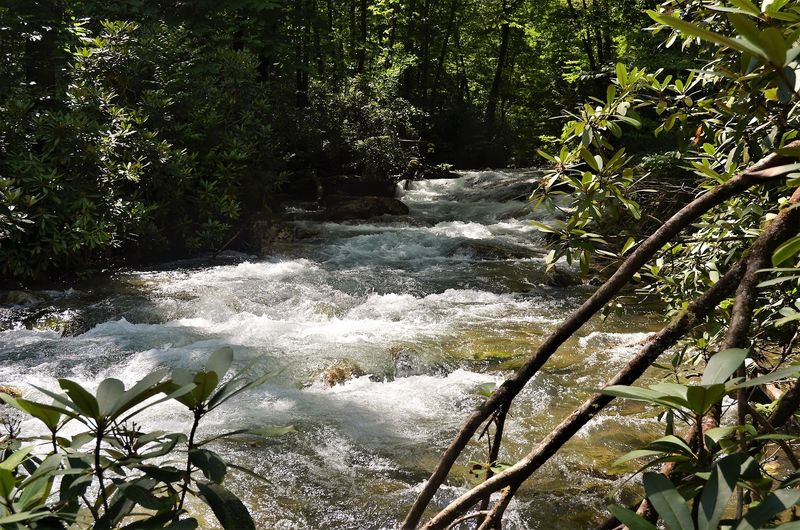
Stream crossings are basically the signature move of this hike, and there are plenty of them. Depending on which route you take and recent rainfall levels, you can expect to cross Devil’s Fork Creek somewhere between seven and thirteen times before reaching the main attraction.
Some crossings are easy hop-scotch affairs over dry rocks. Others require a bit more commitment, and wet feet are basically guaranteed unless you’ve got seriously waterproof footwear.
Pack an extra pair of socks in a dry bag because soggy socks on the return hike are nobody’s idea of fun.
After heavy rainfall, the creek swells fast and these crossings can shift from playful to genuinely dangerous. Flash flooding is a real risk in this part of Virginia, so checking the weather forecast a few days before your trip is non-negotiable.
When conditions are right, though, the crossings add a fantastic layer of playfulness to the whole experience. Splashing through cold mountain water with forest all around you feels less like a chore and more like the whole point.
Kids who are old enough to manage the footing absolutely love this part of the trail.
Gear Up Right Before You Go
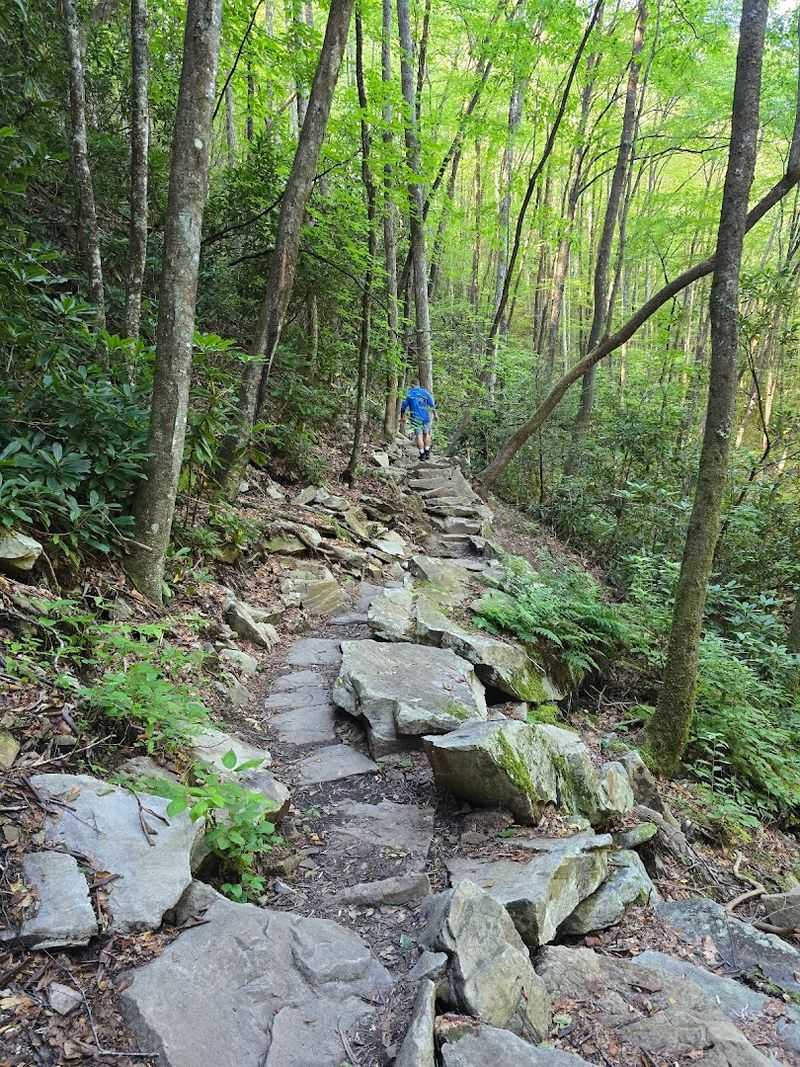
Showing up underprepared for this hike is a rookie mistake that turns a spectacular day into a miserable slog. The terrain is uneven, the water crossings are frequent, and cell service is essentially nonexistent once you’re on the trail.
Preparation is everything here.
Waterproof hiking shoes or trail runners with good ankle support are a must. Water shoes work well once you reach the pool itself, so many hikers carry a second pair in their pack.
A trekking pole adds serious stability on the rocky sections and makes creek crossings much less nerve-wracking, especially on the return trip when your legs are tired.
Pack more water than you think you need, along with high-energy snacks to keep your legs moving. A basic first aid kit deserves a spot in your bag too, given the remote location and the complete absence of phone service.
Sunscreen matters even under the tree canopy, and a lightweight towel makes post-swim relaxation far more comfortable on the sharp rock edges. Virginia’s mountain weather can shift quickly, so a packable rain layer takes up almost no space but earns its keep on unpredictable afternoons.
Go prepared, and this hike delivers pure magic.
The Best Time to Visit Devil’s Bathtub
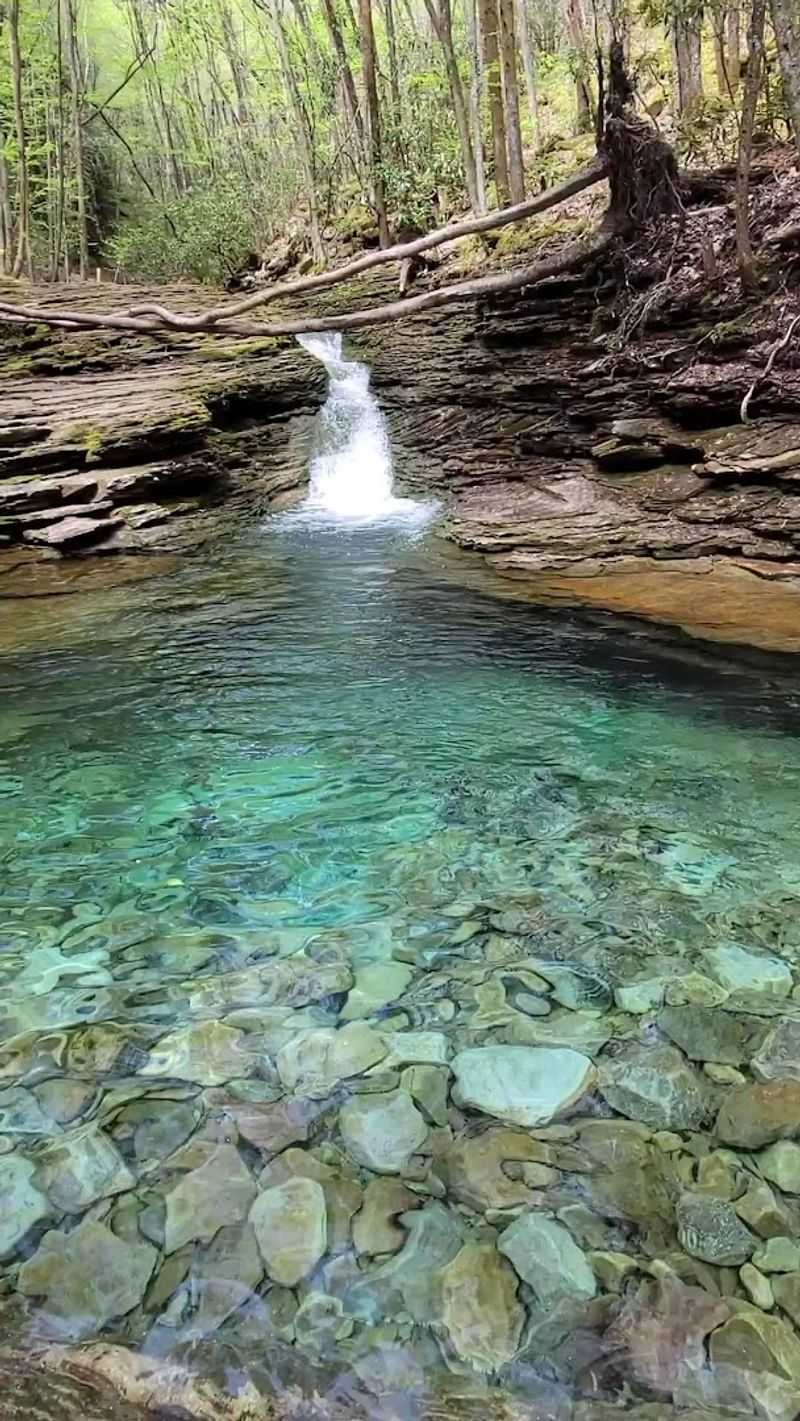
Timing your visit smartly makes an enormous difference between a peaceful mountain escape and a packed, shoulder-to-shoulder scramble at the pool. Summer weekends draw serious crowds, especially from June through August when the swimming hole is at its most appealing.
Weekday mornings in summer offer the sweet spot of warm weather and manageable crowds. Early April through late May brings gorgeous wildflowers along the trail, cooler air, and far fewer hikers competing for space.
Fall is arguably the most visually stunning time to make the trek, with the Virginia mountains erupting into reds, oranges, and golds that frame the blue-green water in jaw-dropping contrast.
Winter visits are possible for the truly adventurous, and the frozen or semi-frozen cascade creates an otherworldly scene, though the trail becomes significantly more treacherous with ice. Spring snowmelt swells the creek substantially, making crossings tougher but also cranking up the waterfall’s drama factor.
Sunrise arrivals during summer lock in trailhead parking and grant you those golden first-light moments before the crowds descend. Whatever season you choose, setting off early in the morning almost always rewards you with a more intimate, quieter experience at one of Virginia’s most spectacular natural spots.
Parking, Access, and Getting There
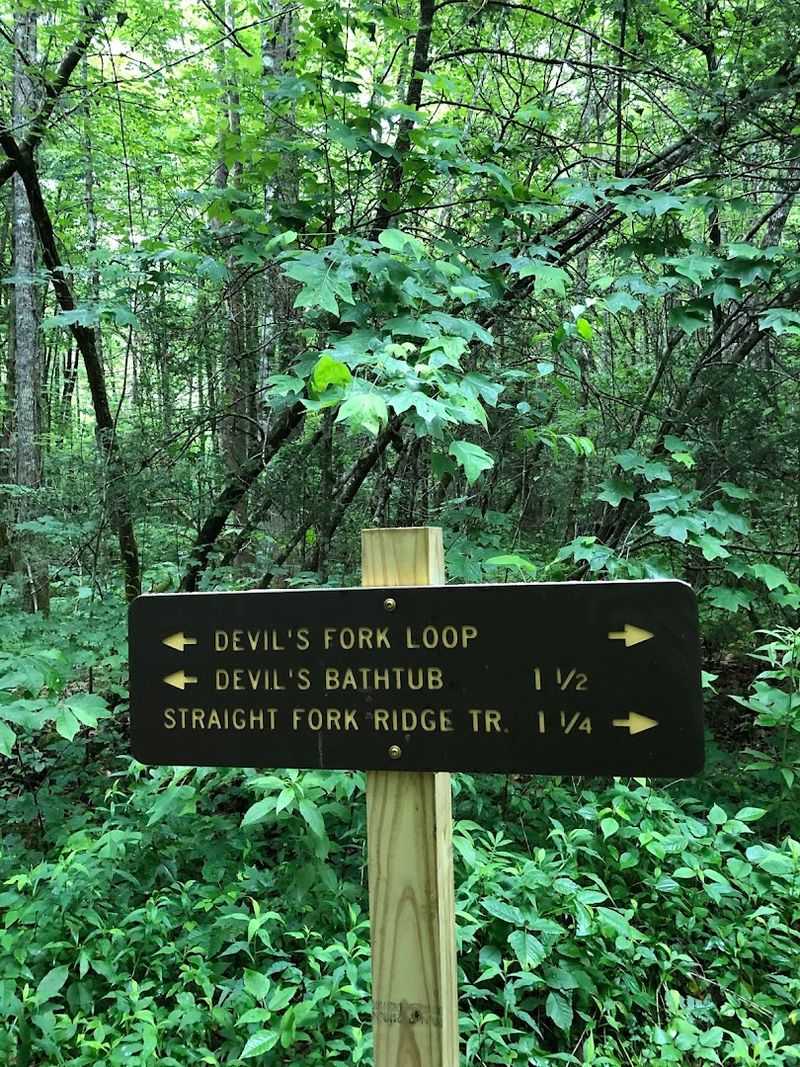
Getting to the trailhead requires a bit of navigation patience, especially since cell service drops out well before you arrive. Downloading an offline map before leaving civilization is genuinely one of the smartest moves you can make for this trip.
Two parking options exist near the trailhead. The first lot, better suited for standard cars, sits slightly further from the start of the trail.
A second smaller lot sits closer to the trailhead itself and is accessible via a rough gravel road that really does benefit from higher ground clearance. On busy summer weekends, both lots fill up fast, sometimes before mid-morning.
The address to plug into your GPS is Devils Fork Loop Trail, Duffield, VA 24244, and the trailhead phone contact is listed as 276-386-6521 for any pre-visit questions. The road leading in is unpaved and can be rutted after rain, so slow and steady driving is the move.
Arriving early on weekends essentially eliminates parking stress entirely. Nearby Natural Tunnel State Park and Little Stony Falls are both within a short drive, making this corner of Virginia a full weekend adventure rather than a single-stop day trip.
Plan the route before you lose signal.
Safety Tips You Actually Need to Know
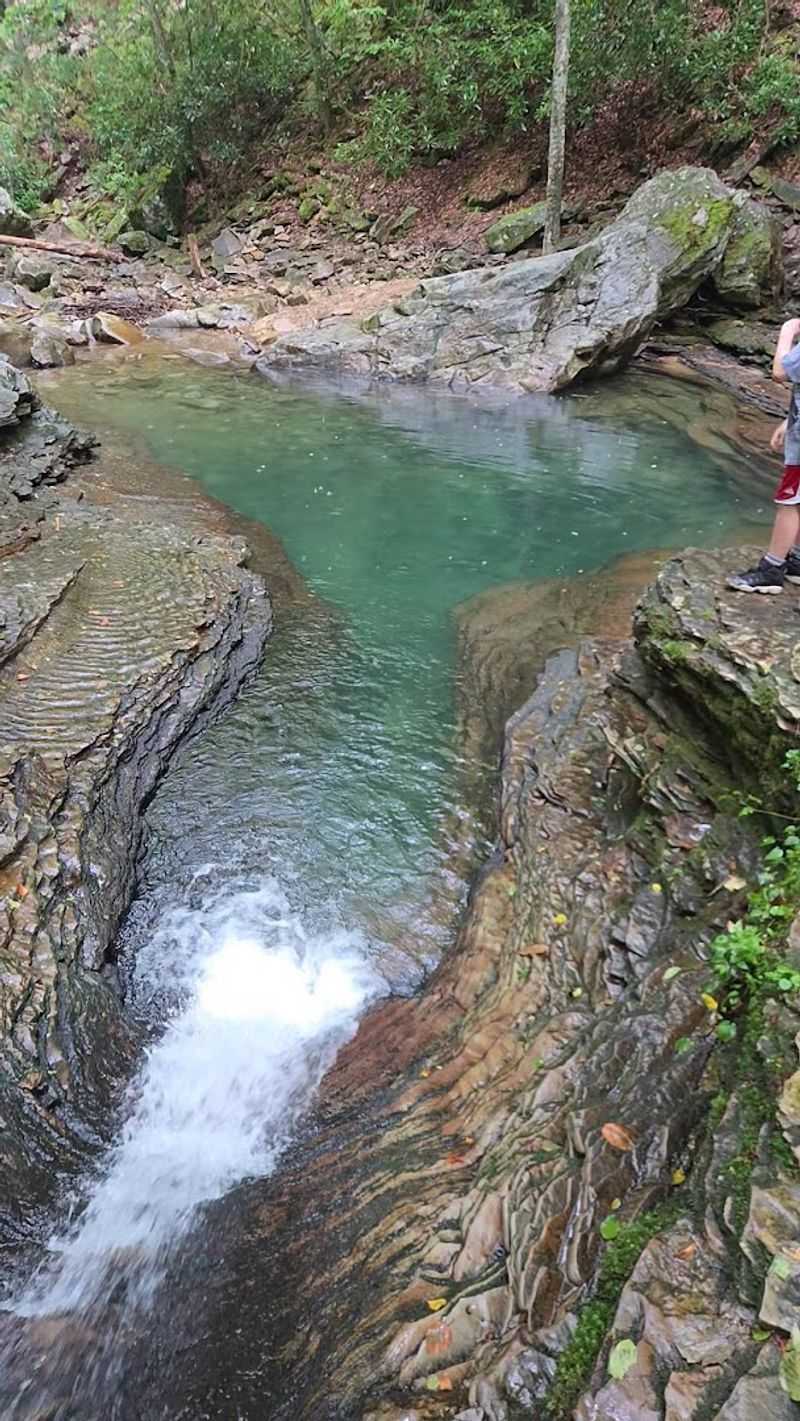
This trail has a reputation for being gorgeous, and it absolutely is, but it also demands respect. The combination of remote location, zero cell service, slippery rocks, and flash flood risk means a careless approach can turn dangerous fast.
Flash flooding is the biggest threat in this canyon. The creek can rise with alarming speed after upstream rainfall, even when skies directly above you look perfectly clear.
Checking weather forecasts for the entire region, not just the immediate area, before heading out is essential. If rain is in the forecast, consider rescheduling.
The rocks surrounding the pool and along the trail are genuinely slippery, especially when wet. Timber rattlesnakes do live in this part of Virginia, so watching where you step and where you place your hands while scrambling over boulders is important.
Keep dogs on leashes and children within arm’s reach near the water, which is deeper than it appears in places. Recent trail improvements have eliminated several of the most hazardous stream crossings, making the route safer than it used to be.
That said, no trail improvement replaces good judgment. Hike with a buddy, leave your itinerary with someone at home, and carry a physical map just in case.
The Loop Trail vs. the Out-and-Back Option
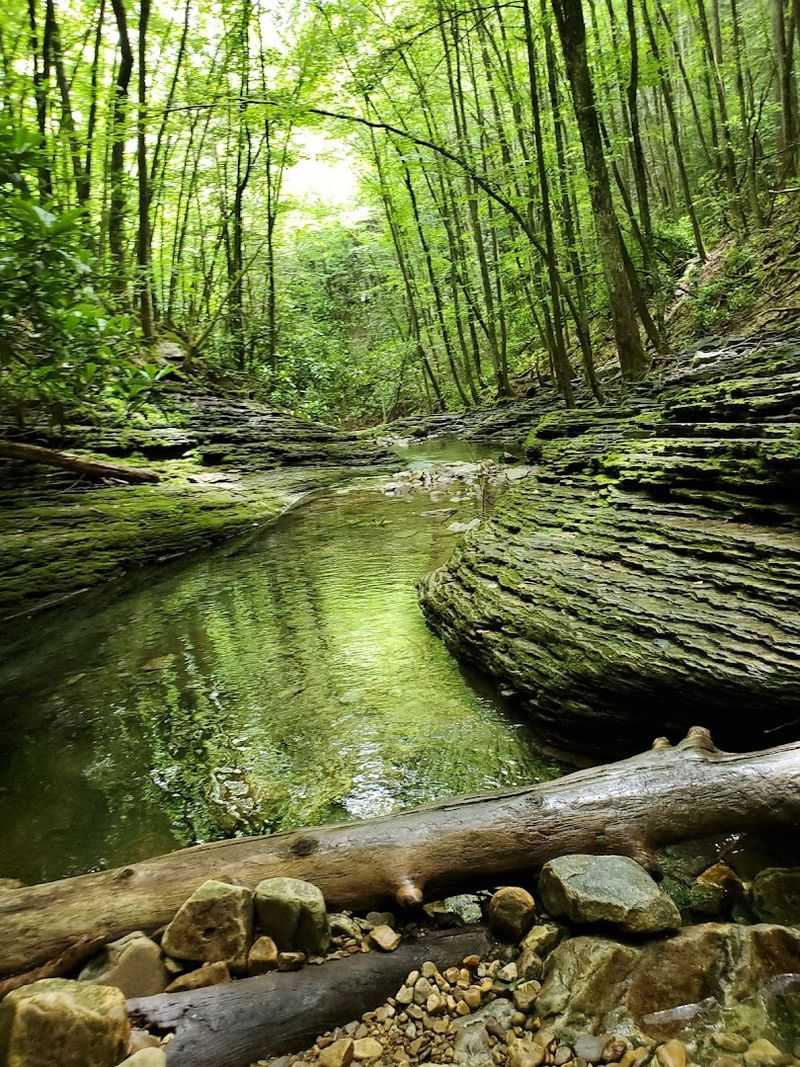
One of the first decisions you’ll face at the trailhead is choosing your route. The out-and-back option heads straight to Devil’s Bathtub and back, covering roughly four miles total.
It’s the most direct path to the main attraction and works well for first-timers or anyone with limited time.
The full Devils Fork Loop stretches out to around eight miles and takes you through a much broader sweep of the surrounding Jefferson National Forest. Experienced hikers who want to truly absorb the landscape and avoid backtracking on the same path tend to prefer this version.
The loop rewards patience with additional creek views, forest solitude, and a more complete sense of the terrain.
Taking the left fork at the trail junction gets you to the waterfall and pool more quickly, while the right fork adds mileage before looping back around. Starting early enough to complete the full loop before afternoon thunderstorms roll in is smart planning in summer.
Both options lead to the same stunning payoff at Devil’s Bathtub, so the real question is how much of this spectacular Virginia wilderness you want to absorb along the way. More miles almost always means fewer people sharing the trail with you.
Leave No Trace at This Beloved Spot
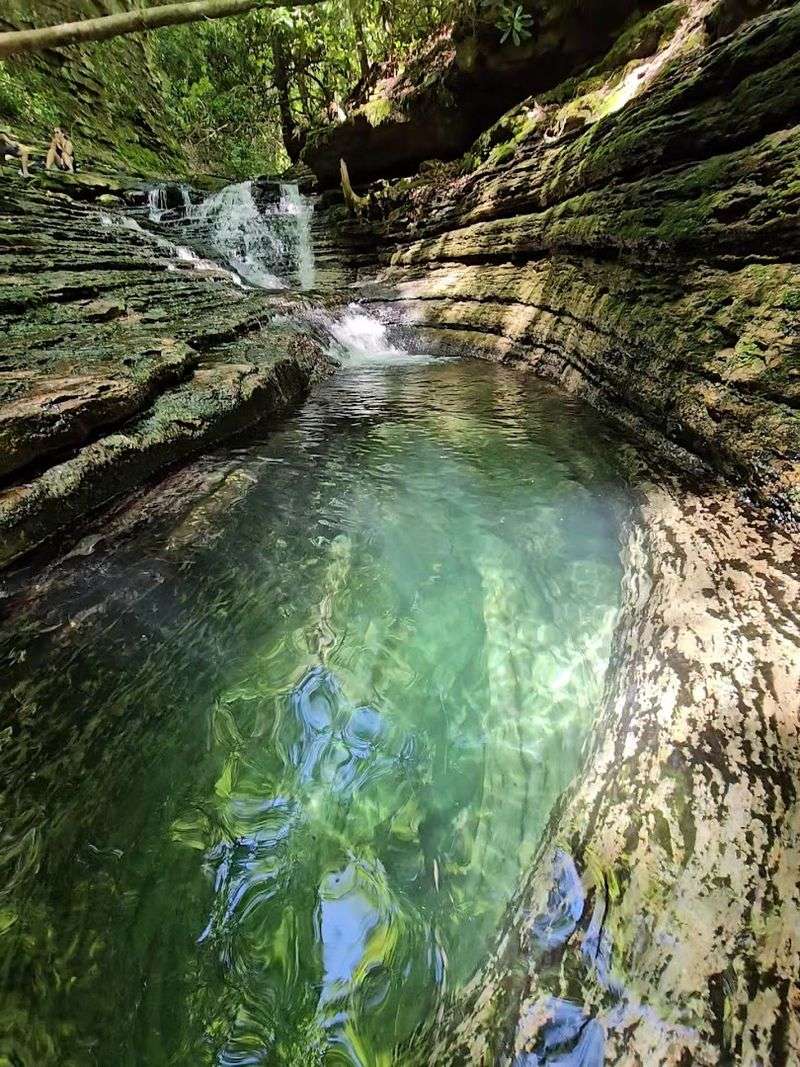
Devil’s Bathtub has exploded in popularity over the past several years, and that surge in foot traffic brings real consequences for the ecosystem. The trail and pool sit within Jefferson National Forest, and keeping them in spectacular condition depends entirely on every single visitor making responsible choices.
Pack out absolutely everything you bring in. That means food wrappers, water bottles, fruit peels, and yes, even those biodegradable-ish items that take far longer to decompose than most people assume.
Fires are not appropriate here, and disturbing the rocks, plants, or wildlife along the trail damages the delicate forest balance that makes this place so special.
Staying on marked trail paths protects fragile streamside vegetation that holds the soil together and filters the water. Cutting switchbacks or trampling off-trail plants causes erosion that compounds over thousands of visits.
Dogs are welcome on the trail but must stay leashed to protect local wildlife and other hikers. The pool’s stunning color and clarity exist because the surrounding environment remains largely intact.
Virginia’s outdoor community takes enormous pride in this place, and the collective effort to preserve it shows. Treat it the way you’d want your own backyard treated, and it’ll stay magical for decades to come.
Why This Spot Belongs on Your Virginia Bucket List
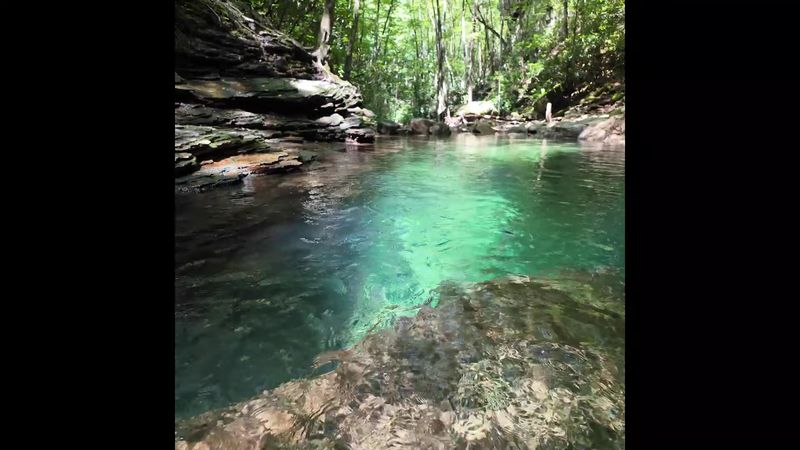
Virginia is packed with incredible natural wonders, from the rolling Shenandoah Valley to the rugged ridgelines of the Blue Ridge Parkway, but Devil’s Bathtub occupies a category all its own. Very few places on the East Coast deliver this combination of dramatic scenery, physical adventure, and payoff this visually stunning.
The hike itself builds anticipation with every creek crossing and every rocky scramble. By the time you reach that glowing blue-green pool tucked between canyon walls, the effort feels completely worth it.
Swimming in water this cold and this clear, surrounded by nothing but Virginia forest and the sound of a waterfall, is a full sensory reset from everyday life.
Nearby attractions like Natural Tunnel State Park and Little Stony Falls make this corner of southwest Virginia worth a full weekend of exploration rather than a quick day trip. The region is genuinely underexplored compared to Virginia’s more famous destinations, which means the roads stay quieter and the trails feel wilder.
Pack your bags, point your car toward Duffield, and make a plan to stand at the edge of that impossibly blue pool. Some places are worth every single muddy, wet, breathless step it takes to reach them, and this is absolutely one of them.
Dear Reader: This page may contain affiliate links which may earn a commission if you click through and make a purchase. Our independent journalism is not influenced by any advertiser or commercial initiative unless it is clearly marked as sponsored content. As travel products change, please be sure to reconfirm all details and stay up to date with current events to ensure a safe and successful trip.
