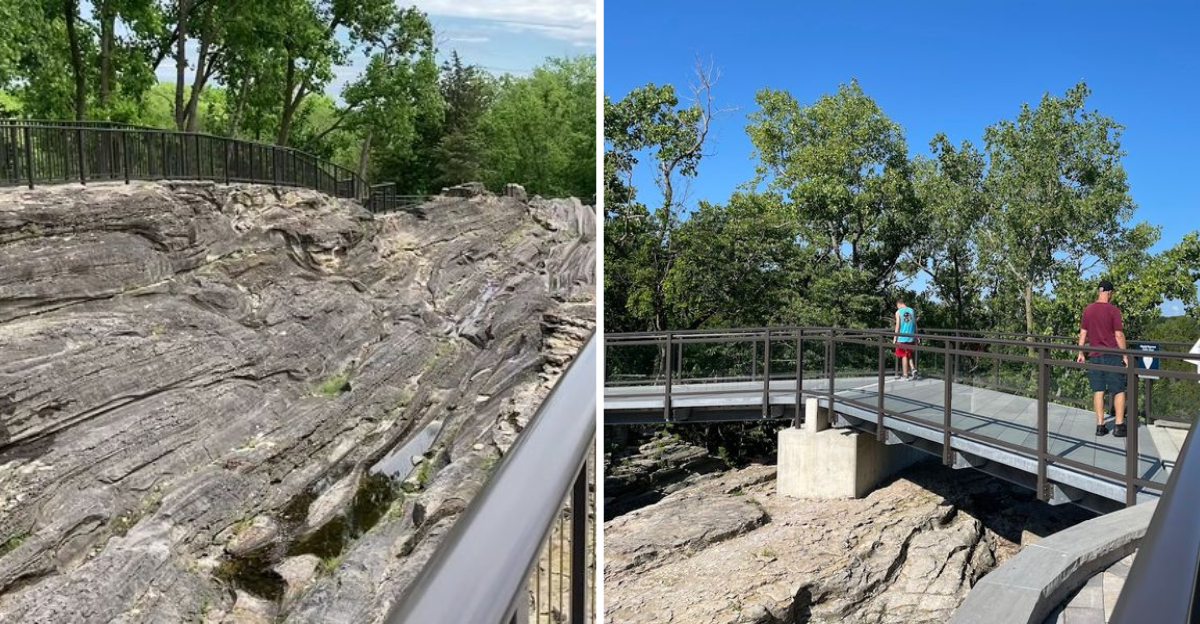
A small island sitting quietly in western Lake Erie where the ground beneath your feet tells a story so old it is almost impossible to wrap your head around. This Ohio island is home to one of the most extraordinary geological sites in the world, and not nearly enough people know about it. A state memorial preserves a stretch of ancient limestone bedrock carved by massive glaciers during the last Ice Age.
Woolly mammoths roamed Ohio while this stone was being shaped. Today you can stand right above it and feel the scale of what happened here. The grooves cut into the rock are massive, wide enough to feel genuinely jaw dropping in person.
Getting here takes a ferry ride across the lake, and honestly, that short trip only adds to the sense that you are heading somewhere truly special.
How Glaciers Carved These Grooves Into Solid Rock
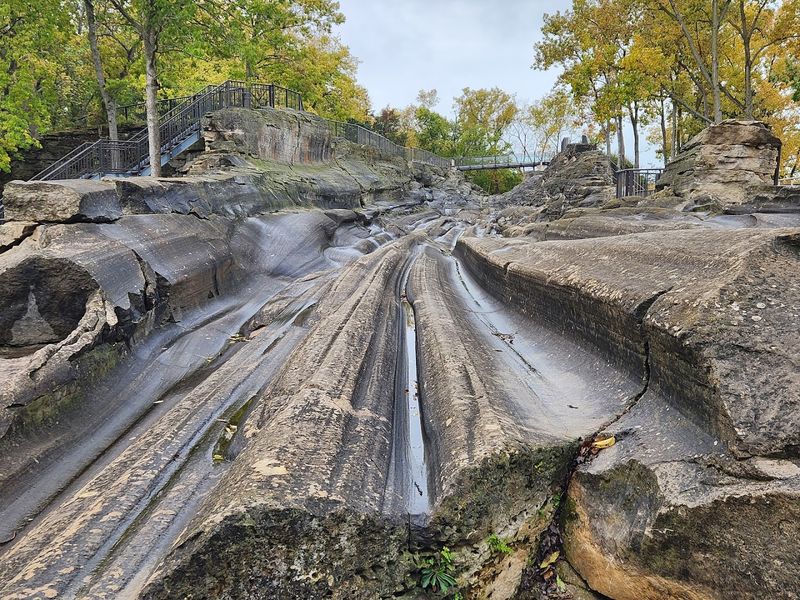
The sheer size of what the ice did here is hard to process until you are actually looking down at it. During the Wisconsinan glaciation, ice sheets potentially a mile thick crept southward from Canada, carrying embedded rocks and debris like a slow-moving sheet of sandpaper.
That debris ground relentlessly against the softer limestone beneath, cutting long, parallel channels into the bedrock over thousands of years.
The grooves at this site stretch roughly 400 to 427 feet in length, reach up to 15 feet deep, and measure around 33 to 35 feet wide. Those are not small scratches.
They are enormous, sweeping channels that make the glacier feel almost tangible even though the ice itself vanished around 12,000 years ago.
What makes this place special beyond just its size is how accessible it all is. The Ohio History Connection and Kelleys Island State Park have built a well-maintained system of walkways, an overlook bridge, and interpretive signage that explains exactly what you are looking at.
You do not need a geology degree to appreciate the story the rock is telling.
The informative plaques posted throughout the site break down the science in a way that genuinely clicks, even for younger visitors. Many families bring kids here and end up having some surprisingly deep conversations about time, nature, and scale.
The grooves are considered the largest and most easily accessible glacial grooves in the world, which is a remarkable title for a free Ohio state memorial.
The Ancient Limestone Beneath Your Feet Is 400 Million Years Old
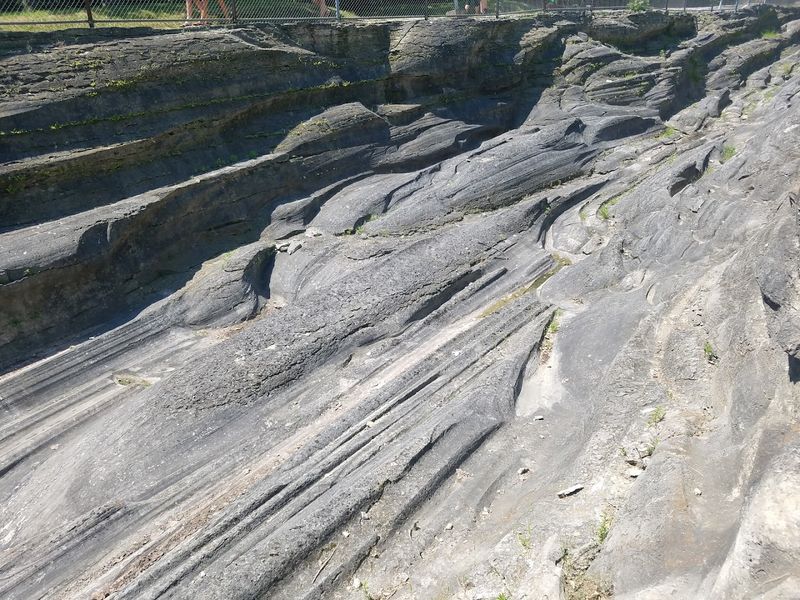
Before the glaciers ever arrived, this stone had already lived through something extraordinary. The limestone bedrock here, known as Columbus Limestone, formed approximately 400 million years ago during the Devonian Period.
At that time, Ohio sat south of the equator and was submerged beneath a warm, shallow subtropical sea teeming with marine life.
Coral reefs, crinoids, brachiopods, and other ancient sea creatures lived and died in that long-vanished ocean, and their remains slowly compressed into the rock over millions of years. If you look closely at the surface of the grooves, you can actually spot fossils embedded right in the stone.
No special tools needed, just your eyes and a little patience.
The fact that this bedrock survived 400 million years, a shallow sea, the weight of a mile-thick glacier, and centuries of Ohio weather is genuinely staggering. It puts time into a perspective that no textbook can fully deliver.
Seeing a fossil in rock that old, right there under your feet, has a way of making the world feel both enormous and oddly personal.
Visitors consistently mention the fossils as one of the unexpected highlights of the site. The interpretive signs nearby help you identify what you are seeing, which makes the fossil-spotting feel like a real discovery rather than a guessing game.
For anyone who has ever been even slightly curious about Earth history, this limestone is a front-row seat to something ancient beyond imagination.
Woolly Mammoths and Mastodons Once Roamed This Same Ground
Roughly 11,000 to 14,000 years ago, woolly mammoths and mastodons were very much alive and walking across Ohio. Fossils of these massive elephant-like creatures have been found all over the state, and their timeline overlaps directly with the period when glaciers were still actively carving the grooves you see on Kelleys Island today.
Mammoths stood up to 11 feet tall and were covered in thick, shaggy fur suited for the cold climate of the late Pleistocene. Mastodons, while similar in appearance, were a distinct species with different teeth and a slightly stockier build.
Both species went extinct around 10,500 to 11,000 years ago, likely due to a combination of climate change and hunting pressure from early humans.
There is something quietly powerful about standing at the Glacial Grooves and knowing that these animals were alive when the ice that made these channels finally melted away. The stone you are looking at has not fundamentally changed since that era.
It has been exposed, studied, and protected, but the grooves themselves are the same ones the glacier left behind.
That kind of continuity is rare. Most things from that period exist only as fossils in museum cases.
Here, the physical record is right in front of you, open to the sky, free to visit any day of the week from sunrise to sunset. It is the kind of place that makes history feel less like something you read about and more like something you can actually stand next to.
Getting to Kelleys Island Is Part of the Adventure
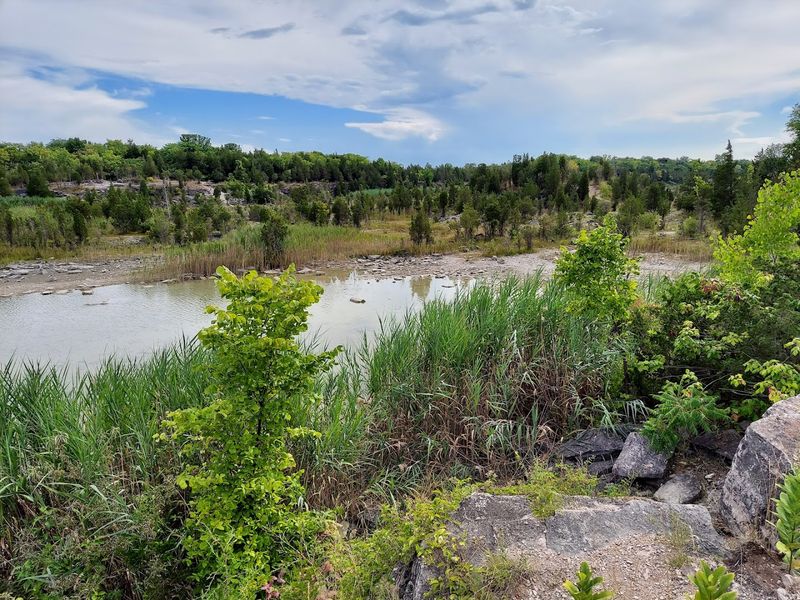
Kelleys Island does not have a bridge connecting it to the mainland, and that is honestly part of what makes it feel so removed from everyday life. The most common way to reach the island is by ferry from Marblehead, Ohio, and the ride itself sets the tone for the whole visit.
Lake Erie stretches out around you, the island grows larger on the horizon, and by the time you dock, something about the pace of the day has already shifted.
You can bring your car on the ferry if you want, though many visitors choose to travel on foot and rent a golf cart once they arrive on the island. Golf carts are genuinely the preferred mode of transport here, and cruising around the island’s quiet roads in one adds a relaxed, unhurried quality to the whole experience.
The island is small enough that getting from the ferry dock to the Glacial Grooves does not take long at all.
Kelleys Island can also be reached by private boat or small aircraft for those with access to either option. However you arrive, the sense of being on a real island, surrounded by water and largely free of traffic noise, hits quickly.
It feels like a different world compared to the Ohio mainland, even though you are only a short trip away.
Free parking is available at the Glacial Grooves site itself, which is a small but welcome detail. The address is 739 Division St, Kelleys Island, and the site sits on the north side of the island near the shoreline.
What to Expect When You Visit the Glacial Grooves Site
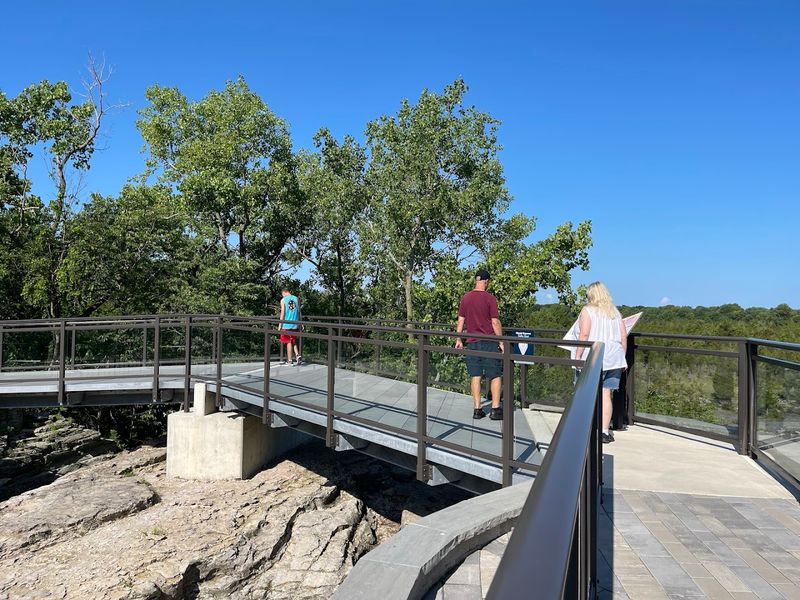
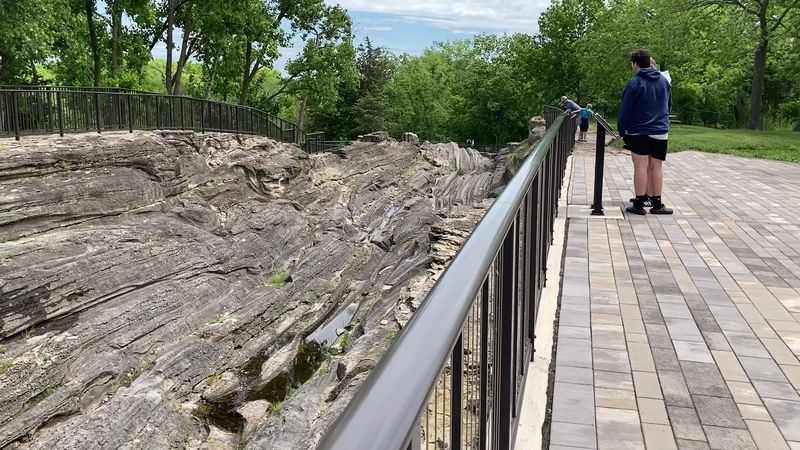
The site has been significantly upgraded in recent years, and the improvements are noticeable from the moment you arrive. Custom pavers cover the main walkways, the fencing and railings have been replaced with high-quality materials, and the overlook bridge spanning the grooves has been widened to give a better view.
Accessibility was clearly a priority during the renovation, with a wide gravel pathway and built-in traction leading from the parking area all the way to the observation area.
Golf cart parking has also been added to the lot, which makes sense given how many visitors explore the island that way. The whole setup feels thoughtful and well-organized without being overly manicured.
The natural scenery, with trees lining the paths and the exposed limestone stretching out below, still dominates the experience.
Multiple viewing spots and overlook points are positioned along the walkway, so you can take in the grooves from different angles and distances. Each vantage point offers something slightly different, and the interpretive signs nearby provide context that deepens what you are seeing.
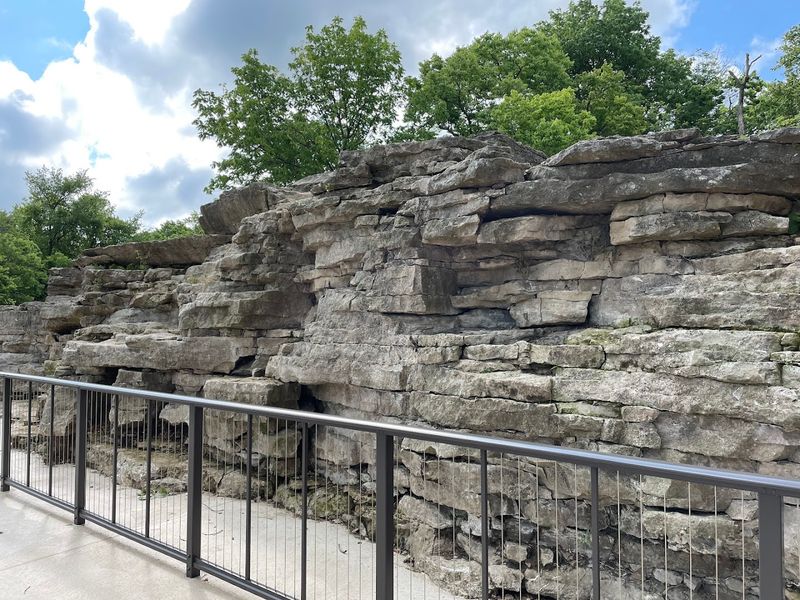
There is also a nearby trail that runs along the edge of the old quarry area, where you can see dramatic cliff-like formations left behind from past limestone mining.
The site is free to visit and open daily from 6:30 AM to 8:45 PM, which gives plenty of time to explore without feeling rushed. Weekends can get busy, but the layout handles crowds reasonably well.
Mornings tend to be quieter if you prefer a more peaceful visit.
Why This Place Deserves a Spot on Every Ohio Travel List
Ohio does not always get credit as a destination for natural wonders, but the Glacial Grooves make a strong case for putting it on the map. This is a National Natural Landmark, a designation that recognizes sites of exceptional geological or ecological significance across the United States.
The grooves here are considered the largest and most easily accessible of their kind anywhere in the world, which is not a small claim.
Beyond the science, the place just feels good to visit. It is quiet, grounded, and genuinely interesting without trying too hard.
There is no admission fee, no gift shop pushing overpriced souvenirs, and no long lines to manage. You show up, walk the path, read the signs, and leave knowing something real about the planet you live on.
Families with kids seem to get a lot out of it, especially children who are into science, nature, or history. The fossils embedded in the rock give younger visitors something tangible to search for, and the scale of the grooves has a way of sparking genuine curiosity.
Adults tend to find it quietly humbling in a way that is hard to fully explain until you are standing there.
Pairing the Glacial Grooves with a walk along the nearby shoreline or a stop at one of the island’s small restaurants makes for a full and satisfying day trip. Kelleys Island holds a lot of character for such a small piece of land, and the Glacial Grooves are the undeniable centerpiece of any visit.
Address: 739 Division St, Kelleys Island, OH 43438
