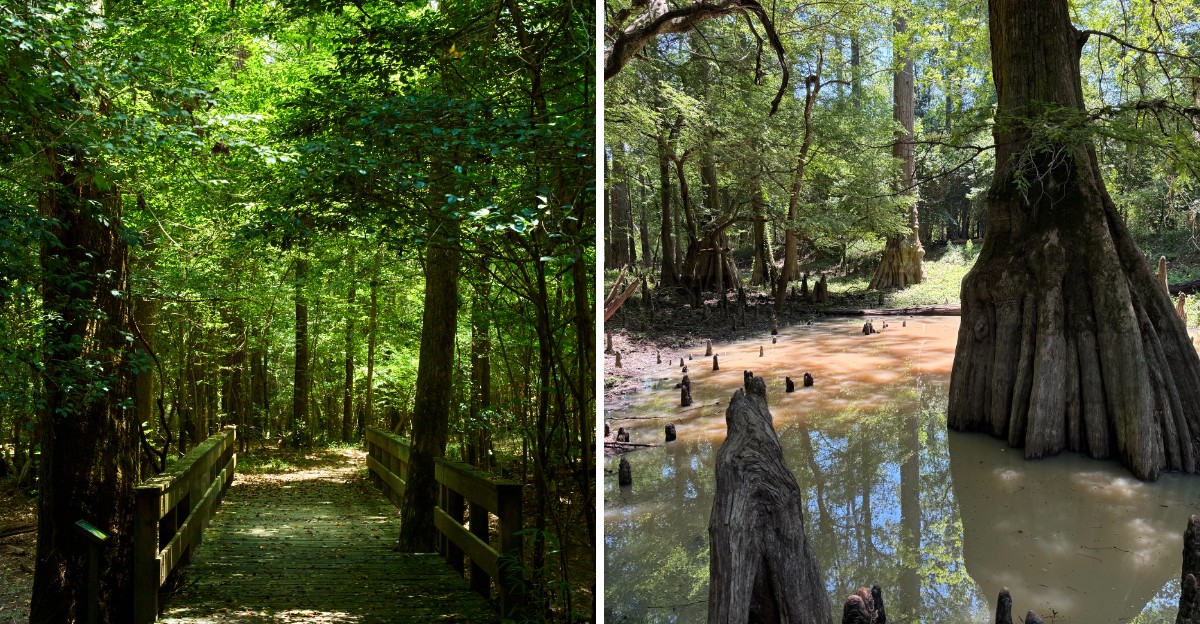
Towering trees. Shaded trails.
And enough quiet to hear your own footsteps. That is what this Texas forest offers.
It is one of the state’s most underrated nature escapes, a place where you can walk for miles without seeing another soul. The trees are tall and thick, creating a canopy that blocks out the sun and the noise of the outside world.
The trails wind through the woods, past creeks and clearings, each one offering a different view. It is not a park with manicured lawns and picnic tables.
It is wilder than that, more natural. And that is exactly what makes it special.
If you are looking for a place to disconnect and breathe, this is it. Bring good shoes and a sense of adventure.
The forest is waiting.
A Trailhead Marked By History And Shade
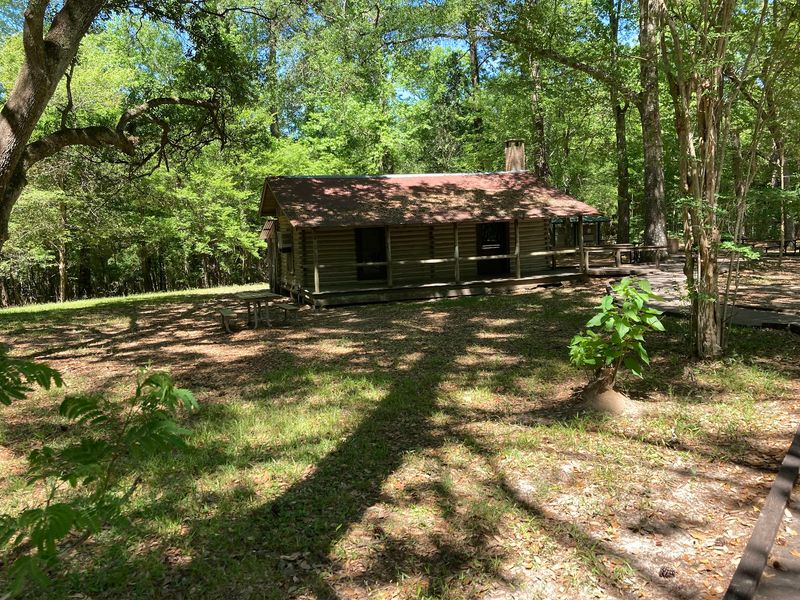
Most trails start with a sign and a parking spot. Kirby starts with a cabin.
The historic Staley Cabin sits right at the trailhead, a weathered reminder that people lived and worked in this thicket long before it earned federal protection.
A wide live oak spreads over the entrance area, throwing shade across the gravel before the hike even begins. Parking is straightforward, and restrooms sit near the start, which matters more than people admit on a forest walk with kids in tow.
The address to plug into a map is 1618 FM 420, Kountze, TX 77625, and the turnoff is easy to miss if driving fast. Go slow.
The road curves through pine country and the entrance appears without much fanfare.
The first quarter mile is the friendliest stretch of the whole system, built with pavement and wooden boardwalk sections that make the forest reachable for strollers, wheelchairs, and anyone who prefers a stable surface underfoot.
Interpretive signs begin almost immediately, naming the trees and explaining what makes this soil so unusual. A printed trail guide is available at the visitor center a short drive up FM 420, and grabbing one changes the experience from a walk to a lesson.
Green ribbons and wooden markers keep the route clear, though the branching loops can confuse first timers. A map helps.
Big Thicket became America’s first national preserve back in 1974, and standing near that old cabin, the history feels close rather than abstract.
Cypress Slough And Those Famous Knees
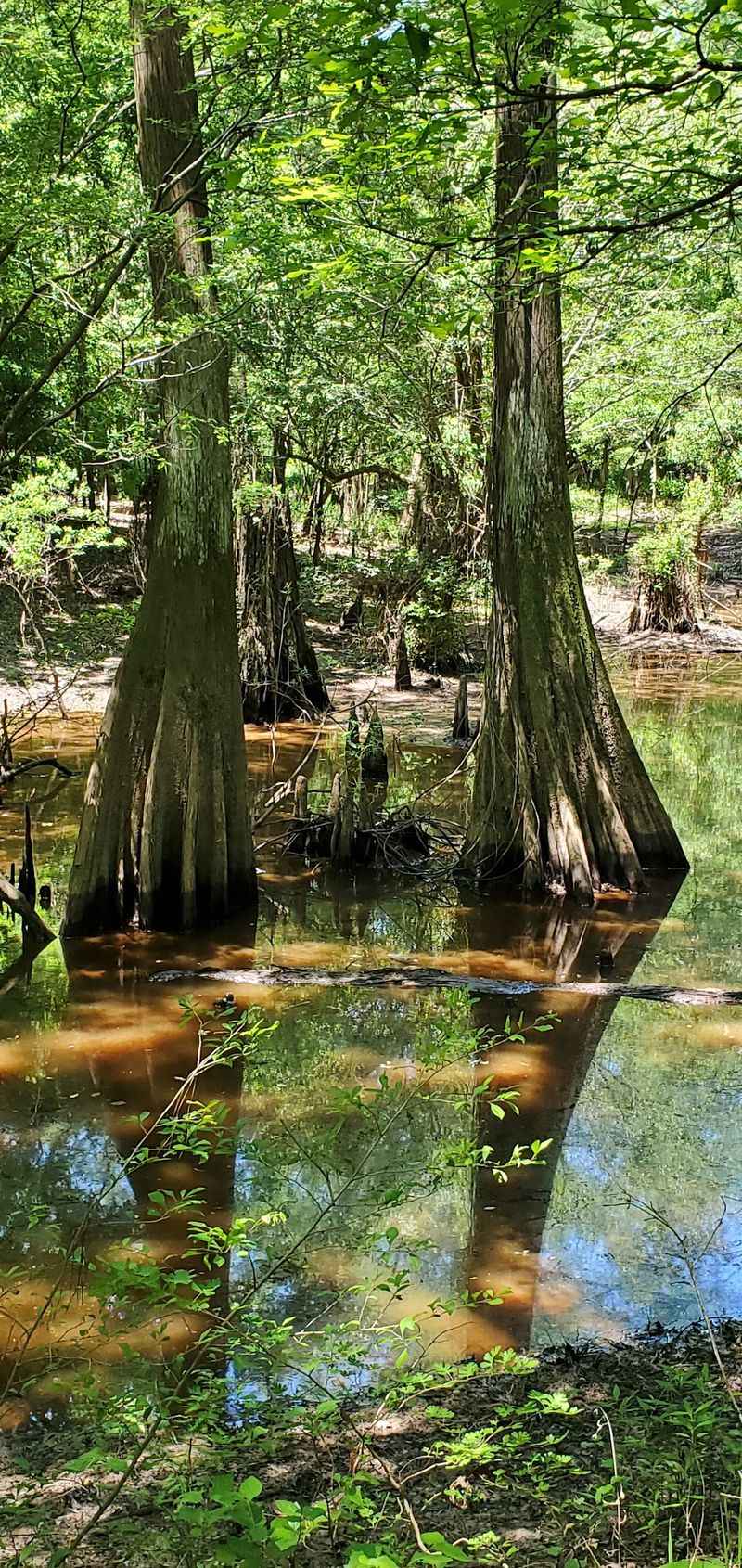
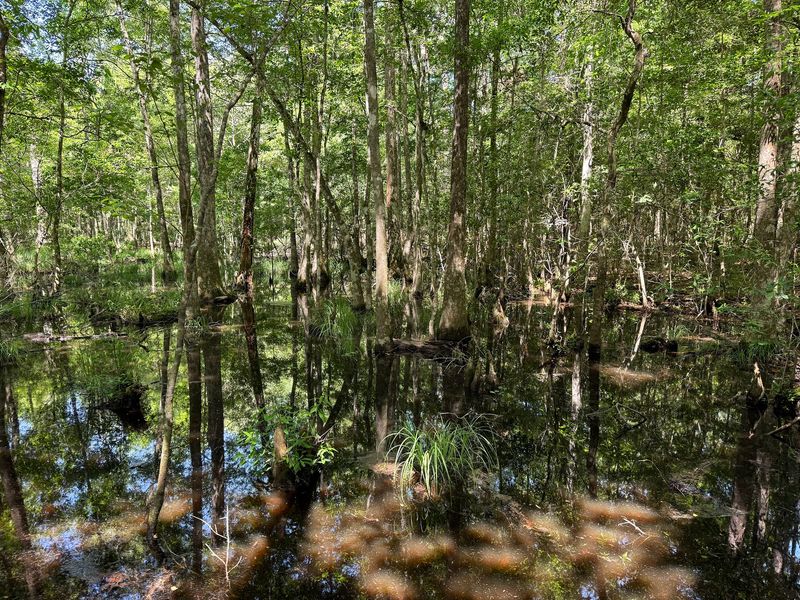
The short spur to Cypress Slough is the part nobody should skip. At roughly three tenths of a mile, the cypress loop is barely a detour, yet it delivers the single most memorable scenery on the property.
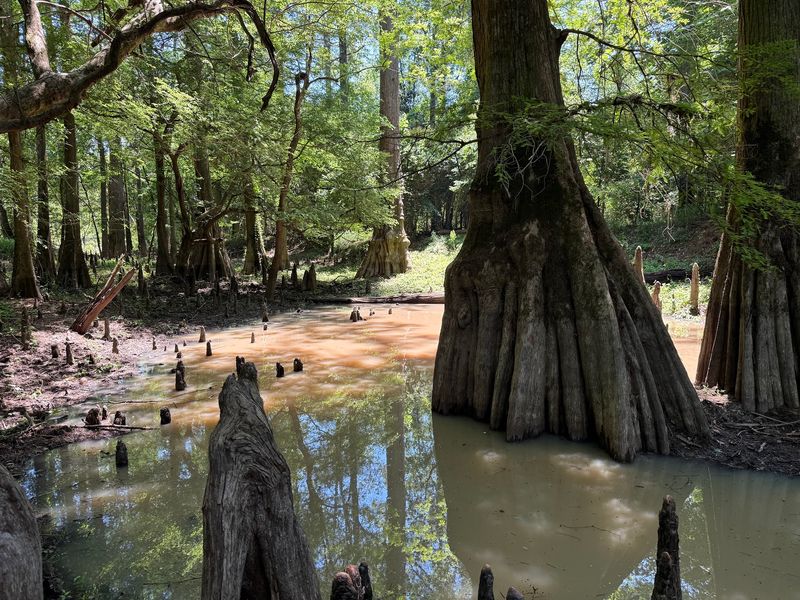
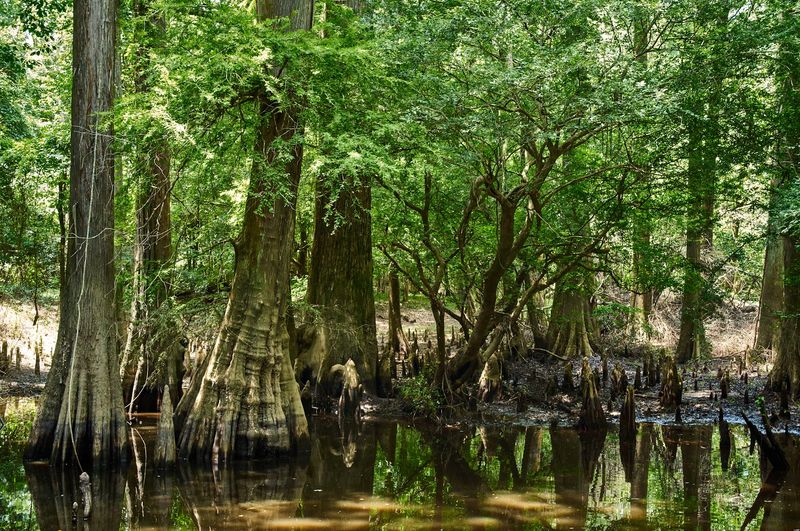
Bald cypress trees crowd the dark water here, some of them massive enough that estimates of 150 years or more get tossed around by regular hikers. Their trunks flare out at the base like they are bracing against something.
Then there are the knees. Those woody knobs push up from the mud and water in clusters, some barely ankle high, others tall enough to reach a person’s waist.
Scientists still debate exactly what purpose they serve.
Reflections make the whole scene double. On a still morning the water goes glassy, and the trees appear twice, which turns even a phone camera into something respectable.
Light behaves differently in a slough. It filters down green and gold, and the temperature drops a few degrees compared to the drier pine sections.
Listen for frogs, woodpeckers, and the occasional splash that never quite gets identified. Alligators do live in the preserve, though sightings along this stretch are uncommon.
The spur reconnects to the main loops without backtracking, so there is no penalty for taking it. Repeat visitors tend to describe this section as the reason they came back.
Give it time, sit on a bench, and watch the water for a while.
Choosing Between The Inner, Outer And Sandhill Loops
Flexibility is the quiet strength of this trail system. Instead of one fixed route, several loops connect like puzzle pieces, letting hikers build a walk that matches their energy and their schedule.
The inner loop runs about 1.5 miles and takes roughly an hour at a relaxed pace. It covers the essentials, including deep shade and plenty of towering trees.
Adding the outer loop, around nine tenths of a mile, stretches the outing closer to two and a half miles. Tack on the cypress spur and the total lands near three miles, which many hikers finish in about an hour and twenty minutes with photo stops.
For those wanting more, the Sandhill Loop adds a noticeably different landscape and pushes total time toward two or two and a half hours. Dry sandy soil replaces the damp bottomland, and the plant life shifts with it.
Terrain stays mostly flat with gentle rolls, though thousands of exposed roots demand attention. Watch your feet.
Trail markers and green ribbons do a solid job, but signs do not always list distances for each option. Downloading a map or picking one up beforehand prevents guesswork at junctions.
Benches and picnic tables appear at intervals, which makes the longer combinations easier for families. Kids can rest, snack, and then charge ahead again.
Doing the loops in different combinations across separate visits keeps the place from ever feeling repetitive.
Bridges, Boardwalks And The Crossing Over Village Creek
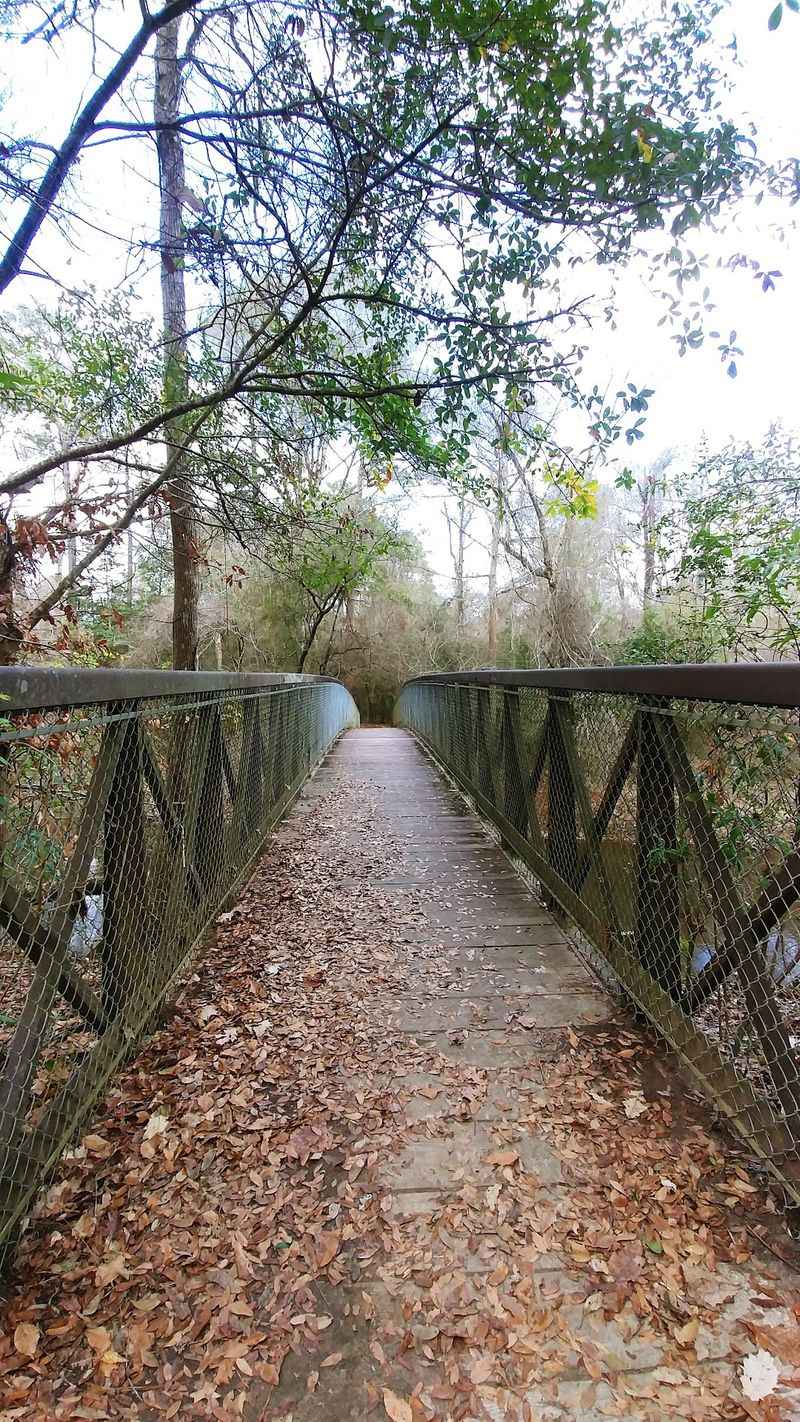
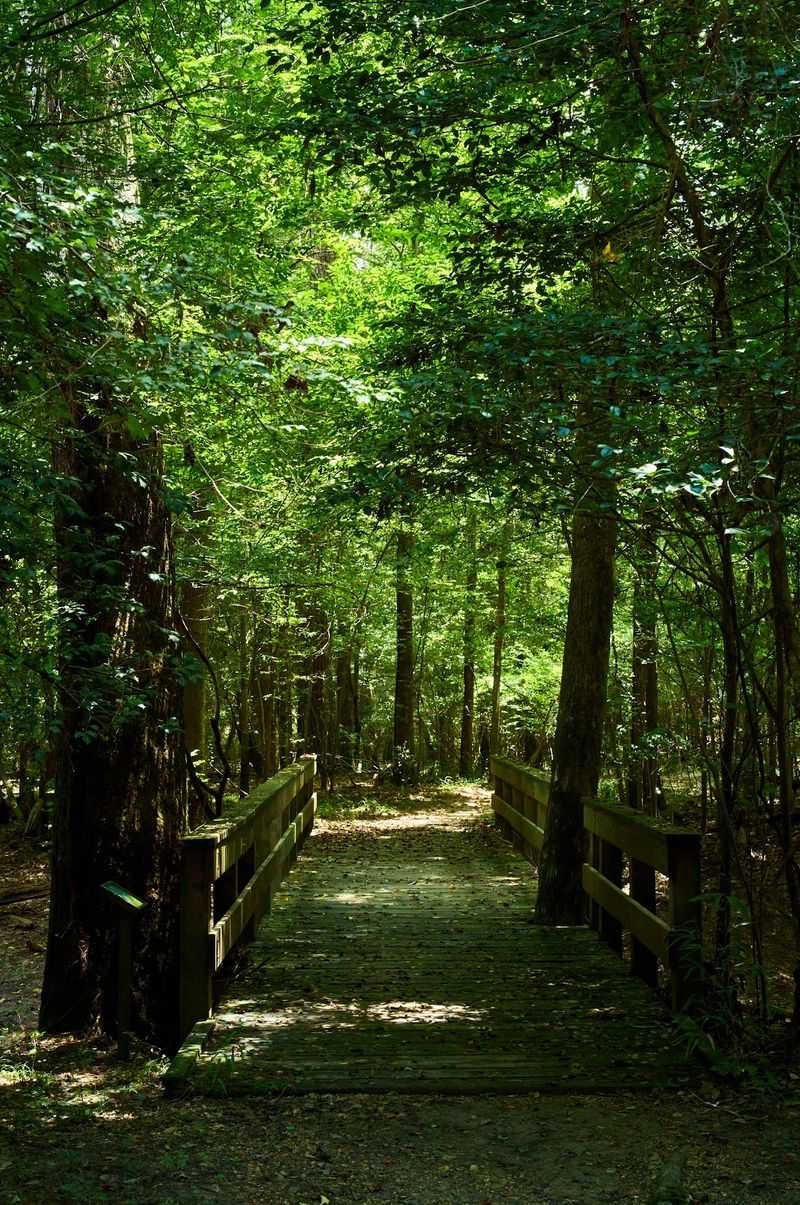
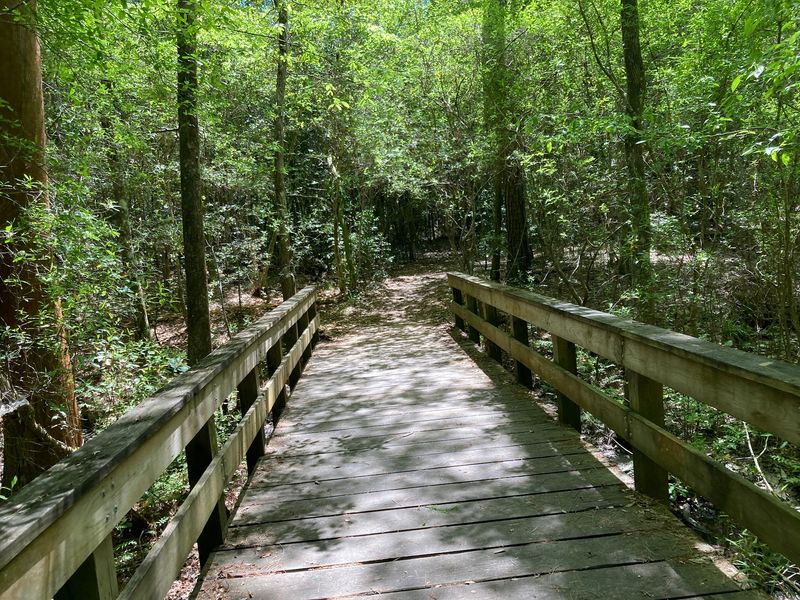
Wooden bridges show up again and again along these loops, and they are more than practical. Each one lifts the path over a slough, a low spot, or a soggy stretch that would otherwise turn into a mud pit after rain.
Sturdy railings, solid planks, and the hollow thump of boots on wood give the walk a rhythm. Kids love running across them.
The headline crossing is the iron bridge over Village Creek. Water moves slow and tea colored below, sandbars catch the light, and the view opens up after miles of enclosed forest.
Pausing there is almost automatic. The bridge gives one of the few wide sightlines on the entire trail, and it is worth a few minutes of standing still.
That same bridge doubles as a gateway. On the far side, the Turkey Creek Trail runs somewhere between 15 and 17 miles through the preserve, which is a serious undertaking rather than a casual add-on.
Anyone not equipped for a long day should enjoy the view and turn back toward the Kirby loops. Wandering onto Turkey Creek without water, a map, and daylight to spare is a rookie mistake.
Boardwalk sections near the beginning also make the forest accessible to visitors who cannot handle rough ground, which is a genuinely thoughtful piece of design.
Bridge conditions can change after storms or flooding, so checking current trail status with the preserve before driving out saves disappointment.
Trees That Steal The Show
Tree lovers tend to lose track of time here. The canopy layers beech, magnolia, loblolly pine, and oak together, and the result is shade that holds through most of the day even in warm months.
Longleaf pines stand tall in the drier stretches, their long needles catching wind in a way shorter pines never manage. That sound alone is worth stopping for.
Dwarf palmettos spread across the understory in thick green fans, and they are the reason so many visitors describe this forest as jungle-like rather than typically Texan.
Ferns fill the damp hollows. Orchids bloom in season.
Cacti grow in the sandy patches, which sounds like a mistake until the soil changes right under your boots.
Small identification signs attached to trunks along parts of the path make learning easy, and they turn a regular walk into a low effort botany lesson for anyone curious.
The preserve is famous for carnivorous plants too. Four of the five types found in the United States grow within Big Thicket, including pitcher plants and sundews, though the wet savannas of other units are the best places to see them.
Nine distinct ecosystems converge in this region, which explains why swamp plants and dry-land plants sometimes stand within sight of one another.
Nothing about this mix should work together. Somehow it does, and walking through it is genuinely strange in the best way.
Birding, Bobcats And The Wildlife Worth Watching
Over 300 bird species have been documented across Big Thicket, and spring and fall migrations turn the canopy into a busy airport. Binoculars help enormously, since most of the action happens high overhead.
Warblers move fast. Woodpeckers announce themselves.
Owls sometimes call near dusk.
Roughly 60 mammal species live in the preserve, including bobcats, coyotes, and white-tailed deer, though most of them are far more interested in avoiding people than meeting them.
Squirrels are the ones that actually show up on schedule, along with lizards sunning on the boardwalks and turtles logged out on branches over the water.
Nearly 100 fish species swim in the waterways here, plus freshwater mussels that quietly filter the creeks. That underwater diversity rarely gets the credit it deserves.
Snakes live here too, and warm months bring them out. Staying on the path, watching where hands and feet land, and giving anything coiled a wide berth handles the situation just fine.
Alligators are present in the preserve, so treat still water with respect rather than curiosity.
Early morning delivers the best odds for sightings. Sound carries differently before the day warms up, and animals move more freely.
Leashed pets are welcome, which makes this a favorite for dog owners, though a dog’s enthusiasm tends to scatter wildlife within a hundred feet.
Patience pays off more than distance covered. Sitting quietly on one of the benches often reveals more than hiking another mile.
Timing The Visit To Beat The Mosquitoes
Ask anyone who hikes this trail regularly and the first piece of advice will involve bug spray. Summer mosquitoes in the thicket are legendary, and not in a charming way.
Late fall and spring earn the strongest recommendations. Temperatures ease, insect pressure drops, and the forest still looks spectacular.
Winter walks have their own appeal. Bare branches open up sightlines, the swamp sections look moody and sculptural, and the bugs mostly disappear.
Summer is not off limits, just demanding. Long sleeves, repellent, and an early start make a real difference, and the heavy canopy keeps direct sun off almost the entire route.
Water matters year round. Humidity in southeast Texas does not care what the thermometer says.
The trail is open around the clock, but hiking here after dark is a poor idea. The forest swallows light quickly, and what felt like a simple loop in daylight becomes disorienting once the sun drops below the treeline.
Starting with enough daylight to finish comfortably is basic common sense. Give the longer loop combinations at least two hours of margin.
Rain changes the surface too. Hard-packed soil, leaves, and gravel handle moisture reasonably well, but roots turn slick and low spots hold water.
Closed-toe shoes with decent tread beat sandals every single time on this trail. Sturdy footwear also protects against roots that seem determined to trip somebody.
Why This Quiet Loop Deserves More Attention
Some places are loud about their beauty. This one is not.
There are no dramatic overlooks, no waterfalls, no crowds jostling for a photo spot.
What exists instead is silence, texture, and a forest that rewards attention. Visitors regularly describe it as a place to de-stress and disconnect, and that reputation holds up.
Recognition has come from serious quarters. UNESCO designated Big Thicket a Biosphere Reserve in 1981, a rare honor that reflects just how ecologically valuable these 113,000 or so acres really are.
Nine ecosystems overlapping in one region earns the nickname biological crossroads of North America, and Kirby packs a surprising sample of that variety into a walk most people can finish before lunch.
Families do well here. So do solo hikers, photographers, birders, and anyone who just needs trees and quiet for an hour.
The visitor center up the road on FM 420 is worth a stop for maps, current conditions, and context about what grows where.
Leave the trail exactly as found. Small preserves like this stay beautiful because visitors carry out what they carry in.
Texas has bigger parks and flashier destinations, yet few offer this particular combination of swamp, pine forest, ancient cypress, and palmetto jungle within a few easy miles.
Come with curiosity and comfortable shoes. The thicket handles the rest, and it tends to stick in memory far longer than expected.
