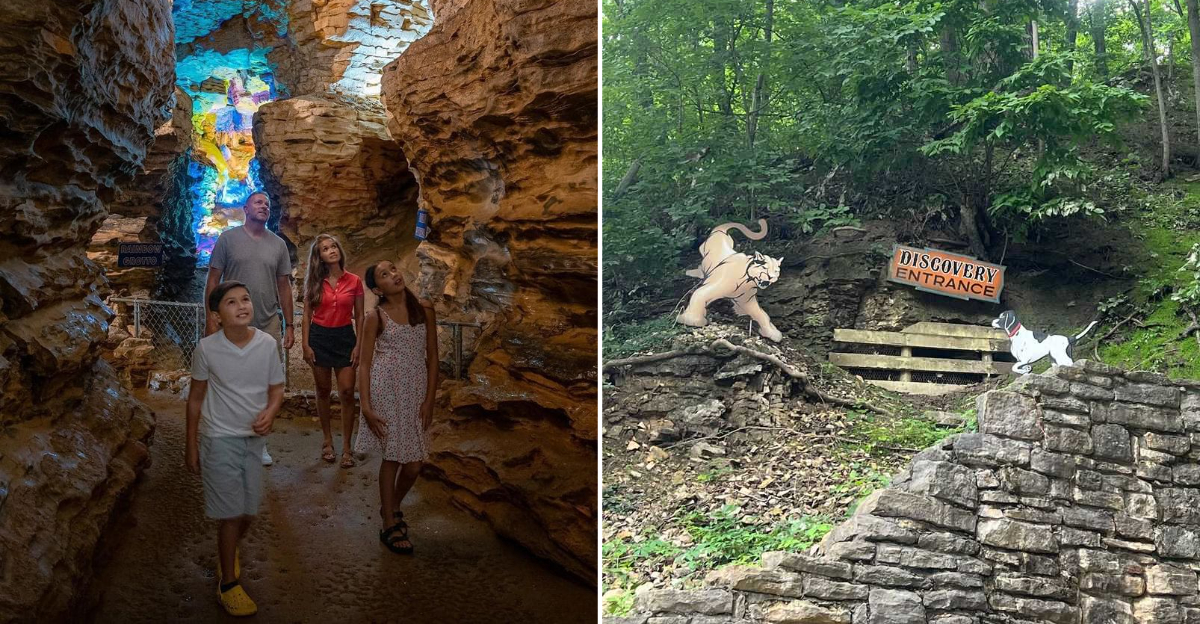
The same twisting passages that once sent a young Samuel Clemens scrambling through the dark later became the labyrinth where Tom Sawyer and Becky Thatcher lost their way in American literature.
The walls of this Missouri cave have held secrets for centuries, including the author’s own signature, scrawled in pencil and only confirmed in recent years.
It remains the state’s oldest operating show cave, with guided tours tracing a route through three miles of passages that inspired at least five of Twain’s books.
The temperature stays a constant fifty-two degrees year-round, a cool contrast to the Mississippi summer heat above.
Walking those same limestone corridors, you can almost hear the echoes of boys who once played here long before the novels made them famous.
The Cave That Turned Into A Chapter
Picture a kid with no phone, no schedule, and a whole cave system sitting practically in his backyard. That was Samuel Clemens growing up near Hannibal, and the passages he crawled through as a boy ended up baked straight into the pages of The Adventures of Tom Sawyer.
When Tom and Becky get lost in that terrifying underground maze in the book, Twain was not making up the setting from thin air, because he was describing a place he actually knew by heart. He even wrote about it in Life on the Mississippi, calling it a labyrinth of narrow passages that nobody had fully mapped.
Standing in there today, with the lights on and a guide leading the way, you still get a sense of how easy it would be to lose your bearings if the lights blinked out. The corridors branch and rejoin in ways that genuinely confuse your sense of direction.
What gets me is how ordinary it must have felt to him back then, just a local hangout for restless kids. Now folks drive across several states to see the same rock walls, which says something about how a good story can turn a plain old cave into a landmark.
Finding Your Way To Cave Hollow Road

Getting there is honestly the easy part, since the whole complex sits at 300 Cave Hollow Road, Hannibal, MO 63401, just a short drive south of downtown along the highway that hugs the river bluffs.
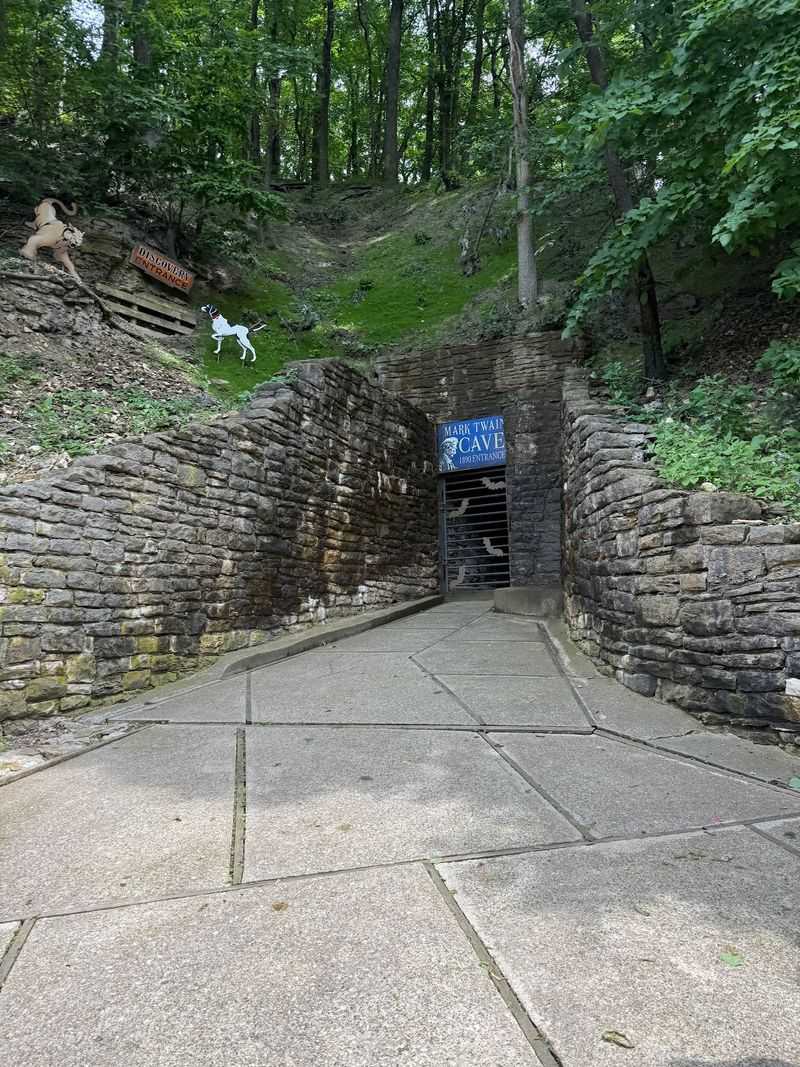
The property opens up into a wooded hollow with a visitor building, a gift shop, and the cave entrance tucked into the hillside behind it. You park, you walk a short distance, and suddenly you are standing at the mouth of the thing itself, which feels almost too convenient for something this historic.
Because the grounds sit in a valley surrounded by trees, the whole place has a quiet, shaded feel even before you step underground. There is a campground on the property too, so plenty of travelers make it an overnight stop rather than a quick swing through.
My advice is to give yourself more time than you think you need, since between the tour, the grounds, and the gift shop, an hour turns into a half day pretty fast. If you are already touring the Twain boyhood home in town, the drive out here takes only a few minutes and rounds out the whole Hannibal experience nicely.
A National Natural Landmark Hiding In The Bluffs
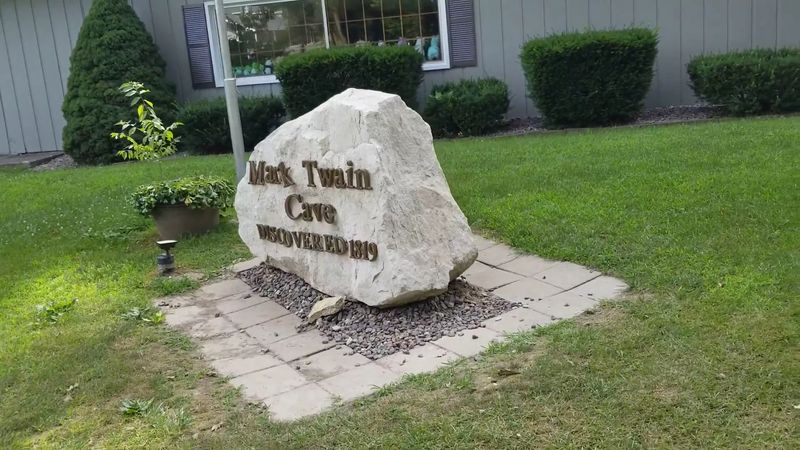
Here is something most visitors do not realize until a guide mentions it. Mark Twain Cave and its neighbor, Cameron Cave, both carry National Natural Landmark status, which is not a title handed out casually.
They earned it for being outstanding examples of maze type cavern development, meaning the passages cross and loop in a grid pattern rather than following one long tunnel. Geologists get genuinely excited about that layout because it is uncommon and it tells a clear story about how water carved through the rock over an enormous stretch of time.
For the rest of us, the practical takeaway is that this cave looks different from almost any other you have toured. The walls run tall and close together, the ceilings stay fairly flat, and the corridors feel more like hallways in some strange underground building than a natural cavern.
Knowing the landmark designation while you walk through changes how you look at it, because you stop thinking of the place as only a literary attraction. Missouri has hundreds of caves scattered across the state, and this one stands out for reasons that have nothing to do with a famous author, which is pretty remarkable when you sit with it.
Seeing The Clemens Signature With Your Own Eyes
Okay, this is the part that makes the whole trip worth it. After decades of people wondering whether young Sam Clemens ever scratched his name on these walls, a pencil signature reading Clemens was located and later authenticated by handwriting experts.
Think about that for a second. A boy wandering through a cave with a pencil stub in his pocket wrote his name on a rock, went on to become one of the most famous writers in the English language, and the mark just sat there quietly in the dark for generation after generation.
Seeing it in person hits differently than reading about it, because handwriting is such a personal thing. It is not a plaque or a statue or a curated exhibit, it is just a kid’s scribble that happened to survive.
The signature is protected now, and guides will point it out during the tour, so you do not have to go hunting for it yourself. Bring a little patience for the group to shuffle through and get a good look, because everyone wants their moment in front of it.
Honestly, that shared quiet as people lean in is part of the charm.
Missouri’s Oldest Show Cave Still Running Tours
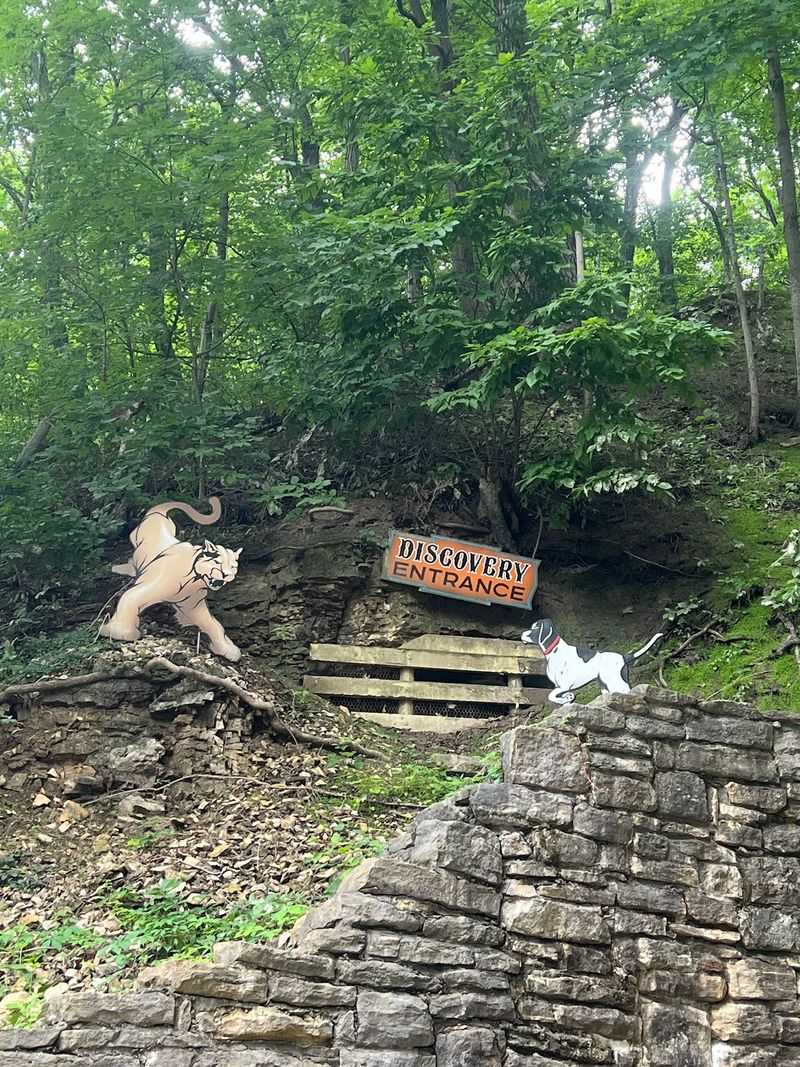
Long before roadside attractions were a thing, folks were already paying to walk through this cave with a lantern and a guide. Mark Twain Cave holds the title of the oldest operating show cave in Missouri, running continuous tours since the eighteen hundreds.
That kind of longevity means the place has hosted an absurd range of visitors, from horse and buggy travelers to families rolling in on interstate road trips. The tour route itself has been walked so many times that the floors are worn smooth in spots.
What I find fun is imagining the earliest tours, when the only light came from candles and smoky lanterns held overhead. Guides back then had to know every twist by memory, since one wrong turn in a maze cave could turn an outing into a genuine problem.
Today the walkways are level and the passages are wired with electric lighting, so the experience is far more relaxed than it once was. Still, there is something satisfying about following a path that people have been following for well over a century, in a state that takes its cave heritage seriously.
That Steady Chill No Matter The Season
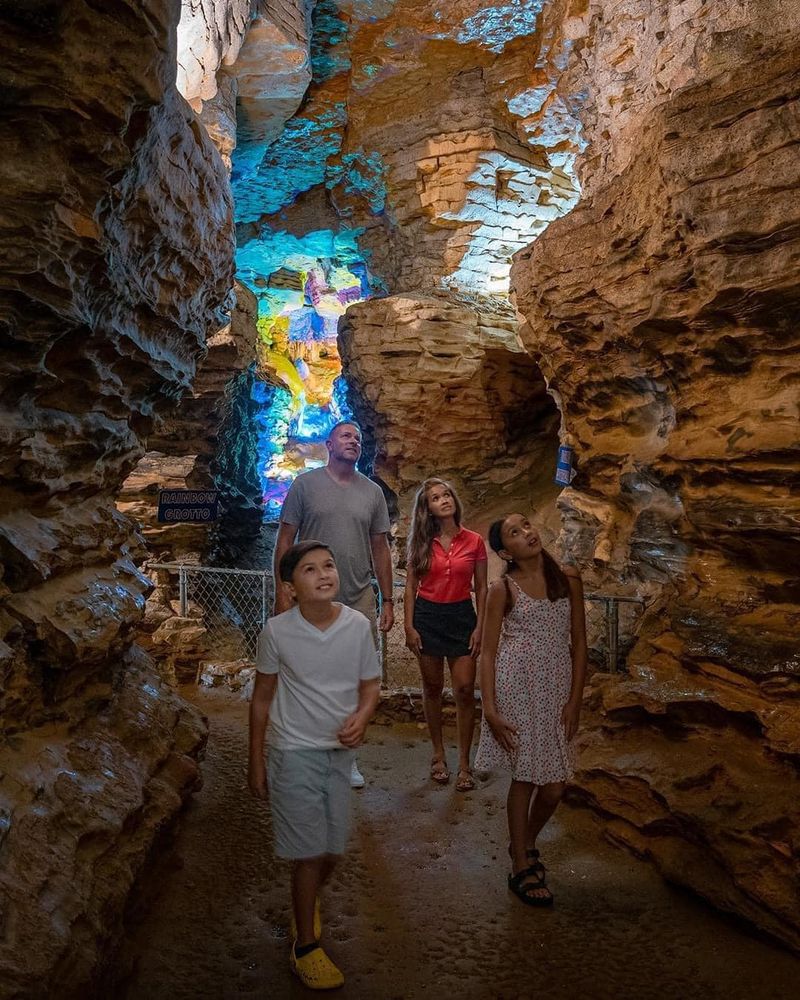
Ever notice how caves do not care what the weather is doing up top? This one sits at a steady fifty two degrees Fahrenheit year round, which is a gift in the middle of a muggy Missouri summer and a surprise in the dead of winter.
Bring a light jacket or a hoodie even if you are sweating in the parking lot, because fifty two feels a lot colder once you have been walking underground for a while. Plenty of people learn that lesson the hard way and spend the back half of the tour with their arms crossed.
The steady temperature also means there is no bad season to visit, which takes a lot of pressure off planning. Summer crowds are heavier, sure, but a rainy spring afternoon or a gray fall day underground feels just as good.
Footwear matters more than you might expect too, since cave floors can hold a little dampness. Closed shoes with decent grip will serve you far better than sandals, and your feet will thank you when you are ninety minutes into wandering around in the cool air.
Two Hundred Fifty Thousand Names On The Walls
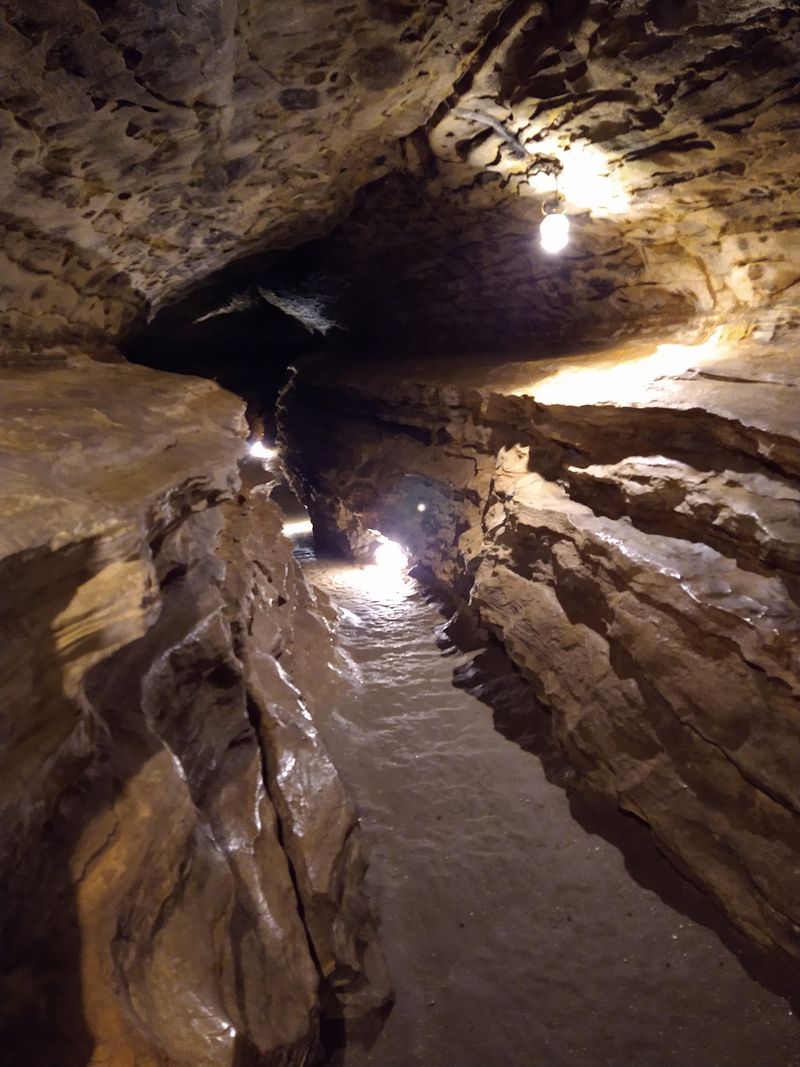
Twain’s name gets the headlines, but he has plenty of company down there. The cave walls carry somewhere around two hundred fifty thousand signatures left by visitors over the years, written in pencil, scratched into the rock, and smoked onto the ceiling with candle flames.
Walking past them feels like flipping through the world’s strangest guestbook, with names stacked on top of names in every direction. Some are neat and careful, others look like someone scrawled them in a hurry before the group moved on.
Legend has it that the outlaw Jesse James ducked into this cave at some point and left his own mark behind, which guides are happy to point out. Whether every detail of that story holds up, it has been part of the local lore for a very long time.
Modern visitors are not allowed to add their names, and honestly that is the right call, since the historic writing is the whole point now. Look closely at the older signatures and you will spot the smoke marks, which came from holding a candle flame steady against the stone in that dim Missouri darkness.
The Strange Story Of Doctor McDowell
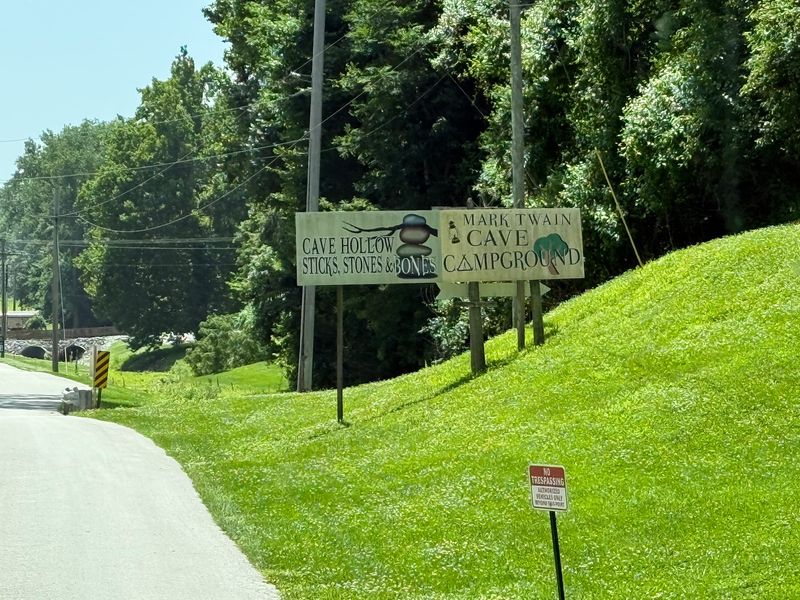
Every good cave needs an eerie chapter, and this one has a doozy. Back when Samuel Clemens was a boy, the cave belonged to a St. Louis physician named Joseph Nash McDowell, who had some unconventional ideas about what to do with a private cavern.
McDowell reportedly used the space for medical research, and the most talked about piece of the story involves an attempt to preserve his deceased daughter’s body inside the cool, stable air of the cave. Local kids apparently knew all about it, which tells you something about how gossip traveled in a small river town.
Twain scholars generally connect that grim episode to the darker, spookier corners of The Adventures of Tom Sawyer, including the graveyard scene that gives so many young readers their first literary chill.
Guides tell the story in a matter of fact way rather than turning it into a haunted house routine, which somehow makes it land harder. Standing in a cool, dim passage while hearing about it is an experience you will probably retell to somebody later, and it adds a layer to the visit that most attractions never manage.
