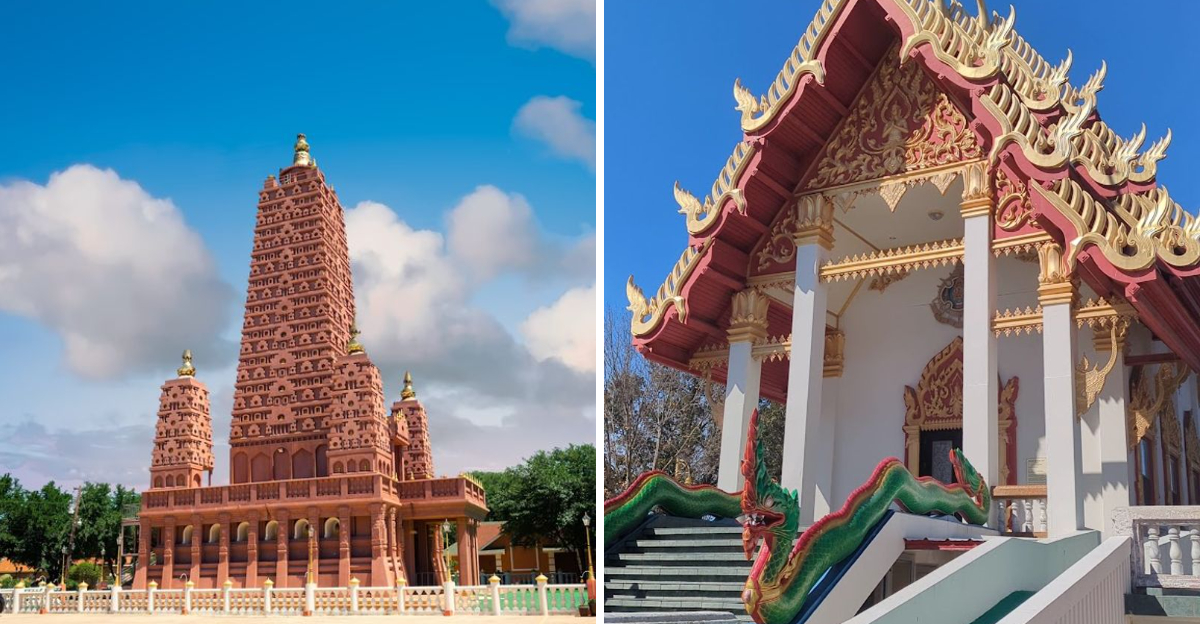
A golden Buddha statue gleams under the Texas sun. Traditional Thai roofs curve toward the sky, and a quiet pond reflects it all back. This place feels like a teleportation device set to Southeast Asia, except it is hiding in suburban Fort Worth.
The temple grounds are open to visitors who want to soak in the peace, wander the gardens, or just sit by the water and breathe. No need to travel across an ocean to experience this kind of beauty.
The monks who live here are welcoming, and the annual Thai festival draws crowds from all over the state. On a normal day, though, it is just a quiet spot to escape the noise.
Texas has churches, mosques, and synagogues, but a Buddhist temple with this much serenity is something special. Leave the shoes at the door, bring a respectful silence, and prepare to feel very far from home.
The First Glimpse That Rewires Your Brain
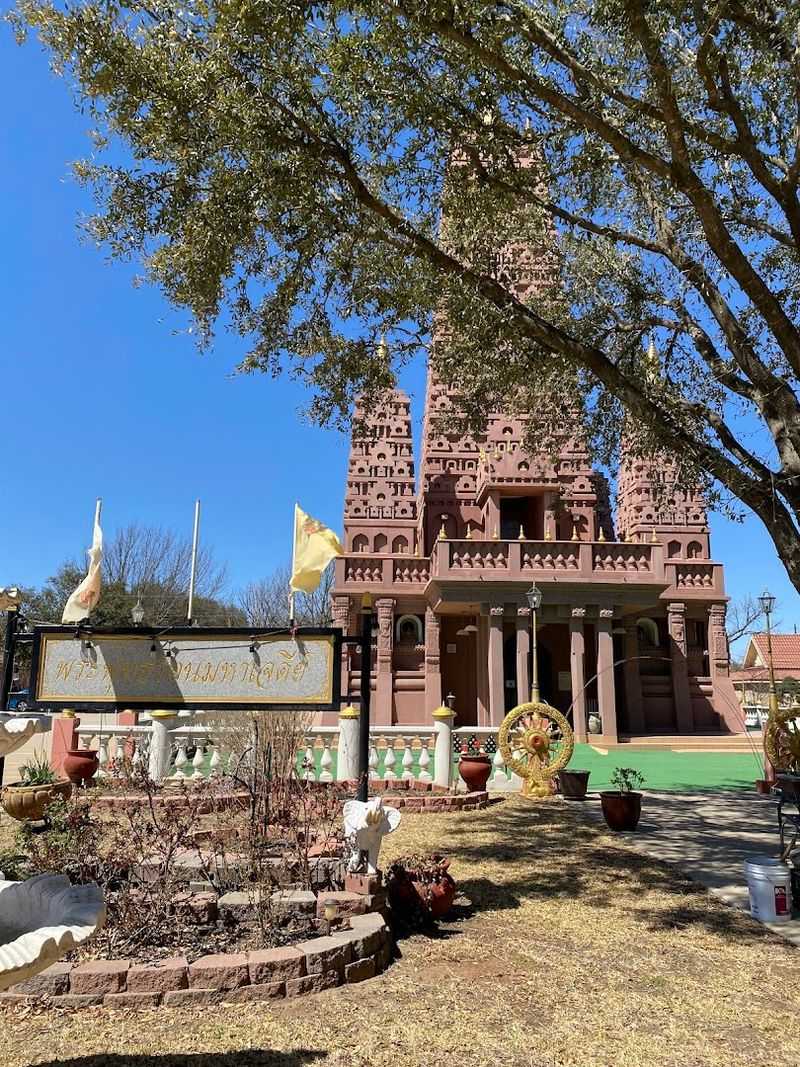
Nothing in the surrounding neighborhood gives you any warning. One moment you are driving past ordinary Texas suburbia, strip malls and flat roads stretching in every direction, and then suddenly a cluster of gilded spires breaks the skyline like a mirage.
The shift is so abrupt it almost feels cinematic, like someone changed the channel on the scenery without telling you.
The approach along Wat Road is short but meaningful. Lush trees line the path, softening the transition from everyday Fort Worth life into something that feels genuinely transported from another part of the world.
By the time the full temple complex comes into view, the mental adjustment is already happening.
Wat Buddharatanaram was founded in mid-1982 by Phra Ajaan Maha Samarn Siripunno, and the community poured real effort into building it from the ground up. The local Lao community made significant contributions to early construction, helping raise monk residences and communal buildings that still serve the temple today.
That history of collective effort is somehow visible in the place itself, in the care taken with every detail.
What strikes most first-time visitors is not just the visual surprise but the atmosphere that follows it. The noise of everyday life fades almost immediately once you step onto the grounds.
It is the kind of quiet that feels earned rather than enforced, and it sets the tone for everything else you are about to experience here.
Architecture That Belongs in a Different Hemisphere
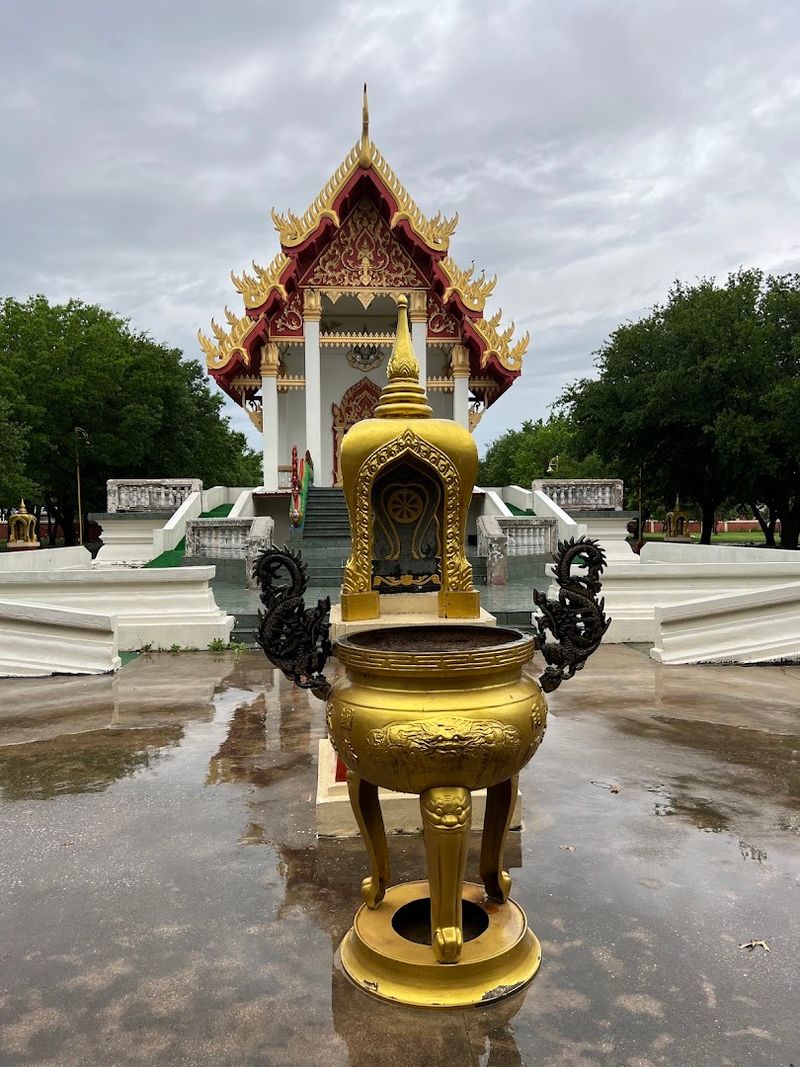
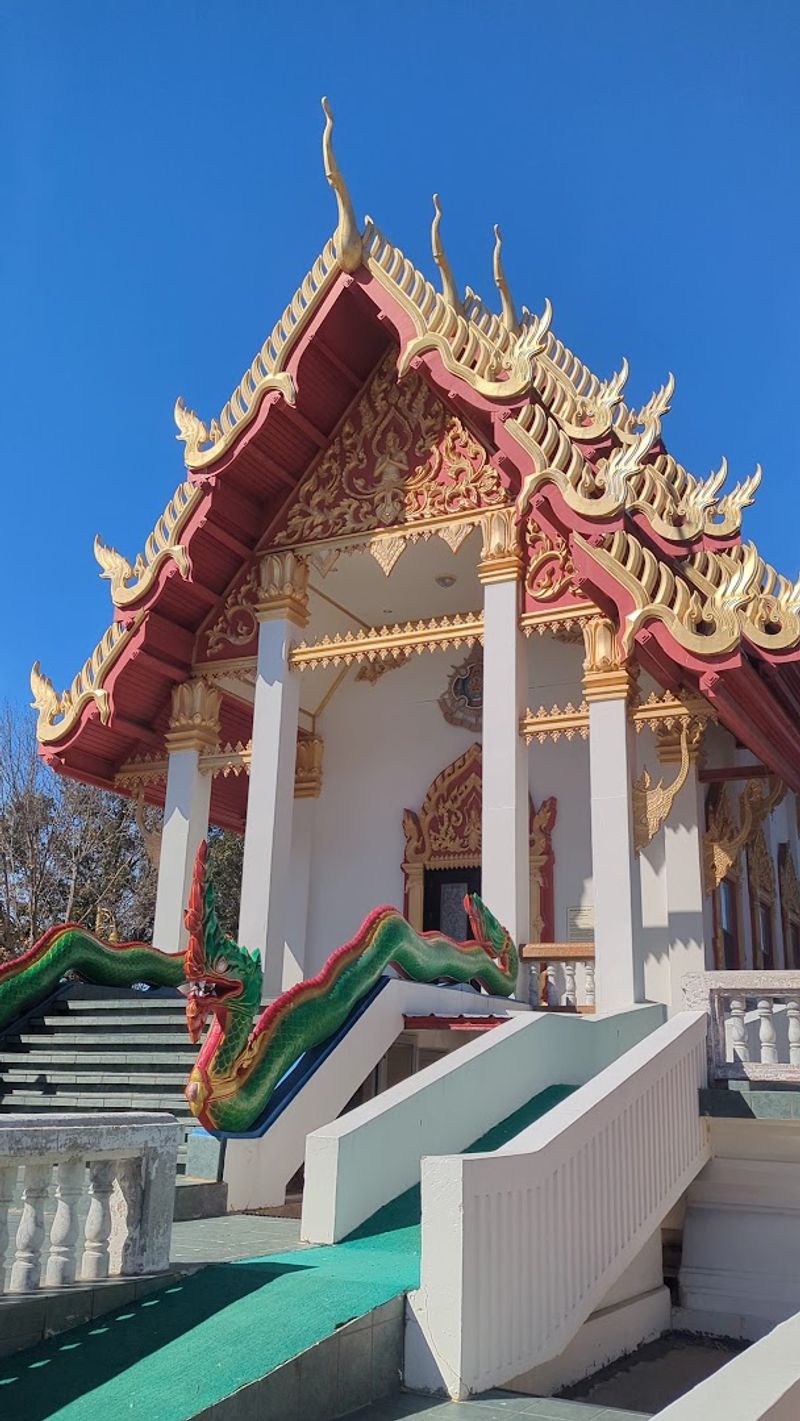
Thai temple architecture is not subtle, and Wat Buddharatanaram makes absolutely no attempt to blend in. The main temple building follows traditional Thai Buddhist design with layered, sweeping rooflines that curve upward at the tips, decorated in deep reds and glittering gold.
Every surface seems to carry some deliberate detail, from carved wooden trim to ceramic tile patterns that catch the light differently depending on the time of day.
The Bodh Gaya-style chedi, or stupa, stands as the centerpiece of the complex. This type of structure has deep roots in Buddhist history, referencing the site in India where the Buddha is believed to have attained enlightenment.
Seeing one planted firmly in a Fort Worth suburb is genuinely disorienting in the most wonderful way.
The grounds surrounding the buildings are carefully maintained, with landscaped gardens and mature trees creating a sense of enclosure that feels intentional. A large pond sits within the property, adding a reflective stillness to the overall atmosphere.
On a calm morning, the water mirrors the temple structures in a way that makes the whole scene feel almost unreal.
For anyone who has traveled through Thailand, Laos, or Cambodia, the visual language here will feel immediately familiar. For those who have not, it offers a genuinely immersive first encounter with Southeast Asian sacred architecture.
Either way, the craftsmanship demands slow, appreciative attention rather than a quick glance from the parking lot.
The Golden Buddha That Commands the Room
Stepping into the main temple hall requires removing your shoes at the entrance, a small ritual that already shifts your mindset before you even cross the threshold. The cool floor beneath bare feet is part of the experience, grounding you in a way that feels deliberate.
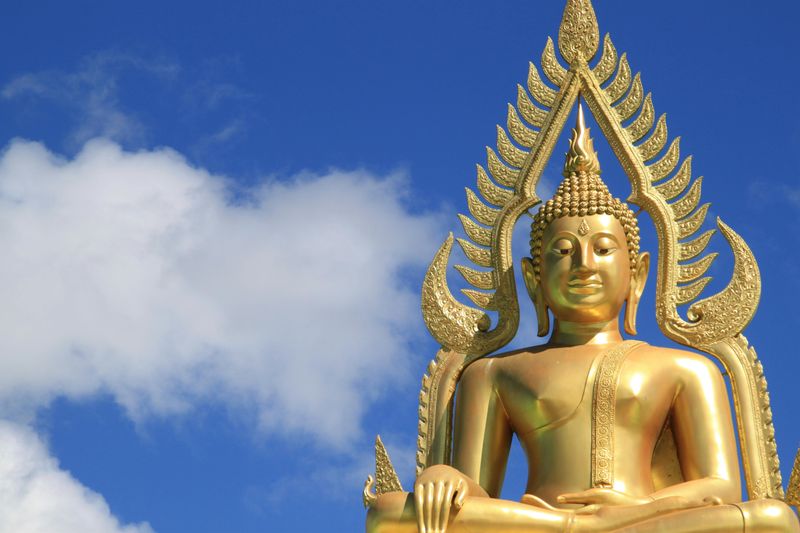
Then the interior opens up, and the golden Buddha statue stops you completely.
The statue is enormous. Rumored to be among the largest Buddha images in the United States, it radiates a kind of serene authority that is difficult to describe without sounding dramatic.
The gold finish catches every bit of available light, and the expression on the face, perfectly calm and slightly downward-gazing, creates an atmosphere of genuine stillness in the room around it.
Offerings of fresh flowers, incense, and fruit are arranged at the base of the statue, placed there by devotees who visit regularly. The scent of incense drifts through the hall in soft waves, mixing with the faint smell of aged wood and wax candles.
It is a sensory combination that is hard to replicate anywhere else in Texas.
Visitors are welcome to sit quietly in the hall, and many do exactly that, some for prayer, others simply for the rare experience of genuine silence in a public space. There is no pressure to perform any particular ritual.
The space holds you gently, regardless of your background or beliefs, and that openness is one of its most remarkable qualities.
Sacred Relics and the Dhammayut Lineage
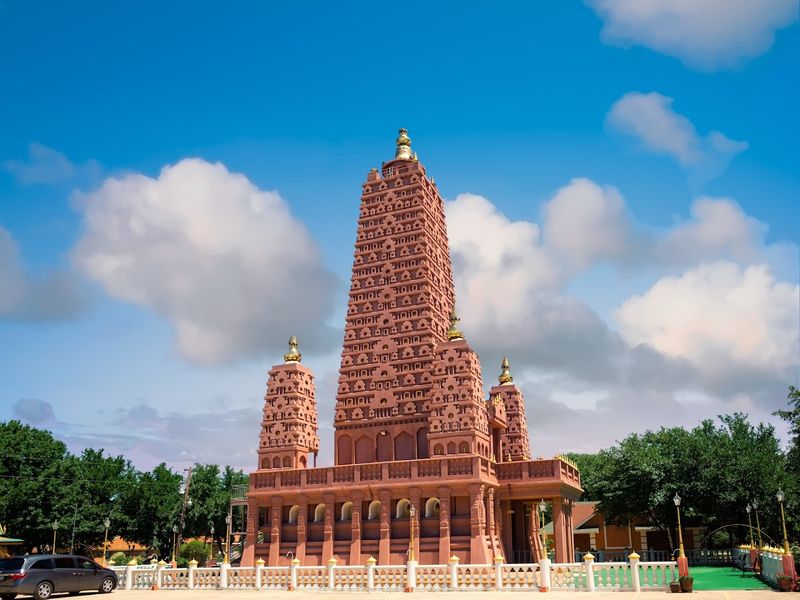
Most visitors come for the visual spectacle, but the spiritual depth of Wat Buddharatanaram runs considerably deeper than its architecture. The temple is associated with the Dhammayut lineage, a reform movement within Theravada Buddhism that emphasizes strict monastic discipline and meditative practice.
That tradition shapes everything about how the monastery operates.
One of the most remarkable features of the complex is the presence of viewable relics belonging to nine Dhammayut monks who are said to have attained enlightenment. These relics are preserved and displayed within the temple, and for practicing Buddhists, their presence carries profound significance.
Even for visitors unfamiliar with the tradition, there is something quietly powerful about being in a space that holds objects considered so sacred.
The Dhammayut lineage originated in Thailand in the nineteenth century and spread throughout Southeast Asia and eventually to Thai communities abroad. Wat Buddharatanaram represents one of its homes in the American South, serving both as a place of worship and a living connection to that heritage.
The monks who reside here maintain daily practices that follow those centuries-old rhythms.
Understanding even a little of this background changes how the temple feels. What might initially read as ornate decoration reveals itself as layered symbolism.
What looks like a quiet courtyard is actually a space shaped by generations of spiritual intention. That layering of meaning beneath the visible surface is what makes this place genuinely compelling rather than simply photogenic.
Morning Chants and the Sound of Something Ancient
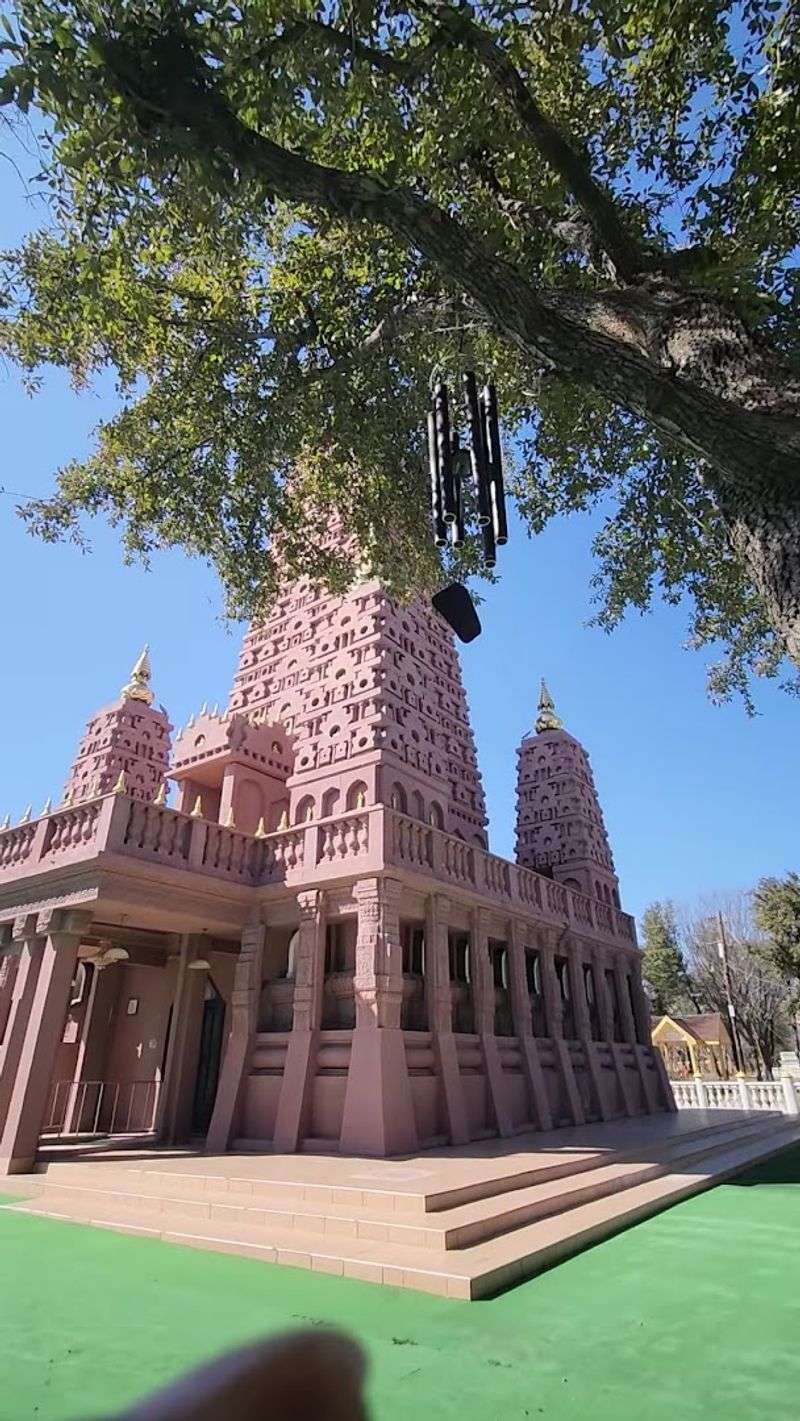
If you can manage an early arrival, the experience at Wat Buddharatanaram shifts into something entirely different. Morning chants run from six to seven in the morning, and hearing them from anywhere on the grounds is one of those sounds that seems to reorganize your nervous system without asking permission.
The rhythm is steady and low, resonating through the wooden structures in a way that feels almost physical.
Monks in saffron robes move through their morning routines with a kind of unhurried precision that is genuinely calming to witness. There is no performance in it.
The chanting happens whether visitors are present or not, which is exactly what makes it feel authentic rather than staged. You are simply there at the right moment, catching something real.
The Pali language used in Theravada chanting has been passed down in an unbroken oral tradition for centuries. Hearing it in Fort Worth, Texas, of all places, creates a strange and beautiful collision of geography and history.
The words have traveled across continents and generations to land here, in a suburb most people drive past without a second thought.
Evening chants follow the same pattern, running from six to seven in the evening. The fading Texas light during that hour adds its own texture to the experience, casting long shadows across the temple courtyard and softening everything into warm amber tones.
Either session is worth planning your visit around if you want to experience the temple at its most alive.
The Gardens, the Pond, and the Art of Doing Nothing
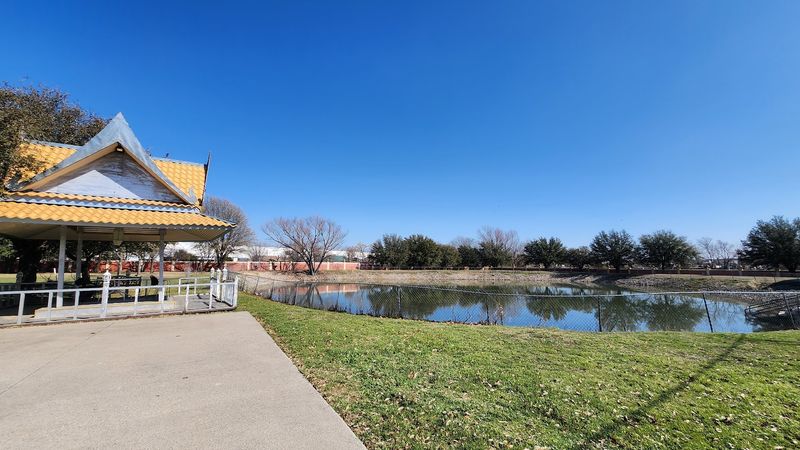
Between the buildings, the grounds of Wat Buddharatanaram open into something unexpectedly peaceful. Landscaped gardens wrap around the structures with obvious care, and mature trees provide shade that makes even a hot Texas afternoon feel manageable.
The air smells different here, greener and quieter, as if the grounds generate their own small climate.
The pond is one of the most underrated features of the whole complex. It sits with a calm authority, its surface broken only by the occasional ripple from wind or wildlife.
Lotus plants grow near the edges, and the reflections of the temple buildings shimmer across the water on still days. Sitting near it for even ten minutes has a noticeably settling effect.
There is a particular kind of slowness that good sacred spaces encourage, and Wat Buddharatanaram does this without any signage or instruction. People naturally lower their voices.
They walk more carefully. They find a bench or a patch of shade and just exist in the space for a while, which is something most of us rarely allow ourselves on an ordinary afternoon.
Bringing a book, a journal, or simply nothing at all and spending an hour on the grounds is a completely legitimate way to visit. The temple does not demand anything from you beyond basic respect.
In return, it offers a kind of quiet that is genuinely hard to find in a metropolitan area of this size. That trade feels more than fair.
A Living Community, Not Just a Tourist Attraction
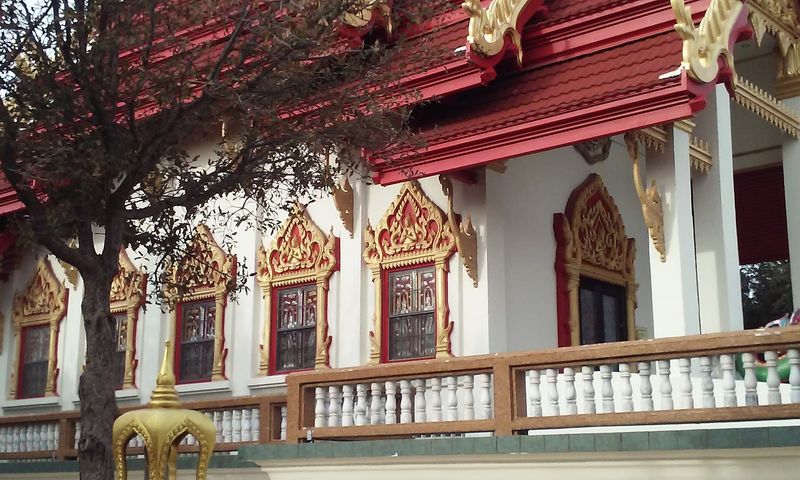
Wat Buddharatanaram is not a museum piece. It is an active, functioning spiritual and cultural center for the Thai and Lao communities in the Fort Worth area, and that vitality is palpable in every corner of the grounds.
The people who gather here are not performing tradition for outside observers. They are living it, and visitors are simply welcome to witness that.
The temple occasionally hosts cultural events and festivals that draw members of the local Southeast Asian community together. These gatherings bring food, music, traditional dress, and a kind of communal energy that transforms the already remarkable space into something even more layered.
Checking the temple calendar before your visit is worth the extra step.
The founding story of the temple reflects this community spirit. When Phra Ajaan Maha Samarn Siripunno established the wat in 1982, it was built through collective effort, with the local Lao community contributing significantly to construction.
That origin shapes the character of the place in ways that are still felt today. Community-built spaces carry a different energy than those constructed by institutions.
Visiting during a regular day rather than a festival still offers plenty of genuine interaction with this world. Monks may be visible going about their daily routines.
Devotees arrive with offerings of fresh fruit or flowers. The temple hums with a quiet, purposeful activity that makes clear this is a living place, not a preserved one.
That distinction matters enormously to how it feels from the inside.
Etiquette Tips That Make the Visit Better for Everyone
Visiting a working Buddhist temple is a different kind of experience than touring a historic building or a public garden. A few simple habits go a long way toward making the visit respectful and comfortable for everyone, including yourself.
The good news is that none of it is complicated.
Shoes come off before entering any of the temple buildings. This is standard practice at Thai wats worldwide, and the entrance areas usually make it obvious where footwear should be left.
Wearing socks is a perfectly reasonable choice, especially if the thought of bare feet on unfamiliar floors gives you pause. The floors inside are kept clean, but comfort matters too.
Modest clothing is appreciated. Covering shoulders and knees is the general standard, and dressing this way signals awareness of the space you are entering.
If you arrive underprepared, some temples keep wraps or sarongs available, though it is better not to rely on that. Arriving already dressed respectfully just makes everything easier from the start.
Donations are welcome and genuinely appreciated. Cash contributions support the upkeep of the grounds and the daily needs of the monks.
Fresh fruit is another traditional offering that visitors can bring. Photography is generally allowed in outdoor areas, but checking before pointing a camera inside the main hall is the courteous approach.
Being genuinely present and unhurried is, in many ways, the most valuable thing you can bring to a place like this.
Why Fort Worth Keeps This Secret Better Than It Should
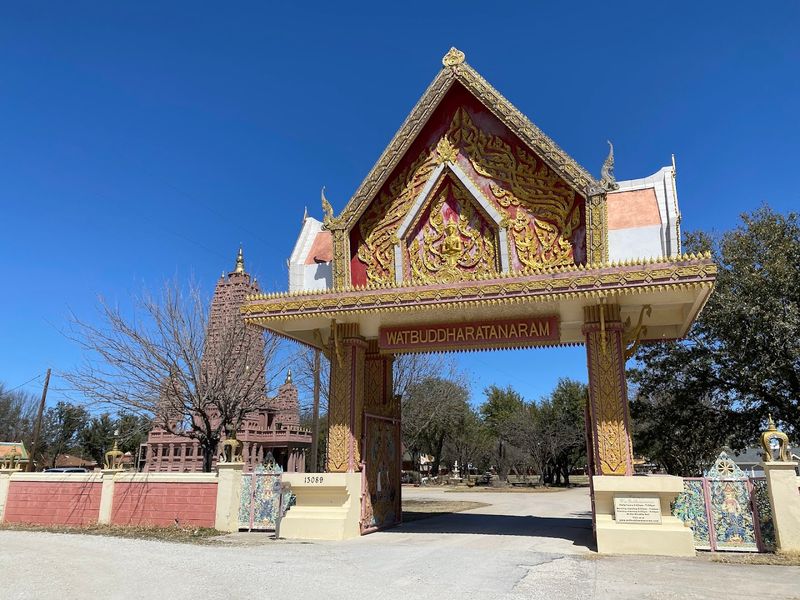
For a city that prides itself on its character, Fort Worth keeps Wat Buddharatanaram surprisingly quiet. Ask most locals about it and you will get a blank look, which is both baffling and somehow charming.
The temple sits right there at 13089 Wat Rd, accessible and open daily from 8 AM to 7 PM, yet it remains genuinely off the radar for a large portion of the population that lives within thirty minutes of it.
Part of what makes the temple feel so special is precisely that low profile. There are no tour buses.
There are no gift shops selling temple-branded merchandise. The experience has not been packaged or smoothed out for mass consumption, and that rawness is what gives it staying power in the memory long after you have left.
Texas has a reputation for big, loud, obvious attractions, and there is nothing wrong with that. But the quiet ones, the places that reward a little curiosity and a willingness to step outside familiar territory, tend to leave the deeper impression.
Wat Buddharatanaram is that kind of place. It asks only that you show up with some openness and basic respect.
The drive home after a visit here tends to feel different from the drive in. The Texas landscape looks the same, the same roads and flat horizons, but something in the perception has shifted slightly.
That is the mark of a place that has actually done something to you, not just shown you something. Not many spots can claim that.
