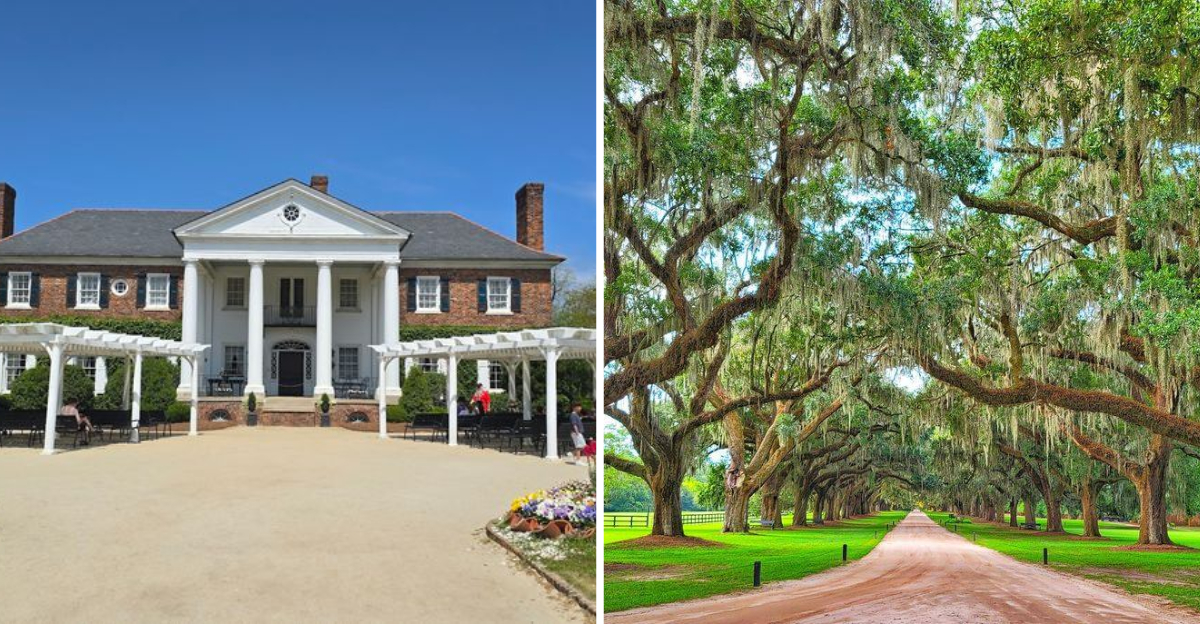
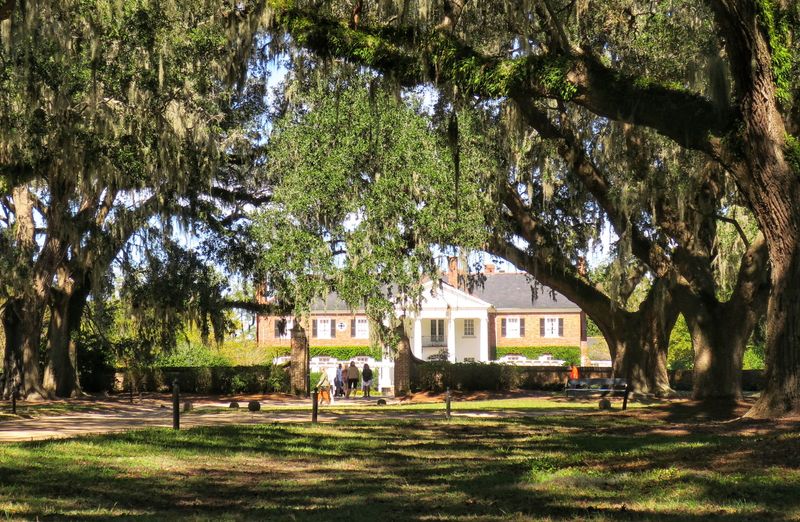
The oak trees at this South Carolina plantation form a tunnel of branches and spanish moss, shading the road from the main gate all the way up to the house. It is one of those views that stops you mid sentence. But keep walking.
Pay attention. Something feels off.
Not scary exactly. Just present.
Like someone is standing behind one of those massive trunks, watching you pass. Visitors have reported this feeling for generations, a quiet awareness that you are not alone under those limbs. I walked the avenue slowly, telling myself it was my imagination.
The moss swayed in a breeze I could not feel. The shadows seemed deeper than they should have been. South Carolina has plenty of beautiful driveways.
This one comes with company.
The Avenue of Oaks: A Living Tunnel That Has Seen Everything
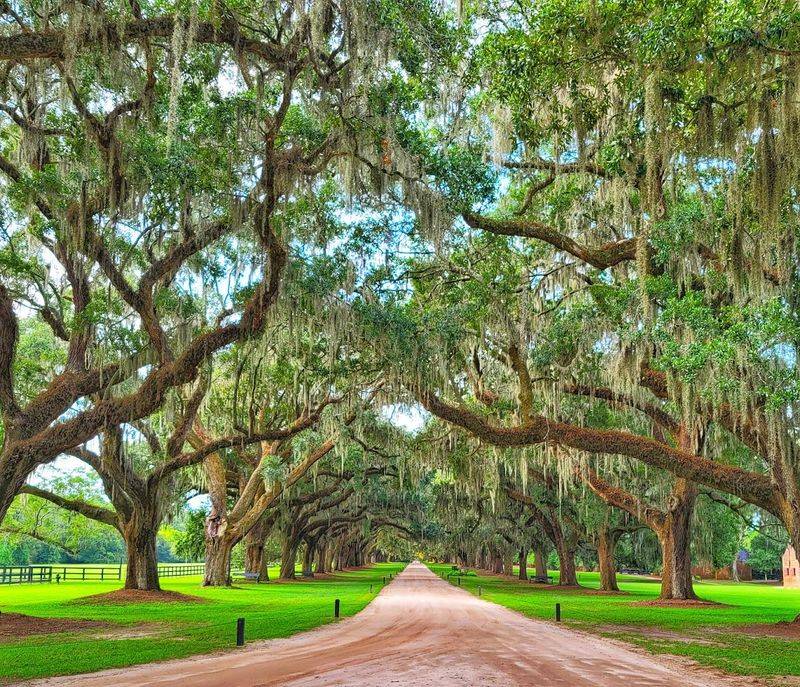
The first time you drive or walk through the Avenue of Oaks at Boone Hall Plantation, your stomach does something unexpected. It drops, just a little, the way it does when you realize you are somewhere genuinely old.
Roughly 88 live oak trees, plus one magnolia, line both sides of a three-quarter-mile stretch that leads to the plantation’s main house.
These trees were first planted in 1743 by Major Thomas Boone, son of the plantation’s founder. The Horlbeck brothers completed the avenue in 1843, with enslaved laborers doing the planting.
That history is built right into the roots, literally.
Each tree has grown massive and gnarled over nearly 280 to 300 years, their branches reaching toward each other overhead to form a dense green arch. Spanish moss hangs in long grey curtains from every limb, swaying in the coastal breeze.
The avenue has been called one of the most photographed in the entire country, and it served as inspiration for the famous Twelve Oaks avenue in the novel and film Gone With the Wind. It has also appeared in productions like The Notebook and North and South.
No photo fully captures the feeling of actually being inside it.
The Weight of History You Feel Before Anyone Explains It
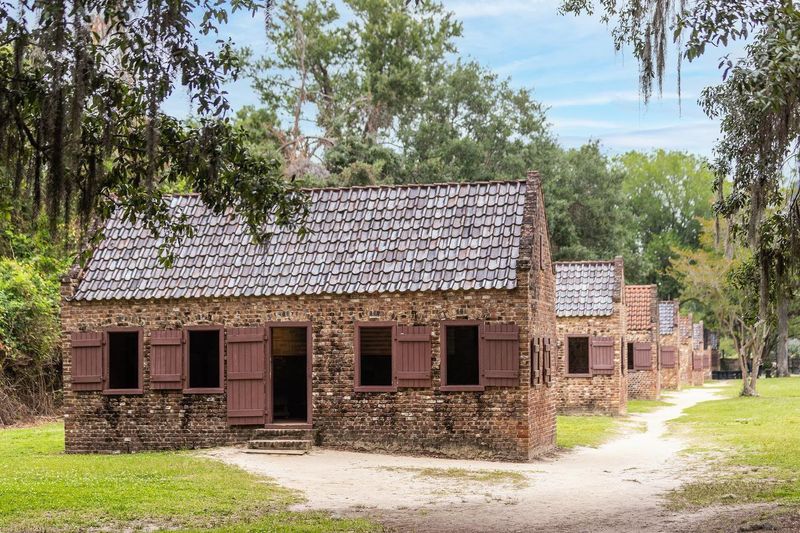
Before a single tour guide says a word, Boone Hall already communicates something heavy. The nine original antebellum brick slave cabins standing along the grounds were built between 1790 and 1810.
They are small, solid, and sobering, each one a physical reminder of the people who lived and labored here under brutal conditions.
The majority of the work at Boone Hall, from growing crops to producing the distinctive handmade bricks used throughout the property, was carried out by enslaved African Americans. The Horlbeck brothers, who owned the plantation from 1817 onward, expanded the brickyard significantly.
At its peak, up to 225 enslaved individuals worked there in dangerous, exhausting conditions.
In 2009, Boone Hall was designated one of the African American Historic Places in South Carolina. The slave cabin row is now part of a self-guided tour that explores both the struggles of enslaved Americans and the remarkable Gullah culture that developed here.
The Gullah presentation offered on-site draws strong praise from visitors, and for good reason. It connects the past to living traditions in a way that feels genuine rather than performative.
You leave knowing more than when you arrived, and that matters.
Gullah Culture and the Stories That Survived
Gullah culture is one of the most resilient and fascinating traditions in American history, and Boone Hall gives it real space. The Gullah people are descendants of enslaved West and Central Africans who developed a unique language, cuisine, spiritual practice, and way of life along the South Carolina and Georgia coasts.
Their culture survived centuries of oppression and erasure because communities held tightly to what mattered.
The live Gullah presentation at Boone Hall consistently stands out as a highlight for visitors. It is not a dry lecture or a staged reenactment.
It feels personal, rooted, and honest about both the pain and the strength embedded in this heritage.
The Gullah language itself is remarkable, a creole blend of English and various African languages that developed as a way for enslaved people from different regions to communicate. Hearing it spoken or explained out loud is genuinely moving.
Rice, not cotton, was actually the dominant crop here for much of the plantation’s early history, and Gullah expertise in rice cultivation was central to the entire regional economy. That detail alone reframes a lot of what most people think they already know about plantation life in South Carolina.
It is the kind of fact that sticks with you long after you leave.
The Old Brick Kiln and the Feeling of Being Watched
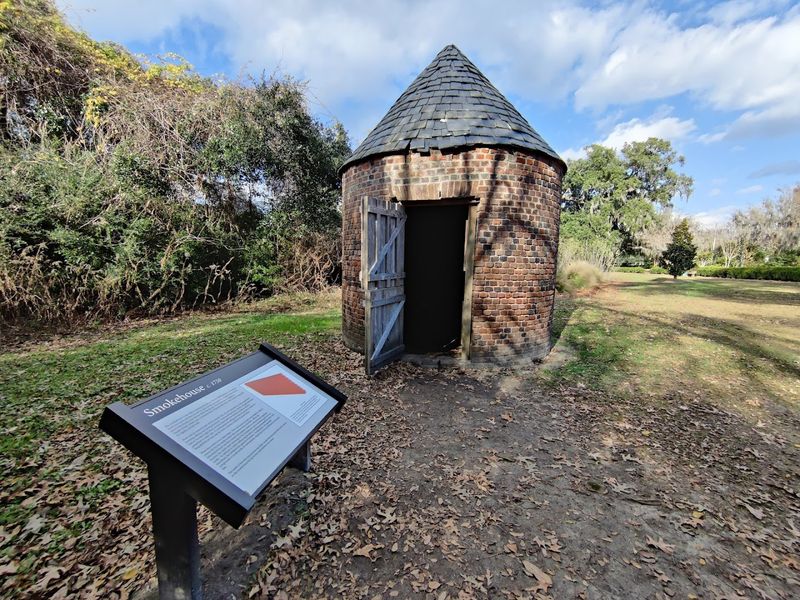
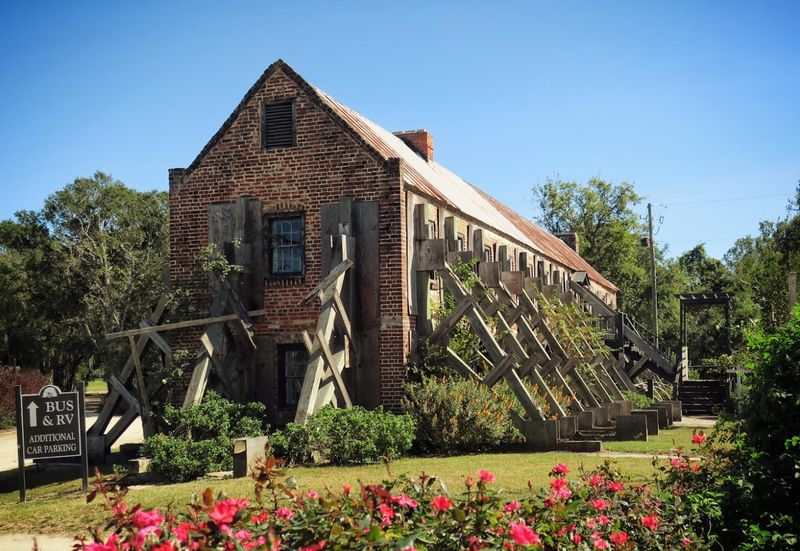
Near Wampacheone Creek, away from the main foot traffic of the plantation grounds, there is an old 19th-century brick kiln chimney that draws a different kind of attention. Not everyone walks out there.
Those who do tend to describe a specific, hard-to-shake sensation, the feeling that someone is nearby even when no one visibly is.
Reported spirit sightings at Boone Hall cluster around this area more than anywhere else on the property. The most commonly described apparitions are those of a young girl and a young boy.
Another figure, reportedly a woman in tattered clothing with her face hidden by her hair, is said to appear near the creek and the chimney, most often at dusk.
Paranormal researchers have described this as a residual haunting, meaning the energy of past trauma seems to replay in a location rather than actively interact with visitors. Whether you believe in that or not, the atmosphere near the kiln is genuinely different from the rest of the grounds.
The history alone makes it feel charged. Hundreds of people labored in dangerous heat at this brickyard, and the land around it carries that weight in a way that is hard to dismiss, even in full daylight.
The Wagon Ride and What You See From a Slower Pace
One of the most consistently enjoyed parts of a Boone Hall visit is the tractor-pulled wagon ride around the property. It covers the wider acreage in about 25 to 30 minutes, and it gives you a completely different perspective than walking the immediate grounds around the main house and cabins.
From the wagon, you get a sense of just how large and active this place still is. Boone Hall has been in continuous agricultural production for over 320 years, making it one of the oldest working plantations in the United States.
The fields, the tree lines, the distant buildings all tell a story of a landscape that has never stopped being used.
Visitors with mobility limitations will be glad to know the wagon has a lift for wheelchair access. The ride is narrated, so you pick up historical context while moving through the property rather than standing in one spot.
Families with young children seem to love it, partly because it is easy and comfortable, and partly because kids tend to get genuinely excited spotting wildlife from the wagon, including eagles perched high in the tree canopy. It is one of those low-effort, high-reward moments that makes the whole trip feel worth it.
The Main House and the Gardens That Surround It
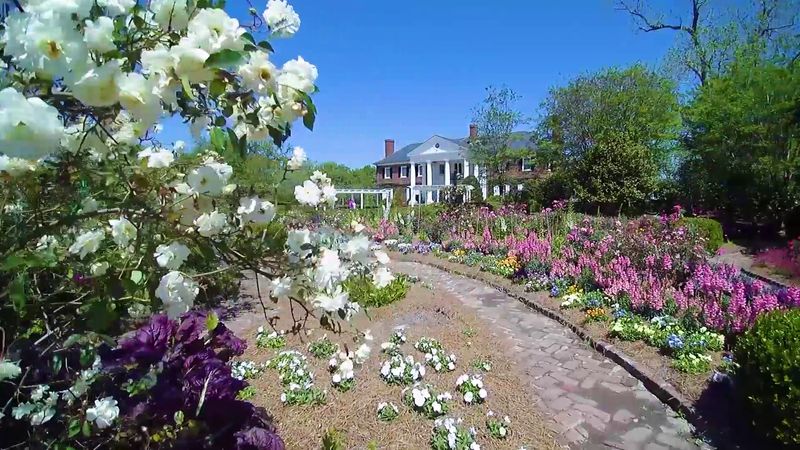
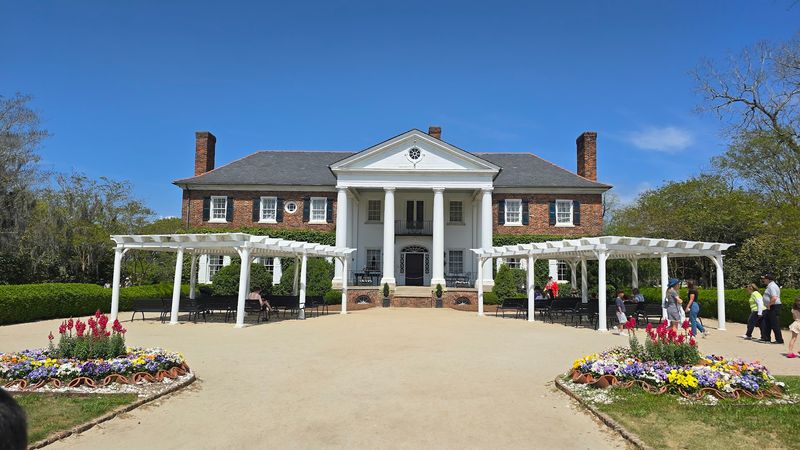
At the far end of the Avenue of Oaks sits the main house, a Georgian-style structure that surprises some visitors when they learn it was built in 1935. The original plantation house no longer stands, and the current building replaced it.
That said, the interior is still packed with period antiques, and guided tours of the lower level offer real historical context about life at Boone Hall across different eras.
The surrounding gardens are well-maintained and genuinely lovely, especially in warmer months when flowers are in full color. Butterflies, bees, and hummingbirds make regular appearances, and the whole area has a calm, almost suspended quality to it.
The contrast between that serenity and the history you have just walked through is part of what makes Boone Hall such a layered experience.
After touring the house and gardens, the on-site Butterfly Cafe offers a place to sit and eat something before heading back out. Visitors have mentioned the pimento cheese sandwich and the baked goods with genuine enthusiasm.
It is a good spot to slow down, process what you have seen, and let the afternoon settle. The grounds stay open until 5 PM most days, giving you enough time to linger without feeling rushed.
Why Boone Hall Stays With You Long After You Leave
Places that carry real history tend to follow you home, and Boone Hall is exactly that kind of place. It is beautiful in a way that is almost uncomfortable, because the beauty exists right alongside something deeply painful.
The tension between those two things is what makes it linger.
The oak trees, the brick cabins, the creek, the old kiln chimney, the Gullah presentation, the wagon ride through open fields, all of it adds up to something that is hard to categorize as just a tourist attraction. It is more like a conversation with the past that you did not fully expect to have.
Visitors consistently mention spending three to four hours on the grounds without feeling like they have exhausted what is there to see and feel. Some come for the film locations, some for the gardens, some for the history, and some, honestly, come because they heard something strange happens near the creek at dusk.
Whatever brings you through that entrance, the Avenue of Oaks greets you the same way it has greeted people for nearly three centuries, quietly, massively, and with the unmistakable sense that it has seen far more than you have.
Address: 1235 Long Point Rd, Mt Pleasant, SC 29464
