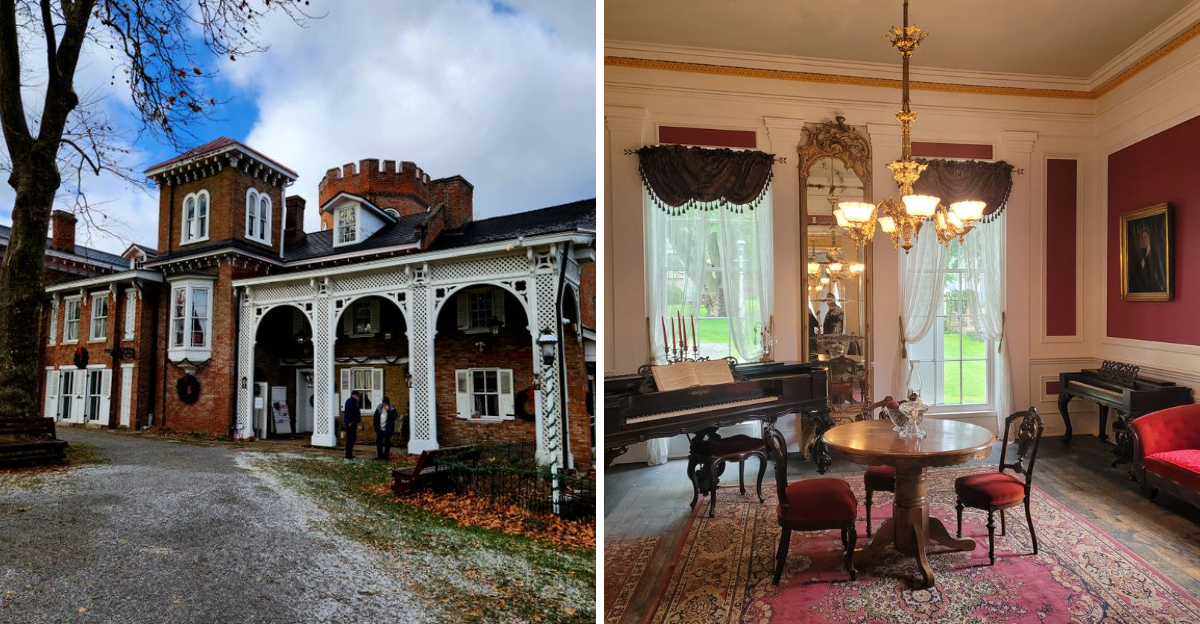
Nestled along the banks of the Monongahela River in Brownsville, Pennsylvania, Nemacolin Castle stands as a remarkable testament to American history and one family’s enduring connection to their community.
Built in 1789 and expanded over the decades, this historic structure at 136 Front St has witnessed the growth of a young nation, the rise and fall of river commerce, and the dedication of generations who preserved its stories.
Travelers seeking authentic historical experiences find themselves drawn to this architectural gem, where the Bowman family’s 170-year stewardship has kept the past alive in ways few places can match.
Walking through its doors means stepping into a world where every room, artifact, and carefully preserved detail speaks to the resilience and vision of those who refused to let history fade away.
The Trading Post That Became a Castle
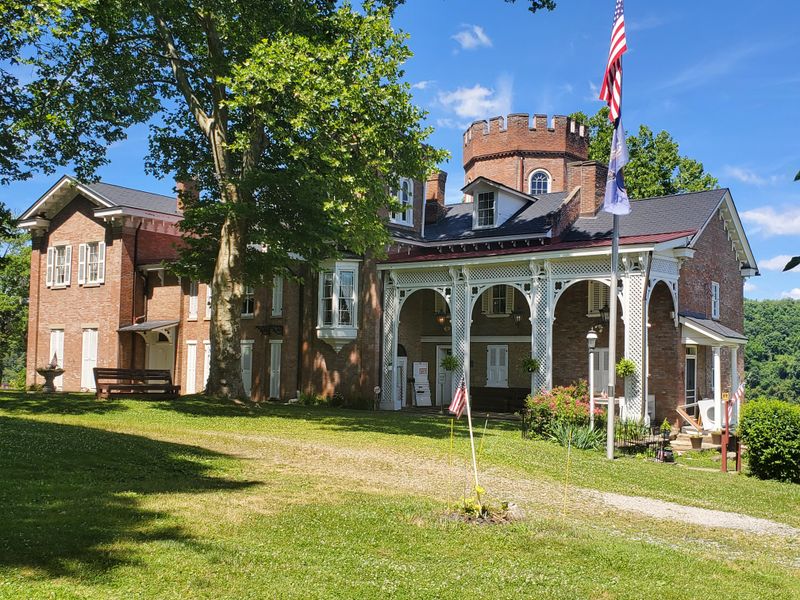
Long before Nemacolin Castle earned its fairy-tale name, it began as something far more practical: a sturdy trading post built to serve travelers along the Monongahela River.
Jacob Bowman constructed the original structure in 1789, using locally quarried sandstone that would prove strong enough to last centuries.
The thick walls and strategic location made it an ideal stop for traders, frontiersmen, and families heading westward during America’s expansion.
What makes this building truly special is how it grew organically with the family’s needs and the region’s development.
Over the decades, additions transformed the simple trading post into a more elaborate residence, each expansion reflecting the architectural styles and economic fortunes of its time.
The name “castle” came later, inspired by the building’s fortress-like appearance and the romantic sensibilities of the Victorian era.
Standing before its weathered stone facade today, visitors can trace the evolution of American frontier life through its very structure.
The original trading post section still exists within the larger building, a reminder of humble beginnings.
Seasonal changes bring different moods to the castle grounds, with spring highlighting the ancient stonework against fresh greenery and autumn wrapping the building in golden light.
This transformation from utilitarian outpost to beloved landmark mirrors the journey of countless American families who built something lasting from modest starts.
The castle’s survival through wars, economic depressions, and social upheaval speaks to both the quality of its construction and the determination of those who called it home.
The Bowman Family’s Unbroken Thread
Few American families can claim continuous stewardship of a single property for 170 years, yet the Bowmans accomplished exactly that through vision and unwavering commitment.
Generation after generation chose to preserve rather than sell, to maintain rather than abandon, creating an unbroken thread connecting 1789 to the present day.
This wasn’t always the easy choice, especially during economic hardships when selling the property might have brought financial relief.
The family’s dedication transformed what could have been just another forgotten building into a living museum of regional history.
Each generation added their own chapter to the castle’s story while respecting what came before.
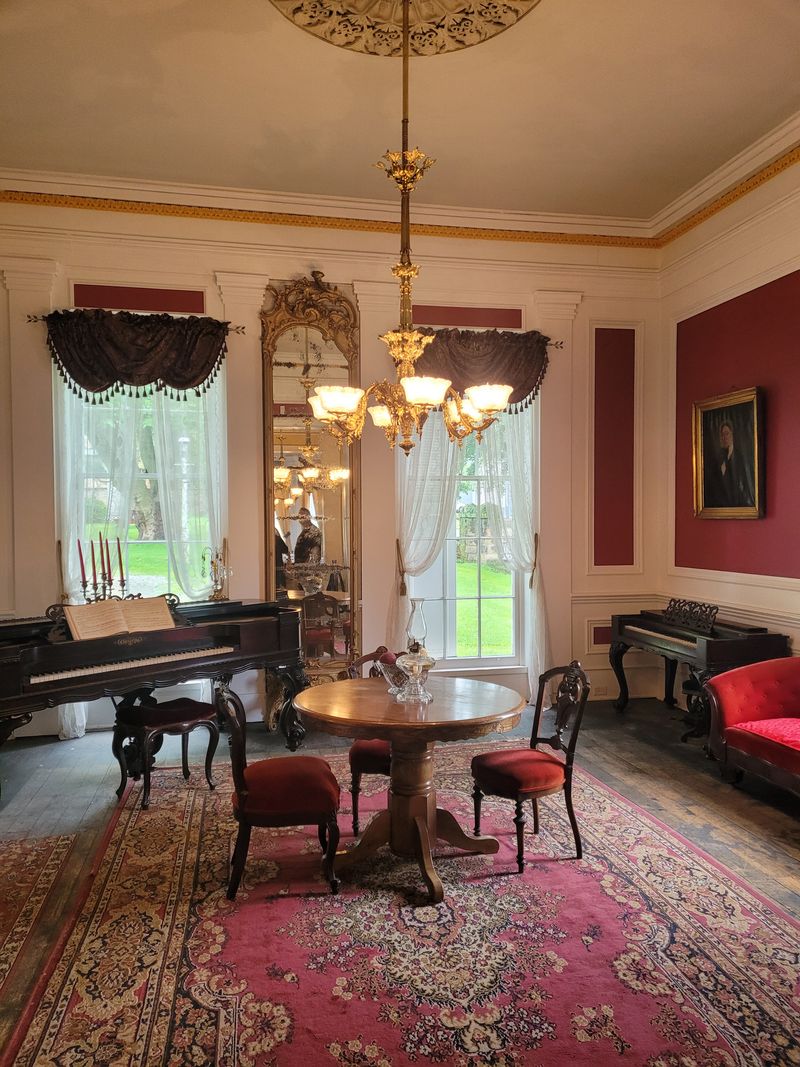
Walking through the rooms today, you encounter personal belongings, furniture, and everyday items that span nearly two centuries of family life.
Unlike museums filled with acquisitions from various sources, everything here connects to the Bowman family narrative.
A child’s toy from the 1850s sits near a photograph from the 1920s, both belonging to direct ancestors in the same lineage.
This continuity creates an emotional resonance that’s hard to find elsewhere, making history feel personal and immediate rather than distant and abstract.
The atmosphere inside the castle reflects this multi-generational presence, as if the accumulated memories of all those years still linger in the air.
Visitors often comment on feeling a strong sense of connection to the past, not through grand historical events but through the intimate details of ordinary lives lived extraordinarily well.
Architectural Layers of Time
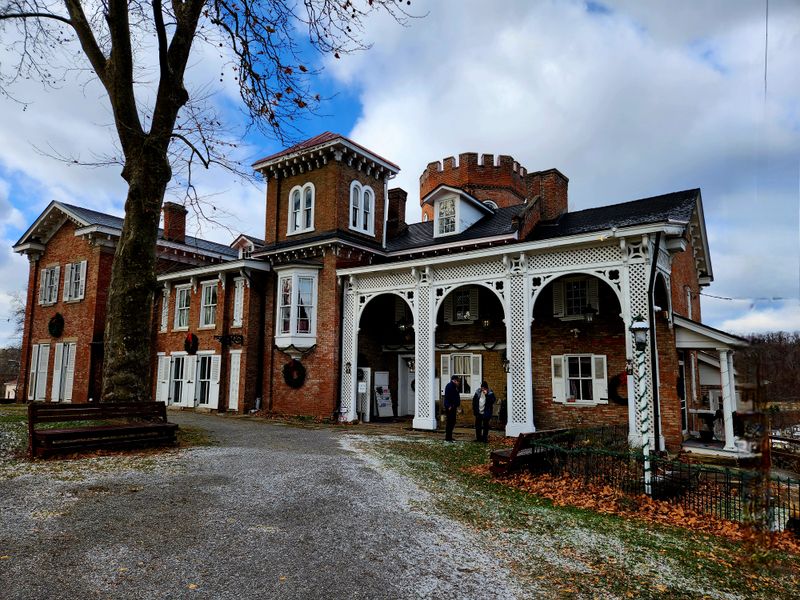
Architecture tells stories when you know how to read it, and Nemacolin Castle reads like a fascinating novel with chapters added across different eras.
The original 1789 section features the thick stone walls and small windows typical of frontier construction, designed for defense and durability rather than aesthetics.
As you move through the building, you encounter additions from the early 1800s that show growing confidence and prosperity.
Windows become larger, allowing more light, and decorative elements begin appearing where pure function once ruled.
The Victorian-era expansions brought ornamental flourishes, reflecting the romantic architectural movements sweeping through America during the mid-to-late 1800s.
Rather than creating a jarring clash of styles, these layers blend into something uniquely compelling, a physical timeline of American architectural evolution.
Guides point out how different types of stonework, window styles, and construction techniques mark the boundaries between building periods.
The castle’s nickname itself reflects Victorian romanticism, when Americans increasingly looked to European traditions for cultural inspiration.
Examining the building’s exterior from different angles reveals these historical layers, with each expansion carefully integrated into the existing structure.
Interior spaces showcase original hand-hewn beams, later plasterwork, and period-appropriate furnishings that help visitors visualize life during different eras.
This architectural palimpsest makes the castle an invaluable educational resource, showing how American building practices and aesthetic values changed over time while maintaining structural integrity and family continuity.
River Commerce and Transportation Hub
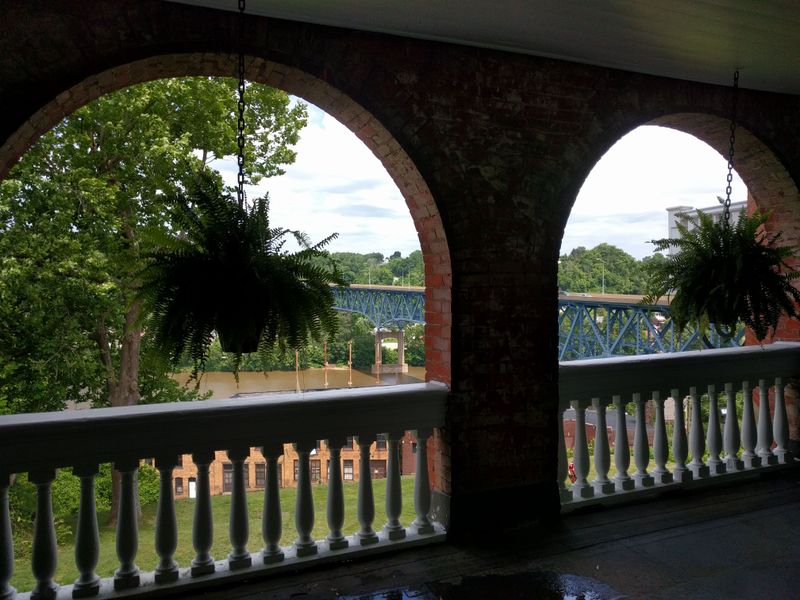
Understanding Nemacolin Castle requires understanding the river that flows past its doorstep, for the Monongahela River shaped every aspect of Brownsville’s development.
In the late 1700s and throughout the 1800s, rivers served as America’s highways, carrying goods, people, and ideas between settlements.
Brownsville’s strategic location made it a vital transportation hub where travelers switched from land to water routes or vice versa.
The castle’s position overlooking the river wasn’t accidental; it allowed the Bowman family to participate in and benefit from this bustling commerce.
Flatboats, keelboats, and later steamboats crowded the river, creating a constant flow of potential customers for the trading post and inn.
Imagine standing on the castle’s riverfront side during the 1840s, watching dozens of vessels navigate the water while hearing the shouts of boatmen and merchants.
The family’s fortunes rose and fell with river commerce, thriving during boom times and persevering through quieter periods.
When railroads began replacing river transport in the late 1800s, many river towns declined rapidly, but Brownsville and the castle adapted.
Today, the river provides scenic beauty rather than commercial bustle, its peaceful flow offering visitors a chance to reflect on how dramatically transportation has changed.
Standing at the same vantage point the Bowmans used for generations, you can almost hear echoes of that vanished river culture.
The relationship between castle and river illustrates how geography shapes human settlement patterns and how communities must adapt when economic circumstances shift.
Collections That Tell Personal Stories
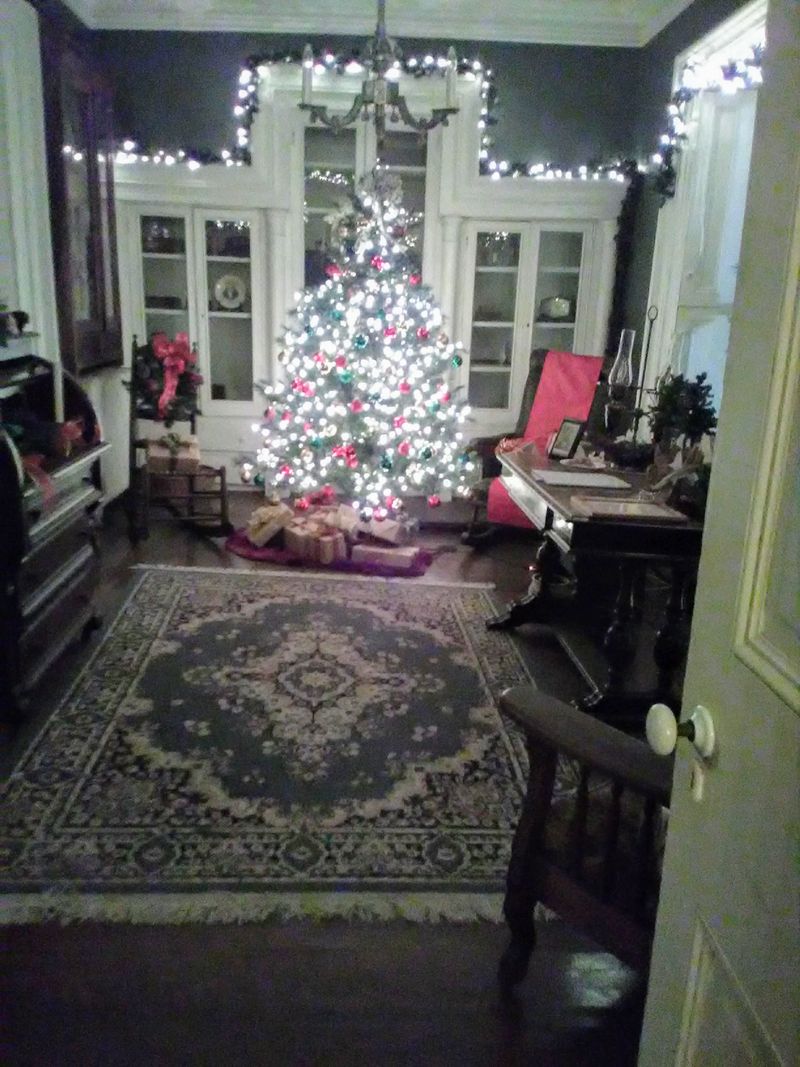
Museums can feel sterile when artifacts lack context, but every item in Nemacolin Castle comes with a story rooted in family experience.
The collections here weren’t assembled by curators buying pieces at auctions; they accumulated naturally through generations of family life.
A wedding dress from 1867 belonged to a specific Bowman bride whose portrait hangs nearby, making the garment more than just a period costume.
Kitchen implements, medical instruments, children’s toys, and business ledgers all connect to the people who actually used them in this very building.
This provenance transforms ordinary objects into powerful historical witnesses, helping visitors understand daily life across different eras.
You might see a child’s slate with actual arithmetic problems still faintly visible, or letters discussing family concerns during the Civil War.
The intimacy of these collections distinguishes Nemacolin Castle from larger institutions where objects often come from diverse sources.
Seasonal decorations, holiday traditions, and special occasion items reveal how the family celebrated and mourned through changing times.
Documentation accompanying many pieces provides names, dates, and circumstances, preventing the anonymity that often strips artifacts of emotional power.
Walking through rooms filled with these personal belongings creates an almost voyeuristic feeling, as if you’re glimpsing private lives across the centuries.
The collection’s strength lies not in rarity or monetary value but in its completeness and continuity, offering an unusually detailed picture of how one American family lived, worked, and evolved over 170 years.
Preservation Through Dedication
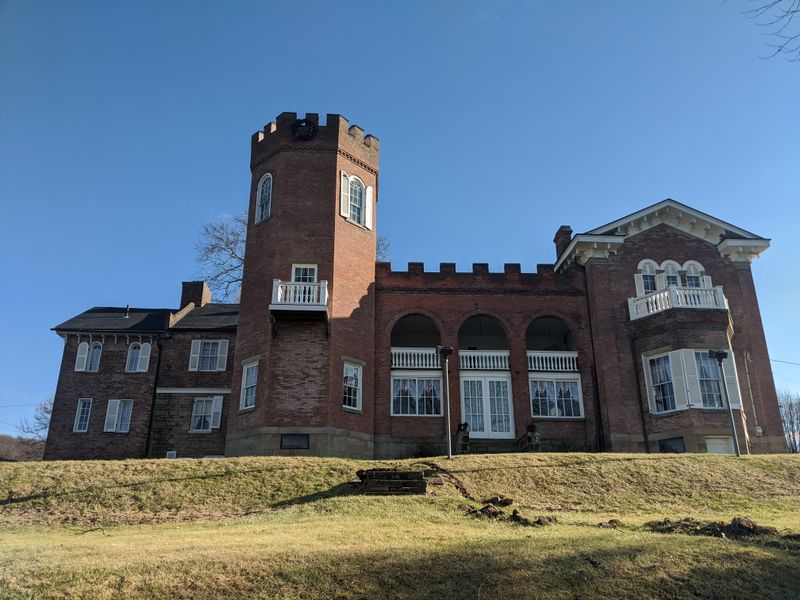
Keeping a building standing for over two centuries requires more than good intentions; it demands constant vigilance, specialized knowledge, and significant resources.
The Bowman family’s commitment to preservation meant making difficult choices, often prioritizing the castle’s needs over personal comfort or financial gain.
Early preservation efforts happened long before modern conservation techniques existed, relying instead on traditional craftsmanship and materials.
Each generation faced different challenges, from structural repairs to adapting the building for changing uses while maintaining historical integrity.
Weather takes a continuous toll on any structure, especially one built with 18th-century methods, requiring regular attention to roofing, stonework, and foundations.
The decision to open the castle as a museum in the 20th century brought new preservation challenges alongside opportunities for public support.
Balancing public access with conservation needs requires careful planning, limiting visitor numbers and controlling environmental conditions to protect fragile artifacts.
Modern preservation specialists work with historical societies and grant programs to fund ongoing maintenance and restoration projects.
Visitors today benefit from decades of careful stewardship, seeing the castle in remarkably good condition considering its age.
The building’s survival stands as a monument not just to original construction quality but to the consistent care it received across generations.
Watching preservation work in progress, when permitted, offers fascinating insights into historical construction techniques and the challenges of maintaining authentic materials and methods in contemporary times.
The Castle’s Role in Regional History

No building exists in isolation, and Nemacolin Castle’s story intertwines with broader regional developments across nearly two and a half centuries.
Southwestern Pennsylvania played a crucial role in America’s westward expansion, serving as a gateway for thousands of settlers heading into the frontier.
The castle witnessed this great migration, with the Bowman family providing services and supplies to travelers embarking on uncertain journeys.
During the Civil War era, the region’s complex politics and divided loyalties created tensions that affected every family, including the Bowmans.
The rise of coal mining and steel production transformed the area’s economy and culture, bringing prosperity but also environmental and social challenges.
Labor movements, industrial accidents, and economic booms and busts all left their marks on the community and the castle’s residents.
Immigration waves brought diverse populations to the region, changing the cultural landscape while the castle remained a constant presence.
The 20th century brought modernization that bypassed many small river towns, leading to economic decline that threatened historic properties like the castle.
By preserving their home and opening it to visitors, the Bowman family created a resource for understanding regional history beyond their own story.
The castle now serves as an educational center where local schools bring students to learn about their community’s past.
Its survival through such dramatic regional changes makes it an anchor point, a place where people can connect with continuity amid constant transformation and understand their own place in an ongoing historical narrative.
Experiencing the Castle’s Seasonal Moods

History might seem frozen in time, but the castle’s atmosphere shifts dramatically with Pennsylvania’s distinct seasons, each offering unique visiting experiences.
Spring brings renewal to the grounds, with historic gardens awakening and the river swelling with snowmelt, much as the Bowman family would have witnessed each March and April.
The stone walls seem to warm in the lengthening daylight, and opened windows allow fresh air to circulate through rooms that feel stuffy after winter closure.
Summer’s full foliage frames the building beautifully, creating the fairy-tale castle appearance that inspired its name during the romantic Victorian period.
The river moves more slowly, reflecting blue skies and puffy clouds, while the castle’s thick stone walls provide cool refuge from summer heat.
Autumn transforms the surrounding landscape into a spectacular color display, with the castle’s gray stone providing perfect contrast to brilliant reds, oranges, and yellows.
This season often draws the most photographers, seeking to capture the building amid Pennsylvania’s famous fall foliage.
Winter strips away decorative elements, revealing the castle’s bones and emphasizing its fortress-like qualities and enduring strength.
Snow softens the landscape and muffles sound, creating an almost timeless quiet that helps visitors imagine long-ago winters when the building provided essential shelter.
Each season highlights different aspects of the structure and landscape, encouraging multiple visits to appreciate the full range of experiences.
The castle’s limited weekend hours make planning essential, but this restriction also ensures more intimate visits without overwhelming crowds diluting the historical atmosphere.
Educational Programs and Community Connection

Rather than existing as a static memorial, Nemacolin Castle continues serving its community through educational programs that bring history alive for new generations.
School groups regularly visit, with age-appropriate programs helping students understand daily life in different historical periods through hands-on experiences.
Children might try writing with quill pens, examine reproduction clothing, or handle period tools under careful supervision, making abstract history tangible.
These programs connect Pennsylvania’s academic standards to real historical settings, reinforcing classroom lessons with memorable field trip experiences.
Special events throughout the year, from holiday celebrations to historical reenactments, draw community members who might not otherwise visit museums.
The castle serves as a venue for historical society meetings, genealogy workshops, and lectures on regional history topics.
Local artists sometimes use the grounds for inspiration, creating works that help contemporary audiences see familiar history through fresh perspectives.
Volunteer opportunities allow community members to participate directly in preservation and education efforts, creating personal investment in the castle’s future.
This ongoing community engagement ensures the castle remains relevant rather than becoming an isolated relic visited only by history enthusiasts.
The Bowman family’s legacy extends beyond physical preservation to include fostering historical awareness and community pride across generations.
By opening their family home to the public, they transformed private heritage into shared cultural resource, demonstrating how individual stories contribute to collective memory and understanding.
Planning Your Visit to This Historic Landmark

Making the most of your Nemacolin Castle experience requires some planning, given its limited weekend-only operating hours from 11 AM to 3 PM on Saturdays and Sundays.
The castle’s location at 136 Front St in Brownsville places it along the river in the historic downtown area, easily accessible but requiring attention to seasonal weather conditions.
Arriving early in the four-hour window allows maximum time to explore the collections and grounds without feeling rushed through this remarkable property.
Comfortable walking shoes are essential, as you’ll navigate stairs and uneven surfaces typical of buildings constructed before modern accessibility standards.
Photography policies vary, so check current guidelines before your visit if capturing images is important to your experience.
Guided tours offer the richest experience, with knowledgeable volunteers sharing stories and details you might miss during self-guided exploration.
The intimate size of the castle means visitor capacity is limited, creating a more personal experience but potentially requiring patience during busy periods.
Combining your castle visit with exploration of Brownsville’s other historical sites and the scenic river valley creates a full day of discovery.
Seasonal considerations matter in Pennsylvania, where winter weather can make travel challenging and summer heat makes the castle’s cool stone interior especially welcome.
Contacting the castle at 724-785-6882 or checking their website before traveling ensures you have current information about any special events or temporary closures.
This historic treasure rewards those who make the effort to visit, offering authentic connection to American history through one family’s extraordinary 170-year legacy of preservation and dedication.
Dear Reader: This page may contain affiliate links which may earn a commission if you click through and make a purchase. Our independent journalism is not influenced by any advertiser or commercial initiative unless it is clearly marked as sponsored content. As travel products change, please be sure to reconfirm all details and stay up to date with current events to ensure a safe and successful trip.
