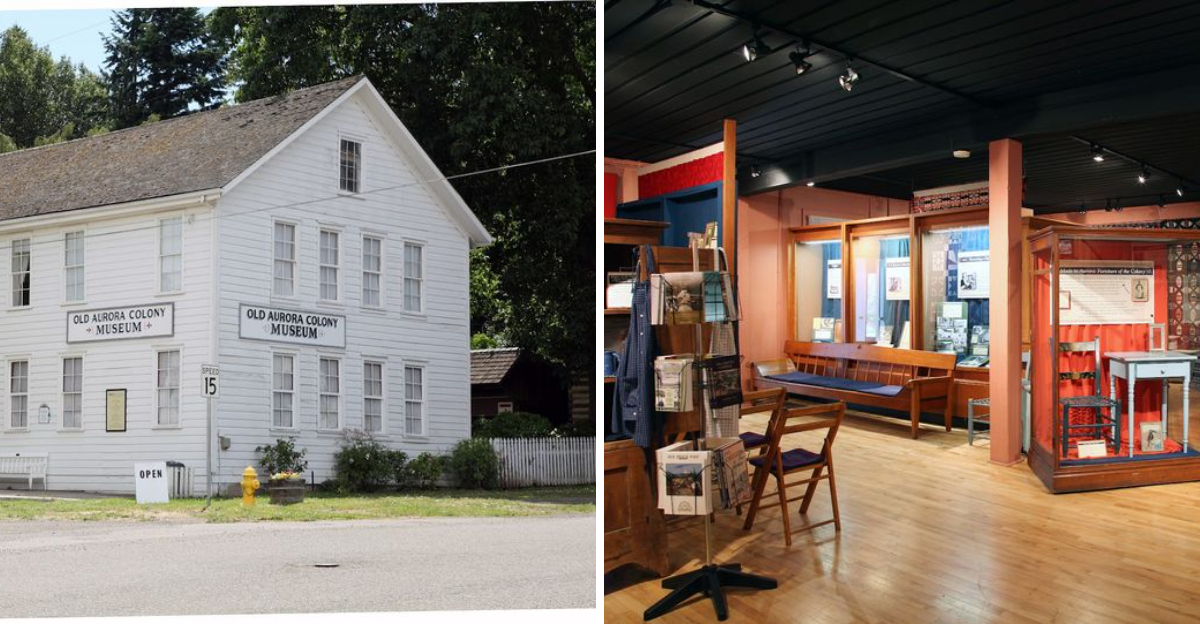
You step inside and the smell of old wood and forgotten stories hits you immediately. Oregon has a barn that feels less like a building and more like a time machine with a leaky roof.
Ten thousand square feet of history packed into one creaky structure, every corner hiding something you did not expect. Vintage tools hang from beams, their wooden handles worn smooth by hands that turned to dust long ago.
Antique furniture sits in dusty rows, waiting for someone to appreciate a scratch or a faded stain as character rather than damage. Old farm equipment rusts gracefully in the corners, too heavy to move and too beautiful to throw away.
Children’s toys from a century ago peek out from under tables, little reminders that kids have always been kids. The light filters through cracked windows, illuminating dust motes that dance like tiny ghosts.
You will find yourself touching things, picking up objects, wondering whose hands held them last. It is not a museum with ropes and signs, just a barn full of memories waiting for someone to notice.
The Story Behind the Aurora Colony
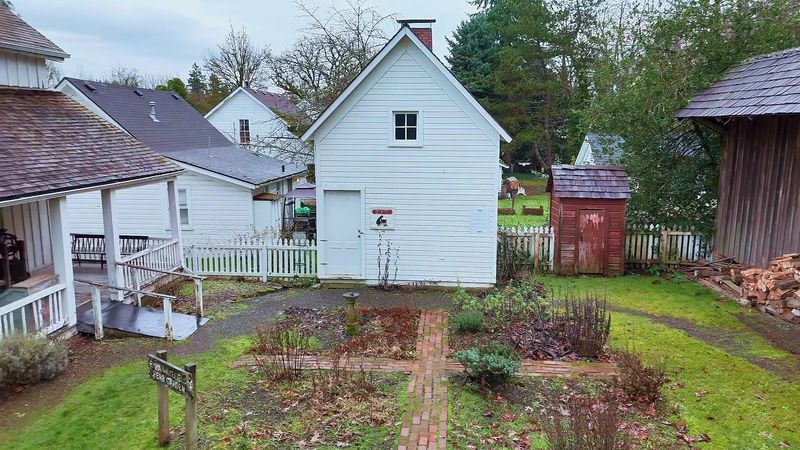
Not every small Oregon town has a backstory this layered. Aurora was founded in the mid-1800s by German immigrants who traveled from Missouri to build a communal society here.
They shared land, labor, and resources in a way that was pretty radical for the time.
The colony was led by Wilhelm Keil, a charismatic and deeply religious man. His followers trusted him completely.
They built homes, barns, and a whole community from the ground up in the fertile Willamette Valley.
The museum does a beautiful job of telling this story. Old photographs line the walls.
Handwritten documents are displayed with care. You start to feel the weight of what these people actually accomplished.
It is not just Oregon history. It is a rare window into communal pioneer life that almost no other place in the Pacific Northwest can offer.
Walking through these exhibits, the colony stops feeling distant and starts feeling remarkably human.
The Salvage Barn and Its 10,000 Square Feet
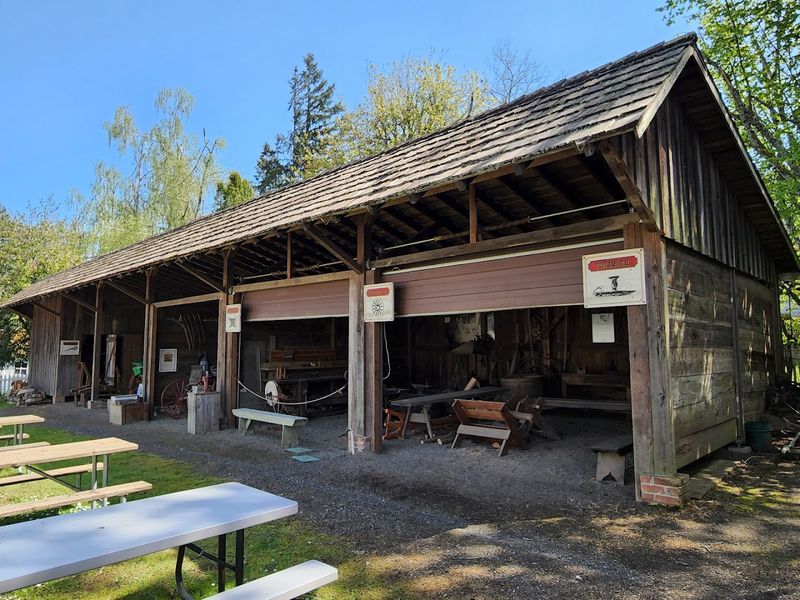
Walking into the salvage barn is a little overwhelming at first. In the best possible way.
The sheer scale of the space catches you off guard, and then the contents start pulling your attention in every direction at once.
Old furniture sits beside farm tools. Architectural pieces lean against weathered wooden walls.
There are items here that look like they came straight from a pioneer homestead, and maybe they did.
The barn spans roughly 10,000 square feet, which sounds large on paper but feels even larger in person. Every corner holds something unexpected.
I found myself doubling back multiple times just to look more closely at things I had walked past. The mix of salvaged building materials and genuine historical artifacts gives the space a texture that feels completely authentic.
It is not curated in a sterile, hands-off way. It feels alive, a little chaotic, and wonderfully real.
Serious history lovers and casual browsers both find plenty to love here.
Handmade Quilts That Tell Their Own Stories
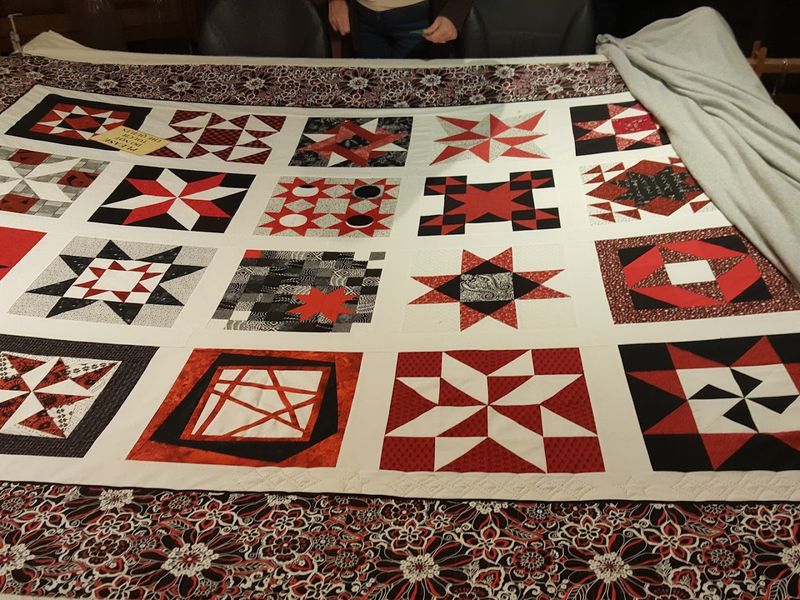
Few things in the museum stopped me the way the quilts did. They hang on the walls like paintings, but each one carries a kind of warmth that painted canvas never quite achieves.
These were made by real hands, for real families, in real Oregon winters.
The quilt-making tradition was central to Aurora Colony life. Women gathered to sew together, and the results were both functional and strikingly beautiful.
Some patterns are geometric and bold. Others are delicate and intricate in ways that feel almost impossible given the tools available at the time.
Visitors who come during special events sometimes get to see demonstrations of traditional textile arts. The museum also hosts an annual spinning wheel showcase, which draws fiber arts enthusiasts from across the region.
Even if you have never thought much about quilts before, standing in front of these pieces changes something. You start to understand that everyday objects can carry history just as powerfully as any written document ever could.
The Kraus House and Its Preserved Interiors
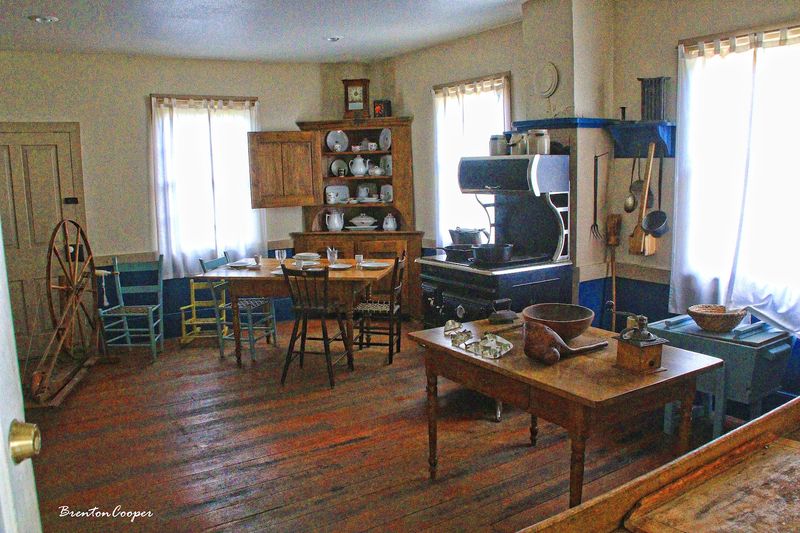
The Kraus House sits on the museum property and looks exactly like what it is: a carefully preserved piece of the 19th century. Stepping inside feels less like visiting a museum and more like knocking on a neighbor’s door in 1870.
Period furnishings fill each room with quiet authenticity. The furniture is heavy and handcrafted.
The proportions of the rooms feel different from modern spaces, lower ceilings, smaller windows, a closeness that reminds you how people actually lived back then.
What makes this building special is the level of care put into its preservation. Nothing feels fake or reconstructed for effect.
The docents who walk you through are genuinely passionate about the history. They share details about the families who lived here that bring the whole space to life.
One visit through the Kraus House is enough to completely shift how you think about pioneer-era Oregon. It is a small building with an enormous amount of story packed inside every room and corner.
The Dangerous and Deadly Fashion Exhibit
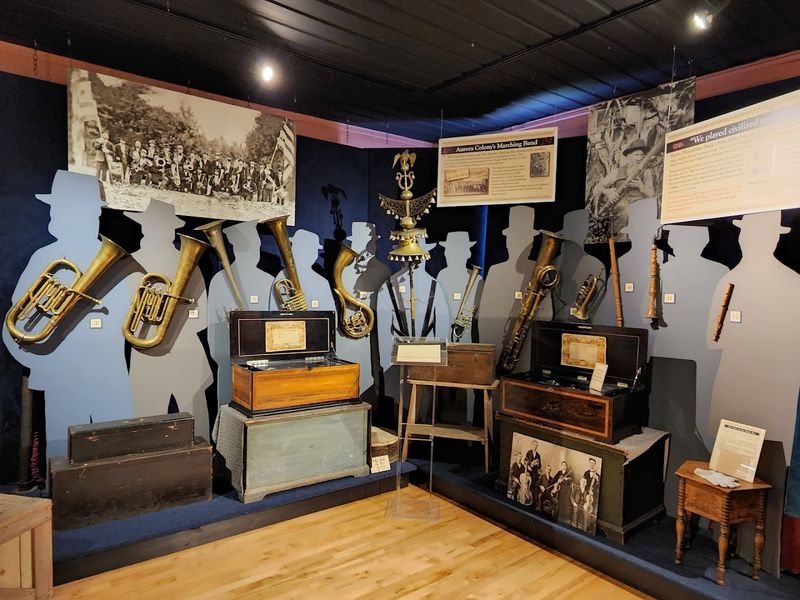
This one genuinely surprised me. A fashion exhibit inside a pioneer history museum sounds like an odd pairing, but it absolutely works.
The Dangerous and Deadly Fashion exhibit looks at how 19th-century clothing trends were often beautiful and genuinely hazardous at the same time.
Corsets that restricted breathing. Dyes made from toxic materials.
Heavy skirts that caught fire near open flames. The exhibit unpacks all of it with clarity and a little dark humor.
You walk away with a whole new appreciation for modern clothing.
The presentation is packed with information without ever feeling overwhelming. Labels are clear.
Objects are well-displayed. The exhibit connects fashion history to broader social history in ways that feel relevant and interesting even today.
Several visitors I overheard kept stopping to read every single placard, which says a lot. It is the kind of exhibit that sticks with you long after you leave.
Fashion, it turns out, has always been complicated, and sometimes genuinely dangerous.
The Gift Shop Full of Handcrafted Treasures
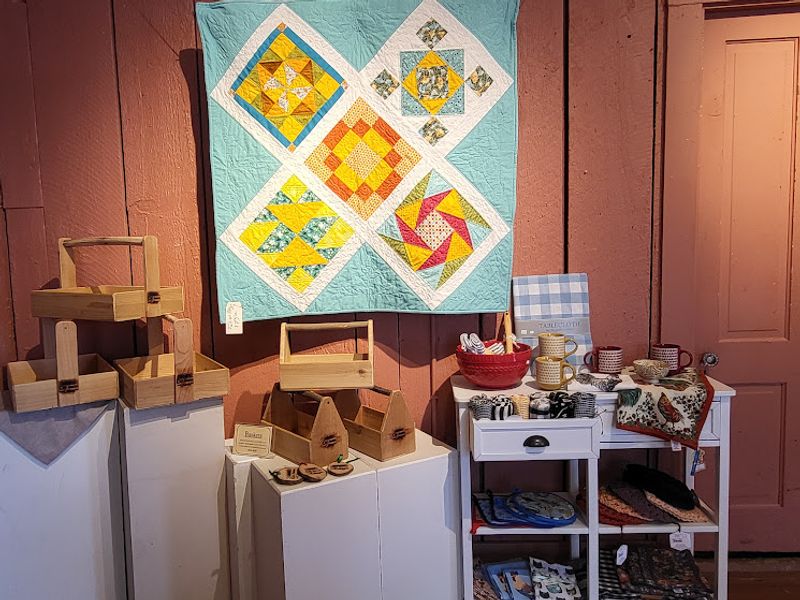
Museum gift shops can be hit or miss. This one is firmly in the hit category.
The shop at Old Aurora Colony Museum carries handcrafted items that actually reflect the spirit of the place, not generic souvenirs slapped with an Oregon logo.
Locally made goods line the shelves. There are handwoven textiles, wooden items, and artisan products that feel worth bringing home.
The selection changes, so repeat visitors often find something new each time they stop in.
Browsing here feels like a natural extension of the museum experience rather than a commercial interruption. The items connect back to the colony’s tradition of skilled handcraft and communal production.
Several visitors mentioned picking up gifts here that were genuinely unique. I spent longer in this room than I expected to.
The quality is noticeable, and the prices feel fair for what you are getting. If you leave empty-handed, you probably were not paying close enough attention to the shelves.
The Music Box That Stops Everyone Cold
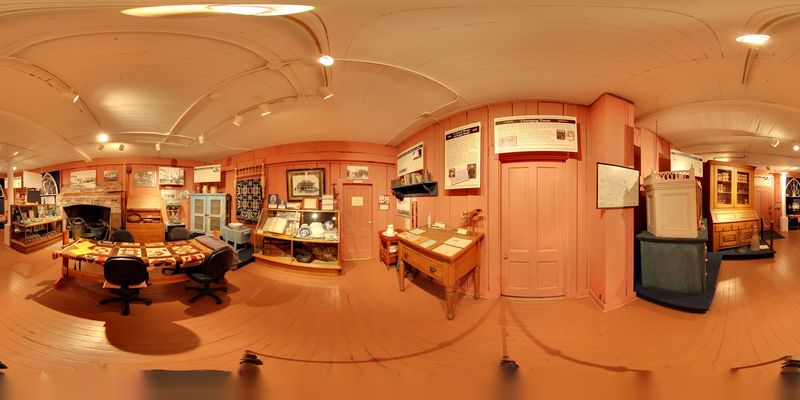
There is a music box inside the museum that visitors consistently mention as one of the most memorable things in the entire collection. I understand why the moment I saw it.
The craftsmanship is extraordinary. It looks like something from a dream.
The mechanism inside is visible and complex. Tiny metal components work together to produce sound in a way that feels almost magical when you think about the era it came from.
No electricity. No digital components.
Just precise engineering and patient hands.
Seeing it up close gives you a sense of how much skill and artistry went into everyday objects during the colony period. Entertainment was handmade.
Music required real craftsmanship to produce and own. The music box serves as a reminder that beauty was not reserved for the wealthy even in hard-working pioneer communities.
Small moments of wonder were built in. This single object made me pause longer than almost anything else in the museum, and I think most visitors feel exactly the same way.
The Knowledgeable Docents Who Bring It All Alive
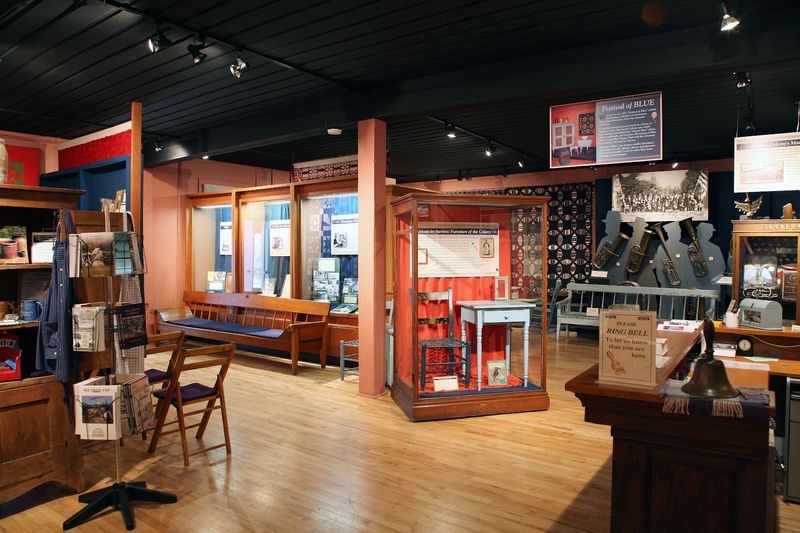
A museum is only as good as the people who guide you through it. The docents at Old Aurora Colony Museum are genuinely exceptional.
They know this history deeply, and more importantly, they love sharing it.
Multiple visitors have noted that they learned something brand new on a second or even third visit. That speaks to the depth of knowledge the staff and volunteers bring to every tour.
They do not just recite facts. They connect the history to real human experiences in ways that land differently depending on who is listening.
For families with kids, the docents are especially skilled at making the past feel relevant and engaging. Field trip groups have had hands-on experiences here, making candles, learning quilt patterns, and hearing stories that stick.
The warmth of the staff is something that comes up again and again in visitor feedback. It is not performative friendliness.
It feels genuine, rooted in real pride for a community and a history worth preserving and passing forward.
Annual Events and the Spinning Wheel Showcase
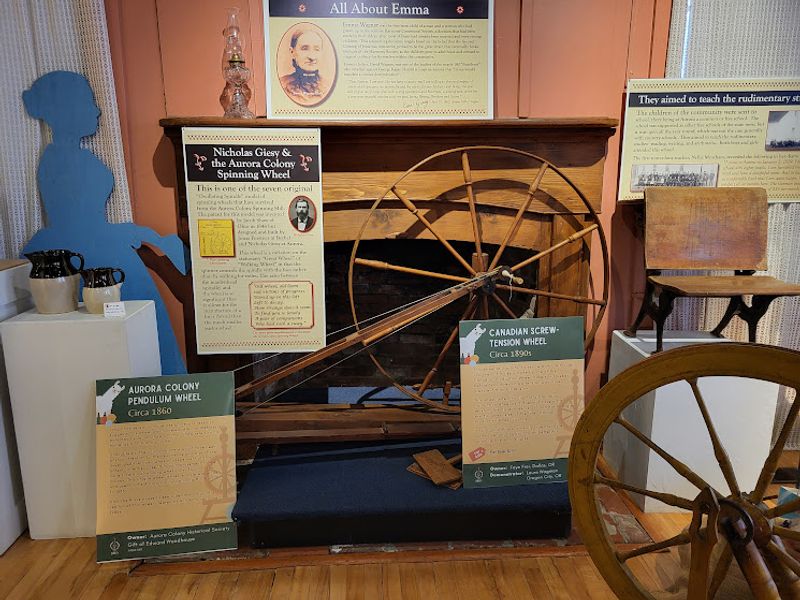
The museum is not just a static collection of old things. It is an active, living cultural space that hosts events throughout the year.
The calendar gives visitors a reason to come back more than once, and many do exactly that.
The Antique Spinning Wheel Showcase happens every first weekend of March. It draws fiber arts enthusiasts from across the region.
Watching skilled spinners work with historic equipment in a historic setting creates an atmosphere that feels genuinely transportive.
Other events rotate through the year and reflect the broader creative and cultural traditions of the Aurora Colony. Checking the museum website before your visit is a smart move.
You might time your trip to coincide with something special. Even on a quiet weekday with no scheduled events, the museum has plenty to offer.
But arriving during an event adds a layer of energy and community that transforms the experience entirely. Aurora has a habit of surprising visitors with how much life a small historic town can hold.
Aurora Town and the Walking Tour Beyond the Museum
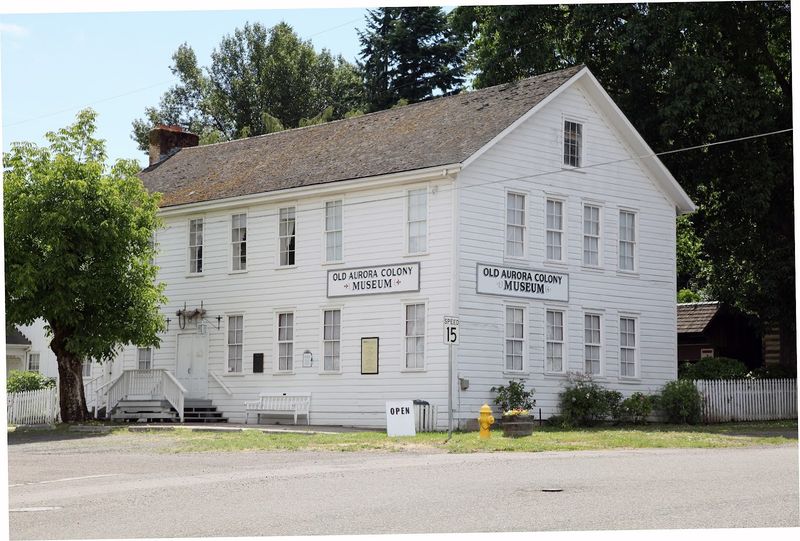
The museum is a perfect starting point, but Aurora itself rewards a longer look. The town surrounding it is full of preserved buildings that once belonged to colony families.
Many are still standing, still occupied, still part of daily life here.
A suggested walking tour map is available at the museum. It guides you past colony-era homes and landmarks that you might otherwise miss entirely.
Following it feels a little like reading the town as a living document of its own history.
Antique shops and local stores line the main street. Aurora Mills is one spot worth slowing down for, full of salvaged architectural pieces and unexpected finds from earlier eras.
The whole town has a relaxed, unhurried pace that makes it easy to spend a full afternoon here without feeling rushed. After all the history inside the museum, stepping out into the streets of Aurora and seeing that history still standing and breathing around you is a feeling that is hard to replicate anywhere else in Oregon.
Address: 15018 2nd St NE, Aurora, OR 97002
