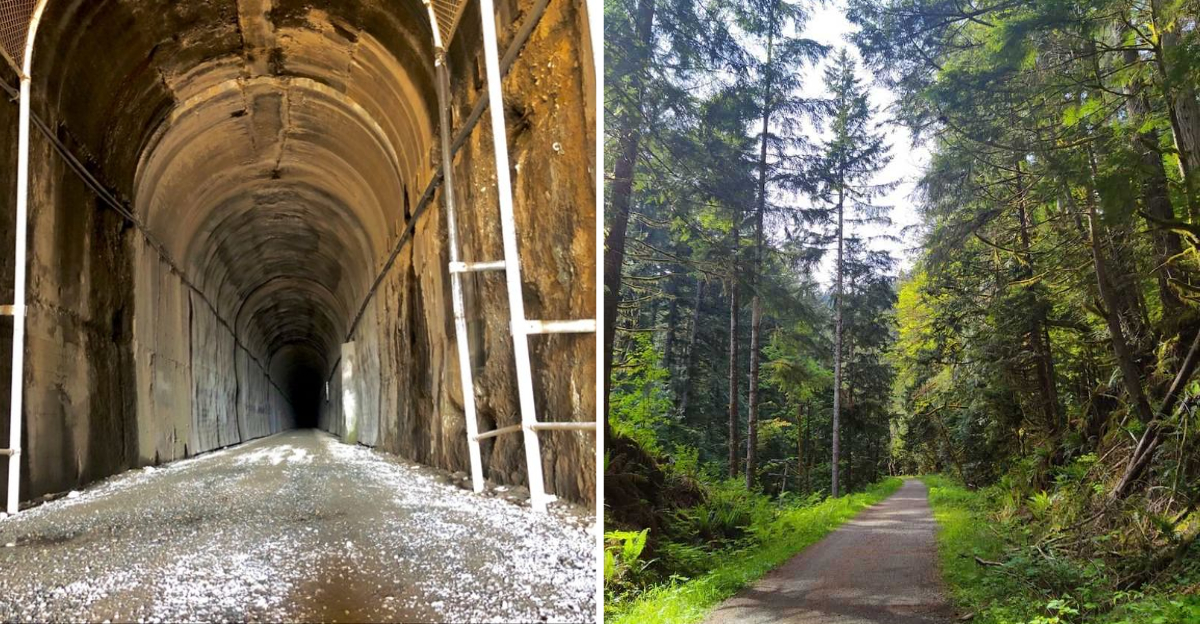
here is something almost surreal about hiking through the dense forests of Washington State and suddenly coming face to face with the mouth of a massive, pitch-black tunnel carved straight through the Cascade Mountains. The Snoqualmie Tunnel sits quietly along the John Wayne Pioneer Trail, and the moment it appears between the trees, it feels like the landscape has opened a secret passage.
Its scale alone is enough to stop you for a second look, a dark void stretching into stone where daylight quickly disappears. Step closer and the air changes immediately, cool and heavy, carrying that unmistakable shift that signals you are leaving the open world behind.
Inside the tunnel, sound softens, footsteps echo, and the beam of a flashlight becomes your only guide through a corridor that seems to swallow light whole. Far ahead, a tiny glow marks the opposite end, distant enough to feel almost unreachable.
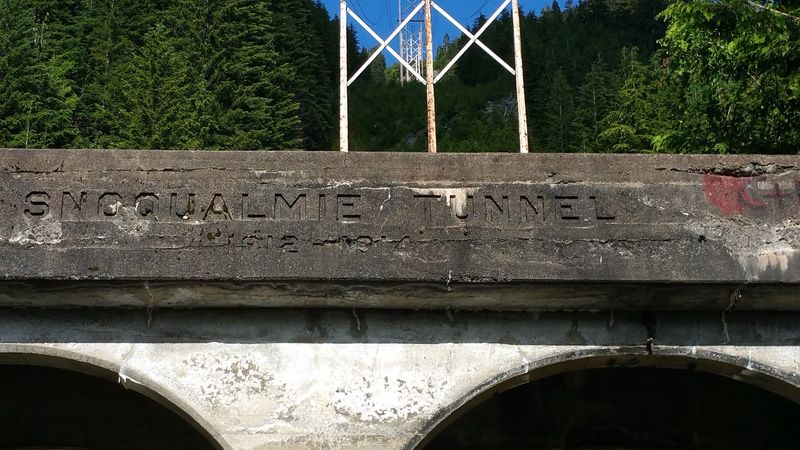
Built in 1914 as part of a transcontinental railroad route, the tunnel once carried the roar of freight trains through solid mountain rock. Today, it offers a very different kind of passage, one shaped by curiosity rather than steel wheels and momentum.
Every step through it feels like moving through a suspended moment in history, where forest, stone, and silence meet in the middle of the Cascades.
The History Behind the Tunnel
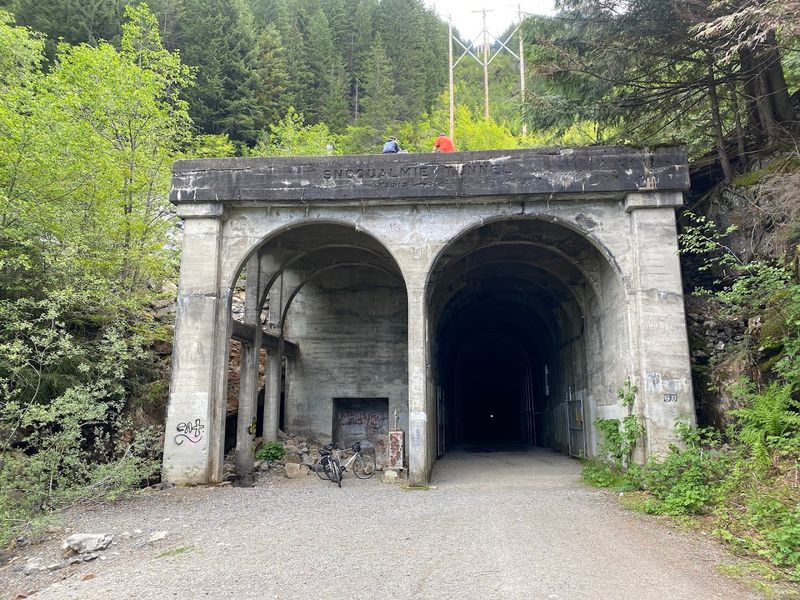
Few tunnels in the American West carry as much railroad history packed into one dark corridor as this one does. The Snoqualmie Tunnel was completed in 1914 as a critical link in the Chicago, Milwaukee, St. Paul and Pacific Railroad’s Pacific Extension, a bold engineering project designed to connect the Midwest to the Pacific Coast by rail.
At roughly 2.3 miles long, it was one of the longest railroad tunnels in the United States when it opened. Blasting and boring through the granite heart of the Cascades was no small feat, and the project demanded enormous resources, skilled labor, and relentless determination.
Trains hauled everything through here, from timber to coal to passengers bound for Seattle. The railroad eventually ceased operations in the 1980s, and the tunnel sat quietly in the dark, waiting.
Washington State stepped in during the 1990s and incorporated the tunnel into Iron Horse State Park, preserving it as part of the John Wayne Pioneer Trail. That decision transformed an industrial relic into something the public could actually experience.
The history here is not just on a plaque.
You feel it in the cold stone walls and the silence that presses in from every direction.
The Hike to Get There
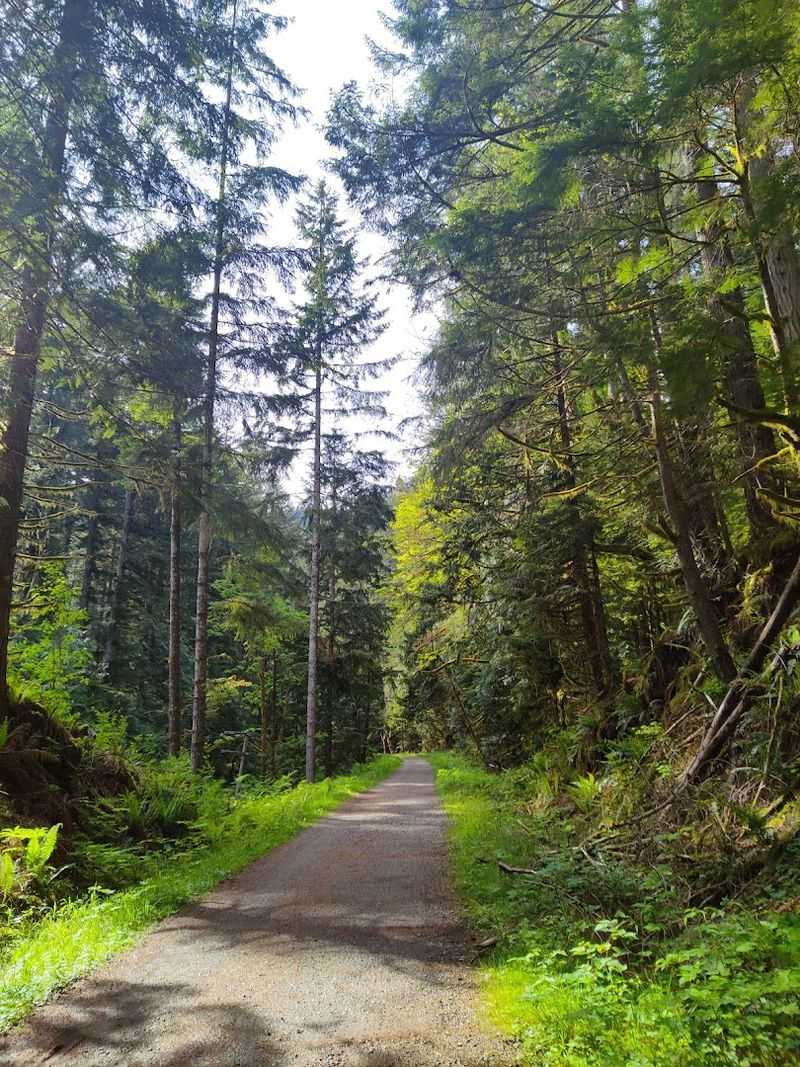
Getting to the Snoqualmie Tunnel is honestly half the fun. The most popular access point is the Iron Horse State Park trailhead near Snoqualmie Pass, and from there the trail stretches about 4.5 miles one way before you reach the eastern tunnel entrance.
The path follows the old railroad grade, which means it is remarkably flat and wide. That makes it accessible for a wide range of hikers, including families with older kids and casual walkers who do not want a strenuous climb.
The scenery along the way is classic Pacific Northwest, all towering conifers, mountain views, and the kind of crisp air that makes you feel genuinely alive.
Because the trail is a converted rail bed, there are no steep switchbacks or technical sections to navigate. You just walk, breathe, and take it all in at whatever pace feels right.
The approach builds a slow sense of anticipation, and by the time the tunnel entrance comes into view, you have already had a solid outdoor experience even before stepping inside.
Round trip puts you at about nine miles total, so comfortable footwear and a decent pair of hiking boots make a real difference on this one.
Stepping Inside the Darkness
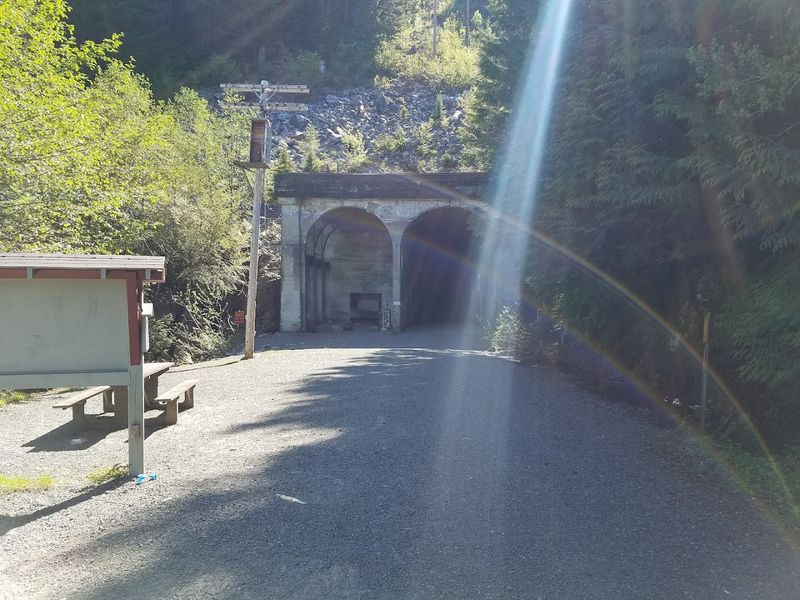
Nothing quite prepares you for that first step into the Snoqualmie Tunnel. One moment you are in daylight surrounded by trees and birdsong, and the next you are swallowed by a darkness so complete it feels almost physical.
The temperature drops noticeably, hovering around 34 to 38 degrees Fahrenheit even during summer months.
The floor is uneven in places, with puddles and dripping water adding to the sensory experience. Your flashlight beam only cuts so far into the dark before the tunnel just seems to absorb the light entirely.
That pinprick of exit light on the far end becomes your anchor point, and you find yourself staring at it more than you expect.
Sound behaves strangely in here too. Footsteps echo in odd ways, and water dripping from the ceiling creates a rhythm that sounds almost intentional.
I kept glancing back at the entrance light shrinking behind me, which added a quiet thrill I had not anticipated. The tunnel is about 2.3 miles long, so the walk through takes a good chunk of time.
Every step deeper in feels like the outside world is getting further and further away, and honestly, that is kind of the whole point.
The Eerie Legends and Local Stories
Every great abandoned place has its stories, and the Snoqualmie Tunnel has collected more than its share over the decades. Hikers have described feelings of unease that seem to come out of nowhere, a sudden sense that something is watching from the darkness beyond the reach of their lights.
Some visitors report hearing sounds that do not match the footsteps of their group, faint echoes, distant thuds, or odd scraping noises that drift from deeper in the tunnel. Whether those have rational explanations tied to the structure of the tunnel itself or something else entirely depends on who you ask.
The acoustics alone are strange enough to spark the imagination.
Local lore has grown around the tunnel over the years, with stories passed between hikers at trailheads and shared on hiking forums. No verified accounts or documented paranormal investigations have confirmed anything supernatural, but the stories keep circulating anyway.
What makes the Snoqualmie Tunnel genuinely unsettling is not any single legend. It is the combination of total darkness, freezing temperatures, strange sounds, and the knowledge that you are walking through a mountain with two miles of solid rock above your head.
That alone is enough to make even the most rational hiker pick up the pace a little.
What to Bring and How to Prepare
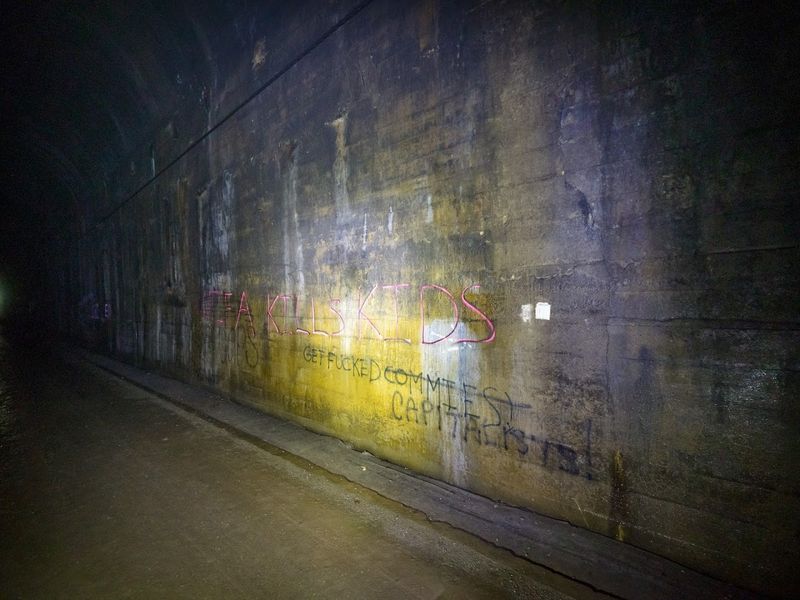
Preparation makes an enormous difference on this particular hike. The tunnel is completely unlit, so a powerful headlamp or flashlight is not optional.
Bring a backup light source too, because losing your light inside a 2.3-mile pitch-black tunnel is not an experience anyone wants to have.
Warm layers are essential even in summer. That 34-degree tunnel air will cut right through a light jacket, and you will be inside long enough to feel genuinely cold if you are not dressed for it.
Waterproof shoes or boots are also a smart call since the tunnel floor has standing water and mud in several sections throughout the year.
Trekking poles help with stability on the uneven floor, especially near puddles where the ground can be slippery. Carry enough water for the full round trip, roughly nine miles total, and pack a snack since the trail length makes this more of a half-day commitment than a quick outing.
Cell service is unreliable or nonexistent in the area, so downloading an offline map before you leave is a practical move. Tell someone where you are going and when you expect to be back.
The tunnel is open seasonally, typically from late spring through early fall, so checking Iron Horse State Park’s current access schedule before your visit saves potential disappointment.
The View from the Other Side
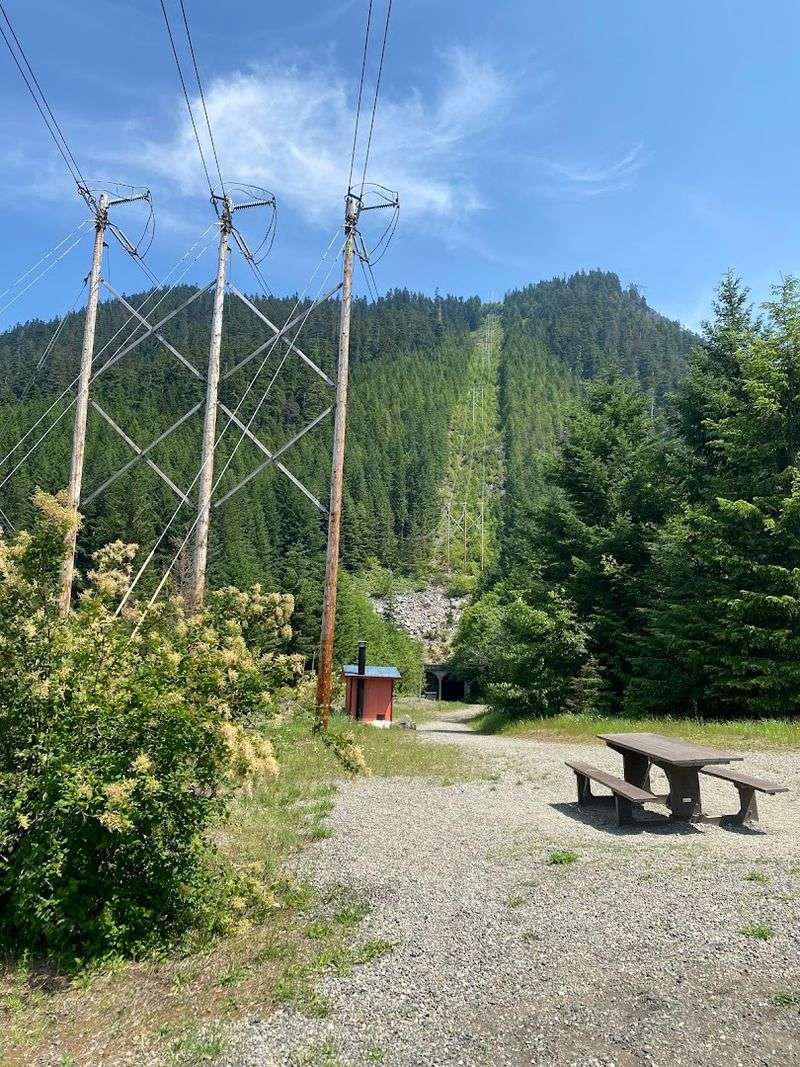
Reaching the far end of the Snoqualmie Tunnel feels like surfacing after a long dive underwater. That small circle of light you have been watching for nearly 2.3 miles suddenly grows into a full frame of daylight, and stepping back into open air brings a rush of warmth and relief that is genuinely satisfying.
The western portal opens onto a different stretch of the John Wayne Pioneer Trail, and the landscape here offers its own rewards. The Cascade Mountains spread out around you in a way that feels almost cinematic after spending so much time in the dark.
The contrast between the tunnel’s cold interior and the open mountain air outside is striking in the best possible way.
Many hikers choose to rest here for a few minutes before heading back through. Sitting at the tunnel entrance with a snack and a view of the surrounding ridgelines is one of those quiet travel moments that sticks with you.
Going back through the tunnel on the return leg has its own energy too. Knowing what to expect makes it slightly less unnerving, but the darkness never fully loses its edge.
The second pass through tends to move faster, partly because you know the distance and partly because the warmth of the trailhead is calling you back.
Why This Hike Is Worth Making the Trip
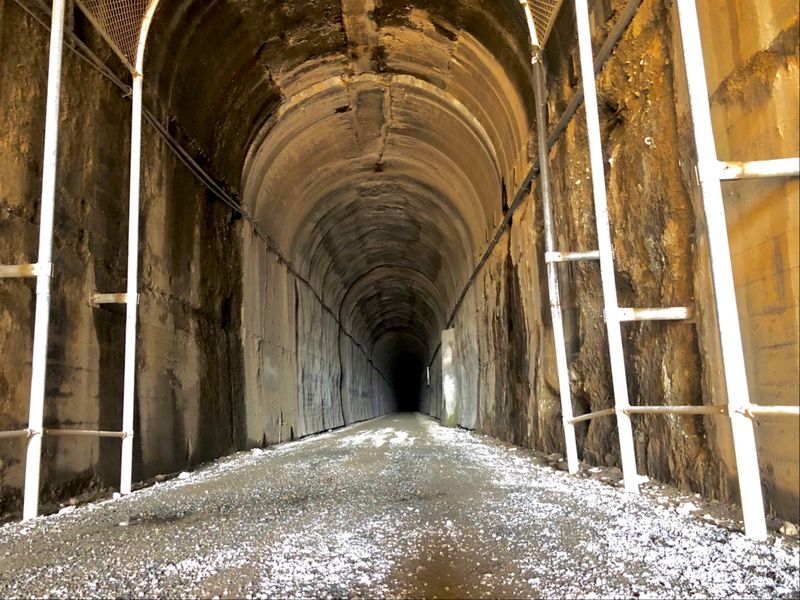
Not every hike needs a summit or a waterfall to justify the drive. The Snoqualmie Tunnel offers something rarer, a genuine sense of discovery layered over real history in a setting that feels completely unlike anything else in the Pacific Northwest hiking scene.
The combination of a pleasant trail through mountain forest, a physically and psychologically unique underground experience, and the context of a century-old railroad story makes this outing memorable in multiple ways at once. It is the kind of place that generates actual conversation afterward, not just photos.
Kids tend to be completely captivated by it, and adults who think they have seen it all usually leave a little surprised by how much the tunnel got under their skin.
The John Wayne Pioneer Trail itself is worth exploring beyond just the tunnel section, offering miles of scenic rail-trail experience through some of Washington’s most beautiful terrain. The Snoqualmie Tunnel sits at the heart of it all, a dark and quiet reminder that the mountains have been shaped by human ambition as much as by nature.
If you are planning a Washington State outdoor trip and want something that goes beyond the typical trail, this one earns its place at the top of the list.
Address: Iron Horse State Park, Snoqualmie Pass, WA 98068
