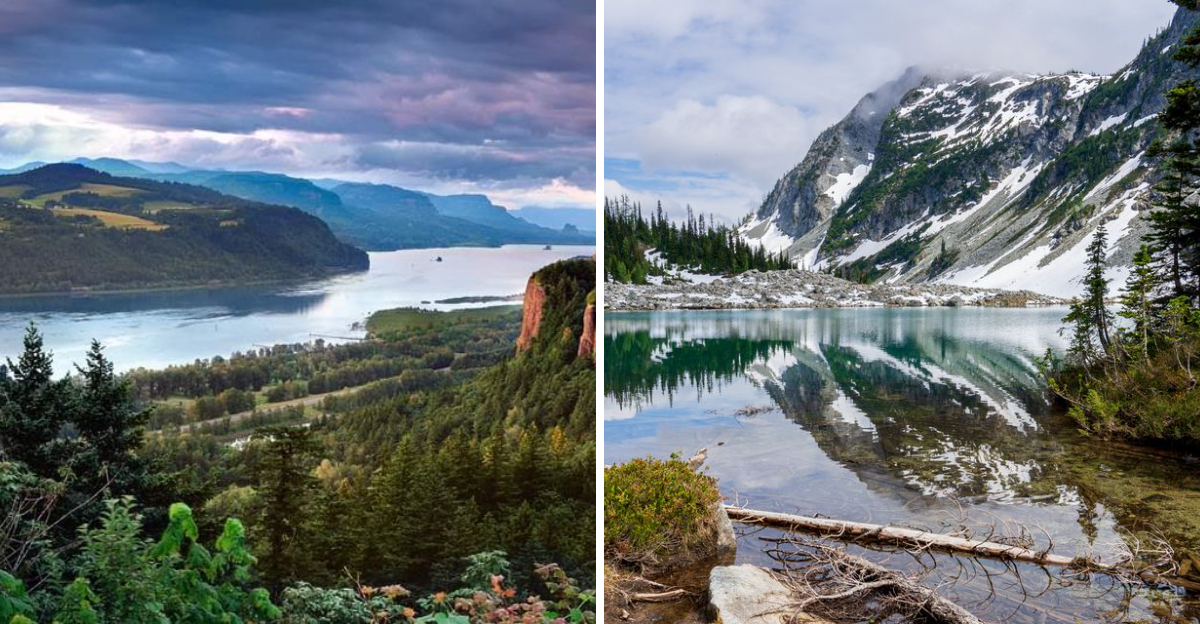
Washington State is a paradise for anyone who loves dramatic landscapes.
Here, towering peaks rise directly from sparkling waters, creating scenes that look like they belong on a postcard.
From glacial lakes nestled in alpine valleys to rugged coastlines where mountains plunge into the Pacific, these stunning intersections offer some of the most breathtaking views in the Pacific Northwest.
Whether you’re hiking through wilderness trails, driving scenic routes, or simply soaking in the natural beauty, these locations showcase the incredible diversity of Washington’s terrain.
Each destination tells its own story of geological forces that shaped the land over millions of years.
You’ll find turquoise waters reflecting snow-capped summits, deep fjords carved by ancient glaciers, and island peaks rising from saltwater channels.
These aren’t just pretty places to visit.
They’re living landscapes where you can witness the powerful connection between earth and water.
Ready to explore where Washington’s mountains and waters come together in spectacular fashion?
Let’s discover ten remarkable areas that perfectly capture this natural harmony.
1. North Cascades National Park
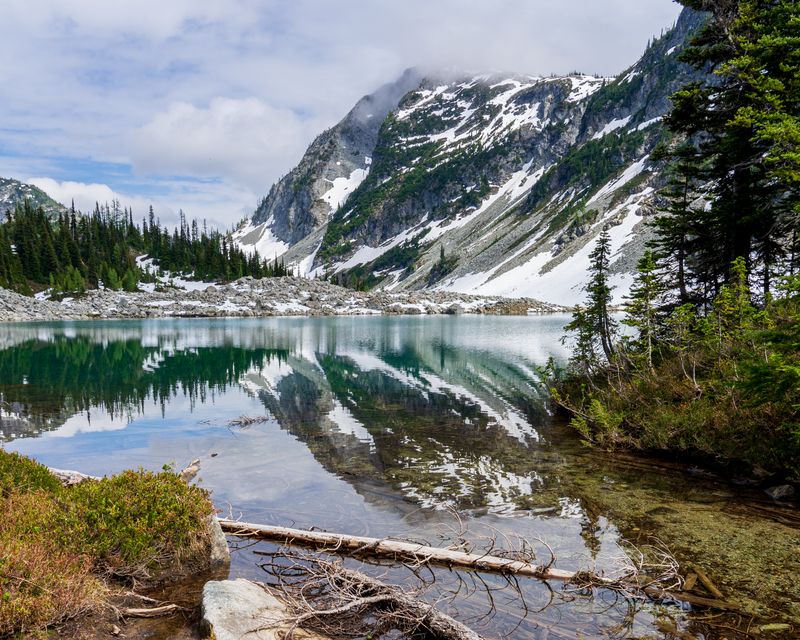
Often called the American Alps, this park delivers mountain drama on an epic scale.
Jagged granite peaks pierce the sky, their sharp ridges creating a skyline that rivals any European range.
Below these towering summits, glacial-fed lakes shimmer in shades of turquoise and emerald that seem almost unnatural in their brilliance.
Diablo Lake stands out as one of the most photographed spots in Washington State, its otherworldly blue-green color caused by glacial flour suspended in the water.
Ross Lake stretches for miles, a narrow reservoir surrounded by wilderness that feels untouched by time.
More than three hundred glaciers still cling to these mountains, slowly carving the landscape just as they have for thousands of years.
The park receives heavy snowfall each winter, keeping those glaciers fed and the summer waters cold and clear.
Hiking trails range from easy lakeside walks to challenging alpine scrambles that reward you with panoramic views.
Wildlife thrives here, from black bears fishing in streams to mountain goats navigating impossible cliffs.
Getting there requires commitment, as the park sits far from major cities, but that remoteness preserves its wild character.
Address: 810 State Route 20, Sedro-Woolley, WA 98284.
This is where mountains and water create pure magic.
2. Olympic National Park
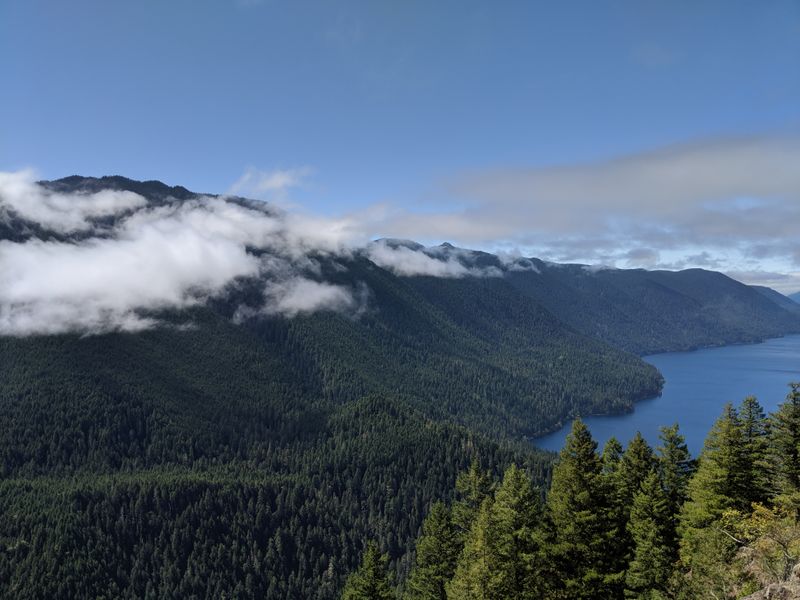
Glaciated summits dropping straight toward the ocean create one of nature’s most dramatic transitions.
Olympic National Park contains an entire mountain range isolated on a peninsula, surrounded by water on three sides.
Lake Crescent ranks among the deepest lakes in the country, its crystal-clear waters plunging to extraordinary depths.
The lake’s remarkable clarity allows you to see far below the surface, where submerged logs rest on the bottom like ghostly sentinels.
Mountains rise abruptly from the shoreline, their slopes covered in ancient temperate rainforest.
Snow-capped peaks visible from the lakeshore create a stunning contrast with the lush green valleys below.
On the western side of the park, those same mountains face the Pacific Ocean, where storm waves crash against rocky beaches.
Alpine meadows burst with wildflowers in summer, while glaciers cling to the highest elevations year-round.
The diversity here is staggering, from coastal tide pools to alpine tundra, all within a single park.
Roosevelt elk wander through the valleys, and harbor seals bob in the coastal waters.
Address: 3002 Mount Angeles Road, Port Angeles, WA 98362.
Few places on Earth pack such variety into one landscape.
3. Deception Pass State Park
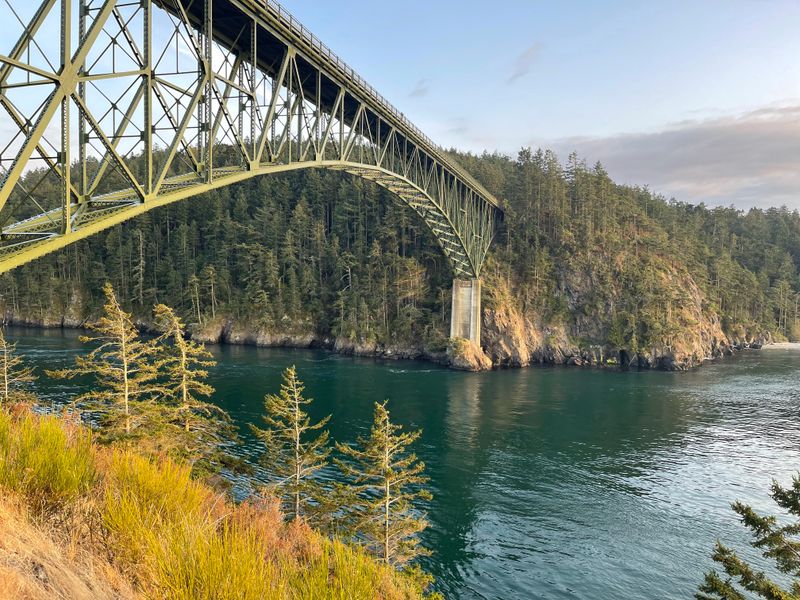
Turbulent currents rush through a narrow channel where mountain foothills meet the inland sea.
Deception Pass connects Puget Sound with the Strait of Juan de Fuca, creating some of the most powerful tidal flows in the region.
Standing on the high bridge that spans the pass, you’ll feel the structure sway slightly as wind and traffic move across it.
Below, whirlpools and standing waves form as billions of gallons of seawater rush through the constricted opening.
Rocky cliffs rise on both sides, covered with twisted shore pines and madrone trees that cling to the steep slopes.
The surrounding landscape shows clear evidence of ancient glacial activity, with rounded hilltops and U-shaped valleys.
Trails wind through old-growth forest and emerge onto clifftop viewpoints where the panorama takes your breath away.
On clear days, you can see the Olympic Mountains to the west and the Cascades to the east, with island-dotted waters stretching in every direction.
Tide pools along the rocky shores teem with sea stars, anemones, and crabs.
Kayakers brave enough to time the currents correctly can paddle through the pass during slack tide.
Address: 41229 State Route 20, Oak Harbor, WA 98277.
This is where geology and oceanography collide spectacularly.
4. Bellingham and Chuckanut Drive
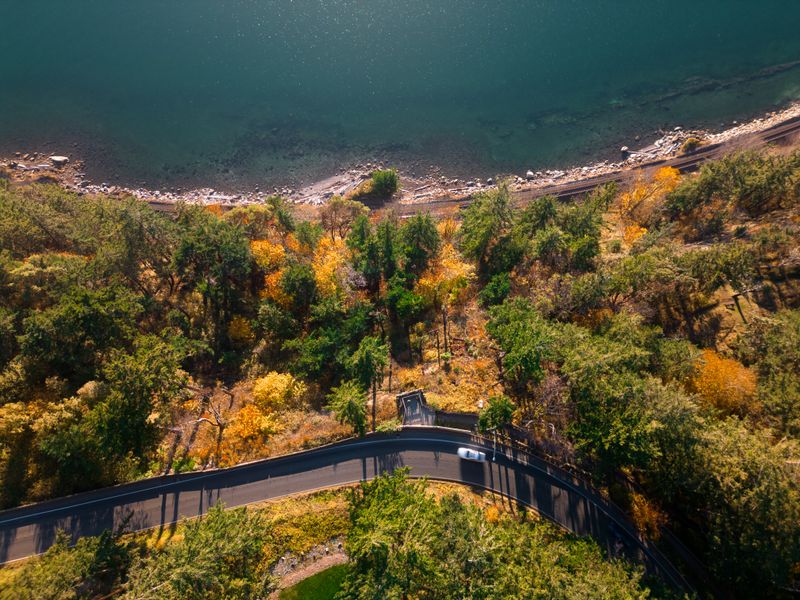
A winding coastal highway climbs through forested foothills where the Cascades meet saltwater.
Chuckanut Drive earned its reputation as one of the most scenic routes in the Pacific Northwest for good reason.
The road hugs steep hillsides high above Puget Sound, offering sweeping views across island-studded waters.
On one side, dense forest climbs toward mountain peaks that catch the first snow of autumn.
On the other, cliffs drop away to rocky beaches and tide flats where herons hunt for fish.
Pull-offs along the route provide perfect spots to stop and absorb the scenery without rushing.
The San Juan Islands appear as dark silhouettes on the horizon, with Mount Baker’s white cone dominating the eastern skyline.
Local oyster farms dot the shoreline below, taking advantage of the cold, clean waters.
Bellingham itself sits at the base of these foothills, a vibrant city with easy access to both mountain and marine environments.
From downtown, you can see glaciated peaks in one direction and saltwater bays in the other.
The combination of elevation and coastal location creates microclimates that support incredible biodiversity.
Address: Chuckanut Drive, Bellingham, WA 98229.
Every curve in the road reveals another postcard-perfect scene.
5. Mount Rainier National Park
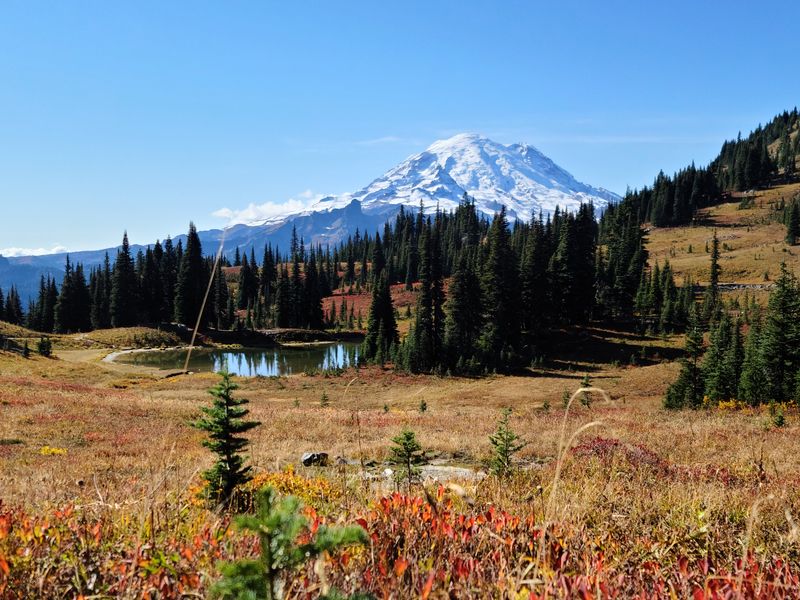
The highest peak in the Cascades dominates the landscape, its massive bulk visible from hundreds of miles away.
Mount Rainier rises more than two vertical miles above the surrounding terrain, a dormant volcano wrapped in glacial ice.
Twenty-five major glaciers flow down its slopes, feeding countless streams, rivers, and alpine lakes.
Reflection Lake lives up to its name on calm days, creating mirror-perfect images of the mountain’s summit.
Photographers gather here at dawn and dusk, hoping to capture that flawless reflection.
Mowich Lake sits at a higher elevation, its pristine waters surrounded by subalpine meadows that explode with wildflowers in late summer.
The glacial milk in many of these lakes gives them a milky turquoise color that contrasts beautifully with the surrounding evergreen forest.
Hiking trails circle the mountain, passing dozens of lakes and tarns carved by ancient ice.
Each body of water has its own character, from shallow ponds filled with lily pads to deep cirque lakes nestled in rocky bowls.
The mountain creates its own weather, often wearing a lenticular cloud cap even when surrounding areas enjoy clear skies.
Address: 39000 State Route 706 East, Ashford, WA 98304.
No visit to Washington State feels complete without witnessing this iconic peak.
6. Columbia River Gorge
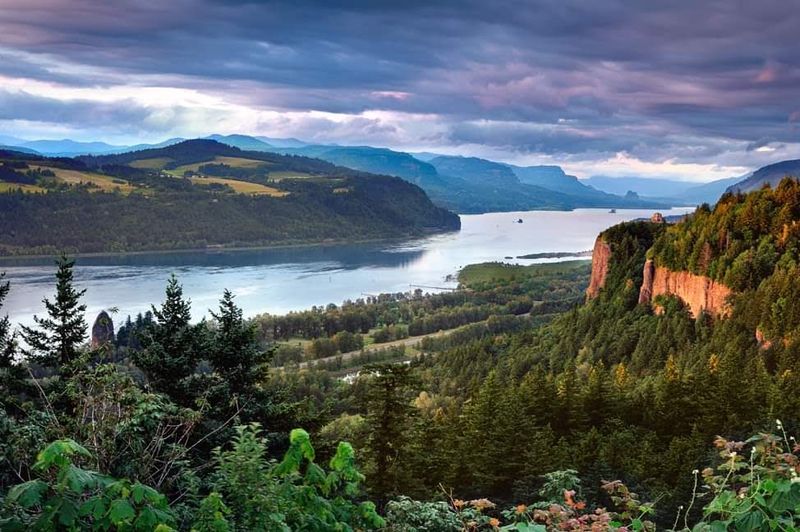
A mighty river carved a canyon straight through a mountain range, creating one of the continent’s most spectacular gorges.
The Columbia River maintained its course even as the Cascade Range rose around it, cutting deeper into the rock over millions of years.
Today, sheer cliffs rise thousands of feet on both sides of the wide river, their layered basalt faces revealing the region’s volcanic history.
Waterfalls cascade down these cliffs in incredible numbers, making this area the waterfall capital of North America.
Some plunge in single drops, while others tumble down multiple tiers through moss-covered grottos.
The gorge creates a natural wind tunnel, funneling powerful winds through the gap between mountains.
These reliable winds make the area famous among windsurfers and kiteboard enthusiasts who flock here year-round.
Hiking trails climb from river level to clifftop viewpoints, offering perspectives that change dramatically with elevation.
Spring brings wildflower blooms to the sunny south-facing slopes, while the north-facing cliffs stay green and mossy.
The river itself serves as a major transportation corridor, with barges and ships navigating between the towering walls.
Address: Columbia River Gorge National Scenic Area, Cascade Locks, WA 98610.
Where else can you see mountains and a major river in such dramatic interaction?
7. Lake Chelan
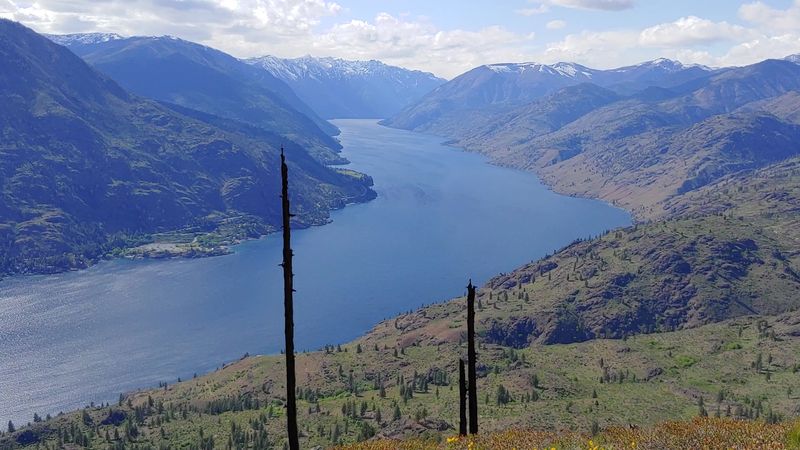
Imagine a narrow lake stretching for fifty miles into increasingly wild mountain country.
Lake Chelan fills a deep glacial valley, its floor lying far below sea level despite the lake’s surface sitting at an elevation above it.
The southern end features a resort town with beaches and marinas, but as you travel north, civilization fades away.
Steep mountains rise directly from the water’s edge, their slopes too precipitous for road construction.
The northern reaches remain accessible only by boat or floatplane, preserving a sense of frontier wilderness.
Snow-capped peaks tower above the deep blue water, creating a fjord-like atmosphere more commonly associated with Norway or Alaska.
The lake’s depth and volume moderate the local climate, creating a surprisingly warm microclimate at the southern end.
Orchards and vineyards thrive here, an unexpected sight given the rugged mountains looming overhead.
Boaters can spend days exploring remote coves and beaches that see few visitors.
The water stays remarkably clear, allowing you to see deep below the surface in many areas.
Sunset paints the surrounding peaks in shades of pink and gold, reflected in the calm evening water.
Address: Lake Chelan, Chelan, WA 98816.
This is Washington’s longest lake and one of its most stunning.
8. Hood Canal
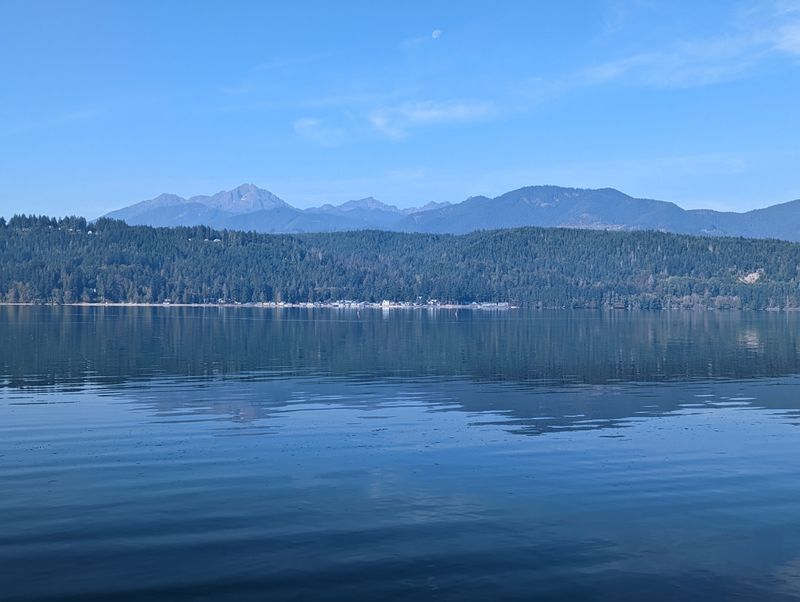
A natural saltwater fjord separates a peninsula from a mountain range, creating a unique geological feature.
Hood Canal isn’t actually a canal at all but rather a long, narrow arm of Puget Sound.
It formed when glaciers carved a deep trench parallel to the Olympic Mountains, which later filled with seawater.
The Olympic range rises dramatically from the western shore, with peaks climbing to impressive heights in just a few miles.
From waterfront communities along the canal, you can watch the sun set behind snow-covered summits reflected in the calm water.
The depth of the canal creates excellent habitat for marine life, including salmon, octopus, and diverse shellfish populations.
Small towns dot the shoreline, many originally established as logging and fishing communities.
The Great Bend section hooks sharply, creating a distinctive shape visible on any map.
A floating bridge crosses the canal at its narrowest point, connecting the Kitsap and Olympic Peninsulas.
Kayakers love paddling these protected waters, with mountain views providing constant companionship.
The combination of saltwater and alpine scenery creates an environment found in few other places.
Address: Hood Canal, Union, WA 98592.
Watching mountains rise from the sea never gets old here.
9. Snoqualmie Pass and Alpine Lakes Wilderness
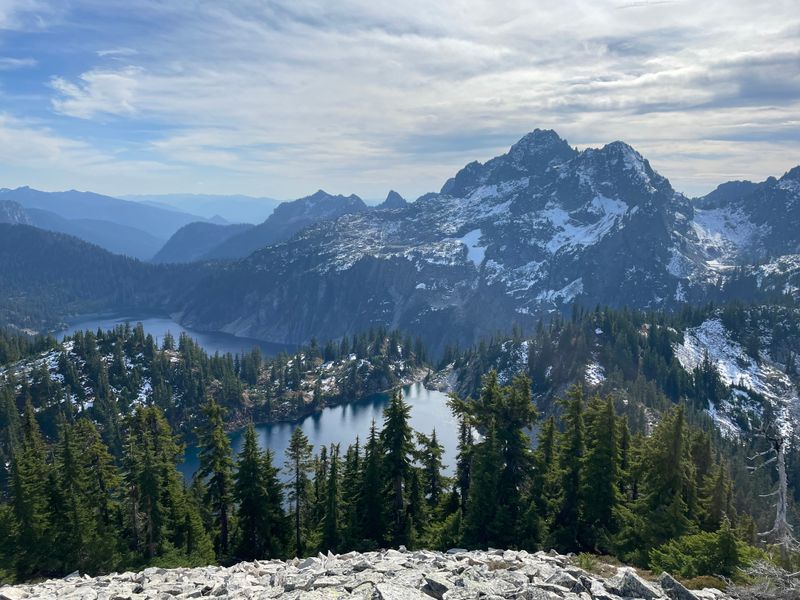
Hundreds of mountain lakes dot a wilderness area accessible from a major highway pass.
Snoqualmie Pass sits at the crest of the Cascades, where Interstate 90 crosses the mountain range.
Just beyond the highway corridor lies one of Washington State’s premier wilderness areas, home to more than seven hundred alpine and subalpine lakes.
Glaciers carved these basins thousands of years ago, leaving them perched in high valleys and hanging cirques.
Snow Lake ranks among the most popular destinations, a turquoise gem surrounded by rocky peaks and meadows.
Colchuck Lake sits beneath dramatic granite spires that attract rock climbers from around the world.
Many lakes remain frozen until midsummer, their surfaces cracking and melting as temperatures rise.
The terrain here is classic alpine wilderness, with granite outcrops, stunted trees, and patches of persistent snow.
Hikers need to be prepared for rapidly changing weather, as storms can roll in quickly at these elevations.
The wilderness designation means no motorized vehicles, preserving the area’s pristine character.
Mountain goats navigate the rocky slopes, perfectly adapted to this harsh environment.
Address: Snoqualmie Pass, WA 98068.
Each lake offers its own rewards for those willing to make the hike.
10. San Juan Islands
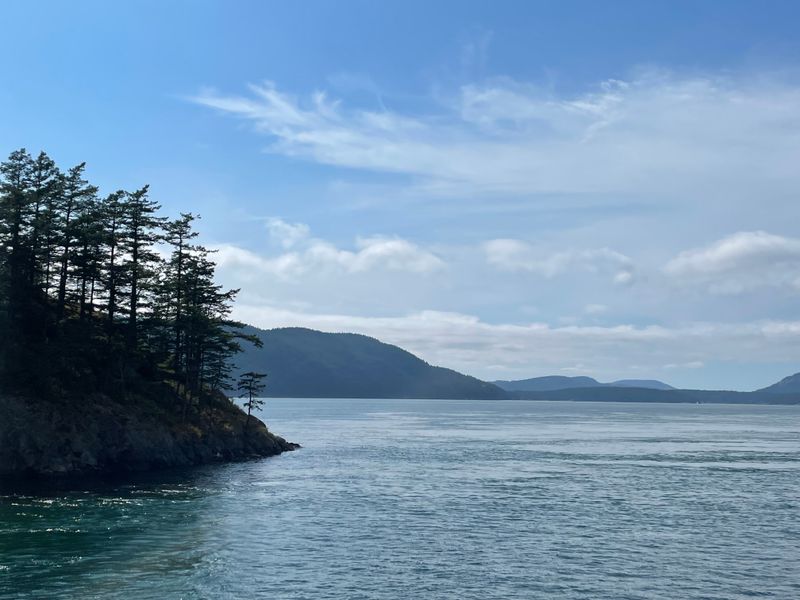
An archipelago of mountainous islands rises from the inland sea, each peak offering views across island-dotted waters.
The San Juan Islands number in the hundreds, depending on what you count as an island versus a rock.
Orcas Island claims the highest point, where Mount Constitution provides three-hundred-sixty-degree panoramas.
From the stone observation tower at the summit, you can see the Olympic Mountains, the Cascades, Canadian peaks, and countless islands spreading in every direction.
The islands themselves are the exposed peaks of a submerged mountain range, with most of their mass hidden beneath the waves.
Rocky coastlines alternate with sheltered bays and sandy beaches, creating diverse shoreline habitats.
Orca whales cruise through the channels between islands, hunting for salmon in the cold, nutrient-rich waters.
Bald eagles nest in the tall trees, and harbor seals haul out on rocky outcrops.
The islands’ maritime climate stays mild year-round, with less rain than the mainland and more sunshine.
Ferries connect the major islands, providing a scenic journey across the sparkling strait.
Each island has its own character, from artistic communities to agricultural heritage.
Address: Mount Constitution, Olga, WA 98279.
Standing atop an island mountain surrounded by saltwater creates an unforgettable perspective.
Dear Reader: This page may contain affiliate links which may earn a commission if you click through and make a purchase. Our independent journalism is not influenced by any advertiser or commercial initiative unless it is clearly marked as sponsored content. As travel products change, please be sure to reconfirm all details and stay up to date with current events to ensure a safe and successful trip.
