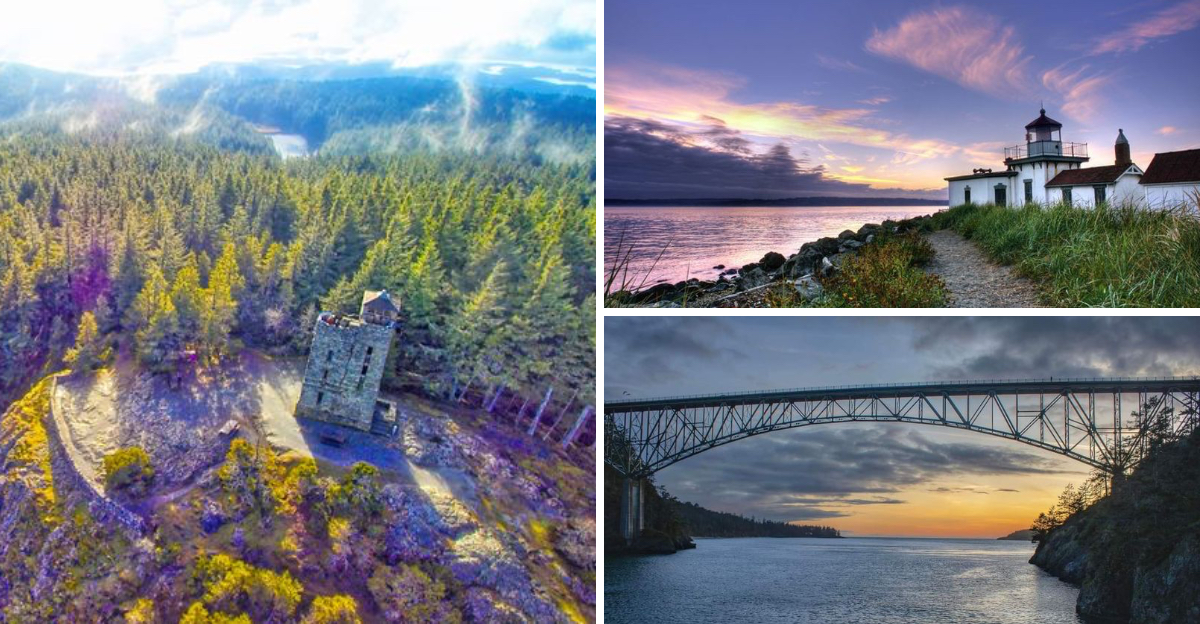
Washington State’s varied landscapes, from ocean shores and mountain ridges to river valleys and urban waterfronts, make it a strong setting for memorable sunsets.
The light shifts differently across the Puget Sound, the Cascades, and the high desert of Eastern Washington, offering a wide range of evening views.
For travelers and locals alike, certain spots consistently provide settings where the sunset becomes the day’s highlight.
This guide points to places in Washington where sunsets take center stage, each offering a different way to experience the state’s natural beauty.
1. Kerry Park (Seattle)
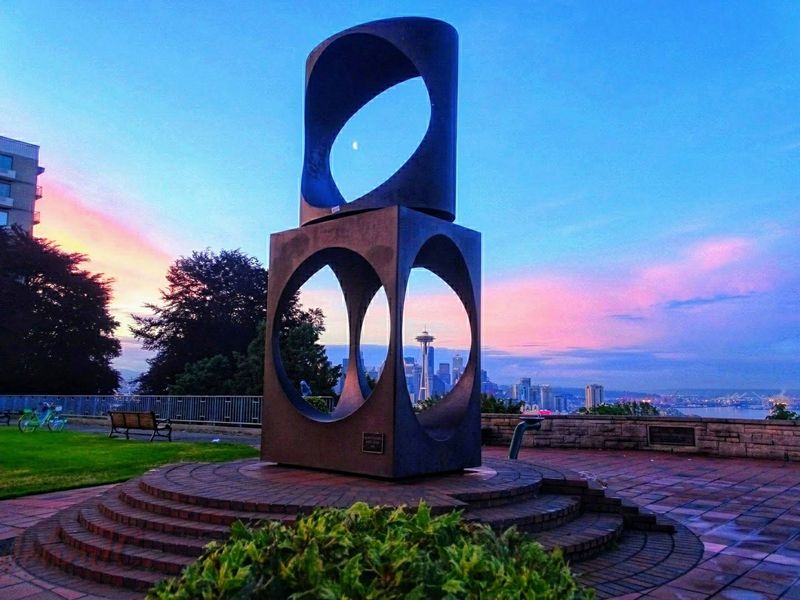
For many Seattleites, Kerry Park is the city’s go-to sunset lookout.
The park’s modest size belies its sweeping perspective: here, the Space Needle aligns perfectly with the downtown skyline, and on clear days, Mount Rainier looms in the distance.
Arrive before sunset to secure a spot along the railing, especially in summer when crowds gather for that famous cityscape glow.
Photographers favor this spot for its changing light, which can turn glass towers to gold and frame the mountain in pastel shades.
While the skyline is the star, the real charm comes from being part of the evening ritual.
Locals on evening strolls, visitors setting up tripods, and the city winding down.
As daylight fades, the scene feels both communal and peaceful, whether or not the mountain shows up.
The view never disappoints, even in less-than-perfect weather, as city lights flicker on and colors shift above the bay.
It’s the kind of place where you linger a little longer, always hoping for that last, unexpected splash of color before night settles in.
Located at 211 W Highland Dr, Seattle, WA 98119, this small park packs a powerful punch.
Street parking can be competitive during peak hours, so plan accordingly.
The surrounding Queen Anne neighborhood adds to the charm with its historic homes and tree-lined streets.
Even on cooler evenings, visitors bundle up and stake their claim to witness the daily transformation.
Some bring blankets and thermoses, turning sunset watching into a cherished routine.
The elevation provides just enough height to see over the buildings while keeping you grounded in the urban fabric.
Whether you’re a first-time visitor or a seasoned local, each sunset here writes its own story across the sky.
2. Ruby Beach (Olympic Peninsula)
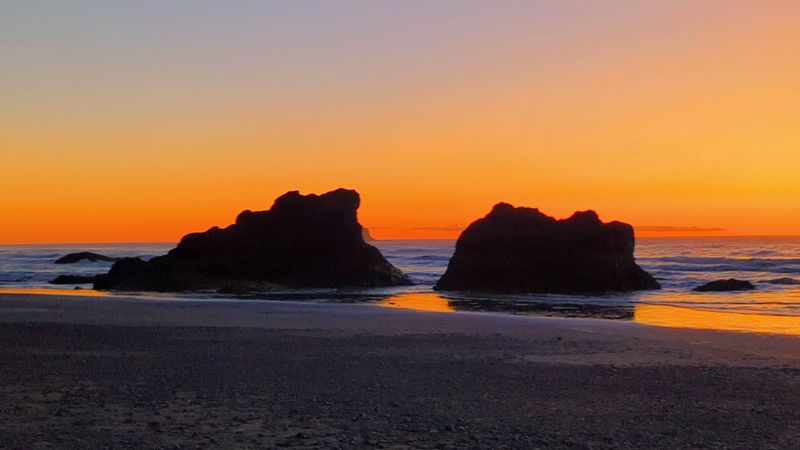
Standing on Ruby Beach as the sun drops toward the Pacific feels like watching the world’s slowest, most dramatic play.
The scattered sea stacks and tangle of driftwood set the stage for silhouettes you can’t find anywhere else in Washington.
Photographers often rush to capture the moment low tide reveals reflective pools, turning the beach into a mirror for the sky.
On some evenings, the clouds catch fire with color, casting a glow that bounces between the surf and sand.
Nature’s soundtrack here, waves, seabirds, the distant rush of wind, adds to the experience.
Even on gray days, the textures of the landscape stand out, making each evening a little different.
Ruby Beach rewards those willing to linger after the sun dips, as the colors shift and linger on the horizon.
This spot’s wild mood and open space offer a refreshing contrast to busy city parks.
Located along Highway 101, roughly 27 miles south of Forks, the beach is part of Olympic National Park.
A short trail from the parking area leads down to the shore, manageable for most visitors.
The name comes from the reddish crystals found in the sand, though you’ll be too busy watching the sky to hunt for them at sunset.
Tide pools teem with marine life during daylight, but evening brings a quieter magic.
The Olympic Peninsula’s rugged coastline makes this beach feel wonderfully isolated.
Wind can pick up quickly, so layering clothes is wise.
After the sun disappears, twilight lingers, painting the horizon in softer purples and blues that feel almost otherworldly.
3. Deception Pass Bridge (Whidbey Island)
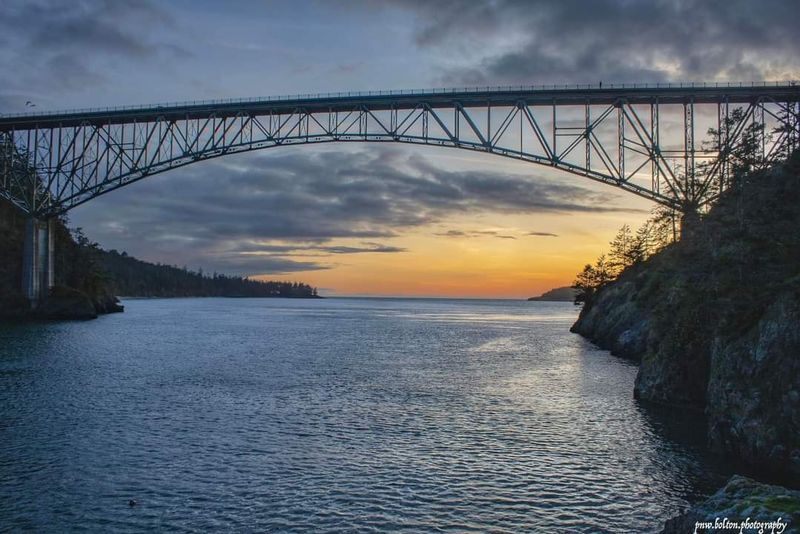
Not every sunset comes with a rush of wind and the dizzying height of Deception Pass Bridge.
Here, standing above churning water and jagged cliffs, you get a perspective that feels both exhilarating and humbling.
The bridge connects Whidbey and Fidalgo Islands, and the light over the pass shifts quickly, bouncing off forested bluffs and the water below.
It’s common to spot boaters drifting beneath as the last sunlight glimmers across the current.
Local lore adds a layer of intrigue, with stories of the area’s history in navigation and native use.
Some visitors simply park and stroll the bridge, while others hike nearby trails for a different vantage.
Either way, the interplay of rock, water, and sky makes this a must-see for sunset seekers.
Despite the popularity, the scene remains unpredictable, changing with each season and tide.
The bridge itself, completed in the 1930s, spans 976 feet and rises 180 feet above the water.
Its steel arches frame the sunset beautifully, adding an architectural element to the natural drama.
Address: State Route 20, Oak Harbor, WA 98277, with parking available on both sides of the bridge.
Walking paths allow you to pause midspan and take in the full sweep of the pass.
The roar of the water below mixes with the hum of traffic, creating a unique sensory experience.
Sunset here can feel almost cinematic, especially when fog rolls through the pass or when storm clouds break apart just as the sun descends.
Bring a jacket, the wind funnels through with surprising force.
4. Rattlesnake Ledge (North Bend)
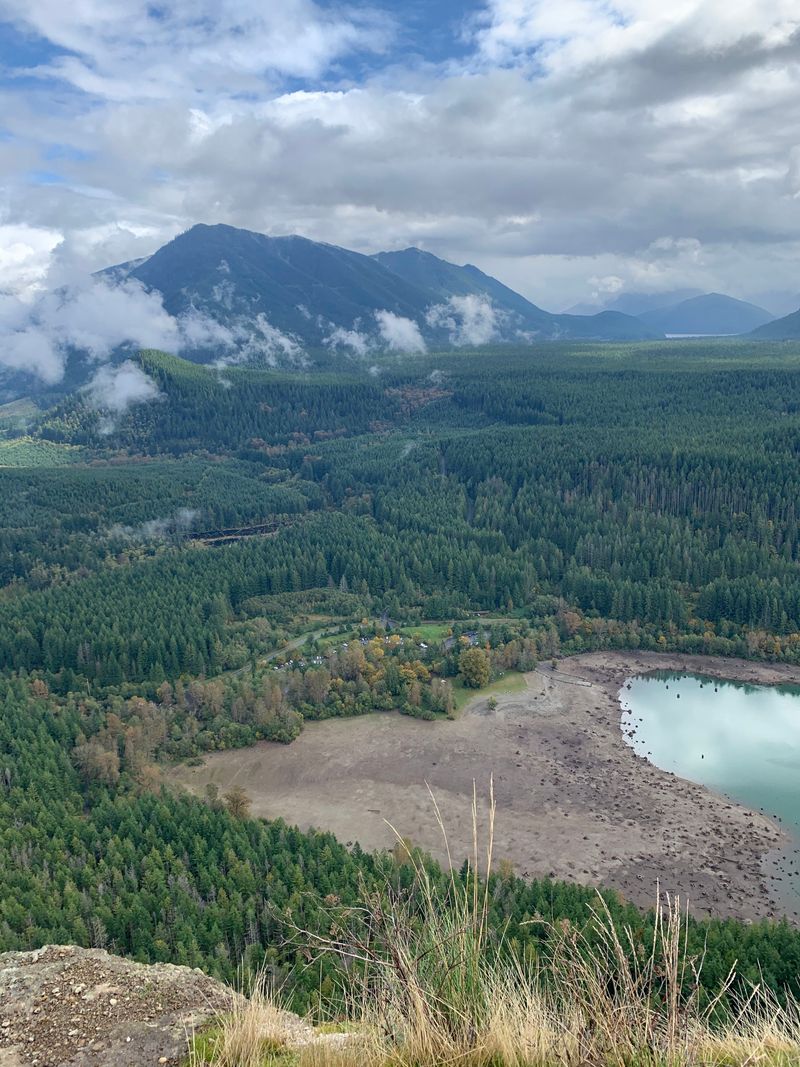
At the top of Rattlesnake Ledge, the effort of the hike pays off with an expansive sunset view that feels far from city life.
This is the kind of spot where you catch your breath, partly from the climb, partly from the scenery stretching out below.
As the sun lowers, colors sweep across mountain ridges and spill into the valley, turning the forest into a patchwork of shadow and light.
Rattlesnake Lake glitters at your feet, catching the last rays in a way that changes with the season.
Evenings bring a sense of quiet accomplishment among fellow hikers, who often share snacks or stories as the day winds down.
The shifting light can surprise you with unexpected hues, sometimes even after you think the show is over.
The trail is managed by Washington State DNR, and it’s one of the busiest hikes near Seattle, so parking can fill quickly, but the payoff is worth the effort.
It’s a classic Washington experience: a trail, a view, and a sky worth every step to the top.
The trailhead is located at Rattlesnake Lake Trailhead, 33855 SE 87th St, Snoqualmie, WA 98065.
Roughly four miles round trip with about 1,160 feet of elevation gain, the hike is moderately challenging but accessible to most.
Switchbacks lead upward through dense forest before opening to the ledge’s dramatic overlook.
On weekends, expect company, but the ledge is spacious enough that everyone finds their own perch.
Bring water and a headlamp if you plan to stay past dusk, as the descent can be tricky in fading light.
The lake below was once a town, flooded decades ago, adding a quiet history to the landscape.
5. Columbia River Gorge (Maryhill area)
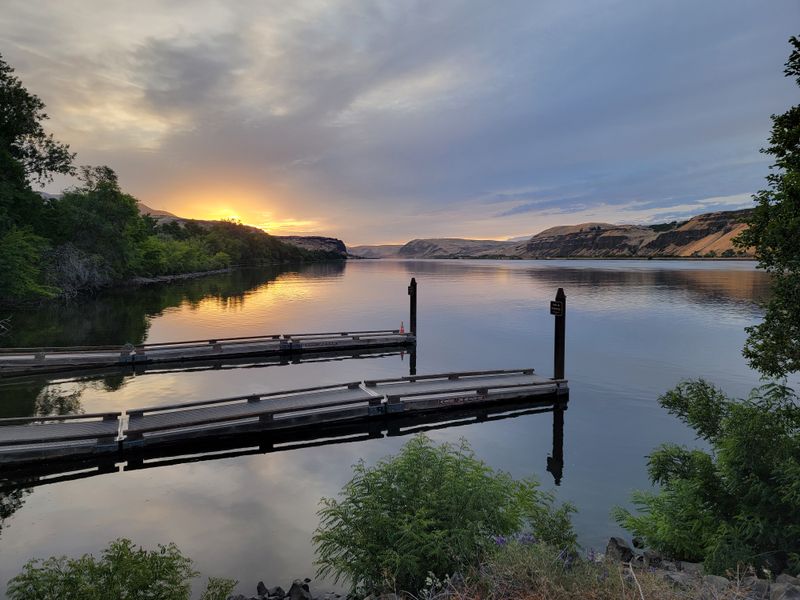
The Columbia River Gorge, especially near Maryhill on the eastern Washington side, delivers sunsets with a sense of scale you don’t often find in the state.
Here, cliffs frame a winding river that seems to stretch forever into the horizon.
Sunset brings out the subtle colors in the high-desert landscape, lighting up golden grasses and the river’s broad expanse.
The Maryhill Overlook is a favorite for travelers making the drive, with plenty of space to set up a camera or just rest against a fence post.
It’s not uncommon to find yourself alone here, save for the sound of wind and the occasional bird.
The openness of the terrain adds to the drama, making the sky feel enormous.
Without city lights, the stars often appear not long after the last orange streak disappears, giving you a two-part evening show.
This part of the gorge is very different from the greener, waterfall-filled western section.
Its desert-like scenery makes the sunset feel even more dramatic.
Located near Maryhill Museum of Art at 35 Maryhill Museum Dr, Goldendale, WA 98620, the overlook provides sweeping views.
The museum itself sits on a bluff above the river, and the grounds offer multiple vantage points.
Nearby, Stonehenge Memorial adds an unexpected historical curiosity to your visit.
The area is known for strong winds, which can be bracing but also keep the air crystal clear.
Wildflowers bloom in spring, adding splashes of color to the already striking landscape.
Summer evenings are warm and long, perfect for extended watching as the light slowly drains from the sky.
6. Mount Constitution (Orcas Island)
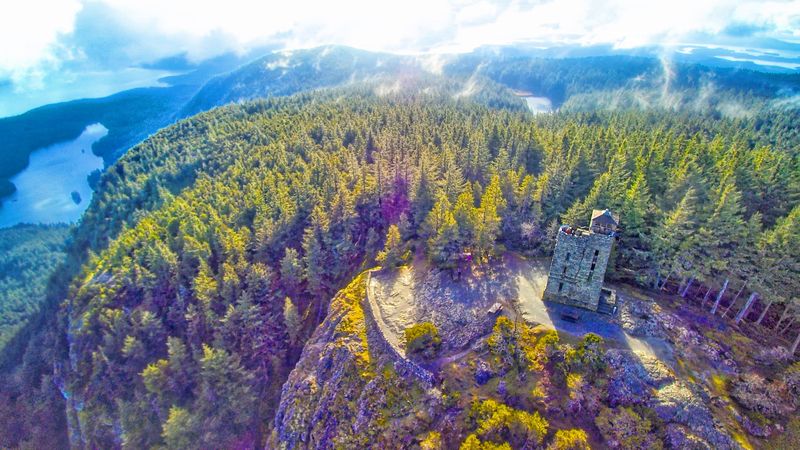
Sometimes, reaching Mount Constitution feels like climbing into a painting.
As the highest point in the San Juan Islands, it offers vast views across sparkling waterways and forested islands, all crowned by the distant Olympics.
Evenings here can be calm and quiet, with the colors changing so slowly you almost lose track of time.
The old stone tower at the summit adds a touch of history and makes for a memorable foreground as the sun slips behind the mountains.
On especially clear nights, you might spot ferry lights twinkling far below or catch the pink afterglow as it sweeps the sky.
The sense of space and connection to the islands makes this sunset spot feel like a reward for the climb.
Each visit brings a new layering of color and mood, influenced by the weather or season.
Located in Moran State Park at 3572 Olga Rd, Olga, WA 98279, the summit sits at 2,409 feet.
You can drive most of the way up, though the winding road requires attention.
The stone observation tower was built in the 1930s by the Civilian Conservation Corps and still stands solid.
Climbing its spiral staircase adds another 50 feet of elevation and an even better view.
The islands spread out like puzzle pieces, with water channels catching the last light in brilliant streaks.
Ferries crossing between islands leave white trails that fade slowly into the blue.
Bring binoculars if you want to pick out individual landmarks or watch for eagles soaring at eye level.
The summit can be windy and cool even in summer, so a light jacket is wise.
7. Palouse Falls (Eastern Washington)
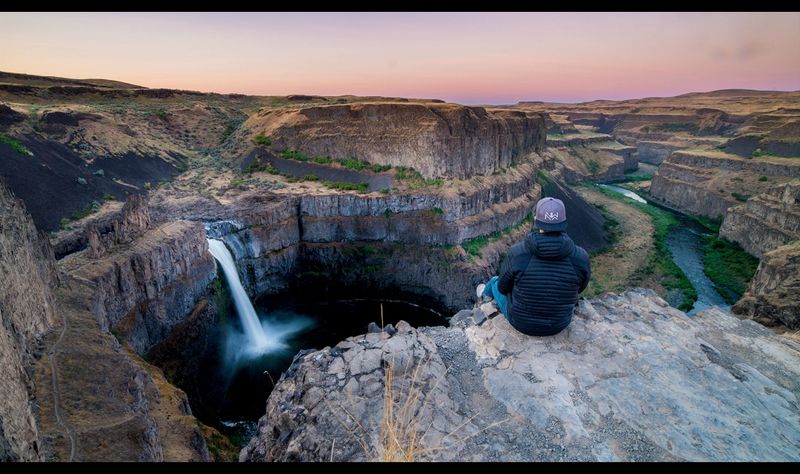
Few places in Washington offer a sunset backdrop quite like Palouse Falls.
The waterfall tumbles nearly 200 feet through a basalt canyon, and as evening approaches, the setting sun paints the walls in gold and rose.
Photographers often line the rim, drawn by the contrast between water, rock, and sky.
The wind can be brisk, adding to the sense of drama as spray from the falls catches shifting colors.
Palouse Falls State Park feels remote, and the surrounding landscape only emphasizes the wildness.
Late light reveals textures in the canyon that go unnoticed earlier in the day.
Even if you’re not a photographer, you’ll find yourself lingering, watching as the very last color drains from the cliffs.
Visitors should take care near the edges.
The park has posted safety advisories in recent years due to the steep drop-offs, but with caution, the views remain unforgettable.
Located at 38787 Palouse Falls Rd, LaCrosse, WA 99143, the park is about an hour southwest of Spokane.
The drive takes you through wheat fields and rolling hills, a landscape that feels endless and timeless.
A short walk from the parking area brings you to the main viewpoint, where the falls come into full view.
The roar of the water is constant, a powerful reminder of nature’s force.
Basalt columns frame the falls, their geometric shapes adding to the scene’s otherworldly quality.
Spring runoff makes the falls more dramatic, but summer sunsets bring warmer, more saturated colors.
The isolation of the park means fewer crowds, giving you space to soak in the moment without distraction.
8. Discovery Park (Seattle)

Discovery Park doesn’t just offer sunset views, it offers quiet, too.
Perched on a bluff above Puget Sound, the park’s west-facing trails wind through forest before suddenly opening to panoramic water views.
As the sun sets, birdsong gives way to the hush of evening, and the city feels miles away.
Water and forest meet in shifting colors, with ferries gliding in the distance and bald eagles sometimes soaring past.
This is a place to slow down, maybe bring a picnic or simply sit and watch the changing light.
Each sunset here is unique, shaped by the weather, the tides, and the season.
Even frequent visitors often find some new detail to appreciate as the sun disappears below the Olympic Mountains.
Located at 3801 Discovery Park Blvd, Seattle, WA 98199, the park spans over 500 acres, making it Seattle’s largest green space.
Multiple trails lead to overlooks, with the Loop Trail being a popular choice for sunset seekers.
The bluff offers unobstructed views across the sound, with the Olympics forming a jagged silhouette against the fading light.
Beaches below are accessible via steep trails, offering a different perspective closer to the water.
Driftwood and tide pools add to the coastal atmosphere.
The park’s mix of meadow, forest, and shoreline creates diverse habitats, and wildlife sightings are common.
Seals sometimes bob in the waves, and herons stand motionless in the shallows.
As darkness settles, the lighthouse at West Point blinks to life, guiding boats through the night.
9. Lake Chelan (Central Washington)
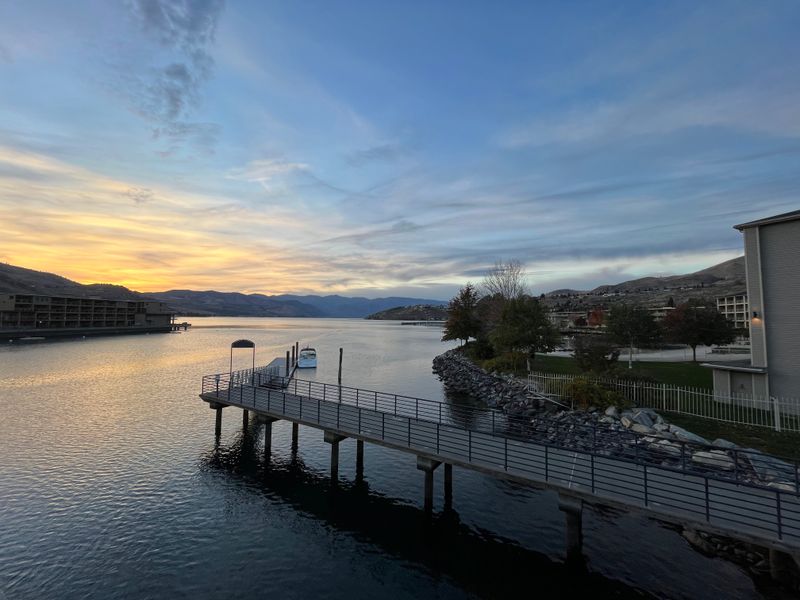
Lake Chelan holds a different kind of sunset magic, shaped by its deep water and long valley.
The lake stretches for over 50 miles, and its glacial origins give it a clarity that makes sunset colors pop during midsummer and early fall.
The surrounding mountains and vineyards catch the fading light, creating a layered effect that changes minute by minute.
Some evenings, you’ll spot paddleboarders drifting along the glassy surface, while others are marked by the laughter of families on the shore.
This region is known for its warm, dry air, especially welcoming after a day of exploring or tasting wine.
The calm of the lake at dusk encourages you to linger, watching as reflections blur and night settles in.
Each sunset here feels like a personal invitation to slow down and soak in the surroundings.
The town of Chelan sits at the lake’s southeastern tip, providing easy access to beaches and parks.
Riverwalk Park at 102 E Woodin Ave, Chelan, WA 98816, offers a lovely spot to watch the sun descend.
The park’s lawns slope gently toward the water, perfect for spreading a blanket.
Nearby wineries and tasting rooms add to the area’s appeal, though the real draw is the natural beauty.
Mountains rise steeply on both sides of the lake, their slopes covered in pines that darken as the light fades.
Summer brings warm temperatures and clear skies, ideal conditions for sunset watching.
Boats return to marinas as evening approaches, their wakes catching the last light in rippling patterns.
The combination of water, mountains, and sky creates a scene that feels both expansive and intimate.
10. Cape Flattery (Northwest tip of Washington)
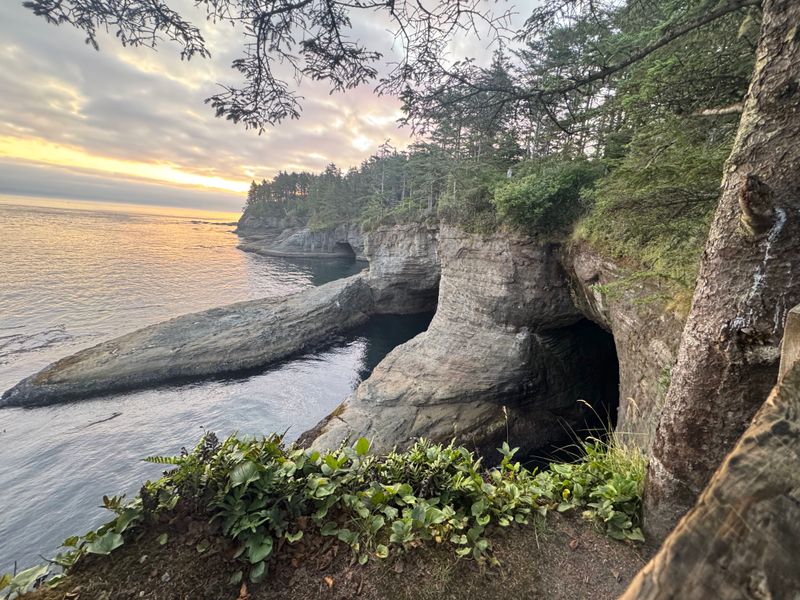
At the edge of the state, Cape Flattery pairs remoteness with wild beauty.
The short boardwalk trail leads to a platform above cliffs that jut into the Pacific, offering an unobstructed view toward the open ocean.
Sunset here feels elemental, wind, waves, and sky shifting together as the light changes.
The rugged coastline creates bold silhouettes, and the vastness of the scene is accented by the calls of seabirds and the rhythmic crash of surf below.
Whether you’re visiting for the first time or returning after many years, sunset at Cape Flattery leaves a lasting impression.
The changing weather and tides ensure no two evenings are alike.
This is a place where you can stand quietly, feeling both the edge of the continent and the quiet persistence of nature.
Located near Neah Bay at the northwestern tip of the Olympic Peninsula, the trailhead is accessible via Hobuck Rd, Neah Bay, WA 98357.
The trail is less than a mile round trip, mostly flat and well-maintained with boardwalks and stairs.
Cape Flattery marks the northwesternmost point of the contiguous United States, a fact that adds weight to the experience.
Tatoosh Island sits just offshore, home to a historic lighthouse and large seabird colonies.
Waves batter the rocks below with relentless energy, sending spray high into the air.
The Makah Tribe manages the area, and a recreation pass is required, available in Neah Bay.
Fog sometimes rolls in unexpectedly, turning the sunset into a softer, more mysterious affair.
Dear Reader: This page may contain affiliate links which may earn a commission if you click through and make a purchase. Our independent journalism is not influenced by any advertiser or commercial initiative unless it is clearly marked as sponsored content. As travel products change, please be sure to reconfirm all details and stay up to date with current events to ensure a safe and successful trip.
