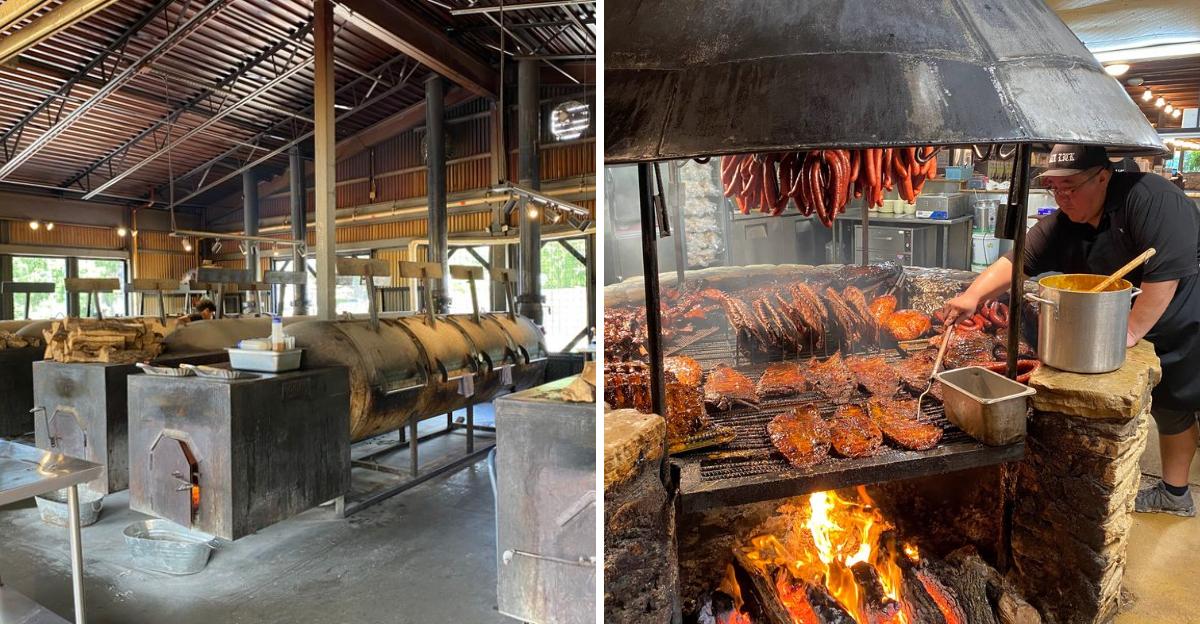
Texas stretches wide across the American South, offering travelers rolling hills, sprawling ranches, vibrant cities, and small towns where smoke rises from pit houses at dawn.
Barbecue culture runs deep here, woven into the state’s identity through generations of pitmasters who have perfected the craft of slow-cooked meats over wood fires.
From the legendary barbecue temples of Lockhart to the bustling food scenes in Houston and Dallas, weekend trips centered on smoky brisket and abundant buffets reveal the heart and soul of Texan hospitality.
Whether you’re cruising through Hill Country’s scenic backroads or exploring urban neighborhoods known for their culinary innovation, these destinations promise unforgettable flavors, welcoming atmospheres, and stories that have been passed down through decades of family traditions.
1. Lockhart: The Barbecue Capital
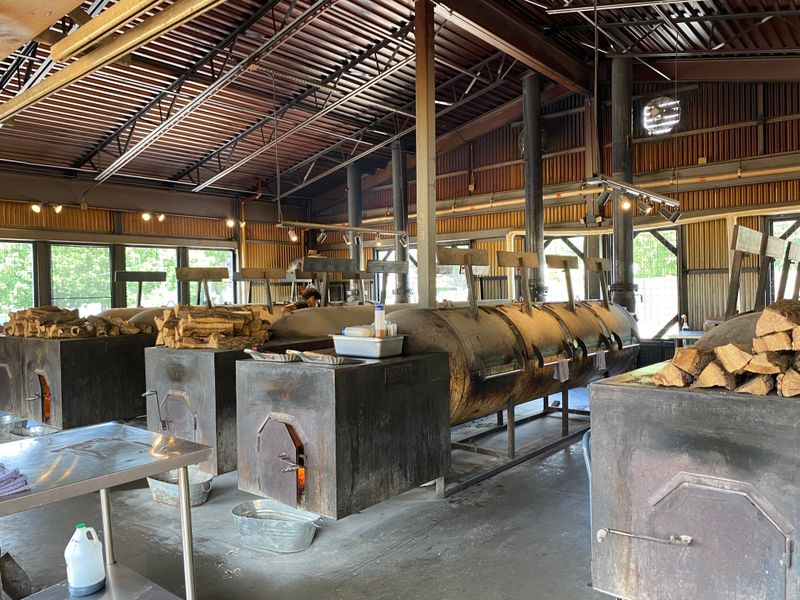
Lockhart sits just thirty miles south of Austin, a small town where the aroma of mesquite smoke drifts through the streets and barbecue isn’t just food but a way of life.
Declared the Barbecue Capital of Texas by the state legislature in 1999, this community of fewer than 15,000 residents houses some of the oldest and most revered barbecue establishments in the entire country.
Driving into town, you’ll notice the historic courthouse square surrounded by buildings that have stood for over a century, their weathered facades telling stories of cowboys, cotton farmers, and families who built their lives around Central Texas traditions.
Kreuz Market (619 N Colorado St, Lockhart, TX 78644) stands as a pilgrimage site for barbecue lovers worldwide, occupying a massive building that looks more like a warehouse than a restaurant.
Inside, the no-frills approach means no forks, no barbecue sauce, and no unnecessary distractions from the perfectly smoked meats that emerge from the brick pits.
The brisket comes out with a dark, peppery crust that gives way to tender, juicy meat that needs nothing but butcher paper and your hands.
Sausage links snap with each bite, releasing flavors that have made this place legendary since 1900.
Black’s Barbecue (215 N Main St, Lockhart, TX 78644) holds the distinction of being the oldest continuously family-owned barbecue restaurant in Texas, operating since 1932 under the same family’s watchful care.
Walking through the doors feels like stepping into a living museum where recipes and techniques have been preserved and perfected across four generations.
The dining room displays photographs spanning decades, showing the evolution of both the restaurant and the town around it.
Their brisket achieves a balance of smoke and seasoning that represents the gold standard of Central Texas barbecue, while the beef ribs offer a primal eating experience that satisfies on a deep, instinctual level.
Smitty’s Market (208 S Commerce St, Lockhart, TX 78644) occupies the original Kreuz Market location, a building where smoke has permeated every surface since 1900.
The atmosphere here transports visitors back in time, with blackened walls, ancient pits, and a sense that not much has changed in over a hundred years.
Pitmasters work in a smoke-filled room visible from the ordering line, tending fires and turning meats with practiced efficiency.
The experience of eating here connects you directly to barbecue history, making each bite feel significant beyond mere sustenance.
Spending a weekend in Lockhart means immersing yourself in a culture where barbecue represents community identity, family pride, and a connection to the past that continues to shape the present in delicious, smoky ways.
2. Dallas to Fort Worth: Urban BBQ and Buffet Diversity
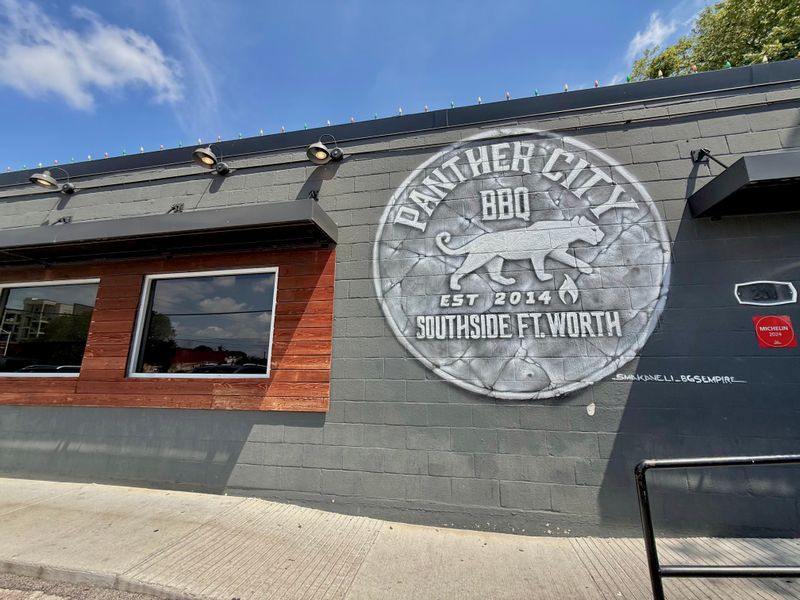
The Dallas-Fort Worth metroplex represents Texas urbanism at its finest, where gleaming skyscrapers rise above neighborhoods that still honor cowboy heritage and traditional foodways.
This sprawling region of over seven million people offers barbecue experiences that range from cutting-edge fusion concepts to old-school joints that have been smoking meats since before the highways connected these two distinct cities.
Fort Worth maintains its identity as “Where the West Begins,” with stockyards, rodeos, and a cultural commitment to preserving the rough-and-tumble spirit of frontier Texas.
Dallas, by contrast, embraces cosmopolitan sophistication while still celebrating the barbecue traditions that unite all Texans regardless of zip code.
A weekend trip between these cities reveals how barbecue adapts and thrives in metropolitan environments without losing the essential qualities that make it authentically Texan.
Asian King Buffet (6051 SW Loop 820, Fort Worth, TX 76132) in Fort Worth might seem like an unexpected entry on a barbecue-focused itinerary, but it represents the beautiful diversity of Texas eating culture.
This expansive buffet offers an all-you-can-eat experience featuring hundreds of items spanning multiple Asian cuisines, from sushi to Mongolian grill to traditional Chinese dishes.
After several meals of heavy, smoky meats, the fresh vegetables, seafood options, and lighter preparations provide a welcome contrast while still delivering the abundance that defines great buffet experiences.
Families appreciate the variety that ensures even picky eaters find something they love, while adventurous diners enjoy sampling flavors from across the Pacific.
The Fort Worth Stockyards National Historic District transforms a weekend trip into a journey through Texas history, where you can watch twice-daily cattle drives down brick streets before settling into barbecue spots that have fed cowboys, oil barons, and tourists for generations.
Live music spills from honky-tonks, boot stores display handcrafted leather goods, and the smell of grilling meats mingles with the earthy scent of livestock.
Dallas neighborhoods like Deep Ellum and Bishop Arts District offer a different vibe, where barbecue joints sit alongside craft breweries, vintage shops, and art galleries.
Pecan Lodge in Deep Ellum draws lines that stretch around the block, with devotees waiting patiently for brisket that achieves near-perfect bark and tenderness.
The urban setting means you can enjoy world-class barbecue for lunch, then explore museums, catch live music, or browse independent bookstores before dinner.
Exploring both cities over a weekend reveals how Texas barbecue culture thrives everywhere from historic stockyards to trendy urban districts, adapting to local character while maintaining the smoky soul that defines it.
3. Lockhart to Luling Loop: Small Town BBQ Trail
Highway 183 connects Lockhart and Luling through twenty miles of quintessential Central Texas landscape, where pastures dotted with oak trees roll toward distant horizons and small ranches maintain ways of life that have changed little over generations.
This short drive creates a perfect barbecue loop for travelers who want to experience how small towns preserve culinary traditions with fierce pride and generational commitment.
Luling gained fame as an oil town in the 1920s, when black gold gushed from wells that transformed this agricultural community into a boomtown almost overnight.
Today, colorful oil pump jacks painted to resemble cartoon characters dot the landscape, creating quirky photo opportunities that contrast beautifully with the serious business of barbecue that happens downtown.
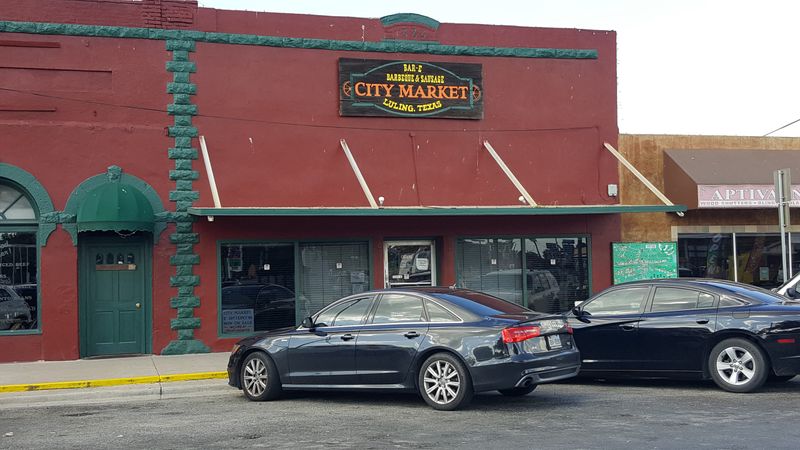
City Market (633 E Davis St, Luling, TX 78648) in Luling has been smoking meats since 1958, establishing itself as a destination worthy of the drive from anywhere in Texas.
The restaurant occupies a humble building that doesn’t announce itself with fancy signage or modern amenities, relying instead on reputation earned through decades of consistent excellence.
Inside, the setup follows the classic Central Texas model with a meat market counter where you order by the pound, pointing to glistening brisket, pork ribs, and sausage links that get weighed and wrapped before your eyes.
The brisket here achieves remarkable tenderness while maintaining enough structure to hold together, with smoke penetrating deep into the meat without overwhelming the natural beef flavor.
Hot links provide a spicy counterpoint, their casings snapping to release juices that run down your fingers as you eat over butcher paper spread across communal tables.
The beauty of this loop lies in its manageability, allowing you to hit multiple legendary spots without spending entire days on the road.
Start in Lockhart for a late breakfast of brisket and sausage at one of the famous trinity of restaurants, then cruise south through open country where cattle graze and hawks circle overhead.
Luling makes a perfect lunch stop, with City Market providing the main event followed by a stroll through downtown to see the painted pump jacks and browse antique stores housed in century-old buildings.
The return drive to Lockhart gives you time to digest before an early dinner at whichever legendary spot you missed in the morning.
This concentrated barbecue experience showcases how small Texas towns have become custodians of culinary traditions that attract visitors from around the world, proving that sometimes the best destinations are the ones that never tried to become tourist attractions but simply kept doing what they’ve always done with unwavering dedication and skill.
4. Houston: Diverse BBQ Scene and Global Buffets
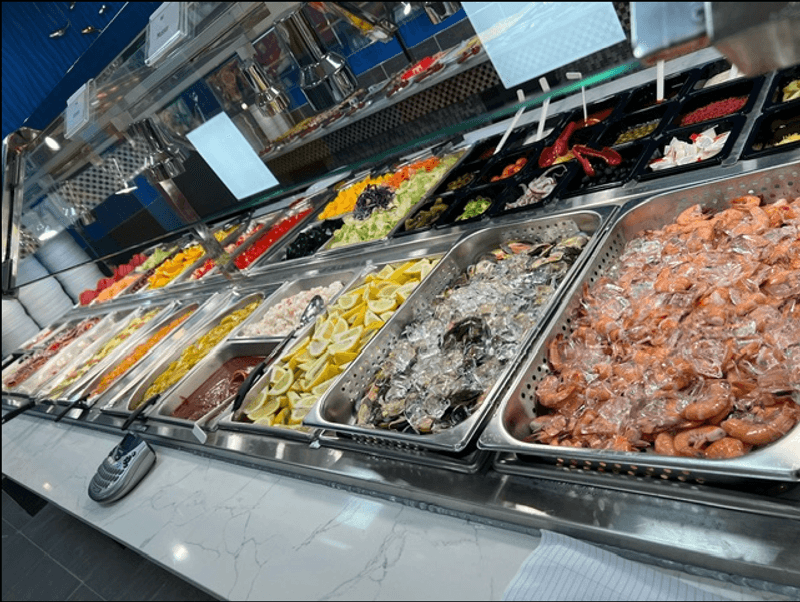
Houston sprawls across the coastal plain like a concrete and steel organism that keeps growing, absorbing influences from around the world and transforming them into something distinctly Houstonian.
As one of America’s most diverse cities, with residents representing virtually every nation on earth, Houston’s food scene reflects global connections while still honoring Texas traditions.
The barbecue culture here incorporates innovation and experimentation alongside reverence for classic Central Texas techniques, creating a dining landscape where you might find Korean-inspired brisket tacos one block away from a pit house that could have been transplanted directly from Lockhart.
Truth BBQ (110 S Heights Blvd, Houston, TX 77007) in the Heights neighborhood has built a cult following through social media and word-of-mouth, with devotees praising their brisket as some of the best in the state.
The restaurant occupies a renovated space that balances industrial chic with barbecue authenticity, featuring exposed brick, communal seating, and a no-nonsense ordering system that puts the focus squarely on the meat.
Their brisket develops a thick, peppery bark that shatters at the touch before revealing interior meat so tender it barely holds together.
The fat renders perfectly, creating that sought-after unctuousness that separates good brisket from transcendent brisket.
Beyond brisket, their beef ribs achieve almost mythical status, with massive bones supporting meat that has absorbed smoke for hours until it reaches a state of primal deliciousness.
The Pit Room (1201 Richmond Ave, Houston, TX 77006) brings craft barbecue sensibilities to Houston’s Montrose area, a neighborhood known for art galleries, vintage clothing stores, and a progressive attitude that embraces both tradition and innovation.
The restaurant sources quality ingredients, employs traditional smoking methods, and presents everything with attention to detail that elevates the entire experience.
Their menu extends beyond standard offerings to include creative sides and seasonal specials that reflect Houston’s culinary diversity.
The atmosphere strikes a balance between casual and refined, making it equally appropriate for a quick lunch or a leisurely dinner with friends.
Houston’s international character means the buffet scene here rivals any city in America, with options spanning every continent.
Indian buffets in the Hillcroft area offer dozens of curries, tandoori dishes, and breads that provide complex spice profiles completely different from barbecue’s smoke-forward flavors.
Vietnamese buffets showcase the delicate balance of fresh herbs, grilled meats, and nuoc cham that defines that cuisine.
Brazilian churrascarias employ gaucho-style grilling techniques that share some DNA with Texas barbecue while taking the meat in entirely different flavor directions.
A weekend in Houston allows you to experience Texas barbecue at its innovative best while also exploring the global food cultures that make this city endlessly fascinating for anyone who loves to eat.
5. Hill Country Drive: Scenic Routes and Pit Stops
The Texas Hill Country unfolds west of Austin like a geography lesson in how landscapes shape culture, with limestone hills, spring-fed rivers, and oak-studded valleys creating an environment distinct from the flat prairies most people associate with Texas.
German and Czech immigrants settled this region in the 1800s, bringing sausage-making traditions that blended with Southern barbecue techniques to create the unique Central Texas style that now defines the state’s barbecue identity.
Small towns with names like Fredericksburg, Luckenbach, and Llano dot the map, each maintaining individual character while sharing a common commitment to live music, craft beer, and smoked meats.
Driving these winding farm roads with windows down and country music playing feels like the quintessential Texas experience, especially when your destination involves brisket and cold beer.
Cooper’s Old Time Pit Bar-B-Q (604 W Young St, Llano, TX 78643) in Llano represents Hill Country barbecue at its most authentic, with a direct pit-to-plate approach that puts customers right at the fire.
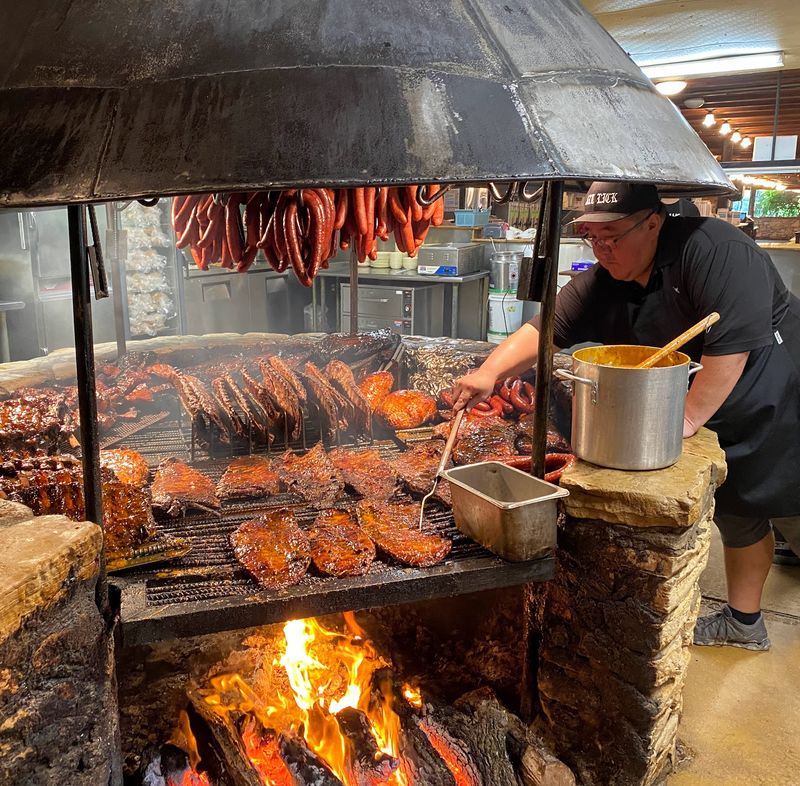
Unlike most barbecue restaurants where you order at a counter and trust the pitmaster’s selections, Cooper’s invites you to walk up to massive outdoor pits where whole briskets, pork loins, chickens, and giant beef ribs cook over mesquite coals.
You point to what looks good, the pitmaster cuts your selection fresh from the pit, weighs it, and sends you inside to pay and grab sides.
The meat arrives still crackling from the fire, with char and smoke flavors that taste even better when eaten at picnic tables under shade trees.
Their giant beef ribs have achieved legendary status, massive bones supporting pounds of meat that pull away cleanly after hours of slow cooking.
The drive to Llano from Austin takes about ninety minutes through increasingly rural landscape, passing through small communities where feed stores and tractor dealerships outnumber chain restaurants.
The Llano River flows through town, creating swimming holes and fishing spots that make this a popular summer destination for families seeking relief from the Texas heat.
After lunch at Cooper’s, you can explore downtown’s antique stores, rock shops selling local minerals, or simply sit by the river watching the water flow past.
The return journey allows for detours through Fredericksburg, where German heritage manifests in bakeries selling strudel and breweries crafting lagers alongside Hill Country wine country that has transformed this region into a major viticulture destination.
Vineyard tasting rooms offer respite from barbecue’s heaviness, with crisp whites and fruit-forward reds that cleanse the palate.
A Hill Country weekend trip combines barbecue excellence with natural beauty, small-town charm, and the sense that you’ve discovered a part of Texas that exists outside normal time, where traditions persist because people value them too much to let them fade away.
6. San Antonio: Historic City with Deep BBQ Roots
San Antonio carries history in every stone of its Spanish missions, every curve of the River Walk, and every recipe passed down through generations of families who have called this place home for centuries.
Founded in 1718 as a Spanish colonial outpost, the city predates most American settlements by decades, creating a cultural foundation that blends Mexican, German, and Southern influences into something that can only be described as uniquely San Antonian.
The River Walk snakes through downtown like a tropical dream transplanted to South Texas, with cypress trees shading pathways that run below street level alongside the San Antonio River.
Restaurants, bars, and hotels line the water, creating an atmosphere that feels simultaneously touristy and genuinely charming, especially in quieter sections away from the main commercial areas.
Beyond downtown, neighborhoods like Southtown showcase the city’s artistic side, with galleries, murals, and independent businesses occupying renovated historic buildings.
San Antonio’s barbecue scene reflects the city’s multicultural character, with some establishments following strict Central Texas traditions while others incorporate Mexican spices, cooking techniques, and flavor profiles that create hybrid styles found nowhere else.
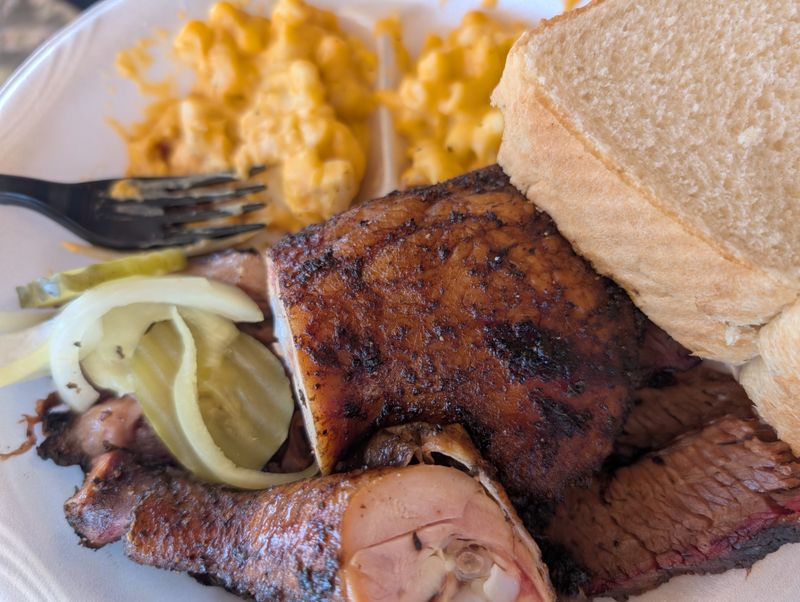
Brisket tacos represent this fusion perfectly, combining the slow-smoked meat of Texas barbecue with the handheld convenience and accompaniments of Mexican street food.
Breakfast tacos, a San Antonio invention that has spread across Texas, often feature smoked meats alongside eggs, cheese, and salsa, creating morning meals that satisfy on multiple levels.
The city’s German heritage manifests in exceptional sausage-making traditions, with many butcher shops and restaurants producing links that would feel at home in Bavaria while tasting distinctly Texan through the addition of local spices and smoking methods.
All-you-can-eat buffets in San Antonio often reflect this cultural mixing, offering stations with traditional barbecue meats alongside Mexican dishes, German sides, and Southern comfort foods that create a greatest-hits collection of regional flavors.
A weekend in San Antonio allows you to explore the Alamo and other Spanish missions that form a UNESCO World Heritage Site, understanding how centuries of history created the cultural landscape that exists today.
Pearl Brewery, a renovated complex that once produced beer for South Texas, now houses restaurants, a farmers market, shops, and the Culinary Institute of America’s San Antonio campus.
Walking these grounds while sampling foods from various vendors creates a contemporary Texas experience that honors the past while embracing current culinary innovation.
San Antonio proves that barbecue culture thrives when it remains open to outside influences, absorbing new ideas while maintaining the core values of quality ingredients, patient cooking, and generous hospitality that define Texas foodways regardless of specific techniques or flavor profiles employed.
Dear Reader: This page may contain affiliate links which may earn a commission if you click through and make a purchase. Our independent journalism is not influenced by any advertiser or commercial initiative unless it is clearly marked as sponsored content. As travel products change, please be sure to reconfirm all details and stay up to date with current events to ensure a safe and successful trip.
