Minnesota’s highways aren’t just about getting from point A to point B. They’re packed with stops that make you do a double take and maybe even pull over without thinking twice.
Giant sculptures, bizarre landmarks, and attractions that feel just a little too strange to be real start popping up when you least expect them. This isn’t your typical sightseeing list – it’s a collection of places that lean fully into the weird and somehow make the trip better because of it.
I kept thinking I’d seen the strangest one already, and then another showed up around the next bend. There’s a fun unpredictability to it all, like the road itself is in on the joke.
It’s the kind of adventure where the detours end up being the whole point.
1. Otto the Otter, Fergus Falls, Minnesota
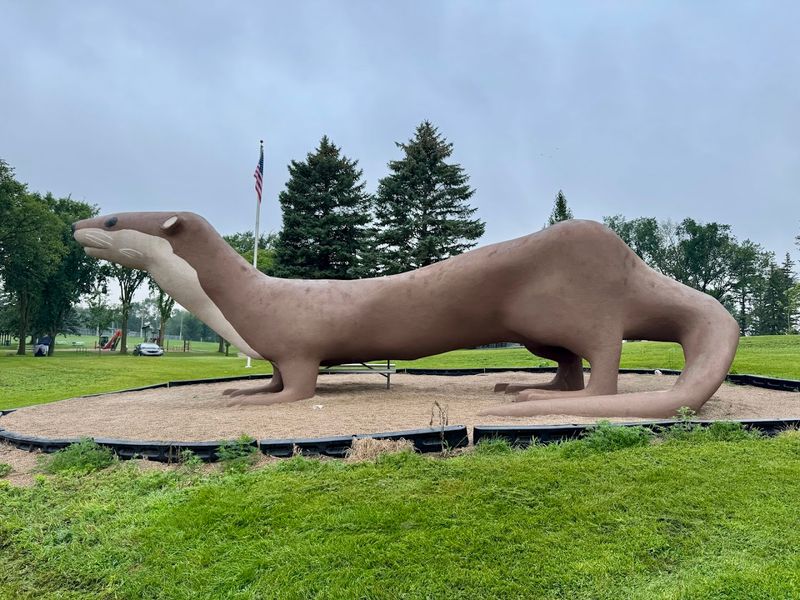
Concrete has never looked so adorable. Otto the Otter stands 40 feet long in Fergus Falls, Minnesota, and he has been doing it since 1972.
This giant river otter is the official mascot of Fergus Falls, and locals absolutely love him. He was built to celebrate the area’s connection to the Otter Tail River, which runs right through town.
Otto is not just a photo op. He represents real local pride and a community’s decision to do something genuinely fun with public art.
Kids go wild when they see him. Adults pull over mid-sentence because they cannot believe their eyes.
The sculpture sits near downtown, making it easy to visit during a road trip through central Minnesota. You can walk right up to Otto and get as close as you want for photos.
Fergus Falls itself is a charming small city worth exploring. There are parks, trails, and local restaurants nearby to round out your visit.
2. Paul Bunyan and Babe the Blue Ox, Bemidji, Minnesota
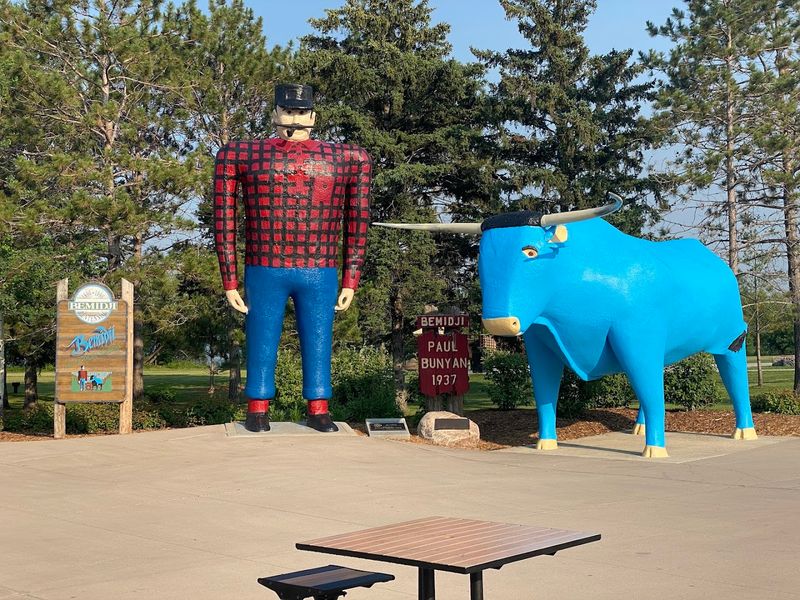
Standing at the edge of Lake Bemidji, these two figures have welcomed road-trippers since 1937. Paul Bunyan and Babe the Blue Ox are legends of American folklore, and Bemidji, Minnesota, made them real.
Paul stands tall in his classic plaid shirt and suspenders. Babe, his faithful blue ox, stands right beside him, and yes, Babe is actually painted blue.
Built to celebrate Minnesota’s logging history, these statues became icons almost immediately. They were among the first roadside attractions of their kind in the entire country.
What makes this stop special is the setting. The statues sit right next to a beautiful lake, giving you a stunning backdrop for photos at any time of year.
The area around the statues includes a visitor center and a pleasant waterfront park. You could easily spend an hour or two exploring the lakeside before hitting the road again.
Bemidji itself is a lively northern Minnesota city with great food and outdoor activities. It sits near the headwaters of the Mississippi River, which adds another layer of cool to the visit.
3. Jolly Green Giant Statue, Blue Earth, Minnesota
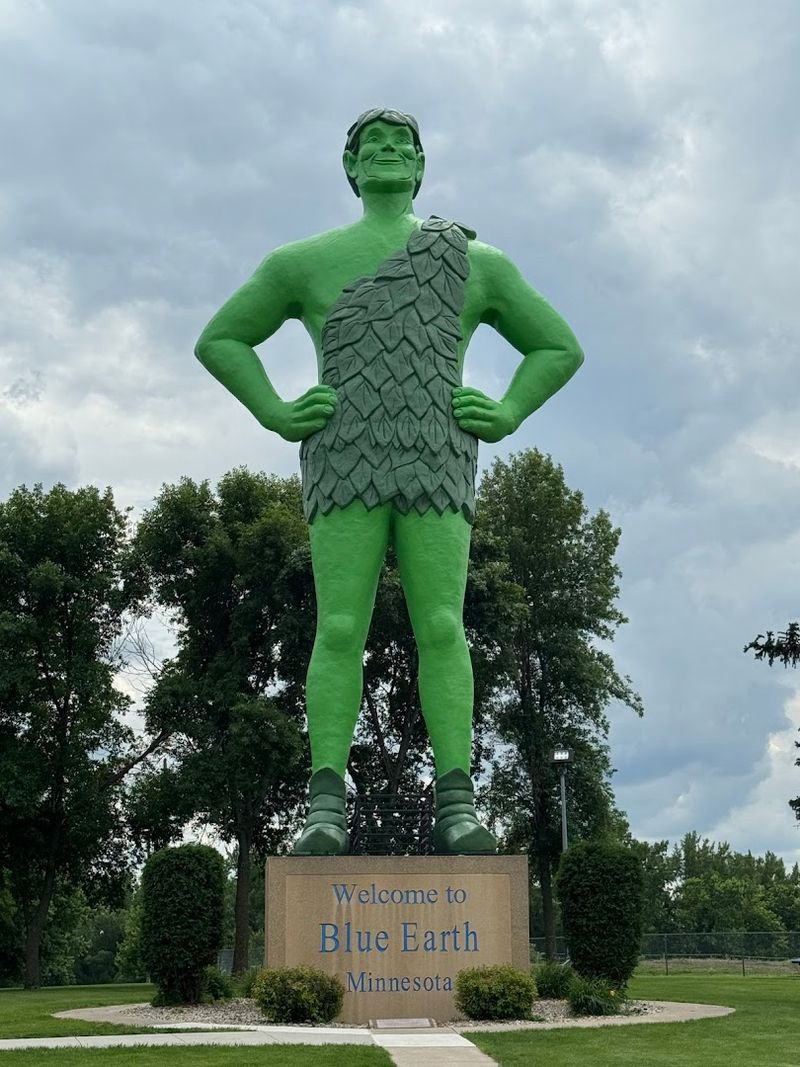
You cannot miss a 55-foot neon green giant standing beside the highway. The Jolly Green Giant statue in Blue Earth, Minnesota, is one of the most recognized roadside figures in the Midwest.
Built in 1979, this towering mascot was erected to honor the Green Giant Company’s deep connection to the Blue Earth area. The region has long been a major producer of canned vegetables, especially peas and corn.
Standing at the base of this statue, you realize just how tall 55 feet actually is. The giant’s leafy green outfit and cheerful expression make him both funny and impressive at the same time.
Blue Earth is a small town in southern Minnesota, conveniently located right off Interstate 90. That makes it an easy and rewarding pit stop for travelers crossing the state.
There is a small park surrounding the statue with benches and open space. Families often stop here for a quick stretch and a photo before continuing their drive.
The town itself leans into the giant theme with local shops and signage that celebrate their famous green neighbor. It is the kind of place where community identity is built around something wonderfully silly.
This stop is quick, fun, and absolutely camera-worthy. The Giant has been making travelers smile for over four decades.
4. Big Ole the Viking, Alexandria, Minnesota
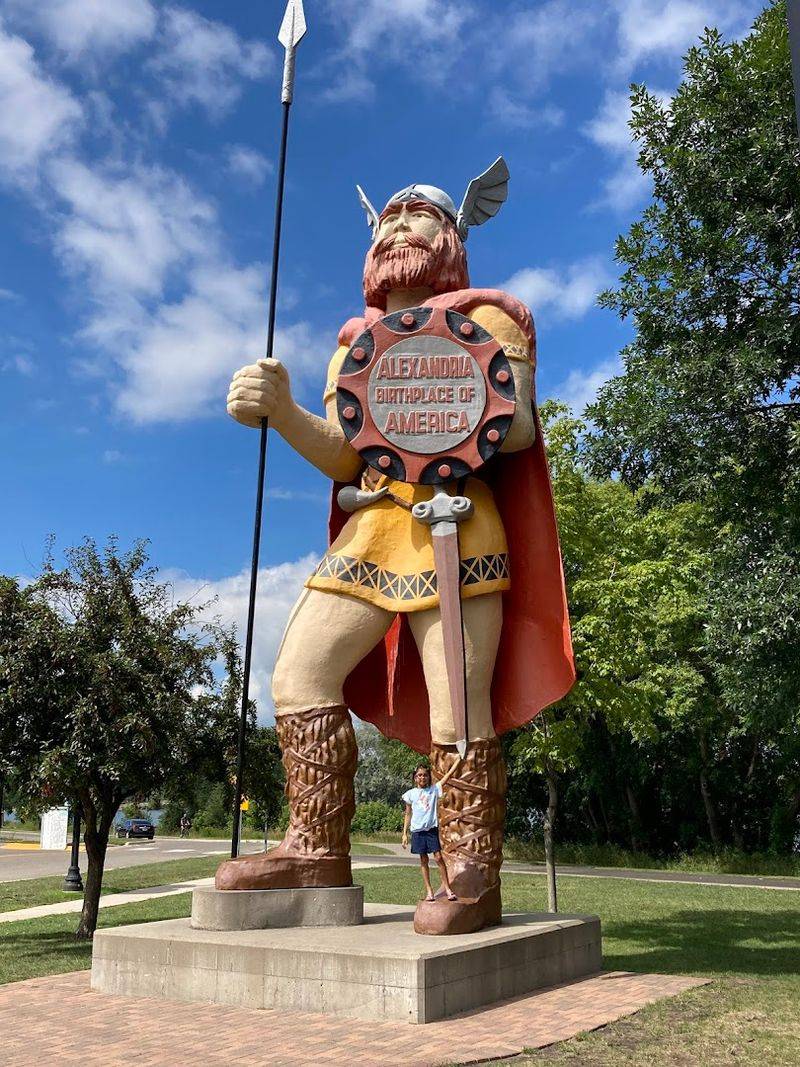
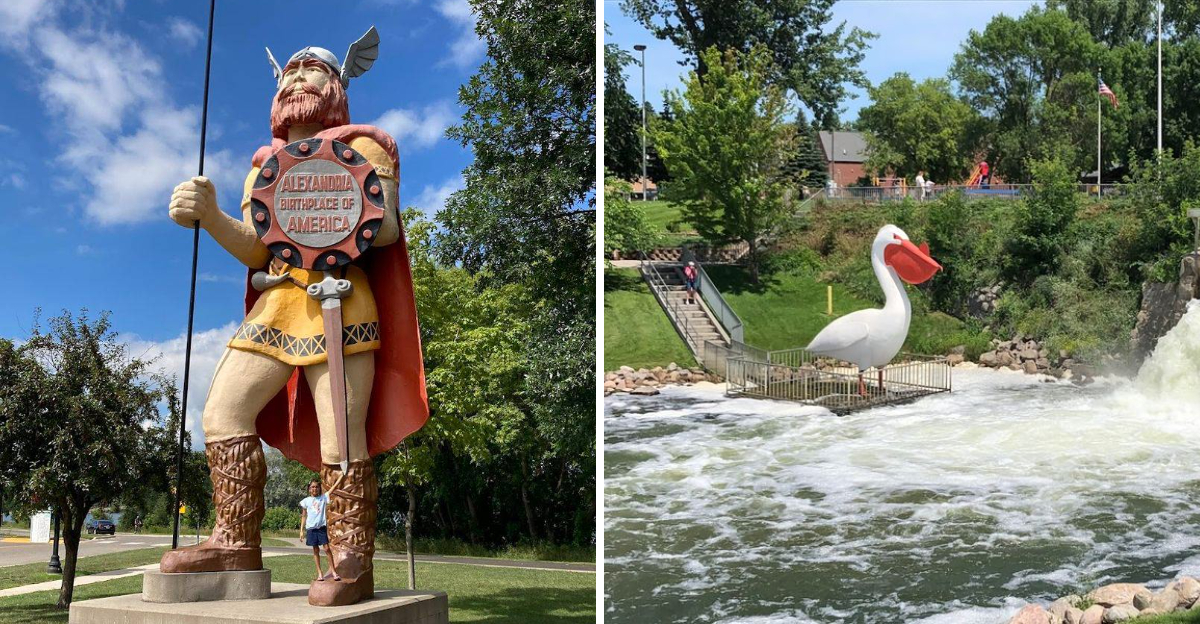
A 28-foot Viking wearing a red cape and gripping a massive spear is not something you expect to find in central Minnesota. Big Ole has been standing guard over Alexandria since 1965, and he looks like he means business.
Big Ole was originally built for the 1965 World’s Fair in New York. After the fair ended, Alexandria brought him home, and he has been a local icon ever since.
He represents the legend of early Norse exploration in North America. The Kensington Runestone, a controversial artifact discovered nearby in 1898, supposedly tells the story of Viking explorers in the area.
Whether or not you believe the runestone is authentic, Big Ole is absolutely real and worth a stop. His size, detail, and bold red cape make him one of the most photogenic statues in the state.
Alexandria is a popular lake resort town in west-central Minnesota. It sits in an area known as the Lakes Region, offering plenty of outdoor activities beyond the Viking photo op.
The runestone itself is displayed at the Runestone Museum in town, which adds a fascinating historical layer to your visit. You can learn about the controversy and decide what you believe.
5. World’s Largest Ball of Twine, Darwin, Minnesota
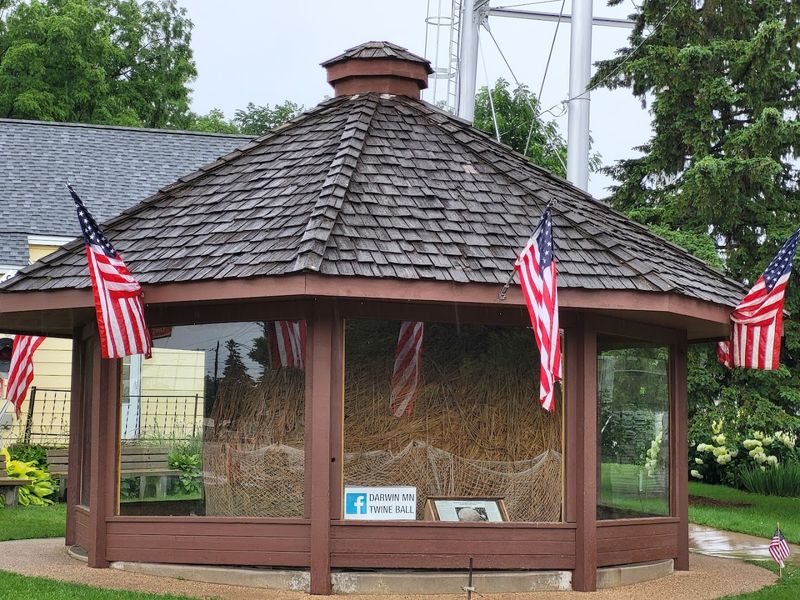
One man, 29 years, and nine tons of twine. The World’s Largest Ball of Twine in Darwin, Minnesota, is one of the most committed roadside attractions ever created.
Francis Johnson started wrapping twine in 1950 and did not stop until 1979. By the time he finished, the ball measured 12 feet wide and weighed as much as a small truck.
The ball now sits in a gazebo in downtown Darwin, protected from the elements but fully visible to anyone who stops by. Darwin is a tiny town about an hour west of Minneapolis, making it a manageable side trip.
What makes this stop so compelling is the human story behind it. Johnson wrapped the ball alone, a little at a time, for nearly three decades.
That level of dedication is genuinely hard to wrap your head around.
Every August, Darwin hosts Twine Ball Days, a festival celebrating the town’s most famous landmark. The event draws visitors from across the state and beyond.
The ball has sparked a friendly rivalry with other twine ball claimants around the country. Darwin’s version holds the Guinness record for the largest ball created by a single person.
6. The Largest Pelican Statue, Pelican Rapids, Minnesota
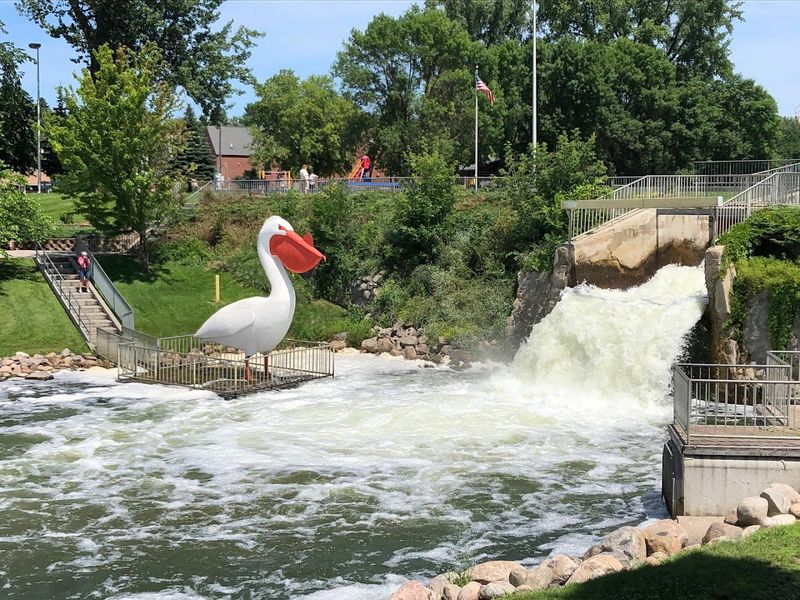
Pelican Rapids takes its name very seriously. The town in west-central Minnesota is home to a massive white pelican statue that stands right in the middle of the main street, perched above a small waterfall on the Pelican River.
The pelican sculpture is large enough to stop traffic, literally. Visitors often pull over just to stare at the big white bird looming over the river below.
White pelicans are actually native to Minnesota, which makes this statue more than just a quirky prop. It celebrates a real and beautiful part of the local wildlife.
The setting is surprisingly scenic. The waterfall beside the statue adds a natural soundtrack to your visit, and the surrounding downtown area is charming and walkable.
Pelican Rapids is located along U.S. Highway 59, making it a natural stop on a north-south road trip through western Minnesota.
It is small but memorable.
Local shops and cafes are close by, so you can grab a snack and stroll along the river after snapping your photos. The whole stop can fit into 30 to 45 minutes easily.
There is something refreshing about a town that fully commits to its identity.
7. The Runestone Museum and Kensington Runestone, Alexandria, Minnesota
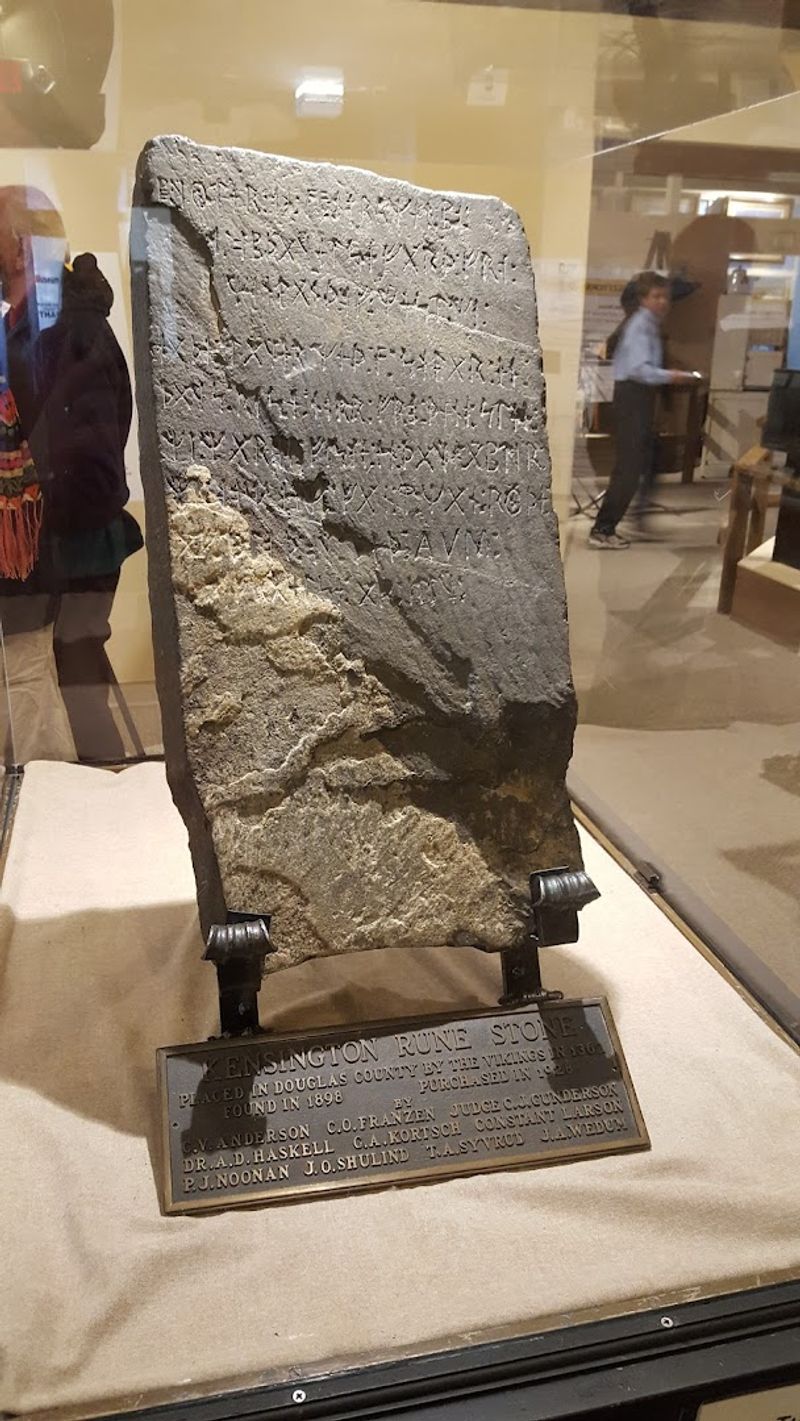
A carved stone slab found in a farmer’s field in 1898 sparked one of the greatest historical debates in American history. The Kensington Runestone, now housed at the Runestone Museum in Alexandria, Minnesota, claims that Norse explorers reached the American Midwest in 1362.
The inscription on the stone describes a group of Scandinavian explorers and their journey inland from the coast. Scholars have argued for over a century about whether it is genuine or an elaborate hoax.
The museum does a great job presenting both sides of the debate. You get to look at the actual stone up close and read the translated inscription yourself.
Beyond the runestone, the museum features exhibits on Viking history, Minnesota’s Scandinavian immigrant heritage, and local pioneer life. It is a surprisingly rich experience for a small-town museum.
Alexandria is already worth visiting for Big Ole the Viking statue nearby. Combining both stops makes for a full afternoon of history and humor.
The museum is family-friendly and reasonably priced. Kids tend to find the mystery of the stone genuinely exciting, especially when they realize no one has fully solved it.
Alexandria sits in the heart of Minnesota’s lake country, so there is no shortage of things to do before or after your museum visit. The runestone alone is reason enough to stop.
8. Spam Museum, Austin, Minnesota
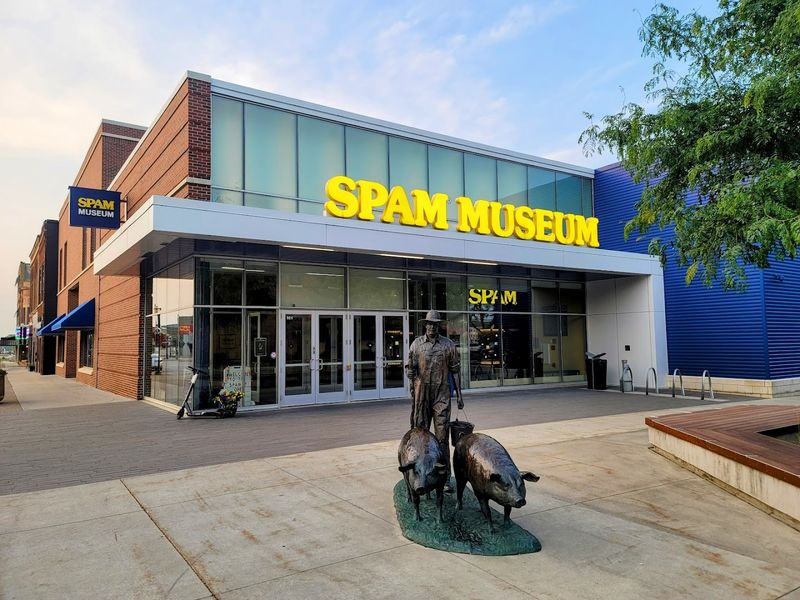
Yes, there is an entire museum dedicated to Spam, the canned meat. And yes, it is absolutely worth visiting.
The Spam Museum in Austin, Minnesota, is one of the most unexpectedly entertaining stops in the entire state.
Austin is the home of Hormel Foods, the company that invented Spam in 1937. The museum opened to celebrate that legacy and has grown into a genuinely impressive attraction.
Inside, you will find interactive exhibits, a full history of Spam’s role in World War II, and more canned meat trivia than you ever thought you needed. The exhibits are well-designed and surprisingly engaging.
Spam became a global phenomenon, especially in countries like South Korea and the Philippines where it is considered a premium food item. The museum covers that international story in fascinating detail.
Admission is free, which makes it one of the best deals on any road trip through southern Minnesota. You can spend one to two hours here without feeling rushed.
The gift shop is legendary. From Spam-branded clothing to collectible cans, you can find souvenirs that will confuse and delight everyone back home.
Austin is located in southern Minnesota near the Iowa border.
9. Muskie Statue, Nevis, Minnesota
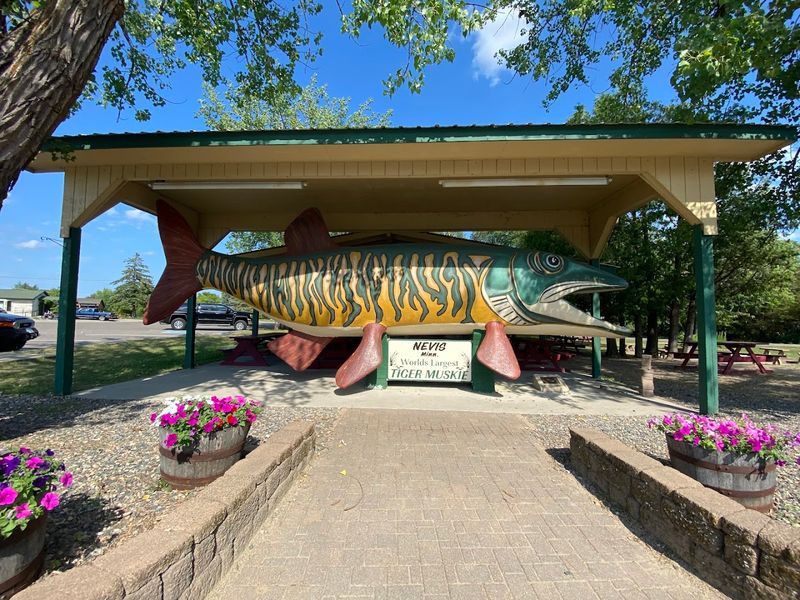
Fishing culture runs deep in Minnesota, and Nevis decided to honor that tradition in the most oversized way possible. The town is home to a massive muskie statue that celebrates the area’s reputation as a top fishing destination.
Nevis sits in the Park Rapids area of north-central Minnesota, surrounded by lakes that attract anglers from across the region. The muskie is the trophy fish of these waters, and the statue captures that local obsession perfectly.
The fiberglass fish is painted in realistic silver and green tones, with enough detail to impress even someone who has never held a fishing rod. It makes for a fantastic photo, especially if you pose like you just caught it.
Minnesota is known as the Land of 10,000 Lakes, and towns like Nevis embody that identity completely. Fishing is not just a hobby here; it is a way of life.
The surrounding area offers real fishing opportunities on nearby lakes. You could snap a photo with the statue in the morning and actually reel in a catch by afternoon.
Nevis is a small and quiet town, but the muskie statue gives it a personality that punches well above its size. Locals are proud of it, and visitors consistently rate it as a fun and memorable stop.
10. The Largest Crow, Belgrade, Minnesota
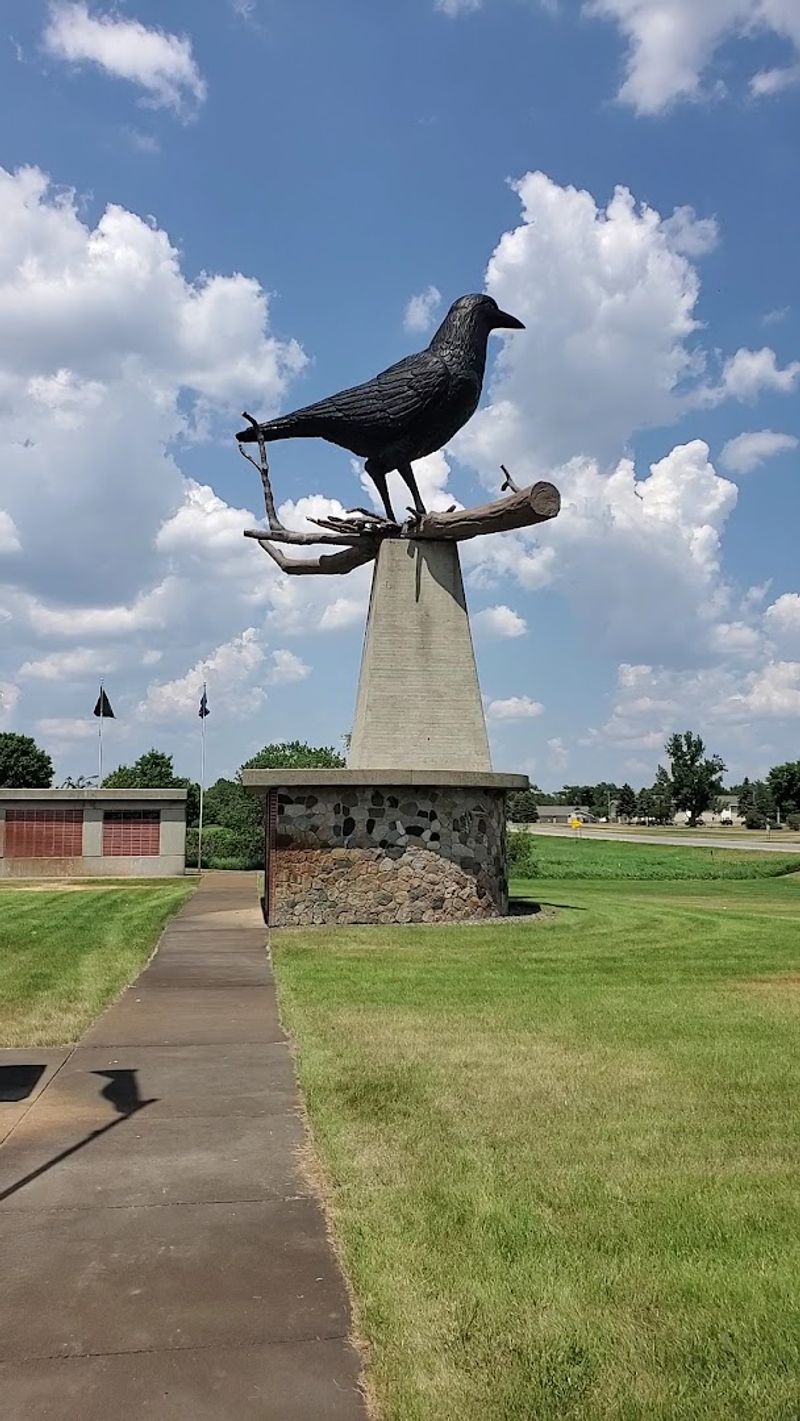
Belgrade, Minnesota, is a tiny town that decided to claim a very specific title: home of the world’s largest crow. The oversized black bird statue sitting in this small central Minnesota community is one of those roadside finds that makes a road trip feel genuinely rewarding.
The crow was installed to put Belgrade on the map, and it worked. Travelers who would otherwise pass right through now slow down, turn around, and pull over for a closer look.
The statue is bold, black, and surprisingly well-crafted. It sits on a pedestal that gives it an air of importance, as if the crow is surveying the flat Minnesota landscape with great authority.
Belgrade is located along U.S. Highway 12 in Stearns County.
It is a quick stop that fits naturally into a drive across central Minnesota.
Small towns across America have used giant animal statues to build identity and attract visitors for decades. Belgrade’s crow fits perfectly into that tradition while still feeling unique.
There is not much else to do in Belgrade itself, but that is part of the charm. The crow is the whole reason to stop, and it delivers on that simple promise completely.
11. The Glockenspiel, New Ulm, Minnesota
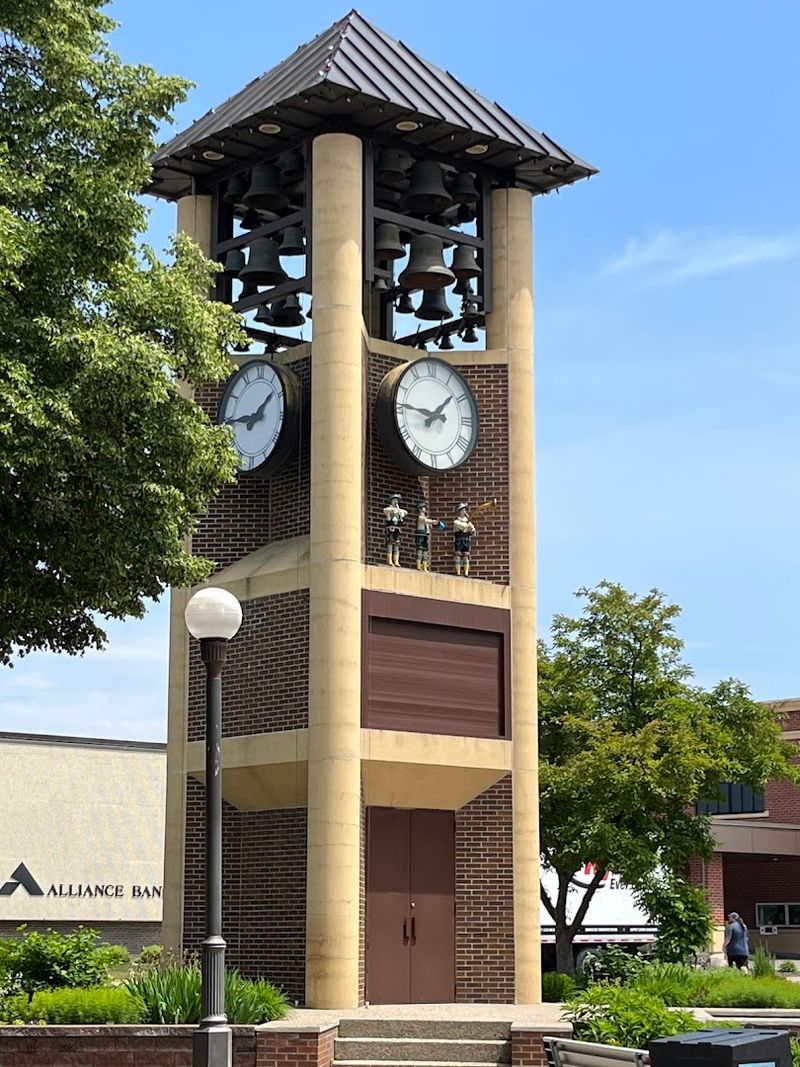
New Ulm, Minnesota, is one of the most distinctly German-American towns in the entire country. And right in the heart of downtown stands a 45-foot glockenspiel tower that plays music and animates carved figures three times a day.
The glockenspiel was built in 1980 to celebrate New Ulm’s German heritage. Its 37 bells and rotating cast of carved figurines tell stories from the town’s history and culture.
Performances happen at noon, 3 p.m., and 5 p.m. daily. Crowds gather on the sidewalk below to watch the miniature parade of figures spin and chime through their routine.
New Ulm was settled by German immigrants in the 1850s, and that heritage is visible everywhere. The architecture, the street names, and the local festivals all reflect a deep and genuine cultural pride.
The Hermann Monument, another major landmark, sits on a hill just outside downtown. Combining both stops gives you a full picture of what makes New Ulm so different from any other Minnesota town.
Local restaurants serve German-style food that is hearty and delicious. A bratwurst and a stroll past the glockenspiel make for a very satisfying afternoon.
