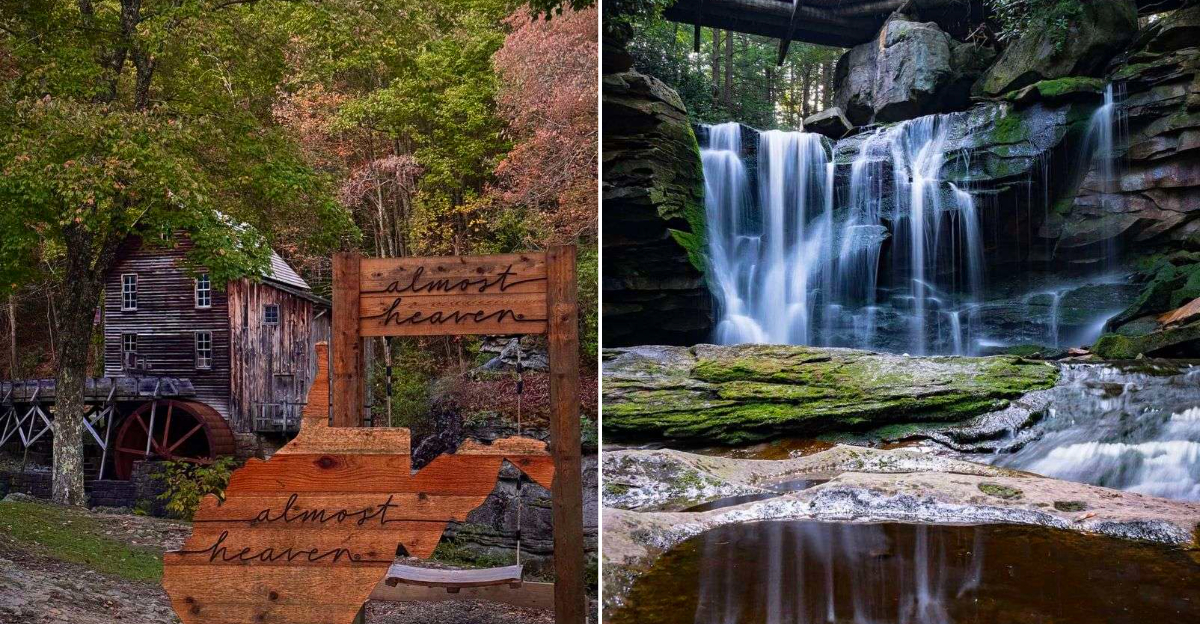
Think waterfalls are a summer thing? Winter in West Virginia says otherwise!
Cold air pulls the crowds off the trails and leaves the falls talking in quieter voices you only notice when your breath turns visible.
If you like history layered over ice and spray, these cascades are just the right fit, with stained water sliding past old rail beds, coke ovens, and silent mill ruins.
Rock ledges glaze over, mist freezes on branches, and the whole scene feels stripped down in a good way.
Bring traction, leave the rush at the trailhead, and let these places show you what they have been holding all along.
1. Blackwater Falls – Blackwater Falls State Park
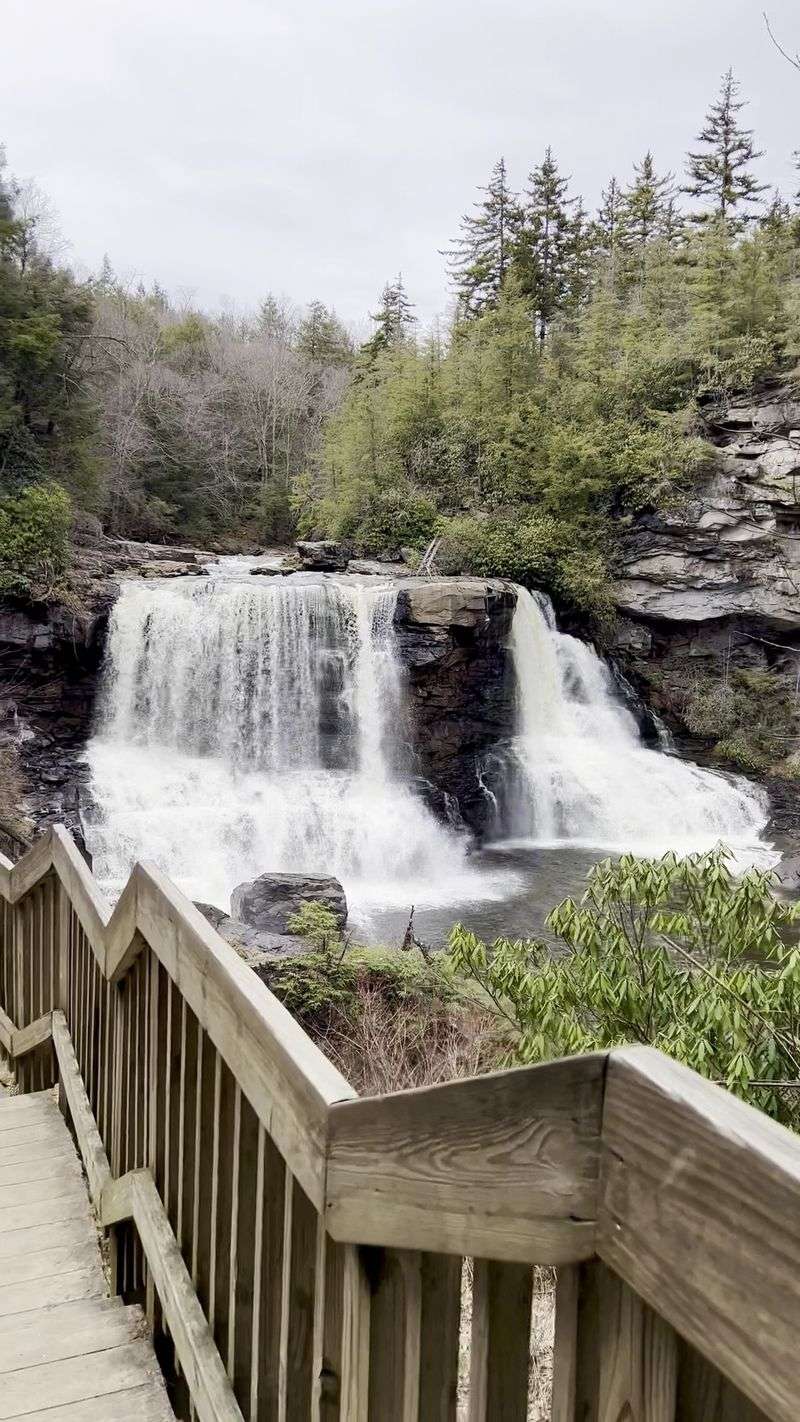
You see the dark water first and that might look weird at first, until you learn it is just tannins from hemlock and red spruce.
They tint the Blackwater River like brewed tea, a natural color, not pollution.
From the parking area, a main boardwalk leads to staggered platforms where the falls drop into Blackwater Canyon.
In winter, rime clings to the railings and makes every grab on cold metal feel crisp.
If you like learning while you look, park signs explain the rock layers and forest chemistry behind that dark flow.
I always pause at the upper overlook, where drifting spray and cold air sharpen the steady hush of the falls.
The park crew clears the path when they can, but microspikes make the short descent feel calmer and safer.
Davis sits close by, so warming up with coffee is easy after a quick visit in the cold.
The layout stays simple, with clear signs pointing toward several overlooks that each show a slightly different angle on the drop.
If you want an easier route, the Gentle Trail offers a milder grade and still delivers the main view.
In winter light, the mix of snow, dark water, and black shale shows exactly why West Virginia feels like the Mountain State.
2. Elakala Falls – Blackwater Falls State Park,
Looking for a waterfall you can reach before your coffee gets cold?
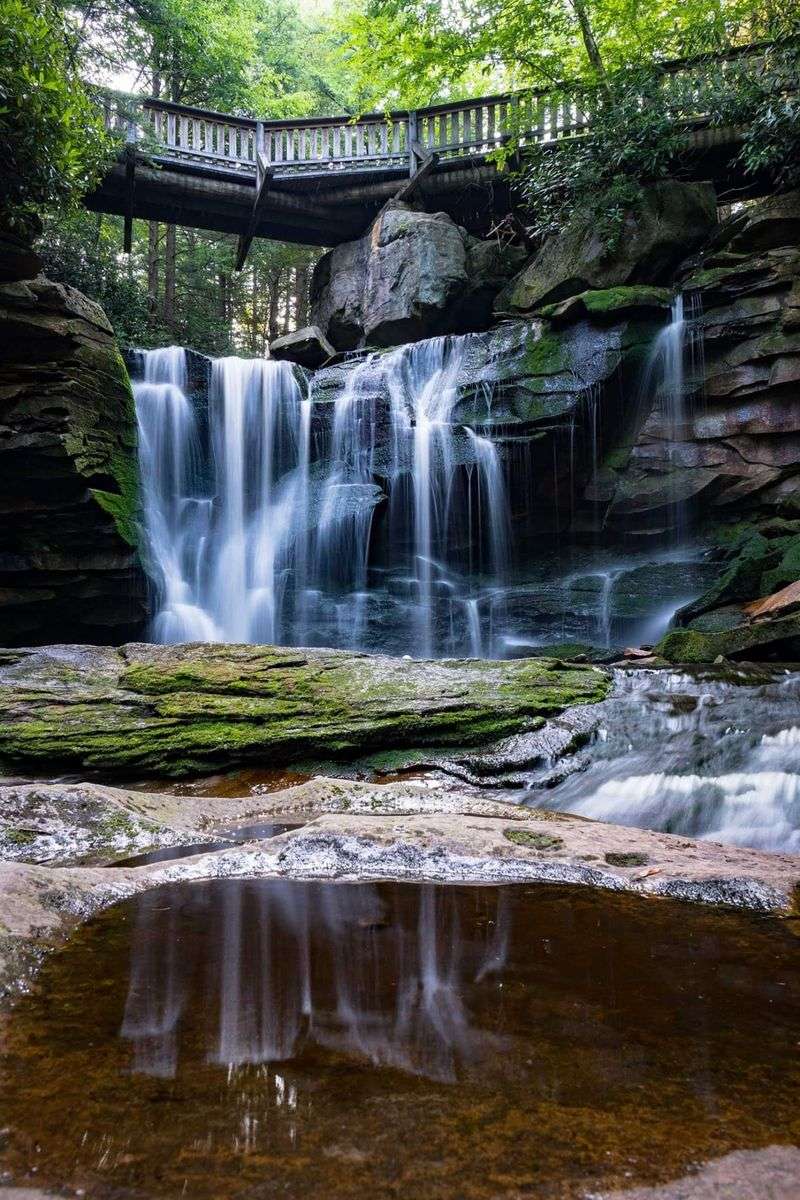
Elakala Falls starts just below a wooden bridge on Shays Run near the lodge.
The short path from 1584 Blackwater Lodge Rd reaches the first drop with only a few careful steps.
Lower tiers hide deeper in the ravine with no official trail and slick boulders, which turn risky in winter.
Most visitors wisely enjoy the upper falls from solid footing and let the rest stay a story for another day.
The name comes wrapped in legend, with Native tales of a princess or a warrior called Elakala hanging in the air.
I like how the plunge bowl collects fallen leaves that freeze into thin ice mosaics along the edges.
The bridge gives a clean frame for photos without leaving the path, and the moss stays bright even in cold months.
Do you feel calmer when the forest soundtrack shrinks to one steady creek and a few soft wind gusts?
Because this spot sits in the same park as Blackwater Falls, you can pair both stops without a long drive.
Keep traction handy, since shaded sections around Shays Run hold ice long after sunny overlooks have cleared.
If you thought winter blocks access, this little detour proves the opposite and shows how legend and landscape share the same quiet corner.
3. Douglas Falls – Rail Falls Rd
Want a waterfall that brings its history lesson with it?
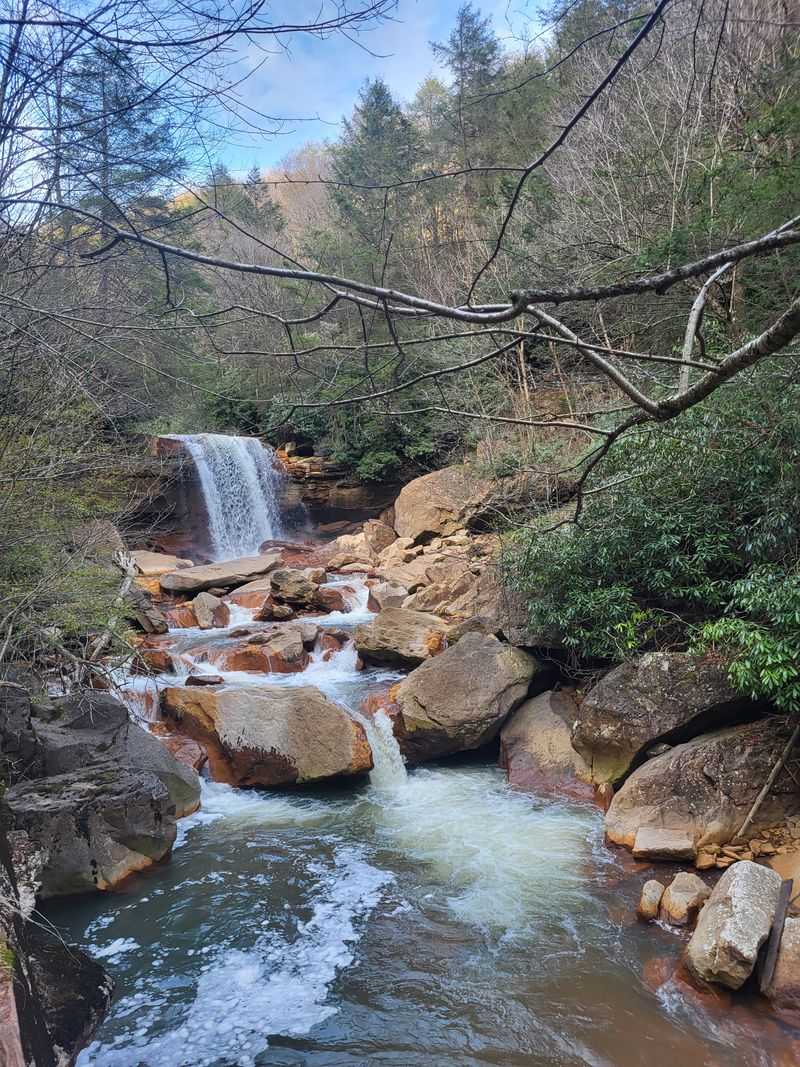
Downstream from Thomas, Douglas Falls sits off Rail Falls Rd, where the North Fork of the Blackwater drops over orange stained rock that jumps even brighter against snow.
That color traces back to historic mine drainage, a clear reminder of what the watershed went through and how it keeps healing.
Old beehive coke ovens near Coketon line the corridor, brick shells that hint at roaring heat and busy rail cars.
In winter, a short walk here turns into a simple, visual tour of West Virginia’s working past.
The road in can be rough, pull offs are unmarked, and ice lingers in shaded bends, so drive slow and check your footing.
Photographers love the contrast, amber water over orange rock with bands of white shelf ice along the rim.
The sound feels heavier than it looks because the canyon tightens and focuses the flow.
Keep river respect high, since currents stay strong even when banks look frozen and slick rocks hide under thin snow.
If you want a spot that ties West Virginia scenery to its industrial story, Douglas Falls spells it out in plain view and lets the quiet after snowfall feel like a clean page.
4. Cathedral Falls – US Route 60
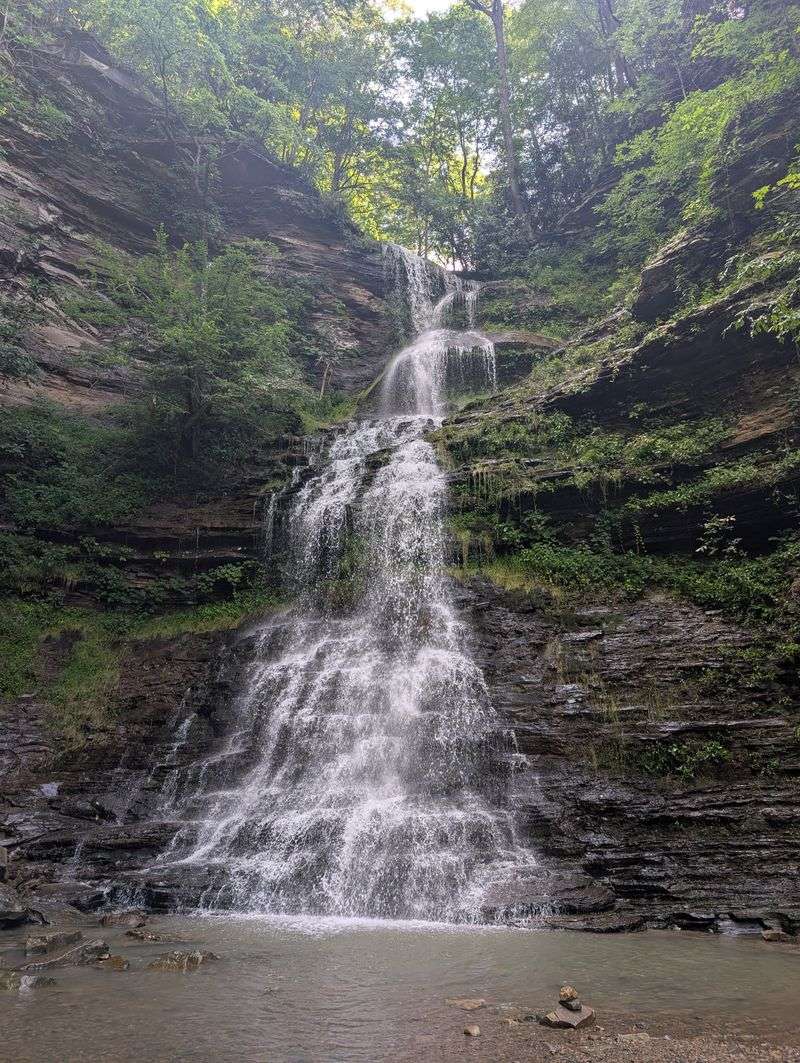
Roadside waterfalls can be forgettable.
Cathedral Falls refuses to be one of them.
Just outside Gauley Bridge, it drops through narrow tiers into a rock walled amphitheater that goes hushed in winter.
When the air turns cold, the alcove gets so quiet you can hear single drips between cascades.
The pull off along U.S. Route 60 makes this one of the easiest waterfalls to visit, yet the walls and ledges tuck you away from traffic.
If you like quick stops with big payoff, this one is hard to beat.
The name fits the vertical feel, with stone ribs rising around the water like simple columns.
Icicles hang from ledges and change shape all day, so the scene never looks exactly the same twice.
I like stepping to the edge and looking back toward the highway to see how close and hidden can share the same frame.
Do you enjoy spots that are easy to reach but still make you lower your voice? This is your spot then!
Cane Branch feeds the falls before joining the New River down the road, proof that a small creek can carve a memorable room in hard rock.
Traction helps on the polished stones near the base, and a light rain or thaw reshapes the flow just enough to keep each visit fresh.
If you thought roadside waterfalls lacked charm, this stop will change your mind fast, and the stone room feeling follows you back to the car.
5. Sandstone Falls – New River Gorge National Park and Preserve
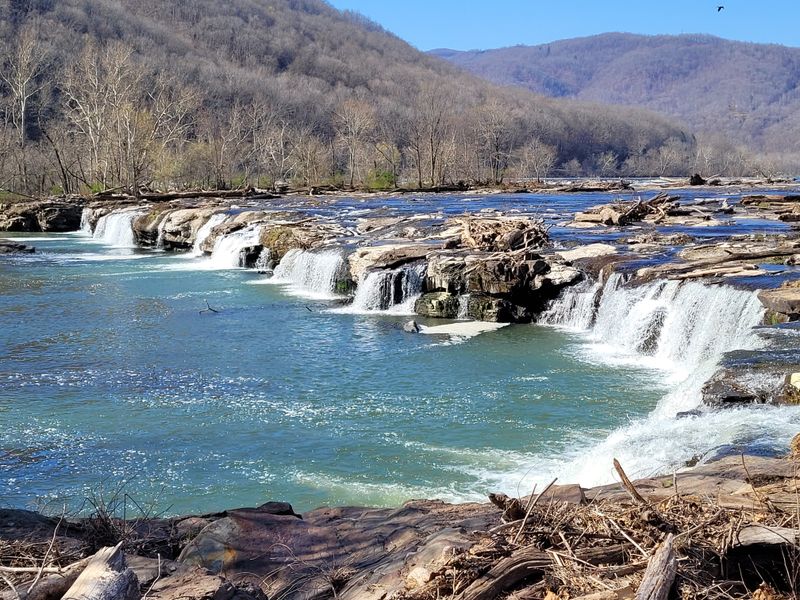
Big waterfall energy without a long hike! What a deal!
Sandstone Falls stretches across the New River in a broad line of ledges and islands, and the boardwalk from River Rd, Hinton, WV 25951, puts you close without a scramble.
In winter, mist hangs low, the sound rolls like distant surf, and the size still surprises people who know the park well.
If you want a waterfall that fills your whole field of view, this is your stop.
The boardwalk weaves through brush and over side channels to several platforms.
Each one gives a slightly different angle on the segmented drop.
I like standing near river level because the power feels horizontal, more of a push than a straight plunge.
The islands break the flow into clean sections that frame an easy photo.
This stretch shaped local commerce, turning boat travel and timber drives into puzzles instead of simple runs.
You can almost feel that challenge in the bends and currents.
Carry layers, because wind follows the river and finds you even on calm days.
Watch for icy patches on the boards where spray drifts.
West Virginia’s national park title makes sense here, with huge winter views that stay wild and still feel reachable in a short walk.
6. Glade Creek Grist Mill Falls – Babcock State Park, Clifftop
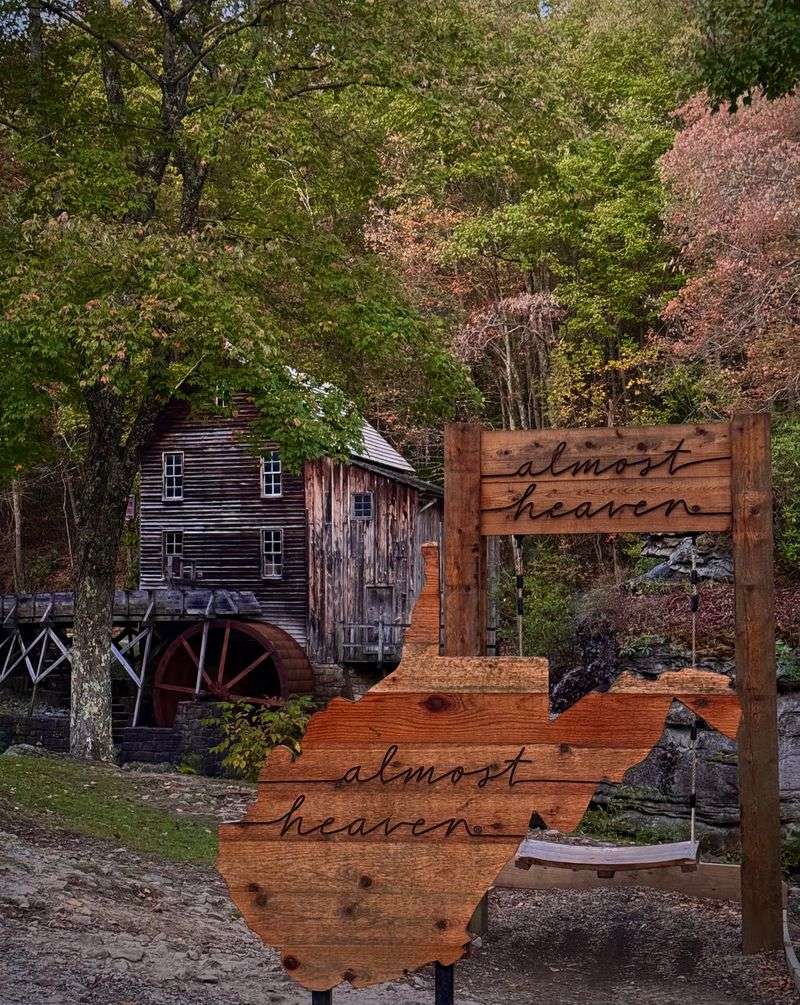
If you have ever wondered where those famous West Virginia mill photos come from, this place answers fast.
At Babcock State Park, the wooden Glade Creek Grist Mill sits right beside the creek and steals the scene.
Glade Creek drops in small ledges next to it, so water, rock, and wood all share one tight frame.
The mill is a working replica built from pieces of several historic mills, a hands-on nod to water powered days.
In winter, the wheel can frost, railings sparkle, and thin ice shelves form along the edges of the creek.
I like moving around the footbridge and framing the mill from downstream, where the falls and siding line up cleanly.
You can read the story in the chutes, wheel, and roofline, even when everything is still.
Signs around the site explain how the mill came together and why so many once stood across the state.
Rocks and walkways get slick, so traction and slow steps both help when you explore near the banks.
The park layout keeps access simple, which makes a short winter loop easy to fit into a cold day.
A quiet visit proves the calendar view is real, with the creek writing a calm line beside wood and stone.
7. Wonder Falls – Off Jenkinsburg Rd
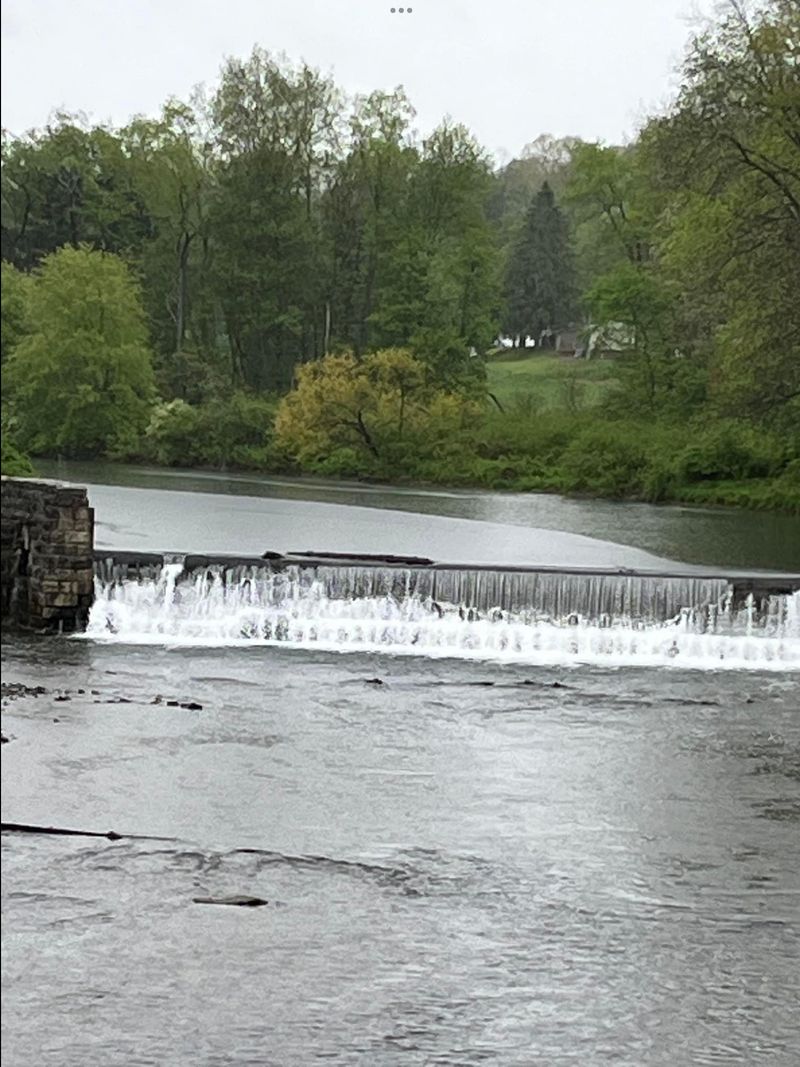
You know a waterfall means business when kayakers talk about it before photographers do.
Wonder Falls spreads across Big Sandy Creek in one wide pour, a bold lip that winter often wraps in near silence.
The approach uses rougher roads and informal pull offs off Jenkinsburg Rd, so planning and daylight both help.
If you want a place that feels earned without a long hike, this checks that box neatly.
The river here carries a serious reputation, with hydraulics that demand respect when levels run high.
Even in cold months, you can hear the weight in the current as it drops and folds.
I like standing well back on a solid boulder and watching the flow sheet off the ledge into broken pillows.
This corner of West Virginia stays low key, and winter thins traffic to paddlers and a few dialed in visitors.
Ice hangs in layered curtains on the sidewalls, and shelf ice creeps into eddies near the banks.
Traction and a cautious approach turn the visit from risky to rewarding.
If you thought secluded had to mean far from any road, Wonder Falls proves that remoteness can also be about attention, timing, and how carefully you move along Big Sandy Creek.
8. High Falls of the Cheat – Bemis Rd, Elkins
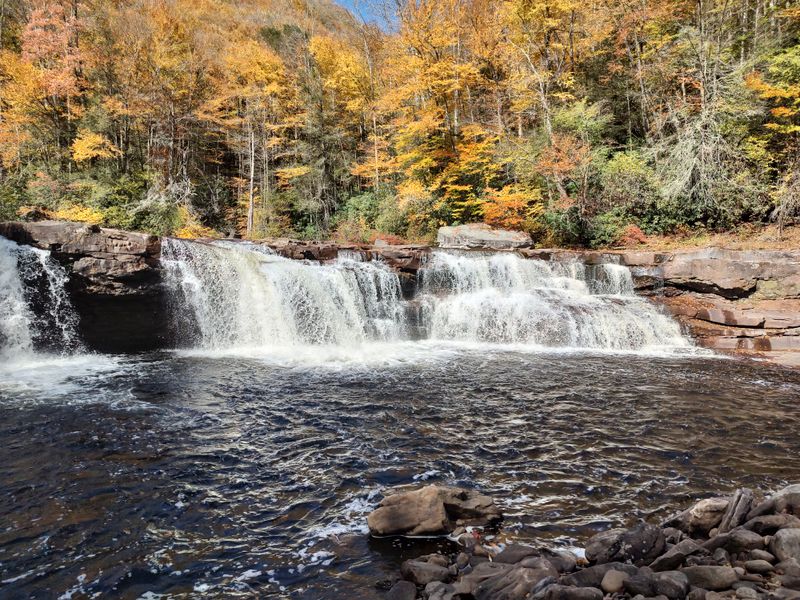
The first time I heard High Falls in winter, it sounded bigger than it looked, and that mismatch hooked me right away!
High Falls of the Cheat spreads across a curved rock lip on Shavers Fork, not very tall but impressively wide.
In winter, the air goes quiet enough that the roar seems to travel farther than you expect.
You can hike in from High Falls Trailhead on Bemis Rd, following a steady up and down through spruce and hardwoods.
Or you can ride the New Tygart Flyer excursion train and step off close to the falls when it runs.
If you like choosing your effort level, this stop gives you both, sweat or seat.
I enjoy the hike because the sound builds slowly, then the trees open and the whole sheet of water appears at once.
The flow splits around boulders and drops into foamy channels, while snow hangs on the banks in the shade.
Spray freezes along roots and rocks in clear ribs that photograph well from a safe, dry spot.
The setting feels remote and the river energy hints at how this corridor once shaped timber and travel stories.
Watch your footing near the edges, because wet rock glazes fast and turns slick with even a little ice.
If you want a West Virginia waterfall that feels like a small winter expedition, High Falls keeps that promise and sends you back with an earned grin.
9. Valley Falls – Valley Falls State Park, Fairmont
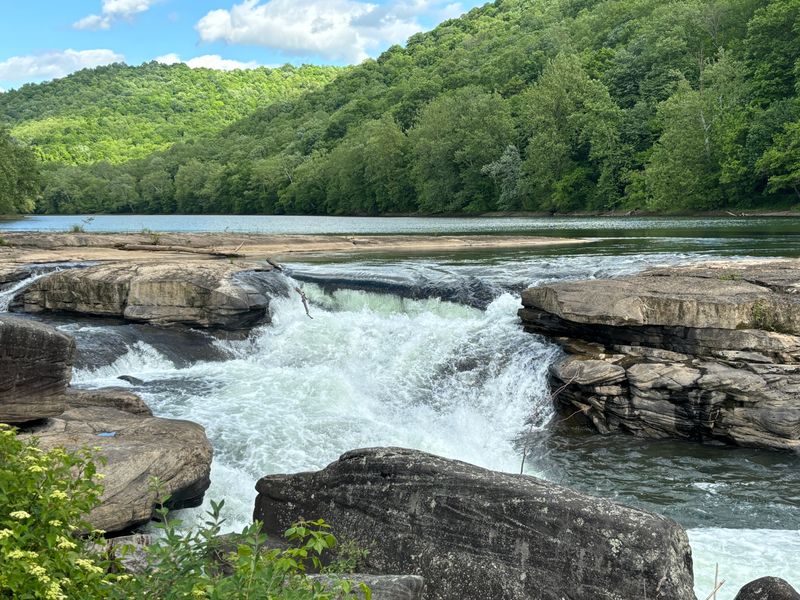
Some waterfalls hit you with one big drop. Valley Falls stretches the whole story out along the river instead.
Here the Tygart Valley River runs over a half mile of ledges, braiding, surging, and sliding around rock instead of falling in a single sheet.
In winter the trees open the view and the rock texture pops, from smooth shale slabs to rough sandstone steps.
Before it was a park, a mill town sat on these banks with shops, a ferry, and small factories working the water.
You can still spot old foundations and traces of walls near the trails if you take your time.
I like reading an interpretive sign, then turning to the river and imagining the noise of mills laid over today’s quiet.
Do you enjoy those moments when you can feel the past and present stacked in the same place? There are plenty of those here!
Access here is straightforward, with clear paths that lead to several overlooks and open rock for better angles when ice pulls back.
The current is strong and winter slabs can turn glassy, so traction and a healthy buffer from the edge keep things safe.
If you want a stop that mixes ruins, river energy, and easy logistics, this park makes the choice simple.
On a cold bright day, Valley Falls gives you space to wander, listen, and leave feeling like you saw more than just a pretty rapid.
10. Falls of Hills Creek – Monongahela National Forest
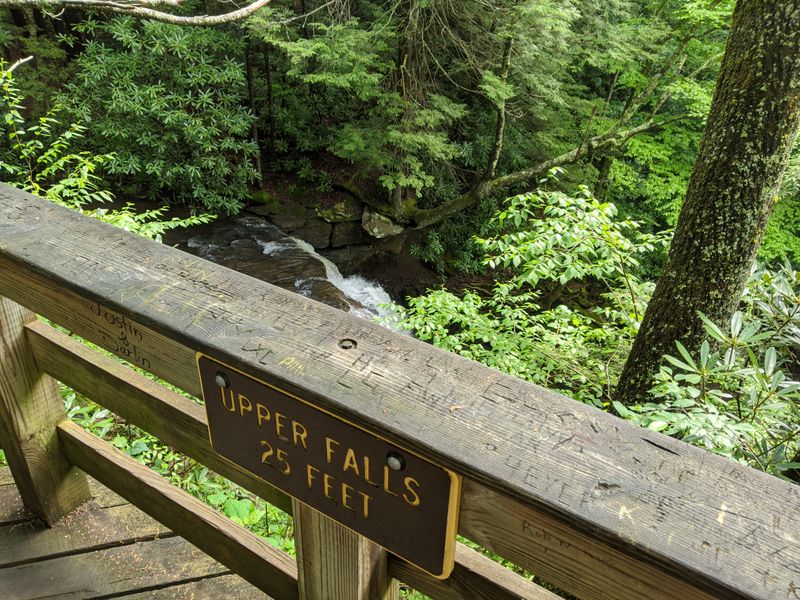
Looking for a waterfall walk that reveals itself one scene at a time instead of all at once?
The Falls of Hills Creek sit below the Highland Scenic Highway near Marlinton, with a trail and boardwalk dropping into a narrow gorge to three cascades.
In winter, rock walls grow thin ice curtains and spray dusts ferns white, so the whole hollow feels like a small stage hidden under the road.
The upper falls appear first, a good warm up that tells you the creek means business.
The middle drop tightens the view and adds more sound, pulling you a little deeper into the gorge.
The lowest falls brings the biggest drop and the biggest payoff, a final rush that makes the extra stairs worth it.
I like how the boardwalk stays close to the creek so each landing gives a clean frame, helpful on short winter days.
Stairs can hold ice, so carry traction, use the rail when you need it, and leave time to climb back at an easy pace.
Because this corner of Monongahela National Forest is well signed but not loud, the setting stays calm even in the colder months.
If you thought roadside overlooks were enough, a short descent here will remind you how a layered waterfall walk can shift your whole day.
Dear Reader: This page may contain affiliate links which may earn a commission if you click through and make a purchase. Our independent journalism is not influenced by any advertiser or commercial initiative unless it is clearly marked as sponsored content. As travel products change, please be sure to reconfirm all details and stay up to date with current events to ensure a safe and successful trip.
