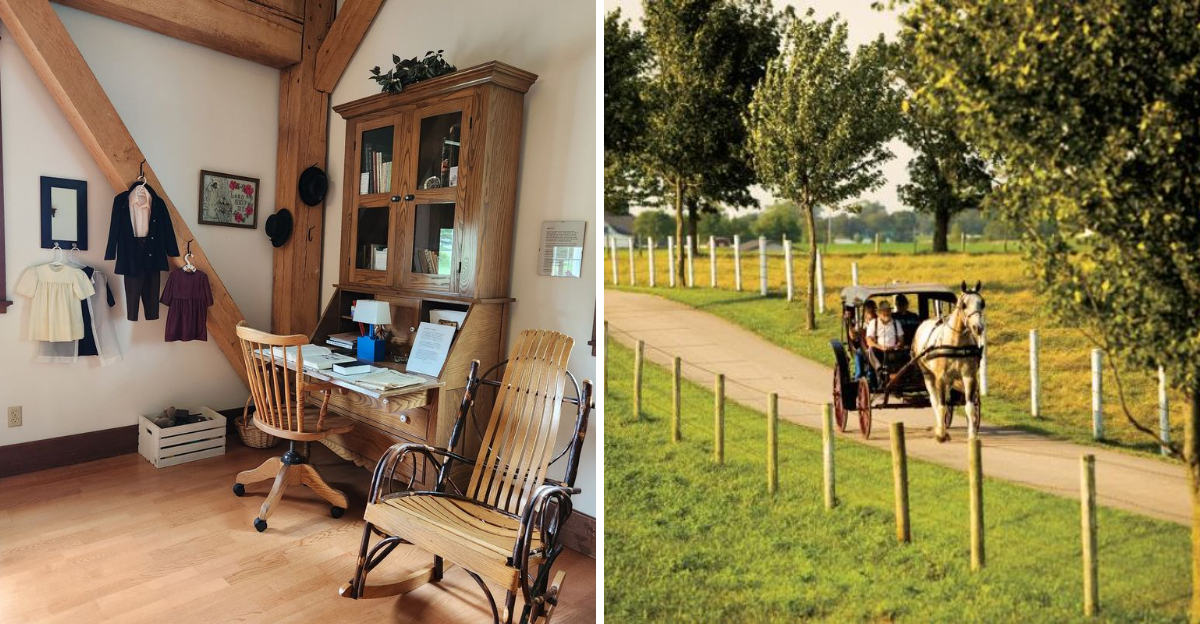
Indiana draws travelers with quiet roads, clip clop traffic, and hand lettered signs that hint at a way of life built on community.
You might think you know the Amish, yet myths linger, especially around technology, work, and worship.
This guide unpacks the biggest misunderstandings with places you can respectfully visit, learn, and observe daily rhythms across Shipshewana and Elkhart County.
Read on, and you will see Indiana with fresh eyes and kinder curiosity.
1. Taxes, Myths, and What the Law Really Says

As of 2026, Indiana hosts one of the largest Amish communities, and tax myths tend to swirl along US 20 near Shipshewana, Indiana, where buggies share space with pickup trucks.
Visitors often repeat the idea that Amish families do not pay taxes, which sounds catchy but is not accurate in daily life or in state records.
The reality is more ordinary, because they pay state and federal income taxes, property taxes, and sales taxes like other Hoosiers in Indiana.
Exemptions exist for Social Security and Medicare payroll taxes, which stems from the community belief that commercial insurance separates people from responsibility.
Mutual aid fills that gap, and church networks organize support for elders, widows, and large medical bills without public programs.
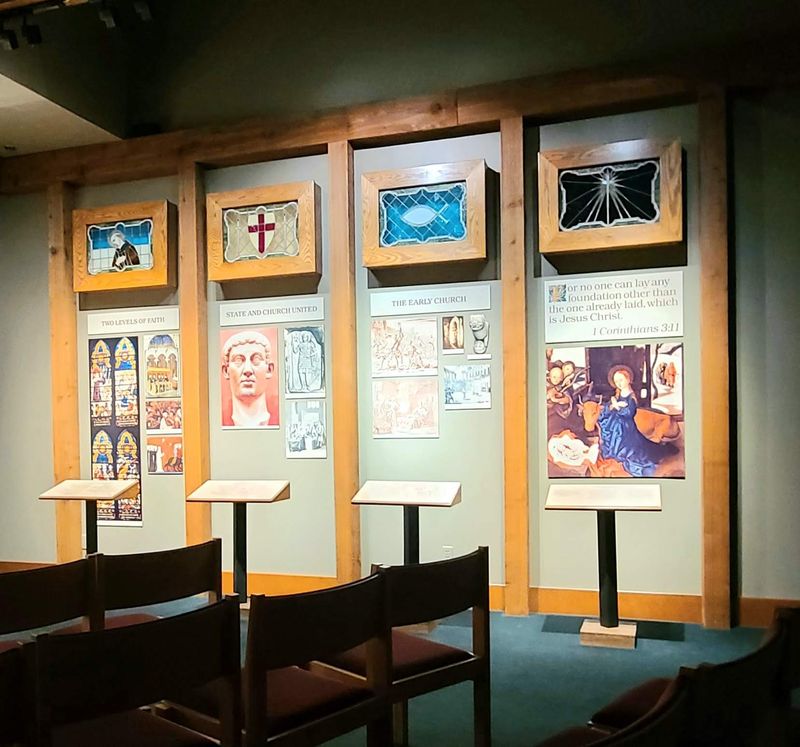
You will hear this explained at the Menno-Hof Amish Mennonite Information Center, 510 S Van Buren St, Shipshewana, IN 46565, where exhibits clarify money and community care.
The staff presents clear timelines, and the displays show how tax choices align with faith practices and practical tools like community funds.
Information panels include plain text, photos of barns, and a model house that traces household economy from farm to workshop.
If you arrive with a checklist of gotchas, you will leave with nuance, since exemptions do not mean avoiding every civic obligation in Indiana or beyond.
It helps to ask questions politely, skip assumptions, and remember that tax policy can be specific, narrow, and grounded in conscience rather than loopholes.
2. Why Technology Is Chosen, Not Shunned
People often picture a total ban on gadgets, yet in Indiana you will notice solar panels near cornfields and battery lights on buggies outside country stores.
The difference is discernment, since communities weigh each tool against family time, church life, and dependence on outside systems in a practical way.
Many shops use 12 volt batteries, pneumatic tools, or diesel compressors, and some permit flip phones for business calls during work hours.
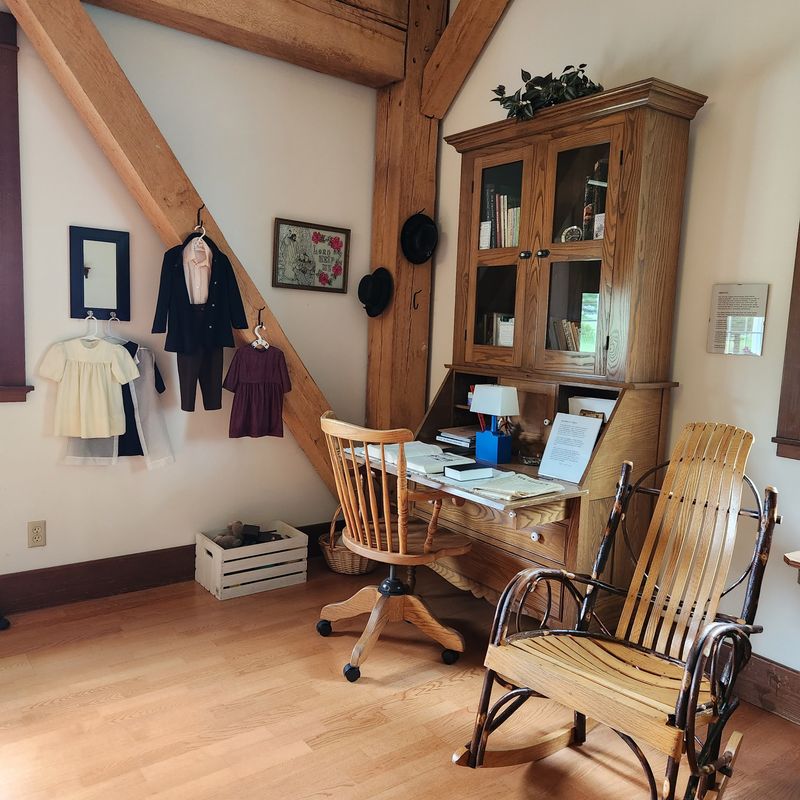
A good place to learn is the Heritage Ridge Amish Schoolhouse exhibit at Menno-Hof, 510 S Van Buren St, Shipshewana, IN 46565, where displays show home systems.
Panels explain why an air tool may be fine, while a wall outlet might not be, because grid power can symbolize unhelpful ties and constant convenience.
You will also see buggies with safety triangles and LED lamps, which local ordinances support for night travel and foggy mornings along rural lanes.
In shops around Middlebury, Indiana, expect to hear compressors chug as craftsmen shape oak and maple without a typical wired array overhead.
The point is not fear of circuits, it is guarding the pace of life, keeping work close to home, and limiting outside pull.
Indiana communities vary, so one district might allow a tool that another declines, and that difference reflects local Ordnung decisions.
Walk in with open eyes, read posted signs, and ask before photos, and you will understand why technology here serves people, not the other way around.
3. Beyond the Farm, Craft and Industry Thrive
Farming shaped early settlement, yet northern Indiana shows a diversified economy with woodshops, construction crews, and small factories running near Middlebury and Nappanee.
Visitors often assume every household milks cows at dawn, but many commute by buggy or van to furniture shops or RV component plants.
Craft skill stands out in dovetailed drawers, hand planed surfaces, and careful sanding, all supported by pneumatic lines and a steady hum of compressors.
For a look at working life, stop by the Heritage Trail welcome point at the Elkhart County Visitors Center, 3421 Cassopolis St, Elkhart, IN 46514, then follow marked routes.
The center outlines shop etiquette, hours, and how to step inside respectfully without disrupting production or privacy during a busy weekday.
In Nappanee, Indiana, small enterprises line county roads, where signs point to custom cabinetry, quilt shops, and buggy repair sheds behind tidy homes.
RV industry ties are real, as some Amish employees build cabinetry or install trim under arrangements that fit community transportation limits.
The distinction is choice, pursuing honorable work that supports families while avoiding workplace cultures that stretch time away from home.
Seasonal rhythms still matter, since planting, canning, and school calendars shape shop schedules and pickup times for deliveries.
If you travel the Heritage Trail, you will see that modern Indiana industry and Amish craft sit side by side, different yet mutually supportive.
4. Healthcare Decisions, Plain and Practical

The idea that Amish families avoid doctors altogether does not hold up in northern Indiana, where clinics and hospitals see plain community patients daily.
Most households use modern medicine for emergencies and specialist care, yet they organize payment through church funds rather than commercial insurance.
That choice keeps costs transparent and supports mutual accountability, with negotiated rates and prompt cash payments after procedures.
You can observe this ecosystem at Parkview LaGrange Hospital, 207 N Townline Rd, LaGrange, IN 46761, where staff are accustomed to buggy parking and family visits.
Reception areas often include signage about financial counseling, which helps self pay families arrange plans that fit community norms and budgets.
Preventive care also exists, with midwives, family practitioners, and dental clinics serving rural routes across Elkhart County and nearby towns.
Privacy is valued, so photography near entrances should be avoided, and conversations should respect family choices and church counsel.
Herbal knowledge remains part of daily life, yet serious conditions move quickly to hospitals, and follow up happens at home with church support.
The balance is not rejection of science, it is stewardship of time, money, and dependence on outside systems that can become controlling.
Indiana providers have learned to meet patients where they are, which shows that care can be modern, respectful, and community centered.
5. Courtship, Choice, and Community Weddings

Arranged marriages make good television scripts, yet in Indiana Amish towns, couples choose each other through familiar courtship patterns and youth gatherings.
Social life blooms in singings and after church visits, and friendships deepen into steady dating with parents and church leaders offering guidance.
Proposals are quiet, home centered, and intentional, building trust long before a wedding service held in a house or a barn.
To understand the rhythm, visit the Dutch Creek Farm Animal Park office area, 6255 N 1000 W, Shipshewana, IN 46565, which provides context on local customs during tours.
Staff emphasize respect, reminding guests that weddings are private church events, not public entertainment for busy travel days.
On weekends, roads fill with relatives in buggies, and helpers arrive early to set benches, cook, and welcome long distance family groups.
Gifts tend to be practical, like linens or tools, and the service focuses on vows, faith, and community promises that endure.
The couple joins the church as adults, and baptism usually precedes marriage, anchoring the household in shared belief and accountability.
After the ceremony, laughter continues at a home meal, and cleanup teams work with care so the family can rest.
Indiana hospitality feels steady rather than showy, which fits a culture that prizes simplicity and long term commitment over spectacle.
6. Rumspringa, Freedom With Boundaries

Rumspringa is often sold as chaos, but in Indiana it mostly looks like youth group gatherings, volleyball, and visiting town for simple activities.
The purpose is space to choose baptism, which means exploring a bit of independence while staying near family and church friends.
Stories of rebellion do happen, yet the norm is mild, social, and structured by curfews, chores, and weekly worship rhythms.
Visitors can learn at Menno-Hof, 510 S Van Buren St, Shipshewana, IN 46565, where panels map the path from adolescence to membership.
Staff highlight the choice to join the church as a conscious decision, not a default, and they explain how community elders support youth.
Transportation during this time might include hired drivers, bicycles, or a van ride to a bowling alley in nearby towns.
Phones, music, and clothing vary by district, and the Ordnung sets boundaries that keep experiments from becoming lifelong detours.
In Indiana, youth choirs and work crews create positive bonds, which reduces the pull of distractions that outsiders expect.
Ask guides about respectful etiquette, since approaching youth for photos is not appropriate, especially near private farms and church homes.
When you see a group laughing by a gym, remember the deeper story, a careful bridge between childhood and a chosen adult faith.
7. Worship Without Church Buildings

The absence of a steeple leads some travelers to assume there is no church life, yet services happen every other week in Indiana homes and barns.
Benches arrive on a wagon, elders guide the morning, and hymns rise without instruments in slow, steady harmony that fills the room.
Lunch follows worship, and conversation lingers long after dishes are stacked and children tumble outside to play.
To learn respectfully, stop at Menno-Hof, 510 S Van Buren St, Shipshewana, IN 46565, where exhibits explain worship flow and song traditions.
Displays show how bench wagons are shared across a district, and how families rotate hosting duties with grace and careful planning.
There is no posted schedule, so visitors should not seek services, since these are private gatherings centered on church members.
Architecture reflects that privacy, because barns and homes adapt to fit attendance, weather, and harvest time commitments.
In Indiana, the approach keeps faith close to daily life, with sermons offered in familiar rooms and seasons framed by farm work.
You might pass a lane lined with buggies and never know, which is precisely the point, quiet worship rather than public display.
Carry that awareness as you travel, and let the lack of a building remind you that community is the true sanctuary here.
8. Travel by Buggy, Ride by Car
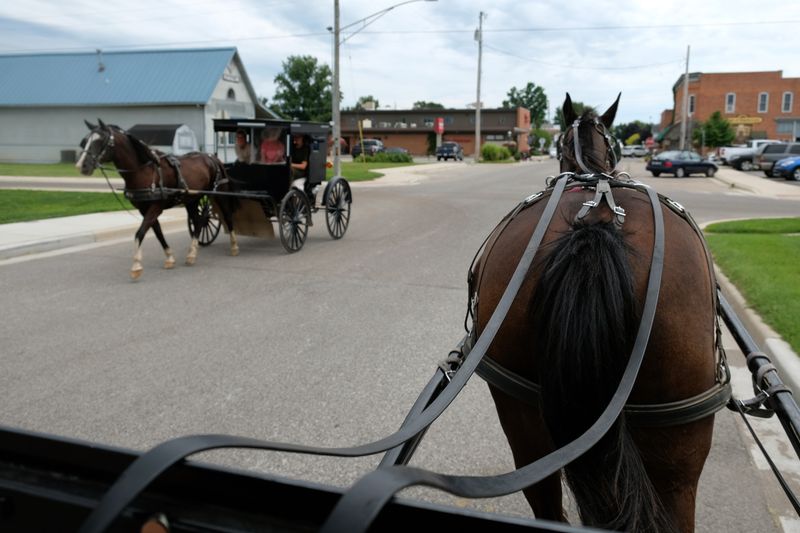
Driving rules confuse outsiders, because Amish households avoid owning cars while still riding as passengers when distance or weather demands it.
You will see hired vans waiting near shop doors in Middlebury, Indiana, and buggies parked neatly outside hardware stores along the county roads.
Taxi services coordinate routes for appointments, shopping, and job sites, which keeps families mobile without personal ownership or licensing.
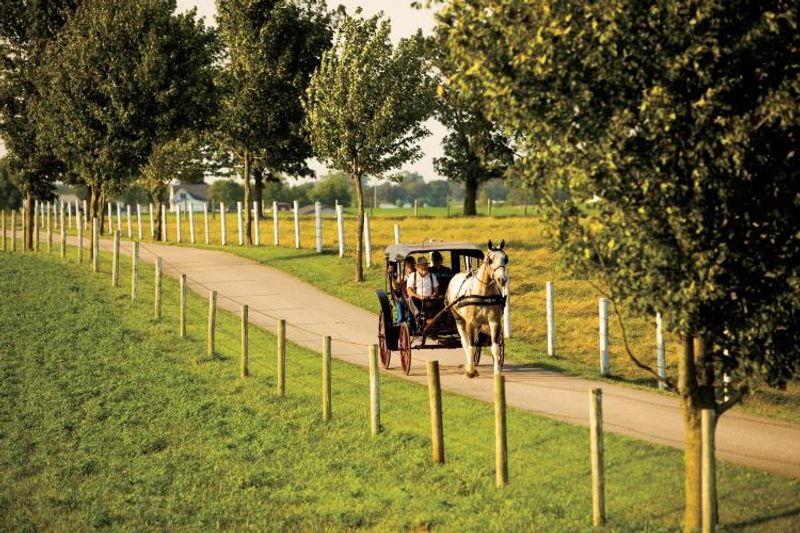
Safety gear on buggies is not decoration, with reflective triangles, LED lamps, and slow moving vehicle rules enforced by local ordinances.
For context on road sharing, visit the Shipshewana Visitor Center, 345 S Van Buren St, Shipshewana, IN 46565, where maps mark buggy lanes and pull offs.
Staff offer tips on passing safely, leaving extra room, and avoiding flashes that can startle horses on narrow curves.
Parking areas often include hitching rails, and you will notice tidy manure cleanup, which keeps sidewalks pleasant for everyone.
Indiana highways post caution signs before hills and intersections, and motorists learn patience during festival days and market mornings.
The habit of riding rather than driving fits the community focus on slow travel, face to face time, and shared resources.
If you match that pace for a day, the road opens up, and the sound of hooves becomes a guide for gentler exploring.
9. One Name, Many Rules, Local Ordnung
There is no single Amish rulebook, and Indiana proves it with districts that set their own Ordnung, which can shift from village to village.
Clothing details, phone use, buggy color, and shop machinery rules vary, and neighbors may follow noticeably different patterns on the same road.
That diversity often surprises travelers, who expect uniform dress and identical homes from county line to county line.
Menno-Hof, 510 S Van Buren St, Shipshewana, IN 46565, offers a map of settlements and a timeline that highlights migration and local governance.
Guides explain how bishops, ministers, and deacons serve without pay, and how community meetings lead to gentle yet firm decisions.
When disputes arise, discussion and consensus move slowly, and families sometimes relocate to districts where practices feel more fitting.
In Elkhart County, Indiana, you will notice practical variations like battery setups, scooter use, and different window styles in new homes.
Respect grows when you treat each district as distinct, asking kindly before photos and noting posted guidelines at shop entrances.
Uniform labels erase people, while local Ordnung tells the real story, one careful detail at a time.
Travelers who listen, read, and pause will leave Indiana with a more accurate picture, many communities inside one broad tradition.
10. School to Eighth Grade, Then Skills

Formal schooling usually ends after eighth grade, and in Indiana this blends into apprenticeships, home duties, and structured hands on learning.
The decision is not anti learning, it is a belief that higher education can pull youth away from community and practical work.
Reading, math, and writing remain strong, since shop orders, farm records, and ledgers require accuracy and careful attention.
You can see a preserved classroom at Menno-Hof, 510 S Van Buren St, Shipshewana, IN 46565, where slates, desks, and maps line neat walls.
Visitors hear how teachers are often young women from the church, and how lessons mix spelling, scripture, and daily arithmetic.
After school years, teens join crews that build barns, craft furniture, or sew quilts, learning safety and quality control from elders.
Indiana employers value reliability, and many shops design roles that grow with skill while keeping schedules family friendly.
State law respects this pathway, balancing education requirements with cultural rights affirmed by court decisions and thoughtful policies.
Field trips by buggy still happen, and chores turn into competencies that support future households and small business ventures.
Travelers who glimpse a recess game or a row of scooters should see not an ending but a deliberate beginning toward capable adulthood.
11. Where to Learn Respectfully and Well
Curiosity deserves good sources, and northern Indiana makes that easy with interpretive centers, visitor hubs, and marked heritage routes.
Start at the Shipshewana Visitor Center, 345 S Van Buren St, Shipshewana, IN 46565, where staff outline etiquette and current cultural programs.
Then head to Menno-Hof, 510 S Van Buren St, Shipshewana, IN 46565, which presents accurate timelines, dioramas, and personal stories from Amish and Mennonite voices.
Maps there help you navigate county roads without crowding private lanes, and they point to shops that welcome guests during business hours.
The Elkhart County Visitors Center, 3421 Cassopolis St, Elkhart, IN 46514, rounds out the picture with Heritage Trail resources and travel tips.
These stops keep your trip grounded, so you avoid rumor chasing and focus on real places, real people, and respectful distance.
Indiana rewards that approach with meaningful encounters, like a wave from a passing buggy or a quiet chat at a bench outside a store.
Photography rules matter, so always ask at shops and never aim cameras at private homes or schoolyards on rural stretches.
Move slowly, park thoughtfully, and remember that everyday life continues while you explore back roads and small town squares.
With patience and good maps, you will leave Indiana informed, welcomed, and ready to share truths that replace tired myths.
Dear Reader: This page may contain affiliate links which may earn a commission if you click through and make a purchase. Our independent journalism is not influenced by any advertiser or commercial initiative unless it is clearly marked as sponsored content. As travel products change, please be sure to reconfirm all details and stay up to date with current events to ensure a safe and successful trip.
