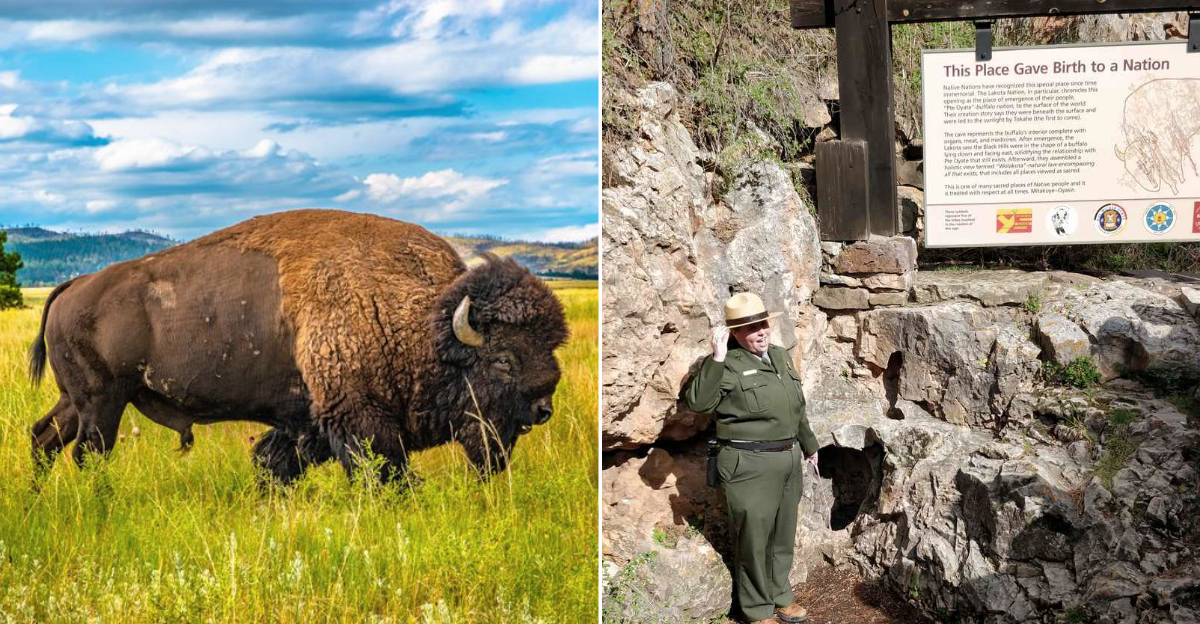
If we are mapping out this South Dakota loop, I need to say this out loud because it keeps coming up in trip stories from friends who tried it anyway. You know those bison you see near Custer State Park or out on the grasslands, looking chill and slow and kind of petlike from the car?
They are not looking for snacks from people, and if they ever start doing that, the whole situation gets weird fast. What starts as a harmless gesture can turn into blocked roads, stressed animals, and rangers stepping in before things escalate.
Let me lay out what really happens when visitors try to feed them, because it changes the animals, the herd, and the day in ways you do not want.
Bison Begin Associating People With Food
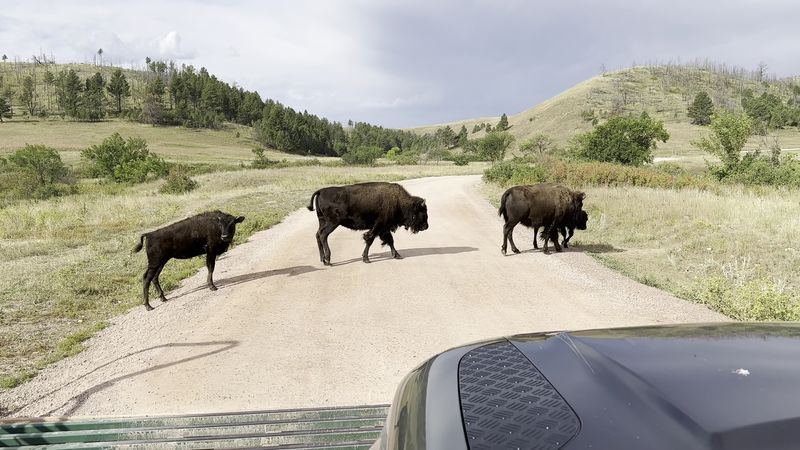
You know how ducks at a pond start crowding around when someone throws bread? Bison in South Dakota can learn the same pattern if people hand out snacks or toss food from a window.
At Custer State Park, 13329 U.S. Highway 16A, Custer, you will see it play out when bison drift toward pullouts where folks stop too long.
Over time the animals start expecting handouts instead of foraging like they normally do.
That habit throws off their daily rhythm and the spacing they keep around vehicles. They begin treating parked cars like mobile feed bins.
Once that connection sticks, you get bison approaching from the front or side where drivers do not see them. A quick turn of a head can mean a horn bumps metal, or worse, a person standing too close.
It also confuses calves watching adults break the natural distance.
Young animals copy what works, which means more pushy behavior in the next season.
Honestly, it is like rewiring a wild brain with a snack-sized bribe. You short-circuit the healthy caution that keeps everyone in a decent bubble.
There is another ripple you can feel on the road. When bison walk up expecting food, traffic stops more often, and that trains even more animals to wander the shoulder.
So the chain reaction is not just about one person and one bag of chips. It becomes a routine that sticks to the landscape long after you drive away.
Animal Behavior Becomes Less Predictable And More Aggressive
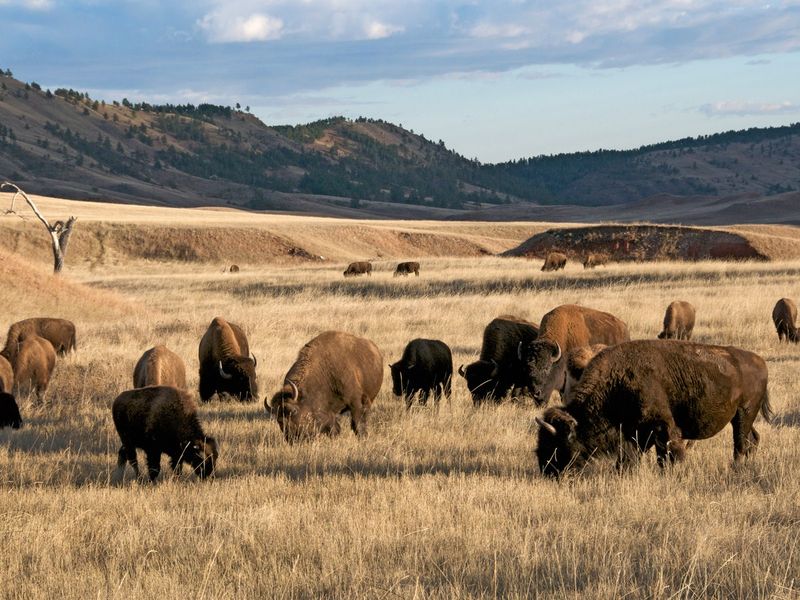
The minute food enters the scene, you can feel the mood tighten. Bison start sorting out who gets space near the treat like it is a moving buffet line.
At Wind Cave National Park, 26611 U.S. Highway 385, Hot Springs, that shift shows up as short feints and head tosses around the road edges.
It is not a cute quirk, it is a real hierarchy clicking into gear.
One animal steps in, another squares its shoulders, and suddenly a calm group is twitchy.
The signals are subtle until they are not.
A person might think the big shaggy head nod is friendly. It is not, it is a warning that says back up right now.
Feeding makes those messages arrive faster because the reward is close.
The distance buffer shrinks, and reactions come hot.
Even cars change the script. A door opening can be read like a challenge or an opportunity depending on where the food was last time.
That is why rangers sound repetitive about staying inside vehicles and keeping room. Predictability keeps the bison predictable too.
When visitors hold back, the herd keeps its normal pace and personal space, and you get that calm, slow-motion prairie vibe.
When visitors offer food, you get hard turns, charged stares, and the kind of energy that makes neck hair stand up.
Close Encounters Increase Injury Risk For Visitors
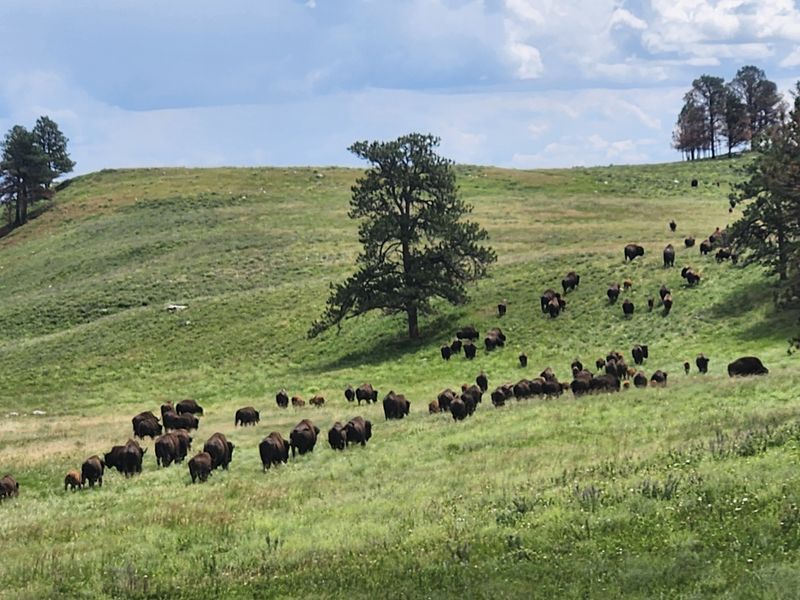
Here is the part nobody wants to learn the hard way. A bison can pivot and cover ground faster than your brain expects.
In Custer State Park, 13329 U.S. Highway 16A, Custer, the shoulders look safe because they are wide and open.
But that open space makes it easy for an animal to close the gap if it feels crowded or keyed up by food.
People think a slow head swing means plenty of time. It can be a prelude to a quick hop and a shove.
Getting out to take a selfie near a feeding situation multiplies the risk.
The bison are paying attention to the food source, not your personal bubble.
Horns are not props. Even a light push can knock a person down against gravel or a bumper.
The scariest part is how quiet it happens. One second you are joking about how big they are, and the next second the car door is not protection anymore.
Keep it simple and stay in the vehicle with the window up when they are close.
If traffic is blocked, wait it out without trying to lure them aside.
You will still get the story and the photo from a safe distance. You will also keep your timeline free of the emergency detour nobody planned for in South Dakota.
Rangers Treat Feeding As A Major Safety Violation
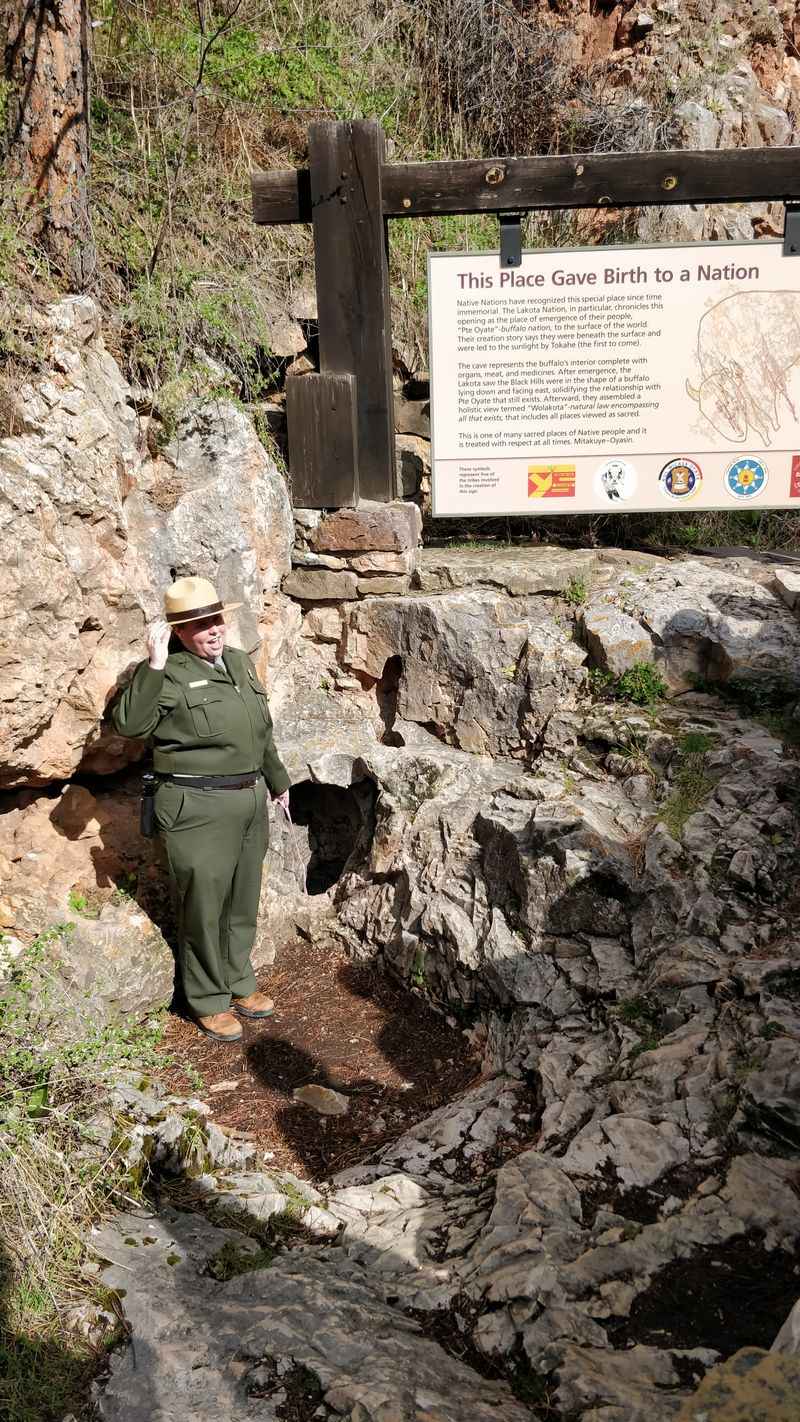
If you have ever chatted with a ranger, you know they repeat the distance rules for a reason. Feeding is not a small slip, it is a full safety violation that pulls focus from bigger jobs.
At Wind Cave National Park, 26611 U.S. Highway 385, Hot Springs, rangers handle traffic control, resource protection, and wildlife education.
When someone starts tossing food, that entire checklist tilts toward preventing a bad encounter.
They will approach, give clear instructions, and document what happened. It feels formal because it needs to be.
The goal is not to lecture, it is to keep you and the herd from colliding. Once food is involved, the chance of a quick lunge jumps.
Rangers also worry about the next car that rolls up.
If bison are still milling around expecting more, the scene becomes a magnet for repeats.
You will notice signage is direct and consistent. It is there so nobody can claim confusion about the rules.
Think of it like guardrails on a curvy road. The structure keeps most people on track, and rangers step in when someone drifts.
Keep the snacks for the picnic table far from wildlife zones, and you avoid a talk you did not plan to have. You also help the next family arrive to calm bison instead of a small roadside circus.
Fines And Legal Consequences Are Common
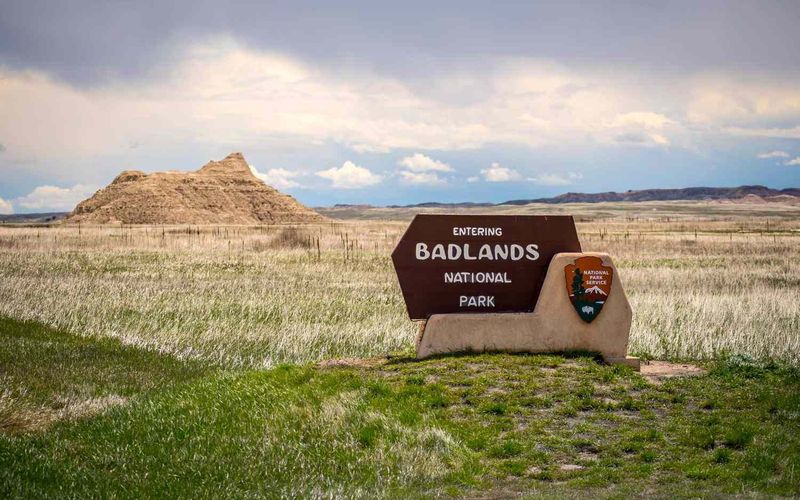
Let me say this gently, because it surprises people. Feeding wildlife can bring fines, and that is not rare in places with bison.
At Badlands National Park, 25216 Ben Reifel Road, Interior, rules against feeding are printed, posted, and reinforced by staff. Enforcement is part education and part accountability.
When rangers witness feeding or get a solid report with details, they can write it up.
The point is to stop a chain of harm before it grows.
Legal consequences also send a message to everyone watching from nearby vehicles. You know how crowds form when bison block a road, and suddenly many eyes are on you.
If that moment turns into a cautionary tale, it reaches more people than any handout.
Nobody wants their vacation story to be a citation story.
The better story is simple. You kept the window up, let the herd pass, and moved on to the next viewpoint.
South Dakota parks and federal lands are clear about protecting wildlife behavior. The law backs that clarity when needed.
So skip the temptation to test the line because other folks seem casual.
The rules apply every mile you travel, and they follow you from the Badlands to the Black Hills without a pause.
Problem Animals May Be Relocated Or Closely Monitored
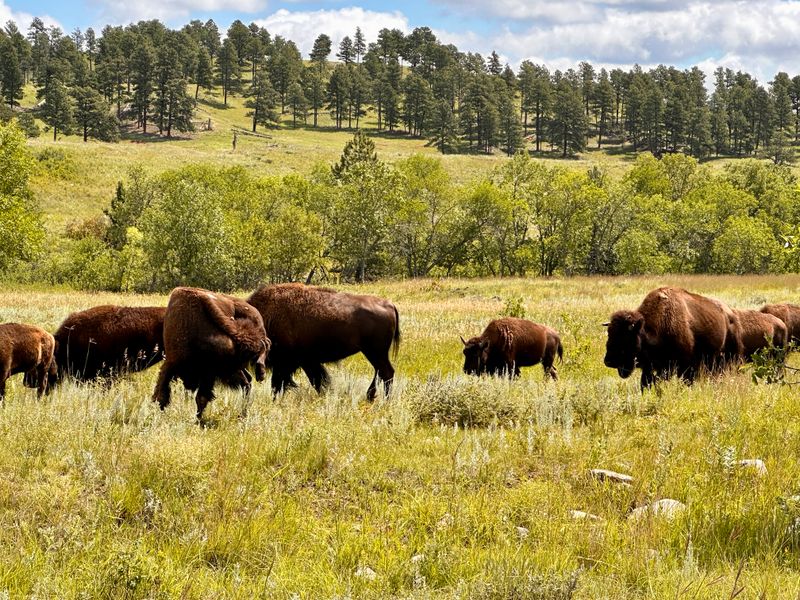
When feeding starts shaping behavior, managers sometimes have to track the animals more closely.
You might notice ear tags or see staff watching from a distance with scopes.
At Custer State Park, 13329 U.S. Highway 16A, Custer, and across nearby public lands, that monitoring helps identify individuals that hang around roads.
Those animals can learn to loiter for handouts and bluff cars.
If the pattern holds, relocation may enter the conversation. No one takes that lightly because it is stressful for wildlife.
Monitoring can also include temporary closures or signed detours.
The goal is to break the loop that food created.
Think about it from the herd view. One pushy bison can pull others toward the shoulder and make the whole group road-smart in the wrong way.
With steady oversight, the habit can fade as the animals stop getting rewards. It is slow, but it works more often when visitors hold the line.
You and I can help by treating cameras like binoculars, not invitations.
Park once, stay inside, and let the animals be animals.
When managers do not need to step in, the prairie stays quiet and wild. That is the version of South Dakota you came for, not a scene that needs a management plan every afternoon.
One Incident Can Alter Herd Movement Patterns
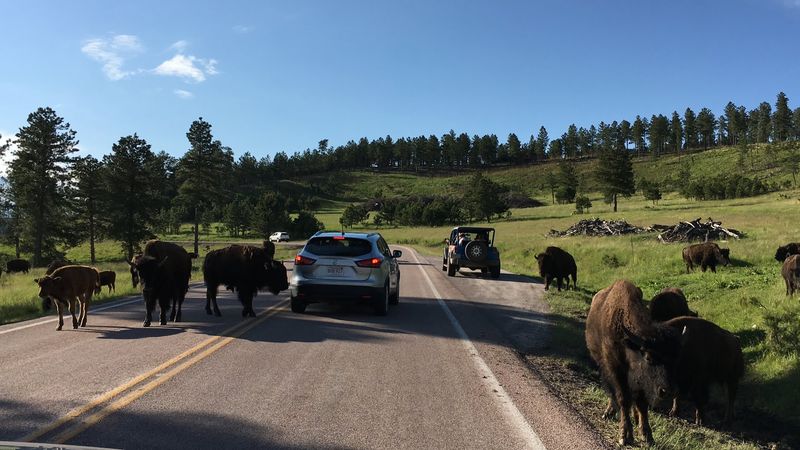
It is wild how a single feeding moment can ripple through herd decisions. Animals remember easy meals, then drift that way on the next pass.
On the Wildlife Loop Road in Custer State Park, 13329 U.S. Highway 16A, Custer, the pattern looks like late-day bunching by popular pullouts.
Vehicles line up and the herd angle shifts to meet them.
That shift adds more close approaches, more brakes, more tossed snacks. It is a feedback loop built from small choices.
Break the loop and the herd resumes normal grazing routes. No special stop points, no roadside clustering.
The landscape even wears the habit. You can see new trails forming near curbs and ditches where bison kept crossing for handouts.
It is not just a convenience shortcut, it becomes movement memory.
Calves grow up thinking that bend in the road is part of daily life.
If you want a smoother drive and calmer animals, you have to be boring. Stay predictable, keep rolling when the road is clear, and park at signed overlooks.
Then the herd spreads back into the grass where it belongs, and you get that big sky rhythm again. It is better for photos, better for traffic, and way better for the animals making a living on South Dakota grass.
Social Media Exposure Encourages Repeated Mistakes
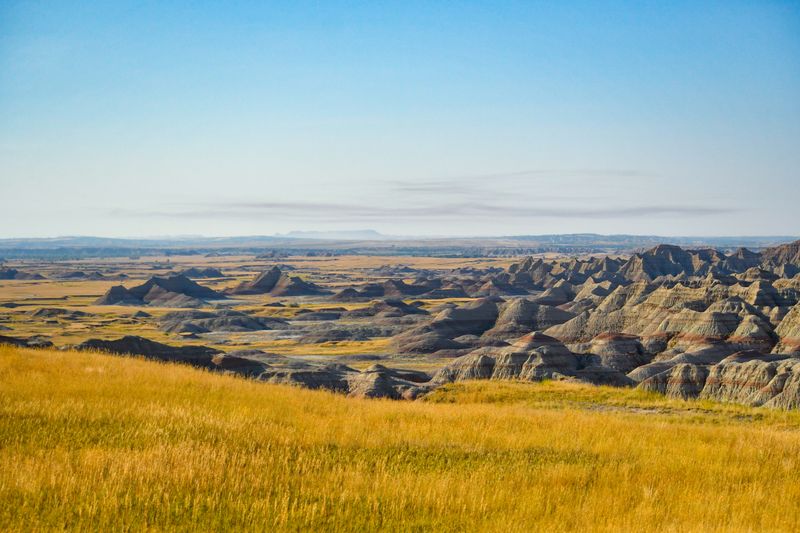
You have seen those clips where someone edges closer and everyone in the comments argues. That stuff travels faster than any ranger talk can.
At Badlands National Park, 25216 Ben Reifel Road, Interior, the overlooks make perfect stages for viral moments.
When one risky scene gets attention, others try to copy it for a better view.
Social energy shifts the mood around wildlife. Suddenly people are watching phones more than body language.
It feels normal to inch forward because the camera frame looks neat. The problem is that bison do not read captions, they read proximity.
The fix is to film smart. Use zoom, stay in the car, and let the animals be the ones moving, not you.
I like to set the phone on the dash and let the scene roll.
The story is prettier when it is quiet and respectful.
When visitors model that vibe, the crowd follows, and the copycats drift away. South Dakota still gets its show, but without turning wildlife into props under pressure.
Visitors Consistently Underestimate Bison Size And Speed
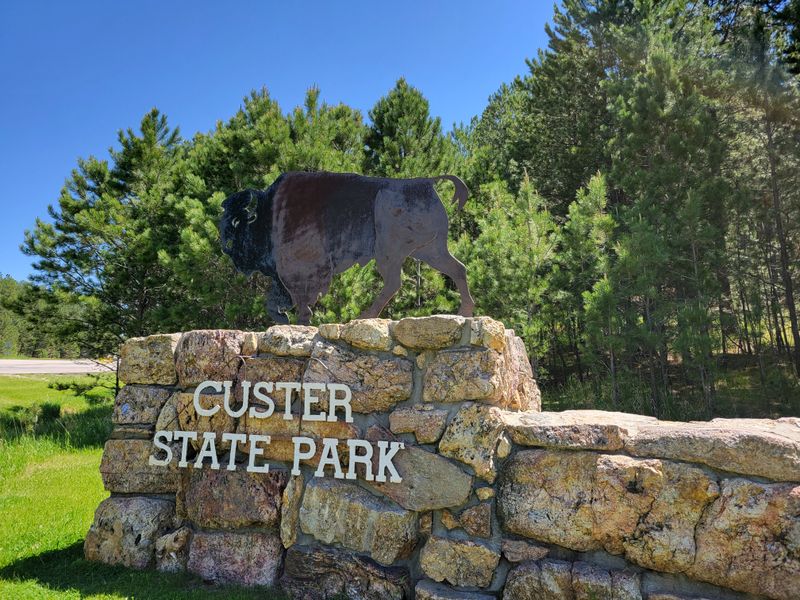
Your eyes lie a little when you look through glass. Bison seem slower and smaller from behind a windshield frame.
Drive the Needles Highway area near Custer State Park, 13329 U.S. Highway 16A, Custer, and you will see it happen.
People step out thinking there is tons of time, then the animal turns and closes space like a sliding door.
Those shoulders and that hump are not fluff. Underneath is a motor that can spool up without a dramatic run-up.
It is easy to forget scale until a head fills the side window. At that point the only good move is to be already inside and still.
Speed plays mind tricks on flat ground.
What looks like a lazy trot can eat distance in a blink.
Give yourself margin so your brain can lag and you still stay safe. That means distance, patience, and windows up.
Tell the folks in your car what the plan is before the herd appears. No door popping, no snacks, no sudden steps toward a calf.
Then you get to keep the moment wide and quiet and honest. That is the way to feel South Dakota in your chest without the adrenaline spike.
Park Rules Prioritize Distance To Protect People And Wildlife
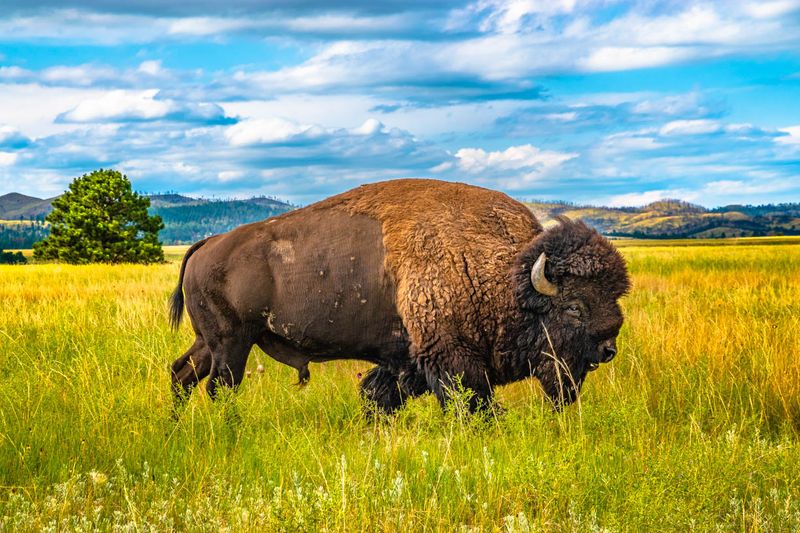
Distance is the whole game with bison. It keeps the animals in their comfort zone and you in yours.
Wind Cave National Park, 26611 U.S. Highway 385, Hot Springs, posts clear guidance about staying back and never feeding.
Custer State Park and Badlands National Park echo the same message across entrances and pullouts.
The signs are not there to ruin the fun. They are the least fussy way to keep a day from bending sideways.
When everyone follows the spacing rules, the herds stay spread and calm. You feel it in how the road breathes.
I like to think of it as good trail etiquette applied to a car.
Let wildlife set the pace and you simply observe.
South Dakota gives you big views without needing front row seats. The best look often comes from farther back with a clean angle.
So we roll the windows up, keep the snacks tucked away, and let the moment pass through. The memory lasts longer when the animals barely notice us.
That is the road trip we want to remember on the drive home.
It is safer, simpler, and exactly how these prairies stay wild.
Dear Reader: This page may contain affiliate links which may earn a commission if you click through and make a purchase. Our independent journalism is not influenced by any advertiser or commercial initiative unless it is clearly marked as sponsored content. As travel products change, please be sure to reconfirm all details and stay up to date with current events to ensure a safe and successful trip.
