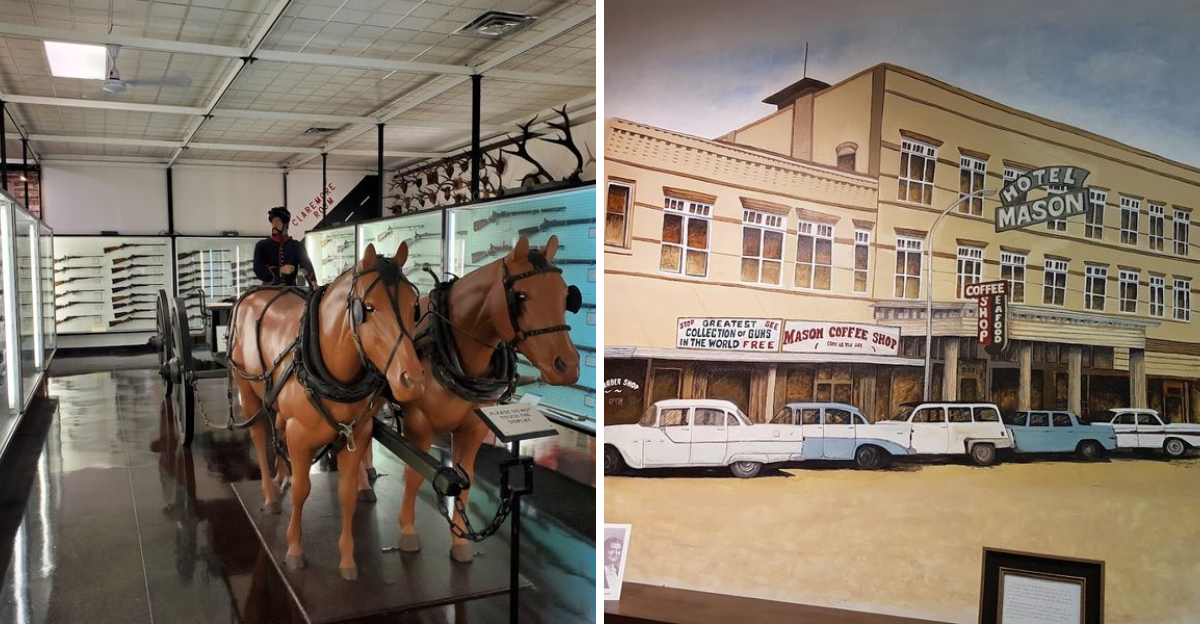
Imagine spending decades quietly collecting pieces of history, one artifact at a time, until your personal passion grows into something the entire world wants to see.
That is exactly what happened in Claremore, Oklahoma, where one man’s lifelong dedication turned into a museum that holds the largest privately-held collection of its kind on the planet.
The J.M. Davis Arms & Historical Museum is not just a building full of old objects.
It is a living story about one person’s love for history, and walking through it feels less like visiting a museum and more like stepping into someone’s extraordinary life.
The Man Behind the Collection
Some people collect stamps. Some collect baseball cards.
J.M. Davis collected history on a scale that nobody else has ever matched, and the story of how it happened is genuinely hard to wrap your head around.
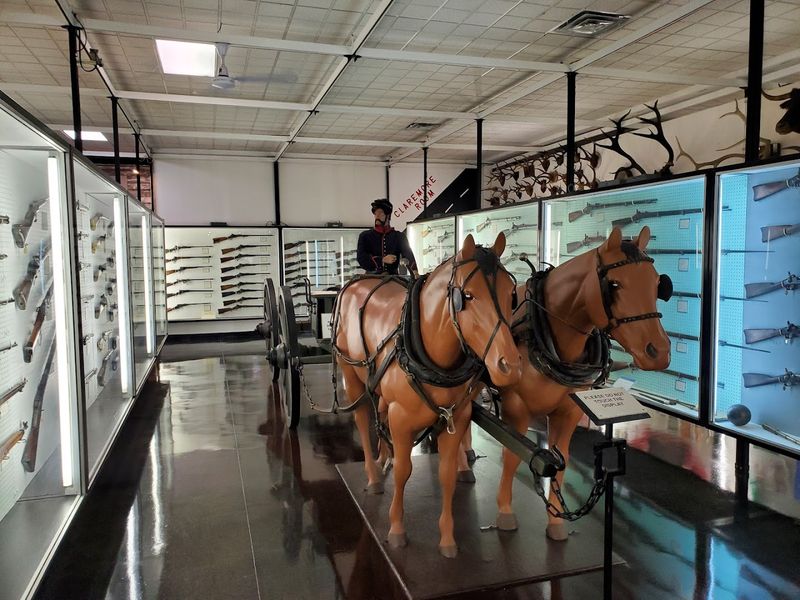
Davis was an Oklahoma businessman who started acquiring historical artifacts as a personal hobby, not as a grand plan to build a world-famous museum. Over several decades, his collection grew from a handful of curiosities into more than 12,000 individual items, many of them rare and one-of-a-kind.
The sheer commitment behind that number is staggering when you stop to think about it.
What makes his story even more compelling is that it was deeply personal. Every piece in this museum was chosen by one man with a genuine fascination for the past.
You can feel that energy the moment you walk through the door.
A short documentary video about Davis plays inside the museum, and it is absolutely worth watching before you start your tour. It gives you context that makes everything you see afterward feel more meaningful.
Knowing the person behind the collection changes how you experience each display case, each artifact, each carefully written information card.
Davis is actually laid to rest at the museum, which surprised many visitors, including me. It adds a quiet, respectful weight to the whole experience that you do not expect going in.
Walking Into a World Record
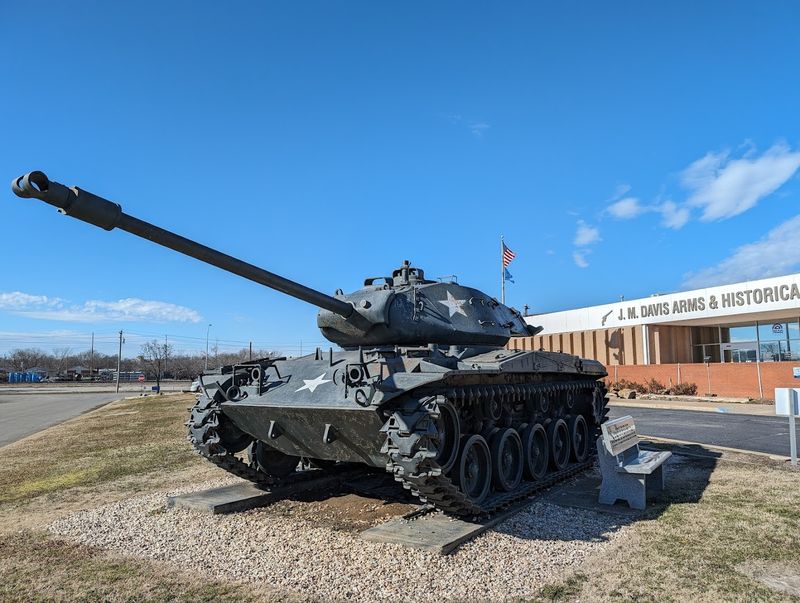
Holding a world record is not something most small-town museums can claim, but this one does it with remarkable calm. There is no flashy banner over the entrance, no dramatic countdown clock, no gift shop full of record-breaking merchandise.
Just row after row of history, quietly doing its thing.
The collection at the J.M. Davis museum officially stands as the largest privately-held collection of its kind in the world, with over 12,000 items on display.
Walking the length of those display cases feels like a genuine workout, both physically and mentally. Most visitors report spending at least two hours inside, and many say they ran out of time before they ran out of things to look at.
The layout is logical and easy to follow, which matters more than you might think in a space this large. You can move through the exhibits in a way that tells a chronological story, watching history unfold from one era to the next without feeling lost or overwhelmed.
The building is all on one level, which makes it fully accessible and easy to navigate at whatever pace suits you. There are also places to sit throughout the museum, a small but thoughtful detail that makes a real difference when you are deep into hour two of exploring.
Plan your visit on a weekday for a quieter experience.
More Than One Kind of History
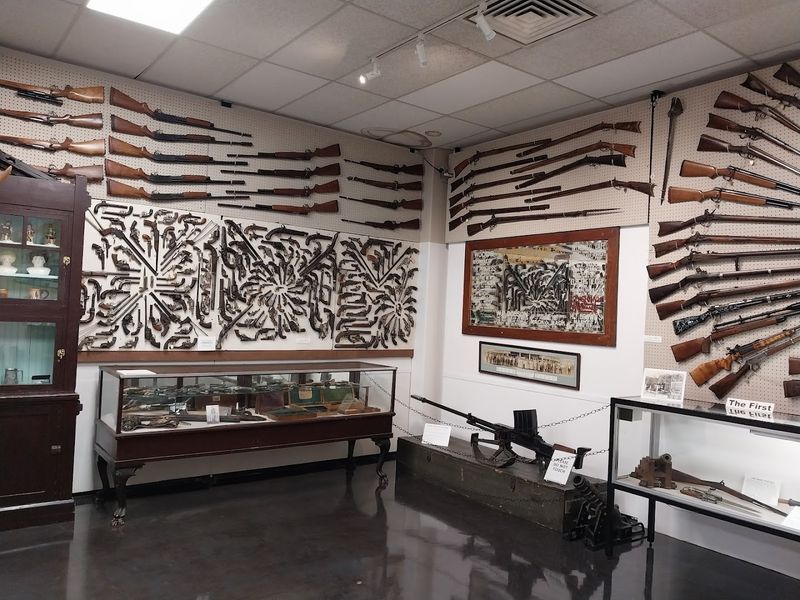
Here is the thing people get wrong before they visit: they assume this museum is only about one subject. It is not.
Not even close.
Alongside the main collection, the museum houses an impressive range of artifacts that cover a wide sweep of American and Oklahoma history. There are Old West saddles and spurs that look like they belong in a Hollywood film set.
There is a collection of John Rogers statuary, Toby mugs, and decorative beer steins that would make any antique dealer stop and stare. World War I posters line certain sections, their bold graphics still striking after more than a hundred years.
Local Claremore and Rogers County history gets its own dedicated space, which adds a deeply regional flavor to the experience. It grounds the collection in a specific place and time, reminding you that this is not just a generic history museum but one rooted in Oklahoma identity.
There is also a section dedicated to Native American artifacts, which feels important and is handled with genuine respect. The breadth of what Davis collected over his lifetime is honestly astonishing.
He was not narrowly focused. He was curious about everything, and that curiosity is visible in every corner of the building.
Even visitors who arrive with low expectations consistently leave surprised by how much there is to discover beyond what they anticipated finding.
The Railroad History Section Nobody Talks About
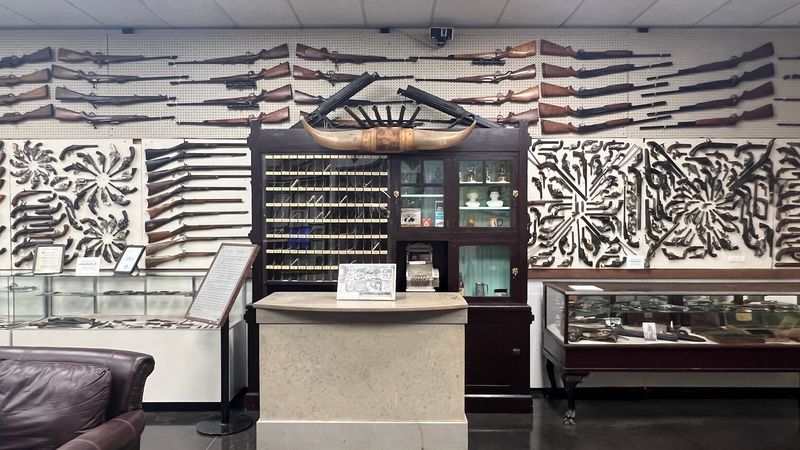
Nobody seems to mention this section in casual conversation about the museum, and I genuinely cannot figure out why, because it is one of the most interesting corners in the whole building.
The railroad history display offers a solid and well-organized look at an era of American expansion that shaped the country in ways people still underestimate. Rail travel was not just transportation.
It was the engine of an entire civilization, connecting cities, moving goods, and stitching together a nation that was still figuring out what it wanted to be.
For Oklahoma specifically, railroad history carries enormous cultural weight. The rail lines that ran through this part of the country played a direct role in shaping communities, economies, and migration patterns across the region.
Seeing that history represented inside a Claremore museum feels right and overdue.
The exhibits are informative without being overwhelming, which is the sweet spot for a museum section that could easily have become too dense or academic. There is enough visual material to keep your eyes engaged while the written context fills in the gaps.
If you are the kind of person who speeds through museums to hit the highlights, do yourself a favor and slow down here. The railroad section rewards patience, and it tells a story that connects directly to the world outside the museum’s front door in ways you might not expect.
The Outlaw Section That Stops You in Your Tracks
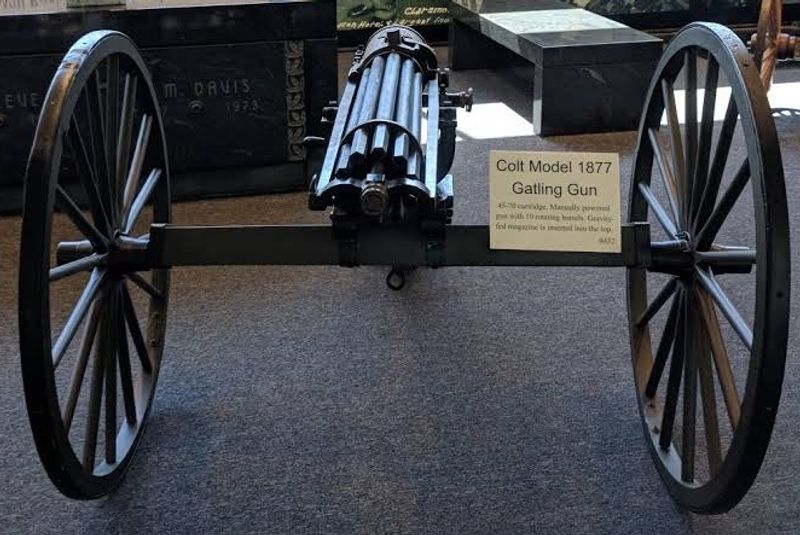
You are moving along at a comfortable browsing pace, reading cards, glancing at displays, and then you turn a corner and suddenly the whole mood of the room shifts.
The outlaw section of the J.M. Davis museum is one of those rare exhibits that genuinely makes you stop walking.
It is dedicated to famous criminals from the 1920s and 1930s, that wild and chaotic era of American history when outlaws became folk legends almost overnight. The artifacts here are the real thing, not reproductions, not approximations.
Actual items connected to actual historical figures.
Among the most striking pieces on display are hangman’s nooses, preserved under glass and accompanied by historical context that makes them feel both sobering and significant.
It is the kind of object you do not expect to encounter in a small-town Oklahoma museum, and that surprise is part of what makes it so memorable.
The display is handled thoughtfully, without sensationalizing the violence of the era while still acknowledging its reality. There is a balance here between historical education and human dignity that not every museum manages to strike.
Visitors consistently mention this section as one of the most talked-about parts of the experience. It is the kind of exhibit you find yourself describing to friends later, starting with the phrase, you are not going to believe what I saw.
Route 66 Runs Right Past the Front Door
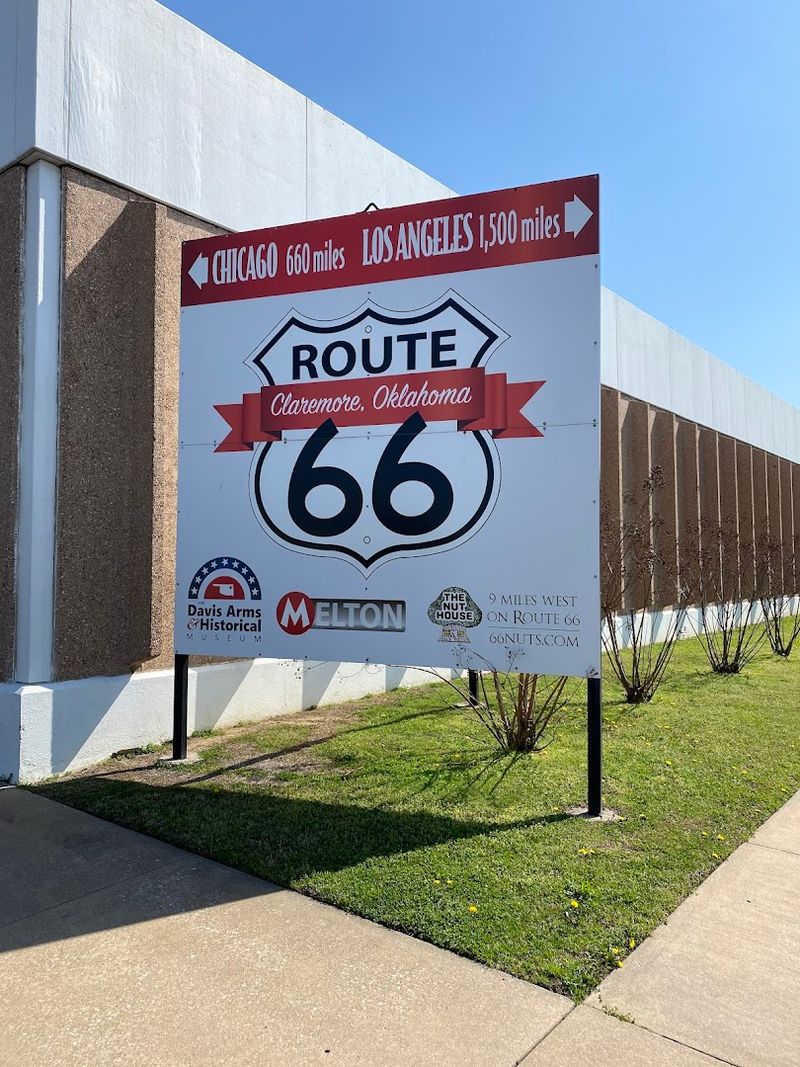
There is something poetic about a world-record collection sitting right along one of the most famous roads in American history, and the J.M. Davis museum earns that location completely.
Historic Route 66 passes directly through Claremore, and the museum sits right on that legendary stretch. For road trippers making their way across the country, this stop is the kind of unexpected discovery that makes the whole journey worthwhile.
You pull off the highway thinking you will spend thirty minutes inside, and two and a half hours later you are still reading display cards.
The Route 66 connection also explains the gift shop, which is stocked mostly with Route 66 merchandise rather than museum-specific souvenirs. Some visitors find that surprising, but it fits the spirit of the place perfectly.
This museum exists within a larger story about American travel, discovery, and the open road.
Claremore itself is worth a little extra time if you can manage it. The town has a genuine small-city character that feels unhurried and welcoming, the kind of place where locals actually wave at strangers.
Parking at the museum is straightforward and free, which is a relief after navigating some of the more chaotic tourist stops along Route 66.
Arriving here feels like finding something real in a stretch of road that sometimes leans heavily on nostalgia. This museum earns its place on the map.
The Atmosphere Inside Is Surprisingly Warm
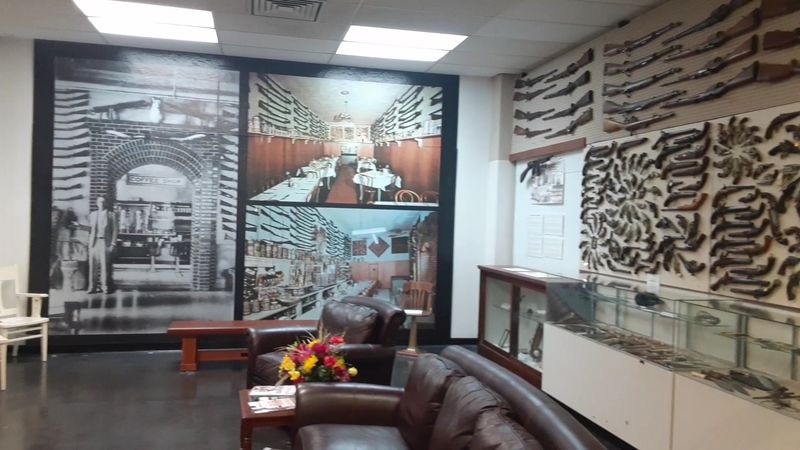
Walking into a museum with a world-record collection, you might brace yourself for that sterile, slightly intimidating atmosphere that large institutions sometimes carry. This place is the opposite of that.
The staff at the J.M. Davis museum are consistently praised in visitor reviews for being genuinely knowledgeable and warm without being overbearing.
The person at the front desk greets you like a neighbor, not like a ticket scanner. That distinction matters more than you might think when you are about to spend a few hours somewhere.
The space itself feels approachable. Display cases are well-lit and organized, with informational cards that give you enough context to understand what you are looking at.
Seating is scattered throughout the building, which sounds like a minor detail until your feet remind you that you have been standing for ninety minutes straight.
The single-level layout means there are no stairs to navigate, no elevators to wait for, and no sections that feel cut off from the rest of the experience.
Wheelchair users and visitors with mobility considerations can move through the entire museum without restriction, which reflects a genuine commitment to making history accessible to everyone.
The whole atmosphere carries a kind of quiet pride. This is a place that knows what it has and does not need to shout about it.
It just lets the collection speak, and the collection has plenty to say.
Admission That Feels Almost Too Good to Be True
Free admission at a world-record museum. Go ahead and read that again, because it is real.
The J.M. Davis museum operates on a donation-based model, meaning there is no fixed ticket price to walk through the door.
A suggested donation is posted at the entrance, and the staff may gently mention it if you walk in without stopping at the desk. But you are not going to be turned away for not having cash, and nobody is going to follow you around with a clipboard.
That said, if you have the means to donate, do it. A collection this size and this historically significant requires ongoing maintenance, and the museum clearly invests care into keeping everything in good condition.
The suggested amounts are modest and completely reasonable for what you receive in return.
One practical note worth mentioning: bring cash. There is not always a card machine available at the front desk, and showing up without any cash can create an awkward moment at the entrance.
A small amount of planning saves a lot of fumbling.
The gift shop near the exit is a nice bonus, stocked with Route 66 themed items and a few museum-related souvenirs. It is a low-pressure browse, not a gauntlet you have to survive on the way out.
Overall, the value here is genuinely exceptional, the kind of experience that makes you feel like you found something the rest of the world somehow missed.
Multimedia Exhibits That Bring the Past to Life
Not every piece of history sits quietly behind glass. Some of it moves, talks, and pulls you into the story in ways that a display card simply cannot manage.
The J.M. Davis museum includes multimedia exhibits that add a dynamic layer to the overall experience.
The documentary video about Davis himself is the centerpiece of this section, and it is one of those things that genuinely reframes everything you see afterward. Watching someone’s life story told in their own context makes the artifacts feel less like objects and more like chapters in a biography.
For families visiting with younger kids, these multimedia elements are a real asset. Children who might glaze over at rows of display cases tend to perk up when there is something moving and narrated to engage with.
The museum has clearly thought about accessibility in the broadest sense, including making history interesting for people who do not already arrive with a deep passion for the subject.
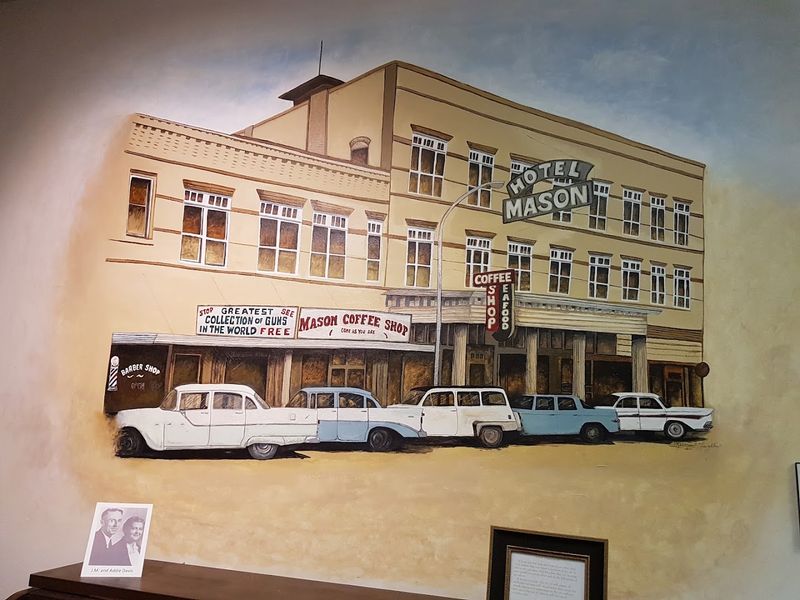
Photos and historical articles are also displayed throughout the museum, providing additional context that enriches the collection without overwhelming it. The pacing of information feels considered rather than crammed, which keeps the experience from becoming exhausting.
Coming here with someone who knows a bit of history makes the multimedia sections even more rewarding. The back-and-forth of pointing things out and making connections is exactly the kind of experience that turns a museum visit into an actual memory.
Planning Your Visit to Claremore, Oklahoma
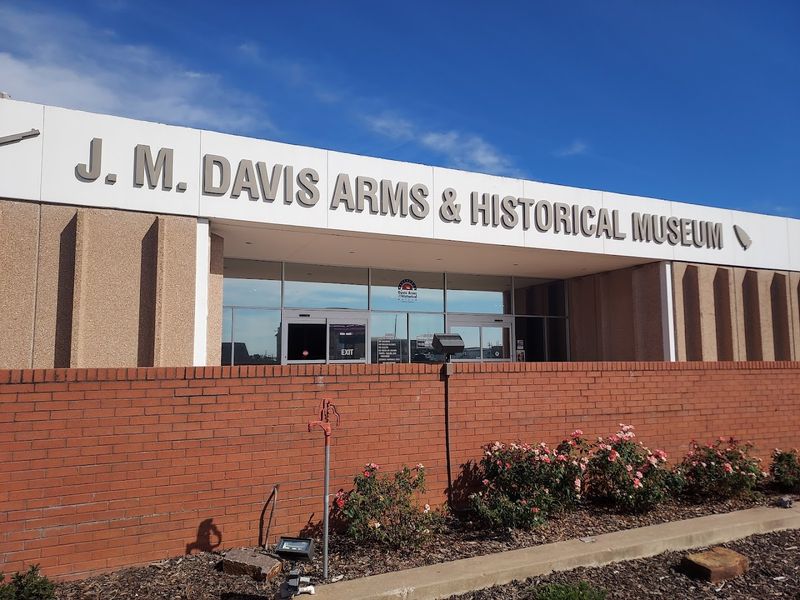
Getting to the J.M. Davis Arms and Historical Museum is straightforward, and the town of Claremore makes the trip feel like more than just a single-stop errand.
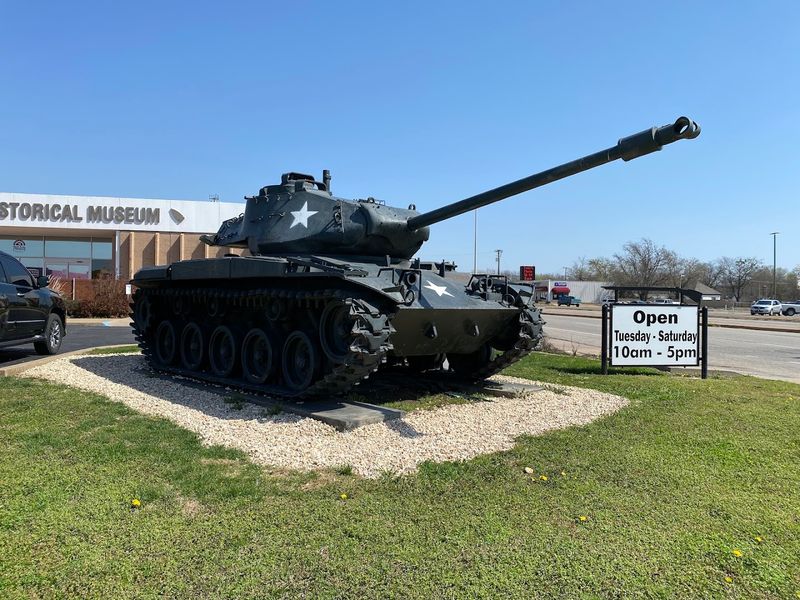
The museum is open Tuesday through Saturday from 10 AM to 5 PM and is closed on Sundays and Mondays. Plan to arrive early in the day if you want the most time to explore without feeling rushed toward closing.
Most visitors report needing at least two hours, and some have spent closer to four without seeing absolutely everything.
Claremore sits in Rogers County in northeastern Oklahoma, about thirty miles northeast of Tulsa. It is an easy drive from the city and an even easier stop if you are already traveling along Route 66.
The surrounding area has its own character worth exploring if you have an extra hour or two before or after your museum visit.
The museum’s full address is 330 N J M Davis Blvd, Claremore, OK 74017. Parking is available on site and costs nothing.
If you have questions before arriving, you can reach the museum by phone at +1 918-341-5707 or visit their website at thegunmuseum.com for the latest information on hours and events.
Honestly, this is the kind of place you tell people about after you visit, the kind that makes you feel like you stumbled onto something genuinely extraordinary hiding in plain sight on a quiet Oklahoma boulevard.
Dear Reader: This page may contain affiliate links which may earn a commission if you click through and make a purchase. Our independent journalism is not influenced by any advertiser or commercial initiative unless it is clearly marked as sponsored content. As travel products change, please be sure to reconfirm all details and stay up to date with current events to ensure a safe and successful trip.
