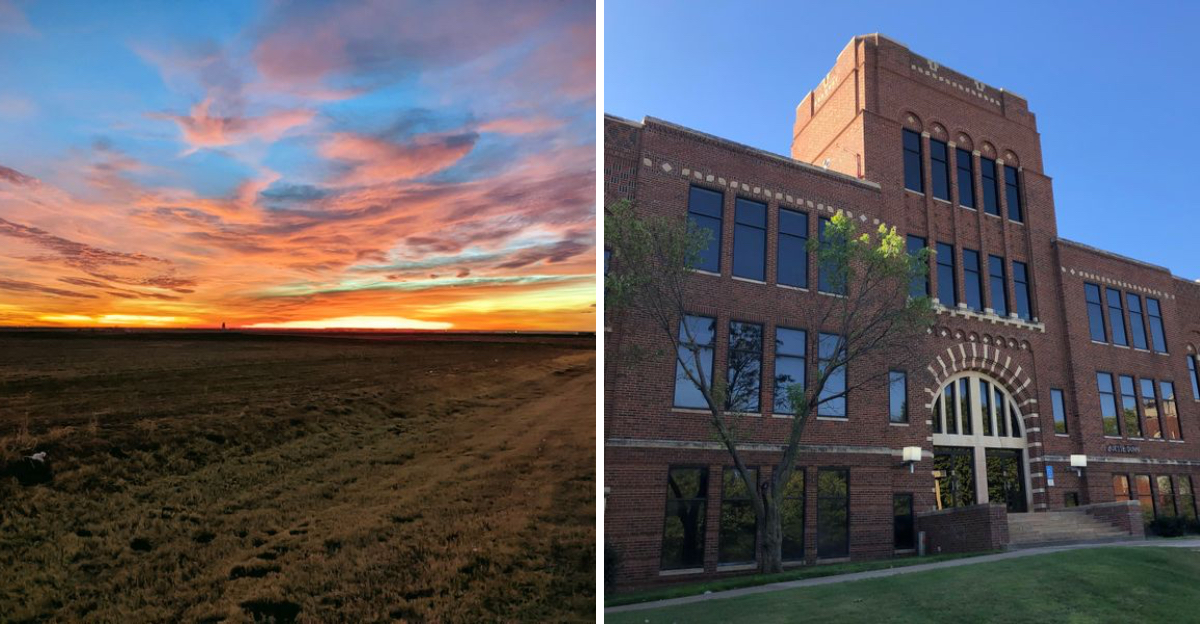
Alva sits along the Salt Fork Arkansas River in northwestern Oklahoma, where the prairie stretches wide and the pace of life slows to something almost forgotten in modern America.
This small county seat town draws visitors who crave authenticity over flash, offering a glimpse into rural Oklahoma life that feels both timeless and welcoming.
Whether you pass through on a road trip or stay awhile to explore, certain qualities about Alva leave lasting impressions that speak to the character of this corner of the state.
Its historic downtown, lined with brick buildings and locally owned shops, provides a tangible connection to the town’s past while supporting a close-knit community today.
1. Northwestern Oklahoma State University Campus Brings Youthful Energy
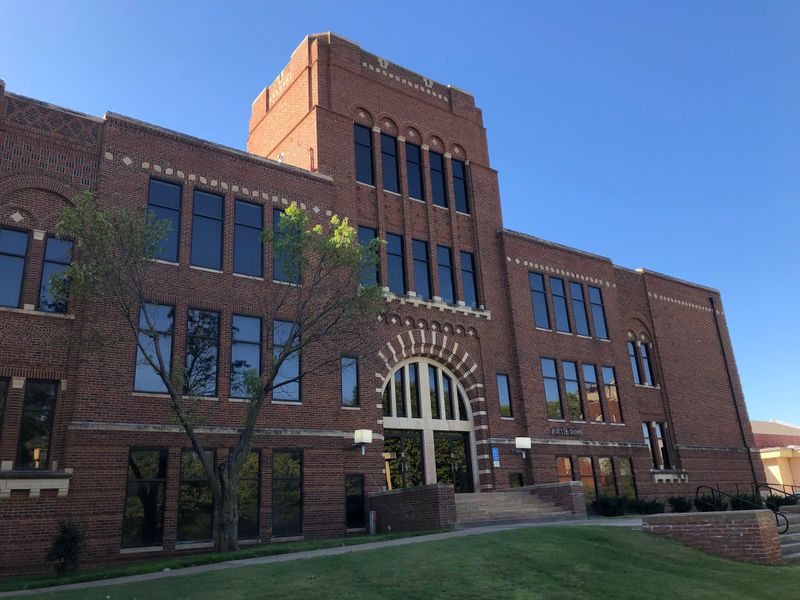
College towns possess a particular rhythm, and Alva proves no exception to this rule.
Northwestern Oklahoma State University anchors the community with brick buildings, tree-lined walkways, and a steady flow of students who bring vibrancy to the otherwise quiet streets.
The campus blends into the town seamlessly, without the sharp division you might find in larger cities.
Students fill local coffee shops and diners, creating a bridge between generations that feels natural rather than forced.
Academic events, theater productions, and athletic competitions give residents and visitors alike reasons to gather throughout the year.
The university library stands open to the public, offering resources that small towns rarely enjoy.
Walking through campus reveals architecture that speaks to different eras of Oklahoma education, from older stone structures to modern facilities designed for contemporary learning.
Green spaces provide quiet spots for reading or conversation, shaded by mature trees that have watched decades of students come and go.
The presence of young people from across the region and beyond adds diversity to Alva that might surprise first-time visitors.
International students contribute perspectives that enrich the local culture in subtle but meaningful ways.
Campus bookstores and student centers hum with activity during the school year, then quiet during summer months when the town takes on a different character entirely.
This educational institution shapes Alva’s identity more than any single landmark, creating an atmosphere where learning and community life intertwine in ways both practical and profound.
2. Downtown Historic Buildings Tell Stories of Settlement Days
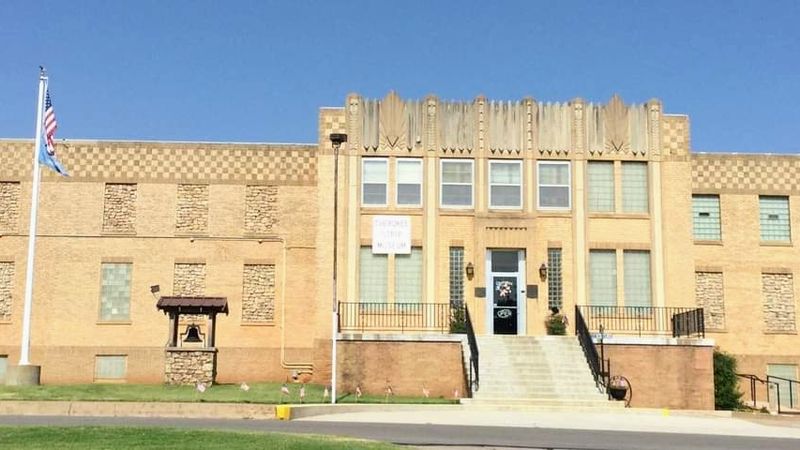
Brick facades along the main street downtown carry the weight of more than a century of prairie commerce.
These structures went up during the land rush era when settlers poured into northwestern Oklahoma seeking opportunity and fresh starts.
Many buildings retain their original architectural details, from decorative cornices to large display windows designed to catch the eye of passing wagon traffic.
Some storefronts still operate as they have for generations, housing hardware stores, law offices, and small businesses that serve local needs rather than tourist traffic.
Others have adapted to new purposes while preserving their historical character, a practical approach to heritage that keeps buildings useful rather than merely decorative.
Walking these sidewalks offers a lesson in how prairie towns organized themselves around commerce and community gathering.
The scale feels human, with buildings rarely exceeding three stories and streets wide enough to accommodate the agricultural machinery that once rumbled through regularly.
Faded paint advertisements occasionally peek through on side walls, ghostly reminders of products and services long discontinued.
Local history enthusiasts have worked to document which businesses occupied which spaces over the decades, creating an invisible map of economic shifts and family enterprises.
The downtown area experiences quiet periods but never feels abandoned, maintaining a lived-in quality that distinguishes it from towns where historic districts exist only for show.
Seasonal decorations appear on lampposts and in windows, marking holidays in ways both traditional and understated.
This stretch of preserved buildings represents not just architectural history but the ongoing story of a community that values continuity alongside necessary change.
3. Wide Open Skies Dominate Every View
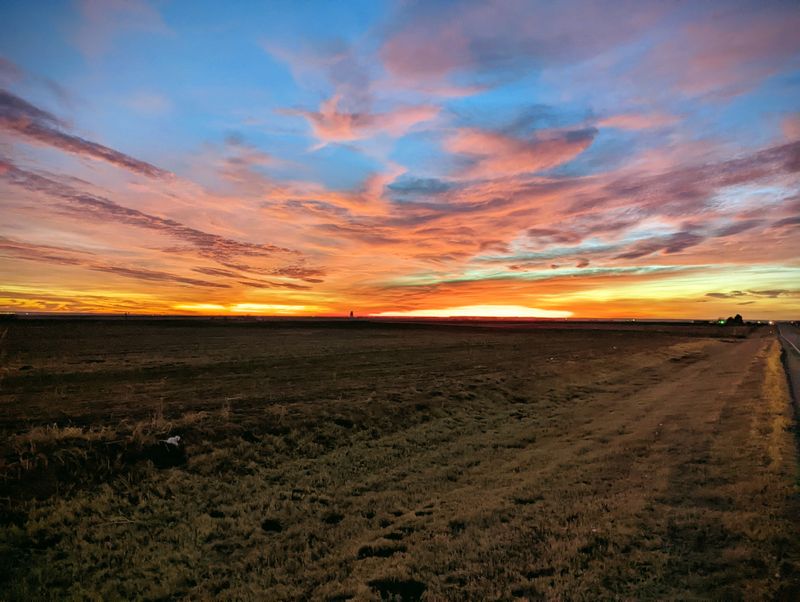
Visitors from forested regions or mountainous areas often comment first on the sky above Alva, which seems to occupy more visual space than the land itself.
Without tall buildings or dense tree cover to interrupt the view, the atmosphere becomes the landscape’s most dramatic feature.
Cloud formations travel across this canvas in ways that make weather watching a legitimate pastime rather than idle observation.
Thunderheads build on summer afternoons with theatrical intensity, their progress visible from miles away as they move across the prairie.
Sunsets paint the western horizon in colors that shift and deepen for long minutes after the sun actually drops below the edge of the world.
Stars appear in quantities rarely seen in more populated areas, the Milky Way visible on clear nights as a pale river across the darkness.
This openness affects how people move through space, creating sightlines that extend to the curve of the earth rather than stopping at the next block.
The wind, unimpeded by natural or human-made barriers, becomes a constant presence that shapes everything from architecture to agriculture.
Trees that do grow here lean slightly, permanently bent by prevailing breezes that never fully cease.
Photographers find endless subjects in the interplay of light and atmosphere, particularly during the golden hours when the sun sits low.
The psychological effect of this openness varies by individual, with some finding it liberating and others experiencing a slight unease at the lack of visual boundaries.
For those who spend time in Alva, the sky becomes a clock and calendar, its changes marking time more reliably than any human schedule.
4. Salt Fork Arkansas River Provides a Green Corridor
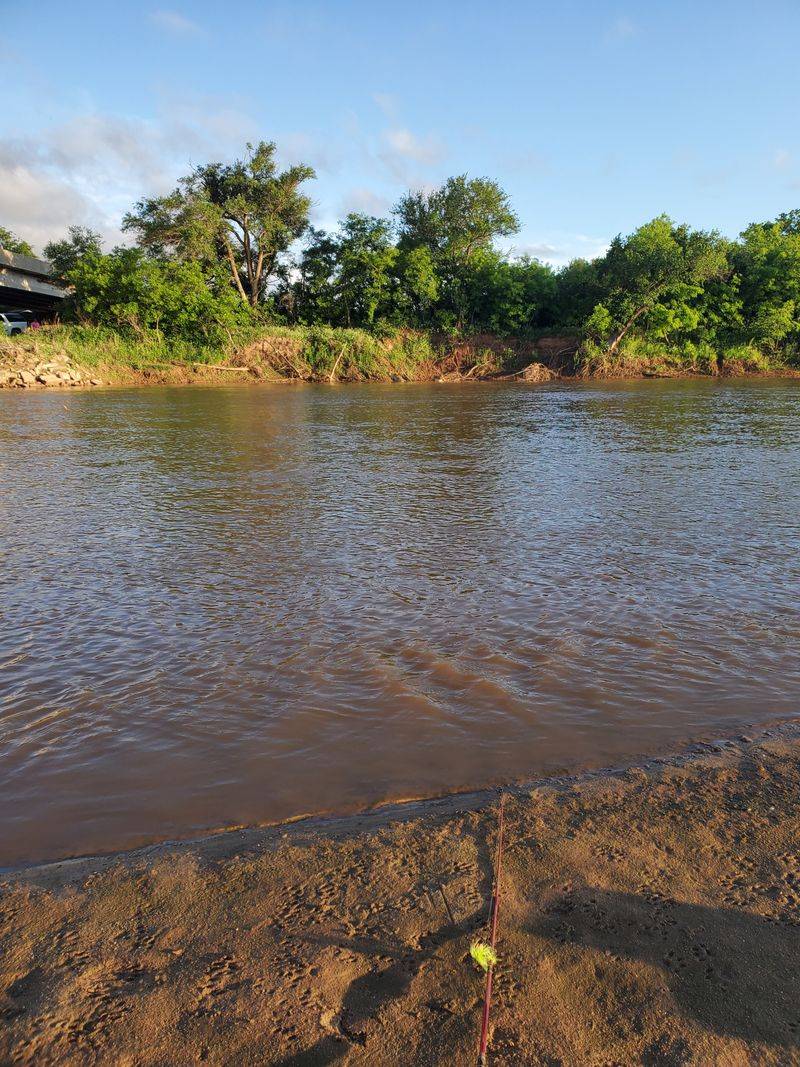
Water in this semi-arid region carries special significance, and the Salt Fork Arkansas River serves as Alva’s lifeline and natural gathering place.
Cottonwood trees cluster along its banks, their leaves rustling in constant conversation with the breeze that follows the watercourse.
The river itself varies dramatically with seasons and rainfall, sometimes running full and brown with prairie runoff, other times reduced to isolated pools connected by trickles.
Birds congregate here in numbers that contrast sharply with the surrounding grasslands, making the riparian zone a magnet for anyone interested in wildlife observation.
Local residents know the river’s moods and respect its occasional floods, which have shaped settlement patterns and land use throughout Alva’s history.
Sandy banks and shallow stretches invite wading during hot months, though the water rarely achieves the clarity of mountain streams.
Fishing happens here in patient, unhurried fashion, with success measured as much by time spent outdoors as by actual catch.
The river corridor provides the closest thing to wilderness that exists within town limits, a narrow strip of semi-wild space where deer leave tracks and occasional beavers engineer small dams.
Bridges crossing the Salt Fork offer elevated views that reveal how the waterway has carved its channel through layers of Oklahoma geology.
During drought years, the river’s diminishment serves as a visible reminder of climate realities in this part of the state.
Conversely, spring floods demonstrate the raw power contained in what usually appears as a modest prairie stream.
This watercourse connects Alva to a larger watershed system stretching across multiple states, a liquid highway that predates human settlement by millennia.
5. Agricultural Rhythms Shape the Community Calendar
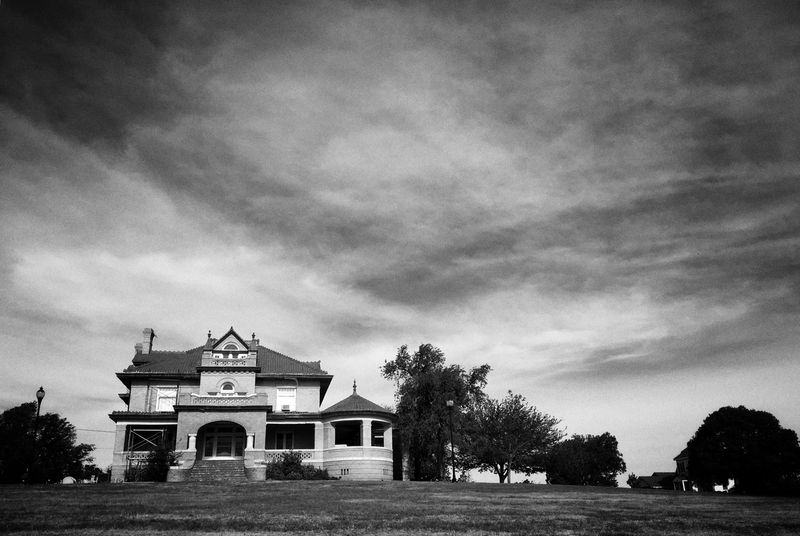
Farming and ranching remain central to life in and around Alva, creating seasonal patterns that visitors quickly notice if they spend any real time in town.
Wheat harvest brings a surge of activity in early summer, with combines working fields into the evening hours and grain trucks rumbling toward elevators.
The smell of fresh-cut hay drifts across town during mowing season, a scent both sweet and dusty that marks the transition between spring and summer.
Livestock auctions and agricultural extension events draw crowds that discuss soil conditions, commodity prices, and weather forecasts with the intensity others reserve for sports or politics.
Equipment dealerships occupy prominent positions on the edge of town, their lots filled with machinery whose cost and complexity would surprise anyone unfamiliar with modern agriculture.
Local diners serve as informal meeting halls where farmers gather for coffee and conversation, exchanging information that helps individual operations succeed or struggle.
The county fair, when it arrives, celebrates agricultural heritage with competitions judging everything from cattle to homemade preserves.
Young people involved in agriculture programs demonstrate skills and knowledge that connect them to generations of rural Oklahoma tradition.
Even residents not directly involved in farming understand its centrality to the local economy and culture.
Conversations reference rain amounts, growing degree days, and market conditions as naturally as urban dwellers discuss traffic or real estate.
This agricultural identity gives Alva a purpose beyond simply existing as a dot on the map, grounding the community in productive relationship with the surrounding land.
Visitors who arrive during planting or harvest seasons witness the town at its busiest, when the work of feeding distant populations happens in fields visible from nearly every vantage point.
6. Small Town Hospitality Feels Genuine Rather Than Performed
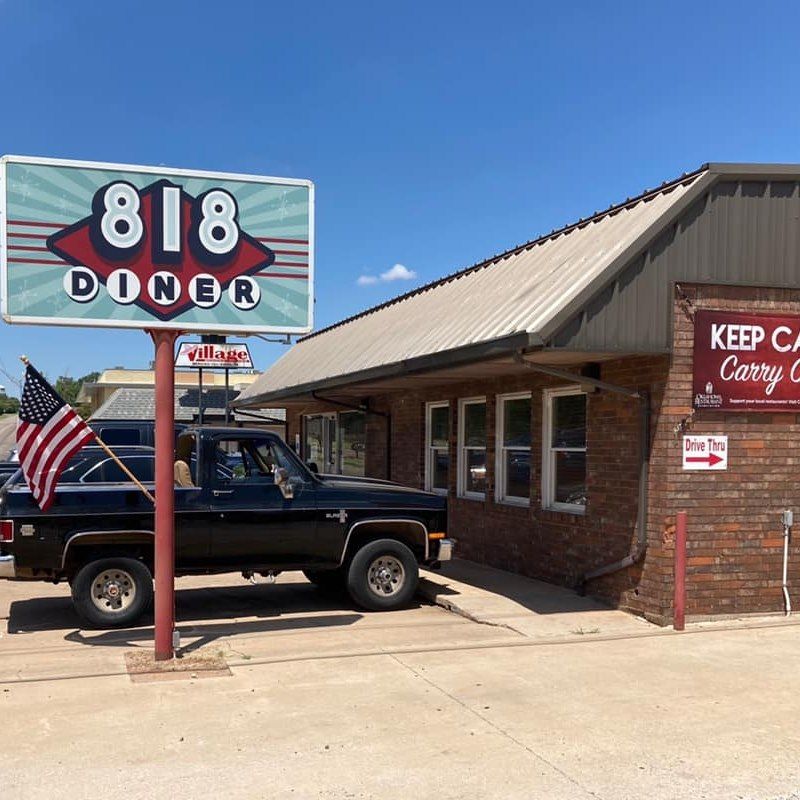
Strangers in Alva often remark on the friendliness they encounter, though the quality differs from the service-industry politeness common in tourist destinations.
People here make eye contact and offer greetings not because they expect tips or reviews but because social norms in small Oklahoma communities include acknowledging fellow humans.
Conversations with shopkeepers or restaurant staff tend to wander beyond transactional necessities into genuine exchanges about where you’re from and what brings you to town.
This curiosity comes without nosiness, reflecting interest rather than suspicion toward outsiders.
Help with directions or recommendations arrives unprompted, with locals offering information that proves surprisingly detailed and accurate.
The pace of interaction allows for these small courtesies without anyone feeling rushed or inconvenienced.
Church communities maintain strong presences, their influence visible in both formal worship and informal social networks that support residents during difficult times.
Volunteer fire departments, civic organizations, and school booster clubs create overlapping webs of connection that bind people together across generational and economic lines.
Newcomers report that acceptance into these networks takes time but happens more readily than in larger, more transient communities.
The downside of this closeness involves reduced anonymity, with personal business becoming community knowledge faster than some find comfortable.
For visitors passing through, however, the hospitality registers as warm without being cloying, helpful without being intrusive.
Local businesses operate on trust to a degree that might surprise those accustomed to urban caution, with informal arrangements and handshake agreements still holding weight.
This social fabric represents one of Alva’s most valuable but least tangible assets, creating quality of life that statistics and data points struggle to capture.
7. Quiet Streets and Slow Pace Provide Respite from Urban Intensity
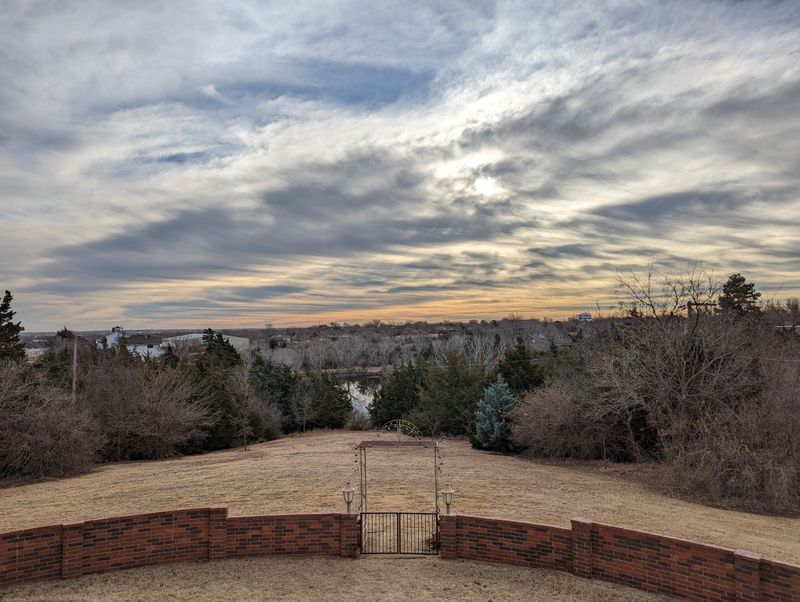
Traffic jams don’t exist in Alva, and the absence of congestion creates a different relationship with time and movement.
Driving across town takes minutes regardless of starting point or destination, eliminating the calculations and stress that accompany urban navigation.
Sidewalks see occasional use but never the constant flow of pedestrians that characterizes denser communities.
This emptiness might read as abandonment to some eyes, but longer observation reveals a different pattern of occupancy.
People emerge for specific purposes rather than maintaining constant street presence, creating rhythms tied to school schedules, mealtimes, and business hours.
Residential neighborhoods feature modest homes on generous lots, with space between structures that allows for gardens, workshops, and the small-scale projects that fill rural leisure time.
Mature trees shade many streets, their canopies meeting overhead to create tunnels of green during summer months.
The sound environment differs markedly from urban areas, with birdsong and wind often the loudest elements rather than traffic or human activity.
Night falls darker here than in places with significant light pollution, the streetlights spaced widely enough to leave pockets of genuine darkness.
This quietness appeals strongly to certain visitors while leaving others feeling understimulated or isolated.
The lack of entertainment options forces people toward self-directed activities, whether reading, crafts, outdoor exploration, or social visiting.
For those accustomed to constant stimulation, Alva’s pace requires adjustment and acceptance that boredom might occasionally arise.
For others, this represents exactly the antidote they seek to overwhelming modern life, a place where silence and stillness remain available and valued.
Dear Reader: This page may contain affiliate links which may earn a commission if you click through and make a purchase. Our independent journalism is not influenced by any advertiser or commercial initiative unless it is clearly marked as sponsored content. As travel products change, please be sure to reconfirm all details and stay up to date with current events to ensure a safe and successful trip.
