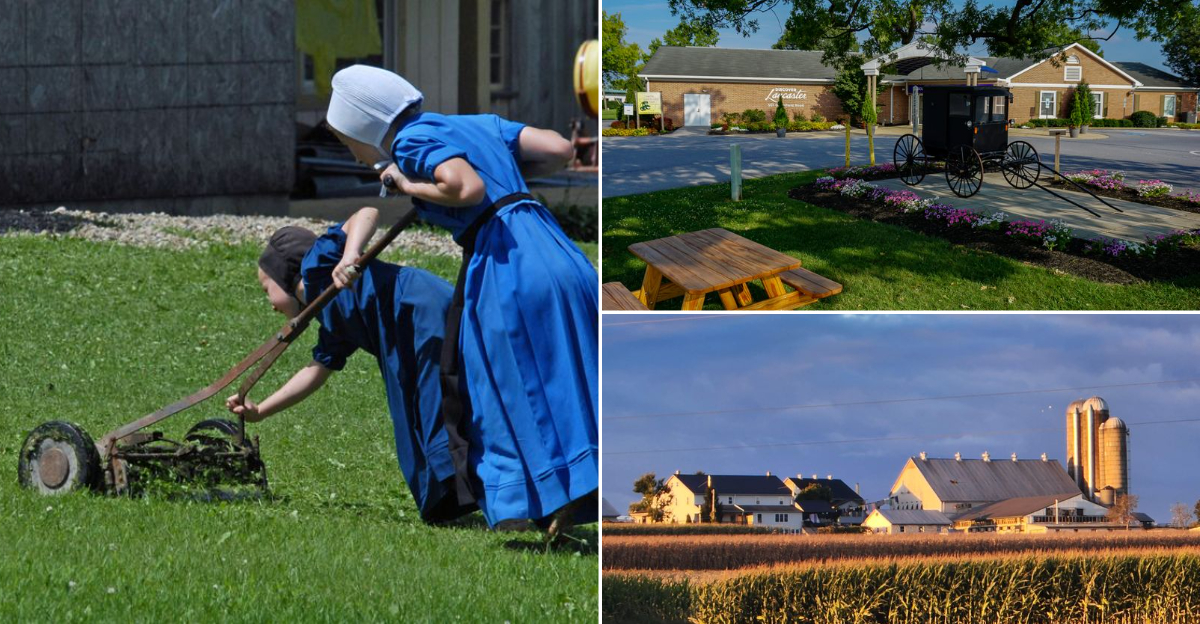
You know how we picture Lancaster, Pennsylvania like a living museum on the way to the outlets? It is not that.
The Amish live their lives beside tourism, not for it. If we remember that, the road gets kinder and the visit makes more sense.
Daily routines still revolve around work, family, and faith, even when traffic slows down for a buggy or a camera comes out too fast.
What looks picturesque from the car window is simply normal life continuing, steady and practical, without any need to explain itself.
The key is noticing without intruding, slowing down without expecting a performance, and letting the place exist without trying to package it. Once that clicks, Lancaster stops feeling like a stopover and starts feeling like a community you’re briefly passing through with respect.
The Amish Are Not A Tourist Attraction
Let me start with the thing that surprises people most. The Amish in Pennsylvania are not a display set up for weekend plans.
Tourism happens around them, not for them.
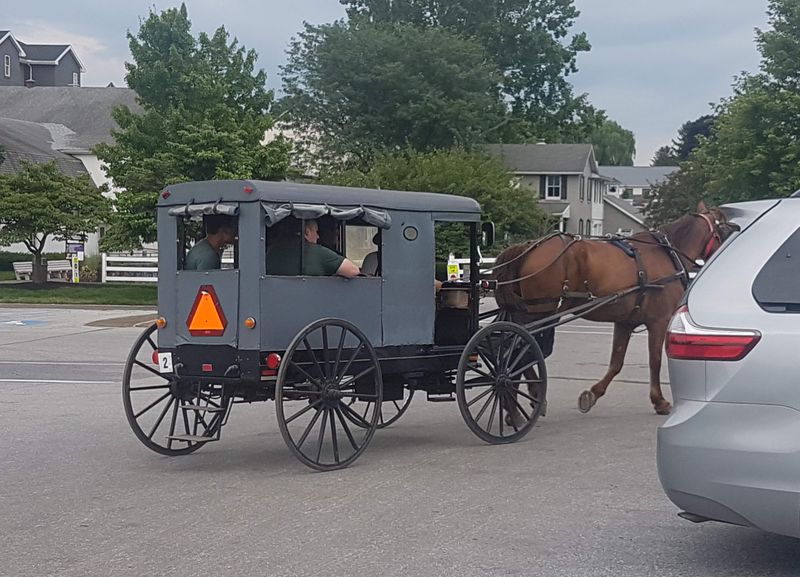
You can see that on Old Philadelphia Pike in Lancaster County, where farms sit back from the road and buggies roll past like any normal commute.
The fields near 2760 Old Philadelphia Pike, Bird in Hand, feel private even when the highway gets busy. It is regular life with curious neighbors riding through.
Think about how a school day looks.
Children travel by foot or buggy while vans of visitors pull over to snap pictures. That does not make the route a tour, it makes it crowded.
The Amish economy is rooted in farms, trades, and small shops that were not designed for visitor schedules.
Folks at Bird in Hand and Intercourse balance harvests with traffic lights. That tension is real and daily.
So how should we move through it? Treat the road like someone else’s driveway.
If it feels like you are in their space, you probably are.
I like to stop at the public spots that are meant for guests, like The Amish Village at 199 Hartman Bridge Rd, Ronks, which is an interpretive site, not a neighborhood.
It keeps boundaries clear while still teaching context. Everyone breathes easier.
When we plan this road trip, we will aim for respect first.
Curiosity can ride in the backseat. The drive will be better for it.
Curiosity Is Expected, Attention Is Not
You have questions? Of course.
Curiosity is normal when you roll into Lancaster County and everything slows down. The catch is that attention can feel heavy.
Standing too close or staring from a few feet away reads louder than words.
People are not exhibits, even if the scenery is scenic.
On Main Street in Intercourse, near 3541 Old Philadelphia Pike, the sidewalks are busy and the pace is gentle. That is exactly where visitors forget to soften their gaze.
A pause and a step back keeps the moment humane.
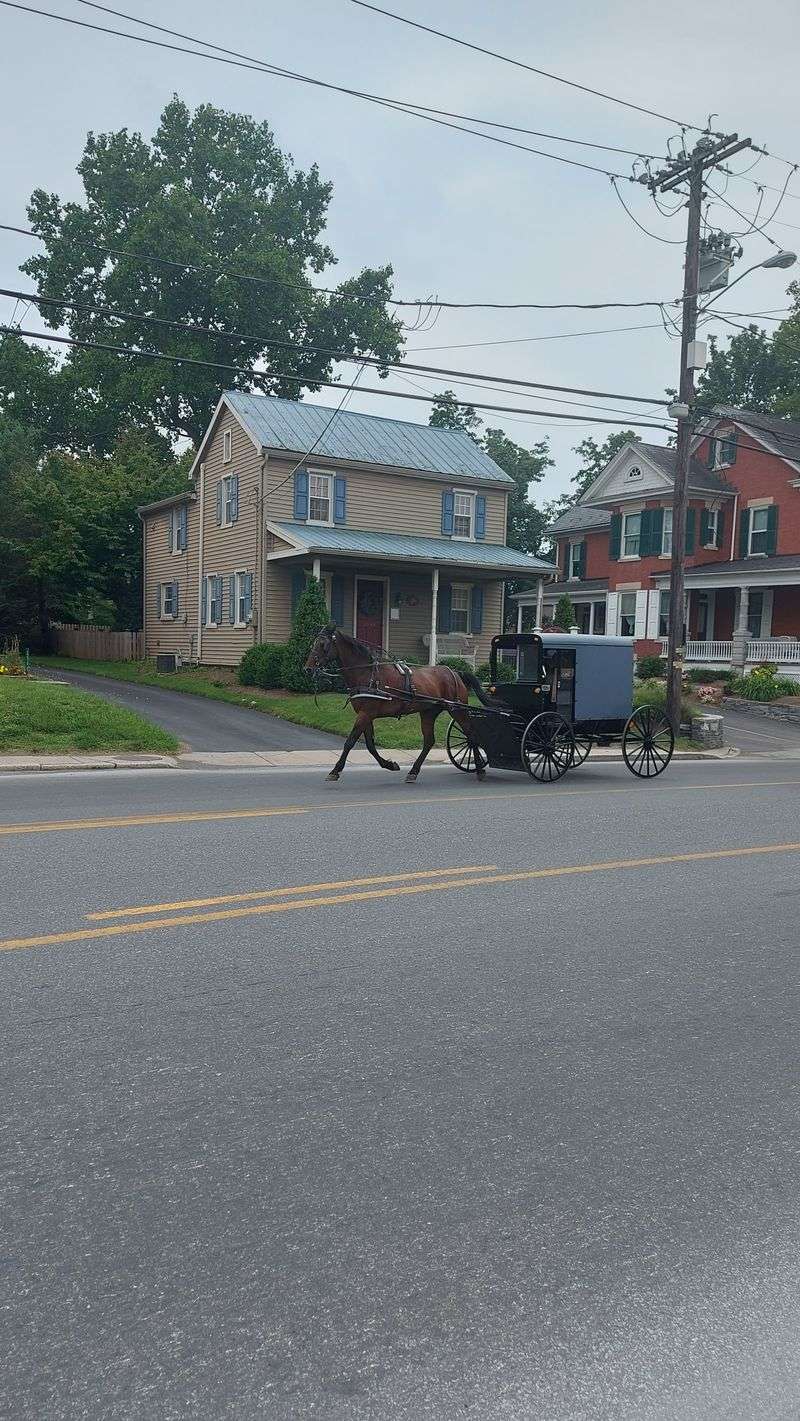
You might see a buggy at the hitching rail by Kitchen Kettle Village at 3529 Old Philadelphia Pike, Intercourse. That rail is for transportation, not photoshoots.
Quick glances travel better than long lenses.
If you want to learn without hovering, the Mennonite Information Center at 2209 Millstream Rd, Lancaster is set up to explain things clearly.
Staff there handle questions with care and context. It is a conversation, not a spotlight.
Think about how you feel when someone watches you work.
A minute is fine. Ten minutes becomes a weight.
So we can keep it light. Ask questions where questions belong.
Let daily life flow without our commentary.
Why Photos Are Often Considered Disrespectful
This one trips people up.
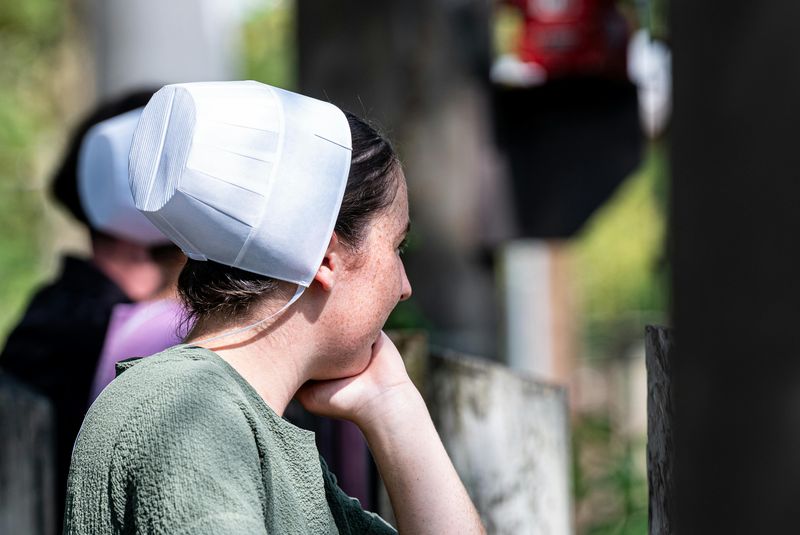
The hesitation about photos is not mood or shyness. It is rooted in religious conviction about humility and images.
In Lancaster, Pennsylvania you will sometimes see polite signs asking visitors not to photograph individuals.
Those signs are not suggestions. They translate a belief into something we can understand in a second.
Drive down Hartman Bridge Rd toward Ronks and you pass fields where buggies move like quiet punctuation.
Imagine someone hopping out to pose you without asking. That is how a long lens can feel from the other side.
If you want visuals without crossing a line, look for interpretive settings.
The Amish Farm and House at 2395 Covered Bridge Dr, Lancaster teaches context on guided terms. That difference matters more than it sounds.
Photos of barns, roads, and landscapes are usually fine because they do not point at a person.
Faces are the crossing point. Privacy is the practice.
Some visitors lower the camera and end up noticing more.
The clatter of wheels on Route 896. The way the light sits on corn stubble near Strasburg.
We can do the same.
Bring the camera for scenery. Leave people out of the frame unless invited clearly.
Businesses Do Not Equal Public Access
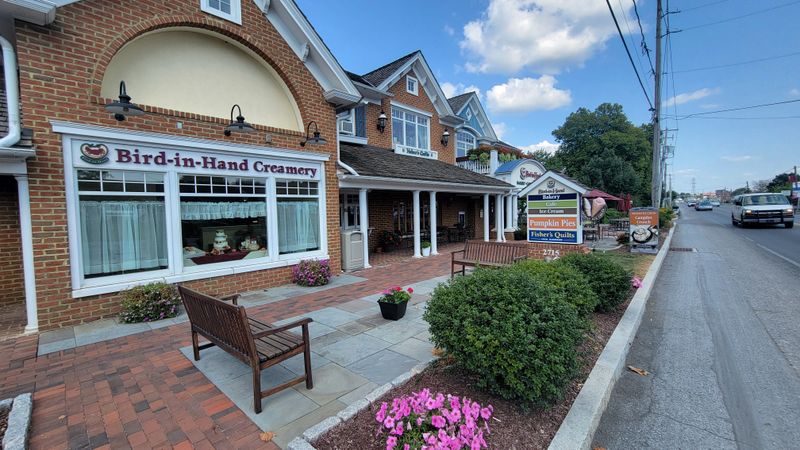
A shop sign feels like an open door to everything? It is not.
Amish businesses are places to conduct business, not invitations into private life.
On Gibbons Rd in Bird in Hand there are farm stands tucked beside homes.
The address 2710 Gibbons Rd, Bird in Hand is a good landmark for the kind of setup you will see.
Porch equals family space, not waiting room.
You park, you step in when it is clearly public, you keep your voice low, and you wrap it up without wandering. Yards and barns are not aisles.
Curiosity stays on the customer side of the counter.
If a workshop door is shut, it is shut on purpose.
Questions about family or beliefs can slide into personal territory faster than you think. Transaction small talk is plenty.
For learning beyond the counter, head to Landis Valley Village and Farm Museum at 2451 Kissel Hill Rd, Lancaster where staff interpret regional history with context.
That space is designed for questions and deeper dives. No one’s porch gets crowded.
It helps to imagine your own home next to your job.
You would want a clean boundary? They do too.
So we will buy what we need, say thanks, and step out.
No wandering toward the fields. The line stays clear and kind.
Why Amish Communities Value Separation
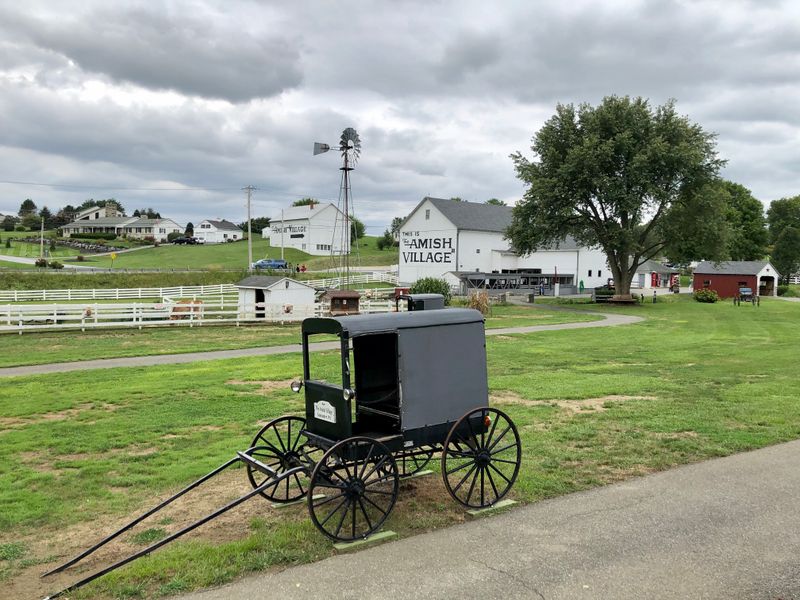
The distance you feel is not rudeness. It is a protective layer.
Separation is part of how Amish communities hold their shape.
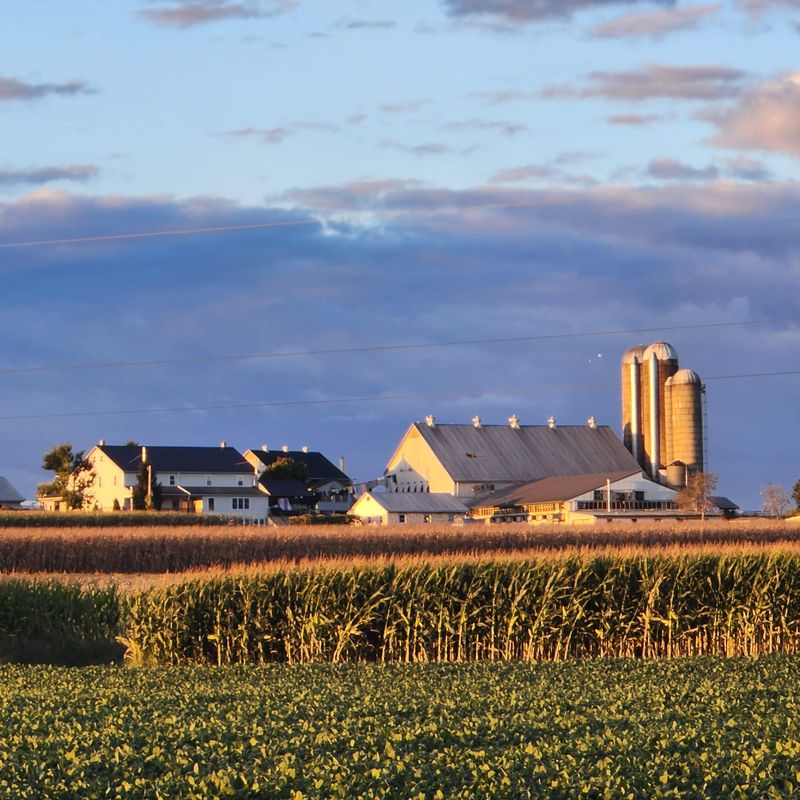
Look at the spread along May Post Office Rd near Strasburg where farms sit apart and roads meander.
The space is intentional. It lowers noise and lowers the pull of trends that do not fit their rules.
There are church districts with their own Ordnung, which is the set of rules for daily life.
That framework asks for discipline. It also asks neighbors to help each other keep it.
If you want a window into how separation shapes history, the Amish Mennonite Heritage Center’s stories are summarized at the Mennonite Life campus at 2215 Millstream Rd, Lancaste.
Exhibits explain migration and boundaries in plain language.
Context makes the gap feel human instead of mysterious.
Modern life pushes in anyway.
Highways get faster. Phones keep buzzing in our pockets.
So the community sets its pace and lets the outside pass by without inviting every influence in.
That is not about judging anyone. It is about keeping a promise to their own people.
We can drive through and respect that fence line.
Observation is enough. The quiet will explain the rest.
Technology Is Chosen Carefully, Not Rejected Blindly
The idea that the Amish reject all tech is just off. They evaluate it.
They ask what a tool does to family, church, and work.
Ride near Paradise, Pennsylvania along Strasburg Rd and you may spot a shop using compressed air, generators, or batteries.
Power without a grid line can be acceptable under certain rules. The details depend on the district.
Business phones might sit in a shed or a shared booth away from the house. That creates a pause before use.
It also keeps constant communication from creeping into dinner tables.
For a grounded explanation, the visitor center at The Amish Farm and House at 2395 Covered Bridge Dr, Lancaster lays out examples without hype.
Staff talk about why a tool is fine in one context and not another. It is thoughtful, not stubborn.
You will see LED lights on buggies for safety and reflective tape on the back.
Again, function is weighed against impact. The goal is community first.
It is kind of refreshing, honestly.
Imagine evaluating every new app with a neighbor committee. Slower, but maybe saner.
So when we pass a shop humming softly behind a barn, it is not a contradiction. It is a choice with boundaries.
Why Silence And Simplicity Are Intentional
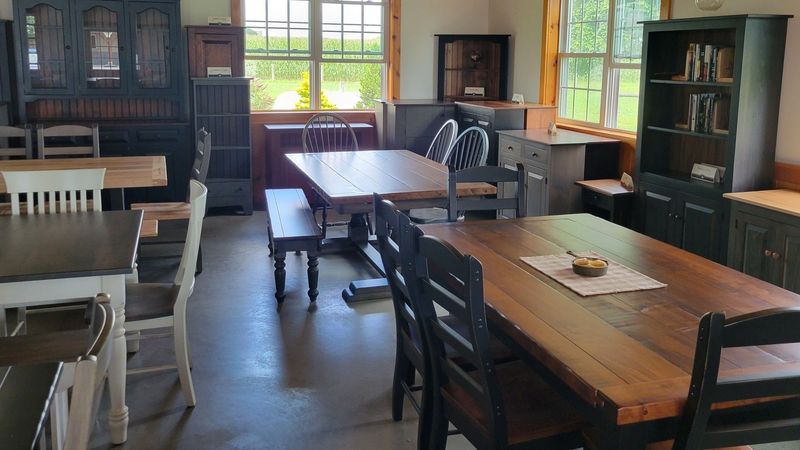
The calm you notice is not an aesthetic trend. It is a practice.
Silence and simplicity help keep pride from taking the driver’s seat.
In Lancaster the plain exterior on a farmhouse along Willow Street Pike tells the story without words.
Fewer ornaments, fewer points to brag about. The focus returns to work, faith, and neighbors.
Plain dress and undecorated rooms make space for attention.
When you remove the extras, the day opens up. That choice is daily and deliberate.
If you want to see plain craft with context, drive by Ephrata Cloister at 632 W Main St, Ephrata which, while not Amish, interprets another plain tradition that shaped the region.
You get a sense of quiet disciplines that linger in Pennsylvania culture. It nudges the conversation wider.
Visitors sometimes label it minimalism like a design blog. That misses the point.
This is about humility, not style.
The sound of a buggy wheel on a quiet road says more than signage ever could.
It marks time slowly and clearly. The day stretches in a good way.
So we match the pace.
Lower voices. Notice the small things and leave them in peace.
Tourism Changes Daily Routines More Than Visitors Realize
Here is the part we forget from the driver’s seat.
Tourism bends time for locals. It turns short errands into long ones.
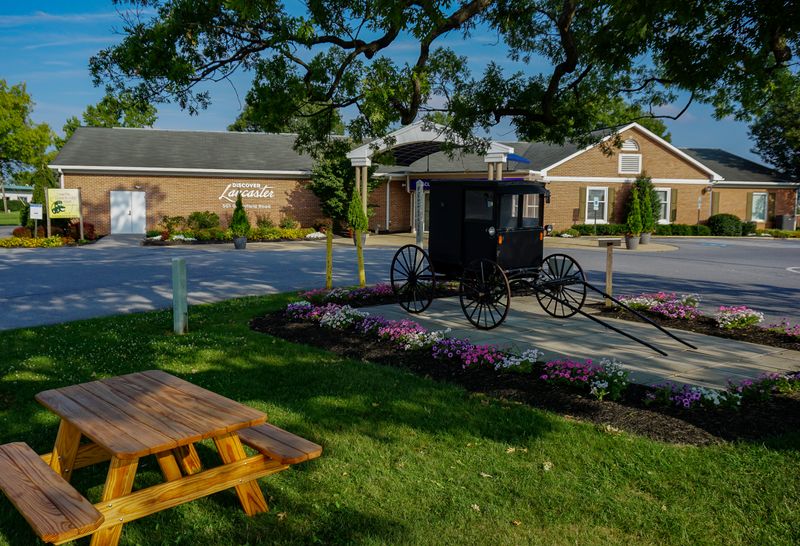
On Route 340 between Bird in Hand and Intercourse a line of cars can back up behind a single buggy.
That buggy is a commute. The road is their work hallway.
Add in buses, photo stops, and noise.
Chores get delayed. School travel gets complicated.
Strasburg Rail Road at 301 Gap Rd, Ronks, draws steady crowds and excitement.
It is a great stop when planned well. It is also a traffic surge on quiet farm roads.
Drivers who pass too tight make the horses nervous.
That is more than inconvenient. It is a safety issue.
The fix is not dramatic.
Leave space. Breathe through the slow patches and wave when it feels right.
We can time our drive for calmer hours around Lancaster County and skip the rush entirely.
The landscape looks better without a clock ticking in your head. Everyone gets home steadier.
Why Amish People Rarely Explain Themselves
You might notice that questions sometimes land softly and stay there.
Explanations do not tumble out. That quiet is on purpose.
Amish communities lean hard into humility.
Talking about yourself at length can feel like self promotion.
Silence helps keep the focus on community instead of individual voices.
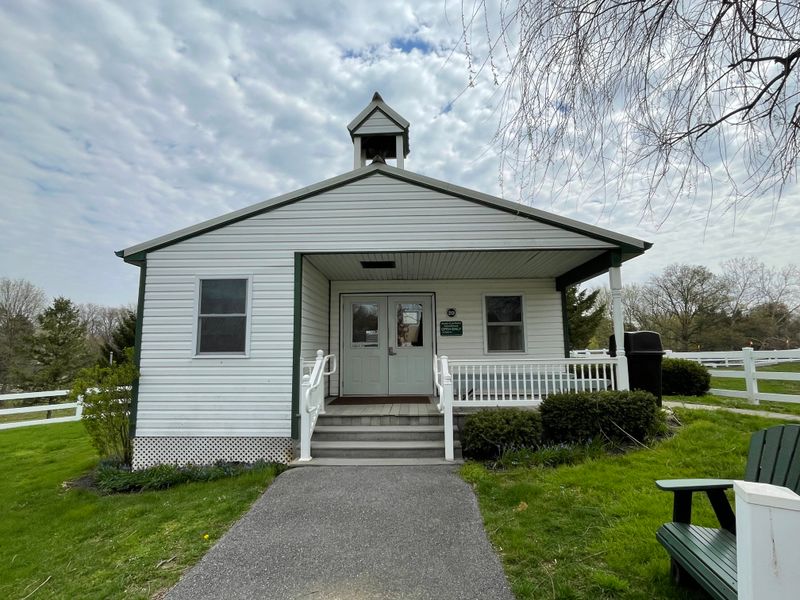
Drive past a meetinghouse lane near 19 Meetinghouse Rd, Leacock and the building looks spare and undecorated.
No banners. No interpretive signs.
It is not secrecy. It is a boundary set with gentleness.
The life is lived, not narrated.
If you want context without putting someone on the spot, the Mennonite Life Museum at 2215 Millstream Rd, Lancaster has exhibits and staff who can field big questions.
It keeps the learning away from doorsteps. Everyone gets to be comfortable.
That all makes sense when you think about attention as a kind of power.
Refusing it is protective. It keeps pride from getting fed.
So we listen more than we ask.
Read the signs. Let the quiet mean what it means.
Differences Between Amish Groups Matter
One group does not speak for all.
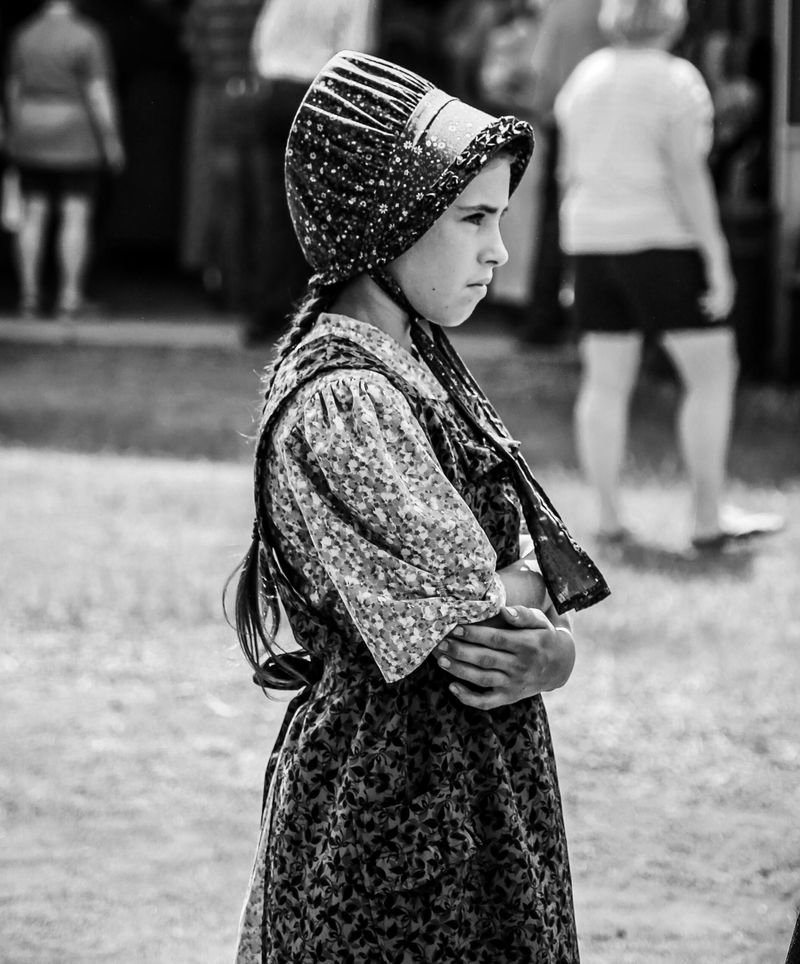
Districts have different rules. Even neighboring communities can look and feel distinct.
In Lancaster County the Old Order is the one most visitors notice. But Chester County and Berks County hold settlements with their own rhythms.
Buggies, clothing details, and technology allowances vary.
Addresses help ground it.
Around Honey Brook in Chester County near 5064 Horseshoe Pike, Honey Brook you will feel a quieter grid of farms.
Up toward Kutztown in Berks County near 32 N Whiteoak St, Kutztown the plain story threads into a broader Pennsylvania Dutch tapestry.
Some districts accept certain safety features or business tools differently. Others hold a tighter line.
None of that is random.
When you stack assumptions, you miss nuance.
Listening place by place keeps you honest. The map starts making more sense.
A helpful stop for orientation is the Heritage Center at 19 S Whiteoak St, Kutztown which explains regional differences.
Pair that with a pass through Intercourse and Bird in Hand for contrast. It turns a drive into a lesson.
So we will not lump everyone together. We will pay attention to where we are standing.
Respect starts there.
Tolerance Does Not Mean Approval
Living side by side is not the same as signing off on everything.
The Amish share roads and markets with the rest of Pennsylvania. That does not mean they endorse the wider culture.
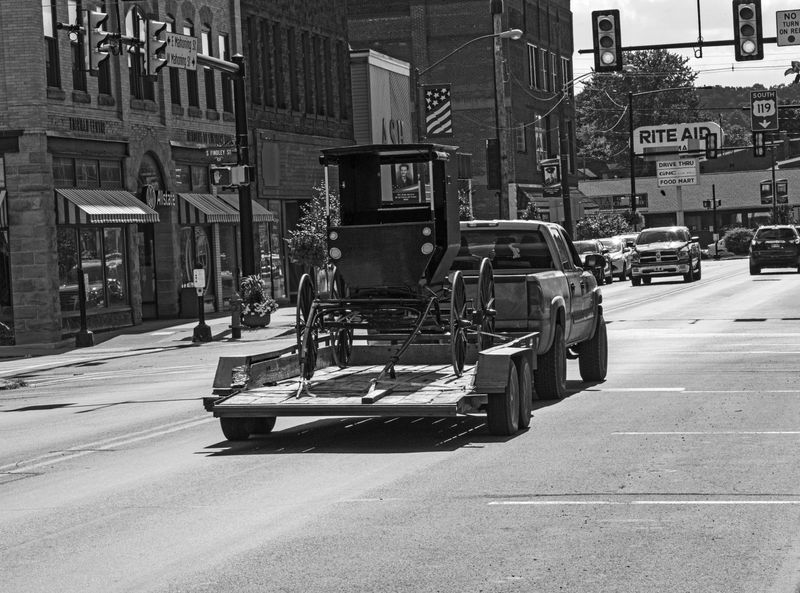
On Lincoln Highway East near 2270 Lincoln Hwy E, Lancaster you see buggies gliding past big box signs.
Coexistence is practical. Beliefs remain tight.
Neighbors can be friendly and still hold distance. A wave is goodwill, not agreement.
Boundaries keep relationships smooth.
The district’s Ordnung sets the line, and the line stands even when the town shifts.
That steadiness can look aloof if you read it wrong. It is actually consistency.
For perspective, the Lancaster County Park at 1050 Rockford Rd, Lancaster is a shared public space where many communities pass without friction.
People occupy it in parallel. No one needs to narrate values to enjoy trees and trails.
So if we do not get enthusiastic engagement, nothing is wrong. It is simply a different social temperature.
Warmth shows up in smaller ways. We can meet that with quiet respect.
Share the road. Leave room for difference.
Why Respect Often Means Doing Less, Not More
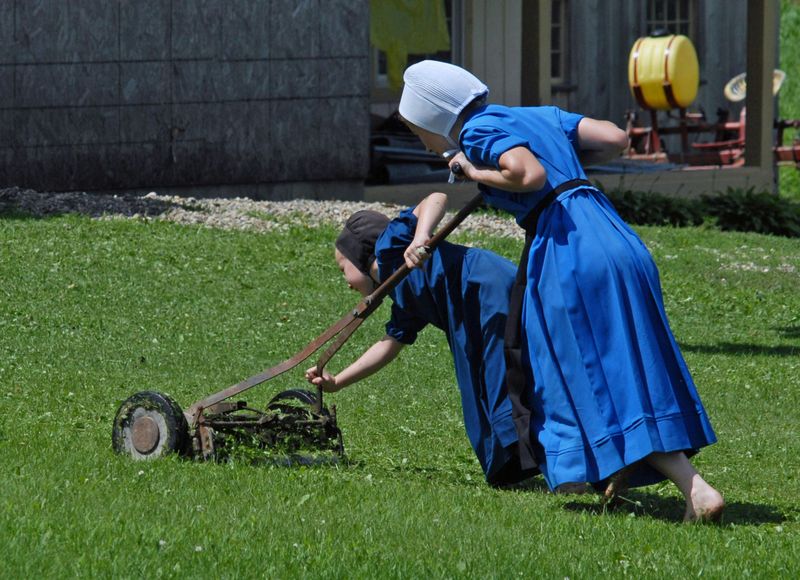
The best move out here might be restraint.
Doing less can be the kindest choice. Observation beats interaction when the line is fuzzy.
Think of the lane along Belmont Rd near Gordonville, Pennsylvania where fence lines run long and clean.
No one needs us to fill the air. The quiet does the work.
We can keep to marked pull offs, skip driveway turnarounds, and leave gates exactly how we found them.
Simple courtesies travel far. The visit lands softly.
If you are itching to learn more, funnel that energy toward places designed to teach.
The Amish Experience Theater at 3121 Old Philadelphia Pike, Bird in Hand sets context without knocking on doors. Questions belong there.
Even our shoes can tell the story.
Walk lightly on public paths. Skip the field shortcuts that look tempting on a map.
Doing less is not disinterest. It is respect translated into action.
It trusts people to hold their privacy.
So we breathe, look, and keep moving at a human pace.
Pennsylvania feels bigger when you stop pushing. The road trip will too.
Tourism Happens Around Them, Not For Them
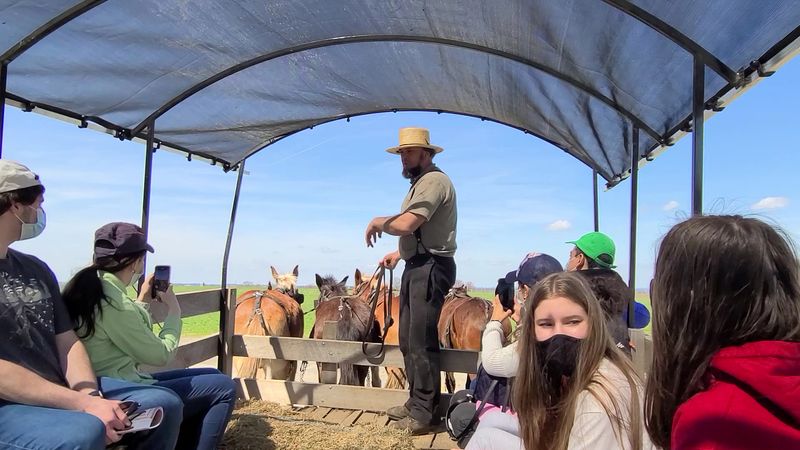
Circling back to the headline truth helps everything click.
Tourism is the layer we bring. Their lives would go on without our weekend plans.
Stand on the overlook near 150 Cherry Hill Rd, Ronks and watch the fields cycle through their quiet rhythm.
Cars arrive, loop, and leave. The farm work does not pause for selfies.
Shops at Intercourse and Bird in Hand grew because visitors came, but families still anchor to church districts and neighbors.
The calendar is local, not seasonal for us. That is the compass.
For a clear frame, the Lancaster Central Market at 23 N Market St, Lancaster shows how many communities move alongside each other without blending fully.
Stalls are public. Home remains separate.
If we plan with that in mind, our choices shift.
We build days around public places rather than private spaces. We trade access for understanding.
It is a nicer way to travel.
Less rush, more noticing. Less staging, more real.
When we head out, let’s hold that as our baseline.
The visit will feel calmer. The respect will show.
Dear Reader: This page may contain affiliate links which may earn a commission if you click through and make a purchase. Our independent journalism is not influenced by any advertiser or commercial initiative unless it is clearly marked as sponsored content. As travel products change, please be sure to reconfirm all details and stay up to date with current events to ensure a safe and successful trip.
