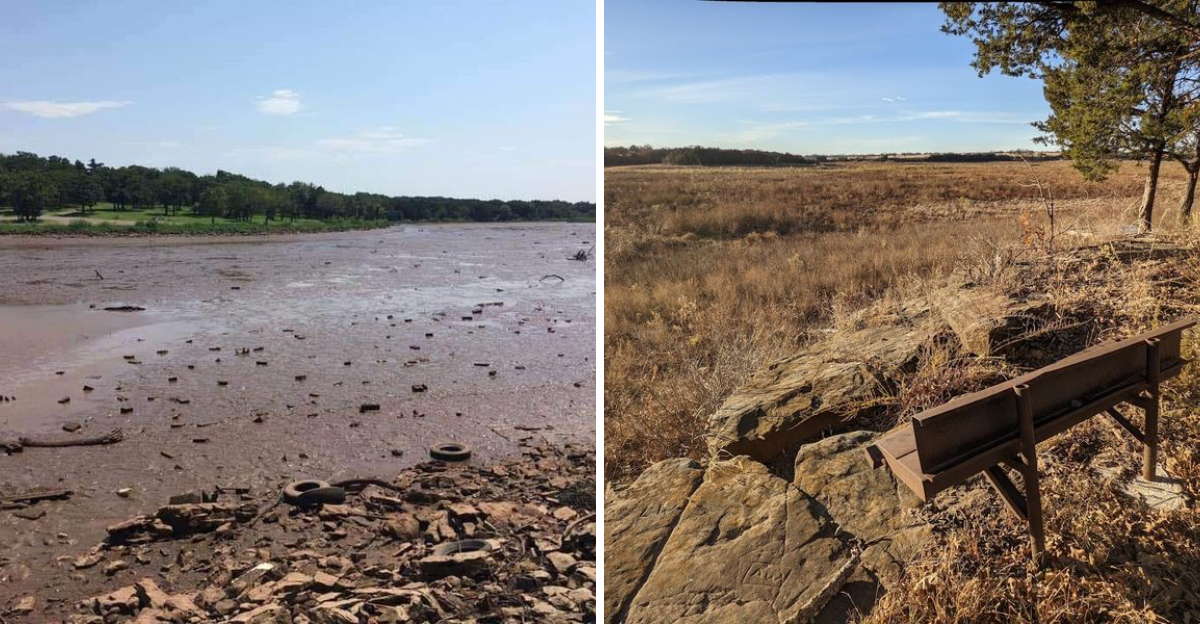
This lake in Oklahoma was once a quiet little spot where locals could fish, relax, and enjoy the outdoors. Then the dam failed, the water drained away, and what remained looked like something out of a science fiction movie.
A place that once had boat ramps, a dock, and plenty of good fishing turned into a wide stretch of cracked mud and exposed lakebed.
If you’ve ever wondered what a lake looks like when it simply disappears, this is one of the most striking examples in the entire state, and the story behind its transformation is as fascinating as it is surprising.
The Rise and Fall of Cushing Lake
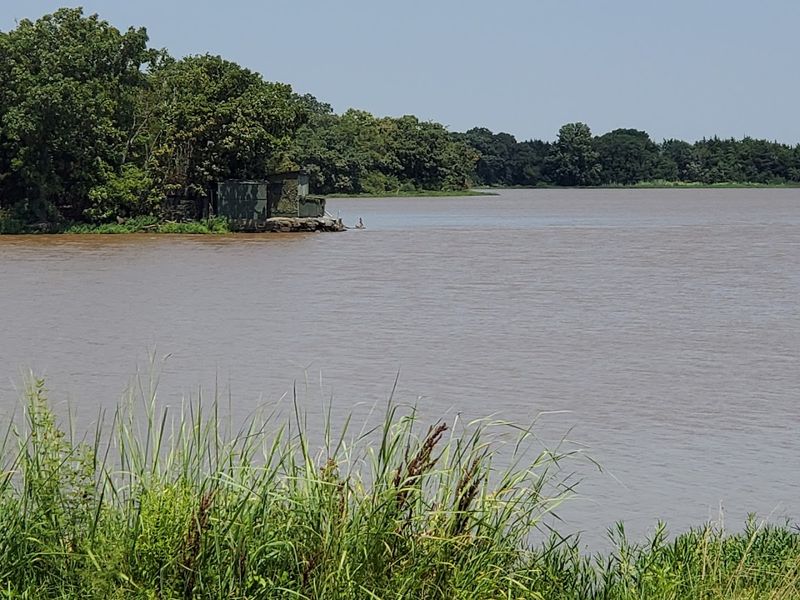
There is something almost eerie about standing at the edge of a place that used to hold thousands of gallons of water. Cushing Lake, located near the town of Cushing in Payne County, Oklahoma, was once a beloved local retreat.
It had boat ramps, a dock, picnic areas, and no entry fees, which made it easy for anyone to enjoy.
For years, families and fishing enthusiasts made regular trips out to this quiet corner of the state. The lake sat peacefully off Highway 33, shaded by Oklahoma’s wide open skies.
It was the kind of place that did not need to advertise itself because word of mouth kept people coming back.
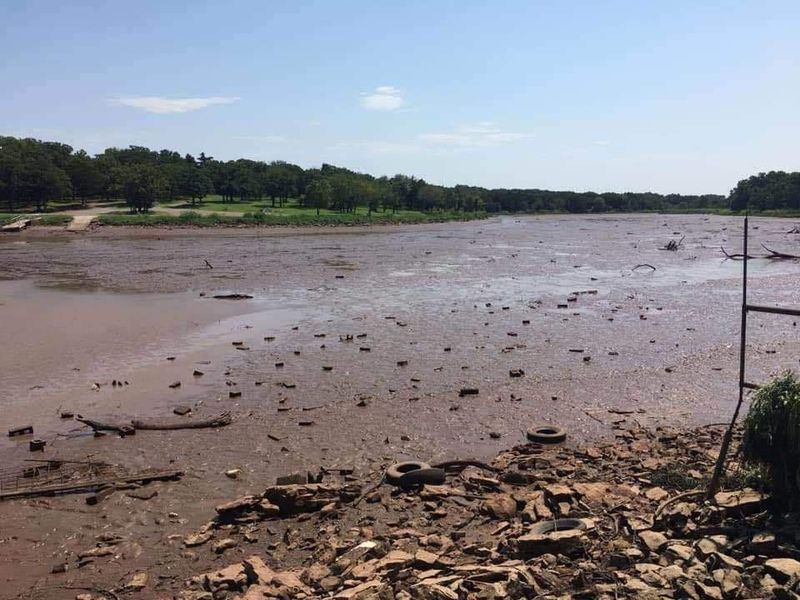
Then the dam gave out. The water drained away, leaving behind a muddy, sun-baked landscape that barely resembled a lake at all.
What was once a shimmering body of water became a broad stretch of exposed earth. The story of Cushing Lake is a reminder of how quickly a natural retreat can change, and how fragile the infrastructure that supports it can be.
What the Dam Failure Actually Looked Like
When people first heard that Cushing Lake had drained, many assumed it was a gradual process. In reality, a structural failure in the dam caused the water to escape far more quickly than anyone expected.
The dam reportedly developed a breach that allowed the lake to empty out, leaving behind a muddy bowl where a lake used to be.
Oklahoma has a long history of small earthen dams supporting local reservoirs and recreational lakes. These structures require regular inspection and maintenance to stay functional.
When that maintenance does not happen, the results can be dramatic and hard to reverse.
Standing near the old dam site, you can see the scale of what was lost. The banks that once held water now slope down into dry, uneven ground.
Patches of vegetation have started to reclaim parts of the lakebed, but the overall scene is unmistakably stark. It is a powerful example of what happens when aging infrastructure meets the unpredictable forces of Oklahoma weather and water pressure over time.
A Walk Across the Exposed Lakebed
Walking across the lakebed of Cushing Lake is one of the stranger outdoor experiences Oklahoma has to offer. The ground beneath your feet is a mix of dried mud, cracked clay, and patchy grass that has slowly moved in since the water left.
In some spots, the soil still shows the layered patterns left by receding water over time.
Old stumps, submerged for years, now stand in the open air. Scattered debris and the occasional piece of fishing equipment dot the landscape, left behind as the water retreated.
It feels a bit like walking through a snapshot of geological time, where the lake’s entire history is written in the ground.
The lakebed is not entirely flat. There are shallow channels where water once flowed, and low ridges that mark old shorelines.
Each feature tells part of the story of how this lake formed and how it eventually disappeared. For anyone with a curiosity about natural processes or Oklahoma’s landscape, a slow walk across this exposed terrain is genuinely thought-provoking and unlike anything else in the area.
The Old Dock and Boat Ramps Still Standing
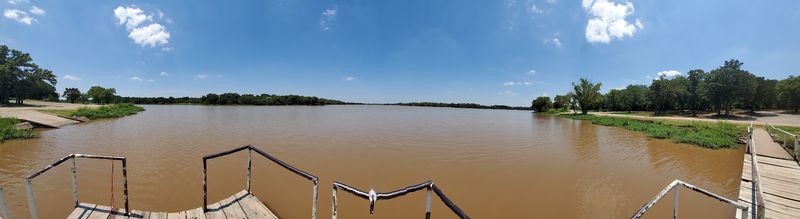
One of the most surreal sights at Cushing Lake is the old dock and boat ramps. They are still there, standing in place as if waiting for the water to return.
The dock extends out over what is now dry ground, its wooden planks weathered and worn from years of sun and rain exposure.
The boat ramps, once used to launch fishing boats and small watercraft, now lead down to cracked mud instead of open water. Concrete slabs sit at odd angles where the ground has shifted beneath them.
The whole scene has a quiet, abandoned quality that is hard to shake once you have seen it in person.
These structures are a physical record of what Cushing Lake used to be. They represent the community investment that went into building a recreational space for the people of Oklahoma.
Seeing them stranded on dry land drives home just how complete the transformation has been. The dock and ramps are not just relics, they are landmarks of a place that is waiting, perhaps indefinitely, for its next chapter.
Wildlife Adapting to a Changed Landscape
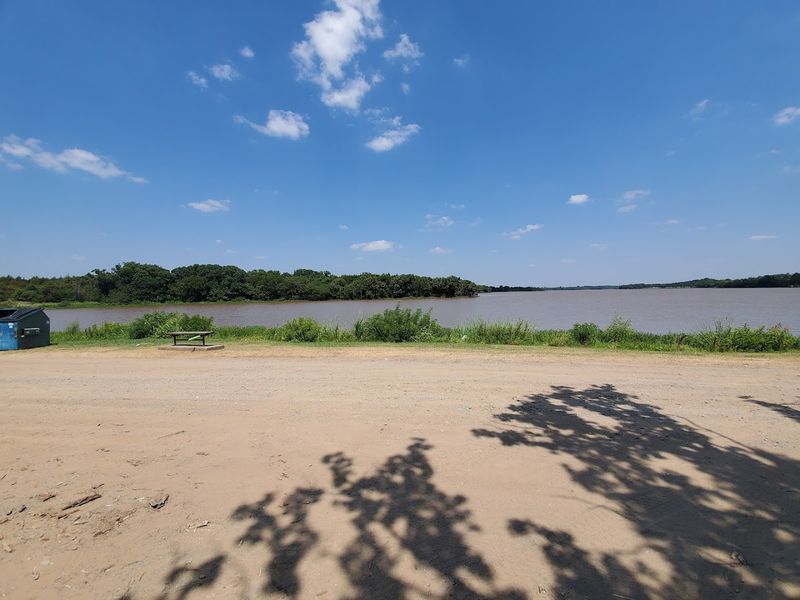
Nature does not wait for humans to fix things before moving on. Since the water left Cushing Lake, the surrounding area has seen a shift in the kinds of wildlife that show up.
Birds that once favored the open water have largely moved on, but other species have moved in to take advantage of the new terrain.
Deer tracks are common along the old shoreline, where patches of grass and low brush have taken root in the moist soil that remains near the former water’s edge. Rabbits and other small mammals have also been spotted moving through the area.
The dried lakebed, while not the habitat it once was, has become a different kind of ecosystem.
Oklahoma is home to a wide variety of wildlife, and the resilience of local animals is always on display in places like this. Watching nature reclaim a space is genuinely fascinating, even when the cause of that reclamation is a structural failure.
The transition from aquatic habitat to dry land is not instant, and the years-long process of change at Cushing Lake offers a slow-moving but real look at ecological adaptation.
The Fishing Culture Cushing Lake Once Had
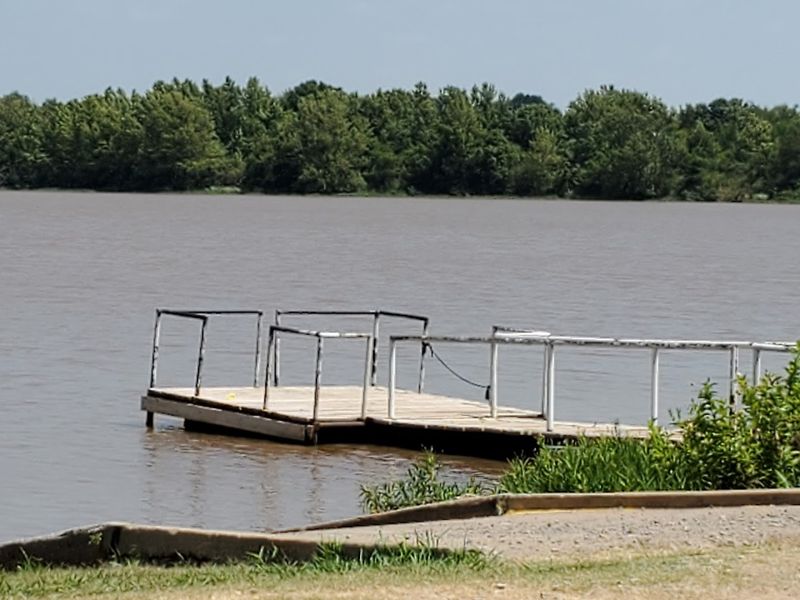
Before the dam failed, Cushing Lake had a genuine fishing culture built up around it. Anglers from the town of Cushing and the surrounding areas of Payne County, Oklahoma, would head out to the lake for early morning bank fishing or a quiet afternoon on the water.
The lake reportedly held a healthy population of fish, making it a solid local spot for anyone with a rod and a free afternoon.
Bank fishing was especially popular since the lake offered easy access with no fees and no gates blocking the way. People would set up along the shore, cast their lines, and spend hours in the kind of peaceful solitude that only a quiet Oklahoma lake can provide.
It was not a glamorous destination, but it was genuinely good for fishing.
The loss of that fishing culture is one of the more personal aspects of what happened to Cushing Lake. For many locals, it was not just a recreational spot but a place tied to routines, memories, and a connection to the natural world.
When the water left, so did that entire way of spending time outdoors in this part of the state.
How Highway 33 Access Has Changed
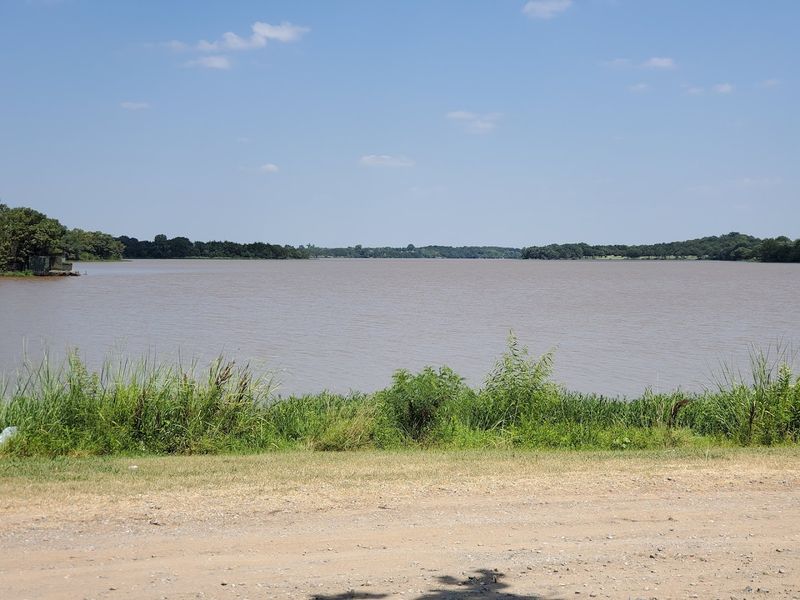
Getting to Cushing Lake used to be straightforward. The entrance off Highway 33 was accessible and clearly marked, making it easy for locals and first-time visitors to find their way in.
The road into the lake area was passable enough for regular vehicles, and the lack of entry fees meant nobody needed to plan ahead or carry cash.
That access has changed significantly. Reports from people who have attempted to visit in recent years describe a blocked entrance, a weathered and deteriorating wooden sign, and no clear way to reach what remains of the lake.
The combination of the dam failure and the apparent lack of maintenance has left the site in a kind of limbo.
For anyone planning a visit to this part of Oklahoma, it is worth doing some research before heading out. The site may not be accessible at all times, and the conditions on the ground can change depending on recent weather and any local maintenance activity.
Highway 33 itself is easy enough to navigate through Payne County, but the turn toward the lake may require patience, a good sense of direction, and realistic expectations about what you will find when you arrive.
The Picnic Areas Frozen in Time
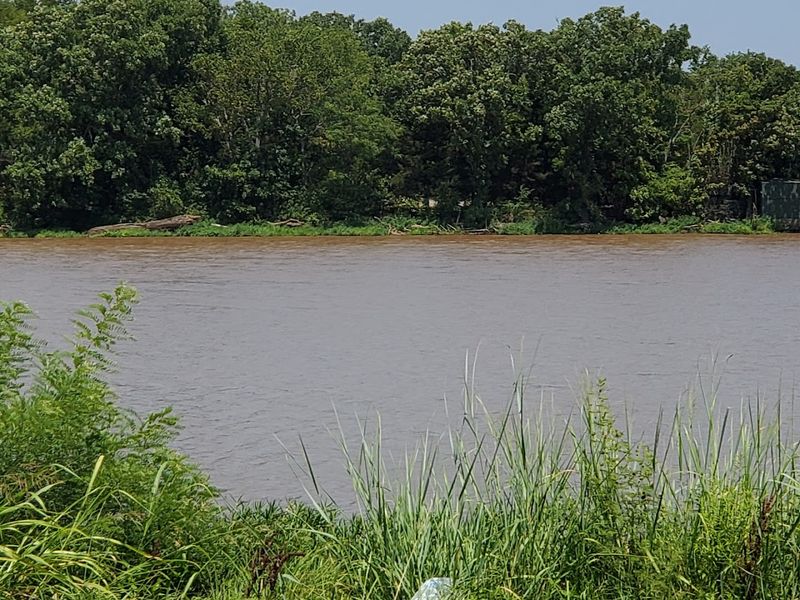
Cushing Lake once had picnic areas set up for families and groups who wanted to spend a full day outdoors. Picnic tables, trash cans, and open grassy spaces made it a practical spot for a casual outing in Oklahoma.
The setup was simple but functional, and it gave the lake a welcoming, community-oriented feel.
Now those picnic areas have a very different atmosphere. Without regular maintenance, the spaces have become overgrown, and some of the furniture has deteriorated from years of exposure to Oklahoma’s intense summer heat and occasional severe weather.
The trash cans that once stood as a symbol of community care are still there in some spots, a small reminder of the organized recreational space this used to be.
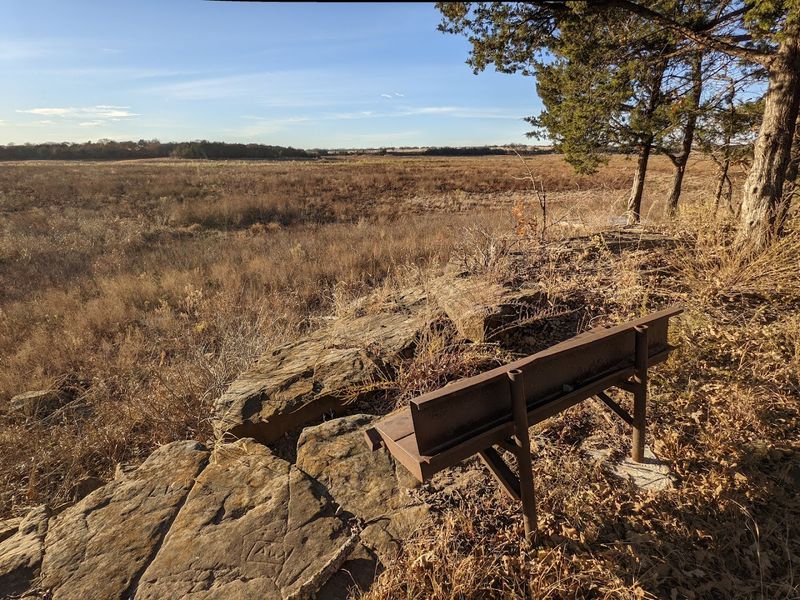
There is something quietly poignant about a picnic table sitting in the middle of a field that used to overlook open water. It is the kind of detail that makes the transformation of Cushing Lake feel personal rather than abstract.
The infrastructure of enjoyment is still partially visible, but the reason for being there, the lake itself, is essentially gone, leaving these spaces in a kind of suspended state.
Payne County and the Broader Oklahoma Water Story
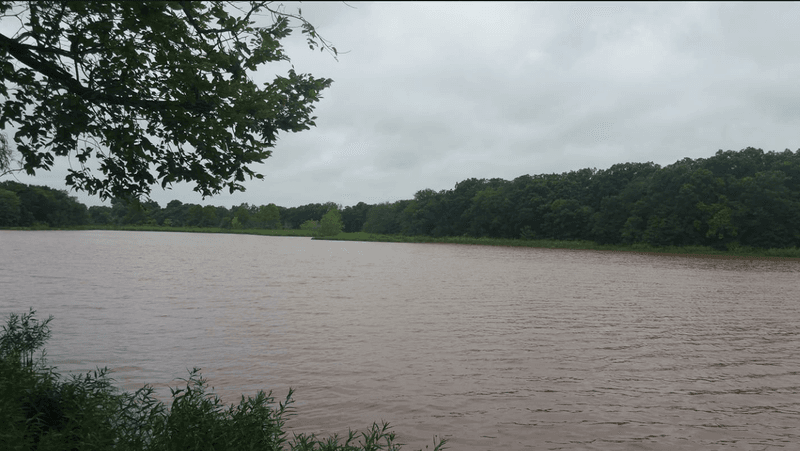
Cushing Lake sits within Payne County, a part of Oklahoma that knows a thing or two about the relationship between water and land. This region of the state experiences a wide range of weather, from heavy spring rains to summer droughts that can crack the earth and stress local water sources.
Managing water in this part of Oklahoma has always required careful planning and consistent upkeep.
Small lakes and reservoirs like Cushing Lake play an important role in local communities across Oklahoma. They provide recreational opportunities, support local wildlife, and offer a sense of place that is hard to quantify but easy to feel when you stand beside them.
When one of these bodies of water disappears, it leaves a gap in the community that goes beyond simple convenience.
The story of Cushing Lake fits into a larger narrative about water infrastructure across Oklahoma. Many of the state’s smaller dams and reservoirs were built decades ago and are now aging past their intended lifespan.
The question of how to maintain, repair, or replace these structures is one that communities across the state are actively grappling with, and Cushing Lake is a very visible example of what happens when the answer comes too late.
Is There Any Hope for Cushing Lake’s Future
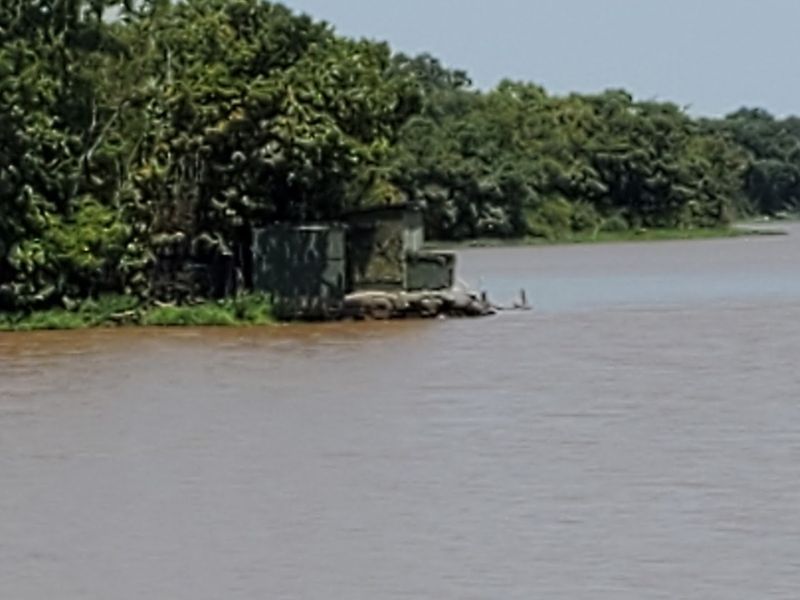
The question most people ask when they learn about Cushing Lake is whether it will ever be restored. Repairing a failed dam and refilling a lake is not a simple or inexpensive process.
It requires engineering assessments, funding, permitting, and a sustained commitment from local and state authorities in Oklahoma to see the project through.
As of the most recent information available, Cushing Lake has remained in its drained state for several years. The entrance has been blocked, and there has been no confirmed public timeline for restoration.
That does not mean the possibility is off the table, but it does mean that anyone hoping to see the lake return to its former state may be waiting for a while.
For now, Cushing Lake stands as one of Oklahoma’s more unusual outdoor destinations, a place that is worth seeing precisely because of what it has become rather than what it once was.
The dried lakebed, the stranded dock, and the overgrown picnic areas tell a story that is honest, unexpected, and genuinely worth knowing.
Sometimes the most interesting places are the ones that remind us how much can change, and how much a community can lose when infrastructure is left to face time alone.
