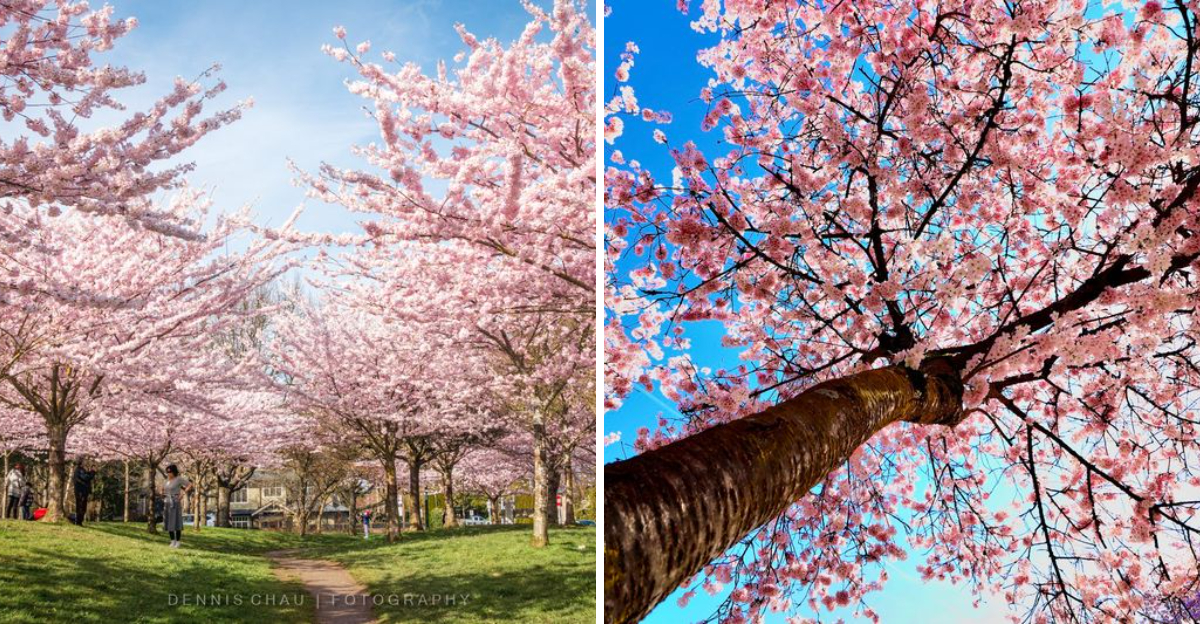
Every spring, something quietly spectacular happens along the Willamette River in Portland, Oregon. The cherry trees lining the waterfront burst into clouds of pink and white, drawing locals and visitors alike to one of the most beautiful seasonal displays in the Pacific Northwest.
If you have been wondering exactly when to show up for peak bloom, you are not alone. Timing a cherry blossom visit can feel tricky since nature does not always follow a calendar.
I have spent more than one spring chasing these blooms, and I can tell you the difference between catching them at peak and arriving a week late is enormous. The good news is there are reliable patterns, helpful resources, and smart strategies that make planning much easier.
Read on to learn everything you need to know about Oregon’s waterfront cherry blossoms this spring. From historical bloom dates to the best spots, what to bring, and how to make the most of every petal-filled moment.
1. Historical Peak Bloom Dates at Tom McCall Waterfront Park
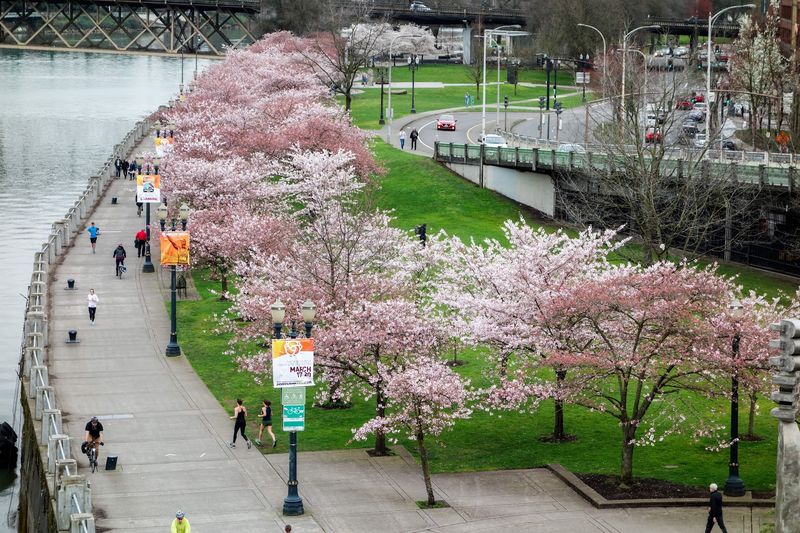
Year after year, Portland’s cherry blossom season has proven to be one of the most consistent floral spectacles in the Pacific Northwest. Tom McCall Waterfront Park, home to 100 ‘Akebono’ cherry trees at the Japanese American Historical Plaza, sits right along the Willamette River in Portland, Oregon.
Historically, peak bloom at this location has fallen between March 19 and March 21, a window that conveniently lines up with the spring equinox. That timing is not a coincidence; the lengthening daylight and warming soil temperatures work together to push the trees into full flower.
In 2025, the trees surprised many visitors by blooming a few days earlier than usual. Full bloom was observed by March 24 that year, with peak conditions arriving around March 22.
Looking back at the records, the late March window is your safest bet for planning a visit. However, bloom timing can shift by a week or more depending on winter temperatures and early spring rainfall patterns in the Portland area.
Understanding this history gives you a solid starting point. If you pencil in a visit for the third week of March and stay flexible through the last days of the month, your chances of catching the blossoms at their absolute best are very high.
Knowing the historical range is honestly the most powerful planning tool you have.
2. The 2026 Bloom Outlook and What the Early Signs Tell Us
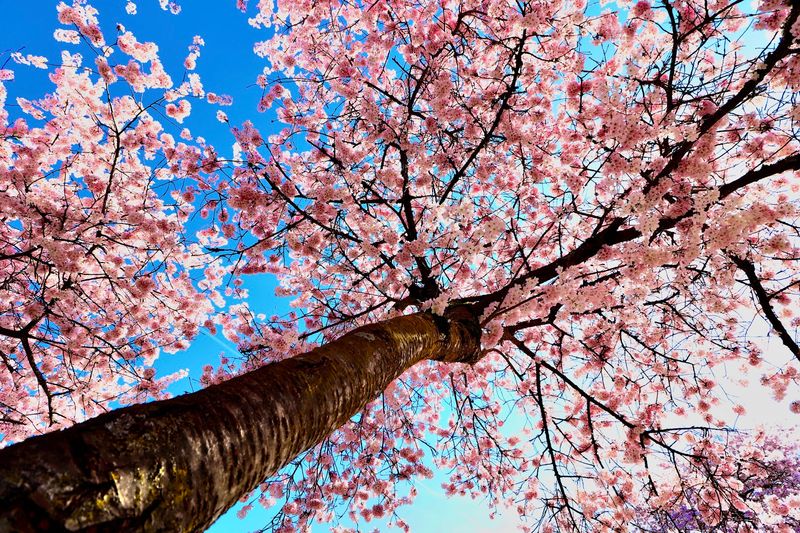
As of early March 2026, the cherry trees along Portland’s waterfront were showing tight green buds with just hints of red and pink pushing through. That early-stage budding, observed around March 4, signals that the season is underway but has not yet hit its stride.
Cool, rainy conditions with temperatures hovering around 49 degrees Fahrenheit have been slowing things down a little this year. When spring stays chilly and wet longer than usual, the trees hold back, which can push peak bloom later into the month.
Based on those early readings, the 2026 bloom may arrive slightly later than the historical average of March 19 to March 21. A window closer to late March looks more likely, though a warm stretch of days could accelerate things quickly.
Cherry trees are famously responsive to temperature swings. A few consecutive warm, sunny days can move a bud from early stage to full flower in what feels like no time at all.
The smartest move for 2026 is to keep a close eye on updates from the Japanese American Museum of Oregon, which posts regular bloom status reports on their website. Checking in weekly starting around March 10 will give you a clear picture of where things stand.
Flexibility is your best friend when planning around nature’s schedule this spring.
3. The Japanese American Historical Plaza: Heart of the Bloom
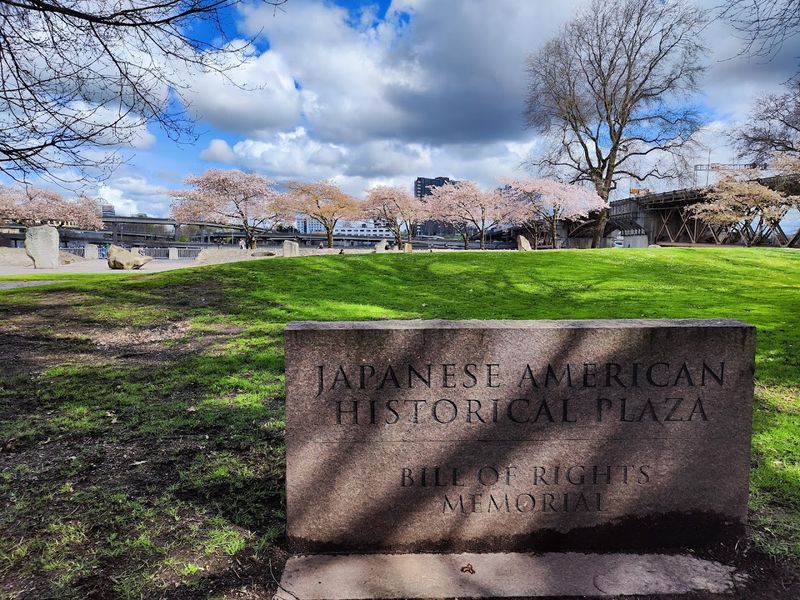
At the north end of Tom McCall Waterfront Park in Portland, Oregon, stands one of the most meaningful cherry blossom viewing spots on the West Coast. The Japanese American Historical Plaza is not just a pretty place to stroll; it carries deep cultural and historical significance for the Japanese American community in the Pacific Northwest.
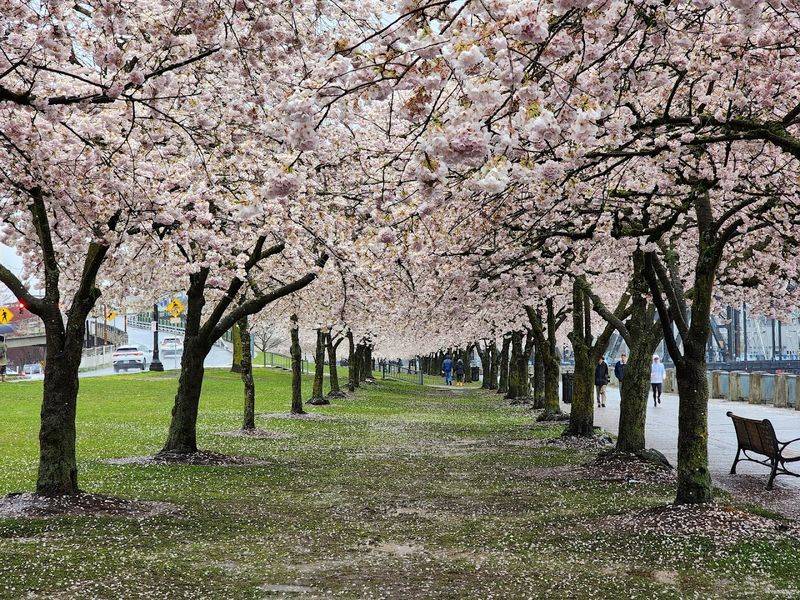
The plaza features 100 ‘Akebono’ cherry trees, a variety known for its soft pink and white blossoms that create a breathtaking canopy over the walkway along the Willamette River. When every tree is in full bloom simultaneously, the effect is genuinely overwhelming in the best possible way.
Stone monuments and poetry inscribed in both English and Japanese add layers of meaning to the experience. Walking through the plaza during peak bloom feels like moving through both a garden and a living memorial at the same time.
The location along the river also means you get stunning views of the water and the bridges beyond the blossoms, making it a favorite spot for photographers. Early morning visits tend to be the quietest and most atmospheric, especially when the light is soft and the crowds have not yet arrived.
Plan to spend at least an hour here, taking time to read the inscriptions and sit with the beauty of the moment. This place rewards slow, thoughtful visits far more than a quick walk-through.
4. How Oregon’s Weather Patterns Affect Bloom Timing Each Year
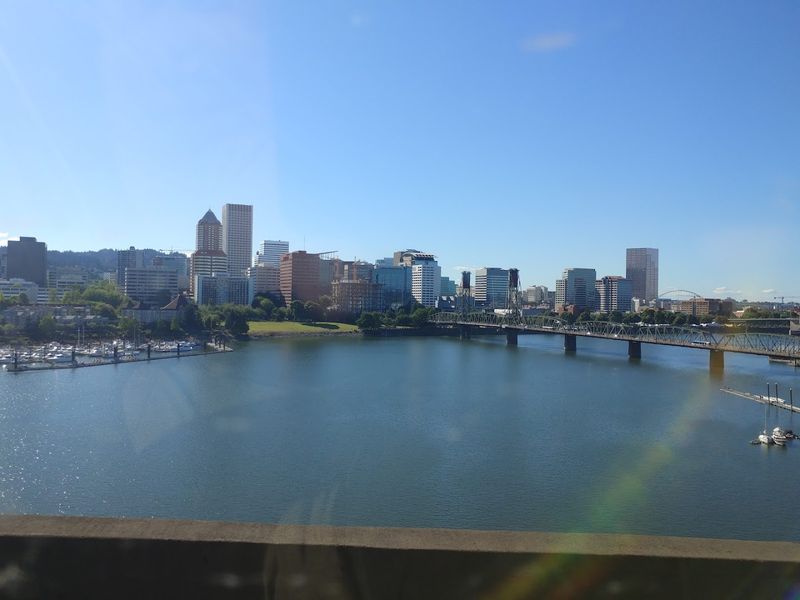
Portland’s spring weather is famously unpredictable, and that unpredictability has a direct impact on when the cherry trees decide to bloom each year. The city sits in the Willamette Valley, where mild but often wet winters transition slowly into spring, creating the perfect conditions for cherry trees but also for delayed or early blooms depending on the year.
Warmer-than-average winters tend to push bloom timing earlier. When February and early March bring more sunshine and slightly higher temperatures, the trees interpret those signals as an invitation to start opening up sooner.
On the flip side, a colder or wetter winter followed by a slow-warming spring, like what Portland has been experiencing in early 2026, can delay peak bloom by a week or more. Even a few nights of frost after the buds begin to show can slow the process significantly.
Rain during bloom season is not necessarily a bad thing. A gentle drizzle on pink petals is actually one of the most photogenic sights imaginable along the waterfront.
Heavy rain and wind, however, can knock petals off quickly and shorten the viewing window.
Paying attention to the ten-day forecast as you approach your planned visit date is genuinely useful.
5. Where to Find the Best Real-Time Bloom Updates Before You Go
One of the most practical things you can do before making the drive or booking a trip to Portland for cherry blossom season is to check for real-time bloom updates. Fortunately, there is a reliable source that makes this easy.
The Japanese American Museum of Oregon, known as JAMO, posts regular updates on their website throughout the season. Their reports cover the current bud stage, estimated days until peak bloom, and any weather-related delays or surprises.
Bookmarking their site and checking it every few days starting in early March is a genuinely smart habit.
Beyond JAMO, local Portland news outlets and weather services often pick up on bloom forecasts as the season approaches. Social media accounts dedicated to Portland parks and outdoor activities are also worth following, as locals frequently post real-time photos from the waterfront.
A quick search on Instagram or local Facebook groups using Portland cherry blossom hashtags can give you an almost live view of what the trees look like on any given day. This kind of crowdsourced information is surprisingly accurate and often more current than any official report.
Combining official updates from JAMO with community photo reports gives you the clearest possible picture of bloom conditions before you commit to a visit.
6. The Best Time of Day to Visit for Peak Viewing and Photography
Timing your visit not just by the date but by the hour can make a massive difference in what you experience at the waterfront. The cherry blossoms at Tom McCall Waterfront Park in Portland, Oregon, look genuinely different depending on when you arrive.
Early morning, roughly between 7 and 9 a.m., is hands-down the best window. The light is soft and warm, the crowds are thin, and the air along the Willamette River has a fresh, almost misty quality that makes the whole scene feel peaceful and unhurried.
Midday brings stronger light that can wash out the delicate pink tones in photographs, and it also tends to draw the largest crowds. If you prefer a livelier, more festive atmosphere with plenty of people enjoying the park, midday and early afternoon work perfectly well.
Late afternoon and the hour before sunset offer another beautiful light window, especially on partly cloudy days when the sky turns soft shades of orange and pink behind the blossoms. The combination of cherry flowers and a colorful sunset sky over the river is hard to beat.
Weekdays are noticeably quieter than weekends at any hour, so if your schedule allows a Tuesday or Wednesday visit, you will have a much more relaxed experience.
7. What the ‘Akebono’ Cherry Tree Variety Means for the Bloom Experience
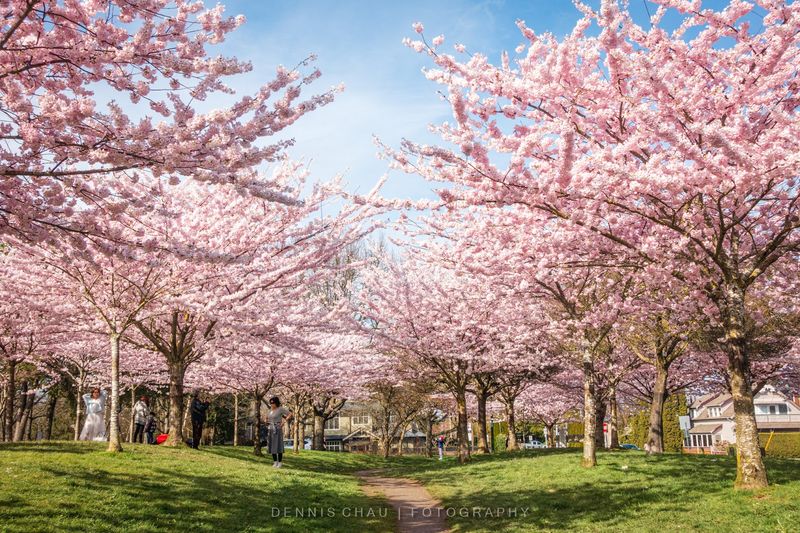
Not all cherry trees bloom the same way, and knowing a little about the specific variety growing at Portland’s waterfront helps you understand what to expect when you arrive. The 100 trees at the Japanese American Historical Plaza are all ‘Akebono’ cherries, a cultivar with a character all its own.
‘Akebono,’ which translates roughly to ‘daybreak’ in Japanese, produces blossoms that are a soft, warm pink fading toward white at the edges. The flowers tend to be slightly fragrant, which adds a sensory layer to the experience that pure visual beauty alone cannot replicate.
This variety typically blooms a little earlier in the season compared to some other ornamental cherry types, which is part of why the waterfront plaza often hits peak bloom before many other cherry blossom sites in the region.
The trees at this location are mature and well-established, meaning they produce full, dense canopies of flowers rather than sparse or patchy displays. When all 100 trees are at peak simultaneously, the effect along the river path is genuinely stunning.
Understanding that you are visiting a specific, curated planting of a single variety also means the bloom window tends to be fairly synchronized. Most of the trees peak within a few days of each other, giving you a reliable target window rather than a drawn-out, uneven display.
That synchrony is part of what makes this spot so special each spring.
8. How Cherry Blossom Timing in Oregon Compares to Washington D.C.
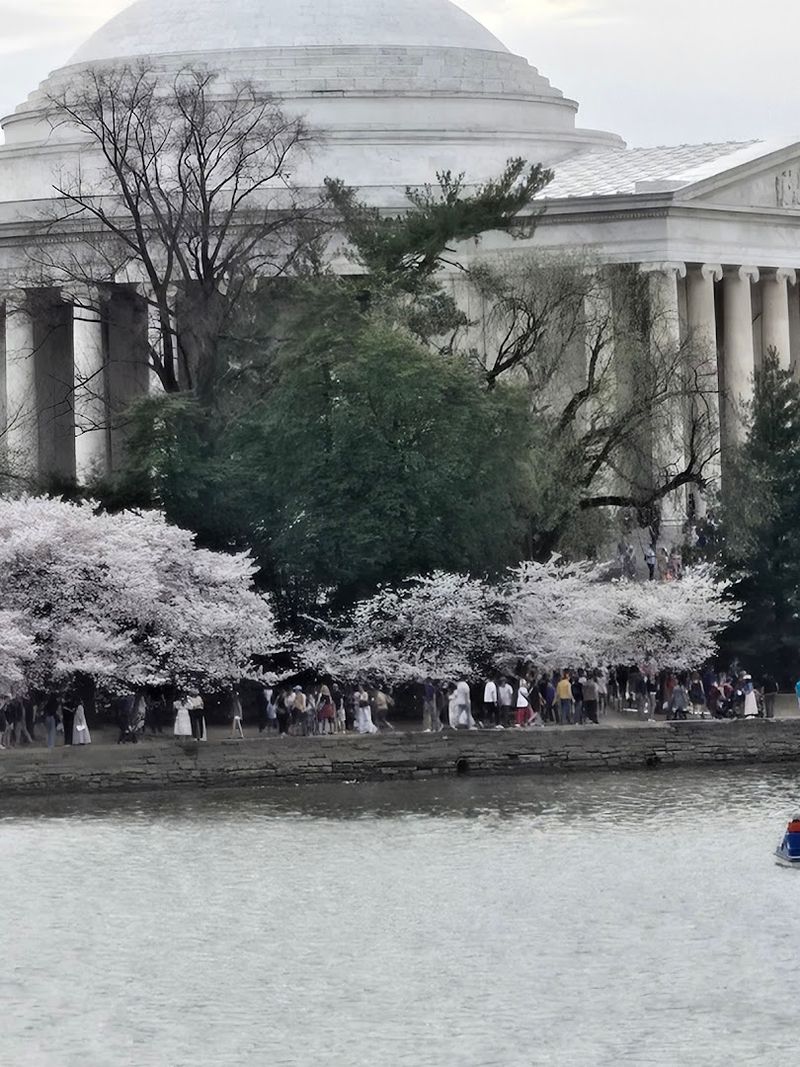
Cherry blossom season is not a uniquely Pacific Northwest event, and comparing Portland’s bloom timing to that of Washington D.C. reveals some interesting patterns worth knowing before you plan a trip.
In Washington D.C., the famous cherry blossoms around the Tidal Basin typically peak in late March as well, with the National Park Service issuing annual predictions that draw enormous national attention. In 2025, D.C.’s blossoms were forecast to hit peak bloom in late March, a timeline that aligns closely with Portland’s historical window.
For 2026, reports suggest that D.C.’s peak bloom may arrive later than usual, potentially due to a colder winter affecting bud development on the East Coast. Portland appears to be experiencing a similar slight delay for the same reasons.
The key difference is scale. Washington D.C. draws millions of visitors during its cherry blossom festival, making the experience much more crowded and logistically demanding.
Portland’s waterfront offers a comparably beautiful display with a fraction of the foot traffic.
If you have ever dreamed of a cherry blossom experience without fighting enormous crowds or booking hotels months in advance, Portland is the answer you have been looking for. Oregon’s waterfront holds its own beautifully against any cherry blossom destination in the country.
9. Practical Tips for Planning Your Waterfront Cherry Blossom Visit
A little planning goes a long way when it comes to making the most of cherry blossom season in Portland. The waterfront is a public park, free to visit, and accessible by foot, bike, public transit, or car, which gives you plenty of options for getting there without stress.
Parking along the waterfront can be limited during peak bloom weekends, so taking the MAX light rail to the Old Town or Skidmore Fountain stations puts you within easy walking distance of the plaza. Arriving by transit also means you can relax and enjoy the scenery rather than circling for a parking spot.
Dress in layers when you visit in late March. Portland spring mornings can be cool and breezy along the river, but afternoons often warm up enough to shed a jacket.
Comfortable walking shoes are a must since the waterfront path is long and you will want to wander.
Bring a camera or make sure your phone is fully charged because you will take more photos than you expect. A small blanket or portable chair is a nice addition if you want to sit along the river and simply absorb the atmosphere.
10. Why Oregon’s Waterfront Cherry Blossoms Are Worth Every Effort to See
Some seasonal experiences are worth building a trip around, and Oregon’s waterfront cherry blossoms genuinely belong in that category. The combination of natural beauty, cultural history, and a stunning riverside setting creates something that is hard to replicate anywhere else in the Pacific Northwest.
Standing beneath 100 mature ‘Akebono’ cherry trees in full bloom along the Willamette River in Portland, Oregon, with the city’s bridges visible in the distance, feels like the kind of moment you remember for years. It is beautiful in a way that photographs capture partially but never fully.
The Japanese American Historical Plaza adds a layer of emotional depth that elevates the experience beyond a typical flower-viewing outing. The history embedded in that space makes the beauty feel meaningful rather than merely decorative.
Peak bloom lasts only about one to two weeks, sometimes less if wind or heavy rain moves through early. That fleeting quality is part of what makes cherry blossom season feel so precious and worth chasing.
Oregon does not always get the national attention that cherry blossom destinations like Washington D.C. or Japan receive, but that relative quiet is actually one of its greatest strengths.
You can have a genuinely moving, crowd-friendly, and deeply beautiful cherry blossom experience right here on the West Coast without a passport or a packed festival itinerary.
Dear Reader: This page may contain affiliate links which may earn a commission if you click through and make a purchase. Our independent journalism is not influenced by any advertiser or commercial initiative unless it is clearly marked as sponsored content. As travel products change, please be sure to reconfirm all details and stay up to date with current events to ensure a safe and successful trip.
