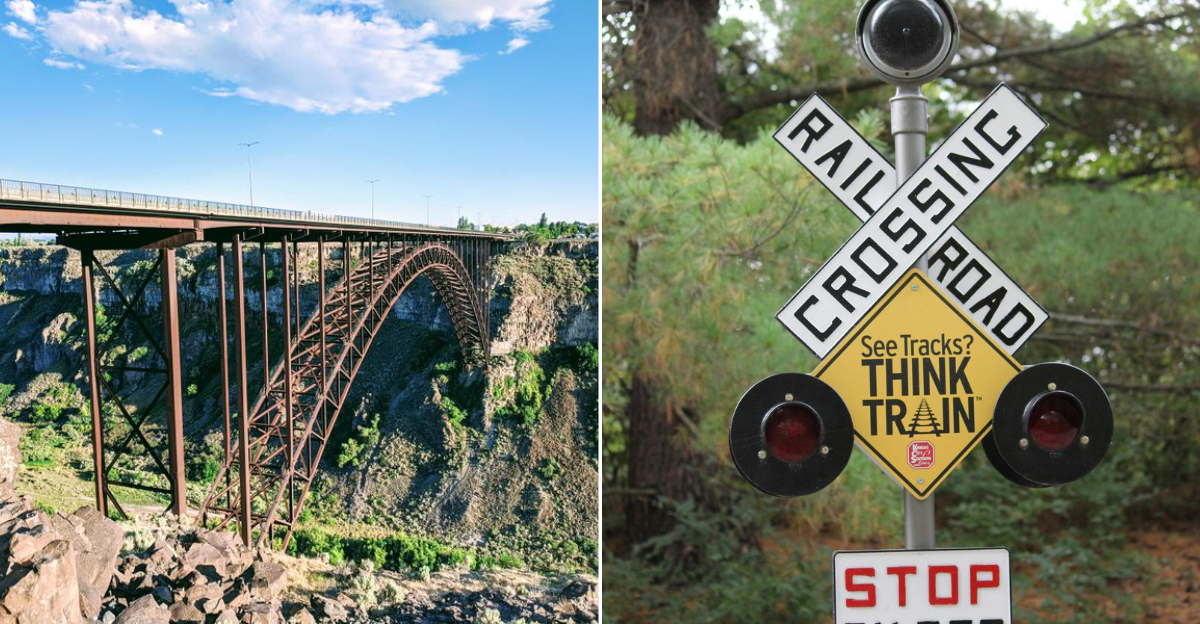
So we are mapping out this Idaho loop, and I keep hearing wild stories about people wandering onto rail bridges for views and then leaving in the back of a patrol car. It sounds dramatic until you look at the fine print and realize those bridges are active, private, and watched a lot more closely than you would think.
A lot of travelers assume empty tracks mean abandoned lines, which is rarely true here. The photos look tempting, sure, but the legal and safety mess that follows is the part nobody posts.
If we want a calm trip, we should understand why those crossings keep going sideways for visitors and steer around the trouble altogether.
Rail Bridges Are Classified As Active Private Infrastructure
Let me start bluntly, because this is where people get tripped up fast.
Active rail bridges in Idaho are private infrastructure, and stepping on them is not like wandering a public trail.
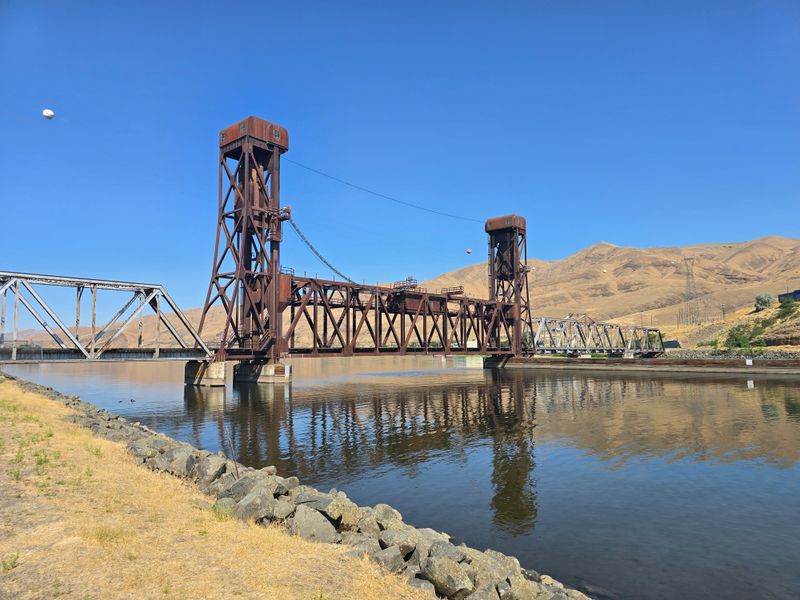
You can see that clearly when you roll up on the Oregon Short Line Bridge over the Snake River near 801 Snake River Ave, Lewiston, Idaho. The structure looks photogenic from the greenway, but the tracks themselves are off limits.
Private means the owner controls access, and the owner here is a rail company, not the city. That is why fences and signs feel so firm about the rules.
Think about it the way you would a backyard with a gate.
The bridge just happens to span water and steel instead of grass and a grill.
If you want a view without drama, you can stand at the levee path along Snake River Ave and keep the lens off the ties. You still get that long line of trusses with the river sliding underneath.
We could park by the greenbelt pullouts, take a mellow stroll, and stay on the public side of the railing. It keeps the day simple.
Idaho folks tend to treat rail property like a clear do not cross line.
Visitors see steel and sky, residents see rules with teeth.
So when you hear about tourists getting stopped, this is the foundation. It is private, it is active, and that combination is not flexible.
Idaho Law Considers Rail Trespassing A Legal Violation
Here is the part that surprises out of state friends. In Idaho, rail trespass is not a slap on the wrist warning, it is a criminal thing with real consequences.
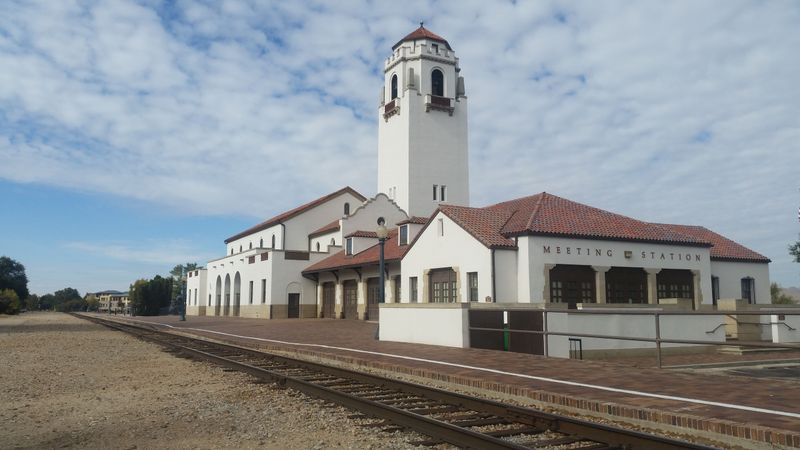
You can see this play out around the Union Pacific corridor by 1401 W Hays St, Boise, where enforcement teams coordinate with city police.
The tracks cut through town, but that does not make them public lanes.
Crossing at bridges amplifies the issue because there is no shoulder and no escape. Law or not, it is dicey.
People assume a short walk for a panorama is harmless. That is the moment officers step in, because intent does not erase trespass.
Idaho law reads very plainly about being on active tracks without permission.
Bridges fold into that like any other segment.
If you want a legal angle, use marked pedestrian overpasses and sidewalks that sit beside the corridor. They exist for a reason and photograph well from the side.
I would rather meet a ranger while holding a map than while standing on ties. Same afternoon, much better mood.
So yes, the view calls, but the code book speaks louder in this state. Save the bridge for a long lens from a public spot and keep rolling.
Trains Cannot Stop Quickly Enough To Avoid Pedestrians
This one is physics, not attitude. Trains moving through Idaho cannot just tap the brakes and stop for someone lingering on a bridge.
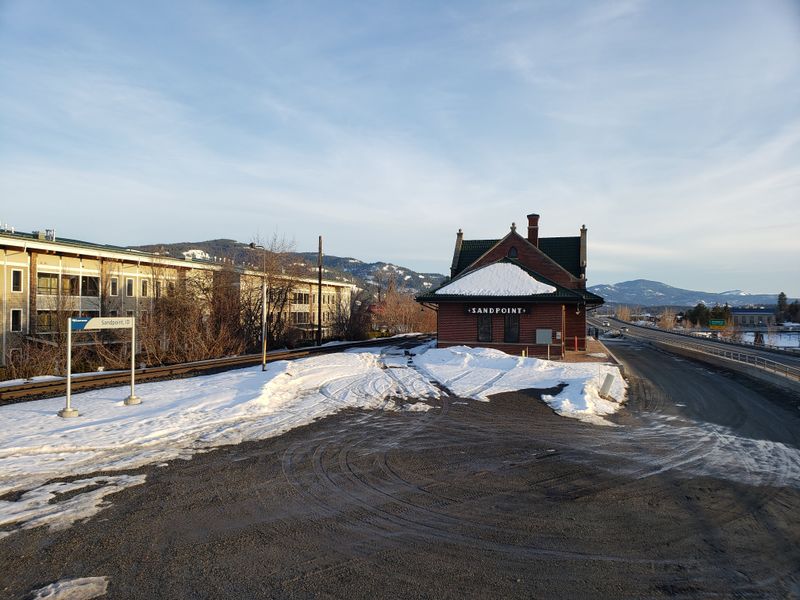
Take the span near Sandpoint over Lake Pend Oreille by Bridge St and N 1st Ave, Sandpoint.
When a consist rounds the curve, the stopping distance is way longer than it looks from the shoreline.
You hear the horn and think there is time. There usually is not, especially on metal grating with gaps and limited footing.
Engineers are trained to blow warnings and hold course. They cannot risk derailment trying to dodge a person who should not be there.
If you want the lake shot, the public City Beach Park at 58 Bridge St, Sandpoint does the job.
You get trains crossing in profile without standing on the structure.
I like catching reflections from the dock when the water is calm. It feels safe and the photos have that clean line across the horizon.
When people still step onto the bridge, they underestimate speed and overestimate their own timing. That mismatch is where the trouble starts.
So yeah, physics wins every single time. Plan the angle from shore, and let the rails do their thing without you on them.
Bridges Remove Any Safe Escape Route Once A Train Appears
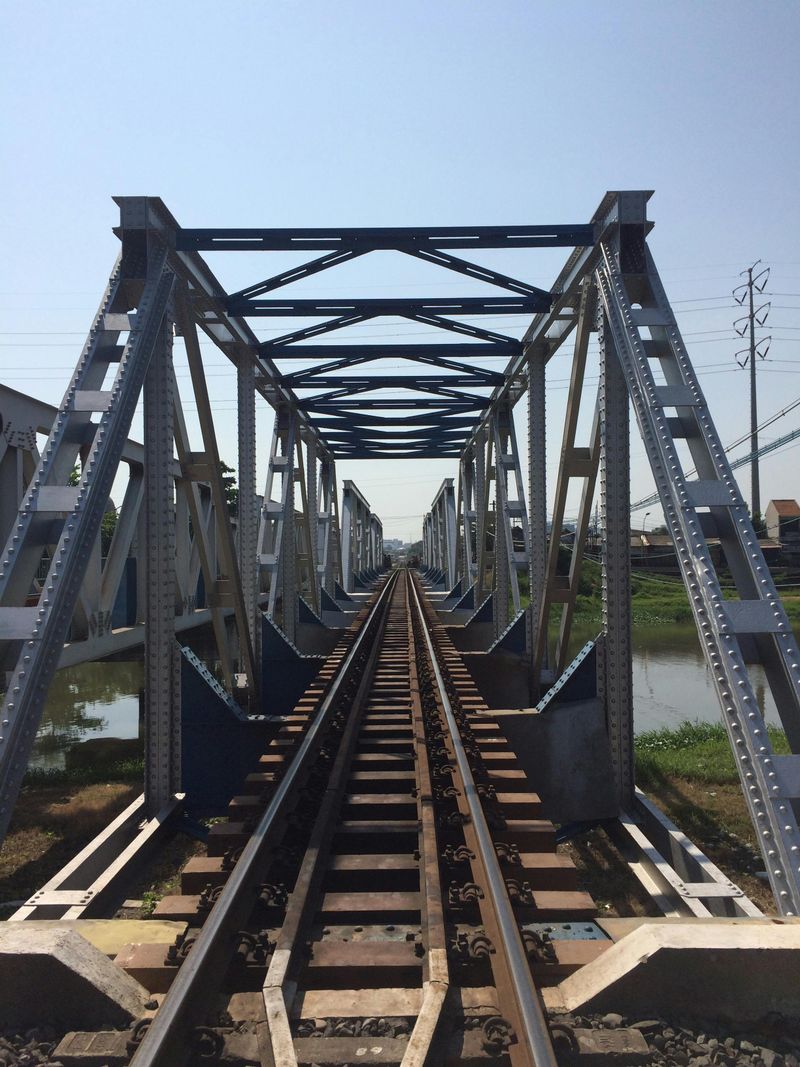
Ever notice how a bridge gives you nowhere to go. That is the whole problem once a horn echoes down the span.
The Camas Prairie Railroad Bridge near Lawyer Creek Canyon by US 95 and East Main St, Cottonwood sits high with narrow decking.
If a locomotive shows up, you are choosing between steel and a bad drop.
Walkways are not built for pedestrians. They are built for maintenance crews with training and safety gear.
Even if there is a catwalk, it is not a public sidewalk. People freeze when they realize how thin that margin really is.
We can still enjoy the architecture from pullouts along US 95 around Cottonwood. Those turnouts give clean angles on the trestle curves.
Bring a zoom and you will get that layered timber and lattice look.
No need to gamble on a narrow beam above a canyon.
When stories pop up about tourists getting cited, it is usually after a scramble. Officers know how fast a quiet stretch can go loud.
So let us treat bridges like cliffs with rails. Beautiful from a distance, not a place to wander.
Tourists Often Assume Remote Areas Mean Relaxed Enforcement
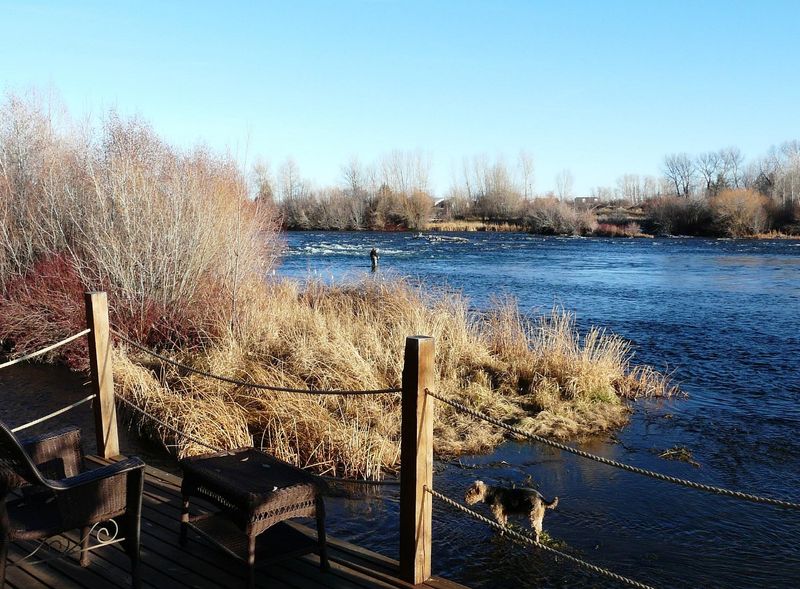
I get the mindset, because quiet backroads feel casual. Idaho has long stretches where you can hear your own footsteps and nothing else.
But near the Henrys Fork crossing by 125 Railroad Ave, St Anthony, railroad police and county deputies still patrol. Remote does not equal unmonitored, especially on bridges.
The trains run on schedules that matter to freight and crews. Interference gets attention fast.
Locals know that a ticket out here means a long, dull afternoon sorting it out.
Visitors learn it the hard way when a cruiser rolls up.
You can stand by the public river access on Bridge St, St Anthony and watch the spans across the water. It scratches the curiosity without stepping into trouble.
We could grab a map at the visitor center and mark safer overlooks. That makes the day smoother and the photos cleaner.
The myth that no one is watching dies quickly once a truck idles near the right of way.
Presence is part of prevention.
So do yourself a favor and keep the remote stretches respectful. Quiet landscapes still have rules, and Idaho takes them seriously.
Social Media Encourages Dangerous And Illegal Crossings
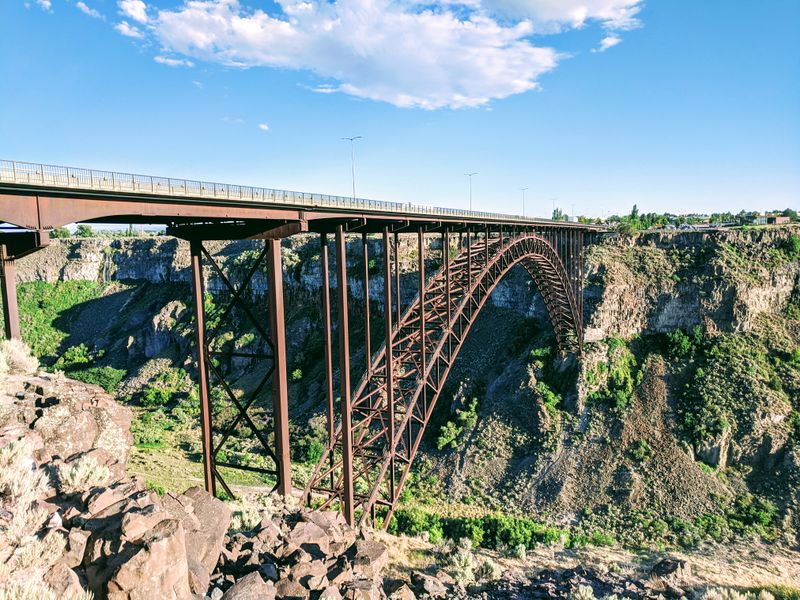
Those glossy bridge selfies make it look effortless. They also skip the part where someone edits out the warning signs.
There is a classic angle near the Snake River bridge close to 310 Bridge St, Twin Falls, where people try for symmetry.
The safe version is from the pedestrian path along the canyon rim, not the tracks.
Algorithms reward the bold shot. They do not cover citations or that stomach drop moment when a horn blasts behind you.
If a post made you curious, read the comments from locals. You will see a chorus saying please keep off the rails.
The rim trail off Canyon Springs Rd, Twin Falls gives a framed view with good light.
Bring a longer lens and you will still fill the frame.
I like finding an angle with a guardrail in the foreground. It anchors the shot and keeps your feet on public ground.
Tourists who chase the viral look often set off enforcement sweeps. It turns into a loop of more patrols and more stops.
So let us be the boring friends who go home with pretty photos and zero drama. The feed will survive just fine without a trespass shot.
Rail Companies Push For Zero-Tolerance Enforcement
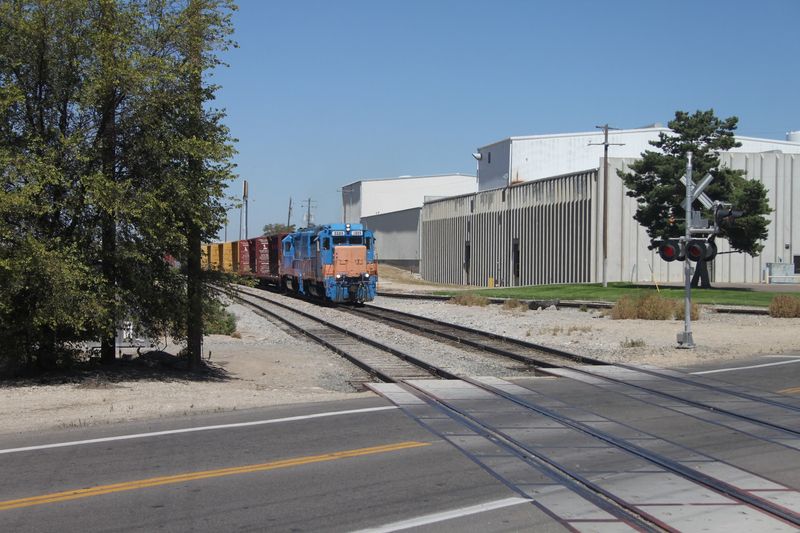
This is not guesswork. Rail companies in Idaho push hard for zero tolerance around active bridges.
Look near the Nampa yard by 1600 N Front St, Nampa, where corporate security teams coordinate with local departments. The policy mindset is consistent along the whole corridor.
They track incidents and trend lines like any safety program.
Bridges always rank high risk, so the response stays tight.
It is not personal, it is liability and crew safety. A single close call can ripple through operations for hours.
If you want trains up close, the public platform near 11th Ave N and Front St, Nampa lets you watch from behind a fence. That distance makes everyone breathe easier.
We can time a visit for soft light and catch locomotives rolling past signals.
You get motion blur and color without stepping a toe wrong.
When tourists climb onto bridges, the companies treat it as a system failure to correct. That means calls, citations, and sometimes arrests.
So when in doubt, assume the strict version of the rule applies. It is the safest way to plan a day around the rails.
Local Authorities Focus On Prevention Through Arrests
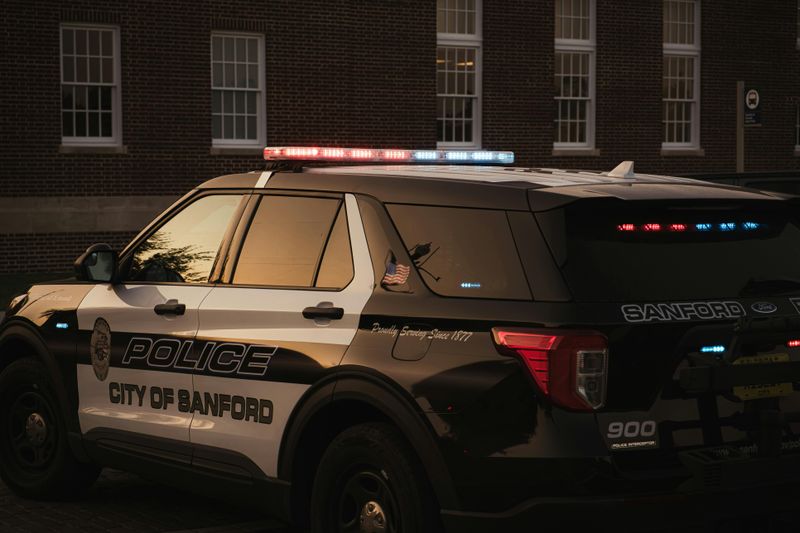
It sounds harsh, but arrests are used as prevention tools here. The idea is to stop the copycat effect.
In Pocatello around 1000 S 1st Ave, Pocatello, you will see joint patrols near bridge approaches.
The message is clear before anyone reaches the span.
Authorities figure a serious response today keeps tomorrow quieter. It is a crowd control mindset for a very long, narrow space.
Meanwhile, there are plenty of legal vantage points near the Portneuf Greenway.
You can frame the bridges with trees and keep a clean conscience.
We could bring a map, circle the public access points, and make a loop. It turns the day into a mellow walk instead of a tense sprint.
When visitors push past fences, the playbook is short. Stop, question, document, and remove.
That is why tourists keep landing in trouble in Idaho. The prevention model is firm by design.
Let us not test the system for no reason. Shots from the trail look just as good once you crop them tight.
Warning Signs Are Present But Frequently Ignored
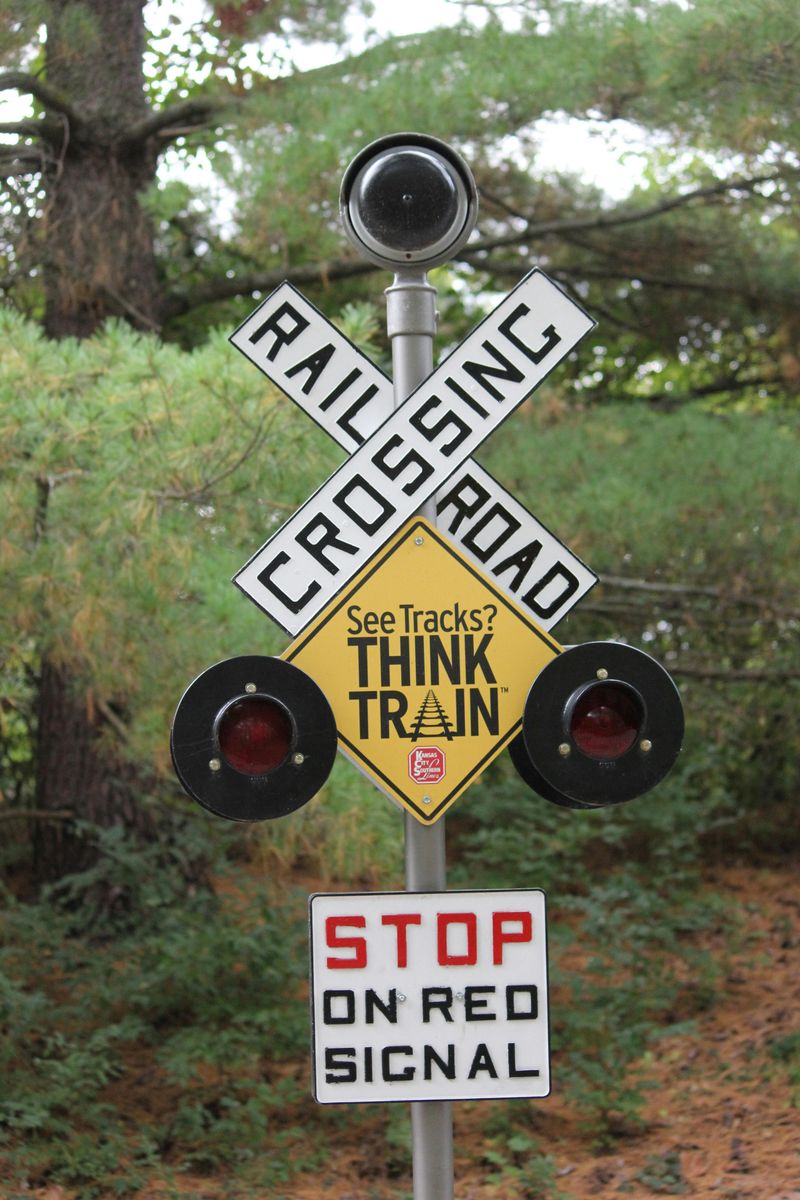
You have seen the signs, bright and plain as day. Somehow the brain edits them out when the view looks cinematic.
Down by the Clearwater River crossing near 201 Main St, Orofino, placards hang on fences and posts.
The water glows in the evening and people forget to read.
Signs matter because they flip the legal switch on notice. Once you pass them, the argument gets thin.
I get it, we are all chasing a good angle. That is why I plan my shots from the city park along Main St instead.
From there, you can set up a tripod and line the bridge against the ridge. It is calm, and nobody worries about you wandering off the curb.
Bring a polarizer if the light goes harsh and the river flares.
You can pull color from the shadows and skip the drama entirely.
Locals tell me the same story every season. Tourists spot the sign and step around it like it is a suggestion.
Let us be the ones who read the words and listen. Idaho posted the rules in plain text, and that is the whole game.
What Feels Scenic To Visitors Is Treated Carefully By Locals
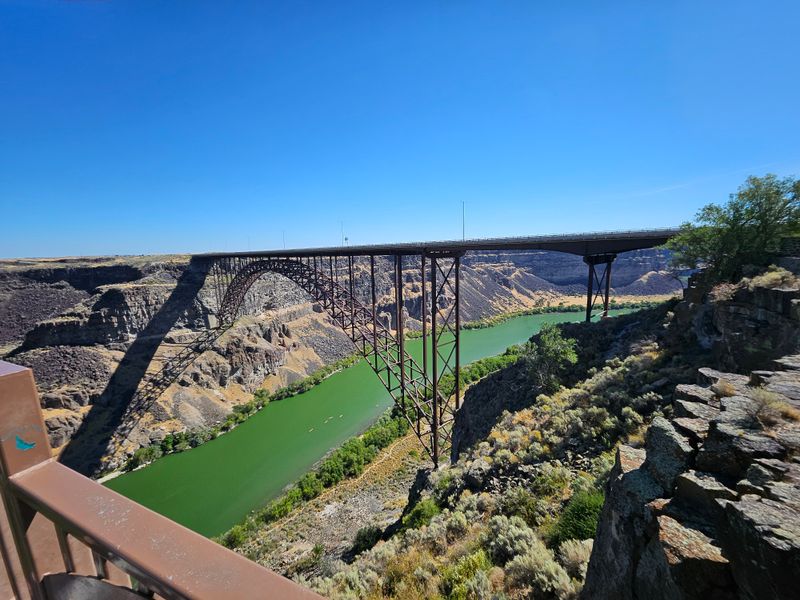
This is the vibe gap. Visitors see drama and lines, locals see hazard and paperwork.
Take the rail span visible from 5th St and Shoshone St W, Twin Falls, where the canyon frames everything. Folks who live here know how fast conditions flip from quiet to loud.
Risk looks different when you hear trains daily.
You start noticing wind gusts, loose footing, and blind curves.
That is why residents steer friends to public overlooks. You get the same sense of place without the nervous glance over a shoulder.
The visitor center at 2015 Nielsen Point Pl, Twin Falls has safe viewing areas.
You can watch the bridge lines with the canyon running wide beneath.
I like leaning on the railing and talking through shots before pressing the shutter. It slows everything down in a good way.
If we respect the local lens, the day stays easy. You leave with photos and no lecture from a patrol officer.
So the rule for Idaho is simple, admire rail bridges from where your feet are allowed. Scenic still counts when you are standing in the right spot.
Dear Reader: This page may contain affiliate links which may earn a commission if you click through and make a purchase. Our independent journalism is not influenced by any advertiser or commercial initiative unless it is clearly marked as sponsored content. As travel products change, please be sure to reconfirm all details and stay up to date with current events to ensure a safe and successful trip.
