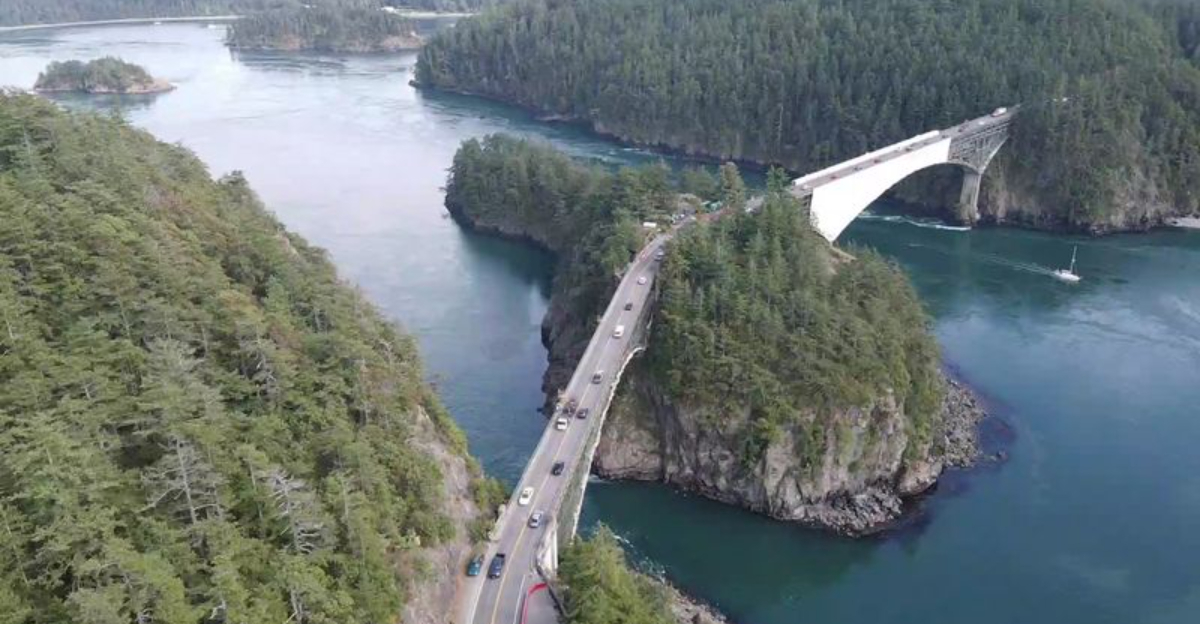
Nestled between Whidbey Island and Fidalgo Island in the Pacific Northwest, Deception Pass Bridge stands as one of Washington State’s most photographed and visited landmarks.
This stunning structure arches dramatically over turbulent waters where Puget Sound meets the Strait of Juan de Fuca, creating a scene so breathtaking that nearly every visitor stops in their tracks with the same awestruck reaction.
The bridge’s unique combination of natural beauty, engineering marvel, and raw coastal power draws travelers from around the world who come seeking that perfect snapshot and unforgettable memory.
Whether you’re a first-time visitor or a seasoned Pacific Northwest explorer, understanding what makes this bridge so universally captivating will enhance your experience and help you appreciate why Deception Pass has earned its 4.9-star rating from over a thousand delighted visitors.
The Dramatic Drop That Makes Your Stomach Flip
Standing at the viewpoint and peering over the edge of Deception Pass Bridge creates an instant physical reaction that catches even the bravest visitors off guard.
The channel below plunges to depths where swirling currents churn the water into frothy whitecaps, creating a mesmerizing yet slightly terrifying spectacle.
From the bridge deck, you’re suspended 180 feet above these roiling waters, and the perspective shift between solid ground and the churning passage below triggers an involuntary gasp from nearly everyone who looks down.
The narrow channel squeezes massive volumes of seawater through its rocky throat twice daily as tides shift, creating currents that can reach eight knots during peak flow.
This natural hydraulic show happens right beneath your feet, making the bridge feel like a front-row seat to nature’s raw power.
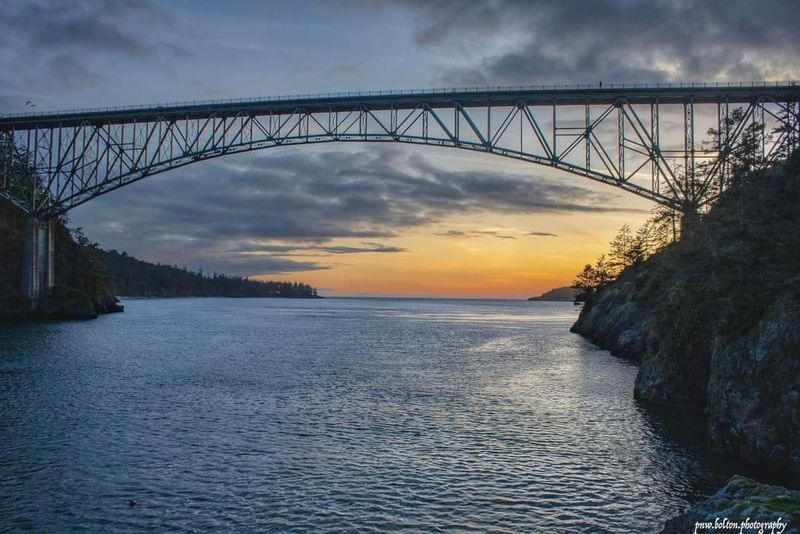
Photographers love capturing the contrast between the sturdy steel architecture and the wild water below, but even those without cameras find themselves drawn to the railings repeatedly during their visit.
The geological forces that carved this passage created vertical rock faces that drop straight into the channel, amplifying the sense of height and exposure.
Walking across the bridge, you can feel the structure’s slight vibration as wind and traffic create subtle movements, reminding you that you’re crossing a living, breathing piece of infrastructure.
This combination of height, natural turbulence, and engineering creates an experience that stays with visitors long after they’ve returned to solid ground, making it impossible not to share stories about that moment of looking down.
The Impossible Color of the Water Below
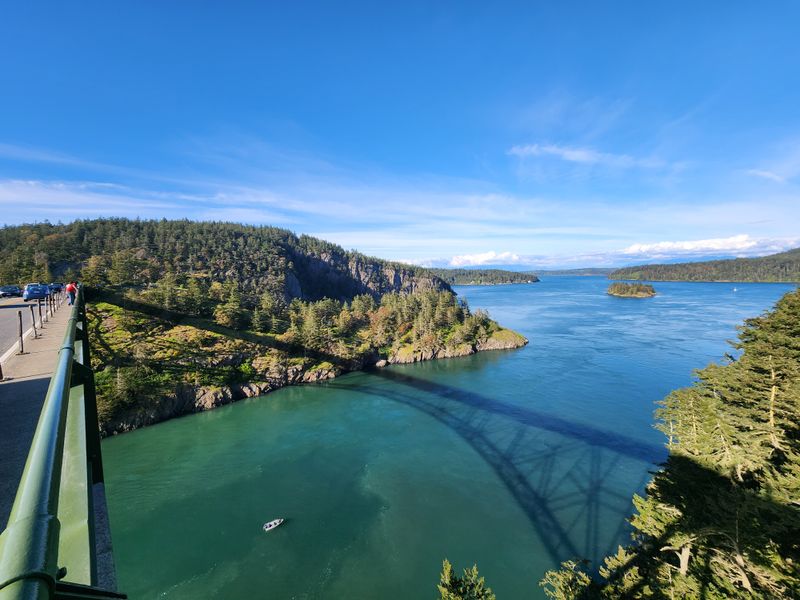
Visitors often arrive expecting typical Pacific Northwest gray-blue waters, but the reality of Deception Pass’s color palette stops them mid-sentence with exclamations of disbelief.
The water here displays shades ranging from deep emerald to brilliant turquoise, colors more commonly associated with Caribbean destinations than the Washington coast.
This unexpected tropical appearance comes from a unique combination of factors including water depth, mineral content, and the way sunlight interacts with the churning currents.
During summer months when sunlight penetrates the water most effectively, the colors become even more vivid, creating photo opportunities that require no filters or editing to look spectacular.
The contrast between these jewel-toned waters and the dark evergreen forests clinging to the rocky shores creates a visual impact that cameras struggle to fully capture.
Many travelers report that their friends back home question whether their photos have been enhanced, not believing that such colors exist in Washington State.
The tidal action constantly refreshes the water, keeping it clear and allowing the channel’s depth variations to paint different shades across the passage.
On overcast days, the water takes on a moody jade quality that feels equally dramatic, proving that Deception Pass delivers visual magic regardless of weather conditions.
Local photographers have built entire portfolios around capturing the water’s changing moods throughout seasons and tidal cycles, yet each visitor’s first glimpse still feels like a personal discovery of something secret and special.
The Wind That Threatens to Steal Your Hat
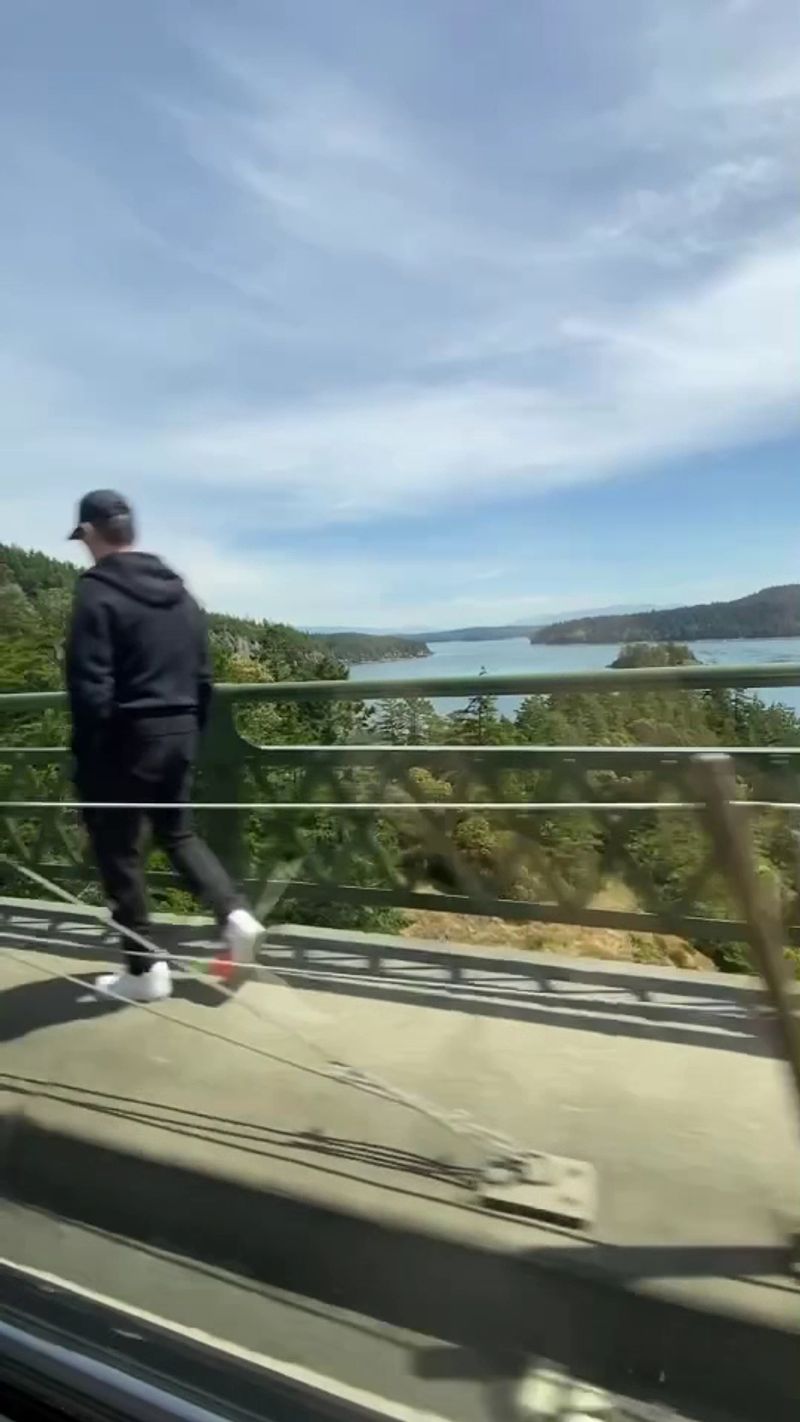
Stepping onto the bridge walkway introduces you to winds that seem to have a personality of their own, gusting with enough force to make you lean into them.
The channel’s geography creates a natural wind tunnel effect, funneling air currents between the islands and accelerating them to speeds that can catch unprepared visitors completely off guard.
Loose items become projectiles here, with countless hats, scarves, and lightweight jackets sacrificed to the winds over the decades, tumbling down toward the waters far below.
Experienced locals know to secure everything before starting their crossing, while first-timers often learn this lesson the hard way, clutching at flying belongings with startled laughter.
The wind’s intensity varies throughout the day and season, but even on relatively calm days, the bridge experiences breezes strong enough to make conversation challenging.
Children find the wind simultaneously thrilling and slightly scary, often gripping their parents’ hands tighter as gusts push against them during the walk across.
This constant air movement contributes to the bridge’s dynamic atmosphere, adding sound and motion to an already dramatic setting.
The winds carry the scent of salt water and evergreen forest, creating an olfactory experience that becomes part of the memory.
Photographers must brace their equipment against these gusts, learning to time their shots between stronger blasts that can blur images or knock tripods askew.
This persistent wind reminds visitors that they’re experiencing a place where natural forces remain powerful and untamed despite human engineering achievements.
The Engineering Marvel That Shouldn’t Be Possible
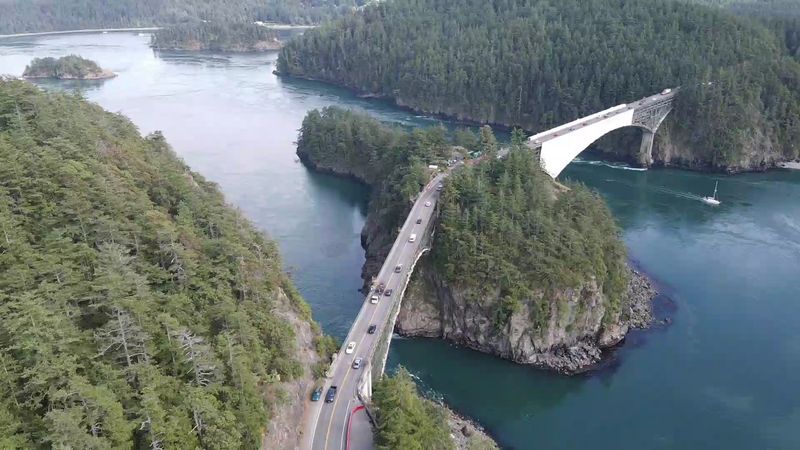
Built during the Great Depression between 1934 and 1935, Deception Pass Bridge represents an engineering achievement that still impresses modern visitors who understand construction challenges.
The bridge actually consists of two spans connected by Canoe Pass Island, with the main arch reaching across the widest and deepest part of the channel in a single graceful leap.
Workers constructed this masterpiece using techniques and equipment that seem impossibly basic by today’s standards, yet the structure has withstood decades of harsh coastal weather without major issues.
The steel framework rises from rocky foundations that required dangerous underwater work in those notorious currents, making every bolt and beam a testament to worker courage and skill.
Historical photographs show construction crews suspended above the churning waters on cables and scaffolding that would never pass modern safety standards, yet they completed the project without losing a single worker.
The bridge’s art deco styling adds aesthetic beauty to its functional design, with graceful curves and proportions that please the eye while serving structural purposes.
Engineers designed the spans to flex slightly with wind and traffic loads, a forward-thinking approach that has allowed the bridge to adapt to increasing vehicle weights over the decades.
Walking across, you can observe the craftsmanship in riveted connections and carefully shaped steel members that reveal the pride builders took in their work.
This combination of historical significance, engineering excellence, and continued functionality creates appreciation that goes beyond mere aesthetics, making visitors pause to consider the human achievement represented in every structural element.
The Trails That Reveal Hidden Perspectives
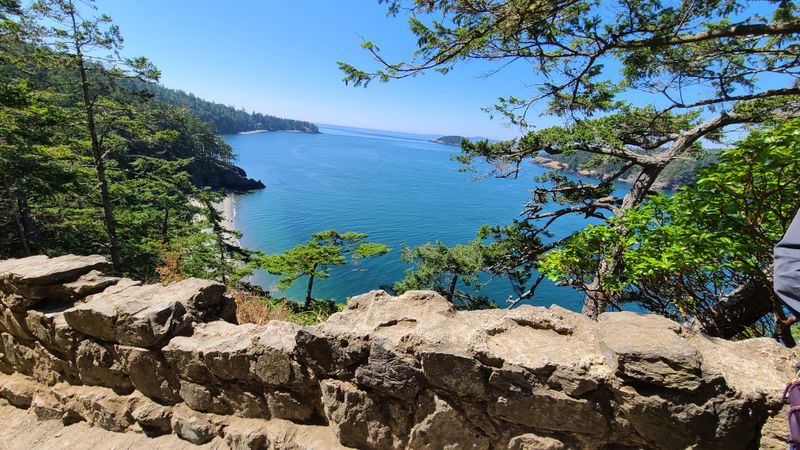
Most visitors experience Deception Pass from the bridge deck, but the surrounding trail network offers perspectives that transform understanding of the landscape’s true scale and drama.
Trails descend from parking areas through dense coastal forest, switchbacking down slopes where Douglas fir and western red cedar create a canopy that filters sunlight into green-tinted beams.
These paths eventually emerge at rocky beaches and viewpoints where the bridge towers overhead, revealing its full architectural presence in ways impossible to appreciate from the roadway.
Standing at water level and looking up at the span creates a perspective shift that makes the structure seem even more impressive, its steel framework etched against sky and clouds.
The trails vary in difficulty from easy beach walks to more challenging routes that scramble over boulders and navigate steep sections requiring careful footing.
Tidepools along the shoreline trails reveal marine life including starfish, anemones, and small crabs, adding biological interest to the geological and engineering features.
Photographers who make the effort to hike these trails discover composition opportunities that separate their images from typical bridge snapshots, capturing unique angles that showcase both natural and human-made elements.
Seasonal changes dramatically alter the trail experience, with spring wildflowers, summer’s lush greenery, fall’s golden foliage, and winter’s stark beauty each offering distinct atmospheres.
The physical effort required to reach these viewpoints creates a sense of earned reward, making the perspectives feel more valuable than easily accessible overlooks, and ensuring that visitors leave with a more complete understanding of Deception Pass’s multifaceted appeal.
The Tidal Drama That Changes Everything Hourly
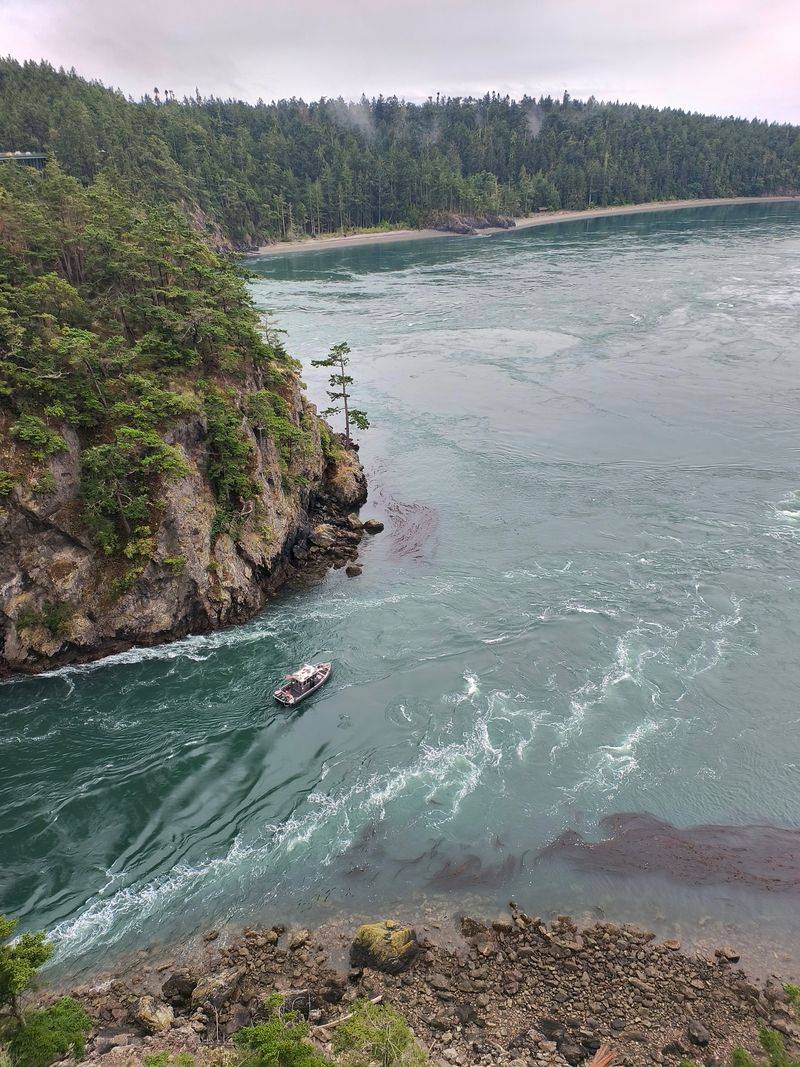
Timing your visit to coincide with tidal changes transforms Deception Pass from merely beautiful to absolutely mesmerizing, as the water below becomes a living demonstration of oceanic power.
Twice daily, millions of gallons surge through the narrow channel as tides shift, creating currents strong enough to form standing waves, whirlpools, and back-eddies visible from the bridge above.
During peak tidal exchange, the water’s surface becomes textured with complex patterns that reveal underwater topography and current interactions, creating a constantly shifting display.
Boaters respect these currents with healthy caution, timing their passages carefully or avoiding the channel entirely during maximum flow periods when even powerful engines struggle against the water’s force.
Visitors who arrive during slack tide might see relatively calm water and wonder what the fuss is about, while those present during peak flow witness nature’s hydraulic fury in full display.
The tidal schedule varies daily, meaning each visit offers potentially different water conditions and visual experiences, giving repeat visitors new perspectives on familiar scenery.
Local wildlife including seals, sea lions, and various seabirds time their activities around these tidal patterns, hunting fish that get swept through the passage or rest in the calmer eddies.
The sound of rushing water becomes audible during strong tidal flows, adding an audio dimension to the visual spectacle and creating an immersive sensory experience.
Understanding these tidal rhythms deepens appreciation for the dynamic nature of this place, revealing it as a living system rather than static scenery, and explaining why seasoned visitors often check tide tables before planning their trips.
The Photo Opportunity That Breaks Social Media
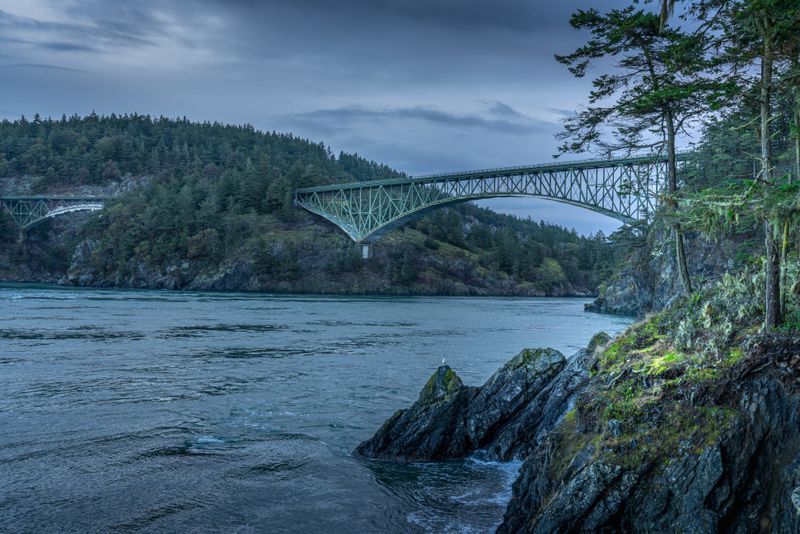
In an age where travel photos flood social media feeds with repetitive content, Deception Pass delivers images that consistently generate genuine engagement and amazed responses from viewers.
The bridge’s photogenic qualities come from its perfect combination of dramatic natural setting, striking architecture, and unusual colors that create compositions requiring minimal skill to capture effectively.
Even smartphone snapshots taken from the bridge walkway often rival professional landscape photography from less visually dynamic locations, democratizing the ability to create stunning images.
The vertical dimension adds compositional interest that flat landscapes lack, allowing photographers to include foreground, middle ground, and background elements that create depth and visual journey through the frame.
Sunrise and sunset sessions attract serious photographers who arrive early to claim prime positions, but the location’s north-facing orientation means dramatic light conditions occur throughout the day rather than just during golden hours.
Storm conditions create particularly dramatic imagery when dark clouds contrast with the bridge’s steel structure and the water’s jewel tones remain visible despite reduced sunlight.
The bridge appears in countless travel blogs, Instagram feeds, and photography portfolios, yet somehow never feels overdone because each visitor’s perspective and timing creates unique conditions.
Local photography workshops use Deception Pass as a teaching location because it offers such reliable visual interest while also presenting technical challenges including high contrast, moving water, and changing light.
This photographic appeal contributes significantly to the bridge’s fame, as visitors share their images and inadvertently advertise the location to their networks, creating a cycle of discovery that brings new admirers to experience their own universal reaction of wonder.
The Seasonal Transformations That Demand Return Visits
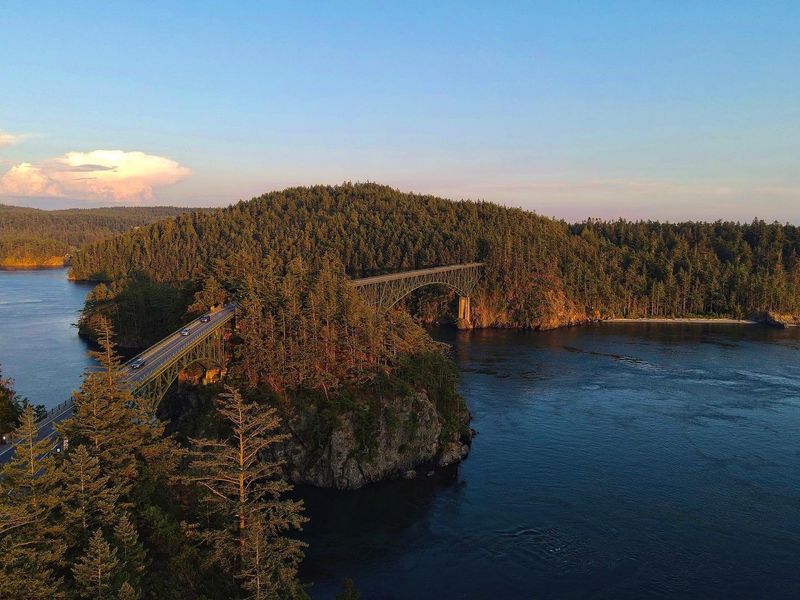
Experiencing Deception Pass once provides a memorable snapshot, but the location’s dramatic seasonal variations mean that each visit throughout the year reveals an entirely different character and atmosphere.
Spring arrives with wildflower blooms dotting the hillsides in purple, yellow, and white, while longer daylight hours allow evening visits when soft light bathes the bridge in warm tones.
Summer brings the most visitors but also the most reliable weather, with clear days showcasing the water’s most vivid turquoise hues and comfortable temperatures making trail exploration pleasant.
Fall transforms the surrounding forests with golden and russet foliage that contrasts beautifully against the evergreens, while storm systems begin moving through, creating dramatic cloud formations and occasional rainbows.
Winter offers the most solitary experience with fewer tourists, allowing contemplative moments on the bridge while waves crash against rocks below and eagles soar on coastal winds.
Each season brings different wildlife activity, from migrating gray whales visible in the distance during spring to bald eagles congregating during winter months when fish runs occur.
Weather variations throughout the year mean that the same viewpoint can look completely different depending on whether you visit during foggy conditions, brilliant sunshine, or dramatic storms.
Locals develop favorite seasonal visits based on personal preferences, with some preferring summer’s accessibility and others seeking winter’s moody atmosphere and powerful storms.
This seasonal diversity ensures that Deception Pass never becomes a one-and-done destination, instead inviting repeated visits that build deeper familiarity and appreciation for the location’s complexity and ever-changing nature.
Dear Reader: This page may contain affiliate links which may earn a commission if you click through and make a purchase. Our independent journalism is not influenced by any advertiser or commercial initiative unless it is clearly marked as sponsored content. As travel products change, please be sure to reconfirm all details and stay up to date with current events to ensure a safe and successful trip.
