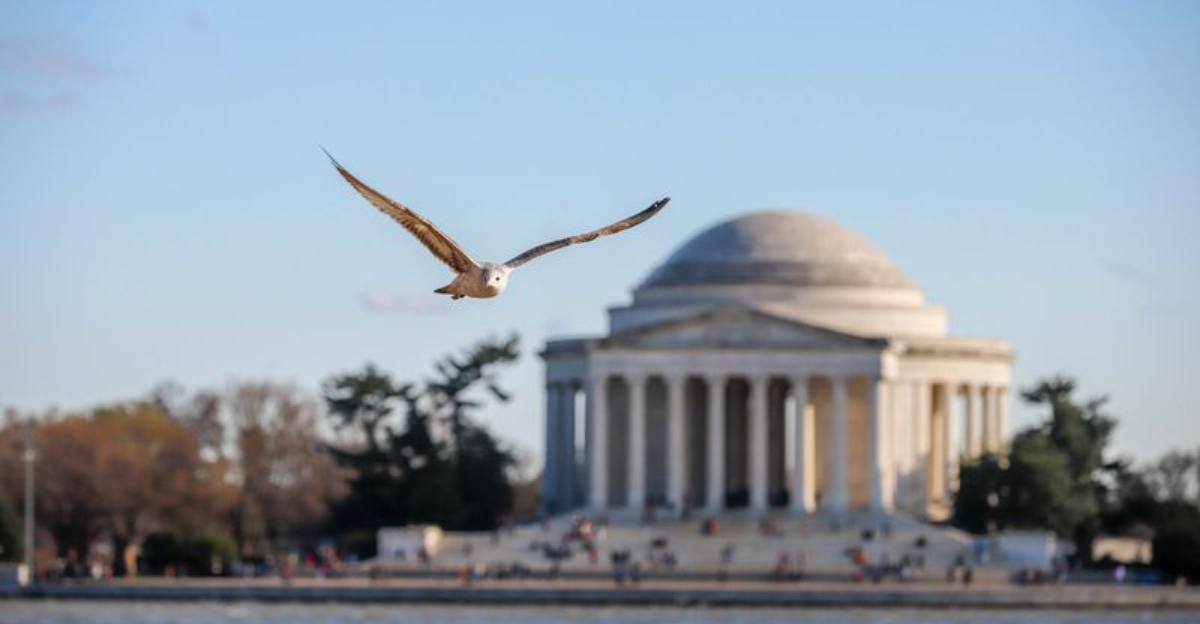
Visitors come for iconic views and leave with surprising encounters. Seagulls swirl over grand plazas and reflect on the water, turning quiet moments into bustling scenes.
It looks playful and harmless, yet it reshapes how wildlife behaves and how these places feel. Learn why a casual snack toss can ripple through Washington’s most treasured spaces.
The Strange Sight That’s Become a Daily Scene in D.C.
Walk the broad paths near the reflecting pools and you’ll notice a chorus of calls overhead. Seagulls gather quickly when a wrapper rustles, expecting a handout. What feels like a quaint city moment is actually a pattern that changes animal behavior. The birds begin to associate visitors with easy meals rather than natural foraging.
The National Park Service reminds visitors that feeding wildlife is prohibited. These reminders protect both animals and historic resources. When rules are followed, birds disperse and rely on natural sources. That helps keep the area calmer and cleaner for everyone.
The habit can be hard to break once established. Crowds reinforce the cycle with every tossed crumb. Breaking it requires clear signs and consistent visitor choices. The result is a more peaceful visit and healthier wildlife.
Where Seagulls Found an Unexpected Home Among Monuments
Seagulls are highly adaptable and follow food sources across river corridors. The city’s rivers and open waters provide habitat, while large plazas create landing space. Trash bins and scattered snacks become reliable food. This draws birds into areas meant for reflection and learning.
Open marble terraces and steps resemble natural loafing spots. Elevated perches give birds a vantage point to watch visitors. They time their swoops with lunchtime crowds, shaping daily rhythms. Over time, these patterns normalize the presence of flocks.
NPS guidance encourages securing food and disposing of waste correctly. When food access drops, birds rely on natural cycles again. That reduces crowding near key memorials. It restores the balance between wildlife and historic settings.
How Tourists Accidentally Started a Bird Feeding Tradition
Many visitors see feeding as a friendly gesture. A cracker tossed becomes a signal that more food is coming. Birds learn quickly and begin to follow groups. Soon, the plazas feel like dining rooms with wings.
The National Park Service explains that handouts alter wildlife behavior. Animals lose caution and compete more aggressively. Visitors then face sudden swoops and crowding. The cycle feeds itself, guided by small choices.
Clear signage and ranger talks help shift norms. Sharing why feeding is harmful makes the message stick. When one person refrains, others often follow. That social cue helps return calm to the memorials.
Why Feeding Wildlife Seems Harmless — but Isn’t
Feeding looks gentle because it offers instant joy. Yet it disrupts natural foraging and encourages dependency. Birds spend less time finding diverse foods and more time waiting for snacks. That shift can affect their condition and behavior.
NPS guidance notes that animals can become bold around people. Boldness can lead to conflicts and unsafe interactions. It also concentrates birds in fragile spaces. Those areas were not built for persistent flocks.
Food scraps draw other urban wildlife, creating a chain reaction. More scavengers mean more mess and stress on the landscape. Avoiding handouts keeps the system in balance. It protects both animals and historic places.
The Mess and Noise That Follow the Birds
Large flocks bring loud calls that echo across stone. The sound interrupts quiet reflection at solemn memorials. It changes the mood that the designers intended. Visitors notice the difference immediately.
Droppings collect on benches, steps, and railings. That creates slippery surfaces and extra cleaning needs. It also affects the look of marble and bronze. Maintenance crews must work harder to preserve the experience.
Trash attracts more birds, compounding the problem. Proper waste disposal is essential to break the cycle. Visitors can help by packing out snacks and sealing bins. Small choices keep the spaces dignified and welcoming.
Park Rangers Trying to Keep the Balance
Rangers act as stewards for both history and habitat. They use education first, sharing reasons behind the rules. Conversations on pathways often change behavior. People respond when they understand the stakes.
Rangers also monitor wildlife patterns and visitor flow. They coordinate with maintenance teams to manage waste. Sign placement and bin design support the message. Clear cues make responsible choices easy.
Enforcement exists, but the focus is guidance. The goal is a respectful, safe environment for all. With cooperation, rangers can keep the monuments serene. Everyone benefits from the restored balance.
Local Reactions to the Growing Seagull Crowds
Residents notice when plazas feel busier with birds. Some are amused at first, then concerned by litter and noise. Locals value quiet corners for reflection and exercise. The change alters daily routines and moods.
Community groups often share tips for respectful visits. They echo NPS advice about food and trash. Their outreach helps visitors adopt local norms. That peer support strengthens stewardship.
When visitors follow guidance, tensions ease. The spaces feel calmer and more welcoming. Locals see that visitors care about their city. That shared respect elevates everyone’s experience.
The Hidden Environmental Cost of a Simple Snack Toss
Leftover food shifts bird populations around key water bodies. Concentrations near memorials can strain nearby habitats. It encourages scavengers that compete with native species. Small crumbs create broad ripple effects.
NPS emphasizes Leave No Trace principles in urban parks. Proper waste handling protects waterways and soil. Clean plazas reduce wildlife conflicts and litter spread. It all begins with what visitors bring and leave.
By skipping handouts, birds keep natural foraging habits. That supports healthier cycles across the city’s green spaces. The benefits reach beyond a single plaza. They protect the wider urban ecosystem.
What Responsible Tourism Looks Like Around D.C. Landmarks
Responsible visitors plan snacks and dispose of waste correctly. They keep a respectful distance from all wildlife. Clear bags and sealed containers prevent spills. Small habits add up across busy days.
Reading NPS signs helps set expectations. Rangers post guidance at entrances and along paths. Following those tips reduces conflicts with birds. It also shortens cleanup times for staff.
Responsible tourism protects the solemn atmosphere of memorials. It honors the purpose of these spaces. Visitors leave with stronger memories and lighter footprints. That is the kind of legacy worth supporting.
How Visitors Can Enjoy the Monuments Without Disrupting Nature
Pack snacks to enjoy away from flocks and seal leftovers tightly. Choose benches away from water edges where birds wait. Keep movements calm and focus on the views. You will notice the difference in the atmosphere.
Use designated bins and check lids are secure. If a bin is full, carry out waste until you find another. This simple act reduces wildlife attraction. It also keeps pathways clear for others.
Share what you learn with fellow travelers. Encourage a no-feeding norm in your group. Respecting the rules protects birds and monuments alike. Your visit becomes a model for future guests.
Dear Reader: This page may contain affiliate links which may earn a commission if you click through and make a purchase. Our independent journalism is not influenced by any advertiser or commercial initiative unless it is clearly marked as sponsored content. As travel products change, please be sure to reconfirm all details and stay up to date with current events to ensure a safe and successful trip.
