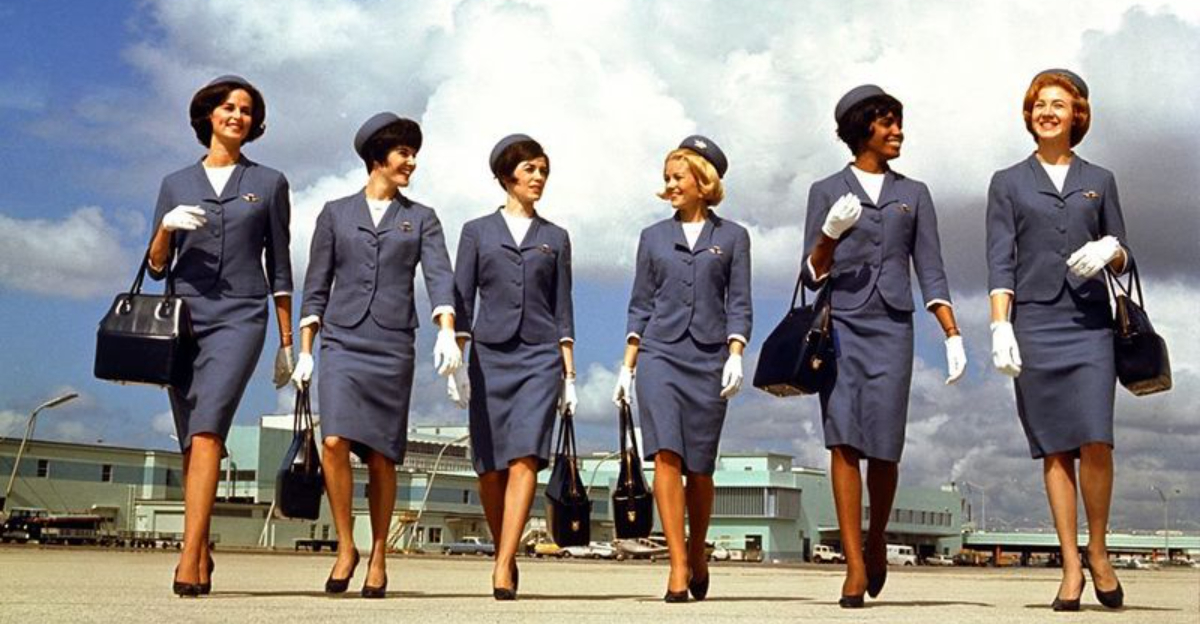
Back in the mid-20th century, Texas airports weren’t just transportation hubs – they were runways of a different kind. Passengers dressed to impress in their finest attire, treating air travel as a special occasion worthy of their Sunday best. The glamorous golden age of flight turned terminals like Dallas Love Field and Houston’s Hobby Airport into showcases of style where your travel outfit mattered almost as much as your destination.
1. Airport Lounges: The Social Catwalks
Braniff International Airways’ famous Terrace Lounges at Love Field became legendary social hubs where Texans showcased their finest threads. These spaces featured plush furnishings and an atmosphere that rivaled upscale country clubs.
Travelers lingered in these lounges not just to wait for flights, but to see and be seen. The architecture itself – with sweeping windows and modern furnishings – provided the perfect backdrop for this impromptu fashion parade.
Photographers from society columns occasionally captured the scene, immortalizing well-dressed Texans embarking on adventures. For many, the pre-flight experience was as important as the journey itself – a chance to display wealth and taste in a semi-public setting.
2. The Texan Interpretation of Travel Chic
Texans put their distinctive stamp on air travel fashion. While East Coast travelers might opt for understated elegance, flying Texans embraced bold colors, statement jewelry, and occasionally, elevated versions of Western wear.
Business travelers from the oil industry made power statements with custom suits and monogrammed accessories. Women from prominent Texas families might board wearing designer outfits straight from Neiman Marcus, the state’s luxury fashion temple.
Even children were dressed immaculately in miniature versions of adult attire – little boys in suits with bow ties, girls in dresses with patent leather shoes. The message was clear: Texans understood that air travel represented status, and they dressed accordingly, with their own regional flair.
3. Airline Staff as Fashion Icons
Dallas-based Braniff Airlines revolutionized the industry when they hired designer Emilio Pucci to create eye-popping uniforms in 1965. Their “Air Strip” campaign featured attendants dramatically removing layers of colorful outerwear during flights, turning safety demonstrations into fashion shows.
Southwest Airlines later countered with their famous hot pants uniforms – mini-shorts paired with go-go boots that became instantly recognizable. Texas-based carriers understood that their staff served as walking billboards for the brand.
Passengers often took style cues from these fashionable airline ambassadors. The bright colors and modern designs of these uniforms influenced regular travelers who wanted to match the sophisticated atmosphere. Flying from Texas meant entering a world where even oxygen mask instructions came with a side of style.
4. The Runway-Ready Dress Code
Women glided through Texas terminals in tailored suits, pillbox hats, and white gloves that practically sparkled under the airport lights. Men wouldn’t dream of boarding without a pressed suit, polished shoes, and often a classic fedora to complete their travel ensemble.
Flight attendants (then called stewardesses) enforced this unwritten dress code with a smile. Passengers who appeared underdressed might receive a gentle suggestion about proper attire expectations.
Airlines sometimes even denied boarding to those deemed inappropriately dressed! This fashion formality wasn’t just about appearances – it reflected the luxury status of air travel when tickets cost the equivalent of thousands in today’s dollars.
5. The Gradual Descent of Dress-Up Culture
The glamorous flying era began its decline in the 1970s when airline deregulation made air travel more accessible. As ticket prices dropped, the exclusive club atmosphere faded, and with it went the fashion formality that once defined the experience.
Texas airports that once resembled fashion shows slowly transformed into the utilitarian spaces we know today. Comfort replaced couture as the primary consideration for travelers, with track suits and sneakers becoming acceptable attire.
Some Texans still maintain elements of the old traditions, especially on international flights. You’ll occasionally spot travelers in pressed shirts and polished shoes, nostalgic echoes of a time when boarding a plane was an event worth dressing for rather than something to endure in stretchy pants and neck pillows.
Dear Reader: This page may contain affiliate links which may earn a commission if you click through and make a purchase. Our independent journalism is not influenced by any advertiser or commercial initiative unless it is clearly marked as sponsored content. As travel products change, please be sure to reconfirm all details and stay up to date with current events to ensure a safe and successful trip.
