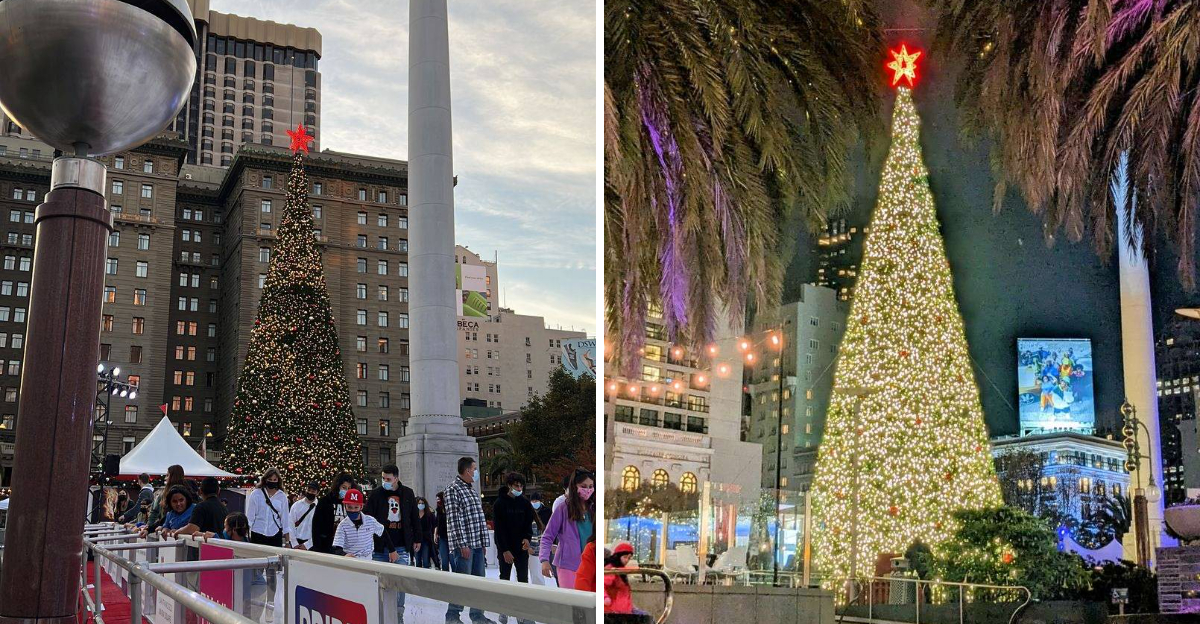
Union Square in California glows during the holidays, and the spectacle pulls in visitors from every direction.
The catch is that crowds can overwhelm the plaza and the streets that frame it, changing the rhythm locals count on.
If you have ever tried to catch a bus on Geary or hustle to work near Powell Street in December, you know how a single stalled selfie can ripple through the block.
Keep reading to see why residents feel squeezed when the festive scene turns into a standing-room-only gridlock.
1. Gridlock and Slow Movement on the Plaza
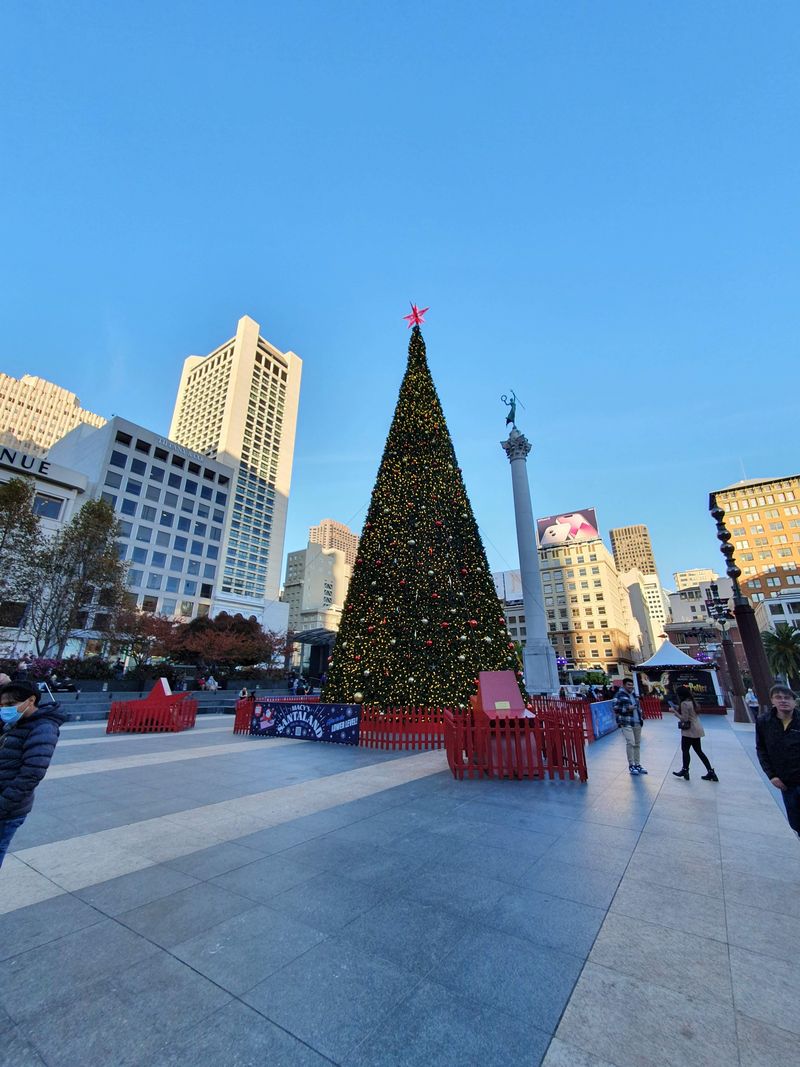
Union Square, San Francisco, CA sits at the heart of California’s shopping grid, where foot traffic is dense even on calm days.
When holiday displays go up, the flow changes from steady to stop and wait, and locals feel the slowdown immediately.
Every pause for a group shot turns pathways into chokepoints that stretch from Powell Street to Geary Street.
Residents trying to cross the square get pinned behind clusters that move in waves rather than a steady stream.
That slow pace spills into the crosswalks, adding extra light cycles and frustration for people with places to be.
Retail staff heading to shifts at nearby stores cannot glide through, they shuffle and squeeze past shoulder to shoulder.
The rhythm of downtown breaks, and that break ripples into side streets where narrow sidewalks leave little room.
Wheelchair users and parents with strollers face an even tighter squeeze that makes short trips feel long and tiring.
Tourists often do not notice because the scene feels festive, but residents read the delay as lost time.
It becomes a chain reaction, slower movement at the plaza causing backups near bus stops and the cable car turnaround.
People who commute by foot rely on predictable stride length and open lanes that vanish when lines form for photos.
Even simple tasks like picking up a package turn into patience tests under the holiday lights and speakers.
2. Disrupted Shopping for Real Errands
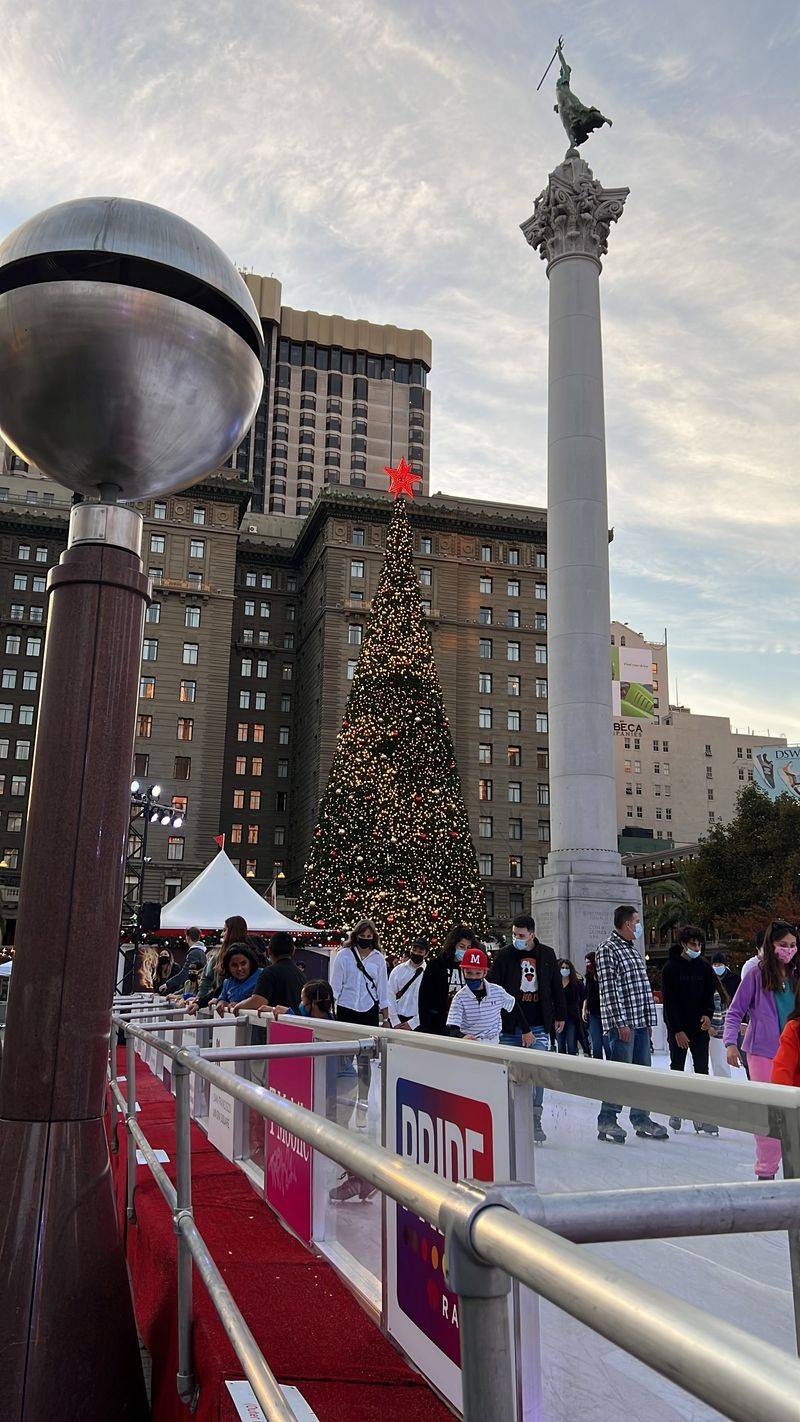
Union Square, San Francisco, CA is where locals run errands for gifts, returns, and quick pickups, especially after work.
During peak holiday weeks, shoppers ready to buy face delays from long photo lines outside window displays.
Doorways clog as visitors linger for the perfect angle, turning entrances into waiting rooms that stall moving in or out.
Security teams end up directing foot traffic at thresholds, which seems odd when the real goal is entering the store.
Residents know what they want and where it sits, yet reaching the counter feels like threading a needle.
That friction pushes people to postpone tasks or leave without completing purchases that should be simple.
Window dressings draw cameras, but they also draw bodies that block signage, aisles, and accessible routes.
Line management inside stores becomes tougher when the bottleneck begins on the sidewalk before a shopper arrives.
Staff get stretched thin because they field crowd questions instead of helping with actual transactions.
Meanwhile, returns desks see swell and stall patterns that do not match regular store rhythms.
Locals who live and work in California want to get in, buy the thing, and get out with minimal fuss.
The tension builds when a one minute task morphs into a slow crawl among tripods, rolling suitcases, and selfie sticks.
3. Safety Concerns in Dense Holiday Crowds
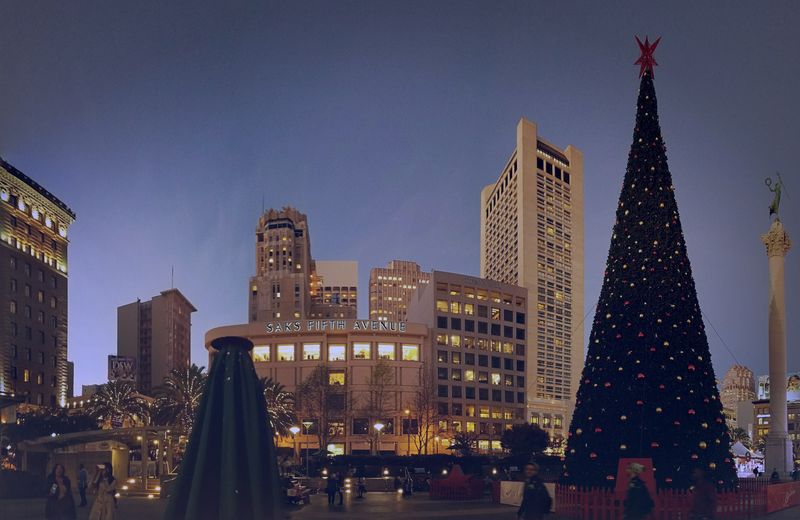
Union Square, San Francisco, CA gathers large crowds that can blur sightlines, which makes locals scan for safety first.
High density means people stop noticing their bags and pockets, and small incidents get missed until after the fact.
The contrast between cheerful decor and real street challenges can feel jarring, especially when attention drifts to cameras.
Residents tend to keep moving, but motion turns to pauses that make them feel exposed in tight clusters.
Emergency access becomes harder when sidewalks are thick, and stepping aside is not always an option.
Tourists sometimes set gear on the ground, which creates tripping hazards and narrow lanes along planter edges.
Locals read the square differently, scanning corners, bus stops, and station entrances while weaving past displays.
Announcements and lights can mask sounds that people rely on to sense shifts around them.
When groups block curb cuts, those using mobility devices face risky detours that cut across street traffic.
Security teams and ambassadors do patrol, yet the sheer volume dilutes visibility where quick response matters.
Residents of California expect crowds, but they also expect clear routes that let them choose proximity or space.
Holiday crush limits that choice, and the feeling of less control feeds the quiet unease that lingers after a visit.
4. Transit Delays Near Key Stops
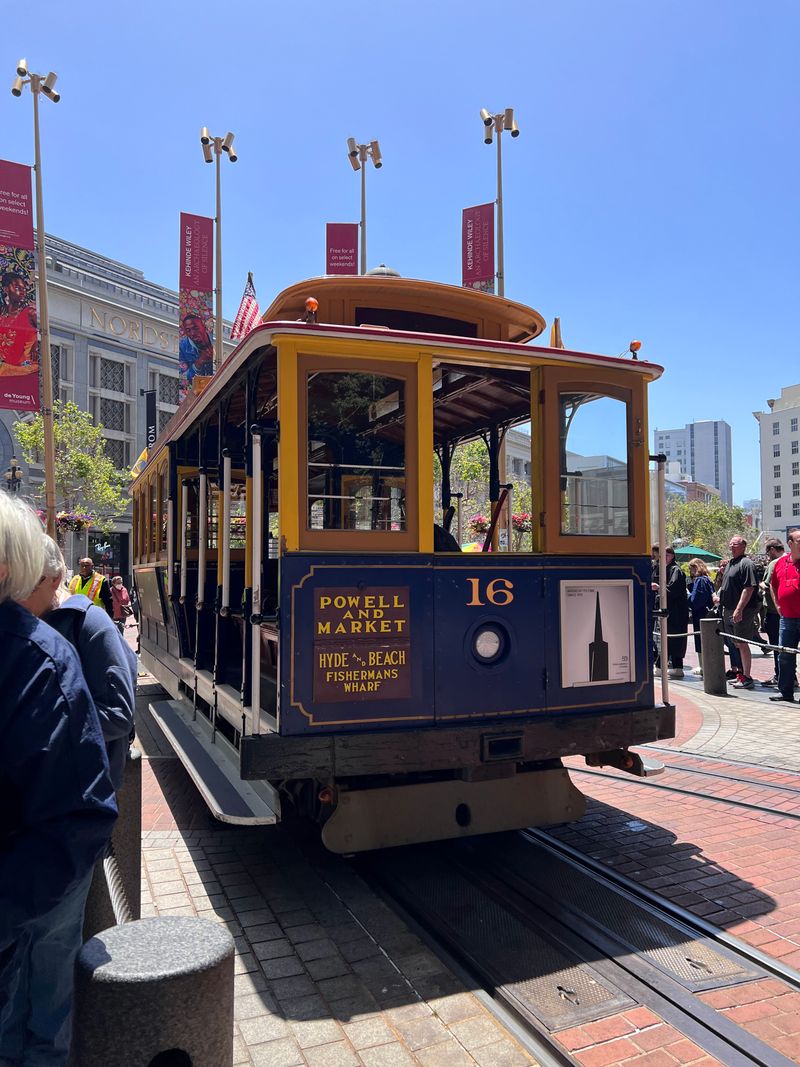
Union Square, San Francisco, CA sits beside major Muni routes and the Powell Street cable car turnaround that draw steady lines.
When crowds swell, boarding areas fill with visitors who are unsure where to stand, and locals get stuck behind.
Sidewalks become antechambers for platforms, which means pedestrians queue accidentally across curb zones.
Bus doors open to a wall of people taking photos, and the process of clearing space adds extra minutes.
Light cycles matter here, but gridlock at crosswalks keeps buses from pulling out smoothly.
Riders who time their commute around predictable headways lose that rhythm once the plaza reaches peak density.
Visitors often try to buy passes at the last second, which backs up the flow at fare points.
Even the cable car turnaround, a charming scene, becomes a bottleneck that spills down Powell Street.
Locals understand the spectacle, yet they need clear lanes to pivot between work and home.
California commuters value reliability, and holiday congestion chips away at that trust.
Signage helps, but it can get blocked by groups lining up for a perfect holiday backdrop.
All of this means missed transfers and longer waits that turn a quick ride into a patience game.
5. The Tourist Bubble Disconnect
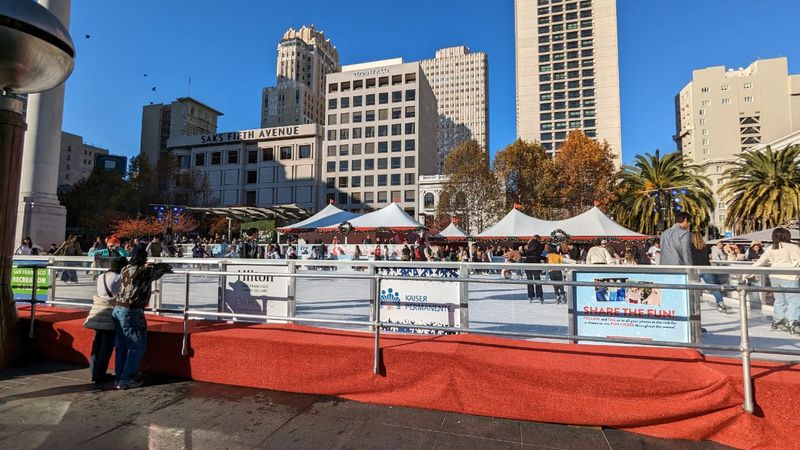
Union Square, San Francisco, CA can feel like a stage set during the holidays, sparkling while daily life pushes underneath.
Visitors see a postcard and settle into it, while residents chart routes around deliveries, shifts, and errands.
That split creates a bubble, a mood where challenges fade for some and sharpen for others who navigate them.
Locals watch tripods go up where couriers need space, and the mismatch breeds quiet annoyance.
There is joy in lights, yet there is also a need to keep sidewalks open so the city functions.
When the bubble thickens, people stop reading the room, and the plaza loses its shared rhythm.
California cities juggle beauty and grit, and this square is a textbook example in winter.
Residents do not want to kill the vibe, they want the vibe to include awareness and flow.
The best moments happen when groups step aside quickly, and everyone moves with a little care.
Without that give and take, the scene tilts from festive to inconsiderate.
The disconnect shows up in small ways, like blocking a bench or a curb cut for a long take.
Multiply that by thousands, and the feeling grows that the bubble has swallowed the block.
6. Photo Op Obstructions Everywhere
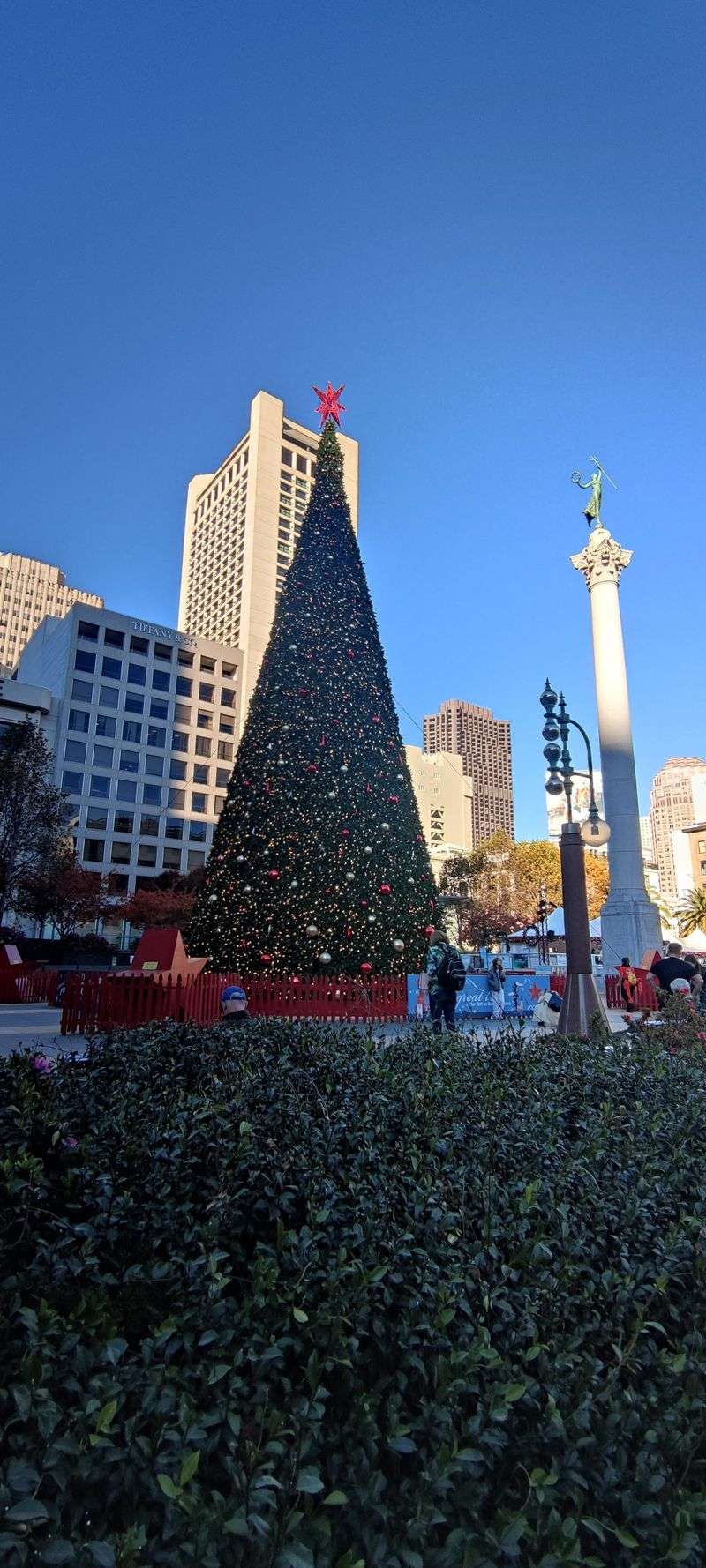
Union Square, San Francisco, CA becomes a camera magnet with every ornament, arch, and twinkling corner drawing a lens.
The problem is not the picture, it is the placement, right in the middle of the only line that moves.
Stopping short can ripple twenty feet, and pathways that looked open turn clogged in a heartbeat.
Locals learn to anticipate sudden halts, but that constant vigilance steals the ease of a simple walk.
Benches double as staging areas, so resting spots vanish just when people need a breather.
Tripods and selfie sticks expand personal space into public lanes, which narrows the usable walkway.
Security asks groups to shift, and for a moment the route clears, then the cycle repeats.
California sun or winter fog makes a flattering glow, and the urge to capture it is understandable.
Still, there are edges and corners perfect for shots that do not break the flow.
Wayfinding plaques get blocked too, which leads to more lost visitors and more abrupt turnarounds.
It is not about banning the photo, it is about picking a spot that respects the shared space.
When that awareness lands, movement returns, and the square feels welcoming again for everyone.
7. Over Commercialization of the Season
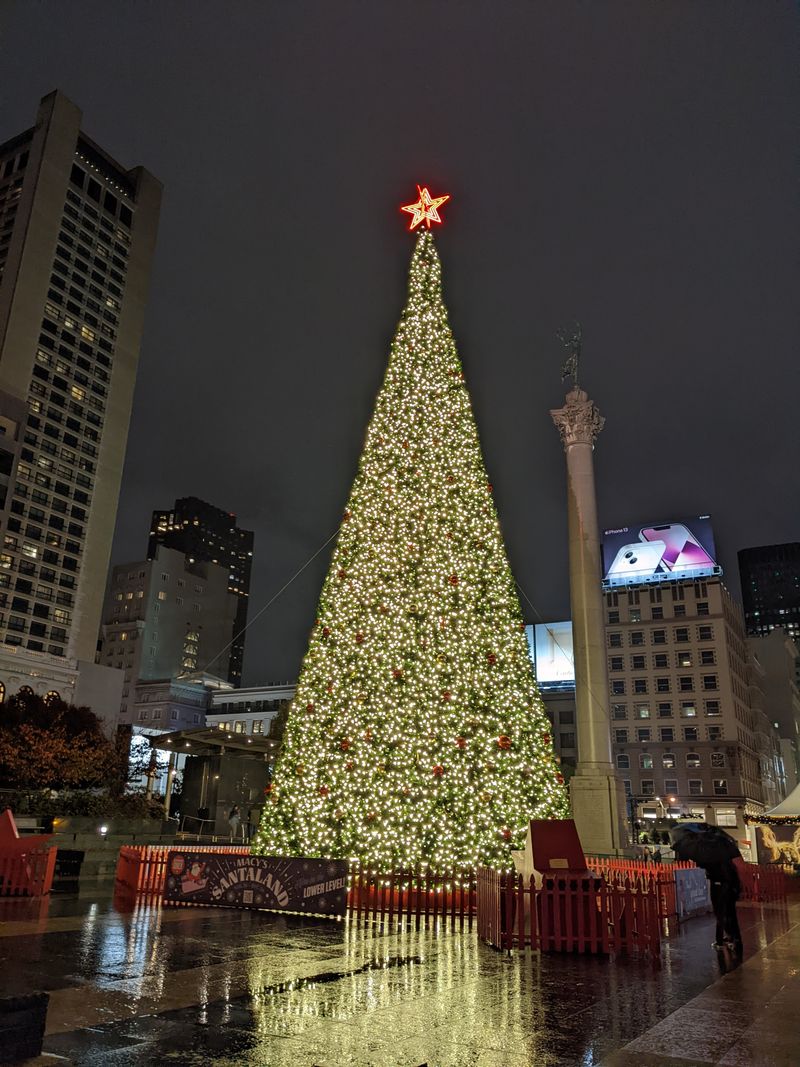
Union Square, San Francisco, CA leans into sparkle, and the message can tilt from community gathering to pure sales pitch.
Residents feel the shift when local voices get drowned out by loops of promotional audio and giant brand backdrops.
The square thrives on retail, yet it also serves as a civic space where people pause and breathe.
When displays take every inch, the room for public life shrinks, replaced by lines for branded moments.
That swap can read as hollow for people who remember quieter corners and open benches.
California’s cities often grapple with balance, and this plaza shows how hard it is to keep that balance steady.
Tourists chase the big shot, while locals wish for a lane to sit, read, or meet a friend.
It is the difference between being in a marketplace and being in a neighborhood square.
Small gestures help, like reserving clear passages and adding seating that is not fenced by queue ropes.
Programming that celebrates local arts can soften the sell and invite people to linger for the right reasons.
The goal is not less joy, it is more shared ownership of the space in the middle of downtown.
When that goal slips, residents feel like extras in a commercial rather than neighbors in a plaza.
8. Loss of Authentic SF Vibe
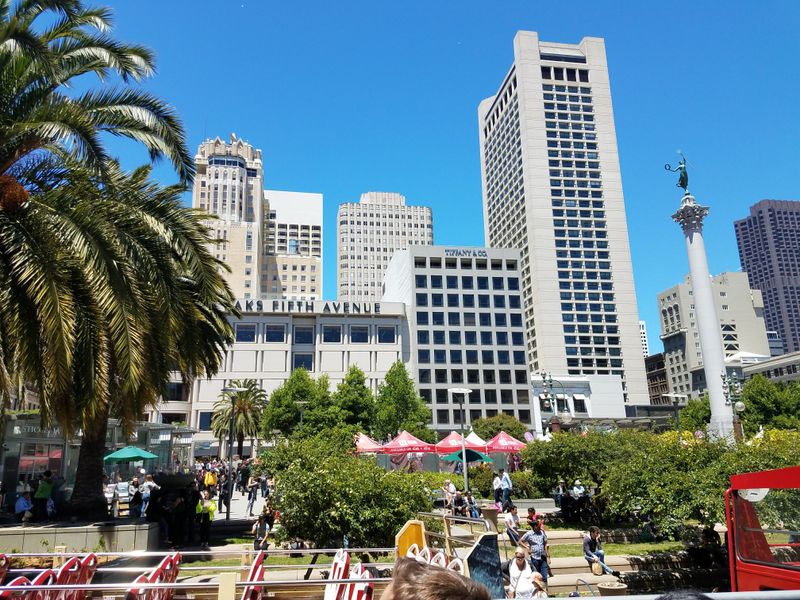
Union Square, San Francisco, CA has a look and feel that belongs to the city, from the palm trees to the cable car ring.
During the holidays, the original voice can get covered by canned soundtracks and made for media staging.
Locals miss the casual mix, where street performers, commuters, and neighbors share space without heavy fencing.
When every corner turns into a backdrop, spontaneity fades, and the square reads like an itinerary item.
California identity thrives on layers, not just the glossy layer, and people who live here notice the difference.
Seasonal decor can enhance place, but it should not erase the everyday patterns that make it feel lived in.
Regulars know which steps catch afternoon light, which ledges warm quickly, and where to sit and watch Powell Street.
If those spots become queue lines, the living map that locals follow dissolves into a scripted route.
The fix is subtle, leave room for the unplanned and let daily city life breathe.
That breathing space honors both the visitors and the neighborhood that hosts them.
Authenticity is not fragile, yet it can be muffled when the volume of spectacle goes up too far.
Turning it down a notch restores the city notes that people move here to hear every day.
9. Seasonal Stress Amplified by Crowds
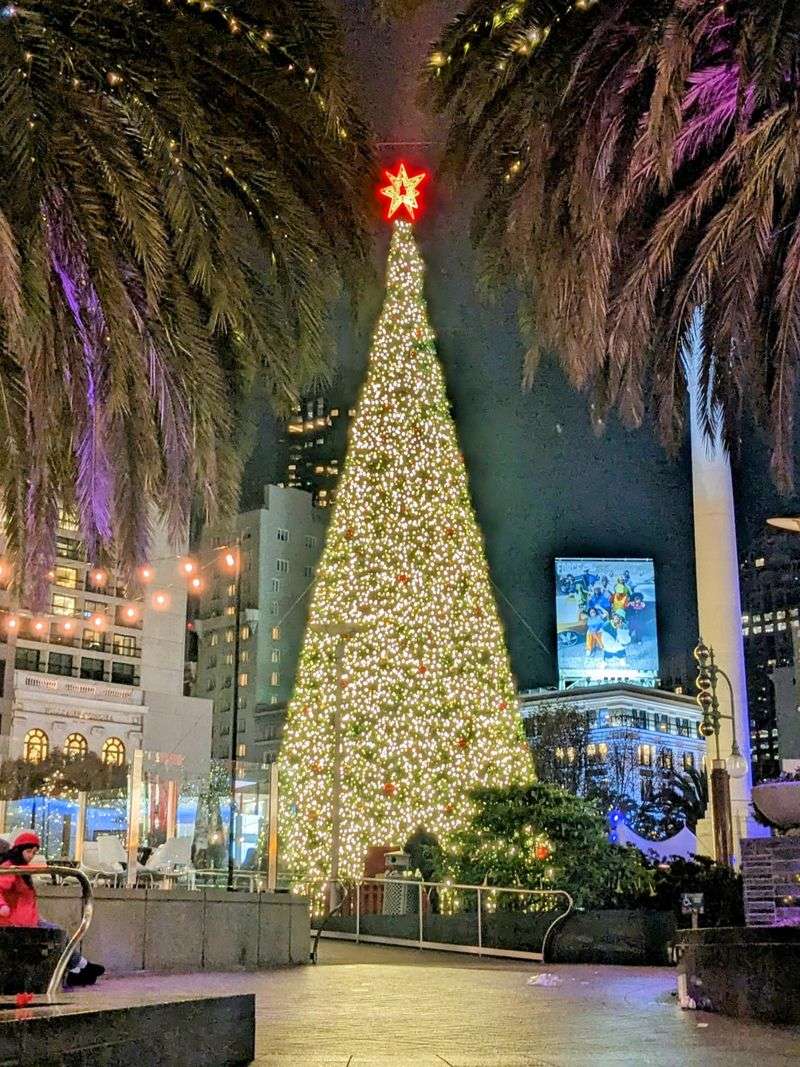
Union Square, San Francisco, CA is beautiful in winter, but the timing collides with packed to do lists for residents.
People arrive already stretched, and tight sidewalks add another layer that frays patience quickly.
Simple tasks like mailing a package or meeting a friend get complicated by sudden stops and detours.
Noise rises too, from music, chatter, and street activity that bounces off glassy facades.
For locals, the plaza becomes a test in pacing breath and choosing routes with fewer pinch points.
California days get short, so a delay in the square can swallow the only free hour before dinner.
That lost time feels larger during the season when plans stack and windows are slim.
Tourists often carry a light schedule, which makes the gap in urgency more pronounced.
No one is wrong for savoring the scene, yet shared awareness can soften the edges.
Stepping to the side for photos and keeping curb cuts clear can lower the temperature for everyone.
Wayfinding signs that point to quiet corners also help, giving people a place to reset.
When small courtesies add up, the square shifts from a stress multiplier to a pleasant pause.
10. Unrealistic Expectations Meet Real City Life
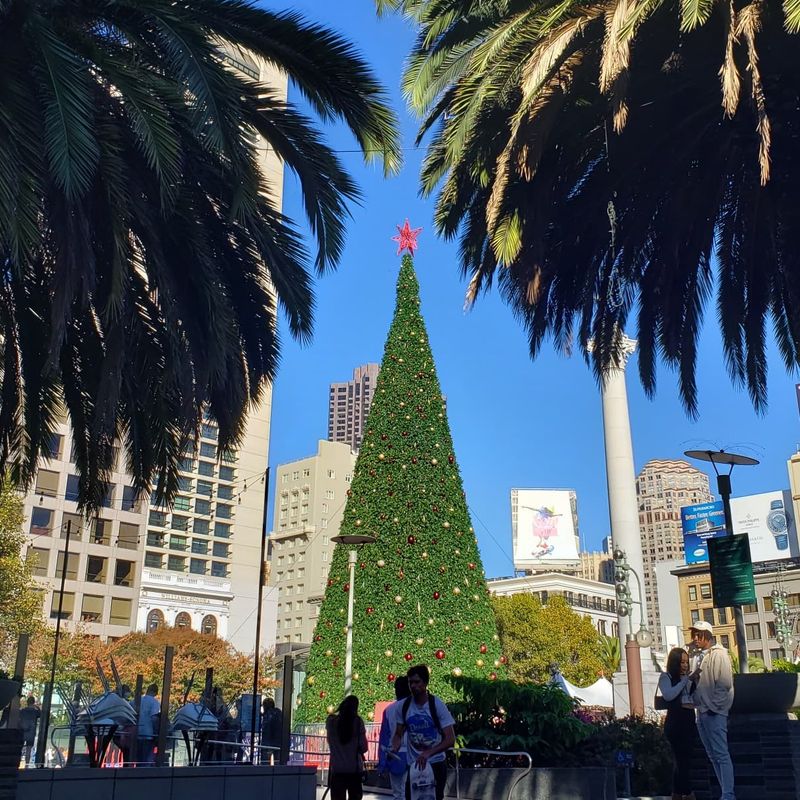
Union Square, San Francisco, CA can look like a snow globe even without snow, and that image sets high expectations.
Visitors come seeking a perfect scene, but cities breathe and change, and this one shows its edges openly.
When reality intrudes, some people react by ignoring it, which reads as indifference to those who live nearby.
Locals see the work that keeps the square running, from cleaning crews to safety teams and transit staff.
The friction grows when people assume the plaza is a theme park rather than a gateway to everyday routines.
California cities hold multitudes, and this plaza collects them in one tightly framed view.
Appreciation goes a long way when it includes awareness of space, pace, and neighbors.
Reading the room means noticing lines behind you and stepping aside so others can pass.
It also means seeing the broader context, where challenges exist and deserve respect.
Expectation management does not dim the sparkle, it simply keeps it honest and shared.
With that lens, visitors experience the square more fully, and residents feel considered rather than crowded out.
The result is a holiday scene that feels like San Francisco, not a set built to exclude real life.
Dear Reader: This page may contain affiliate links which may earn a commission if you click through and make a purchase. Our independent journalism is not influenced by any advertiser or commercial initiative unless it is clearly marked as sponsored content. As travel products change, please be sure to reconfirm all details and stay up to date with current events to ensure a safe and successful trip.
