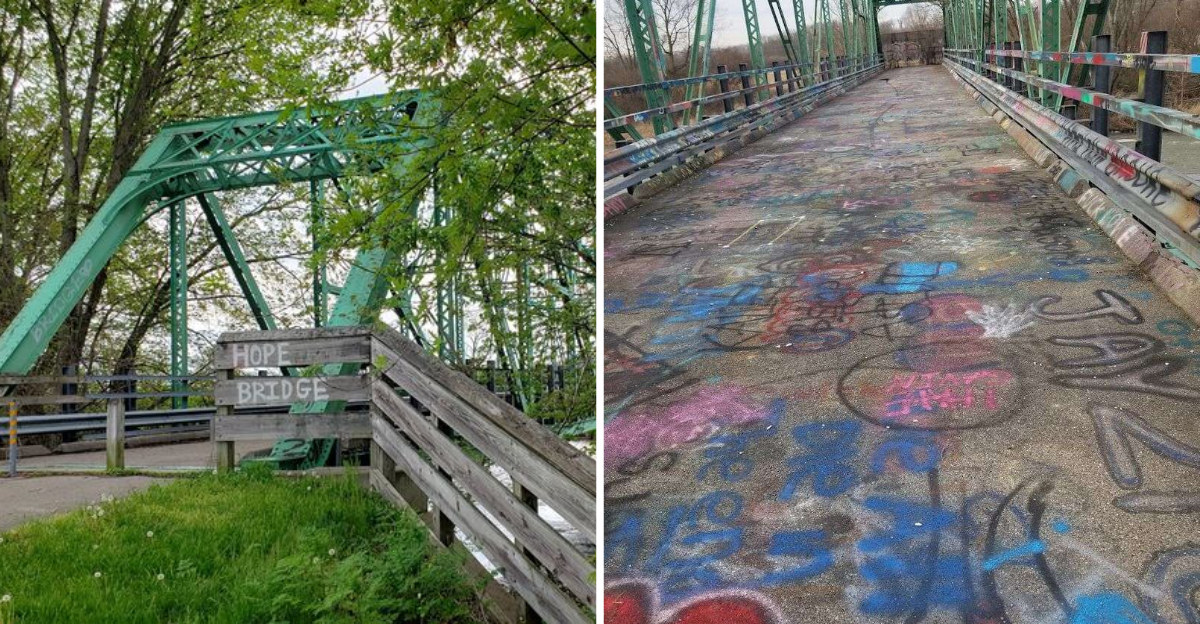
Crossing that Ohio bridge on foot for the first time, the river moved quietly below, and the old steel trusses above felt like they belonged to a different century entirely.
Built between 1923 and 1924, that historic through truss bridge has carried more than just road traffic over the decades. It has carried stories, legends, colorful graffiti messages, and the kind of quiet mystery that makes a place feel alive long after the cars stopped crossing it.
I walked its span on a cool morning, reading the layers of paint and marker left by visitors who came before me, each one adding their own chapter to the bridge’s ongoing story. Since a viral video in 2020, the bridge has drawn a new wave of curious visitors.
Come for the trail, the views, or the folklore swirling around its iron beams, that landmark stays with you.
The History Behind the Bridge That Time Almost Forgot
Most bridges just carry you from one place to another without asking anything of you. Hope Bridge, though, seems to ask you to slow down and actually look at it.
Constructed between 1923 and 1924, this Pennsylvania through truss bridge originally carried Rip Rap Road traffic over the Great Miami River, linking Huber Heights with the broader Dayton area.
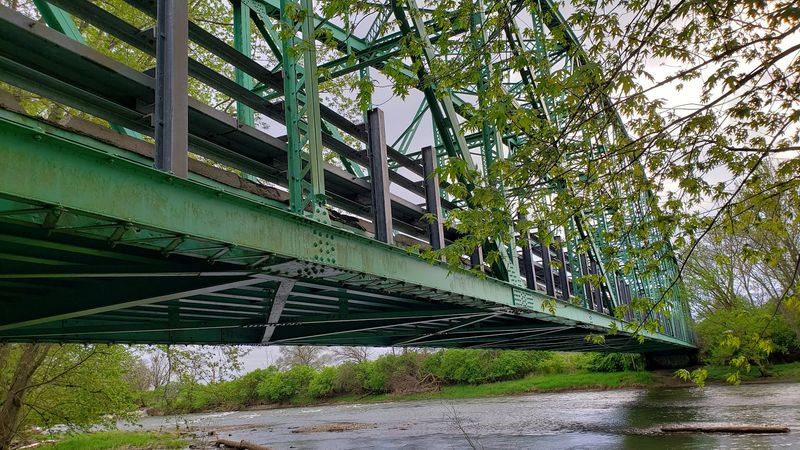
The structure itself is a serious piece of engineering history. Its tall trusses and long span make it a textbook example of the complex Pennsylvania truss configuration, built during the later portion of the truss bridge era when connections were still riveted by hand and members were made to last generations.
Extensive v-lacing and lattice work cover the structure, and roller bearings remain visible at the west end.
In 2002, Rip Rap Road was realigned, and the old bridge was quietly bypassed. Rather than being demolished, it was thoughtfully rehabilitated for non-motorized use and folded into the Great Miami Recreational Trail.
That decision turned a forgotten road crossing into a genuine destination. The bridge now sits on concrete abutments above the river, open to walkers and cyclists who might not even realize they are crossing a piece of regional engineering history.
It is one of those rare cases where preservation genuinely paid off, giving a structure new life without stripping away what made it remarkable in the first place. The bones of the 1920s are still very much there, and they are worth your attention.
Late Night Legends and the Stories That Stuck Around
Bridges and ghost stories have always had a complicated relationship, and Hope Bridge is no exception. The area around Dayton has no shortage of local legends tied to old crossings, and over the decades, stories about unusual late-night activity near bridges like this one have circulated through neighborhoods, school hallways, and now social media threads.
The broader Ohio region has a well-documented history of “Crybaby Bridges,” where local folklore claims strange sounds, apparitions, or unexplained events have spooked visitors and overwhelmed local police with calls. While Hope Bridge itself is not officially tied to a place called Swift Hollow, the pattern of curious visitors arriving after dark is something many Ohio bridge locations share.
The draw of an old, atmospheric structure over moving water at night is genuinely hard to resist for people who love that kind of thrill.
What is interesting about Hope Bridge specifically is that its late-night reputation seems to be more about community than fear. Since the TikTok wave of 2020, visitors have come not to scare themselves but to leave something behind, a message, a name, a word of encouragement painted on the old steel.
The bridge has quietly transformed from a forgotten road relic into a gathering point for people who feel connected to it. That shift from eerie legend to community landmark is actually a pretty remarkable thing for any old structure to pull off.
Not every bridge gets that kind of second life.
The Graffiti That Turned a Bridge Into a Message Board
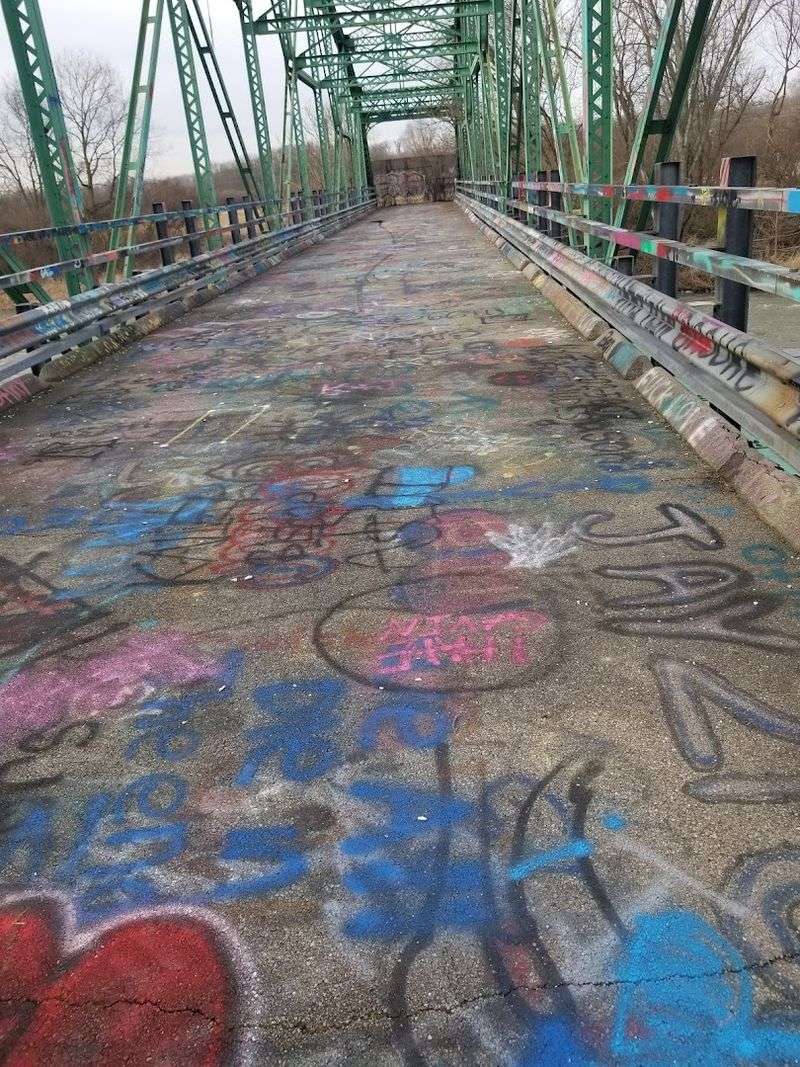
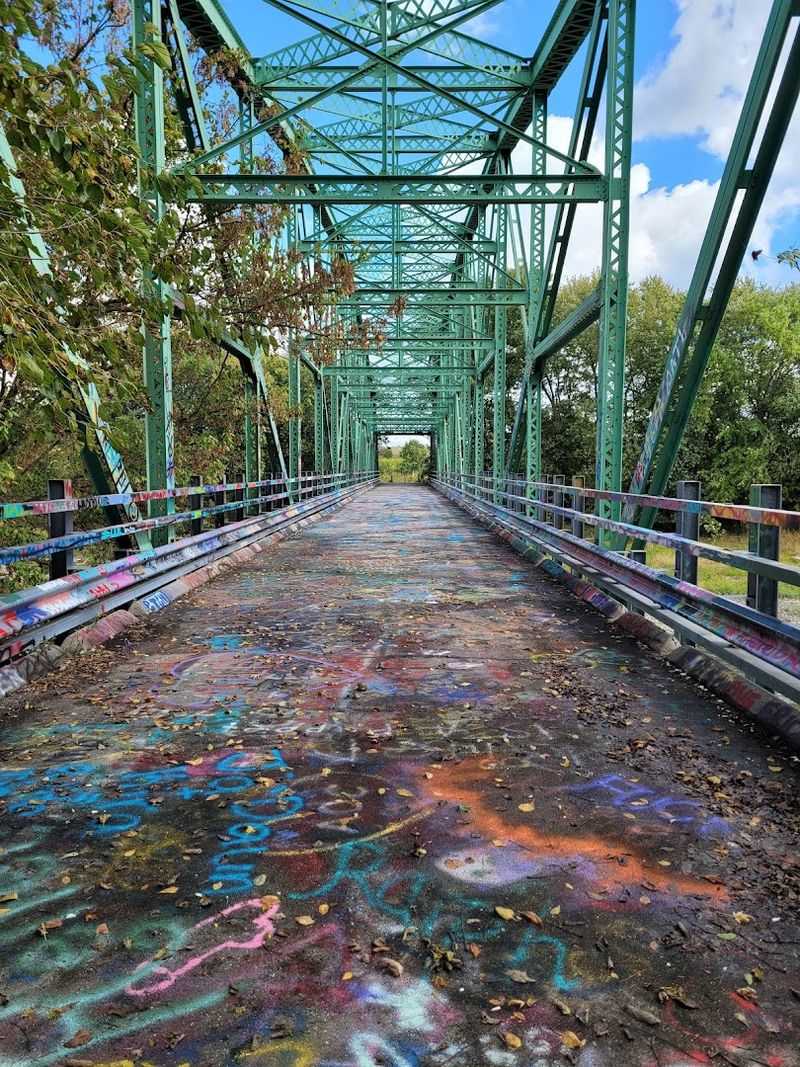
The graffiti on Hope Bridge is not the kind that makes you wince. Most of it reads more like a community bulletin board than vandalism, with names, dates, declarations of love, and surprisingly uplifting phrases layered over each other across the old steel beams.
It has a warmth to it that feels almost accidental, like the bridge became a place for honesty without anyone planning it that way.
After a TikTok video went viral in 2020, foot traffic to the bridge increased significantly, and so did the messages left behind. Some visitors noted that a few pieces of graffiti cross into offensive territory, which is an honest reality of any open public canvas.
But the overall tone leans toward the personal and the hopeful, which fits strangely well with a structure that has literally been named Hope Bridge by the community that adopted it.
There is something genuinely moving about reading layers of messages left by strangers across different years. A name from five years ago sits next to something written last month.
People who have never met each other have shared the same few square feet of painted steel. For a bridge that was nearly forgotten after the road was rerouted, that kind of ongoing human presence feels significant.
It is not a museum piece you admire from a distance. It is a living, slightly chaotic, oddly touching record of everyone who felt compelled to stop and say something.
That is not nothing. That is actually quite a lot.
The Great Miami Recreational Trail and Getting There on Foot
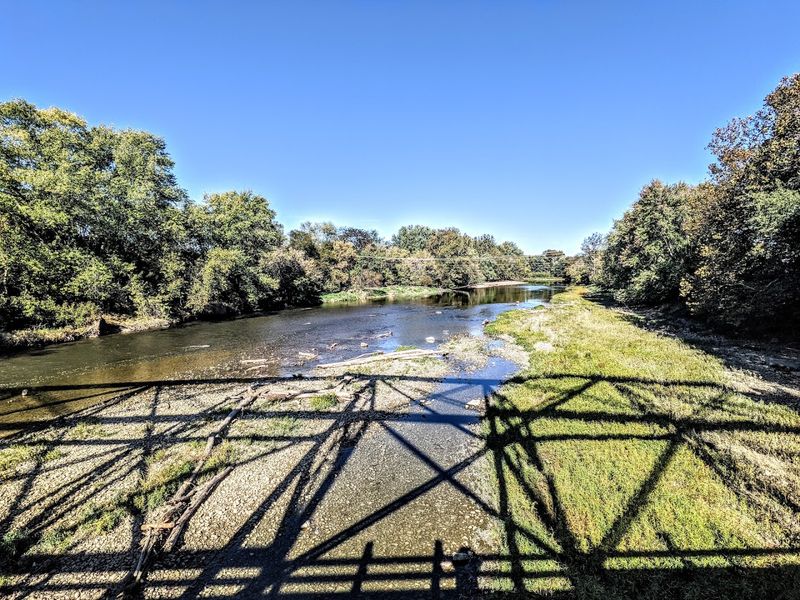
Reaching Hope Bridge on foot or by bike is honestly part of the experience. The bridge sits along the Great Miami Recreational Trail, which follows Rip Rap Road north of the bridge and offers a genuinely pleasant stretch of path with the river visible through the trees.
The trail is well-maintained and accessible, making it an easy outing for most fitness levels.
Parking near the bridge is described by visitors as good and easy, which is a small but real relief for anyone who has ever spent twenty minutes circling a trailhead lot. From the parking area, the walk to the bridge is short enough that you are not committing to a full hiking adventure, but long enough to feel like you earned the view.
That balance matters when you are trying to get somewhere with a good payoff without exhausting yourself before you arrive.
The trail itself is worth exploring beyond just the bridge. Bald eagles have been spotted to the north of the bridge along the river corridor, which is the kind of wildlife encounter that genuinely stops you in your tracks.
The Great Miami River moves quietly through this stretch of Dayton, and the combination of the historic bridge, the open water, and the surrounding greenery creates an atmosphere that feels removed from the city even though you are not far from it at all. For cyclists, the bridge once served as more of a trail attraction than a connection point, and that spirit still holds.
It is a destination, not just a waypoint.
What the Bridge Actually Looks Like Up Close
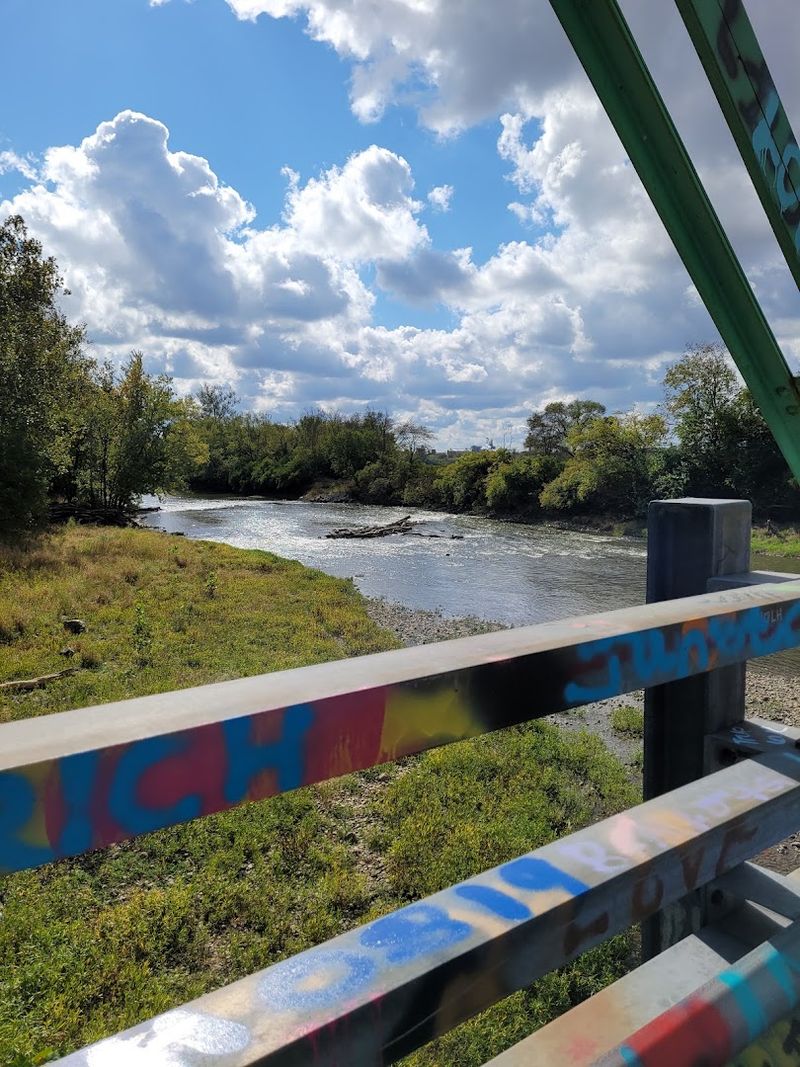
Reading about a Pennsylvania through truss bridge and actually standing beneath one are two very different experiences. The scale of the thing catches you off guard.
The trusses rise above the deck at a height that makes the whole structure feel more like a tunnel than a bridge, and the riveted connections along the members give it a texture that modern bridges simply do not have.
The v-lacing and lattice work that run along the structure are the kind of detail you might walk past without noticing, but once you see them, you cannot stop seeing them. They are almost decorative in their complexity, even though every piece of that pattern was there for a structural reason.
The concrete abutments at either end anchor the whole thing solidly, and the roller bearings visible at the west end are a small mechanical detail that bridge enthusiasts apparently travel specifically to see.
At the east end, a large gate prevents full crossing, which is a practical safety measure but also adds a slightly dramatic quality to the experience. You can walk out onto the bridge, feel the old steel under your feet, look down at the Great Miami River moving below, and hear the water before you see it clearly.
One visitor described spotting a bald eagle nearby during a visit, which sounds almost too cinematic to be real but is apparently just a Tuesday at Hope Bridge. The structure itself is stunning.
Up close, it earns every bit of its four-point-seven-star rating without even trying.
Why Hope Bridge Keeps Drawing People Back Again and Again
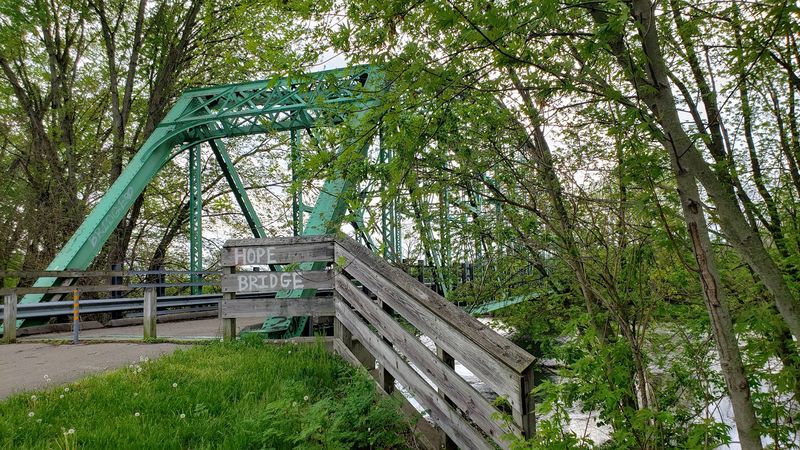
Some places have a quality that is genuinely hard to name. Hope Bridge is one of them.
It is not the flashiest attraction in the Dayton area, and it does not come with a visitor center or an interpretive trail. What it has instead is a specific kind of atmosphere that visitors keep describing with words like peaceful, pretty, and full of love, which is a pretty unusual combination for a steel truss bridge built a century ago.
The geocaching community has also found the bridge, which adds a playful layer to visits for anyone who enjoys that kind of low-key treasure hunt. The wildlife along the river corridor gives naturalists a reason to linger.
History enthusiasts come for the engineering. Photographers come for the light hitting the old steel at different times of day.
The bridge somehow manages to offer something to almost everyone without being designed for any particular group.
What keeps people returning, I think, is the feeling that the bridge is genuinely alive in the way that only well-loved places can be. The messages left on its beams change over time.
The seasons shift the colors of the river and the surrounding trees. A bald eagle might appear or might not.
The trail extends in both directions with its own rhythms and views. Hope Bridge is not a place you visit once and fully understand.
It rewards repeat visits, different weather, different company, and different moods. That kind of staying power is rare, and it is exactly why this old bridge over the Great Miami River has earned its name.
Address: Great Miami River Recreational Trail, Dayton, OH 45424
