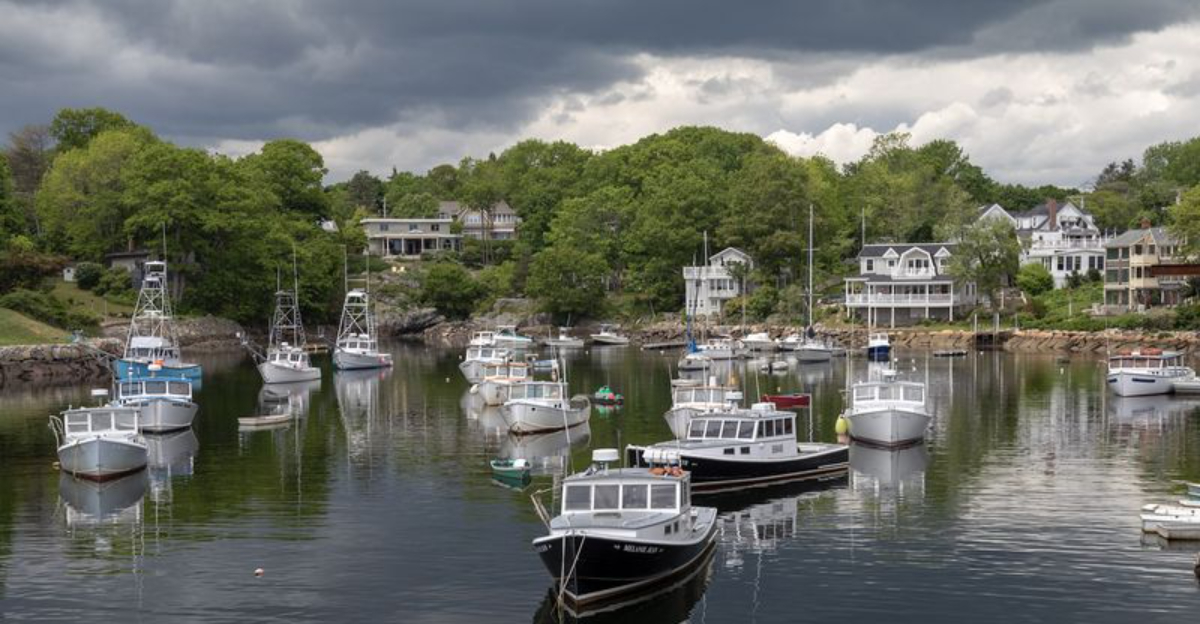
Maine’s small towns offer something increasingly rare in modern America: a slower, simpler way of life that feels plucked straight from decades past.
When you drive through these coastal and inland communities, you’ll notice something remarkable; the pace slows down, neighbors actually know each other’s names, and local businesses still thrive on Main Street.
Visiting or living in these charming places can feel like stepping into a time machine, where community values, traditional commerce, and natural beauty take center stage over convenience and speed.
From mom-and-pop diners serving the same recipes for generations to town halls where everyone gathers for important decisions, Maine’s small towns preserve a lifestyle that many Americans thought was lost forever.
Whether you’re considering a move to rural Maine or just curious about what makes these communities so special, understanding their timeless appeal reveals why so many people are drawn to this northeastern corner of the country.
The reasons go far beyond scenic lighthouses and lobster rolls; they touch on fundamental aspects of human connection, community pride, and living life at a more meaningful pace.
Here’s why small-town Maine feels like a beautiful step back in time.
Main Street Still Thrives With Family-Owned Businesses

Walking down Main Street in towns like Belfast or Camden feels worlds apart from the strip malls and chain stores that dominate most American communities today.
Family-owned bookstores, hardware stores, and general stores have operated in the same locations for generations, often with the original families still running them.
You won’t find a Walmart or Target anchoring these downtown areas; instead, you’ll discover businesses where the owner knows your name and remembers what you bought last time.
The sense of continuity runs deep in these establishments.
Many shops display black-and-white photographs showing how little their storefronts have changed over the past century.
At places like The Smiling Cow in Camden, located at 41 Main Street, locals have been buying gifts and souvenirs since 1940, maintaining traditions that big-box retailers simply cannot replicate.
When you need advice about which paint to buy or what book to read next, you’re talking to someone who genuinely cares about helping you, not just making a sale.
This traditional business model creates stronger community bonds.
When your money stays local and supports your neighbors, everyone benefits from a more resilient economy.
Children grow up seeing the same friendly faces behind counters, learning the value of personal service and community investment.
The checkout experience isn’t rushed or impersonal; it’s an opportunity for genuine human connection.
In an era where online shopping dominates and automation replaces human workers, Maine’s small-town Main Streets remind us what commerce used to be: a social experience that strengthened community ties rather than isolated individuals behind screens.
Everyone Knows Your Name and Your Business
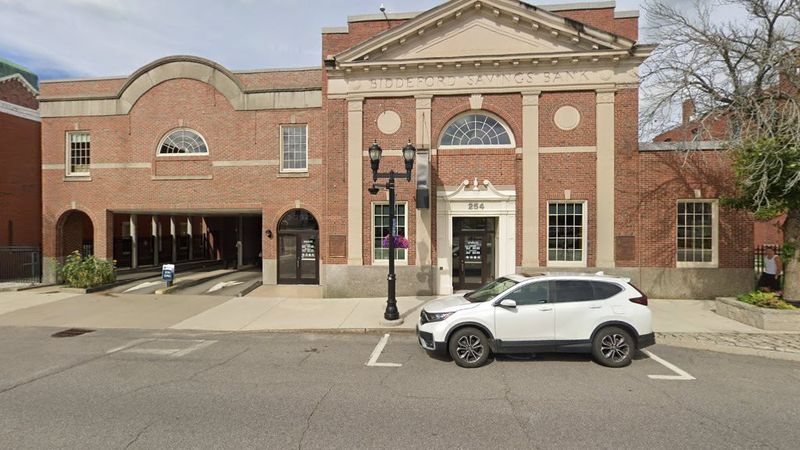
Privacy takes on a completely different meaning when you live in a town of 800 people.
Your neighbors don’t just know your name; they know your car, your work schedule, which church you attend, and probably what you had for dinner last Tuesday.
This level of familiarity can feel shocking if you’re coming from a city where you’ve never met the people living in the apartment next door.
But there’s something comforting about being known, even if it means your personal business becomes community knowledge.
Small-town Mainers watch out for each other in ways that urban dwellers rarely experience.
If your car breaks down on a country road, someone will stop within minutes: not just to offer help, but because they recognize your vehicle and want to make sure you’re safe.
When you’re sick, neighbors appear at your door with casseroles and offers to pick up groceries.
The local postmaster notices if your mail is piling up and might call to check on you.
This interconnected web of caring creates a safety net that no government program or app can replicate.
Of course, this closeness isn’t for everyone.
If you value anonymity or prefer keeping your personal life private, the fishbowl nature of small-town existence might feel suffocating.
Your dating life, financial struggles, or family conflicts become topics of discussion at the local diner.
Yet many residents wouldn’t trade this intimacy for anything, arguing that being truly known by your community; flaws and all; creates authentic belonging.
In Maine’s small towns, you’re not just another face in the crowd; you’re a valued member of a tight-knit community where people genuinely care about your wellbeing.
Town Meetings Decide Local Issues Through Direct Democracy
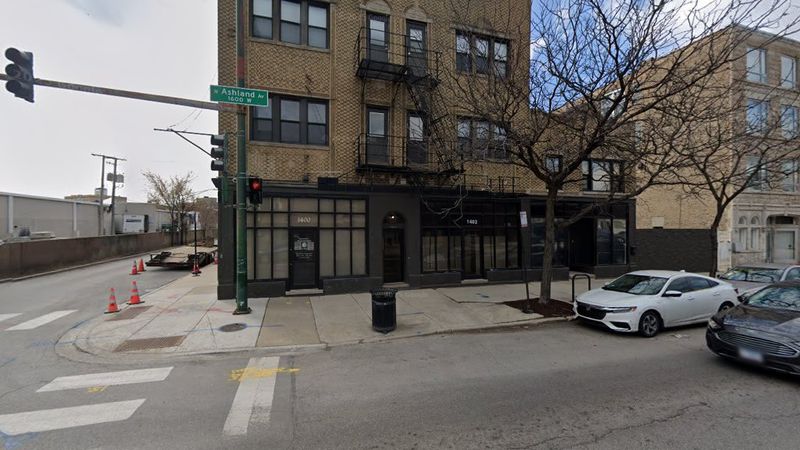
Most Americans experience democracy solely through voting booths every few years, but Maine’s small towns practice something far more direct and engaging.
The traditional New England town meeting brings every resident together annually to debate budgets, elect officials, and decide community issues face-to-face.
Picture a packed town hall where your vote happens by raising your hand, where you can stand up and argue your position directly to your neighbors, and where decisions get made through genuine deliberation rather than political advertising.
These gatherings represent democracy in its purest, most transparent form.
Towns like Blue Hill and Castine still conduct business this way, with meetings that can last all day as residents hash out everything from school budgets to road maintenance priorities.
You might find yourself debating the fire department’s equipment needs with the fire chief himself, or questioning the town manager about proposed tax increases.
There’s no hiding behind press releases or political spin; officials must answer directly to the people they serve, right there in the moment.
This participatory governance creates informed, engaged citizens.
When you must publicly defend your position on local issues, you tend to think more carefully about community needs rather than just personal interests.
Young people learn civic responsibility by watching their parents participate in these democratic traditions.
The process isn’t always efficient; debates can drag on, and consensus sometimes proves elusive; but it ensures that every voice can be heard.
Compared to the distant, disconnected politics that dominate state and national levels, Maine town meetings feel refreshingly human-scaled and accessible, preserving a form of self-governance that America’s founders would recognize and celebrate.
General Stores Serve As Community Gathering Spots

Before shopping malls and supermarkets, Americans gathered at general stores; and in rural Maine, this tradition lives on strong.
These aren’t quaint tourist attractions or nostalgic recreations; they’re functioning community hubs where locals buy groceries, pick up mail, catch up on news, and socialize over coffee.
Places like the Searsmont General Store or Hussey’s General Store in Windsor serve the same essential role they did a hundred years ago, adapted just enough for modern needs while preserving their historic character.
Step inside any authentic Maine general store and you’ll immediately sense the difference from corporate retail.
Mismatched shelves hold everything from canned goods to fishing tackle, work gloves to homemade pies.
A potbelly stove or its modern equivalent provides a gathering spot where old-timers swap stories and debate local issues.
The bulletin board overflows with handwritten notices about lost cats, upcoming church suppers, and items for sale.
You might wait in line behind someone paying for gas while discussing last night’s school board meeting with the cashier, who probably serves on three town committees and knows everyone’s family history.
These stores function as information exchanges in ways that social media never could.
Want to know which roads are washed out after the storm, or who’s hiring, or when the next town meeting happens?
Spend twenty minutes at the general store and you’ll learn everything important happening in your community.
For elderly residents especially, these daily visits provide crucial social connection and a sense of belonging.
The general store isn’t just about commerce; it’s about maintaining the social fabric that holds small communities together through changing times.
Seasonal Rhythms Still Dictate Community Life
Urban life proceeds at roughly the same pace year-round, but Maine’s small towns pulse with seasonal rhythms that govern work, recreation, and social life.
Winter means hunkering down, maintaining equipment, and enduring long, dark months when tourism vanishes and communities turn inward.
Spring arrives late but brings explosive renewal as boats return to the water and maple syrup operations buzz with activity.
Summer transforms coastal towns with visitors and festivals, while inland communities focus on farming and logging.
Fall brings harvest, hunting season, and preparations for the long winter ahead.
This cyclical existence connects residents to natural patterns that modern life usually obscures.
You can’t ignore the changing seasons when your livelihood depends on them; whether you’re a lobsterman working specific waters during legal seasons, a farmer racing to get hay in before rain, or a shop owner whose annual income depends on three months of tourist traffic.
School schedules, town events, and even social calendars align with these natural cycles.
The Fourth of July parade, the fall harvest festival, and the winter carnival aren’t just entertainment; they’re markers of time’s passage and community continuity.
Living by seasonal rhythms creates a different relationship with time itself.
Rather than the relentless, unchanging pace of modern work culture, life in small-town Maine ebbs and flows.
Winter’s slower pace allows for reflection, repairs, and community bonding before the busy season returns.
This pattern mirrors how humans lived for thousands of years before artificial lighting and climate control divorced us from natural cycles.
Many residents find this seasonal structure deeply satisfying, providing natural breaks and variations that prevent the monotonous grind that characterizes much of contemporary American life.
Handwritten Signs and Cash-Only Businesses Remain Common
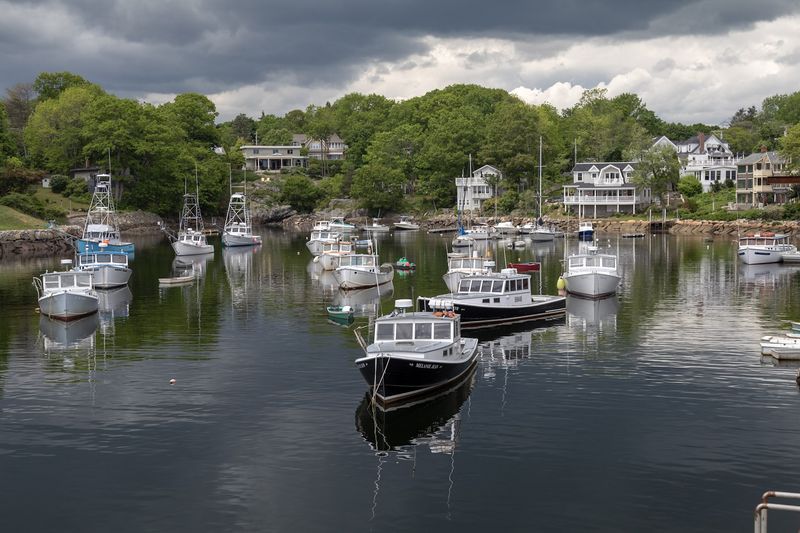
Digital displays and credit card readers dominate most American commerce, but travel through rural Maine and you’ll encounter a refreshingly analog business landscape.
Handwritten cardboard signs advertise fresh eggs, firewood, or lobsters for sale, often with just a price and an arrow pointing toward someone’s house.
Many small businesses still operate cash-only, with apologetic notes explaining that credit card fees cut too deeply into their slim margins.
This low-tech approach might seem inconvenient at first, but it reflects an economy still operating on human scale and personal trust.
The persistence of cash transactions preserves interesting social dynamics.
When you pay with actual money, exchanges feel more real and immediate than the abstract swipe of a card.
Small business owners avoid paying processing fees to distant corporations, keeping more money in their own pockets and local economy.
Customers must plan ahead, ensuring they have cash before shopping; a small inconvenience that actually encourages more mindful spending.
Some businesses maintain honor-system farm stands where customers deposit money in a box, trusting their neighbors to pay fairly without supervision.
This level of trust would be unthinkable in most modern contexts.
Handwritten signs carry their own charm and authenticity.
The slightly crooked letters and faded paint tell you that a real person made this sign, probably with materials they had on hand, without hiring a graphic designer or consulting marketing experts.
These humble advertisements connect you directly to the person selling the goods, stripping away the professional polish that makes most commerce feel impersonal.
While younger visitors might find this analog approach frustratingly outdated, it represents a simpler economic model where transactions happen between neighbors rather than through corporate intermediaries and digital platforms.
Multigenerational Families Live in the Same Towns for Centuries
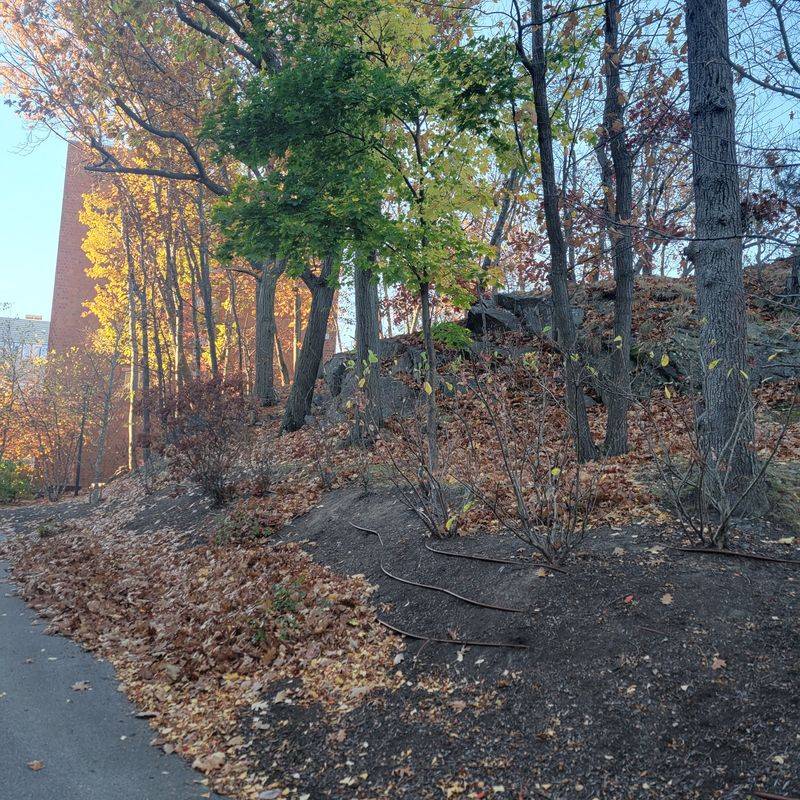
Americans move frequently, with the average person relocating 11 times during their lifetime, but Maine’s small towns tell a different story.
Walk through any local cemetery and you’ll see the same surnames repeated across centuries of gravestones; families that planted roots generations ago and never left.
Children grow up in houses their grandparents owned, attend schools their parents attended, and eventually raise their own children in the same tight-knit communities.
This continuity creates a profound sense of place and identity that’s increasingly rare in our mobile society.
Deep roots change how people relate to their community.
When your great-great-grandfather helped build the town church, and your grandmother served as town clerk for 30 years, you feel personally invested in your community’s wellbeing in ways that newcomers simply cannot.
Local history isn’t something you read about; it’s woven into your family’s story.
You know which houses belonged to which families, remember when specific businesses opened or closed, and carry forward traditions and knowledge passed down through generations.
This accumulated wisdom about place; which roads flood in spring, where the best blueberry patches hide, how to navigate local politics: provides invaluable community knowledge.
Of course, this stability has downsides.
Long-standing family feuds can persist across generations, and newcomers sometimes struggle to break into established social circles.
Economic opportunities may be limited, forcing young people to choose between staying near family and pursuing careers elsewhere.
Yet many Mainers consider these tradeoffs worthwhile, valuing rootedness and continuity over the restless mobility that characterizes modern American life.
In an age when many people feel disconnected and adrift, belonging to a place your family has called home for two hundred years provides something precious: an unshakeable sense of where you come from and where you belong.
Dear Reader: This page may contain affiliate links which may earn a commission if you click through and make a purchase. Our independent journalism is not influenced by any advertiser or commercial initiative unless it is clearly marked as sponsored content. As travel products change, please be sure to reconfirm all details and stay up to date with current events to ensure a safe and successful trip.
