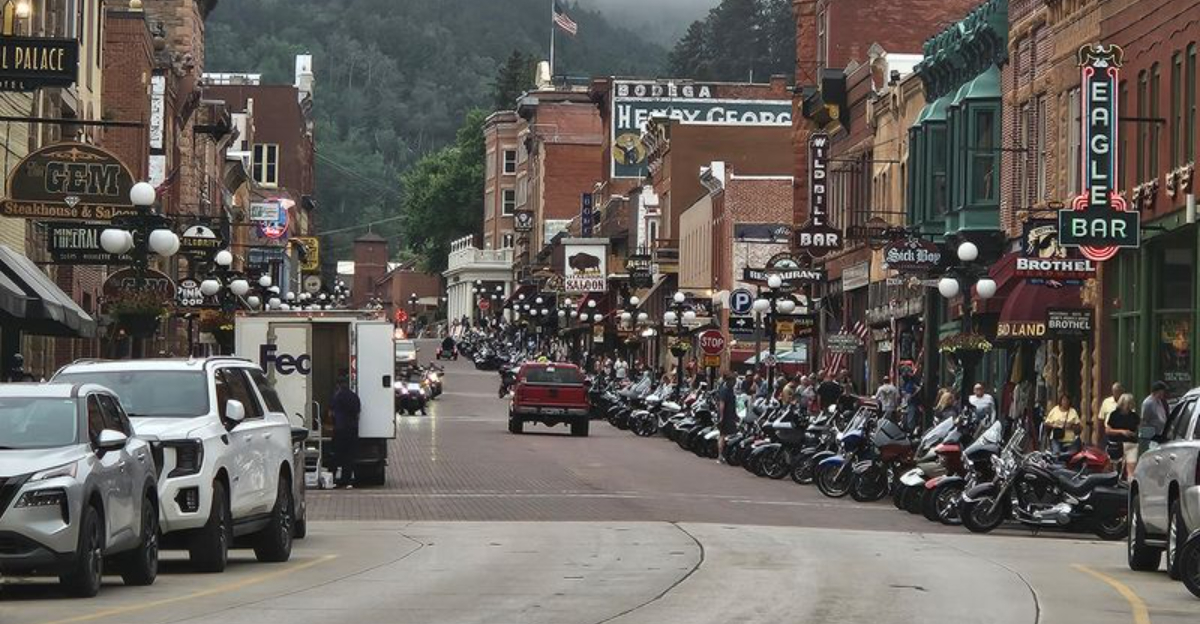
South Dakota might not be the first state that pops into your head when planning a road trip, but it absolutely should be on your radar.
Tucked away in the heart of America, this often-overlooked state offers jaw-dropping landscapes, fascinating history, and unique attractions that you won’t find anywhere else.
From towering granite faces carved into mountains to sprawling prairies filled with roaming bison, South Dakota delivers experiences that stick with you long after you’ve packed up and headed home.
Whether you’re traveling solo, with friends, or bringing the whole family along for the adventure, this state has something special waiting around every bend in the road.
The best part is that South Dakota’s attractions are spread out in a way that makes for an incredible road trip, giving you plenty of reasons to slow down, explore, and soak in everything this beautiful state has to offer.
Getting off the beaten path and discovering hidden gems is what travel is all about, and South Dakota serves up those moments in spades.
So buckle up and get ready to discover why this Midwestern treasure deserves a spot on your travel itinerary.
Mount Rushmore National Memorial
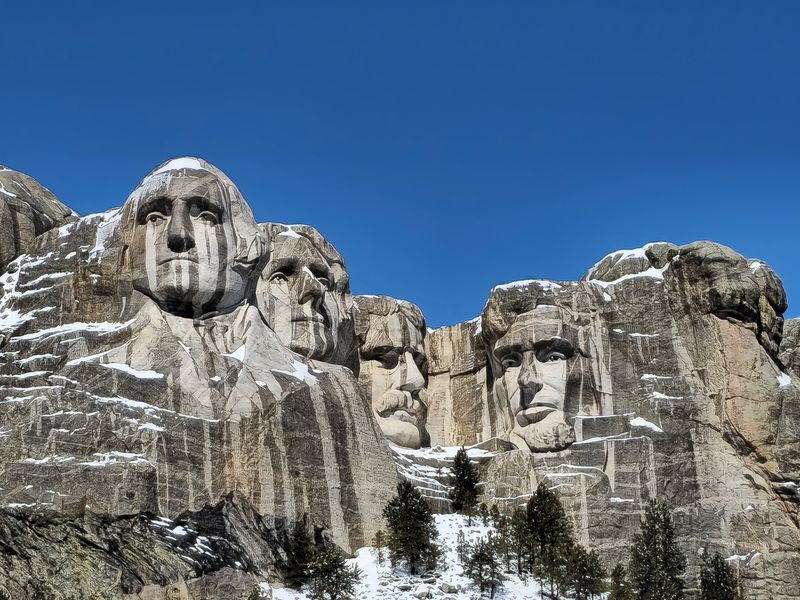
Standing before Mount Rushmore feels like stepping into a history book that suddenly came alive right in front of your eyes.
The massive carved faces of George Washington, Thomas Jefferson, Theodore Roosevelt, and Abraham Lincoln tower 60 feet high on the granite cliff, and seeing them in person is completely different from any photograph you’ve ever seen.
Located at 13000 SD-244, Keystone, SD 57751, this iconic monument draws millions of visitors each year, and for good reason.
Sculptor Gutzon Borglum and his team worked for 14 years, from 1927 to 1941, using dynamite and detailed carving techniques to create this masterpiece.
The sheer scale of the project is mind-blowing when you consider that workers dangled from the mountain face in harnesses while blasting away tons of rock.
Each president was chosen to represent a different aspect of American history: Washington for the birth of the nation, Jefferson for expansion, Roosevelt for development, and Lincoln for preservation.
Visiting Mount Rushmore isn’t just about snapping a quick photo and moving on.
The site includes a museum, walking trails, and an evening lighting ceremony during summer months that adds a patriotic touch to your visit.
The Avenue of Flags leading up to the viewing area displays flags from all 50 states, creating a powerful visual reminder of national unity.
Kids especially love the Junior Ranger program, which lets them earn a badge while learning about the monument’s history and significance.
Plan to spend at least two to three hours here to fully appreciate everything the memorial offers.
The best lighting for photographs happens in the morning when the sun illuminates the faces directly.
Admission to the memorial itself is free, though there’s a parking fee that helps maintain the facilities and grounds throughout the year.
Badlands National Park
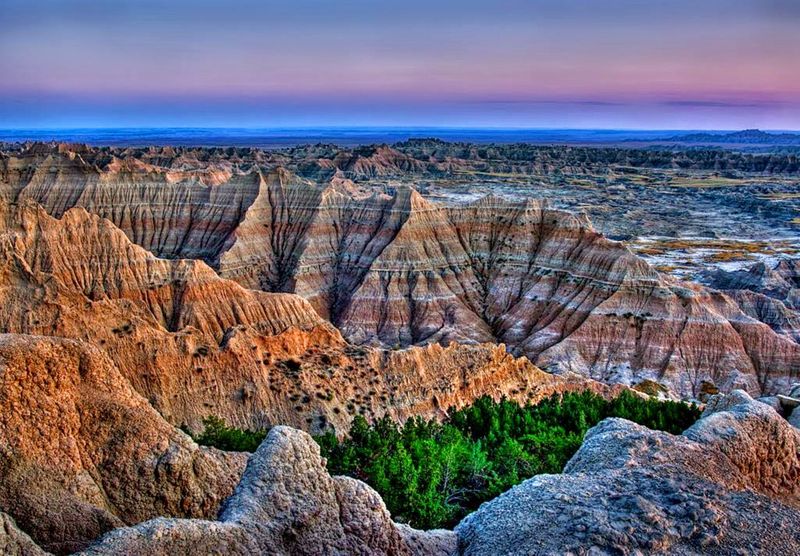
Imagine driving through terrain that looks more like Mars than the middle of America.
Badlands National Park delivers exactly that kind of otherworldly experience, with its dramatically eroded buttes, pinnacles, and spires rising from the prairie floor in shades of rust, tan, and pink.
This 244,000-acre park protects one of the world’s richest fossil beds, where ancient creatures like saber-toothed cats and three-toed horses once roamed millions of years ago.
The 30-mile Badlands Loop Road (Highway 240) takes you past countless overlooks where you can stop and marvel at the bizarre landscape stretching out before you.
Each viewpoint offers something different, from sweeping panoramas to close-up views of the layered rock formations that tell the geological story of this region.
Hiking trails range from easy boardwalk strolls to challenging backcountry routes where you can explore the formations up close and personal.
Wildlife watching here is absolutely incredible, with bighorn sheep scaling the steep cliffs, bison grazing in the mixed-grass prairie, and prairie dogs creating entire towns in the grasslands.
Bring binoculars because the park is also home to pronghorn antelope, coyotes, and numerous bird species that thrive in this harsh but beautiful environment.
The Fossil Exhibit Trail is perfect for families, featuring replicas of ancient creatures and information about the area’s prehistoric past.
Sunrise and sunset transform the Badlands into a photographer’s paradise, with light painting the formations in constantly changing colors.
Summer temperatures can soar above 100 degrees, so visit early morning or late afternoon during hot months.
The park’s proximity to Wall Drug Store, a quirky roadside attraction in the nearby town of Wall, makes it easy to combine natural wonders with some classic Americana fun.
Custer State Park and Wildlife Loop
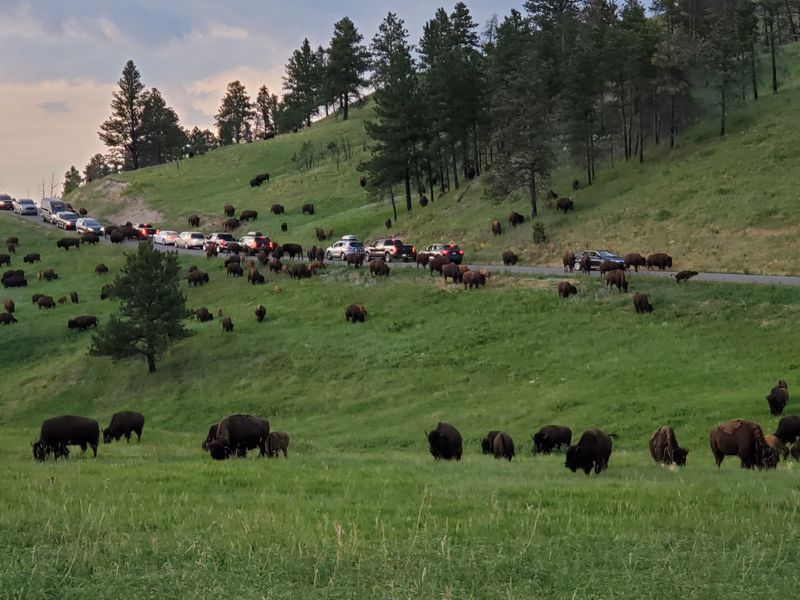
Few experiences beat cruising along a scenic road when a massive bison suddenly decides to cross right in front of your car.
Custer State Park’s 18-mile Wildlife Loop Road delivers these unforgettable moments regularly, making it one of the best places in America to see wildlife in their natural habitat without any fences or barriers.
The park maintains one of the largest publicly owned bison herds in the world, with around 1,300 of these magnificent creatures roaming freely across 71,000 acres of diverse terrain.
Beyond bison, you’ll likely spot pronghorn antelope, elk, white-tailed and mule deer, mountain goats, bighorn sheep, and the famous begging burros that approach vehicles looking for handouts (though feeding them is prohibited).
These friendly donkeys are descendants of animals used in gold mining operations and have become beloved park residents.
The loop takes about two hours if you drive straight through, but smart visitors allow much more time for frequent stops and wildlife photo opportunities.
Custer State Park offers way more than just the Wildlife Loop, including four scenic drives that wind through different landscapes.
Needless Highway features narrow tunnels and hairpin turns carved through granite spires, while Iron Mountain Road connects to Mount Rushmore with its famous pigtail bridges and tunnels that frame the monument.
Sylvan Lake, nestled among granite boulders and pine forests, provides a stunning spot for picnicking, swimming, or paddling.
The park’s annual Buffalo Roundup in late September draws thousands of spectators who watch as cowboys and cowgirls herd the bison for health checks and culling.
Camping options range from rustic tent sites to comfortable cabins, letting you wake up surrounded by nature’s beauty.
Entry requires a license fee, but the incredible wildlife encounters and breathtaking scenery make it worth every penny.
Crazy Horse Memorial
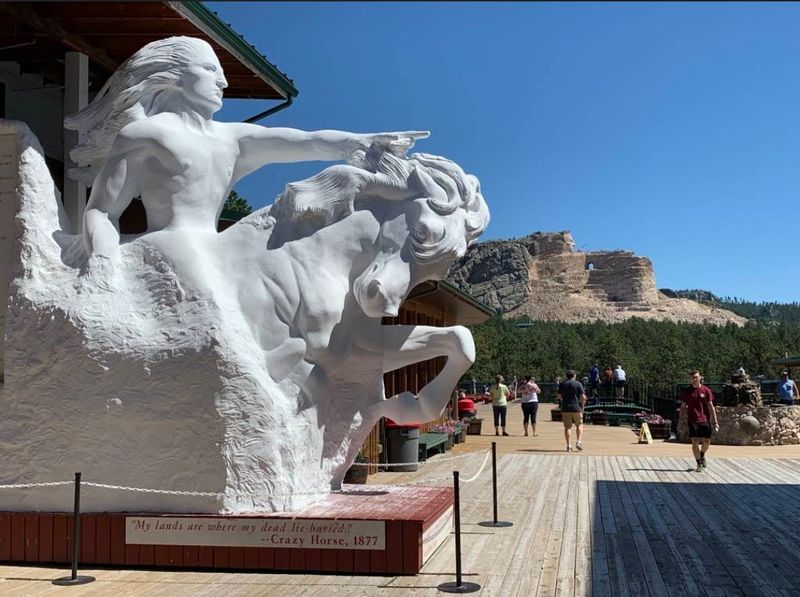
While Mount Rushmore celebrates American presidents, Crazy Horse Memorial honors Native American heritage through what will eventually become the world’s largest mountain carving.
When completed, the sculpture will depict Lakota warrior Crazy Horse riding a horse and pointing over the land, measuring 563 feet high and 641 feet long; dwarfing Mount Rushmore significantly.
Sculptor Korczak Ziolkowski began this ambitious project in 1948 after being asked by Lakota Chief Henry Standing Bear to create a memorial showing that Native Americans also had great heroes.
The memorial remains a work in progress, funded entirely by admissions and donations without any federal or state funding.
Ziolkowski worked on the mountain until his death in 1982, and his family continues the mission today, slowly blasting and carving away tons of granite.
The face of Crazy Horse was completed in 1998, measuring 87 feet high, and work continues on the rest of the figure.
Visitors can view the mountain from the visitor complex and sometimes watch blasting operations that shape the sculpture.
The extensive Indian Museum of North America on-site houses one of the most impressive collections of Native American artifacts, artwork, and cultural items you’ll find anywhere.
The Native American Educational and Cultural Center offers programs, demonstrations, and performances that help visitors understand and appreciate indigenous cultures and traditions.
You can also tour Korczak’s studio and home, preserved exactly as he left them, providing insight into the sculptor’s vision and dedication.
Located at 12151 Avenue of the Chiefs, Crazy Horse, SD 57730, the memorial sits just 17 miles from Mount Rushmore, making it easy to visit both in one day.
Evening laser light shows during summer months illuminate the mountain while sharing the story of Crazy Horse and the memorial’s creation.
The gift shop features authentic Native American crafts, with proceeds supporting the ongoing carving and educational programs.
Historic Deadwood
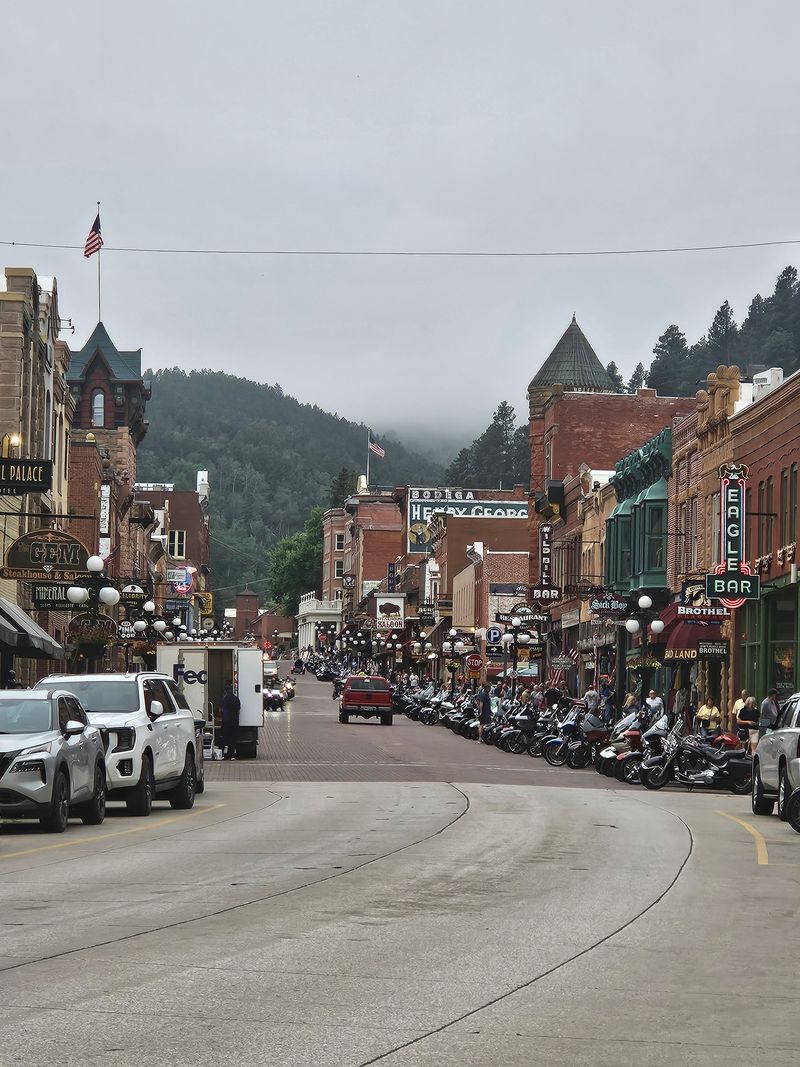
Step back into the Wild West when you visit Deadwood, a town where legends like Wild Bill Hickok and Calamity Jane once walked the dusty streets.
This entire town is a National Historic Landmark, preserving its 1876 gold rush heritage while offering modern entertainment through legalized gambling in historic saloons and casinos.
The authenticity here is remarkable, with original buildings lining Main Street and costumed characters recreating the rough-and-tumble atmosphere of frontier days.
Wild Bill Hickok met his end in Deadwood on August 2, 1876, when he was shot while playing poker in Saloon No. 10.
You can visit a recreation of that very saloon at 657 Main Street, where reenactments of the shooting happen daily during tourist season.
Both Hickok and Calamity Jane are buried in Mount Moriah Cemetery, which overlooks the town from a hillside and offers fascinating gravestone stories of other colorful characters from Deadwood’s past.
The cemetery tour is genuinely entertaining, mixing history with humor as guides share tales of outlaws, madams, and ordinary folks who shaped this legendary town.
Beyond gambling and history, Deadwood hosts fantastic events throughout the year, including motorcycle rallies, historical reenactments, and the Days of ’76 rodeo celebrating frontier heritage.
The Adams Museum at 54 Sherman Street houses an impressive collection of artifacts, including items belonging to famous residents and displays about gold mining operations.
Dining options range from upscale steakhouses to casual cafes, many occupying historic buildings that add atmosphere to every meal.
Walking tours let you explore the town’s architecture and hear stories about its colorful past from knowledgeable guides dressed in period clothing.
Small shops selling Western wear, jewelry, and souvenirs line the streets between casinos.
Deadwood makes an excellent base for exploring the Black Hills region, with comfortable hotels and a lively nightlife scene that keeps the Wild West spirit alive.
Wind Cave National Park
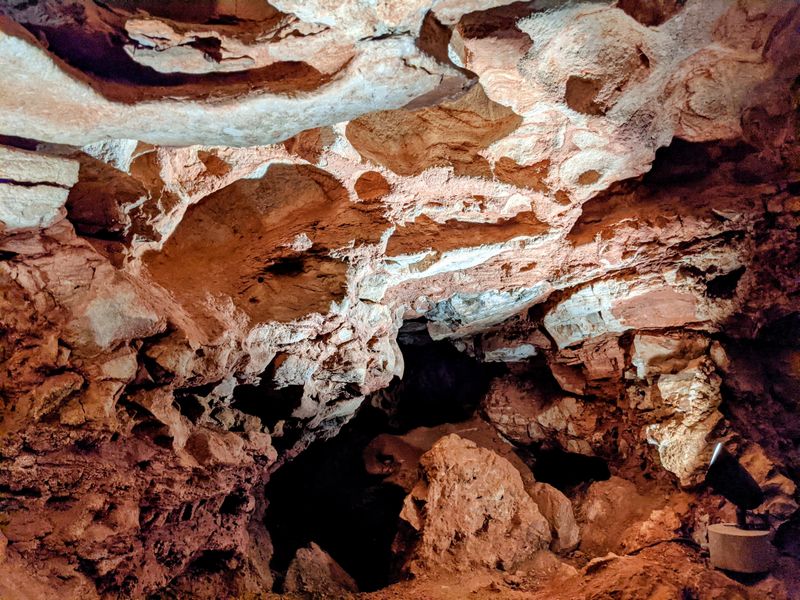
Did you know that Wind Cave contains 95 percent of the world’s discovered boxwork formations?
These delicate honeycomb-like calcite structures cover the cave ceilings like intricate lacework, creating patterns found almost nowhere else on Earth.
Wind Cave ranks as one of the longest and most complex caves in the world, with over 150 miles of mapped passages, though scientists believe much more remains undiscovered beneath the Black Hills.
The cave got its name from the strong winds that blow in and out of its entrance as atmospheric pressure changes.
Native Americans knew about the cave long before European settlers arrived, and Lakota creation stories describe it as the place where their ancestors emerged onto the surface world.
The first documented discovery by settlers happened in 1881 when brothers Tom and Jesse Bingham heard whistling sounds coming from a small hole in the ground.
The wind was reportedly so strong it blew Tom’s hat right off his head!
Several ranger-guided tours take visitors through different sections of the cave, ranging from easy walks to challenging crawling adventures.
The Natural Entrance Tour follows the historic route early explorers used, while the Fairgrounds Tour showcases the famous boxwork in large chambers.
For the adventurous, the Wild Cave Tour involves squeezing through tight passages and getting dirty while exploring undeveloped sections.
Temperatures inside remain a constant 54 degrees year-round, so bring a jacket even on hot summer days.
Above ground, the park protects 33,970 acres of mixed-grass prairie and ponderosa pine forest where bison, elk, and prairie dogs thrive.
Hiking trails wind through this diverse landscape, offering solitude and wildlife viewing opportunities away from the crowds.
The park entrance sits about 11 miles north of Hot Springs on Highway 385, making it easily accessible from other Black Hills attractions.
The Corn Palace in Mitchell
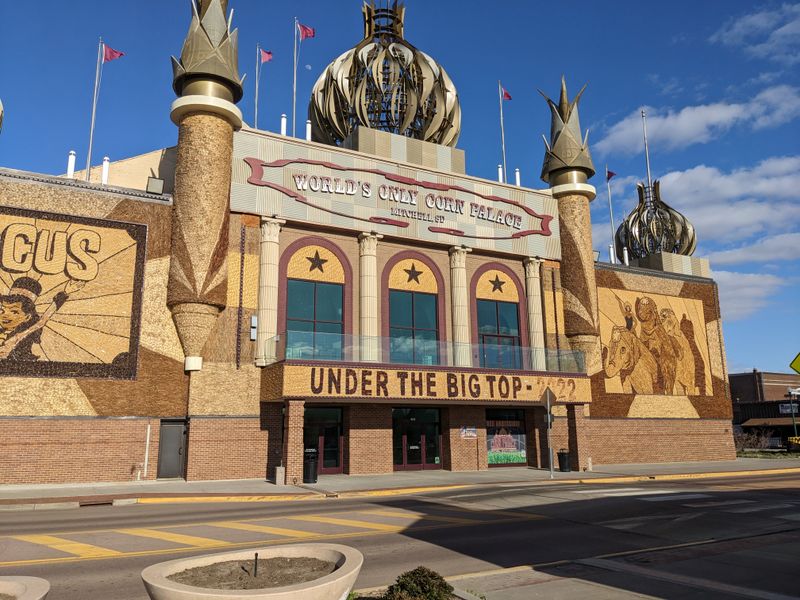
Only in South Dakota would you find a building decorated entirely with corn, grain, and native grasses—and people absolutely love it.
The Corn Palace in Mitchell has been celebrating agriculture and community since 1892, making it one of the world’s most unique attractions.
Each year, local artists create new murals using thousands of bushels of naturally colored corn and grains, transforming the building’s exterior into a massive work of edible art that changes with the seasons.
The tradition started as a way to showcase South Dakota’s agricultural richness and prove that the region could grow abundant crops despite harsh conditions.
What began as a simple harvest festival has evolved into a major tourist attraction drawing over 500,000 visitors annually.
The current Corn Palace, built in 1921, features Moorish-style towers and domes that make it look like something transplanted from a fairy tale rather than sitting on Main Street in a prairie town.
Inside, you’ll find a gift shop selling corn-themed souvenirs, a basketball arena where Mitchell High School teams play, and information about the palace’s history and construction.
The building hosts concerts, events, and festivals throughout the year, including the annual Corn Palace Festival featuring carnival rides, live music, and food vendors.
Admission is free, making it an affordable stop that offers something genuinely different from typical tourist attractions.
Located at 604 North Main Street, Mitchell, SD 57301, the Corn Palace sits right off Interstate 90, making it an easy stop during cross-country road trips.
The murals are typically redone in late summer and early fall, so visiting during autumn gives you the freshest artwork.
Nearby Mitchell also offers the Dakota Discovery Museum and several good restaurants where you can refuel before continuing your journey.
Photographers love capturing the palace’s colorful exterior, especially when the afternoon sun highlights the detailed corn artwork.
Dear Reader: This page may contain affiliate links which may earn a commission if you click through and make a purchase. Our independent journalism is not influenced by any advertiser or commercial initiative unless it is clearly marked as sponsored content. As travel products change, please be sure to reconfirm all details and stay up to date with current events to ensure a safe and successful trip.
