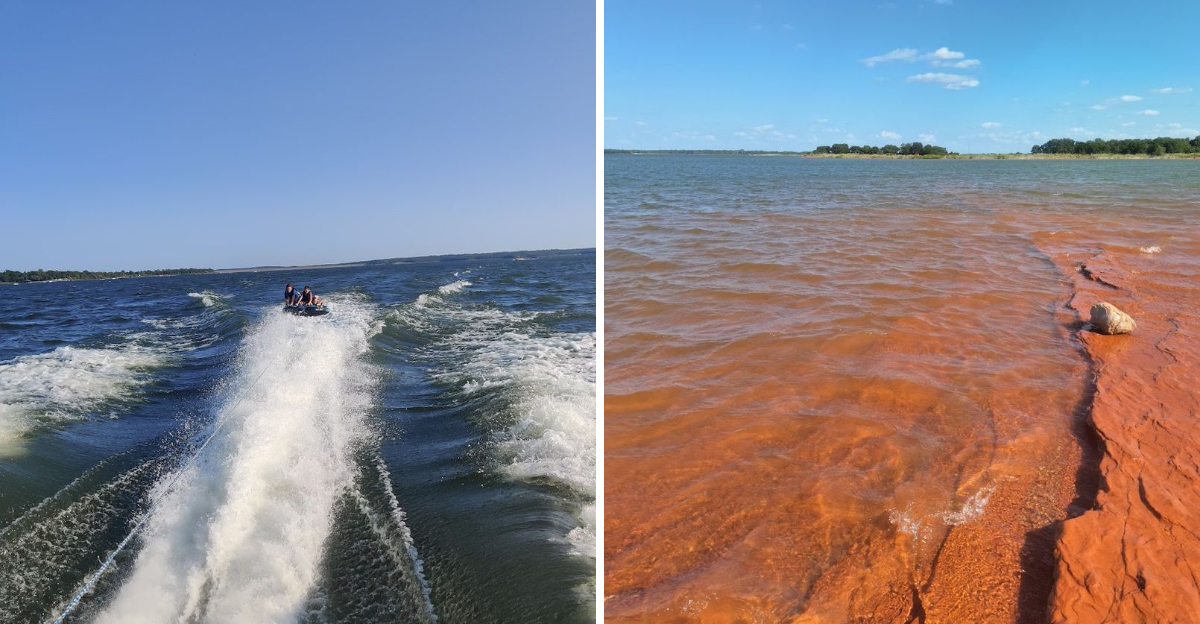
There is a lake in central Oklahoma that has earned itself a reputation far stranger than its calm surface suggests. People go missing on calm days, compasses behave oddly, and the water shifts from red clay murk to glassy stillness without warning.
Stories passed down through local families, whispered at campfire circles, paint a picture of a place that refuses to be fully understood.
If you have ever wanted to explore somewhere that blends outdoor adventure with a genuine edge of mystery, keep reading because this is one of those rare places worth knowing about.
The Legend Behind The Nickname
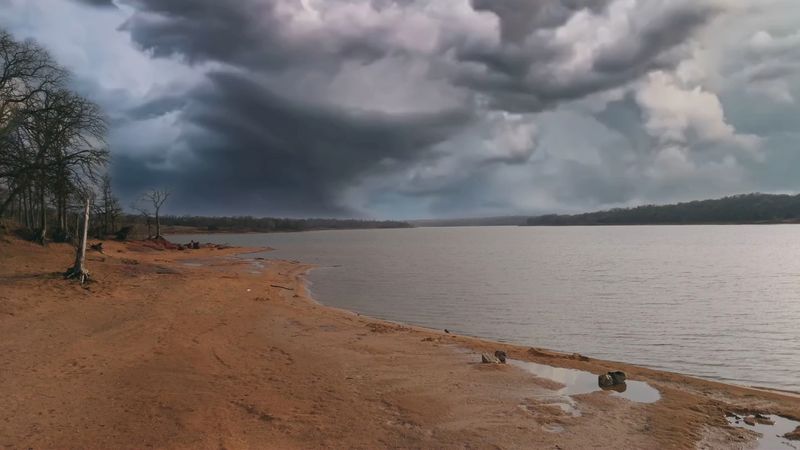
Long before anyone slapped a nickname on it, something about this lake made people uneasy in the best possible way. Lake Thunderbird Oklahoma sits in the rolling red clay hills of central Oklahoma, and its reputation for strange happenings has grown steadily since it was first filled in the 1960s.
The reservoir was built to supply water to the cities of Norman, Midwest City, and Del City, but nobody planned for it to become a local legend.
The nickname “Bermuda Triangle of Oklahoma” did not come from one single dramatic event. It grew slowly, fed by a collection of unexplained disappearances, unusual weather patterns, and water conditions that seem to shift without reason.
Locals who have fished here for decades will tell you the lake has moods, and those moods do not always match the forecast.
Red clay from the surrounding land gives the water a rust-colored tint that makes it feel opaque and secretive. That visual alone is enough to spark the imagination.
When you add the stories of boats losing power in the middle of clear days and swimmers who misjudged the currents, the nickname starts feeling less like folklore and more like a fair warning wrapped in a catchy label.
Water So Red It Looks Like Another World
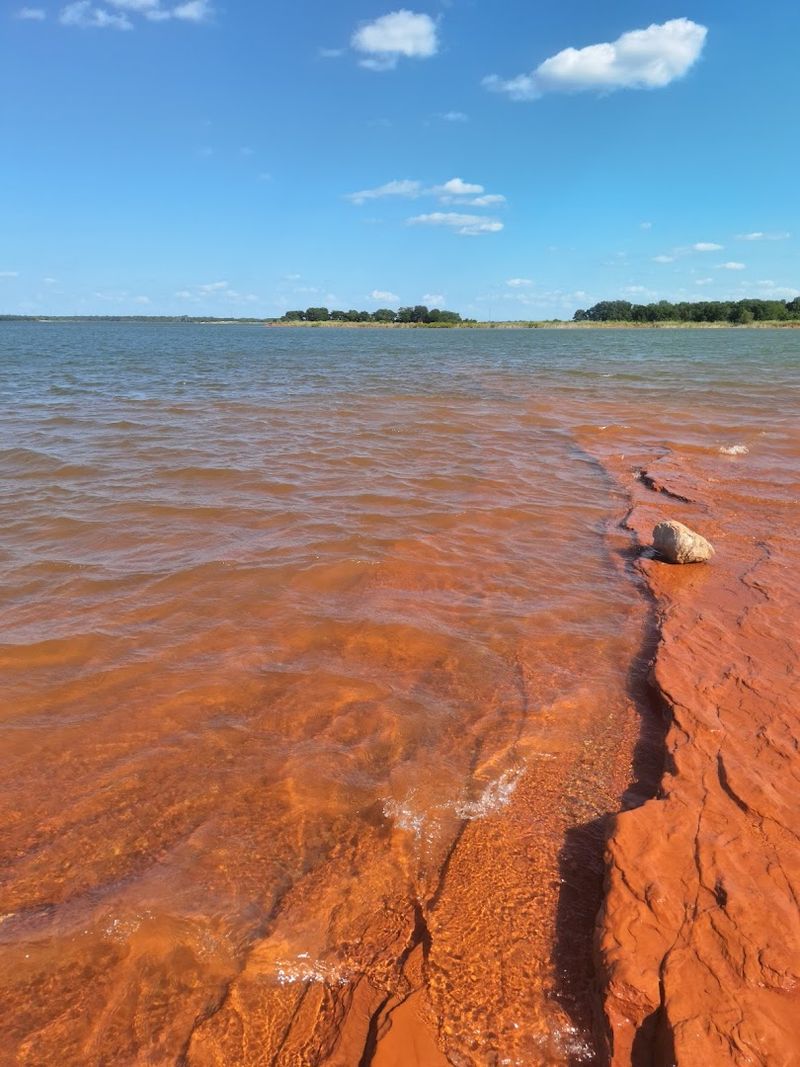
The first time you see the water at Lake Thunderbird Oklahoma, your brain does a double take. It is not blue.
It is not even greenish. It is a deep, rust-red color that looks like someone dissolved a terracotta pot into the entire reservoir.
This is not pollution or algae. It is the iron-rich red clay soil of central Oklahoma doing exactly what it has always done.
That red tint has a way of making the water feel unknowable. You cannot see below the surface.
Fish disappear into it like they are slipping behind a curtain. Swimmers feel it differently too, because there is no visual reference for depth or distance once you are in it.
It is one of those sensory experiences that no photo fully captures.
For the mystery mythology of the lake, the water color is basically perfect casting. Red water, dramatic sky, and the kind of flat Oklahoma horizon that makes everything feel slightly larger than life.
Some visitors find it unsettling. Others find it absolutely beautiful in a raw, elemental way.
Honestly, it is both. The color changes with the light too, going from burnt orange at midday to something closer to deep burgundy just before sunset, which is when the lake looks most like something from a story you would not want to be inside.
Disappearances Locals Still Talk About
Every lake with a mysterious reputation has its stories, and Lake Thunderbird Oklahoma has more than its fair share. Over the years, there have been documented cases of swimmers and boaters who went missing under circumstances that investigators described as puzzling.
The lake is large, covering roughly 6,070 acres, and its irregular shape means there are coves and inlets where someone could drift far from shore faster than expected.
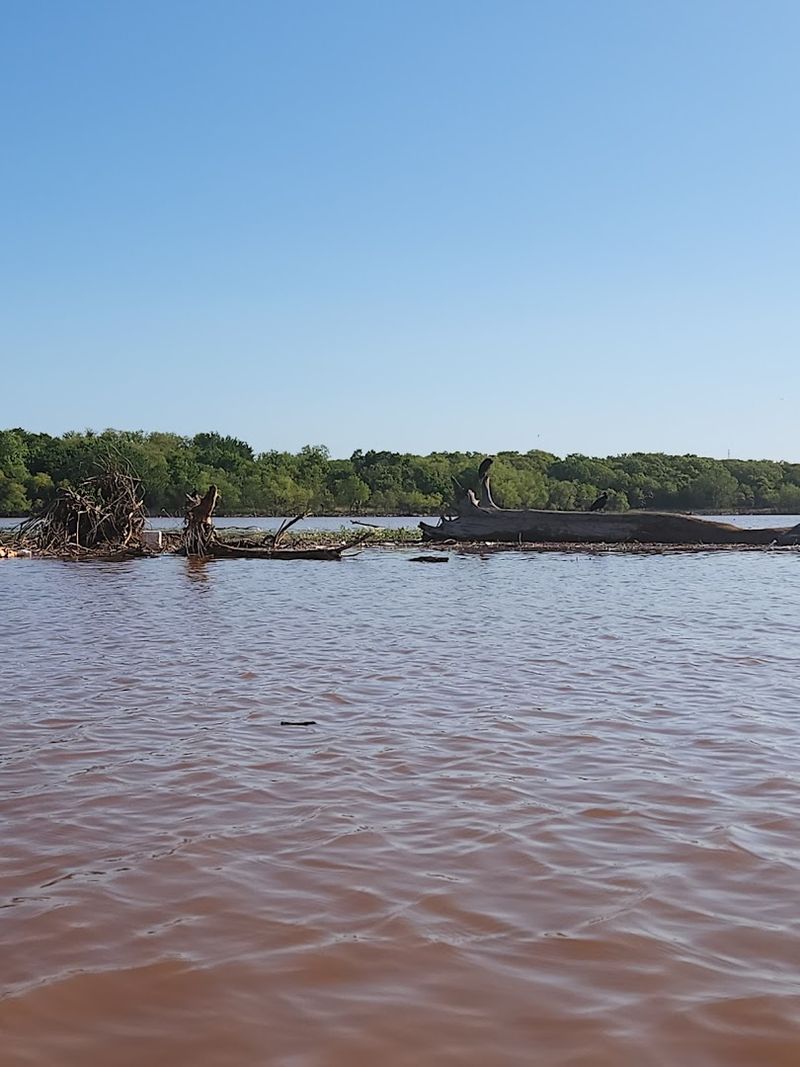
Search and rescue teams have described the lake as challenging to work in because of the low visibility in that red water. Divers have reported disorientation below the surface, which is a real and documented hazard in murky freshwater environments.
The combination of poor visibility, shifting currents from the dam, and the lake’s sheer size creates conditions where accidents can escalate quickly.
None of this is supernatural, of course. But the pattern of incidents over decades, combined with the lake’s already moody personality, has built a story that local families repeat at cookouts and around campfires.
The details shift with each retelling, the way good legends always do. What stays consistent is the feeling that Lake Thunderbird Oklahoma demands respect.
It is not a lake you can be casual with, and most people who have spent real time here will say the same thing without hesitation.
Storm Behavior Unlike Anything Nearby
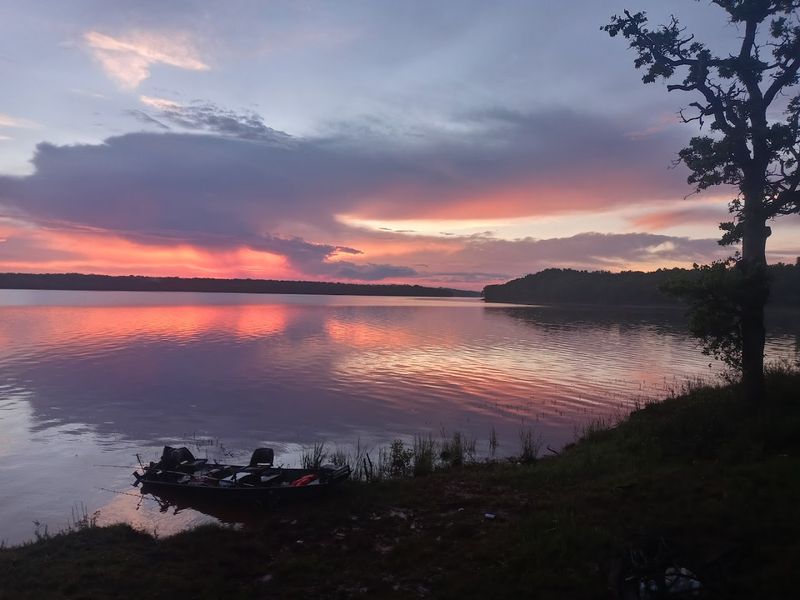
Oklahoma is already famous for unpredictable weather, but Lake Thunderbird Oklahoma has a specific reputation for drawing storms in ways that feel almost personal. The lake sits in a part of central Oklahoma where thunderstorm cells frequently develop and intensify.
Local boaters have learned to watch the western horizon obsessively, because conditions can shift from sunny to dangerous in under twenty minutes.
There is something about large open bodies of water in flat terrain that accelerates storm development. The lake creates its own micro-climate to a small degree, and the surrounding red clay plains offer zero natural windbreaks.
When a storm rolls in, it arrives with full force and nothing to slow it down. Wind on the water can go from calm to whitecap conditions with very little transition time.
Park rangers and the Oklahoma Department of Wildlife Conservation both issue regular advisories about storm safety on the lake, particularly during spring and early summer.
The name Thunderbird suddenly feels very literal when you are caught in the middle of the water watching a purple-black wall of clouds move toward you at speed.
Most experienced visitors check weather apps obsessively before launching a boat here. The storms are not mysterious in origin, but their intensity on this particular lake has contributed heavily to the legend that Lake Thunderbird Oklahoma operates by its own rules.
The Fishing Experience Keeps Anglers Guessing
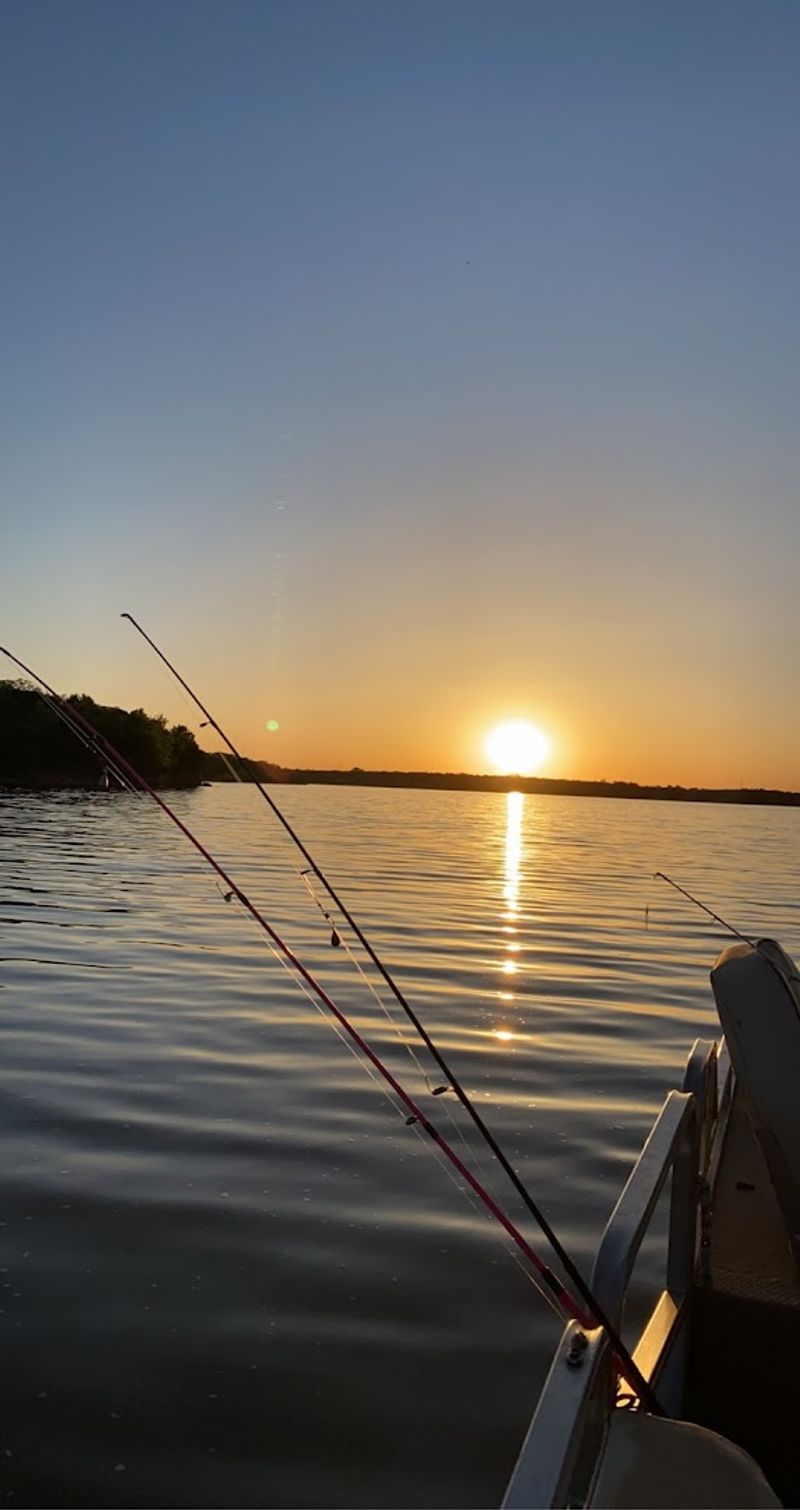
Ask any angler who fishes Lake Thunderbird Oklahoma regularly and they will tell you the same thing with a mix of affection and frustration: this lake keeps you humble. One weekend you pull in catfish and bass like the water is handing them to you.
The next weekend, fishing from the exact same spot with the exact same setup, you get absolutely nothing. The inconsistency is legendary among the local fishing community.
The lake holds a solid variety of species including largemouth bass, channel catfish, white bass, and crappie. The Oklahoma Department of Wildlife Conservation stocks the lake and monitors fish populations, so the fish are definitely in there.
The challenge is finding them through water you cannot see into, in a lake whose depth and structure change with seasonal water levels.
Fishing here requires patience and a willingness to experiment. Early mornings near the coves tend to produce results, especially in spring when bass are moving shallow.
The two marinas on the lake are good sources of local knowledge, and the staff there are usually happy to point you toward where fish have been biting recently. The mystery of Lake Thunderbird Oklahoma is not just a ghost story.
It extends right into the fishing, where the lake will humble you one day and reward you the next with no clear explanation for either outcome.
Hiking Trails With A Slightly Eerie Atmosphere
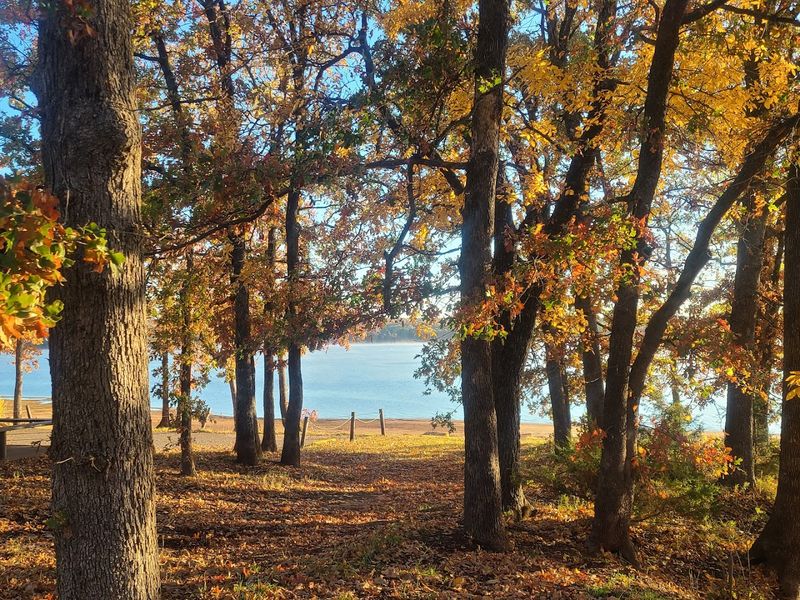
The hiking at Lake Thunderbird State Park is genuinely good, and the trails have a quality that is hard to describe without sounding dramatic.
The red clay soil underfoot, the dense post oak and blackjack oak canopy, and the occasional glimpse of that rust-colored water through the trees create an atmosphere that feels slightly removed from ordinary life.
It is beautiful, but it has an edge to it.
The Clear Bay Trail is one of the more popular routes and follows the shoreline closely enough that you get continuous views of the water. The trail is well-marked and manageable for most fitness levels, but the terrain is uneven enough to keep you paying attention.
Red clay after rain becomes genuinely slippery, and the roots of the old oaks break through the path in unexpected places.
Wildlife encounters are common here. White-tailed deer, wild turkey, and various waterfowl share the park with hikers, and the bird watching along the shoreline trails is excellent.
Tick awareness is essential, especially in warmer months. Wearing long socks and checking yourself thoroughly after any hike is not optional here, it is just part of the experience.
The trails at Lake Thunderbird Oklahoma reward people who slow down and pay attention to the details, because the atmosphere builds gradually the deeper you go into the woods.
Camping Where The Night Sounds Are Intense
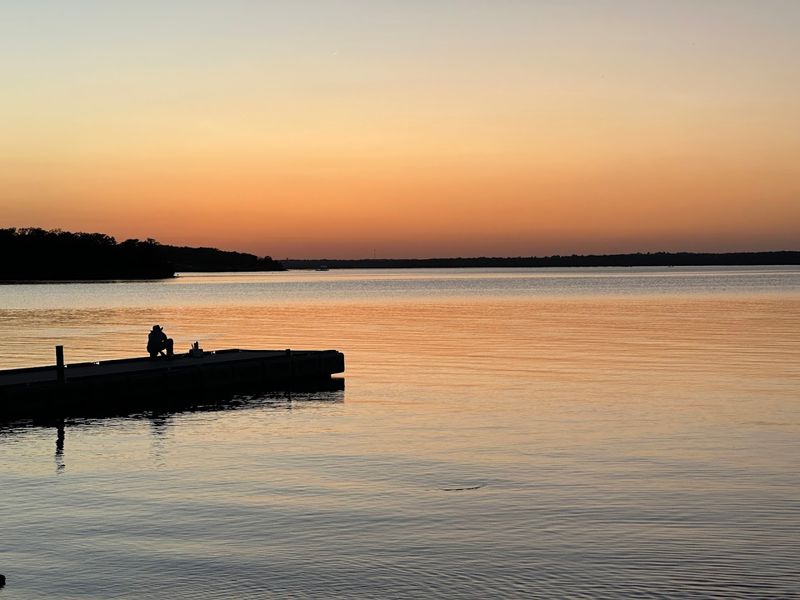
Camping at Lake Thunderbird Oklahoma is the kind of experience that sorts people into two camps pretty quickly. Some people find the nighttime sounds soothing.
Others find them deeply unsettling and spend half the night convincing themselves that every splash from the water is completely normal. Both reactions are valid, because the lake at night is genuinely atmospheric in a way that daytime visits do not fully prepare you for.
The campgrounds are well-maintained and offer options ranging from full hookup RV sites to more basic tent camping areas. The South Dam campground is a popular choice for those who want to be close to the water.
Camp hosts are present during the season, and ranger patrols keep the park orderly, which is reassuring when you are lying in a tent listening to something splash in the dark water twenty feet away.
Geese are everywhere, and they are loud and completely unbothered by human presence. Frogs in the shallows create a wall of sound after dark that is impressive in volume.
Add the occasional night bird and the sound of wind moving across the water, and the sensory experience of camping at Lake Thunderbird Oklahoma becomes something you remember clearly long after you have packed up and gone home.
Bring a good tent, solid tick repellent, and a healthy appreciation for dramatic atmosphere.
Boating And The Hazards Nobody Warns You About
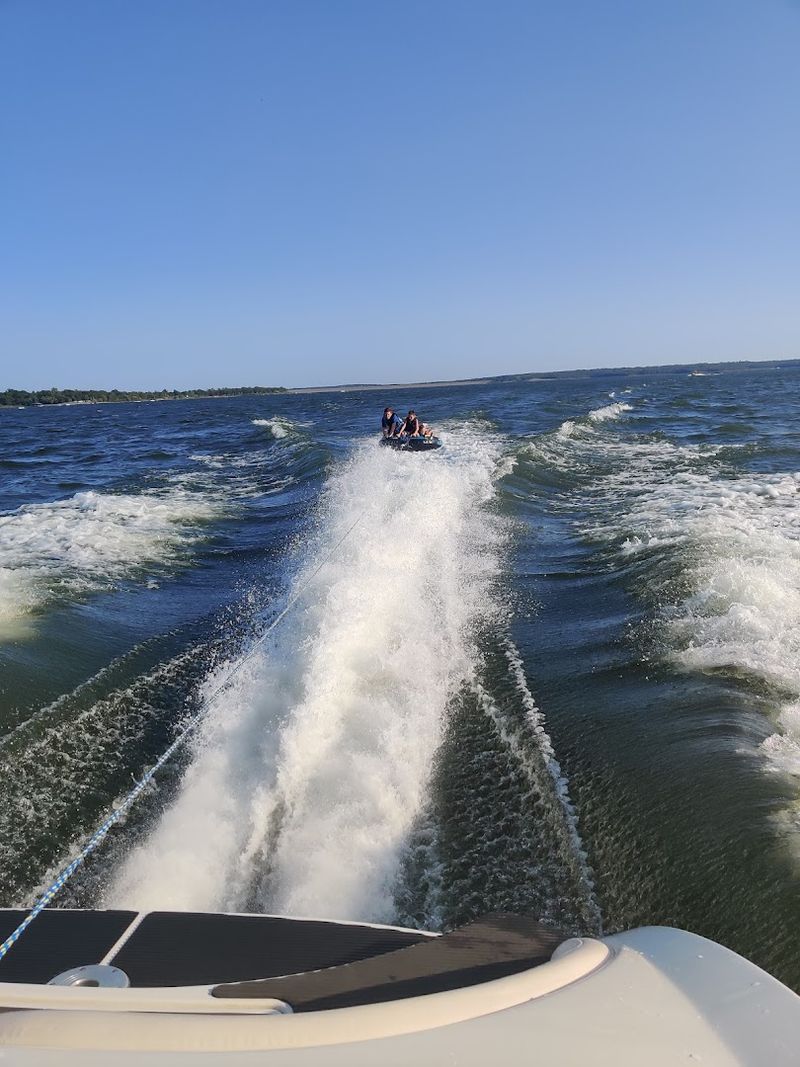
The two marinas at Lake Thunderbird Oklahoma serve as the main access points for boating, and on a calm weekend morning the lake looks completely inviting. The water is wide open, the shoreline is wooded and scenic, and the 6,070 acres of surface area give you plenty of room to move.
It looks like a straightforward recreational lake. Then you spend a few hours on it and start to understand why experienced boaters here have a particular kind of watchfulness.
Submerged obstacles are a real concern. The lake was created by flooding an area that included roads, structures, and natural terrain features, and not all of those have been fully charted at every water level.
When the lake drops during dry periods, new hazards emerge that were not there during your last visit. Boat ramps also vary in quality, and some have seen better days, so launching and retrieving requires care.
Weather shifts quickly here, as already mentioned, but the combination of poor water visibility and sudden wind is particularly challenging for boaters. Whitecap conditions on a lake this size can develop fast enough to catch even experienced operators off guard.
The Oklahoma Department of Wildlife Conservation enforces boating regulations on the lake, and life jackets are not just recommended here. They are the kind of item that locals treat as non-negotiable every single time.
Wildlife Encounters Worth Slowing Down For
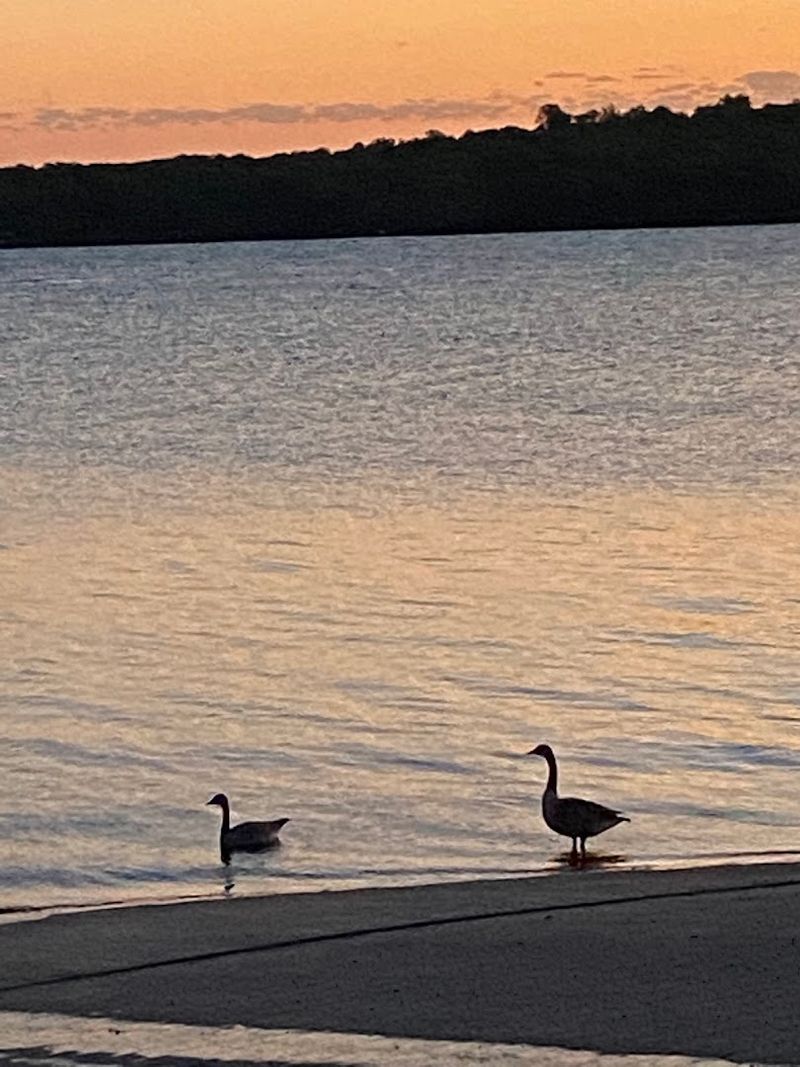
The wildlife at Lake Thunderbird Oklahoma is one of the park’s most underrated features, and it tends to surprise visitors who come expecting a standard reservoir experience.
The park encompasses a significant amount of wooded shoreline and upland habitat, and the mix of water, forest edge, and open grassland creates conditions where multiple species thrive in close proximity to each other.
White-tailed deer are a constant presence, particularly in the early morning and late afternoon hours when they move along the shoreline and through the campground areas with casual confidence.
Wild turkey flocks are common in the wooded sections, and watching a group of turkeys navigate the red clay hillsides is oddly entertaining.
Bald eagles have been spotted over the water during winter months, which is always a moment that stops whatever you are doing cold.
The birdwatching in general is excellent throughout the year. Herons, egrets, and various duck species work the shallows constantly, and the shoreline vegetation provides cover for smaller species.
Reptile enthusiasts will find the lake area productive as well, with various turtle species sunning themselves on logs near the water’s edge. The wildlife at Lake Thunderbird Oklahoma does not need mystery or legend to be compelling.
It earns its own attention just by showing up reliably and putting on a quiet, continuous show.
Practical Things To Know Before You Go
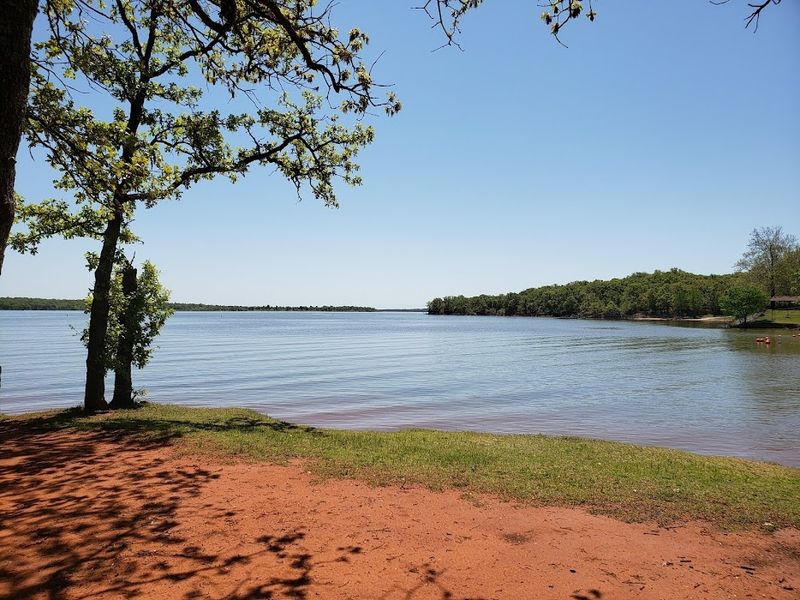
Lake Thunderbird Oklahoma is located in Lake Thunderbird State Park near Norman, Oklahoma, roughly 20 miles southeast of Oklahoma City. The park address is 13101 Alameda Drive, Norman, OK 73026, and it is managed by the Oklahoma Tourism and Recreation Department.
Knowing a few practical details before you arrive makes the whole experience smoother and lets you focus on the actual adventure rather than logistics.
A parking permit is required for day use, and annual passes are available for those who plan to visit multiple times. The park has multiple entry points and the signage inside can be a bit confusing on a first visit, so downloading a trail map before you arrive is a smart move.
Cell service is generally available but can be inconsistent in some of the more remote camping areas.
Tick prevention is serious business here, especially from spring through early fall. Wear long pants, tuck socks over pant legs, and do a full body check after any time in the vegetation.
Goatheads, a type of thorny burr, are present in some areas and will embed themselves in shoe soles and gear with impressive efficiency. The lake rewards visitors who come prepared and treat it with the respect a place of its reputation deserves.
Come ready for real nature, not a manicured park experience, and you will leave with stories worth telling.
Dear Reader: This page may contain affiliate links which may earn a commission if you click through and make a purchase. Our independent journalism is not influenced by any advertiser or commercial initiative unless it is clearly marked as sponsored content. As travel products change, please be sure to reconfirm all details and stay up to date with current events to ensure a safe and successful trip.
