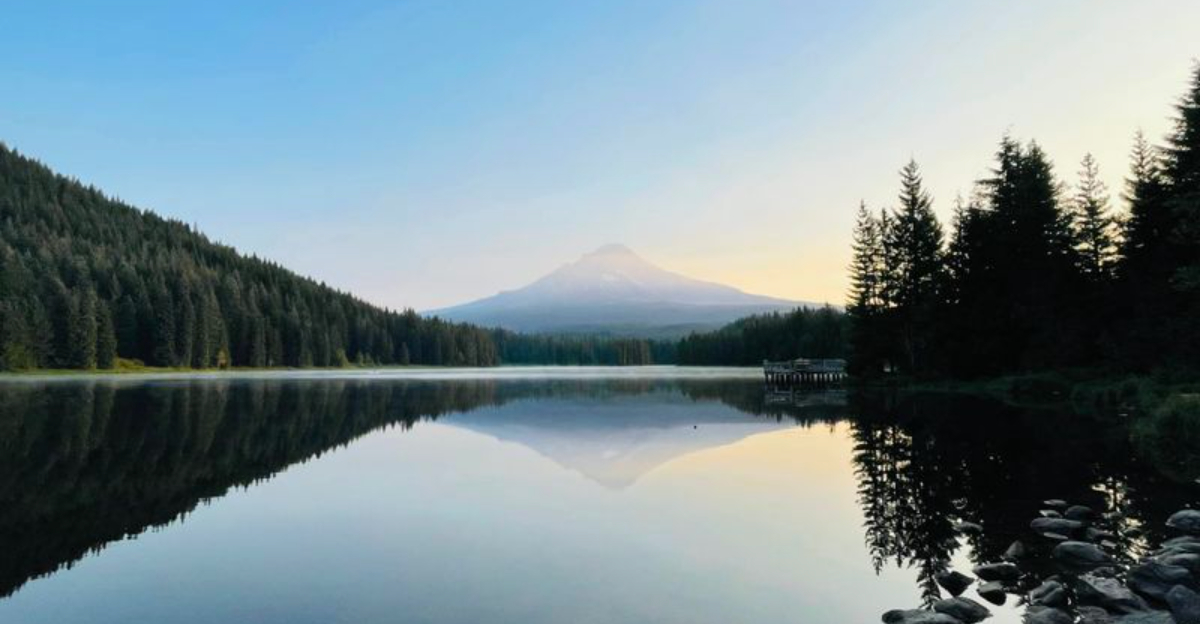
Some winter days you just want an easy win, not a whole expedition.
Trillium Lake gets you exactly that, with Mount Hood sitting right ahead like the view is doing the work for you.
This is a quick, low-stress stop that still feels exciting the moment you step out of the car.
Start with a drive to Government Camp and throw on a few warm layers.
Then head to the shore and let the scenery hit you fast.
The snow is usually packed, the routes are groomed, and you do not need anything fancy to enjoy it.
Walk a bit, take photos, sip something warm, and call it a great winter day.
Stay an hour or hang out until the light shifts and the lake gets that soft, quiet look.
If you have been craving a place that makes your day feel lighter right away, this is it.
First Glimpse Of Mount Hood Across The Ice
Want a winter view that hits fast without a long hike?
Trillium Lake Day Use Area off Forest Road 2656 near Government Camp delivers it fast.
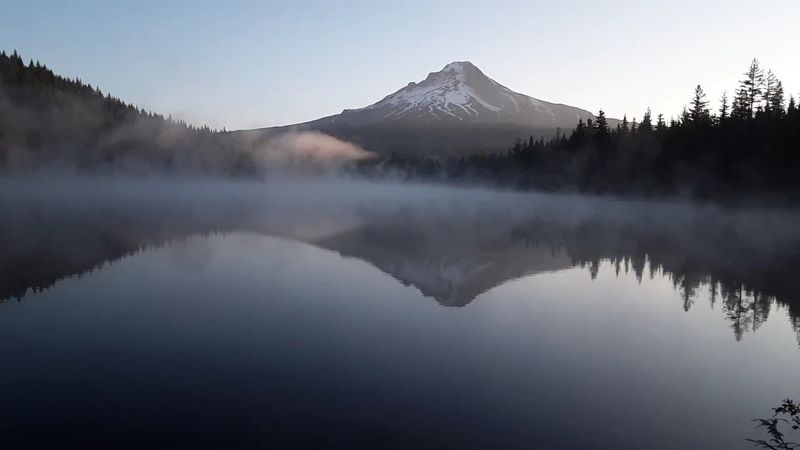
Step out, look up, and Mount Hood sits clean and centered across the lake.
Near shore, winter ice often gets a snow-dusted texture, while the middle can look darker and glossy.
The path from the parking lot drops to the shoreline in a few steady steps.
No wandering, no guessing, just an open view framed by evergreens.
For photos, drift left for a wider foreground or right for a tighter frame, and Hood stays centered.
Want a shot that looks composed before you even try?
Listen for faint creaks and pops, and take them as your cue to stay on packed routes.
Conditions change day to day, so check signs and posted guidance before stepping onto uncertain ice.
Then take one slow breath, look up again, and pick your next hour, quick stroll or longer loop.
You’re minutes from town, but it feels like a quiet reset.
If you only have time for one stop, this is the one that makes the drive feel worth it.
Start here, soak in the straight-on view, and save the longer loop for later.
Easy Drive In From Government Camp
The best part about Trillium Lake is that getting there usually isn’t the hard part.
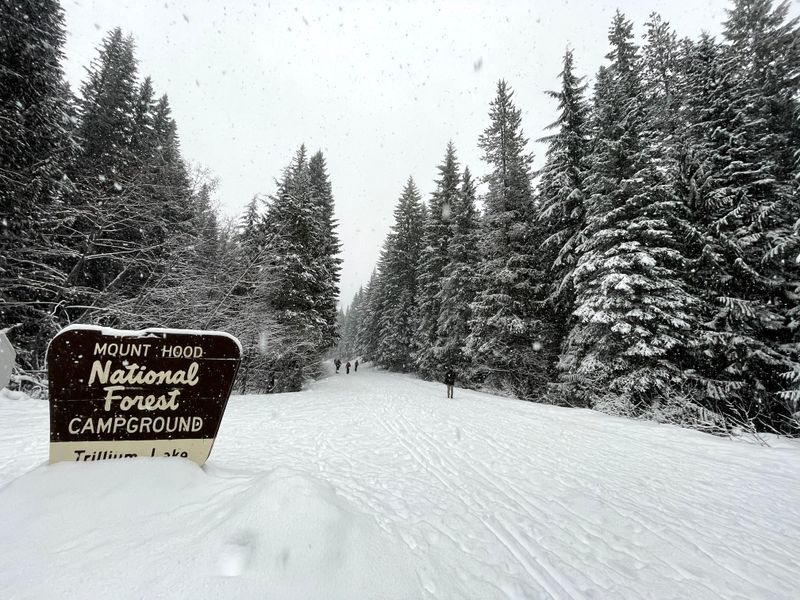
From Government Camp to the Trillium Lake Sno Park and Day Use Area, the drive is short, direct, and typically well signed.
You peel off the main routes near town, follow the forest roads toward NF 2656, and the landmark names show up right when you start wondering if you missed a turn.
Less guesswork means you arrive calmer and actually ready to enjoy the snow.
You still need the basics like traction, warm layers, and a forecast check, but this route feels familiar if you have driven mountain roads before.
The drive itself is part of the mood, because you slip through tall trees, hit the spur, and then it’s suddenly lake time.
Government Camp also makes it easy to pivot if you forgot something or want to adjust your timing.
You can grab a missing layer, warm up for a few minutes, or squeeze in a quick ten minute walk on nearby paths before heading over.
That flexibility keeps the day feeling relaxed instead of locked in.
Parking rules can change with conditions, so look for posted guidance at the Trillium Lake Day Use Area and note any seasonal requirements.
Once you’re parked, you can step straight onto packed trails, which saves energy for the longer loop later.
It’s a simple drive, a clean exit, and an easy transition from car to winter mode.
Snowshoe Loops That Start Right By The Parking Lot
Some trails are perfect because you can keep them short or turn them into a whole thing.
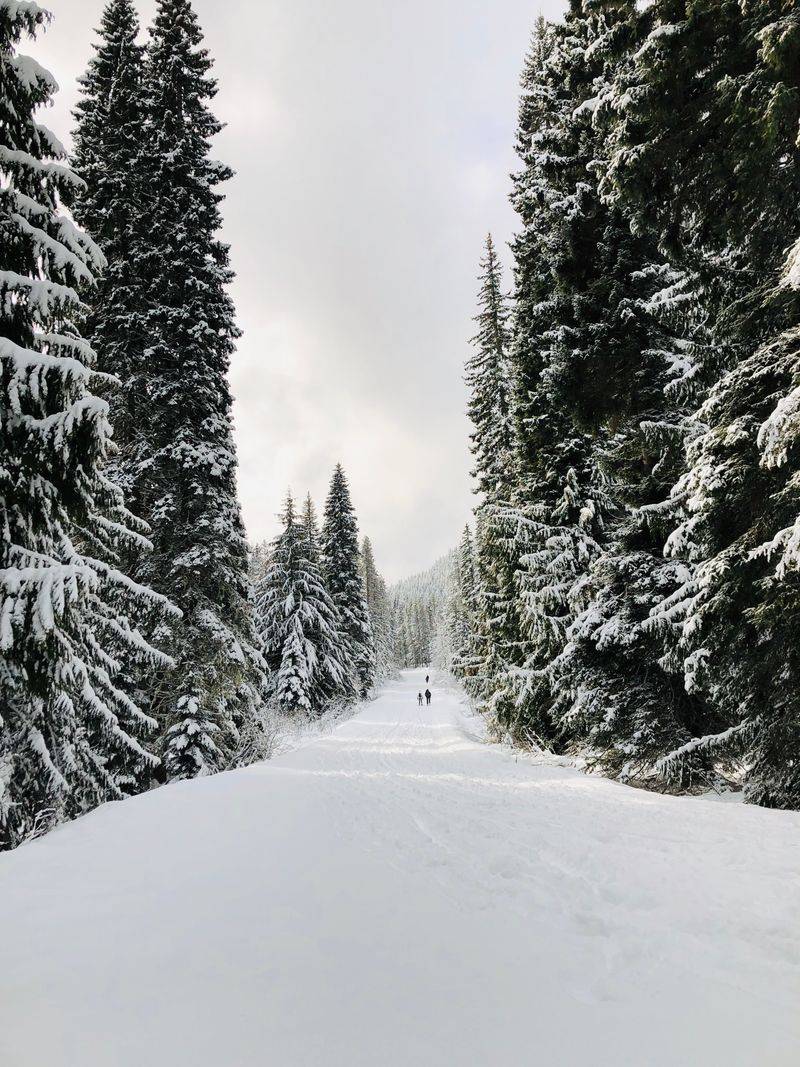
At Trillium Lake, the snowshoe routes start close to your car and give you clear choices right away.
From the Day Use Area on National Forest Road 2656 near Government Camp, you can follow the lake edge or cut a smaller loop through the trees.
The surface is often packed down by frequent use, so a steady pace usually feels smooth and relaxed.
Are you here for water views or that quiet, sheltered forest feel?
Stay near the shoreline to keep Mount Hood in your sightline, or head inland for muffled sound and less wind.
You can even do both in one visit if you split your time.
If you’re figuring out your pacing, set a turnaround time instead of committing to a full lap.
When you hit that mark, decide whether you want more or if you already got what you came for.
The terrain rolls gently, so you can extend in small bites without drifting too far from the lake.
Watch for signs, follow any closures, and give sensitive areas plenty of space.
Poles help on side slopes, and an extra pair of dry gloves can save the second half of your walk.
Most routes naturally funnel you back toward the lot, so navigation stays easy.
This place rewards time on your feet more than time spent planning on your phone.
Sunrise Steam Rising Off The Lake Edge
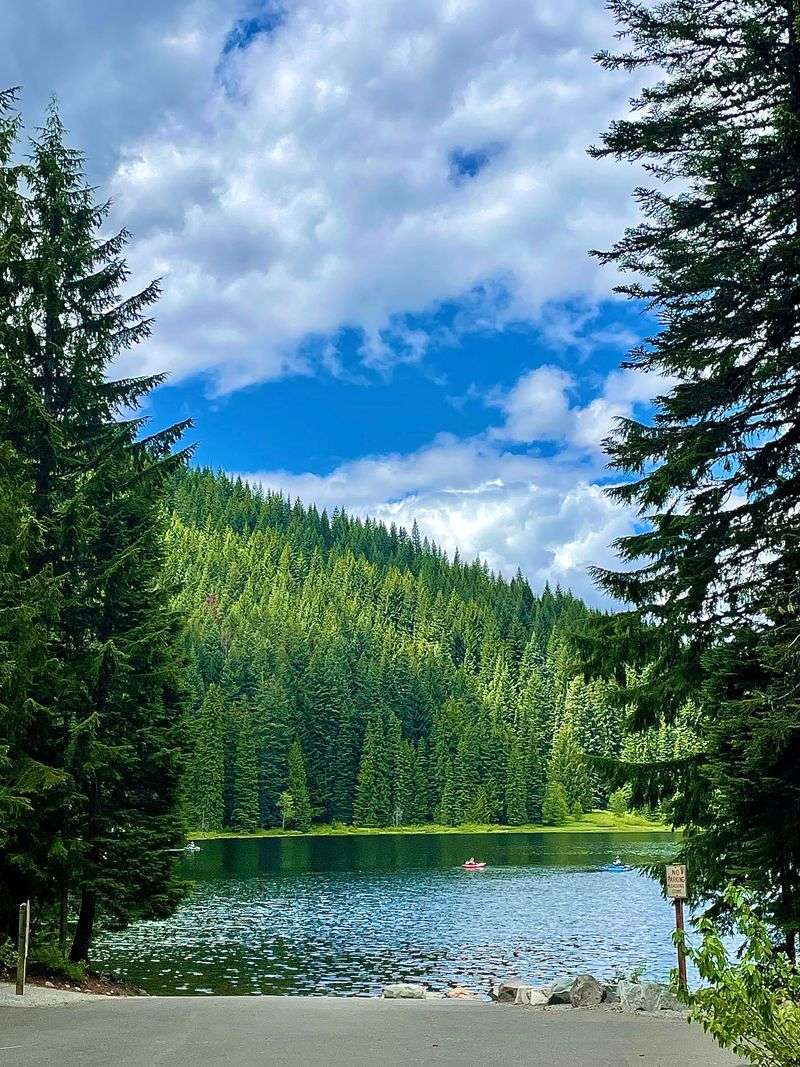
Set the alarm once and you’ll understand why people swear by sunrise at Trillium Lake.
At first light, you can sometimes catch thin steam drifting along the edges where water stays open.
The shoreline makes it easy to frame Mount Hood with frosted grasses right at your feet.
The light builds slowly, so you get multiple looks without hiking around.
Have you noticed how winter mornings make everything sound sharper?
Bird calls feel crisp, the trees stand out hard against the sky, and the quiet lands differently when the day is brand new.
Pick a safe, packed spot on shore and keep your setup simple.
Use a small tripod if you brought one, or steady your camera on a bag and call it good.
Watch the steam ribbon across the surface, then adjust your frame as the colors shift.
Mount Hood stays steady while the foreground changes the whole mood.
If your hands go numb fast, swap gloves and keep a dry liner pair ready.
Once the sun clears the ridge, walk a little along the edge for fresh angles without losing your base spot.
You’ll leave with photos that tell a clean story in one scene.
Early light, quiet water, and Oregon winter doing its best work.
Quiet Shorelines Made For Thermos Breaks
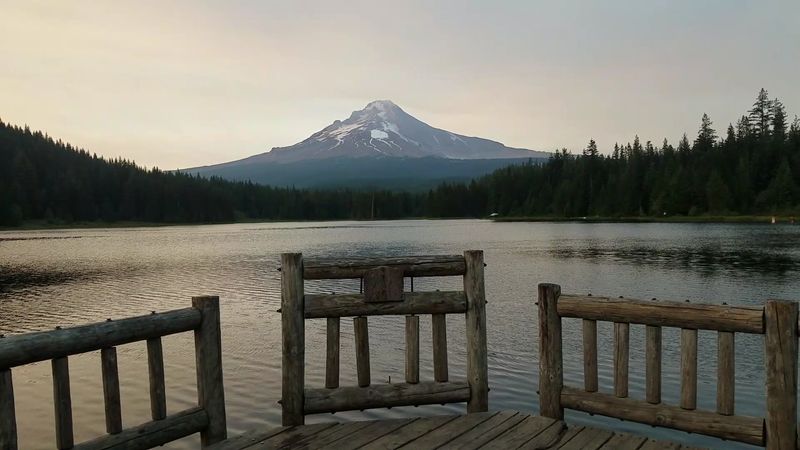
Cold air has a way of making a hot drink feel like a luxury.
The lake edge is an easy spot for a quick thermos break.
Find a downed log or a flat snow bench and tuck in behind a berm near the trees.
The wind drops fast there, and the view still feels big even if you’re sitting low.
Are you the kind of person who plans a “real” break, or do you just stop when your hands demand it?
Either way, this is a simple reset that works between laps or right before the walk back.
Keep your lid tight and pack out every scrap, even the tiny stuff that’s easy to miss in snow.
Set the thermos on something firm so it doesn’t sink and tip over.
If you carry a small sit pad, this is exactly when it earns its spot in your bag.
Take a few slow sips, look up at Mount Hood, and let your pace come back down.
Before you stand, check your fingers and adjust your layers so you don’t get cold the second you start moving again.
Then pick a direction and aim for the next corner of shore.
If you’re with a group, call this halftime and choose a simple landmark for the next stop.
Little pauses like this make winter in Oregon feel friendly.
Photo Spots That Make Winter Look Effortless
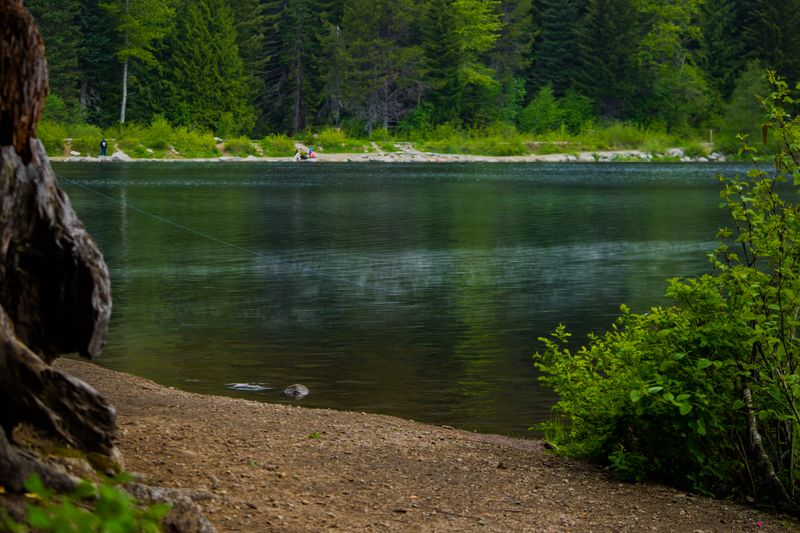
If you want photos that work without a long setup, Trillium Lake makes it easy.
The shoreline serves up ready made frames in almost any conditions.
Start simple with a curve of shore in the foreground and Mount Hood steady in the background.
Water or ice usually anchors the scene, while the trees add clean vertical lines.
Ever freeze up deciding which lens to use at a winter lake?
Go wide for context, then tighten in on a ridge line or tree cluster and keep moving.
Small lens changes here matter more than covering distance.
If reflections show up, shift a few feet until the frame snaps into symmetry.
When the surface is textured, let snow lines lead the eye instead of fighting the pattern.
Dropping low can turn footprints into guides instead of distractions.
Keep your hands warm so adjustments stay quick and confident.
When clouds thin, work the side light to add depth to the trees and definition to Mount Hood.
Later, flat light brings a softer, cleaner look that still holds detail.
Rotate viewpoints along the near shore and small pier areas when they’re open.
Always respect closures and posted guidance as conditions change.
You’ll walk away with a varied set of images without ever leaving the basin.
It’s a tidy win for winter shooting in Oregon.
Afternoons When Ski Crowds Head One Way And You Go Here
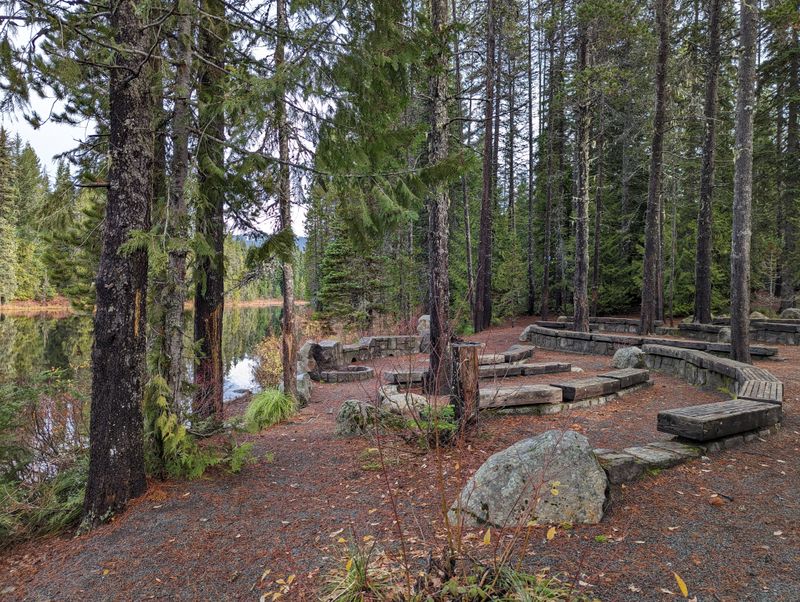
If crowds drain your energy, late afternoon at Trillium Lake is the easiest way to get the place back to yourself.
Show up when most people are finishing ski laps and driving out, and the whole shoreline starts to feel calmer.
You get longer shadows, cooler tones, and fewer voices drifting through the trees while the light slowly drops.
Do you like moving at a steady pace without constantly stepping aside or waiting your turn for a view?
Start with the near loop at your own rhythm, then add a short forest spur before easing back toward the water again.
It’s a route that feels natural in fading light, and it keeps you close enough to the lake to pivot anytime.
If you brought a camera, this is the moment to try a different look, like silhouettes on the ridge or clean contrast against snow.
Then pocket it for a few minutes and just walk, because the cold feels less sharp when the day stops being a checklist.
Keep an eye on the sky if the forecast is clear, since early stars can show up sooner than you expect.
Bring a headlamp and traction for the last stretch, and let the trail guide you back without extra navigation.
Before you leave, pick one last shoreline spot, take a slow breath, and let the quiet be the ending.
Blue Hour Walk Back Under Tall Trees
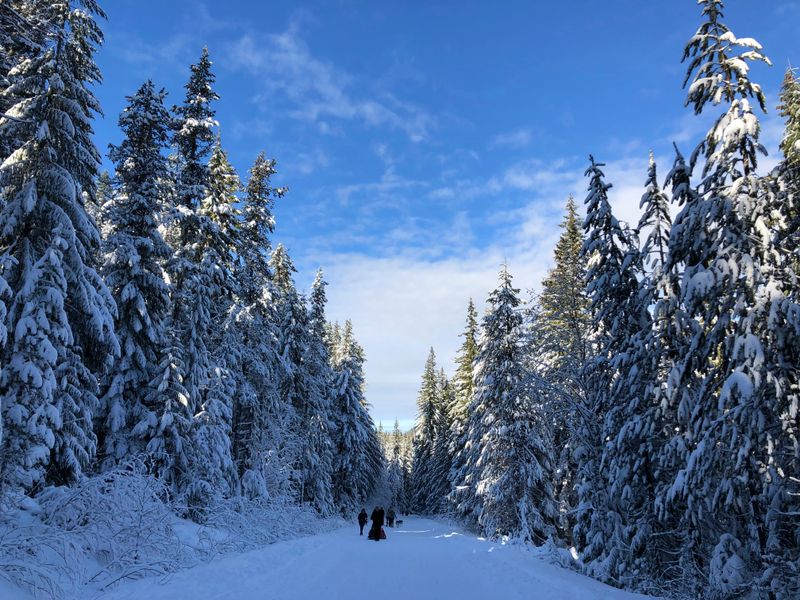
Blue hour is the sweet spot when the day isn’t over, but it finally stops asking things from you.
Start from the shoreline and follow the packed track as it climbs gently under tall firs that hold onto the last cool light.
The route feels obvious in the best way, with snow-soft edges and tree trunks that naturally guide where your eyes go.
You’ll still see texture underfoot, but the color stays true, which keeps the whole scene calm instead of harsh.
This isn’t a dramatic, windy overlook kind of moment, and that’s exactly why it works so well after a full loop.
As dusk settles, the temperature usually drops a notch, so seal your cuffs and pull your hood before you start moving.
Every little gap in your layers shows up fast once you’re walking uphill.
When the trees thin out, pause for a quick look back toward Mount Hood, then keep going as the trail narrows again.
Keep voices low and notice how sound carries in the still air, even when you’re barely talking.
On the way back, watch your footing where the packed track can turn slick, especially near small rises and shaded sections.
When you reach the lot, take a second to confirm access and any posted rules if you’re extending the evening elsewhere.
Then lock in a quick mental snapshot of that color shift in the trees before real night takes over.
It’s a quiet ending that makes an Oregon winter walk stick in your head for days.
Cozy Mountain Stays Just Up The Road
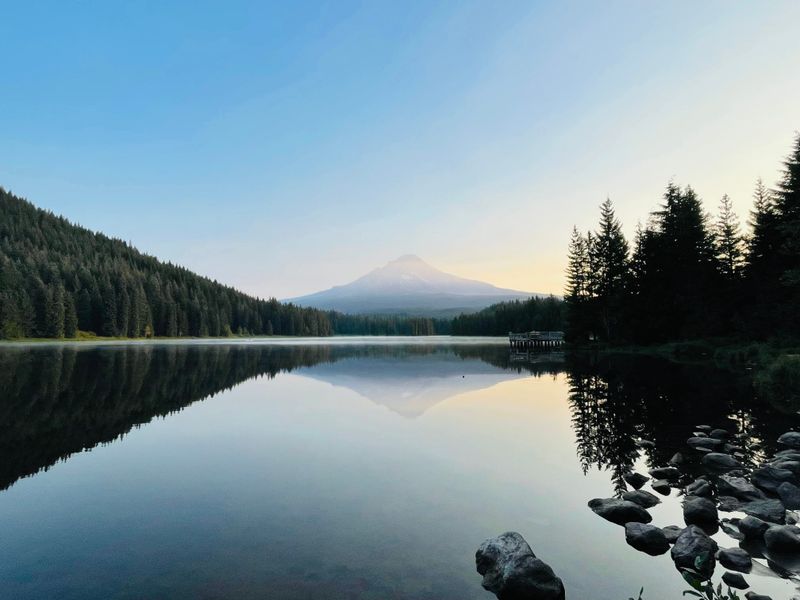
If you want the lake time without the “where do we sleep” headache, base yourself in Government Camp.
Staying nearby means you can treat Trillium Lake like a quick outing instead of an all-day production.
You get cozy lodging options, then make short drives back for sunrise, a midday loop, or that late-afternoon quiet.
The distance is small, the comfort boost is real, and your morning start gets way easier.
Have you ever loved having a reset space after a cold session?
A warm room to dry gloves, repack layers, and check the forecast turns tomorrow into a sure thing instead of a maybe.
It also makes you more willing to go back out, because you’re not starting the next round already chilled.
The village core keeps things simple when you need food, a missing layer, or one last supply run.
Park once, walk to what you need, and skip the extra driving that eats up daylight.
Then you can actually rest, not just “pause,” before the next window of light at the lake.
Pick the time you want to be back on the shore and set alarms like you mean it.
When you return, the route feels familiar and the logistics stop taking up brain space.
You can settle into the walk faster, with more energy for the part you came for.
Close it out with one more look at Mount Hood, then head back as the trees shift into that blue evening tone.
It’s a clean loop between nature and comfort, and it makes winter feel doable instead of stressful.
Dear Reader: This page may contain affiliate links which may earn a commission if you click through and make a purchase. Our independent journalism is not influenced by any advertiser or commercial initiative unless it is clearly marked as sponsored content. As travel products change, please be sure to reconfirm all details and stay up to date with current events to ensure a safe and successful trip.
