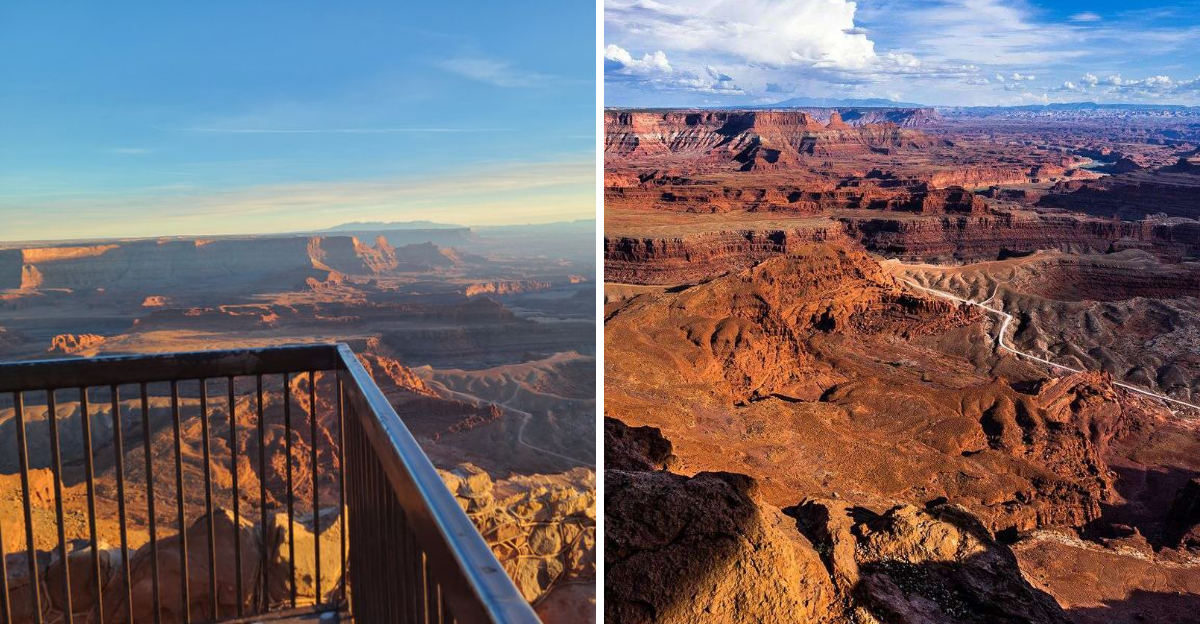
You think one visit will cover it, but Dead Horse Point State Park reveals new angles every time the light shifts or the season changes.
Sunrise paints the buttes with soft peach tones that feel tender, while sunset drapes the canyon in molten copper that looks almost unreal.
Trails unwind along the rim and each bend presents a fresh composition that keeps your camera hand twitching.
A clear night flips the script as the sky opens to a river of stars that makes the Colorado River below seem like a shadowed echo.
Come curious, leave planning your return because Utah magic rarely fits into a single day.
The overlook that makes time slow down
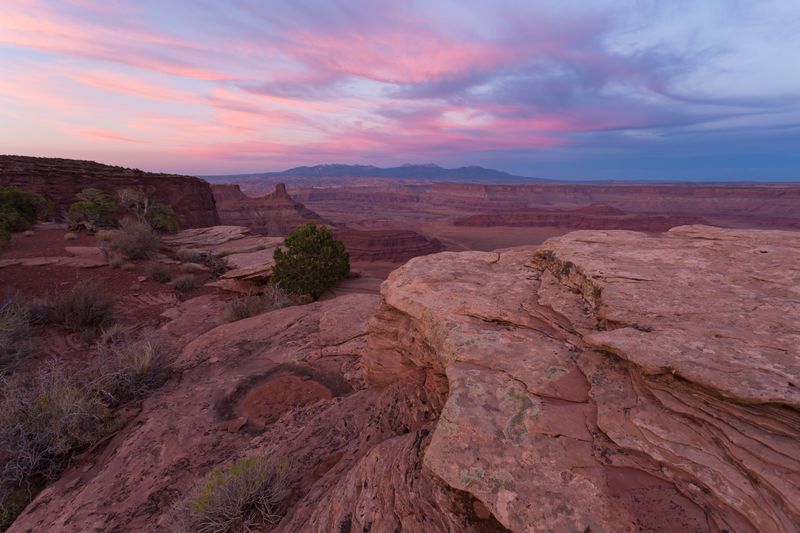
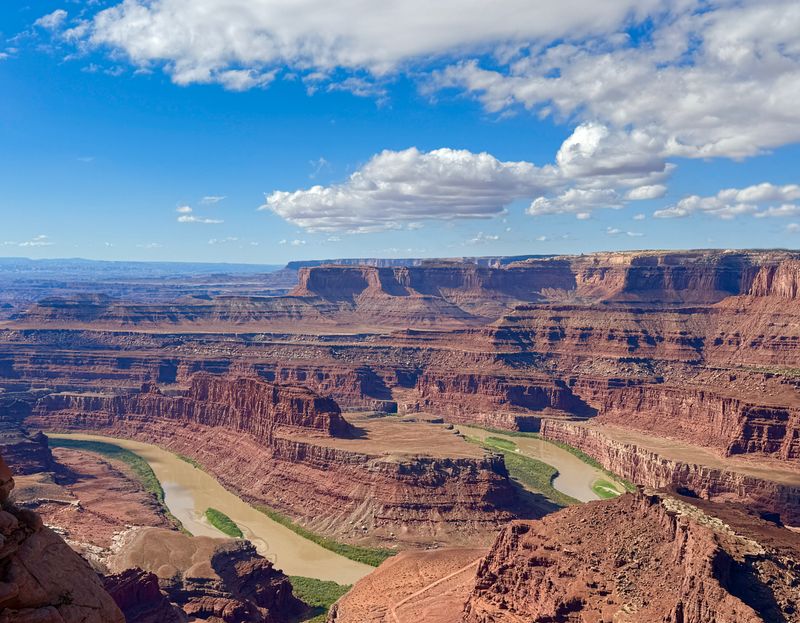
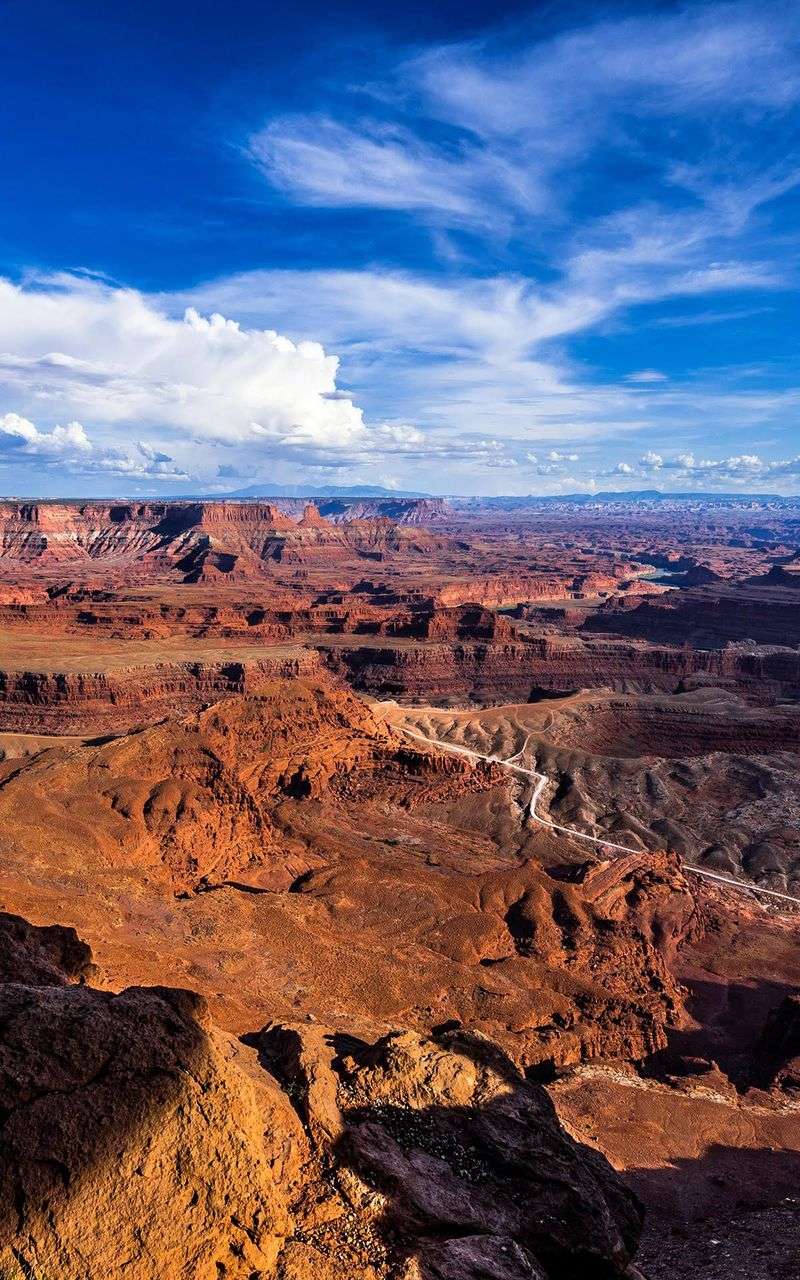
The main overlook at Dead Horse Point State Park delivers a sweeping view of the Colorado River looping through tiered red rock that feels almost architectural.
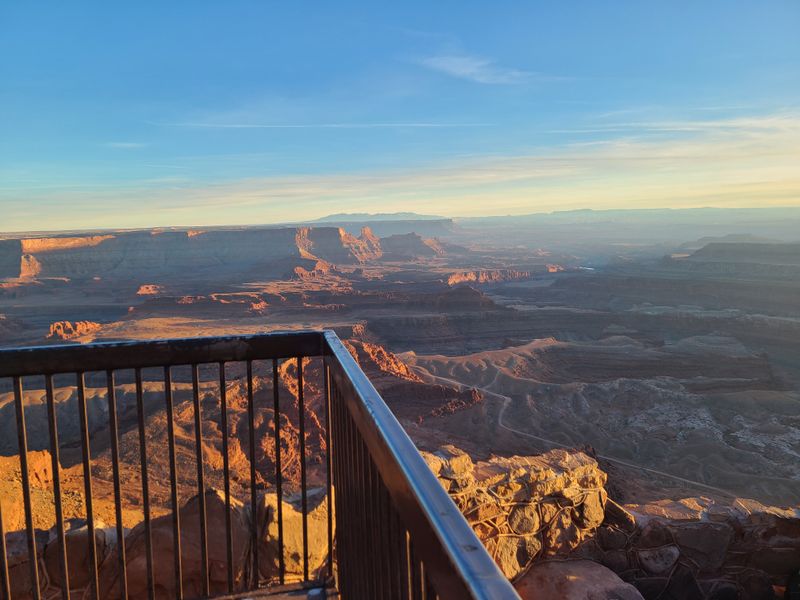
Arrive twenty minutes before sunrise and the canyon glows with pinks and violets that change by the second.
Stay until the sun clears the La Sal Mountains and watch shadows shrink while details sharpen across the terraced cliffs.
Midday light is harsh but still reveals subtle layers of geology that stack like pages.
Late afternoon brings gentle contrast that flatters photos and restores depth to every ridge.
There is a sturdy railing along the rim, yet you should still step carefully and mind the wind.
The viewpoint sits at roughly 5,900 feet, so bring water and pace yourself with the elevation.
On clear days you will see Island in the Sky across the distance and the river carving patient curves below.
Clouds add drama and reflect peach tones that feel unreal in Utah’s dry air.
Use a wide lens for the sweep and a short telephoto for the bends in the river.
Tripods are helpful at dawn and dusk, though handholding works once the light strengthens.
Pack a light layer even in summer because mornings can feel crisp.
Winter visits reward you with quiet overlooks and occasional frosting of snow that heightens contrast.
Monsoon season can brew fast storms that demand caution and quick shelter.
Read the sky, respect the rim, and give each minute room to stretch while the canyon slows the clock.
Rim trails for every mood
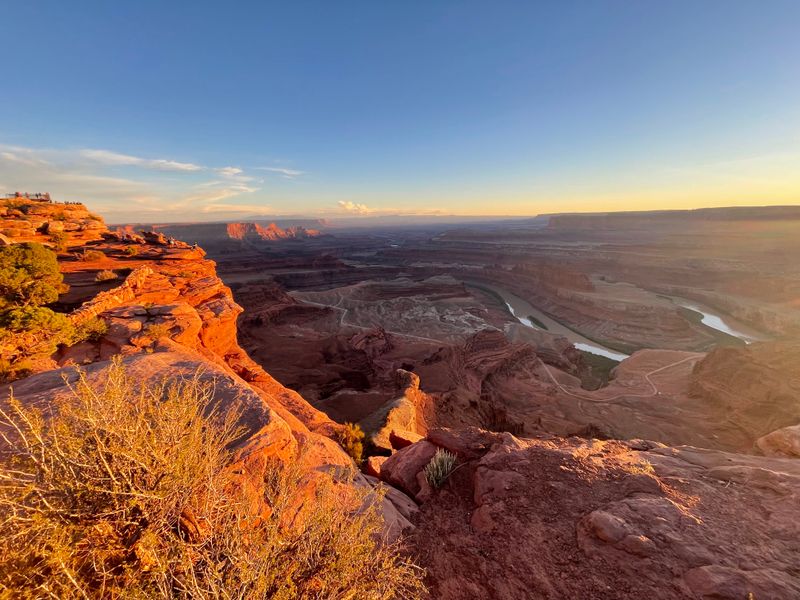
The East Rim and West Rim Trails circle the heart of Dead Horse Point State Park with choices that fit quick strolls or focused half day hikes.
Expect mostly slickrock and packed dirt with occasional steps and cairns that mark the way.
Footing is generally steady yet requires attention near exposed edges.
The West Rim offers long looks toward Canyonlands while the East Rim angles toward the La Sal Mountains.
Link both rims for a loop that samples different light and varied textures along the plateau.
Carry two liters of water per person during warm months because shade is limited.
Trail signs are clear and distances are posted at junctions for easy planning.
Benches appear at key overlooks where you can linger with binoculars and breathe.
Wildflowers punctuate spring walks with penstemon and primrose brightening the rust colored ground.
Autumn brings crisp air and sharp visibility that makes distant mesas feel close.
Pets on leash are allowed on most trails, so check current rules on the park website before you go.
Start early to reduce heat exposure and to catch wildlife like ravens riding thermals.
GPS apps help but are not required if you stay on signed paths.
Storms can turn slickrock into a skating rink, so step carefully when surfaces are wet.
Finish near golden hour on the West Rim for soft textures and easy photography.
Mountain biking the Intrepid system
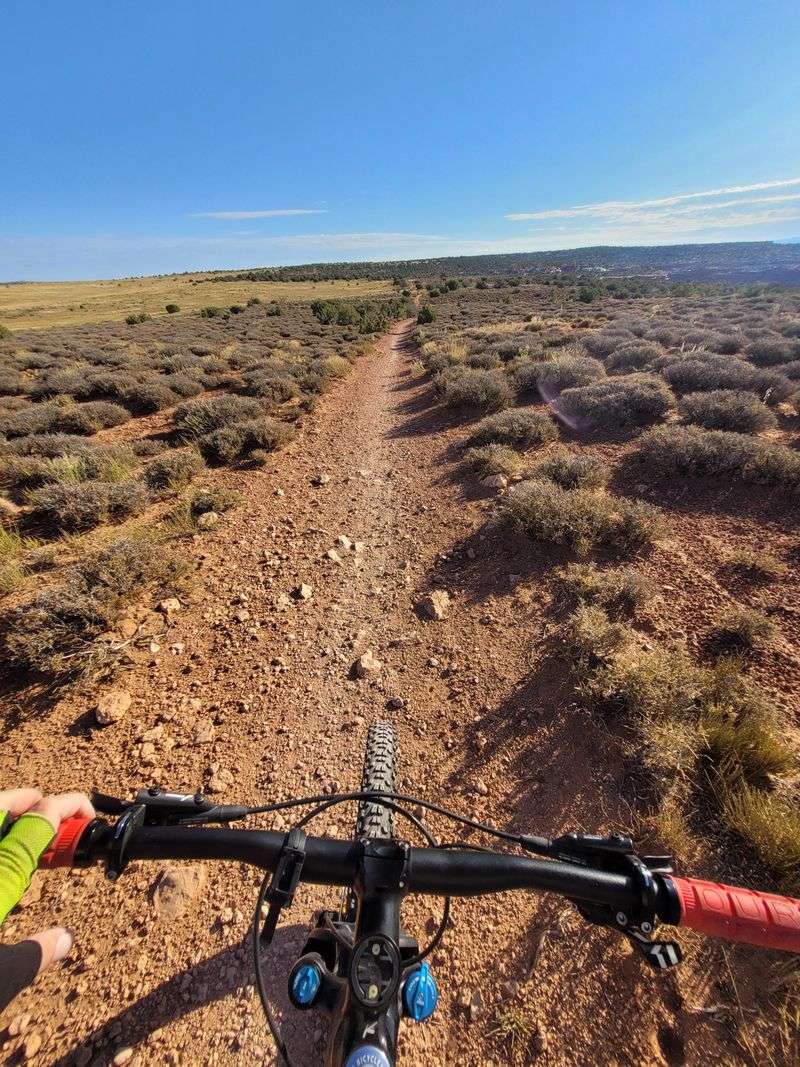
The Intrepid Trail System threads beginner to intermediate singletrack across slickrock benches with big views that are friendly to a wide range of riders.
Trailheads sit near the visitor center with clear wayfinding and stacked loop options.
Expect gentle rollers, short ledges, and wide sightlines that favor rhythm over technical moves.
The Intrepid, Raven Roll, and Great Pyramid loops suit newer riders who want scenery without stress.
Experienced cyclists can add Big Chief or Pyramid for longer mileage and stronger legs.
Surface mixes include sand pockets and grippy sandstone that rides best when dry.
Bring plenty of water since summer heat in Utah can empty bottles fast.
E bikes with Class 1 ratings are sometimes permitted on designated routes, so verify current regulations before arrival.
Yield to hikers, announce passes, and keep speeds reasonable near blind corners.
Midmorning light helps spot undulations while avoiding early chill or afternoon glare.
Repair kits and a spare tube are essential because thorns and sharp rock do not forgive.
Rental shops in Moab can set you up with bikes and helmets sized correctly for comfort.
Trails close temporarily after heavy rain to protect surfaces, so check conditions online.
Photography breaks are part of the fun, so budget time to stop at overlooks along the loops.
End the ride near sunset for shadow lines that carve the terrain into sculptural waves.
Starry nights and Utah dark skies
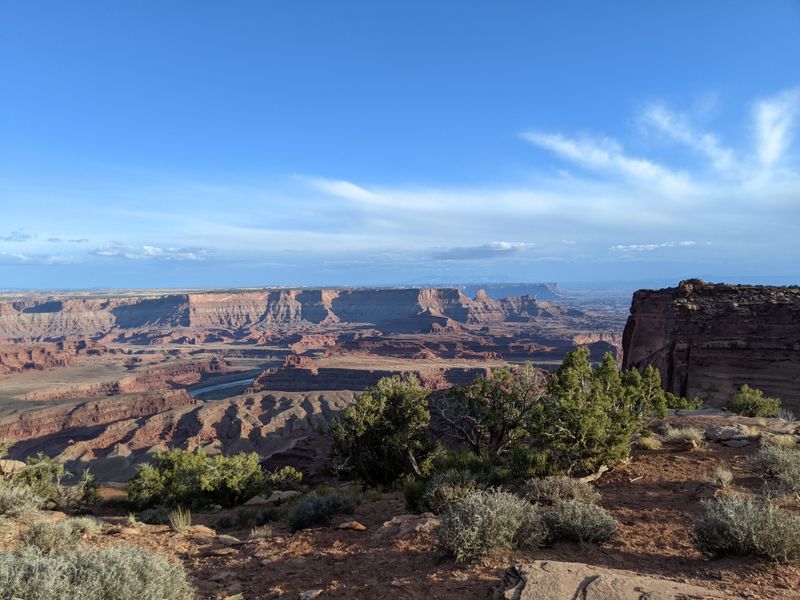
Dead Horse Point State Park holds International Dark Sky Park status that rewards patient stargazers with bright constellations and a creamy Milky Way on moonless nights.
Plan around the lunar cycle so the sky stays dark enough to reveal faint detail.
Check forecasts for wind and clouds since high thin layers can mute stars without warning.
Rim areas near the main overlook offer wide sky, while quieter pullouts reduce distractions.
Bring a red light headlamp to preserve night vision and be courteous to others.
Tripods and fast lenses make astrophotography easier, but any camera can capture star trails with longer exposures.
Temperatures drop quickly at elevation, so pack insulated layers and hand warmers.
Winter skies can be exceptionally transparent when cold air scrubs haze from the horizon.
Summer delivers comfortable evenings though monsoon clouds may roll through late.
Watch footing near dark edges and stay inside railings or established areas.
Rangers occasionally host night programs that explain constellations and light discipline.
Silence carries across the plateau and enhances the sense of scale.
Phones on airplane mode save batteries and reduce stray light during long sessions.
Astro apps help frame targets like the galactic core or seasonal meteor showers.
Leave before gates close if you are not camping, and confirm current hours to avoid surprises.
Sunrise to sunset photography game plan
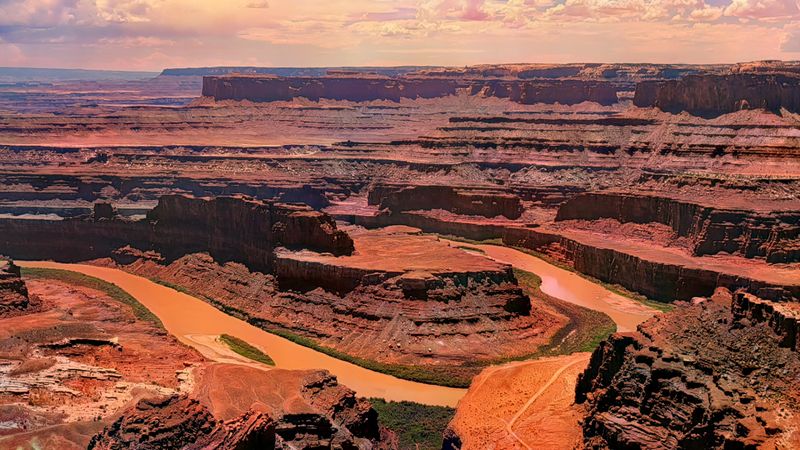
Photographers thrive at Dead Horse Point State Park because changing light reshapes the canyon from soft watercolor to crisp relief.
Start with blue hour silhouettes, then catch first light tilting across buttes and river meanders.
Compose with foreground junipers or textured slickrock to anchor depth.
Midday brings haze and harsh contrast, yet polarizers control glare on distant layers.
Use midday hours for scouting angles and marking safe footing near the rim.
Clouds help diffuse brightness and create spotlight moments on mesas.
Afternoon warmth returns nuance to color and eases dynamic range for sensors.
Golden hour fires the cliffs while the river reflects narrow ribbons of light.
Sunset often peaks after the sun drops, so wait for alpenglow to touch the La Sals.
Bracketing, graduated filters, or modern HDR can manage wide exposure gaps.
Long lenses isolate river bends and tiny roads while wide lenses tell the full story.
Keep dust off gear with a blower and stow equipment when gusts rise.
Bring stable footwear and a small headlamp for safe returns after twilight.
Respect other visitors by stepping aside and sharing popular perches.
Log your favorite coordinates for future trips because Utah light rarely repeats twice.
Camp under big skies at Kayenta and Wingate
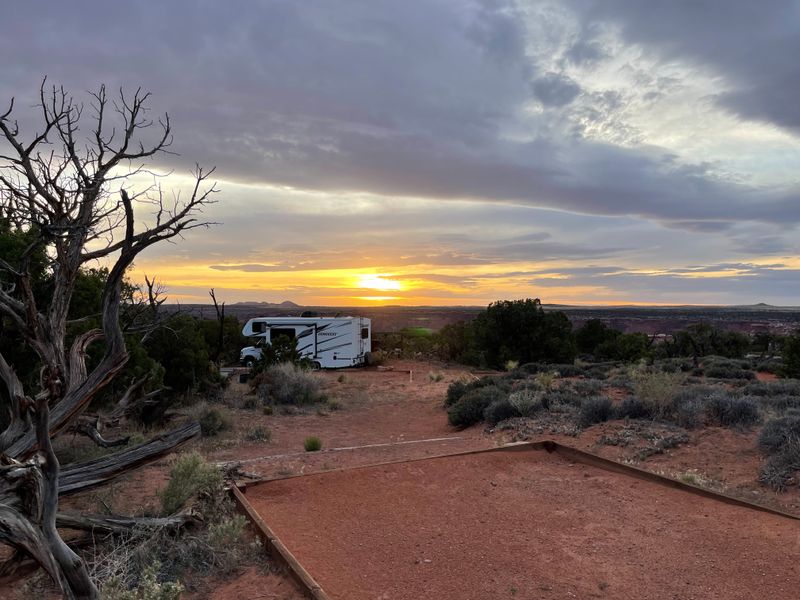
Camping at Kayenta and Wingate brings sunrise to your doorstep and stars to your ceiling with simple comfort and striking views.
Sites are spaced with thoughtful privacy and include picnic tables, fire rings, and graded pads.
Reservable options often book up months ahead during peak seasons.
Quiet hours keep the atmosphere restful and let crickets dominate the night soundtrack.
Generators have designated hours and rules that protect the dark sky experience.
Water is available seasonally, so confirm current services before hauling gear.
Restrooms are clean and maintained, with vault options at nearby trailheads.
RVs fit many pads though size limits apply, which you should verify in advance.
Wind can rise quickly on the mesa, so anchor tents and secure loose items.
Sunrise watchers can roll from sleeping bag to rim in minutes without driving.
Even in Utah summer, nights can feel cool at this elevation, so pack a warmer bag.
Desert etiquette asks that you minimize noise and keep lights low.
Wildlife visits sites occasionally, so store food properly and never feed animals.
Campers enjoy easy access to the Intrepid trails and the main overlook.
Stargazing after dinner often steals the show and lingers as your last memory.
Visitor center insights and trailhead hub
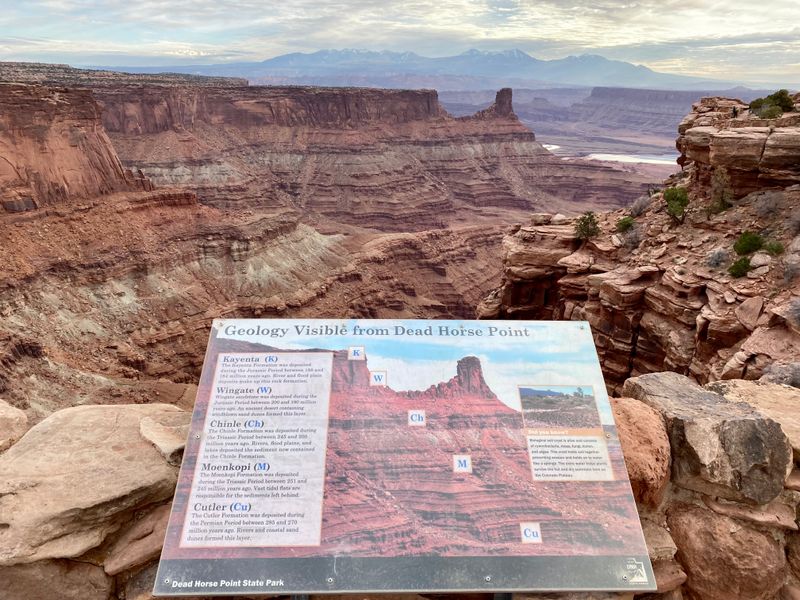
The visitor center at Dead Horse Point State Park anchors orientation with maps, exhibits, and staff who track current conditions.
Interpretive displays explain geology, desert ecology, and the park’s name with context.
Short films or rotating panels outline how water and time carved the canyon.
Trailheads for the Intrepid system and rim paths cluster nearby for an efficient start.
Bathrooms, water fills, and shaded seating make this a comfortable staging area.
Rangers offer safety reminders about heat, exposure, and wildlife respect.
Small retail shelves stock guidebooks, postcards, and practical sun gear.
Seasonal programs may include guided walks and sky talks that enrich visits.
Large windows frame the canyon so even quick stops feel rewarding.
Weather boards list wind speeds and storm chances that can shape your plan.
Cell service varies, so download maps before leaving town.
Ask about road updates and closures on nearby public lands to avoid detours.
Kids gravitate to hands on elements that highlight animals adapted to arid life.
Take a photo of the trail map for reference in case signs are missed later.
Step outside and the rim path begins with instant views that reset your sense of scale.
Seasonal strategies for Utah weather
Spring in Dead Horse Point State Park brings cool mornings, strong sun by midday, and bright wildflowers tucked along slickrock seams.
Layers make comfort easy as temperatures swing and wind gusts brush the rim.
Summer demands early starts, shaded breaks, and relentless hydration in the dry heat.
Monsoon afternoons can build fast with thunder that echoes across the canyon.
Autumn rewards patience with clear air, calm days, and long soft light for photography.
Crowds thin and wildlife appears more often when heat retreats.
Winter can deliver quiet trails, icy patches, and rare snow that outlines the topography.
Microspikes help on shaded steps while sunlit rock warms quickly by noon.
Always check the official site for alerts about storms, closures, and road conditions.
Pack sunscreen year round because UV at elevation does not take holidays.
Ventilated hats and breathable layers keep hikes comfortable through changing hours.
Gloves and a wind shell earn their place in backpacks from October through April.
Lightning safety means leaving exposed rims when thunder enters the soundscape.
Gas up in Moab and carry a spare water jug during summer weekends.
Adapt plans to the season and the park will meet you with its best self.
How to plan your time and avoid crowds
Arrive before 8 a.m. and you will find relaxed parking, cooler air, and quieter overlooks that ease you into the day.
Head straight for the main viewpoint to catch the first light without rushing.
Loop the West Rim next while the sun angles from the east for pleasing contrast.
Break at the visitor center for water, shade, and a check on trail conditions.
Late morning fits the Intrepid loops before heat peaks and crowds swell.
Take a midday rest in shaded picnic areas or in your vehicle with windows cracked.
Return to the East Rim for golden hour and slower foot traffic as day visitors thin.
If camping, set alarms for star time and plan warm layers for a restful watch.
Weekdays from November through February see the calmest rhythm across the park.
Holidays and spring break swell numbers, so reserve early and build patience into plans.
Carpool from Moab to reduce congestion and lighten the parking load.
Carry snacks to skip checkout lines and keep momentum humming.
Download maps offline and keep a flexible mindset when a viewpoint feels busy.
A short walk along the rim usually finds quiet pockets away from clusters.
Leave gates and hours in mind so you are exiting smoothly with a smile.
Practical info, hours, and responsible travel
Dead Horse Point State Park operates daily with posted hours that commonly run from 6 a.m. to 10 p.m., and the official site lists updates if changes occur.
Entry fees support maintenance, staffing, and amenities that keep trails safe and clean.
Credit cards are accepted at self pay kiosks when staffed gates are closed.
Cell coverage can be limited, so save confirmations and maps to your device.
Leave No Trace principles guide behavior on rims, trails, and campgrounds.
Pack out all trash, even tiny bits of tape and fruit peels that do not belong.
Stay behind railings where provided and keep children within arm’s reach.
Photographers should share space kindly and rotate through prime perches.
Pets must remain leashed and never approach wildlife or walk on cryptobiotic crust.
Seasonal closures may protect nesting raptors or sensitive habitats near cliffs.
Weather swings quickly at elevation, so carry layers, sun protection, and extra water.
Respect neighboring lands and avoid off trail driving on fragile soils.
The park’s phone line and website offer current details on conditions and events.
Utah visitors often pair this stop with nearby parks, but this mesa merits its own day.
Travel gently and the canyon will welcome you back for another round of awe.
Dear Reader: This page may contain affiliate links which may earn a commission if you click through and make a purchase. Our independent journalism is not influenced by any advertiser or commercial initiative unless it is clearly marked as sponsored content. As travel products change, please be sure to reconfirm all details and stay up to date with current events to ensure a safe and successful trip.
