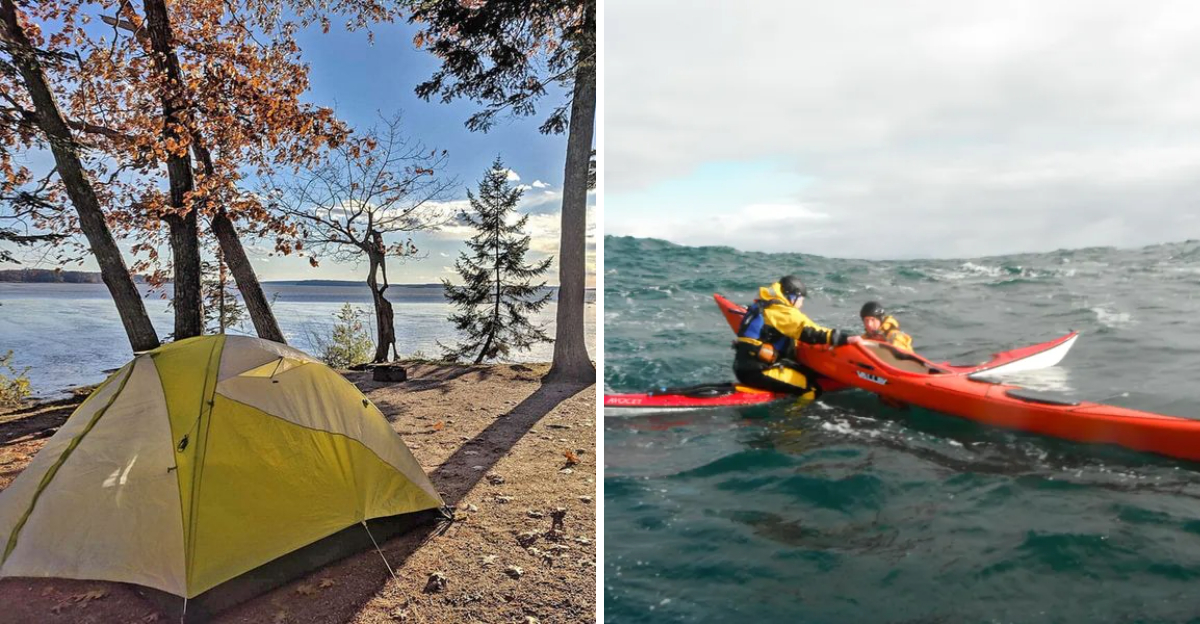
Maine’s rocky coastline hides hundreds of small islands that look like perfect camping spots from the water. Many visitors paddling kayaks or sailing boats see these beautiful, forested islands and decide to pitch a tent for the night without realizing they’re breaking the law.
Every summer, local sheriffs and coast guard officers respond to complaints about trespassing campers who didn’t know these islands belong to private owners or have strict regulations protecting them. Some of these islands are part of fragile ecosystems or conservation zones, making unauthorized camping even more problematic.
What starts as a peaceful night under the stars can quickly turn into a legal headache for unsuspecting adventurers.
1. Most Islands Are Privately Owned
Thousands of islands dot the Maine coast, and most belong to families who have owned them for generations. From the water, these islands look wild and untouched, making visitors assume they’re public land. The reality surprises many tourists who grew up with different camping rules in western states.
Property owners pay taxes and maintain these islands as private retreats. Some families visit their islands only a few weeks each year, but that doesn’t change their legal ownership. When campers arrive uninvited, it’s the same as setting up a tent in someone’s backyard.
Maine law protects property rights strictly, and landowners can call authorities to remove trespassers. Officers take these calls seriously because repeated trespassing damages fragile island ecosystems.
Understanding ownership before landing prevents legal trouble and respects the people who care for these special places year after year.
2. Poor Signage Makes Ownership Unclear
Unlike parks with obvious entrance signs and visitor centers, private islands rarely display clear ownership markers. Wind, salt spray, and harsh winters quickly destroy posted signs, leaving islands looking completely unmarked.
Kayakers and boaters cruise past dozens of islands without seeing any indication of who owns them or whether camping is allowed.
Some property owners intentionally keep their islands looking natural and avoid putting up signs that would detract from the wilderness feel. Others simply can’t maintain signs that weather destroys within months.
This creates confusion for well-meaning visitors who follow the principle of leaving no trace but don’t realize they’re trespassing in the first place.
Before smartphones and GPS apps became common, this problem was even worse. Today, visitors can check ownership using online maps and local resources, but many still rely on visual cues that simply aren’t there on Maine’s remote islands.
3. Confusion About Public Trust Doctrine
Maine follows something called the Public Trust Doctrine, which allows everyone to use the intertidal zone between high and low tide marks. Visitors can walk along beaches, collect seaweed, fish, and even fowl in this narrow strip. This ancient right dates back to colonial times and remains an important part of coastal access.
The confusion starts when people misunderstand where this public zone ends. Once you step above the high tide line, you’re on private property unless signs indicate otherwise. Many campers set up tents just beyond the beach, thinking they’re still in the legal zone.
They wake up to angry property owners or law enforcement explaining the boundary they’ve crossed.
The high tide line isn’t always obvious, especially on islands with gradual slopes or areas covered in seaweed and driftwood. What looks like public beach might actually be someone’s front yard, legally speaking, making this one of the trickiest aspects of Maine coastal law.
4. Limited Legal Camping Options Create Pressure
Maine offers fewer public island camping sites than demand requires, especially during peak summer months. State parks like Camden Hills and Acadia fill up weeks in advance, leaving late planners scrambling for alternatives.
The handful of islands designated for public camping can’t accommodate everyone who wants that quintessential Maine island experience.
When legal campgrounds show no availability, some visitors convince themselves that camping on an empty-looking island for one night won’t hurt anyone. They don’t consider that this decision could result in fines, a criminal record, or being stranded if their boat drifts away while authorities respond.
The shortage of legal options doesn’t justify trespassing, but it explains why the problem keeps happening.
Reserving spots months ahead or being flexible with travel dates helps secure legal camping locations. Some commercial islands offer paid camping with proper facilities, providing alternatives that support local businesses while keeping visitors on the right side of the law.
5. Social Media Inspires Copycat Behavior
Instagram and TikTok overflow with gorgeous photos of people camping on pristine Maine islands, waves lapping at rocky shores while campfires glow under starry skies.
These images rarely mention whether the campers had permission or if they were breaking the law. Viewers see only the romantic result and want to recreate the experience themselves.
Influencers sometimes camp illegally without realizing it, then share their adventures with thousands of followers. Each beautiful post inspires dozens more people to search for similar spots, creating a cycle that increases trespassing incidents every season.
Comment sections fill with questions about locations, and helpful followers share coordinates without mentioning ownership issues.
The pressure to capture perfect content for social media makes some visitors take risks they wouldn’t otherwise consider. They focus on getting the shot rather than researching regulations, leading to awkward encounters with property owners and law enforcement who have seen the same scenario play out repeatedly throughout each summer season.
6. Out-of-State Visitors Expect Different Rules
Western states manage public lands very differently than Maine, where private ownership dominates the coastline. Visitors from Colorado, California, or Montana expect to find vast stretches of public land where dispersed camping is not only legal but encouraged.
They arrive in Maine with that mindset and apply familiar rules to an unfamiliar landscape.
In many western regions, you can camp almost anywhere on public land as long as you follow basic guidelines about distance from water and roads. Maine’s patchwork of private ownership comes as a shock to people accustomed to this freedom.
They see wild-looking islands and assume they’re public resources available to everyone, just like national forests back home.
Cultural differences in how Americans think about land access create genuine misunderstandings rather than intentional lawbreaking. Taking time to research local regulations before any trip prevents these problems, but many visitors don’t realize Maine operates under completely different rules until they’re already in trouble with local authorities.
7. Rental Companies Don’t Always Educate Customers
Kayak and boat rental businesses vary widely in how thoroughly they brief customers about local regulations. Some companies provide detailed maps, explain trespassing laws, and identify legal camping locations. Others hand over equipment with minimal instruction, assuming visitors will figure things out or already know the rules.
During busy summer days, rental staff rush through dozens of transactions and may skip important information about where customers can and cannot go. First-time paddlers receive basic safety instruction but might not hear anything about island ownership or camping restrictions.
By the time they’re on the water, they have no idea which islands are off-limits.
The best rental operations include written materials with equipment, marking legal camping spots on waterproof maps and listing emergency contacts. Visitors should ask specific questions about camping regulations rather than assuming the rental company covered everything important, and they shouldn’t hesitate to request clarification before heading out onto the water for their adventure.
8. Language Barriers Complicate Understanding
Maine attracts international visitors who may not fully understand English signage or the nuances of American property law. A French-speaking family from Quebec or German tourists exploring New England might miss subtle warnings or misinterpret regulations they encounter.
Legal terminology about trespassing and property rights doesn’t translate easily, even for people with decent English skills.
When property owners or authorities try to explain violations, communication difficulties can make tense situations worse. Visitors may not grasp the seriousness of the offense or understand what they’re being asked to do.
Officers sometimes need translation services to properly explain charges and consequences, adding complexity to what should be straightforward enforcement.
Tourist information centers that provide materials in multiple languages help bridge this gap, as do rental companies with multilingual staff. International visitors should research camping regulations before arriving and consider carrying translation apps that work offline, since cell service is spotty around many islands where misunderstandings are most likely to occur.
9. Darkness and Fog Create Navigation Errors
Thick fog rolls into Casco Bay and other coastal areas with little warning, reducing visibility to just a few boat lengths. Paddlers and sailors suddenly can’t see landmarks they were using to navigate, and GPS coordinates become their only guide.
In these conditions, people sometimes land on the wrong island entirely, setting up camp before they realize their mistake.
Late afternoon departures that seem perfectly timed can turn problematic when headwinds slow progress or currents push boats off course. Arriving after dark, exhausted paddlers make camp on the first island they reach rather than continuing to their intended legal campsite.
They plan to figure out exactly where they are in the morning, but property owners or authorities often find them first.
Weather in Maine changes rapidly, and what starts as a clear day can end in pea soup fog by evening. Checking marine forecasts, leaving earlier than seems necessary, and carrying proper navigation tools prevents these accidents that can still result in trespassing charges despite being unintentional.
10. Emergency Situations Force Unplanned Landings
Sometimes campers end up on private islands because genuine emergencies leave them no choice. Sudden storms with dangerous waves, injured paddlers needing immediate rest, or equipment failures can force people to land wherever they can reach safely.
In these situations, getting to shore quickly matters more than checking ownership, and most property owners understand when they hear the full story.
The problem comes when people stretch the definition of emergency to justify poor planning. Running out of daylight because you started late isn’t really an emergency, nor is feeling tired after paddling less than you expected.
Authorities and property owners can usually tell the difference between genuine distress and convenience, and they respond accordingly with either understanding or citations.
True emergencies rarely result in arrests, especially when campers contact authorities or property owners as soon as possible to explain the situation. Carrying communication devices, filing float plans with friends or family, and building extra time into trip schedules reduces the chance of being forced into these difficult decisions in the first place.
Dear Reader: This page may contain affiliate links which may earn a commission if you click through and make a purchase. Our independent journalism is not influenced by any advertiser or commercial initiative unless it is clearly marked as sponsored content. As travel products change, please be sure to reconfirm all details and stay up to date with current events to ensure a safe and successful trip.
