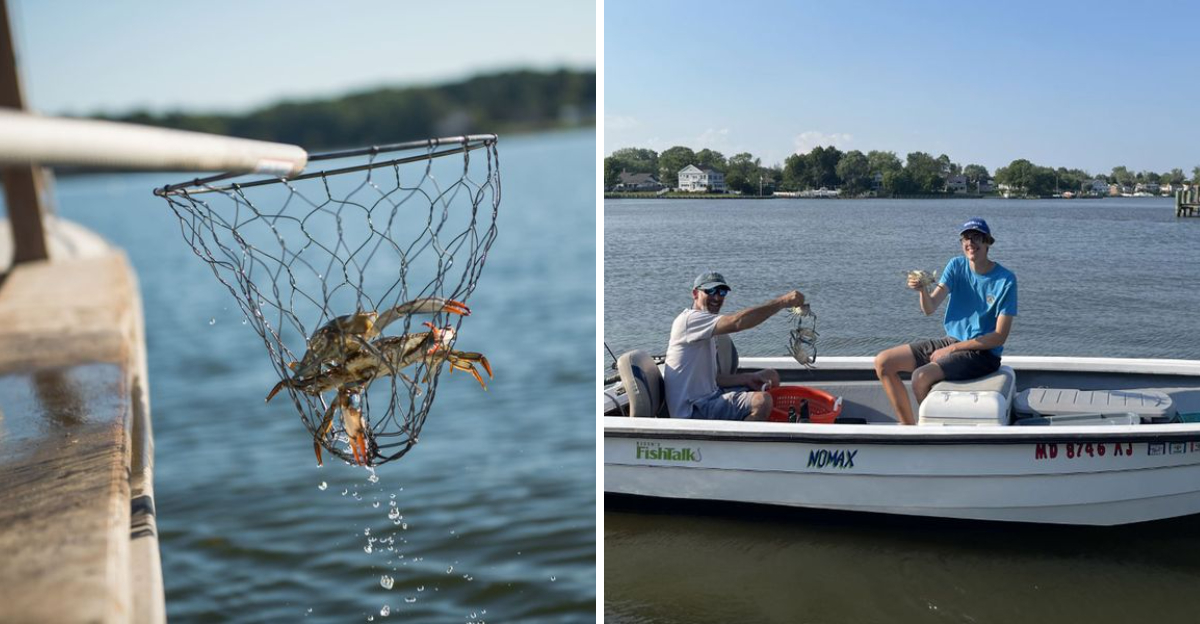
Every summer, Maryland’s waterways buzz with excitement as visitors flock to try their hand at crabbing. But what starts as a fun day on the dock can quickly turn into a legal headache.
Tourists from all over the country find themselves facing fines and even arrests because they didn’t realize they needed a special license to catch those famous Maryland blue crabs. The rules apply whether you’re using traps, trotlines, or even just a simple hand line.
Without the proper paperwork, what seems like a harmless vacation activity can result in unexpected run-ins with wildlife officers.
1. They Don’t Know Licenses Are Required
Most visitors assume crabbing is like fishing off a public pier where anyone can drop a line. They arrive with chicken necks and string, ready for a casual afternoon catching crabs. Nobody tells them that Maryland takes its blue crab population seriously and requires everyone over 16 to have a recreational fishing license.
The confusion grows because different states have different rules. Someone from Pennsylvania might not need a license to fish in their home state’s lakes. They naturally assume the same casual approach works in Maryland waters.
Park rangers and natural resources officers patrol popular crabbing spots regularly during peak season. When they ask to see licenses, tourists often look genuinely shocked. The officers hear the same story repeatedly about families who had no idea they were breaking the law.
Many rental properties and tourism websites fail to mention licensing requirements clearly. Visitors book their trips, pack their gear, and head straight to the water without researching local regulations first.
2. Out-of-State Visitors Miss the Fine Print
Maryland offers several license types, and the differences confuse people who just want to catch dinner. An annual resident license costs one price, while non-residents pay significantly more. Visitors often skip reading the detailed requirements posted at boat ramps and fishing piers.
The state’s Natural Resources website contains all the information anyone needs. However, tourists planning their trips often focus on hotels, restaurants, and attractions instead. They overlook the legal requirements section completely until an officer stops them.
Some folks believe buying bait from a local shop covers their licensing needs. They figure the store would have mentioned something if they needed paperwork. Unfortunately, bait shops aren’t required to check for licenses, so this assumption gets people into trouble.
Social media posts showing friends and family crabbing don’t usually mention the boring legal stuff. Pictures of buckets full of crabs look exciting and easy. Nobody posts photos of their fishing license, so newcomers miss this crucial step entirely.
3. Rental Properties Don’t Always Warn Guests
Vacation rentals along the Chesapeake Bay and coastal areas market themselves as perfect crabbing destinations. Property owners advertise private docks, crab pots, and waterfront access as major selling points. What they sometimes forget to mention is that guests need proper licensing before using that equipment.
Homeowners assume visitors will research local laws on their own. They provide welcome books with restaurant recommendations and WiFi passwords but skip the legal requirements. Guests arrive excited to use the crabbing gear left in the shed without realizing they’re unprepared.
Some property managers include a brief mention in lengthy rental agreements that nobody reads carefully. The important licensing information gets buried among rules about checkout times and pet policies. Families focus on the fun parts of their vacation planning instead.
When officers patrol residential waterfront neighborhoods, they find numerous tourists crabbing illegally from private docks. These visitors genuinely believed their rental fee covered everything they needed for their stay.
4. They Think Recreational Means Free
The word recreational creates serious confusion among visitors trying Maryland crabbing for the first time. People interpret this to mean casual or just for fun, assuming no official permission is needed. They contrast it with commercial fishing, which obviously requires business licenses and permits.
Families see crabbing as a simple leisure activity like building sandcastles or flying kites at the beach. The idea that they need government paperwork for a hobby seems excessive. This mindset leads to genuine surprise when officers explain the violation.
Maryland’s recreational license actually allows quite generous limits compared to commercial operations. Individuals can keep up to two bushels of crabs per day for personal use. But even this generous allowance requires proper documentation first.
Tourist information centers sometimes contribute to the confusion by promoting crabbing as a fun family activity without emphasizing licensing. Brochures show happy families on docks but might not highlight the legal requirements prominently enough for visitors to notice and remember.
5. Online Tutorials Skip the Legal Stuff
YouTube and TikTok overflow with videos showing exactly how to catch Maryland blue crabs. Content creators demonstrate tying chicken necks to strings, setting traps, and measuring keepers. These tutorials cover technique beautifully but rarely mention licensing requirements at all.
Viewers learn about the best bait, ideal water depth, and perfect timing for tides. They watch locals pull up crab after crab and feel confident they can do the same. The boring administrative details don’t make exciting content, so creators skip them entirely.
Travel bloggers writing about their Maryland adventures focus on the experience and the delicious crab feasts afterward. They share gorgeous photos of sunsets over the water and steaming pots of Old Bay seasoned crabs. License numbers and permit costs don’t fit the aesthetic they’re creating.
Newcomers following these guides arrive fully prepared with equipment and knowledge but completely unprepared legally. They’ve watched hours of content without anyone mentioning they need to visit a licensing agent first before heading to the water.
6. Last-Minute Decisions Lead to Shortcuts
Imagine waking up on vacation to a perfect sunny morning and deciding spontaneously to try crabbing. The family piles into the car and heads to the nearest public dock with gear borrowed from neighbors. Nobody wants to spend their limited vacation time tracking down a license agent first.
This impulse decision happens constantly during Maryland summers. Visitors figure they’ll try crabbing for an hour or two, and if they enjoy it, they’ll get proper licenses next time. The waterfront looks inviting, other people are already crabbing, and waiting seems unnecessary.
License agents aren’t always conveniently located near popular tourist crabbing spots either. Someone staying in a beach town might need to drive inland to find an authorized dealer. That 30-minute detour feels like a waste of precious vacation time.
The online licensing system offers convenience, but it requires planning ahead. Visitors need internet access, credit cards, and time to navigate the state website. When they’re already at the dock ready to go, turning back feels disappointing for excited kids.
7. They See Others Crabbing Without Visible Permits
Popular crabbing locations buzz with activity on warm weekends. Tourists observe dozens of people hauling up traps and filling buckets with crabs. Nobody appears to be showing paperwork or wearing visible identification. Newcomers naturally assume they can join in without any special requirements.
Maryland licenses are small cards that people keep in wallets or pockets. Unlike hunting vests with visible tags, crabbers don’t display their permits prominently. Officers only check licenses when they patrol, which might happen once during a several-hour visit.
Visitors watch children crabbing and figure the activity must be unregulated. What they don’t realize is that kids under 16 are exempt from licensing requirements. The young crabbers they observe are perfectly legal, but adults need their own permits.
This follow-the-crowd mentality creates problems when enforcement officers arrive. Just because many people are crabbing doesn’t mean everyone has proper documentation. Tourists caught without licenses often protest that they were just doing what everyone else was doing around them.
8. Confusion About Where Licenses Apply
Maryland’s complex geography creates genuine confusion about licensing jurisdictions. The Chesapeake Bay touches multiple counties, and visitors aren’t always sure whether they’re in state or federal waters. Some areas require additional stamps or permits beyond the basic fishing license.
Private ponds and landlocked waters have different rules than tidal areas where blue crabs live. Tourists familiar with freshwater fishing might not realize coastal regulations differ significantly. They assume their understanding of fishing rules applies everywhere equally.
Some waterfront restaurants and marinas offer crabbing experiences where the business provides equipment. Visitors sometimes believe these commercial operations include licensing in their fees. They participate thinking everything is handled, only to discover they needed personal licenses all along.
Border areas near Virginia create additional confusion since neighboring states have their own separate licensing systems. Someone crabbing near the state line might accidentally cross into Maryland waters without realizing they’ve entered a different jurisdiction requiring different paperwork and permits for legal crabbing.
9. Penalties Seem Too Harsh for Simple Mistakes
Getting arrested sounds dramatic for what feels like an innocent oversight. Tourists expect maybe a warning or small fine for their first offense. Instead, they face citations that can reach several hundred dollars plus court appearances. The severity shocks people who genuinely didn’t know they were breaking laws.
Natural resources violations carry serious penalties because Maryland protects its blue crab population carefully. These crabs support major commercial industries and represent important cultural heritage. The state doesn’t treat licensing violations casually, even when tourists claim ignorance.
Officers have limited discretion when they encounter unlicensed crabbers. While they might show leniency for first-time offenders who cooperate, they must enforce the regulations consistently. Repeat offenders or people with large illegal catches face much stricter consequences including equipment confiscation.
Word spreads quickly on social media when tourists get cited, creating viral stories about Maryland’s strict crabbing enforcement. These posts generate sympathy for the visitors but also serve as warnings. Unfortunately, new tourists keep making the same mistakes despite these cautionary tales appearing online regularly.
10. Local Knowledge Doesn’t Transfer to Visitors
Maryland residents grow up understanding crabbing regulations because they learn them in school and from family. This cultural knowledge gets passed down through generations who make their living from the Chesapeake Bay. Locals know exactly when seasons open, what sizes are legal, and how licensing works for different situations.
Visitors lack this background entirely. They arrive from landlocked states where blue crabs don’t exist and regulations differ completely. What seems like common sense to a Baltimore native is completely foreign to someone from Ohio or Kentucky visiting for the first time.
Friends and relatives hosting tourists sometimes forget to explain the basics. They’ve been buying licenses for so long it becomes automatic. They might lend guests crabbing equipment without thinking to mention the legal requirements that seem obvious to them.
The disconnect between local expertise and tourist ignorance creates most licensing problems. Education efforts target Maryland youth and residents but don’t effectively reach the thousands of visitors arriving each summer ready to experience blue crab country without proper preparation or understanding of local laws.
Dear Reader: This page may contain affiliate links which may earn a commission if you click through and make a purchase. Our independent journalism is not influenced by any advertiser or commercial initiative unless it is clearly marked as sponsored content. As travel products change, please be sure to reconfirm all details and stay up to date with current events to ensure a safe and successful trip.
